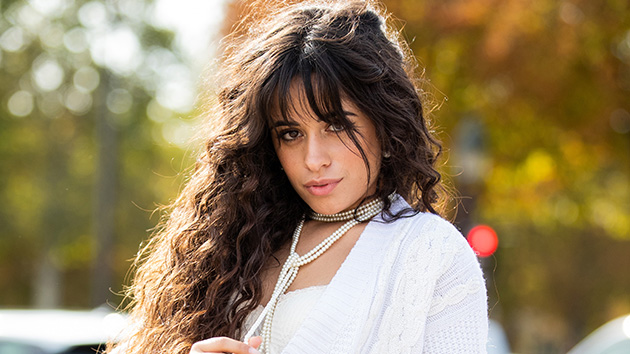
Camila Cabello candidly spoke about how the pandemic negatively affected her mental health, saying the early days of lockdown made her feel “really unstable.”
The “Havana” singer opened up about the emotional rollercoaster during her Monday appearance on Apple Fitness+’s Time to Walk program.
Camila said she was filming Cinderella when COVID-19 shut everything down and, when she was sent back to the United States, she “would just break down crying once a day, at least,” reports People.
The 24-year-old singer admitted she relied on her busy schedule and “nose to the grindstone” mentality to “bury” her growing problems, adding, “Before the pandemic, I felt really burnt out. I had been working pretty nonstop since I was 15.”
“I was just exhausted in every way and at that point, I felt like I was running a marathon with a broken leg. I kept going, but it was extremely hard,” she said.
“I felt so anxious, cripplingly anxious. I just felt really unstable, and I just felt a mess because suddenly, this thing that was distracting me, my work and filming, was not there,” Camila confessed, adding she “definitely asked for help” once her anxiety started affecting her relationships.
Camila said she also explored “therapy, meditation, exercise, changing the way I eat definitely changing the way I schedule my time and making sure that there’s balance” to better manage her anxiety.
She added that learning to prioritize her needs “was pretty life-changing” because it allowed her to discover “new hobbies and other things that soothe me.”
Camila also discovered that she looks great with mint hair and unveiled her icy new ‘do on Sunday.
The singer, who is one half of the duo Maddie & Tae, is expecting her first child with her husband, hit songwriter Josh Kerr, next year.
The couple announced the news via Instagram on Sunday night. Taylor shared a series of photos that show Josh cradling her baby bump, revealing they are expecting a baby girl by munching into pieces of a pink cake with a sign displaying the word “girl” in pink lettering.
“Mom and dad,” Taylor writes alongside the photos with a white heart emoji. “Baby Kerr is joining us earthside in spring ‘22 and we are already so deeply in love.”
“@taylordye and I have been keeping a little secret for a few months now. mom & dad already love you so much baby Kerr,” Josh shares in his celebratory post.
Among those to congratulate the couple were Taylor’s band mate, Maddie Marlow, who cheered in the comment section, “Thank you Jesus for the biggest blessing!! I CANT WAIT TO MEET HER.”
Taylor and Josh wed in February 2021. Maddie & Tae earned their second #1 country song in 2020 with “Die From a Broken Heart.
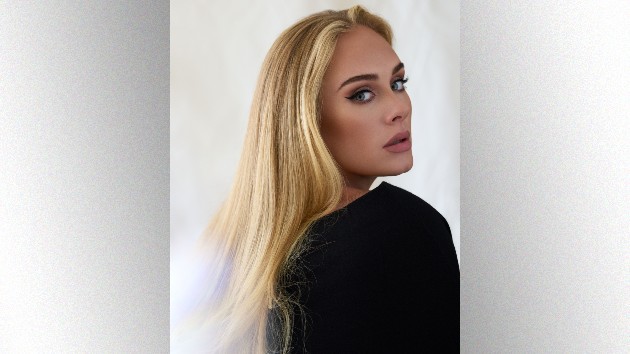
As one of the most famous people in the world, you might figure Adele could use the old “Don’t you know who I am?” line to pretty much do anything, right? Well, during her British TV special on Sunday night, she admitted that her fame once helped her escape a traffic ticket in L.A., though she was ready to face the consequences.
As People reports, during her ITV concert special An Evening with Adele, Samuel L. Jackson asked her if she’d ever used her “Adelity” — that’s ‘Adele celebrity’ — to get out of “a precarious situation, like a ticket.” Adele then told a story about being pulled over on LA’s 401 freeway shortly after moving there.
According to Adele, she was driving her rental car too slowly in the fast lane. When a police car pulled up behind her, she didn’t know what to do, so she simply stopped. The police officer started yelling at her with a megaphone, so she pulled over.
“I wind all my windows down as I’ve been taught to do before, especially if you get pulled over in America, you never know what they’re going to do,” she continued. “I handed him my British driver’s license, which might as well have been, like, a Blockbuster card, like he’d never seen one before. Also it looks nothing like me — it was me when I was like 17.”
The officer took the license back to his car, but when he came back, he was on the phone with his wife, who was, Adele said, “screaming at him…for pulling me over.”
“He’s like ‘I’m so sorry Adele, sorry, do whatever you need to do,'” she recalled. “It was hilarious, but yes, I did [use my celebrity]…I didn’t mean to! I was ready to go to jail.”
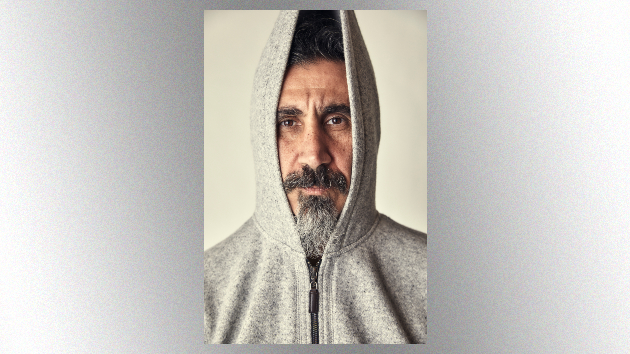
System of a Down frontman Serj Tankian has announced a new art exhibit called Not for Touching — The Intangible Composition.
As its name implies, the project features a variety of NFTs, set to original music composed by Tankian.
“I got into painting to see my music,” Tankian says in a statement. “By adding musical compositions to art, we’ve created a more powerful encompassing experience for lovers of art and music.”
“NFTs are a natural progression allowing the art and music to move within the scopes of our retinas and our creative minds,” he adds. “I called it Not for Touching (NFT) ’cause it’s a lot sexier than non-fungible tokens.”
Not for Touching debuts December 6 via the site CurioNFT.com. A selection of pieces will also be available as physical giclée prints.
Justin Bieber set the bar for big siblings everywhere after penning the sweetest birthday message for his little brother, Jaxon, who recently turned 12.
Sharing a carousel of photos that show the two growing up over the years, the pop singer wrote on Instagram, “I sit here and look at all of these photos and I’m reminded of how much I love you my precious little bro. I am so proud of you.”
“I can’t believe you are 12 years old!,” Justin continued. “You are such an amazing, sweet, handsome, special boy and I’m honored to be your big brother.”
The sweet, never-before-seen photos proved just how close the “Peaches” singer is with Jaxon. Some of the more tender snaps show the two snoozing together and Justin cuddling his then-baby brother. Others demonstrate just how seriously the pop star takes his duties as a big brother, such as teaching Jaxon how to skateboard, ride a bike or skip stones on the ocean.
Justin regularly shouts out his other siblings on social media, including 14-year-old Allie, 13-year-old Jazmyn and three-year-old Bay. The three are Justin’s half-siblings on his father Jeremy Bieber‘s side.
(WASHINGTON) — President Joe Biden announced Monday he will nominate Federal Reserve Chairman Jerome Powell to a second four-year term amid new concerns about controlling inflation.
He also said he would nominate Dr. Lael Brainard, a longtime Federal Reserve official and former Treasury Department undersecretary, to serve as vice chair of the Board of Governors of the Federal Reserve System.
“While there’s still more to be done, we’ve made remarkable progress over the last 10 months in getting Americans back to work and getting our economy moving again. That success is a testament to the economic agenda I’ve pursued and to the decisive action that the Federal Reserve has taken under Chair Powell and Dr. Brainard to help steer us through the worst downturn in modern American history and put us on the path to recovery,” Biden said in a statement.
The announcement follows recent questions surrounding whether Biden would renominate Powell, a Republican, who was nominated to chair the Federal Reserve in 2017 by then-President Donald Trump. Powell was first nominated to the Federal Reserve Board of Governors by then-President Barack Obama in 2011 before Trump elevated him to succeed Janet Yellen, who now serves as Biden’s treasury secretary.
“Fundamentally, if we want to continue to build on the economic success of this year we need stability and independence at the Federal Reserve — and I have full confidence after their trial by fire over the last 20 months that Chair Powell and Dr. Brainard will provide the strong leadership our country needs,” he added.
Biden is expected to speak about the announcement Monday afternoon with Powell and Brainard joining him for the appearance, according to the White House.
As the president faced mounting political pressure in recent weeks to shake up the leadership by nominating Brainard to replace Powell, he talked with both Powell and Brainard about his decision on Friday, according to a source familiar with the matter.
The president regularly engaged with members and stakeholders around the decision, including with both progressives and moderate Democrats on Capitol Hill, the source said. Biden recently met with Sen. Elizabeth Warren, D-Mass., at the White House to get her input on the decision after Warren had publicly called Powell a “dangerous man” to lead the agency.
“Your record gives me grave concerns. Over and over, you have acted to make our banking system less safe, and that makes you a dangerous man to head up the Fed, and it’s why I will oppose your renomination,” Warren said in a hearing on Sept. 28.
Biden and his team had also been in regular and close consultation with Sen. Sherrod Brown, D-Ohio, who chairs the Senate Banking Committee, according to the source.
Despite Brainard winning over progressives like Warren who argue she is tougher on bank regulation and climate change, by keeping Powell in place, Biden appears to be sending a message reaffirming the central bank’s independence from politics.
“Overall, with Mr. Powell remaining Chair, communication will remain clear and transparent and policy will not veer too far off from the current dovish path,” Rubeela Farooqi, chief U.S. economist at High Frequency Economics, an economic research consultancy firm, said in a statement to ABC News.
The nomination comes at a critical moment for the central bank, which has a mandate to contain inflation and sustain job growth. Powell has tilted “dovish” on inflation in recent months, insisting the run-up in prices will abate as the pandemic recedes and the supply chain untangles.
Powell oversaw a busy time at the Federal Reserve as it pumped unprecedented stimulus into the financial system in response to the pandemic and now starts to unwind some of that stimulus. Wall Street had been betting on his re-nomination as a way to keep continuity in policy at a tumultuous time in the economy.
If both are confirmed by the Senate, the White House will still have several seats to fill on the Federal Reserve Board, including the lead banking supervisor, allowing Biden the opportunity to reshape the central bank in a more drastic way with those picks.
Economists told ABC News they expect swift confirmation in the Senate for the nominees.
“We believe that Biden paired the announcement of the more Democratic-leaning nominee Lael Brainard with the Republican-leaning Jerome Powell to allay objections from the progressive members of the Democratic party,” said Kathy Bostjancic, Oxford Economics Chief U.S. Financial Economist.
Although at least three Democrats have signaled their opposition to Powell’s nomination, at least four Republicans have voiced support — so it appears he will be confirmed but not without multiple Republicans supporting Biden’s nominee. There were nine Democrats who opposed Powell’s nomination in 2018 when he was confirmed by the Senate in an 84-13 vote.
ABC News’ Allison Pecorin contributed to this report.
He’s not yet said for certain one way or another if he’s running, but Oscar winner Matthew McConaughey would have a good chance to be Texas’ next governor, according to a new poll.
A survey released by the University of Texas and the Dallas Morning News shows that the actor has 43% support from respondents. In fact, in the hypothetical match-up between McConaughey and current Governor Gregg Abbott, the actor is leading by eight points.
The poll also revealed that McConaughey would trounce newly-announce Democrat candidate Beto O’Rourke. Head-to-head, the Dallas Buyers Club star leads the former presidential contender by a 49-27 margin.
In a three-way-race, the poll revealed, McConaughey could split the vote of those picking anyone but Abbott — the survey showed Abbot at 37%, McConaughey at 27% and O’Rourke at 26%. As of now, O’Rourke has 74% of the Democratic vote, but pundits say the actor could siphon off Democratic votes from Beto if McConaughey decides to run.
Officially, the Academy Award winner told The New York Times in October that he’s “measuring” throwing his hat into the ring, but would only run if he thought he could “useful” to the voters. “I could arguably have more influence as an informal leader than a formal leader,” he noted.
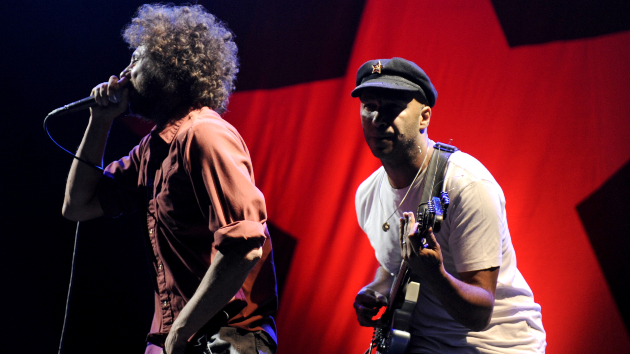
Rage Against the Machine has shared a statement reacting to the Kyle Rittenhouse verdict.
Rittenhouse, then 17, killed two people and injured another with an AR-15-style semi-automatic rifle during a 2020 protest in Kenosha, Wisconsin. Demonstrators were protesting against police violence and brutality after Kenosha police shot and partially paralyzed Jacob Blake, a 29-year-old Black man.
In his much-publicized trial, Rittenhouse, now 18, claimed self-defense. He was acquitted on all charges Friday.
In a series of tweets reacting to the verdict, Rage asks, “What defines innocence in America?”
“This is the settler logic of America’s founding myth: whiteness must cast itself as the victim in order to justify its violence against those resisting its oppression,” Rage continues. “Welcome to the Land of the Free, Home of the Brave.”
1/What defines innocence in America? Tamir Rice was executed for playing with a toy. Nobody was charged. Ahmaud Arbery went jogging and was murdered in broad daylight. Rittenhouse armed himself and killed people who were fighting for racial justice. He claimed self-defense. pic.twitter.com/Em0qIOgaOp
An eight-year-old boy’s quest to save Australia’s threatened Great Barrier Reef received a welcome boost from one of his heroes — Billie Eilish. The young activist contacted Billie in hopes that he could use her song, “Ocean Eyes,” for an upcoming social media campaign…and she said yes.
Elijah Richardson has been part of the nonprofit Coral Watch since last year and the organization says he felt Billie’s 2016 breakout song was the perfect fit for his new conservation campaign, titled “Come Join Our Watch.”
The avid snorkeler shared the impassioned video, titled “An Open Letter to Billie Eilish,” last October and the message went viral. The video not only states Billie’s song can inspire others to use their “Ocean Eyes” to “look out for the reef,” but politely asks her to lend a helping hand. “Not physically, we’d just love you to Zoom or FaceTime. Just let us know by email. We don’t have your address, so we had to do this to get you ours,” the message states.
Elijah says the message eventually found its way to Billie and, when talking to WIN News about their partnership, he called it a “dream come true” to receive her blessing.
“If the Great Barrier Reef dies, then all that marine life dies with it,” Elijah warned. The reef, the most biodiverse in the world, is home to more than 1,500 species of fish.
The young activist is concerned about the critical rate of bleaching, or loss of algae, that is killing the Great Barrier Reef. Coral Watch reports it “takes many years for coral to grow back,” but a “third mass coral bleaching event” is threatening to undo recovery efforts.
You can lean more about Elijah’s campaign on his Instagram, Elijahsworldqld.
Luke Combs has been tapped to headline the Thanksgiving Day halftime show at the Dallas Cowboys vs. Las Vegas Raiders NFL game at the AT&T Stadium in Dallas.
The event also serves as the launch of the annual Red Kettle Campaign run by the Salvation Army to supply a range of resources to people in need during the holiday season, including food, shelter and Christmas gifts.
Luke, who is friends with Dallas Cowboys player Ezekiel Elliott, says he’s “humbled” to be a part of the initiative.
“Considering I’m a huge football fan, the Dallas Cowboys were always on our TV on Thanksgiving Day growing up, so it is a complete honor to be a part of their 25th Thanksgiving Day halftime show supporting The Salvation Army’s Red Kettle Campaign,” the singer says in a statement.
The CMA Entertainer of the Year follows in the footsteps of Kane Brown, who performed at the halftime show last year. Luke’s performance comes as his latest single, “Cold as You,” clinches the #1 spot on the country charts.