Maddie & Taeshared an update this week about duo member Taylor Kerr, revealing that the singer has been in the hospital for the past month due to complications with her pregnancy.
Taylor shared a selfie from her hospital bed, with her singer-songwriter husband, Josh Kerr, in the background. Both are giving the camera a thumbs-up, despite their lengthy bed-rest ordeal.
“Today marks 1 month of being in the hospital,” the post’s caption reads. “T went in for a routine checkup at 24 weeks, then we were immediately admitted and we have been here ever since.”
The band assured fans that Taylor’s baby is doing well. “Our sweet girl is doing great, she is just a little more excited than she is ready to be in the world,” the post continues. “This hasn’t been easy but we’re leaning on God and trusting His plan. Thanks for all your thoughts and prayers.”
Back in December, Maddie & Tae postponed their 2022 tour plans, saying that Taylor was on bed rest per her doctor’s orders. The singer had previously announced her pregnancy in November. Taylor and Josh’s baby girl will be their first child, and she’s due in spring 2022.
Meanwhile, the duo have continued to share new music off their Through the Madness Vol. 1 project, which is due out January 28.
“I’ve won the Golden Ticket!” That’s the word from Ming-Na Wen, who appeared on Good Morning AmericaWednesday, the day the Star Wars spin-off series’ third episode dropped on Disney+.
The seemingly ageless 58-year-old actress is tickled she’s hit a rarefied high-water mark, known as the Disney Trifecta: That is, she voiced Mulan in Disney’s 1998 animated film of the same name; she followed that as special agent Melinda May in Marvel’s Agents of S.H.I.E.L.D., and now plays assassin Fennec Shand on The Book of Boba Fett.
“I’ve won the golden ticket,” she laughed to fellow Disney Legend Robin Roberts. “That will be on my tombstone, I think, ‘I’ve won the golden ticket. ‘”
A life-long geek and an out and proud former alumna of her high school’s Sci-Fi Club, Ming-Na explained Star Wars was always a presence in her life. “When I was a little kid, you know…I would like pretend I’m like the female Han Solo because I loved Luke, I loved Princess Leia and I wanted to like be the rogue warrior, you know, to be in battles with them.”
She adds, “Never in my life did I imagine that I would actually become a character…[alongside] the legendary Boba Fett of all things. I still pinch myself. I really do because I’m a kid!”
The actress says of her Star Wars stardom, “[I]t’s just one of those moments where you go, ‘Wow, I’ve manifested this and if I can do it, anyone can, anyone can.'”
She explains, “You know, a little Chinese girl, you know, an immigrant coming to this country with a single mom…” she says, calling her career, ‘the epitome of the American dream.'”
(ATLANTA) — After weeks of health experts urging Americans to upgrade their masks to protect against the omicron COVID-19 variant, the Centers for Disease Control and Prevention said Wednesday that it was planning to update its mask guidance to “best reflect the multiple options available to people and the different levels of protection they provide.”
In a statement provided to ABC News on Wednesday, the agency said the goal is for Americans to have “the best and most updated information to choose what mask is right for them.”
The move by the CDC would be the first significant update to its mask guidance since last July when it urged all Americans to return to wearing masks, after the delta variant proved so transmissible that research found even vaccinated people could transmit the virus.
While vaccinated people are considered infectious for a shorter period of time than someone who is unvaccinated, and they are considerably less likely to end up hospitalized, the CDC urged everyone to return to masking indoors to prevent community cases from rising.
Since the arrival of omicron, however, health experts have urged caution with the usual cloth masks and cities like Los Angeles and New York have already recommended mask upgrades to their residents.
CDC would not say how soon it planned to update its online guidance, although one administration official said the goal was by week’s end. The Washington Post first reported that CDC was considering the update to its guidance.
Dr. Rochelle Walensky, the agency’s director, told reporters on Wednesday that the overall recommendation won’t change that “any mask is better than no mask” and that a mask should fit well.
The best mask, she told reporters, is “the one you can keep on all day long that you can tolerate in public indoor settings and tolerate where you need to wear it,” Walensky said.
“I recommend you get the highest quality mask that you can tolerate and that’s available to you,” Dr. Anthony Fauci, the nation’s top infectious disease expert and President Joe Biden’s senior medical adviser, told CNN on Tuesday.
One problem with pushing higher grade masks is that they can be costly, harder to find and – in the case of surgical N95s – somewhat uncomfortable to wear. The CDC also warns customers against counterfeit masks that aren’t as effective.
Prior to omicron, Walensky resisted a call for Americans to wear surgical N95 masks for the average American because the agency didn’t want to discourage people from wearing any mask.
Walensky did not wear an N95 mask while testifying on Capitol Hill Tuesday. According to a spokesperson, she wore a disposable mask with a cloth mask on top “to ensure a tight seal.” That would be in keeping with CDC’s current guidance that suggests Americans could opt for two masks for increased protection.
To address the issue of limited supply, the Biden administration says it’s planning to help ramp up production of N95s to make them more available to Americans who want one. Dawn O’Connell, a top official at the Health and Human Services Department, said Tuesday that the government planned to sign a contract within the next month or so that would identify a provider to produce 140 million N95 masks a month.
There are already 737 million N95 masks in the strategic national stockpile available for medical workers.
White House COVID Coordinator Jeff Zients said Wednesday the White House was seriously considering making “high quality masks” available to all Americans, although he did not provide additional details.
ABC News reporter Cheyenne Haslett contributed to this report.
Adele started off her 2022 with a bang by releasing the music video for “Oh My God,” which is rife with symbolism and metaphors.
The most obvious reference is to the Garden of Eden with the video’s inclusion of apples, a snake and ring lights styled like halos. The clip starts with an apple positioned on an empty chair, symbolizing a temptation that haunts Adele throughout the song until she finally indulges herself with it.
In the song, the Grammy winner chants, “I know that it’s wrong, but I want to have fun,” giving a deeper meaning to the apple as it remains a constant theme while Adele keeps herself distracted by other activities. However, as people dance, jump and even sit on a horse — the singer does not participate and just continues to sing.
There are also moments that show multiple Adeles, which appear to symbolize her talking with herself and debating what action to take.
Adele only moves after she decides to bite into the apple, which happens at the end of the song, revealing how paralyzing that decision was for her to make. She then finally stands and walks off screen, with the apple in hand, after chewing contemplatively.
The video was directed by Sam Brown, who also helmed the 2011 “Rolling in the Deep” music video. Adele said working with Sam “was nostalgic to say the least,” adding, “We filmed this one on the day ‘Easy On Me’ dropped, there were a million things going on all at once.”
She also shouted out the “huge python” that starred in the video, saying she “skidaddled my ar** straight out of there” the moment she could make a break for it.
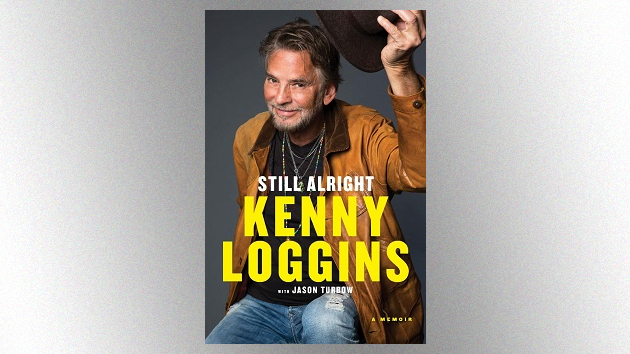
Kenny Loggins will reflect on his decades-long career in a new memoir, Still Alright, due out June 14, 2022. The title of the book is, of course, inspired by his 1980 top 10 hit “I’m Alright.”
“Writing this book and piecing together the moments of my life has been a really eye-opening experience for me,” says Loggins in a statement. “It’s almost like therapy, to get to look at how honest I can be. How honest can I be about my motivations, my reactions to certain relationships and circumstances, what did I learn, and how did it affect my music.”
In the book, Loggins will detail his career with Loggins & Messina and as a solo artist, his musical collaborations with Stevie Nicks and Michael McDonald, his time as the “King of the Movie Soundtracks” in the ’80s thanks to hits for movies like Top Gun, Footloose and Caddyshack, as well as his participation in the all-star 1985 charity single “We Are the World” and more.
In addition, Loggins will discuss his two divorces, his struggles with addiction and his difficult relationship with his older brother, who inspired his hit “Danny’s Song.”
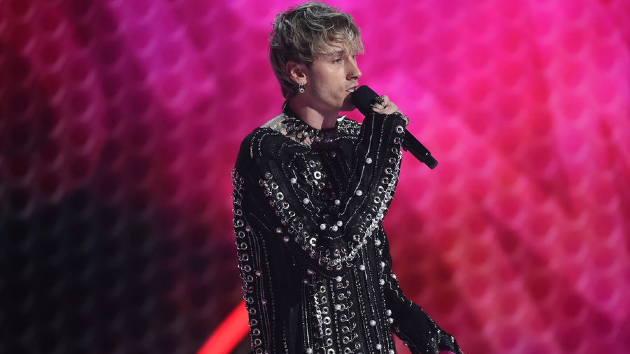
Is Machine Gun Kelly teasing a release date for Born with Horns?
On Tuesday, the “Bloody Valentine” rocker cryptically tweeted out “1-11-2022,” which was yesterday’s date. He then followed that with “I spy angel numbers and a sum of 9.”
“Angel numbers” refers to the concept of sets of repeated or patterns in numbers, such as 111. As for “sum of 9,” you’ll get that by adding up the numbers in the date January 11, 2022.
Being that January 11 came and went without any new MGK music, fans are speculating that the much anticipated Born with Horns, or at least a single, would arrive on a date that also fit the angel numbers and “sum of 9” criteria.
Of course, it’s possible Kelly’s just trolling, and is getting fans riled up over nothing. Or maybe he just enjoys tweeting about numerology.
Kelly announced Born with Horns last August alongside its lead single, “Papercuts.” It’ll once again be produced by Blink-182‘s Travis Barker, who also worked with MGK on 2020’s Tickets to My Downfall.
Along with Born with Horns, Kelly is planning to release a second album this year. His 2022 schedule also includes headlining Bonnaroo.
Rush guitarist Alex Lifeson has formed a new band called Envy of None that will release its self-titled debut album on April 8.
Envy of None also features bassist Andy Curran of the veteran Canadian group Coney Hatch, guitarist/keyboardist Alfio Annibalini and singer-songwriter Maiah Wynne.
The 11-track collection offers up a wide sonic palette, with influences including alternative rock, synth rock and experimental rock mixed with melodic pop.
Lifeson has been working on the Envy of None material for several years, but he says the project really took off when Wynne got involved.
“Maiah became my muse,” Alex maintains. “She was able to bring this whole new ethereal thing through her sense of melody on tracks like ‘Liar’ and ‘Look Inside.’…I’ve never had that kind of inspiration working with another musician.”
The band has released “Liar” as an advance digital track, and a companion lyric video has premiered at the Kscope label’s YouTube channel.
The album ends with a song titled “Western Sunset,” which Alex wrote as a tribute to late Rush drummer Neil Peart.
“I visited Neil when he was ill,” says Lifeson. “I was on his balcony watching the sunset and found inspiration. There’s a finality about a sunset that kinda stayed with me throughout the whole process. It had meaning. It was the perfect mood to decompress after all these different textures…a nice way to close the book.”
The album is available for pre-order now, and will be issued digitally, on CD, on LP — in black vinyl and colored-vinyl variants — and as a deluxe limited-edition package. The latter collection features a blue-vinyl LP, a two-CD set offering five bonus tracks, and a 28-page booklet.
Here’s the full Envy of None track list:
“Never Said I Love You”
“Shadow”
“Look Inside”
“Liar”
“Spy House”
“Dog’s Life”
“Kabul Blues”
“Old Strings”
“Dumb”
“Enemy”
“Western Sunset”
Five Seconds of Summer singer Michael Clifford isa married man, but he reveals the ceremony took place over a year ago!
The Australian artist and his longtime love Crystal Leigh told Peoplethey tied the knot on January 11, 2021 in a secret ceremony. Michael proposed in 2019 and the two had originally planned to throw a big wedding in Bali — but the pandemic forced them to change plans.
The couple didn’t want to move their date and instead opted for a “secret save the date gathering” by signing the official papers before a small crowd of those closest to them. Fellow 5SOS members Luke Hemmings, Calum Hood and Ashton Irwin were in attendance.
“We were most excited to be near our friends all together for the first time in a while due to COVID,” they shared. “To be officially married, even in secret, was so special for us, too.”
Guests dined at a long dinner table and Michael admits the menu was a little out there because it honored both his Australian and Crystal’s Southern roots. “It was definitely a random assortment of meat pies and vegan fried chicken. Turns out they go together pretty nicely,” he joked.
A bigger wedding ceremony — and their eventual honeymoon in Bali — will happen after the pandemic blows over, the couple assured. Crystal added that ceremony will feature “all of the traditional special wedding moments” because they’re “both only children, so we want to make sure all of our parents get to experience every aspect of our wedding since they only get to do it once! No pressure.”
To make the night even more special, Michael reveals he “may or may not have written Crystal a song that I’m planning on playing her at our real wedding.”
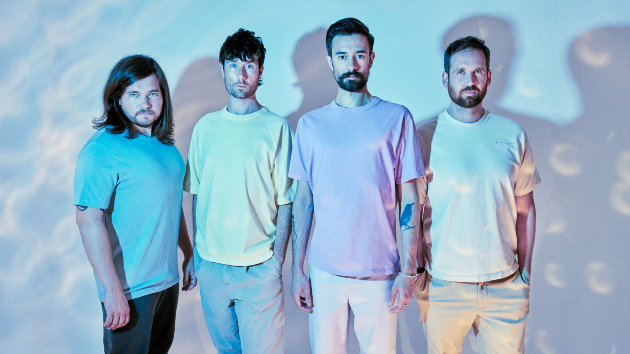
Bastille‘s “Pompeii” is the latest song to get caught up in a viral TikTok trend.
Late last year, a musician named William Li uploaded a mash-up of Bastille’s breakout single with a clip of comedian Steven He yelling the phrase “Emotional Damage,” which originally came from one of He’s comedy videos. The popular clip has now reached the eyes and ears of frontman Dan Smith, who shared his own reaction video.
In his clip, Smith watches Li’s TikTok at first with confusion and bewilderment before starting to jam along himself until he’s mouthing along to “Emotional Damage” by the end.
Along with trending on TikTok, Bastille is gearing up to release a new album called Give Me the Future, dropping February 4. It includes the singles “Distorted Light Beam” and “No Bad Days.”
Jason Aldean’s continuing the rollout of his upcoming Georgia project with a new single, “Trouble with a Heartbreak.”
He shared the news on Twitter, explaining that the song will be out this Friday, January 14. It’s the second on the track list of Georgia, which will be out in full on April 22. He’s already shared a couple of songs off the album, including “Whiskey Me Away” and a tender tribute to his mom, “Your Mama.”
Georgia is the second half of Jason’s double album, which he began releasing in November with the first half of the project, Macon. Together, the full collection is his tenth studio album.
Both Macon and Georgia follow a format that’s new for the country star: In addition to a collection of new studio tracks, each half of the double album features a handful of live versions of some of his greatest hits. The live songs on Georgia include “Any Ol’ Barstool,” “Rearview Town,” “Burnin’ it Down” and more.
My new single “Trouble With A Heartbreak” will be out THIS Friday, 1/14! RSVP to get notified as soon as it’s available here: https://t.co/t3vrvaJoWl.