Dustin Lynch’s new album, Blue in the Sky, arrived on Friday, and along with it comes a new single and music video.
In “Party Mode,” the singer takes an alcohol-fueled getaway to run from his heartbreak, complete with “Drinking every single drink, seven night a week, all over this town.” It’s a party anthem with a darker lyrical subtext, but the music video focuses on the song’s fun side.
In the clip, Dustin joins forces with his real-life buddies Cornbread and Corbin Wilson for a post-breakup tropical escape.
From start to finish, Blue in the Sky is filled with elements from the singer’s real life. Not only does it feature his friends, but in the music video, the gang take a ride in a small plane — when he’s not making music, Dustin’s studying to get his pilot’s license.
“Party Mode” is the next single off Blue in the Sky, following the multi-week number-one hit, “Thinking ‘Bout You.” It also lends his name to Dustin’s Party Mode Tour, which kicks off March 17.
This year marks the 30th anniversary of En Vogue’s Funky Divas, and to celebrate, they’re releasing an expanded and digitally remastered version of the 1992 hit album.
The new digital collection — featuring the album’s top-10 hits “Giving Him Something He Can Feel,” “Free Your Mind,” and “My Lovin’ (Never Gonna Get It)” — will be available on March 25, one day after the album’s official anniversary.
The 21-track remastered version will also feature eight remixes making their digital debut. You can pre-order the album now and get early access to the Hyperadio Remix of “My Lovin’ (Never Gonna Get It).”
En Vogue is also updating the music videos for “Free Your Mind,” “My Lovin’ (Never Gonna Get It)” and “Giving Him Something He Can Feel” to 4K/HD quality.
This summer, the group is touring with other ‘90s acts including New Kids on the Block and Salt-N-Pepa. The Mixtape Tour kicks off on May 10 and runs through July 23.
Happy birthday Sheryl Crow, born sixty years ago today.
Sheryl’s career spans over three decades, 11 studio albums and nine Grammy awards. She got her start singing commercial jingles in the 80s before landing a spot as a backup singer on Michael Jackson‘s tour in 1987. She didn’t get her big break until 1994, when she released her debut studio album Tuesday Night Music Club,which featured her hit single, “All I Wanna Do.”
Since then, Sheryl’s sold more than 50 million albums and scored other hits such as “If It Makes You Happy,” “Soak Up the Sun,” “The First Cut Is the Deepest,” and her “Picture” collaboration with Kid Rock.
Sheryl also dabbled in acting, making her first television appearance in 1990 on the short-lived Cop Rock. Since then, she’s made multiple cameos across several popular series such as One Tree Hill, 30 Rock, Hannah Montana and NCIS: New Orleans. The singer also appeared in three films; 54, The Minus Man and De-Lovely.
In addition to nine Grammys, Sheryl also has one Academy of Country Music Award, three American Music Awards, a Billboard Music Award, a BRIT Award, and a People’s Choice Award. In addition, she was given an honorary doctorate from her alma mater, Southeast Missouri State University.
All this and more will be explored in her eponymous upcoming documentary that will take fans behind the scenes of Sheryl’s rise to fame and her “arduous musical career battling sexism, ageism, depression, cancer, and the price of fame,” per the official description. Sheryl is set to premiere at the SXSW Film Festival on March 11.
(PHOENIX) — Five Phoenix police officers were shot and four others were hurt by shrapnel during an early morning barricade situation at a house, the department said.
All injuries are non-life-threatening, police said.
The incident began when officers were called to a home where a woman was reported shot, Phoenix police said.
When an officer approached to help, the suspect, an adult man, invited the officer inside, said Phoenix police spokesman Andy Williams.
As the officer approached the door, “the suspect ambushed him with a gun and shot him several times,” Williams said. “That officer was able to get back and get away to safety.”
“Other backup officers arrived on scene and they surrounded the home and began calling out the occupants,” Williams said.
Then another man — not the suspect — came out of the house holding a baby girl, police said. The man put the baby on the ground and walked to police where he was detained.
When officers went to bring the baby to safety, the suspect again opened fire from inside the house, shooting four more officers and indirectly injuring four other officers with shrapnel, police said.
The baby appears to be OK, police added.
The suspect then barricaded himself in the home, police said.
Once the scene was secured police said they found the suspect dead inside.
The woman who was the first reported to be shot was found in extremely critical condition inside the home, police said. She appears to be the suspect’s former girlfriend, police said.
Arizona Gov. Doug Ducey tweeted, “Please continue to pray for the five @PhoenixPolice officers injured this morning. Our men and women in blue work day and night—no matter the circumstances—to protect our state from danger.”
He added, “My office is working closely with the Phoenix Police Department to get updates on the situation and the officers’ conditions.”
Other police departments are also speaking out.
Chicago Police Superintendent David Brown tweeted that his department “stands with our brothers and sisters of the Phoenix Police.”
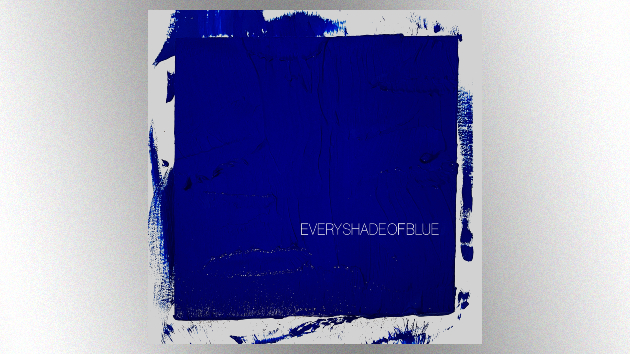
The Head and the Heart has released a new song called “Virginia (Wind in the Night),” a track off the band’s upcoming album, Every Shade of Blue.
“Being from Virginia, for me this song represents a long and winding relationship to place — a place that is grounding,” says vocalist Jonathan Russell.” I’m often drawing on my life through symbolism as a way into someone else’s psyche. It’s part of my search for a deeper connection without having to compare our experiences directly.”
“There is a reason this song has two titles,” he continues. “One is literal and one is symbolic. Not everyone is from Virginia, I know that. But I bet you have walked home and heard the wind in the night.”
“Virginia (Wind in the Night),” which is available now via digital outlets, is the second song to be released from Every Shade of Blue, following the title track. The album, which follows 2019’s Living Mirage, arrives in full on April 29.
The Head and the Heart will launch a U.S. headlining tour in support of Every Shade of Blue in May.
Taylor Swift hasn’t scored an ACM Award nomination since 2018 — until this week. The singer’s deliciously petty music video for “Bet You Think About Me (Taylor’s Version)” has been nominated for Video of the Year.
The music video was directed by pal Blake Lively and stars Top Gun: Maverick actor Miles Teller as a groom suffering from cold feet on his wedding day because he cannot get his ex, played by Taylor, out of his head.
The singer celebrated her nomination via Instagram story, writing, “AHHHHHHH CONGRATS @blakelively, MILES AND @keleighteller!!!! BIG GROUP HUG!”
Taylor continued, “I loved making this video and it’s so cool to see the @acmawards nominate it for video of the year” and closed with a crying while smiling emoji.
“I Bet You Think About Me (Taylor’s Version),” which features vocals from country superstar Chris Stapleton, is among the “from the vault” tracks that appeared on her recently released Red album. The music video was released on November 15 and features an unhinged Taylor wreaking havoc on her ex’s wedding, from ripping chunks out of the wedding cake to giving a drunken speech and falling off the stage — all while the adoring guests approve of her shenanigans. But the ending shows it’s a fantasy conjured by her ex boyfriend, who cannot stop thinking about her.
Ahead of her Super Bowl halftime show performance Sunday, Mary J. Blige has released her new album, Good Morning Gorgeous. The 13-song track list features collabs with Anderson .Paak, Usher, DJ Khaled and Fivio Foreign. Also out today is Blige’s video for “Rent Money,” featuring Dave East.
In addition to being featured on Mary J.’s album, Fivio Foreign has another collab out today: “City of Gods,” with Kanye West and Alicia Keys.
Nicki Minaj is once again teaming with Lil Baby for a brand-new song. After dropping “Do We Have a Problem” last week, the two released “Bussin” on Friday. They teased the new track at the end of the “Do We Have a Problem” video.
Future dropped a new song called “Worst Day,” where he shares his feelings about celebrating Valentine’s Day when you have more than one Valentine. “Valentine’s Day, the worst day, got too many to please,” he raps on the track. The song marks Future’s first original solo music since 2020.
K.Michelle is also celebrating Valentine’s Day with the release of her new song, “Scooch.” It’s the lead single off her sixth studio album, I’m the Problem, out this spring.
Chris Lane has officially been a dad since welcoming his baby boy Dutton in mid-2021, Now, he’s proving that his dad joke game is strong: His new song, “Howdy,” is a play on words, juxtaposing the title against sentiments like “How’d he ever let you go?” and “How’d he ever walk away?”
Though Chris didn’t write the song — it was penned by Sam Ellis, John Byron and Blake Pendergrass — it’s reminiscent of his real-life story of meeting Lauren Bushnell.
Back before the country star and his now-wife got together, Lauren was a contestant on The Bachelor in 2016, and during the season finale, she got engaged to Ben Higgins on the show. Their romance came to an end the following May, and Lauren subsequently found her happy ending with Chris, who’s previously used her as a creative muse for songs like “Big Big Plans.”
Since they first said “Howdy,” the couple have been inseparable, tying the knot in late 2019 and becoming parents in 2021.
As Chris continues his Fill Them Boots Tour, he’s also excited about his new song’s uptempo feel and potential as a live show hit.
“‘Howdy’ is a fun one — the play on words is super clever, and it’s going to be a great addition to my set list on tour,” Chris notes.
Last December, Chris released another new song, “Stop Coming Over.”
Underoath has released a new version of the band’s song “Hallelujah,” featuring guest vocals from musician Charlotte Sands.
“So stoked to be able to partner with Charlotte on this tune,” says drummer/vocalist Aaron Gillespie. “She’s the real deal, a crazy talent and a great person, she brought a different and really cool environment to this song.”
You can listen to the updated “Hallelujah” now via digital outlets.
The original “Hallelujah” appears on Underoath’s new album, Voyeurist, which just dropped in January. Underoath launches a headlining U.S. tour in support of the record February 18 in Dallas.
Sands, meanwhile, is currently on the road opening for Yungblud.
(NEW YORK) — You may not know Ralph Gilles by name but you may have owned (or admired) his cars: the Dodge Viper, Jeep Grand Cherokee and Ram truck, to name a few.
Gilles, the 52-year-old chief design officer of Stellantis, the automotive giant that owns the Chrysler, Peugeot and Fiat brands, has been sketching cars and trucks for more than 30 years. He started as a designer in 1992 and quickly climbed the ladder at Chrysler, becoming president and CEO of Dodge and the SRT Brand. He now oversees the Chrysler, Dodge, Jeep, Ram and Maserati marques, shaping future product and directing a large team of designers.
He has another mission at company: to make it more inclusive. Gilles, who is Black, serves as the executive sponsor of the Stellantis African Ancestry Network Diaspora (STAAND) and is active on the Stellantis Global Diversity Council.
The company announced last month that it was launching two new programs to attract diverse talent and train Black and multicultural employees for future leadership opportunities. Stellantis was also recognized as a top diversity leader by DiversityInc magazine.
In 2019, Black employees accounted for 17.2% of workers in automotive manufacturing, higher than the overall labor market, according to government data. But the industry lacked gender and racial diversity at the leadership level, the report from the U.S. International Trade Commission said.
“I think our industry doesn’t seem to attract people of color as much as others because it’s a little more of a clandestine thing that we do,” he said.
Gilles, an award-winning designer and industry visionary who continues to push the limits, spoke to ABC News about his trajectory in automotive, his attempts to hire more women and people of color and whether the Dodge Viper will return as an electric sports car.
The interview below has been edited and condensed for clarity:
What obstacles did you face as a Black man?
A: I didn’t face any impassable obstacles. If anything, my color made me stand out, sometimes for the better actually. I was a leader very young at my age; at 30 years old I was a director so [race] didn’t hold me back. It was quite the opposite if anything. I was very keen and aware that everything I did was being watched but in a good way. In every action I took I felt I would be representing an entire culture, not just myself. So that was something I was aware of from a very early stage.
Tell me how you’re trying to increase diversity at the company.
A: We’ve been trying to create a wonderful environment for people of color. I’ve been part of our business resource group [Stellantis African American Network Diaspora] for over 10 years and what I find fascinating about the group is that it went from being an internal support group to more of a recruiting device. When the Black Lives Matters stuff really lit up, our CEO at the time, Mr. [Mike] Manley, wanted to understand more so he called on the team to sit with him and that started this desire to create a diversity group. Just having these conversations has opened the minds of all of our execs [to] think about recruitment differently. Once you set up a tolerant place to work it naturally attracts people to the company.
How would you describe the makeup of the design team?
A: We have quite a bit of diversity in certain areas. Our infotainment team is pretty diverse. The exterior design team not as much. We’re finding though that the schools are not generating the pool that we need. We’re trying to get kids in middle school excited about this type of career and educate them about the possibilities and the outstanding life you can have as a designer or an engineer. So getting the word out there that it’s an awesome job is working slowly but surely.
What is the biggest change you’ve seen in the industry since you started?
A: When I started in the industry we were known as the Big 3. Today I laugh, it’s more like the Big 7 or 8. Every company seems to offer a full suite of vehicle types. The competition is really intense. The modern automobile is so technologically laden it’s hard just to call it a car anymore. It’s really rolling technology. And we are feeling more and more like a tech company.
We have software and coding people who are now attracted to the auto industry. The electrification movement, the infotainment movement, the autonomous movement — it’s getting more interesting. You look at it as a mature industry but it’s actually quite the opposite. It’s evolving more than ever.
What will move the needle on electric vehicle sales in the U.S.?
A: I think it’s a combination of more delicious offerings, which is what I am trying to do. To me it should be a choice. Have people say that’s the better, more attractive car. The current suite of EVs out there tend to be a little bit bland and uninspiring — great performing vehicles but not necessarily heart-pumping in the cultural or aesthetical sense. So trying to find a way to make them desirable and affordable. The other thing is going to be the infrastructure. Governments are working quite hard on helping the infrastructure catch up because it is a very different system from what we have today. So trying to make the pain points of owning an electric car go away is something everyone has to collaborate on. It’s not just a Stellantis problem. It’s a societal thing.
How would you respond to criticisms that Stellantis has been slow to produce EVs?
A: I think we’re not interested in just making an EV. We want to make the best EVs. We’re taking our time and developing them properly. We may not have one on offer today but it’s going to be coming very, very soon. We’re going to have several coming at the right time. A lot of the first EVs have very modest ranges that aren’t really solving the problem for the real consumer. So affordability, range, function — that’s what we’re putting in our calculus right now. We’re launching them in Europe. We’re leaders, we’re No. 1 in Europe. As a company we’re actually not laggards. We’ve been quite aggressive. We’re trying to match the society’s take rate.
How is designing an EV different from a gas-powered vehicle?
A: Some of the things we’re running into is trying to give the vehicle a personality. Trying to give it an emotional quotient. EVs don’t make a sound. Part of an excitement of a vehicle, especially with our Dodge brand, is the aural part of it. It’s something we’re intrigued about.
On the Jeep side, it’s creating an EV that looks futuristic but still capable. Aerodynamics are absolutely paramount. The EV gives us a benefit — we have frunks now. We have good packaging solutions. The center of gravity is in a good place. It’s more giving the car personality while balancing the needs of physics.
The Dodge Viper sports car was discontinued in 2017. Could it return as an EV?
A: I can’t talk about future product. I love that people talk about this nameplate so much. So that’s inspiring to us.
What is your daily driver?
A: I have a mixture of vintage cars because I do like the analog. I like to time warp back to the analog times. I have a Grand Cherokee, with a plug-in coming, and I steal my daughter’s [Alfa Romeo] Stelvio because I love that car. I have a few Alfa Romeos, a Lancia Delta and a cute little Peugeot 205 that I restored myself.
Looking back, is there one vehicle you would have tweaked before production?
A: (He laughs). OMG I need a couch now. Are you asking about my failures? (laughs again). I would have fought harder to make the wheelbase of the Chrysler 200 another 2 inches longer. Let’s put it that way.