(NEW YORK) — President Joe Biden repeatedly has said the United States will not be sending troops to fight Russia in Ukraine, but vowed that the U.S. would defend its NATO allies.
“As I made crystal clear, the United States will defend every inch of NATO territory with the full force of American power,” he reiterated in an address Thursday.
The main goal of the North Atlantic Treaty Organization’s founding in 1949 was to foster mutual assistance in response to the Soviet Union’s expansion in Europe. A key component of the treaty, Article 5, covers “collective defense,” which means that an attack on one ally is considered an attack on all allies.
Amid the current crisis, Article 5 could mandate a more direct response from the U.S. and other treaty members if Russian aggression escalates beyond Ukraine.
NATO announced last week it launched its response force, a deployment of about 40,000 troops to provide land, air and naval assistance across the alliance. This is the first time the force has been deployed for a “deterrence and defence role,” a NATO spokesperson said.
Charles Kupchan, a senior fellow at the Council on Foreign Relations and professor of international affairs at Georgetown University, told ABC News it is possible Article 5 could be invoked while the U.S. and its allies are providing military aid to Ukraine.
“Let’s say that Russia succeeds in toppling the government. And it then tries to occupy and pacify Ukraine. Assuming that the U.S. and its allies attempt to get arms to a Ukrainian resistance movement, there’s a not insignificant risk that Russia might try to interdict that flow. And that whether by design or by accident, an artillery shell or a missile or a bomb could land in Poland or another NATO country,” Kupchan said.
“And then we’re looking at the prospect of an attack on NATO territory and the potential trigger of the Article Five collective defense guarantee, which then raises the prospect of potential military conflict between NATO and Russia,” Kupchan said.
All participating countries agree to the form of solidarity outlined in the article, making it a key component of the alliance. While Ukraine is not a member of NATO, it borders Poland, Hungry, Slovakia and Romania, which are members.
Ukraine has been moving toward the West and away from Russia, attempting to join both NATO and the European Union. Kupchan said its geographical location could be strategic during this conflict.
“In the current moment, Ukraine’s border with four NATO countries affords it two important advantages,” Kupchan said. “One is refugees are able to seek asylum in NATO countries, and we’re seeing hundreds of thousands of Ukrainians head west. And the other is that now that Ukraine’s airspace is … dominated by Russia, the long border between Ukraine and NATO affords an opportunity to continue to funnel weapons and other sources of support to Ukraine.”
The first time Article 5 was invoked was after the terrorist attacks of Sept. 11, 2001. The alliance had already identified terrorism as a risk affecting its security in 1999. In response to the attack, NATO engaged in the fight against terrorism, launching its first operations outside the Euro-Atlantic area to patrol the skies over the U.S.
In 2008, NATO appeared to open the door for Ukraine’s membership saying it would become a member of the alliance, despite a lack of consensus between members, Kupchan said. NATO did not specify a pathway or timeframe for Ukraine to join the alliance.
“In 2008, the Bush administration wanted to proceed with what’s called a Membership Action Plan for Ukraine and Georgia. And European partners were reluctant, in part because neither Ukraine nor Georgia was ready to join NATO and because of concern that NATO’s enlargement to Georgia and Ukraine would be seen as provocative in Russia,” Kupchan said.
“Given the lack of consensus within NATO, the alliance agreed to issue a generic statement that Georgia and Ukraine would become NATO members, but didn’t specify a timeframe or a pathway,” Kupchan said.
Russian President Vladimir Putin linked the current crisis to Russia’s NATO demands, including a guarantee that NATO will stop expanding to the East, in a video address days before Russia invaded Ukraine. Putin accused the U.S. and NATO of ignoring his demands and blamed the West for the Ukraine crisis.
“[Putin] has said explicitly that he wants to see NATO’s military presence [reduced] in the eastern flank and that would include the three Baltic countries, Poland, Romania, Hungary, Slovakia, ” Kupchan said. “He wants to see NATO pull its capability back.”
“One of the tragic dimensions of this conflict is that the Russians knew full well, that Ukrainian membership in NATO was not under consideration. It was not on the table. And NATO governments were quite explicit about that. Nonetheless, Putin decided to invade the country,” Kupchan said.
Its unlikely Putin would launch an attack on a NATO ally because he would be looking at a “full-scale war,” he said.
“My guess is that he understands that this is a non-starter,” Kupchan said.
In addition to NATO’s deployment of its response force, it also said it was deploying a quick response brigade of 3,500 troops that could deploy on short notice while the larger unit gathers its troops from various member nations.
“Our measures are and remain preventive, proportionate and non-escalatory,” a statement from NATO said last week.
Kupchan said it is still unclear how far west Russia will go into Ukraine.
“It’s conceivable that there could be a rump in Ukraine that Russia does not try to grab hold of and Western Ukraine has generally been much more integrated into Europe, than into Russia,” Kupchan said.
(WASHINGTON) — President Joe Biden’s first State of the Union address looked very different Tuesday night than it would have a few weeks ago — before Russia invaded Ukraine, inflation kept rising and coronavirus guidance dramatically shifted.
From the war in Ukraine to rising prices at home, here’s a look at the key takeaways from Biden’s first State of the Union address to Congress:
Calling out Putin by name
The president kicked off his speech with strong words of support for the Ukrainian people and their president, Volodymyr Zelenskyy.
“From President Zelenskyy to every Ukrainian,” Biden said, “their fearlessness, their courage, their determination, literally inspires the world.”
The president praised his strategy of standing in lockstep with Europe and NATO allies in imposing harsh sanctions on Russia and its president, Vladimir Putin, arguing they solidified the NATO alliance and that the Russian president was now “more isolated from the world than he has ever been.”
“Putin’s latest attack on Ukraine was premeditated and totally unprovoked,” Biden said. “He rejected repeated — repeated efforts at diplomacy. He thought the West and NATO wouldn’t respond. He thought he could divide us at home, in this chamber, in this nation. He thought he could divide us in Europe as well. But Putin was wrong. We are ready.”
The president also announced the U.S. would ban Russian airlines from American airspace, after Europe and Canada took similar steps Sunday.
“When dictators do not pay a price for their aggression, they cause more chaos,” Biden said.
First lady Jill Biden hosted Ukraine’s ambassador to the United States, Oksana Markarova, as a guest in her box. She received a standing ovation from Democrats and Republicans, many of whom wore the blue and yellow colors of the Ukrainian flag.
The president devoted about one-fifth of his speech to Ukraine — and received rare bipartisan applause for much of what he said — a significant chunk in an address typically focused on partisan domestic issues.
Heavy focus on countering inflation
With low approval ratings for his handling of the economy — and inflation top of mind for Americans — Biden proclaimed: “I get it.”
“Too many families are struggling to keep up with their bills,” he said. “Inflation is robbing them of gains they thought otherwise they would be able to feel.”
He said his “top priority is getting prices under control.”
But many of his proposals will rely on a Congress that has been reluctant to pass much of his social spending proposals.
Emphasizing the need to boost domestic manufacturing, Biden also called for some specific items that would have been part of his stalled “Build Back Better” plan: cutting the cost of prescription drugs, combating climate change in order to lower energy costs, lowering the cost of child care, and instituting free, universal pre-K, among other initiatives.
He touted the nation’s economic recovery but acknowledged that factories had closed, supply chains had been disrupted and prices had gone up.
Biden said his “plan to fight inflation” was, “Lower your costs, not your wages.”
A new phase in the coronavirus pandemic
Biden acknowledged Americans were “tired, frustrated and exhausted” from the coronavirus pandemic — but also signaled the U.S. was entering a new phase.
“We’ve reached a new moment in the fight against COVID-19, where severe cases are down to a level not seen since July of last year,” he said.
He announced his administration was launching a “test-to-treat” program where Americans who test positive for COVID at drugstores could then receive free antiviral pills to treat the virus.
The president also said Americans would be able to order even more free rapid tests from COVIDTests.gov starting next week.
He warned the U.S. must “prepare for new variants” — and noted that scientists could “deploy new vaccines within 100 days” if necessary.
“Thanks to the progress we have made this past year, COVID-19 no longer need control our lives,” Biden said.
“Last year, COVID-19 kept us apart. This year we’re finally together again.”
Transformed chamber
Few masks made appearances in the House of Representatives chamber where Biden spoke.
Under new protocols announced Sunday, attendees did not have to wear face coverings. Biden did not don one like he did last year; attendance was also much more restricted in 2021.
The president hobnobbed with members of Congress at close range in a scene reminiscent of pre-pandemic State of the Union events.
All attendees had to show a negative PCR coronavirus test to gain admittance, and several Republicans boycotted the speech by refusing to test.
But the testing did turn up at least four positive cases among lawmakers.
‘A unity agenda for the nation’
Biden has made a quest for bipartisanship a hallmark of his presidency, and during his speech he proposed what he called “a unity agenda for the nation.”
In addition to listing a variety of proposals that would have been part of a larger “Build Back Better” bill that passed the House but stalled in the Senate because of opposition from Republicans and Sen. Joe Manchin, D-W.Va, he called for legislation to invest in cancer research, support veterans, combat domestic violence and more.
“We can do these things,” Biden said. “It’s within our power.”
(NEW YORK) — Russian forces are continuing their attempted push through Ukraine from multiple directions, while Ukrainians, led by President Volodymr Zelenskyy, are putting up “stiff resistance,” according to U.S. officials.
The attack began Feb. 24 as Russian President Vladimir Putin announced a “special military operation.”
Russians moving from Belarus towards Ukraine’s capital, Kyiv, don’t appear to have advanced closer towards the city since coming within about 20 miles, although smaller advanced groups have been fighting gun battles with Ukrainian forces inside the capital since at least Friday.
Russia has been met by sanctions from the U.S., Canada and countries throughout Europe, targeting Russia’s economy and Putin himself.
Here’s how the news is developing. All times Eastern:
Mar 01, 7:54 pm
Putin will ‘put Ukraine in a vice grip,’ US official says
Despite debate within the U.S. administration on whether Russia is suffering military setbacks in Ukraine, a senior U.S. official reiterated to ABC News that the invasion will be devastating for Ukraine.
“Putin is going to put Ukraine in a vice grip,” the official said, adding that Putin has ratcheted up his determination to carry on.
The dominant analysis within the administration involves Putin acting out with incredible ferocity and intent, believing this is his destiny, the official said.
The massive Russian convoy heading toward Ukraine is just as mighty as it looks from satellite imagery, the official added.
Taking out just half a dozen of those tanks would seriously slow down the convoy, because the roads are surrounded by mud in many places, so it would be difficult for the tanks to maneuver around the crippled vehicles, the official said.
President Joe Biden is under pressure to act, but the U.S. military is wary about any proposals that would bring American troops into open conflict with Russia. The U.S. military is also adamant that about avoiding anything that would trigger conflict, the official said.
-ABC News Chief Global Affairs Correspondent Martha Raddatz
Mar 01, 7:51 pm
Biden to announce ban on Russian carriers from US airspace
President Joe Biden is expected to announce the U.S. will ban Russian carriers from its airspace in his State of the Union address, according to a person familiar with his remarks.
The U.S. now joins Canada and the European Union, which issued bans on Russian planes in their respective airspaces over the weekend.
-ABC News’ Ben Gittleson
Mar 01, 7:33 pm
ExxonMobil to stop Russian investments
Oil giant ExxonMobil announced Tuesday it will be ending current and future investments in Russia.
Specifically, it will cease operations at its Sakhalin-1 venture, which the company operates on behalf Japanese, Indian and Russian companies.
“As operator of Sakhalin-1, we have an obligation to ensure the safety of people, protection of the environment and integrity of operations. Our role as operator goes beyond an equity investment,” the company said in a statement.
ExxonMobil said its stoppage of investments in Sakhalin-1 will “need to be carefully managed and closely coordinated with the co-venturers.”
The company added that it wouldn’t invest in future developments in Russia.
Mar 01, 5:50 pm
Jewish groups condemn attack on Ukrainian Holocaust memorial
Several Jewish groups condemned Russia for a missile attack that struck a Ukrainian Holocaust memorial.
The missiles struck the site of the Babyn Yar massacre where 33,000 Jewish men, women and children were killed in September 1941.
The Auschwitz Memorial and Museum in Poland tweeted, “It’s hard to expect the Russian army to respect the dead if it is not capable of respecting human lives.”
The United States Holocaust Memorial Museum noted that Ukrainian President Volodymyr Zelenskyy visited the site last year to commemorate the 80th anniversary of the event.
“We stand with him and the Ukrainian people during these critical times,” the museum said in a statement.
Israel’s Yad Vashem, the World Holocaust Remembrance Center, called on the international community to protect sites such as Babyn Yar as well as the innocent civilians caught in the crossfire.
“Rather than being subjected to blatant violence, sacred sites like Babi Yar must be protected,” Yad Vashem said in a statement.
-ABC News’ Conor Finnegan
Mar 01, 4:14 pm
Apple pauses sales in Russia
Apple is taking “a number” of actions in response to Russia’s invasion of Ukraine, including pausing product sales in Russia, stopping exports into the country and limiting Apple Pay there, according to a statement from the tech giant on Tuesday.
In addition, RT, Russia’s state-run news network, and Sputnik have been removed from the AppStore outside of Russia.
Apple has also disabled traffic and live incidents in Apple Maps in Ukraine for safety of Ukrainian citizens.
“We are deeply concerned about the Russian invasion of Ukraine and stand with all of the people who are suffering as a result of the violence,” Apple said in the statement. “We are supporting humanitarian efforts, providing aid for the unfolding refugee crisis, and doing all we can to support our teams in the region.”
-ABC News’ Zunaira Zaki
Mar 01, 3:04 pm
UK imposes sanctions on Belarus for its role in invasion
The United Kingdom is imposing sanctions on Belarus in response to the role the country is playing in Russia’s invasion of Ukraine, including facilitating the invasion from within its borders.
Four senior defense officials have been sanctioned, leaving them unable to travel to the U.K. and freeing any of their U.K.-based assets. Also sanctioned are a Belarusian aircraft repair plant and a military semiconductor manufacturer.
Britain’s Foreign Secretary Liz Truss said, “We are inflicting economic pain on [Russian President Vladimir] Putin and those closest to him. … The [Belarusian President Alexander] Lukashenko regime actively aids and abets Russia’s illegal invasion and will be made to feel the economic consequences for its support for Putin.”
ABC News’ Christine Theodorou
Mar 01, 3:14 pm
UK imposes sanctions on Belarus for its role in invasion
The United Kingdom is imposing sanctions on Belarus in response to the role the country is playing in Russia’s invasion of Ukraine, including facilitating the invasion from within its borders.
Four senior defense officials have been sanctioned, leaving them unable to travel to the U.K. and freeing any of their U.K.-based assets. Also sanctioned are a Belarusian aircraft repair plant and a military semiconductor manufacturer.
Britain’s Foreign Secretary Liz Truss said, “We are inflicting economic pain on [Russian President Vladimir] Putin and those closest to him. … The [Belarusian President Alexander] Lukashenko regime actively aids and abets Russia’s illegal invasion and will be made to feel the economic consequences for its support for Putin.”
-ABC News’ Christine Theodorou
Mar 01, 3:10 pm
Russian missile hits Kyiv TV tower killing at least 5
The tower that provides the main signal to TV and radio in Kyiv has been struck by a Russian missile, leaving at least five dead, Ukrainian officials said.
Ukraine’s Foreign Minister Dmytro Kuleba tweeted that the tower “is situated on the territory of Babyn Yar. On September 29-30, 1941, Nazis killed over 33 thousand Jews here. 80 years later, Russian Nazis strike this same land to exterminate Ukrainians. Evil and barbaric.”
Ukraine’s President President Volodymr Zelenskyy tweeted, “What is the point of saying «never again» for 80 years, if the world stays silent when a bomb drops on the same site of Babyn Yar? At least 5 killed. History repeating.”
-ABC News’ Christine Theodorou
Mar 01, 1:51 pm
Russians running out of food, gas: US official
The Russian forces charging toward Kyiv haven’t made progress in the last day as they face Ukrainian resistance and low food and gas supply, a senior U.S. defense official told reporters Tuesday.
However, it could be a deliberate pause, the official said. “Part of the stall could be … as a result of their own self-determined sort of pause in operations — that they are possibly regrouping, rethinking, reevaluating,” the official said.
The U.S. believes Russian forces “have committed now more than 80% of what was their pre-staged combat power,” the official added.
The official said some Russian soldiers weren’t told they were going into combat. The official said “not all of them were apparently fully trained and prepared.”
The strong Ukrainian resistance has also hurt morale, according to the official.
Russia has now launched more than 400 missiles on Ukraine, the official said. The U.S. believes Russia has launchers that could be used for thermobaric weapons, but cannot confirm their use, the official said.
Russian forces are making the most progress in the south. Russians are attacking Kherson in south Ukraine, which “appears very much to be contested city at this point,” the official said.
Russians are also approaching Mariupol in southeastern Ukraine, and while they haven’t yet entered the city, “they are close enough now that they could attack Mariupol with long range fires,” the official said.
Two towns on the path to Mariupol are believed to be occupied by the Russians, according to the official.
The U.S. believes the Russians hope to move north out of Mariupol up to the heavily-contested city of Kharkiv. The official said they believe Russian forces are trying to encircle Kharkiv.
The U.S. official noted that they’ve seen “certain risk-averse behavior by the Russian military” over the last week.
“Take the amphibious assault, for instance. They put those troops ashore a good 70 kilometers away from Mariupol because they knew Mariupol was going to be defended and they could put them ashore in an uncontested environment. And they still haven’t reached Mariupol,” the official said.
“They are not necessarily willing to take high risks with their own aircraft and their own pilots,” the official said.
“And of course we’re seeing that on the ground — the fairly slow and steady progress that they have made, and you guys are seeing it for yourselves on the ground where … units are surrendering, sometimes without a fight.”
-ABC News’ Matt Seyler
Mar 01, 11:43 am
136 civilian deaths reported
A spokesperson for the U.N. High Commissioner for Human Rights said 136 civilians have been killed in Ukraine, including 13 children.
Mar 01, 11:14 am
US, allies agree to release of 60 million barrels of oil from emergency reserves
The 31 countries on the International Energy Agency’s Governing Board have agreed to release 60 million barrels of oil from their 1.5 billion barrels of emergency reserves “to send a unified and strong message to global oil markets that there will be no shortfall in supplies as a result of Russia’s invasion,” the IEA said in a statement.
Russia is the biggest oil exporter on the globe and the third-largest producer, the IEA said.
Mar 01, 10:57 am
677,000 people have fled Ukraine
Filippo Grandi, the United Nations High Commissioner for Refugees, said the number of Ukrainians who’ve fled their country has climbed to 677,000.
Mar 01, 10:16 am
Western officials walk out during Lavrov remarks
Diplomats from Western countries were seen on video walking out in protest as Russian Foreign Minister Sergei Lavrov addressed the U.N. Human Rights Council and Conference on Disarmament.
The meeting was held Tuesday in Geneva and Lavrov gave his address via video.
The Human Rights Council has faced criticism for years for including human rights abusers, including Russia. In a prerecorded video to the council, Secretary of State Antony Blinken questioned whether Russia should be allowed to keep its seat.
“One can reasonably ask whether a U.N. member state that tries to take over another U.N. member state — while committing horrific human rights abuses and causing massive humanitarian suffering — should be allowed to remain on this council,” he said.
Blinken accused Russia of hitting civilian targets like schools, hospitals, residential buildings, critical infrastructure, and cars, buses, and ambulances — including the “monstrous rocket strikes” on an apartment complex in Kharkiv.
“Reports of Russia’s human rights abuses and violations of international humanitarian law mount by the hour,” he said.
“These are the human rights abuses this council was created to stop. If we cannot come together now, when will we come together?” he asked.
-ABC News’ Fergal Gallagher, Conor Finnegan
Mar 01, 9:43 am
‘Growing number’ of unaccompanied and separated refugee children
Filippo Grandi, U.N. high commissioner for refugees, told the Security Council Monday there’s “a growing number of unaccompanied and separated children” in the unending lines of refugees fleeing Ukraine.
UNICEF said there are “anecdotal reports of heartbreaking stories of fathers — or families — arriving at the border with their children and relinquishing them to the border guards, then remaining in Ukraine.”
UNICEF said it doesn’t have numbers yet on unaccompanied or separated children.
Mar 01, 9:23 am
Six killed in attack on Kharkiv civilian building
A rocket attack on an administrative building in Kharkiv in northeast Ukraine has killed at least six people and injured another seven, Ukrainian officials said.
An Indian student was among those killed, according to the Indian government.
A senior administration official told ABC News the U.S. has learned that Russia continues to plan for a “devastating” attack on Ukraine, warning that “the Russians … will crush Ukraine.”
Mar 01, 7:40 am
YouTube blocks RT, Sputnik in Europe
Google on Tuesday said it had blocked RT and Sputnik, Russian state-linked channels, from YouTube in Europe.
Due to the ongoing war in Ukraine, we’re blocking YouTube channels connected to RT and Sputnik across Europe, effective immediately. It’ll take time for our systems to fully ramp up. Our teams continue to monitor the situation around the clock to take swift action.
“Our teams continue to monitor the situation around the clock to take swift action,” the company said.
Mar 01, 6:39 am
Zelenskyy calls Russian attack ‘undisguised terror’
Ukrainian President Volodymyr Zelenskyy on Tuesday said the Russian attack on Kharkiv’s main square was an act of “undisguised terror.”
“After that, Russia is a terrorist state. No one will forgive. Nobody will forget,” he said on Facebook.
Mar 01, 6:22 am
About 660,000 refugees have fled Ukraine: UN
At least 660,000 people have fled Ukraine into neighboring countries in the six days since the Russian invasion began, the U.N. Refugees Agency said.
At the Polish border, UNHCR staff reported queues that were miles long.
“Those who crossed the border said that they had been waiting up to 60 hours,” the agency said on Tuesday. “Most arrivals are women and children from all parts of Ukraine. Temperatures are freezing and many have reported spending days on the road waiting to cross.”
Agency staff said people were waiting up to 20 hours to enter Romania. In Hungary, arrivals were “steady and waiting times vary.” The 37-mile trip between Odessa, Ukraine, and the border with Moldova was taking some refugees 24 hours, the agency said. And arrivals in Slovakia, where asylum laws were rapidly changed, were lower than elsewhere, agency staff said.
An unknown number of Ukrainian citizens have also been displaced within the country, Filippo Grandi, the agency’s commissioner, told the U.N. Security Council on Tuesday.
“The situation is moving so quickly, and the levels of risk are so high by now, that it is impossible for humanitarians to distribute systematically the aid, the help that Ukrainians desperately need,” he said.
The International Organisation for Migration said more than 470,000 people of various nationalities, “including a large number of overseas students and labour migrants,” are still in Ukraine.
Mar 01, 4:11 am
Russian bombardment strikes central square in Kharkiv
Russia on Tuesday launched a major bombardment of Ukraine’s second-largest city, Kharkiv, hitting a central square and its civilian administration building.
Video from the scene shows a large projective hitting next to the regional state administration building on Kharkiv’s Freedom Square, causing a huge blast. Aftermath shot on phones from the scene and inside the building, show it shattered with debris strewn around.
Ukraine’s emergency services ministry said at least six people, including one child were injured. It was unclear if anyone was killed.
Kharkiv Mayor Oleg Sinegubov confirmed the strike, calling it a “war crime.”
Monday’s shelling followed a sustained bombardment of civilian areas yesterday and overnight in Kharkiv by Russian heavy artillery, including multiple rocket launchers and an alleged use of cluster munitions.
“What is happening in Kharkiv is a war crime!” Sinegubov wrote on Facebook. “The Russian enemy is shelling whole residential neighborhoods of Kharkiv, where there is no critical infrastructure, no Ukrainian armed forces positions, which the Russians could be targeting.”
Sinegubov accused Russia of conducting the attacks during the day, when civilians were on the street. He said the city’s emergency services are unable to keep up with the number of attacks and injured.
So far at least 11 are dead, with dozens injured, he said.
Russian forces in Kharkiv appear to have shifted tactics to employing heavy artillery indiscriminately against the city, in an apparent effort to bombard and terrorize it into submission.
Sinegubov claimed the Russians were changing tactics because their offensive capabilities on the ground were running out and so they had nothing left but to launch aerial bombardments.
Mar 01, 3:28 am
‘Leave Kyiv urgently today,’ Indian Embassy tells citizens
The Indian Embassy in Kyiv on Tuesday urged Indians still in the capital to “leave Kyiv urgently today.”
“All Indian nationals including students are advised to leave Kyiv urgently today,” the embassy said on Twitter. “Preferably by available trains or through any other means available.”
Mar 01, 2:48 am
’We will fight until the end,’ says Ukrainian parliament member
Solomiia Bobrovska, a member of Ukraine’s parliament, on Monday said Ukrainians would “fight to the end” as they defend Kyiv from a Russian invasion.
“That’s the mood of Ukrainians. We are staying behind altogether, and we do understand that with the total second line staying behind their shoulders. And I think we will fight until the end,” Bobrovska told ABC News’ Linsey Davis.
Mar 01, 12:14 am
Russian troops ‘operational’ near Ukrainian nuclear power plant, agency says
Ukraine said its nuclear power plants are still being operated “safely and securely,” the International Atomic Energy Agency wrote in an update late Monday.
However, IAEA Director General Rafael Mariano Grossi said he “remained gravely concerned about maintaining their safety and security during the current conflict.”
Ukraine’s foreign ministry told the IAEA on Monday that Russian troops are “operational” near a functioning nuclear power plant at Zaporizhzhia, but the troops haven’t entered it so far. Any fighting near nuclear facilities causes alarm, and Ukraine has four sites in total with 15 reactors.
“It is extremely important that the nuclear power plants are not put at risk in any way,” Grossi said in a statement. “An accident involving the nuclear facilities in Ukraine could have severe consequences for public health and the environment.”
The IAEA Board of Governors will hold a meeting Wednesday to discuss the “safety, security and safeguards implications of the situation in Ukraine.”
(WASHINGTON) — A member of the U.S. Capitol Police Dignitary Protection Detail was arrested in Israel last month after allegedly being intoxicated and getting into a fight while working in an advance role ahead of House Speaker Nancy Pelosi’s trip to the Middle East, according to four sources familiar with the situation.
This information was later confirmed by the U.S. Capitol Police in a statement to ABC News.
Typically, when someone is under protective detail, agents are sent to the location ahead of time to scout out secure locations for the protectee.
The speaker and seven other Democratic lawmakers traveled to Israel while the House was out of session in February. ABC News does not know the name of the DPD agent.
The detail member was hospitalized before being released and given a plane ticket back to the United States, according to two sources briefed on the incident.
Capitol police told ABC News in a statement they would not be releasing the agent’s name since he wasn’t charged with a crime and it was a “discipline/personnel matter.” However, the agency said they had been with the USCP since April 2018 and had worked three details for members of Congress.
“On February 14, a United States Capitol Police Dignitary Protection special agent was doing advance work for a Congressional Delegation in Israel when the agent was accused of having a physical altercation while the agent was believed to be under the influence of alcohol,” Capitol police said in the statement. “The agent was not charged by the Israeli National Police, however U.S. Capitol Police Chief Tom Manger immediately sent the agent home, revoked the agent’s police powers and suspended the agent pending the outcome of an internal investigation by the USCP’s Office of Professional Responsibility.”
House Speaker Nancy Pelosi’s office declined to comment.
U.S. Capitol Police have been under fire since the Jan. 6, 2021, insurrection when a Senate report found Capitol police were underprepared for the riot.
Since then they have implemented sweeping changes to the agency, including hiring a new police chief.
(NEW YORK) — Approximately 46,000 people died on U.S. roads last year, according to preliminary data from the National Safety Council.
That number is up 9% from 42,339 deaths recorded in 2020, and up 18% from 39,107 deaths in 2019, according to the nonprofit health and safety organization.
“This devastating news serves as yet another wakeup call for this country. We are failing each other, and we must act to prioritize safety for all road users,” Lorraine Martin, president and CEO of the National Safety Council, said in a press release. “One life lost in a preventable crash is tragic enough and more than 46,000 in one year is unacceptable.”
The report comes as traffic on roads nears pre-pandemic levels. According to the Federal Highway Administration, vehicle miles traveled in the first nine months of 2021 increased 11.7% from the same time in 2020.
The cause for the continuing rise in motor vehicle deaths is not yet known. Some experts say while fewer people were on roads in the beginning of the pandemic, reckless driving ran rampant.
“What we do know, at least preliminarily through some NHTSA studies at the beginning of the pandemic, is that people are speeding, they are not wearing their seatbelts, they are driving distracted and impaired as well,” Jane Terry, the vice president of government affairs at NSC, told ABC News.
A new study from the AAA Foundation for Traffic Safety found an estimated 4% of drivers in the United States said they increased their driving during the pandemic. Those drivers tended to be younger and mostly male, AAA said.
That group also reported to engage in risky driving behaviors such as distracted driving, speeding, aggressive driving, substance-impaired driving and not using seatbelts, AAA’s report found.
In January, Transportation Secretary Pete Buttigieg released a plan, the National Roadway Safety Strategy, to reduce road deaths across the country. The plan calls for nationwide design changes to roads and automatic emergency braking in passenger vehicles, among dozens of other initiatives — including a goal to reach zero deaths on American roadways.
“This is a national crisis,” Buttigieg said at the time. “We cannot and must not accept these deaths as an inevitable part of everyday life.”
(LONDON) — Prince William and Kate, the duke and duchess of Cambridge, went on a royal walkabout in Wales on St. David’s Day — a day to celebrate the patron saint of Wales.
On Tuesday, the couple visited Abergavenny and Blaenavon to learn about the importance of the agricultural industry to rural populations and how community organizations are providing support to young people while also celebrating the history of the region.
They kicked things off at Pant Farm, where they met with local businesses and a family-run farm. A video taken from their visit shows the duke and duchess petting goats.
📍 Pant Farm, Wales
Seeing first-hand the benefits that local businesses receive through their communities at this lovely family-run farm, promoting local produce and sustainable practices. pic.twitter.com/Rt6WGPCImD
— The Duke and Duchess of Cambridge (@KensingtonRoyal) March 1, 2022
William and Kate then continued their visit with a trip to Abergavenny Market, where they met with people selling locally grown produce.
The importance of community for local business is so vital as we met and heard from third, fourth and even fifth generations of family businesses welcoming customers. pic.twitter.com/OsPGG5CMEF
— The Duke and Duchess of Cambridge (@KensingtonRoyal) March 1, 2022
Wales is special to the royal couple, as it’s where they first lived as newlyweds. After their 2011 wedding, they rented a farmhouse in Anglesey.
Their visit comes as Queen Elizabeth is on the mend after being diagnosed with COVID-19. Over the weekend, the Daily Mail reported that the queen is feeling better and met with Prince William, Kate and their children. She also met with her other grandchild, Princess Beatrice and Beatrice’s baby daughter, Sienna.
The queen made her first virtual appearance since her diagnosis from Windsor Castle on Tuesday while meeting with Andorra ambassador Carles Jordana Madero and Chad ambassador Kedella Younous Hamidi.
Doja Cat is getting a digital makeover and will become the latest character in the popular but raunchy video game, House Party. The “Say So” singer is crashing the cast of romance-able characters and you can try your luck at winning her heart.
Doja is lending her voice to the House Party universe for her very own side story that’s filled with drama, jokes, thrills and more. According to the official press release, “Players will navigate through an unpredictable night filled with outrageous party goers as they help Doja carry out a master plan to track down a masked dancing sensation who is taking the online world by storm.”
Players will be able to interact with Doja in hopes of befriending or romancing the “Kiss Me More” singer. Her character will come equipped with three outfit changes, one of which is a “steamy hot tub bikini.” If you play your cards right, you’ll even get to help Doja create her next music video.
The Grammy nominee says she’s “so excited that I’m going to be a video game character,” and promises that her inclusion in the game means House Party is “about to get even better.” Her DLC — or downloadable content — drops this summer.
House Party, which was released in 2017, is available to play on Steam and PC with a console launch coming soon. Doja is the latest — and biggest — celebrity to be included in the game. Previous celeb additions include the Game Grumps duo Arin Hanson and Dan Avidan, as well as YouTube personality Lety.
Letsgetfr.ee, a diverse movement created by and for people of color, announced its inaugural festival kicking off on August 20 this year, to be held in Queens, New York.
Jhené Aiko, Missy Elliott, Wizkid and Anderson .Paak are among the stars set to perform during the two-day event.
“Get ready for a real diverse lineup and show that breaks the mold,” the organization said in the announcement on its Instagram account on Tuesday.
Letsgetfr.ee is the brainchild of Afropunk festival’s Matthew Morgan, partner Jocelyn Cooper, and creative agency Anomaly.
The organization’s overall mission is “to drastically shift the way the entertainment industry operates — by empowering the advancement of the next generation of fr.ee thinkers, artists, activists and innovators.”
The mission of the festival is to close the equity gap for Black, Brown, Asian, and other underrepresented people in the entertainment industry, with the aim of achieving a diversified workforce across all levels in the industry by 2030. To help achieve the mission, Letgetfr.ee says the organization will only work with brands and companies who commit to long-term systemic change.
Other musical artists slated to perform include Major Lazer, Jorja Smith, Ozuna, Kali Uchis, Flatbush Zombies, Beenie Man, Tems and more.
Tickets for the first-ever “conscious carnival” go on sale to the general public on March 9 via the ticket service DICE. Residents of Queens, NY can register to purchase tickets in advance.
Priscilla Block couldn’t be more excited about her first nomination at the ACM Awards. “I can’t even think about it,” she expresses with enthusiasm. “It’s such an honor to even be nominated.”
Priscilla became a breakout star on TikTok after her breakup anthem “Just About Over You” went viral on the platform. It later scored her a record deal and crossed over onto the mainstream country charts, hitting the top 20 on the Billboard Country Airplay chart.
“I was in Vegas, it was the day that my album came out. I had my alarm set, I think I set it for p.m. instead of a.m., and I wake up in a panic,” she recalls about the day she got the news about her nomination for New Female Artist of the Year. “I have a lot of texts on my phone, so I know that people are either saying, ‘It’s OK. Next year,’ or they’re gonna say, ‘Congrats.’ I’m not even looking at the text…and I went online and saw it, and it was just so special. I cried…just soaking it in. It’s crazy.”
And while the North Carolina native is known for being authentic in her music, she plans to honor her authenticity with her ACM Awards outfit, hinting that she’s going for a non-traditional look.
“I’m not much of a dress girl, but I also know that I probably shouldn’t show up in my jeans that I wear every day,” she jokes. “So I’ve decided that I’m gonna try really hard and go all over the top. But I can say that it’s not a dress.”
The ACM Awards air live from Las Vegas on March 7 at 8 p.m. ET, streaming commercial-free on Amazon Prime Video.
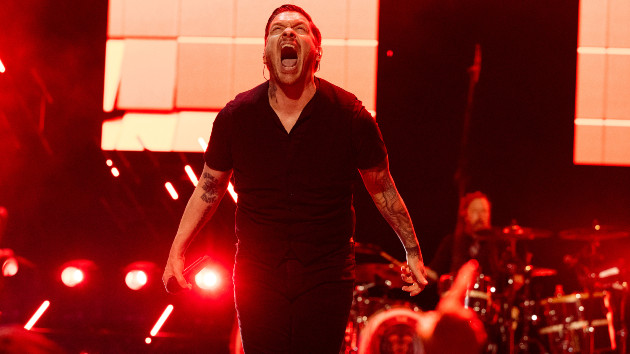
Shinedown‘s Brent Smith has often said that his band only has one boss: the collective Shinedown fan base. When it came time to prep the group’s next album, the boss had only one request: “Give us a banger.”
“Like, a real banger,” Smith tells ABC Audio. “Give us something that is going to give us confidence, give us something that is going to charge us up, that’s going to get us, like, ‘Hell yeah, man, let’s go!'”
Shinedown hoped to deliver on that request with “Planet Zero,” the forceful lead single and title track off their upcoming seventh studio album.
“Sonically, we worked really hard on that,” Smith says. “On the whole record, not just the first single, like, the whole record.
So far, so good: “Planet Zero” has hit number-one on Billboard‘s Mainstream Rock Airplay chart, once again giving Smith and company the record for the most leaders in the ranking’s 40-year history.
Smith describes the album Planet Zero as “massively emotional” and full of “peaks and valleys,” which requires an appropriately intense sound.
“It’s necessary,” Smith says of the record’s hard-hitting direction. “You can’t dance around it. You can’t go halfway, if that makes any sense. If you’re going to go to this level, then you’re going to need to go all the way.”
Planet Zero will be released April 22. The “Planet Zero” video premieres this Thursday, March 3.