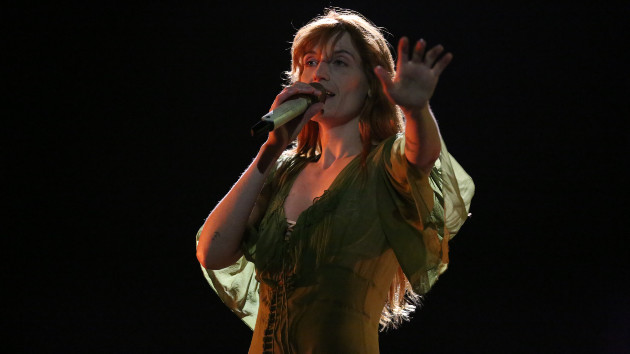
Florence + the Machine‘s next album officially has a title.
The fifth studio effort from Florence Welch and company is called Dance Fever. In an Instagram post announcing the news, Welch describes the record as a “fairytale in 14 songs.”
Dance Fever will presumably feature the recent Florence singles “King” and “Heaven Is Here,” both of which premiered in the last two weeks. A release date for the record has yet to be announced.
Whenever it does arrive, Dance Fever will follow Florence’s 2018 album High as Hope, which spawned the single “Hunger.”
Kelsea Ballerini duetted with living legend and fellow East Tennessee native Dolly Parton on the stage of this week’s ACM Awards, and the younger star shared her excitement over the duet with a series of photos and video clips that she could only describe as “The Dolly Dump.”
In one of those videos, Kelsea asks Dolly, “How long does it take to do your hair?” To which Dolly responds, “How would I know? I’m never there.”
It’s a classic Dolly-ism, and far from the first time Kelsea’s gotten to be on the receiving end of the country legend’s notorious wit. On ACM night, Kelsea told Cosmopolitan that early on in her career, she interviewed Dolly for a Q&A Series.
At the end of all the “thoughtful questions about how East Tennessee impacted her music and what it’s been like defying the odds and being such a successful woman in country music,” Kelsea had one more question, she remembers.
“My very last question was, ‘Dolly, how do you play guitar with your nails like that?’ She looked at me and deadpanned, ‘Good. I play it real good.’”
All these years later, sharing the stage with Dolly at the ACMs was “full circle,” Kelsea continued. The pair sang “Big Dreams and Faded Jeans,” off of the companion album to Dolly’s brand new book, Run Rose Run.
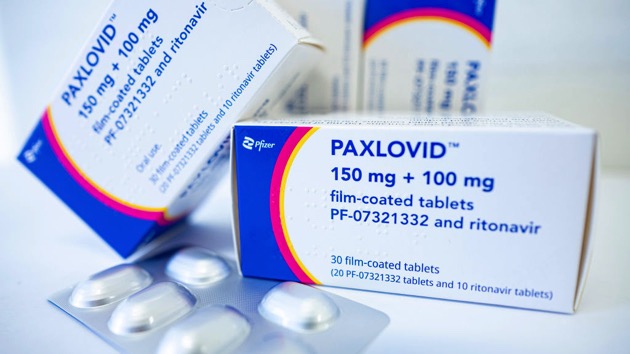
(NEW YORK) — Pfizer announced Wednesday it is launching a clinical trial to study the effectiveness of its COVID-19 antiviral pill in young children.
The treatment, Paxlovid, was authorized in December 2020 by the U.S. Food and Drug Administration for emergency use in patients aged 12 and older who have mild-to-moderate symptoms and are at increased risk of severe illness.
The new trial is planning to enroll 140 children between ages 6 and 17 who will be split into two groups.
One group will weigh between 44 and 88 pounds and the other groups will weigh more than 88 pounds.
The group that weighs more than 88 pounds will be given the dose currently authorized for teens and adults while the group that weighs less will be given a smaller dose.
“Since the beginning of the pandemic, more than 11 million children under the age of 18 in the United States alone have tested positive for COVID-19, representing nearly 18% of reported cases and leading to more than 100,000 hospital admissions,” Mikael Dolsten, chief scientific officer and president of worldwide research, development and medical at Pfizer, said in a company statement.
“There is a significant unmet need for outpatient treatments that can be taken by children and adolescents to help prevent progression to severe illness, including hospitalization or death,” Dolsten said.
Children under age 6 will not be included in this study, but Pfizer said research is ongoing to determine the best dose for the youngest of children
Pfizer’s pill was hailed as a game-changer because it was the first COVID treatment that did not require an infusion, making it more convenient to give to patients.
The pill is made up of two medications: ritonavir, commonly used to treat HIV and AIDS, and nirmatrelvir, an antiviral that Pfizer developed to boost the strength of the first drug.
Together, they prevent an enzyme the virus uses to make copies of itself inside human cells and spread throughout the body.
Paxlovid is currently given as three pills twice daily over the course of five days.
Clinical trial data showed the pill reduced the risk of hospitalization and death for COVID patients by 89% within three days of the onset of symptoms compared to a placebo.
According to clinicaltrials.gov, the pediatric trial has three locations including Mississippi, South Carolina and Texas.
ABC News’ Sony Salzman contributed to this report.
(BALTIMORE) — A Maryland man who earlier this year became the first person to receive a heart transplant from a pig has died, according to the University of Maryland Medicine, where the transplant was performed.
David Bennett, 57, died on March 8, according to University of Maryland Medicine. The hospital did not say what caused his death, noting only that his “condition began deteriorating several days ago.”
“After it became clear that he would not recover, he was given compassionate palliative care,” the hospital said in a statement. “He was able to communicate with his family during his final hours.”
Bennett, a father of two, suffered from terminal heart disease and was deemed ineligible for a conventional heart transplant because of his severe condition, University of Maryland Medicine said in January, at the time the transplant was announced.
On New Year’s Eve, University of Maryland Medicine doctors were granted emergency authorization by the Food and Drug Administration to try the pig heart transplantation with Bennett, who had been hospitalized and bedridden for several months.
Bennett said at the time that he saw the risky surgery as his last option.
“It was either die or do this transplant. I want to live. I know it’s a shot in the dark, but it’s my last choice,” he said the day before the surgery, according to University of Maryland Medicine. “I look forward to getting out of bed after I recover.”
Pig hearts are similar in size to human hearts and have an anatomy that is similar, but not identical.
Xenotransplantation, transplanting animal cells, tissues or organs into a human, carries the risk of triggering a dangerous immune response, which can cause a “potentially deadly outcome to the patient,” University of Maryland Medicine said at the time of the transplant.
Dr. Bartley P. Griffith, a professor in transplant surgery at the University of Maryland School of Medicine, and the doctor who surgically transplanted the pig heart into Bennett, said he is “devastated” by his death.
“He proved to be a brave and noble patient who fought all the way to the end. We extend our sincerest condolences to his family,” Griffith said in a statement. “Mr. Bennett became known by millions of people around the world for his courage and steadfast will to live.”
Bennett’s family said in a statement they are “profoundly grateful” to Griffith and the rest of the medical team that performed the transplant on Bennett, who had been a patient at University of Maryland Medicine since October 2021.
“Their exhaustive efforts and energy, paired with my dad’s insatiable will to live, created a hopeful environment during an uphill climb. Up until the end, my father wanted to continue fighting to preserve his life and spend more time with his beloved family, including his two sisters, his two children, and his five grandchildren, and his cherished dog Lucky,” the family said in a statement. “We were able to spend some precious weeks together while he recovered from the transplant surgery, weeks we would not have had without this miraculous effort.”
“We have felt the prayers of the world during this time and humbly ask that those prayers continue to be offered on behalf of the medical teams, technology companies, research labs, grant writers and innovative initiatives of the future,” the family continued. “We hope this story can be the beginning of hope and not the end. We also hope that what was learned from his surgery will benefit future patients and hopefully one day, end the organ shortage that costs so many lives each year.”
Experts said at the time of Bennett’s transplant, that though it is groundbreaking, it does not minimize the ongoing need for human organ donations.
Around 110,000 people in the United States are on the organ transplant waiting list, and more than 6,000 patients die each year before getting a transplant, according to the Department of Health and Human Services.
(NEW YORK) — Amid the Russian invasion of Ukraine and the resulting humanitarian crisis, U.S.-based businesses with ties to Ukraine have seen an influx of support from their local communities.
Restaurants like Veselka in New York City, which has served traditional Ukrainian fare since 1954 — from borscht to pierogis– are offering meals with a side of activism.
“We are deeply saddened by the events unfolding in Ukraine and incredibly appreciative of the outpouring of support for our Ukrainian community,” the restaurant wrote on its website. “100% of proceeds from every bowl of borscht in-store and take-out go to aiding efforts in Ukraine.”
The restaurant partnered with the Razom For Ukraine organization to handle all donations. Razom, which means “together” in Ukrainian, created a space for people to meet and collaborate on opportunities to both amplify Ukrainian voices in the U.S. and support Ukraine directly through individuals and organizations.
Two Boots Pizza also joined the effort creating two specialty pies — the Mr. Ze, made with kielbasa sausage from renowned butcher J. Baczynsky, and the Lesya, made with Veselka’s borscht and non-dairy cheese. Proceeds from the specialty slices will be donated to Razom for Ukraine.
“As the conflict in Ukraine unfolds, we have seen consumer searches for Ukrainian businesses soar on Yelp. In February 2022, searches increased 602% from January and were up over 2000% compared to February of 2021,” a spokesperson for Yelp told Good Morning America. “We’re seeing some first-party reviewers directly link their choice to visit a Ukrainian-owned establishment as an act of solidarity.”
Laika Cheesecakes and Espresso, a Ukrainian-owned bakery outside San Antonio, Texas, said it has raised over $100,000 in donations to assist Ukraine.
“We are donating ALL OF OUR SALES from the weekend not just profits,” the bakery said in a post on Instagram. “There were multiple reasons why we decided to do it this way. We thought it would be more transparent than counting profits since that can be interpreted differently. This was also so we could have people know they were helping as much as possible and that we were giving as much as possible.”
According to the bakery, the line was around the block over the weekend with about 3,000 people in attendance and a wait time of nearly three and a half hours.
“People still stayed to contribute-even when we had been completely sold out for hours,” the bakery said. “We sold over 4,500 pieces of cheesecake — jars and slices. Individual donations excluding the sales were over $25,000!”
Pushkin, a family-run, modern Ukrainian restaurant in San Francisco that serves traditional comfort foods like pelmeni and vareniki — little dumplings boiled and served with a big scoop of sour cream — hailed The Golden City’s residents for the influx of support.
The restaurant welcomed donations and held a bake sale over the weekend to raise money for humanitarian assistance in Ukraine. The team announced on Instagram that they collected $6,500 from the sold-out event and detailed how the money was directly donated to Nova Ukraine and Global Giving Ukraine’s Crisis Relief Fund.
Chefs, food bloggers, influencers and more are using their personal and professional social media platforms to organize additional support for Ukraine online.
Earlier this month, James Beard-nominated Gage & Tollner pastry chef Caroline Schiff joined forces with other New York City-based chefs to #cookforukraine with boxes of 12 sweet and savory pastries to support an array of nonprofits aiding Ukraine. Within days of launching their effort, she announced on Instagram that due to overwhelming interest and support, the pre-ordered boxes for pickup at the end of the month have already sold out, raising a total of $10,000.
Cookbook and culinary shop Now Serving in Los Angeles has also enlisted its community of bakers, pastry chefs, makers and restaurants to participate in a bake sale on March 12 to help Ukrainian children and families through UNICEF UK’s Ukraine Appeal.
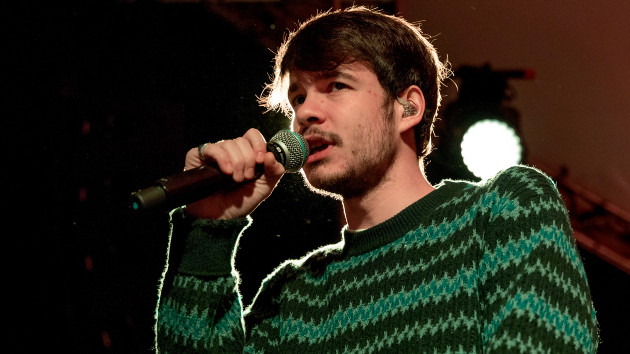
Rex Orange County has released a new song called “Open a Window,” featuring Tyler, the Creator.
The track follows Rex and Tyler’s previous collaborations on the hip hop artist’s Grammy-nominated 2017 album, Flower Boy.
“Open a Window” is available now via digital outlets. You’ll also find it on Rex’s upcoming album Who Cares?, along with the previously released single “Keep It Up.”
Who Cares? will be released this Friday, March 11. It’s the follow-up to 2019’s Pony, which spawned the single “10/10.”
KISS, Alice Cooper and Red Hot Chili Peppers are among the many hard-rock acts that will perform at the 2022 Louder than Life festival, taking place September 22-25 in Louisville, Kentucky.
KISS and the Chili Peppers will headline the fest on September 24 and 25, respectively, while Cooper also will be hitting the stage on the 24th. Nine Inch Nails and Slipknot will serve as the headliners on September 22 and 23.
The festival’s bill also includes Alice in Chains, AIC guitarist/singer Jerry Cantrell solo, Rob Zombie, Incubus, Wolfgang Van Halen‘s band Mammoth WVH, Evanescence, Ministry, Tenacious D, Halestorm, Shinedown, Chevelle, Papa Roach, Sevendust, Helmet, Bad Religion, and Alice Cooper touring guitarist Nita Strauss, among many more.
Ryan Coogler, director of Marvel’s Black Panther, was mistaken for a bank robber at an Atlanta Bank of America, as reported by ABC affiliate WSB.
According to the police report, the incident took place on Jan. 7 when a Bank of America employee called the police after Coogler handed a teller a withdrawal slip for what police say was an excess of $10,000 in cash, with a note written on the back, seeking discretion with the transaction.
The teller reportedly received a notification from Coogler’s account and subsequently told her manager that he was attempting to rob the bank, after which police were called.
Officers took Coogler outside and handcuffed him as they investigated. Two people that Coogler was with at the bank were also detained but never handcuffed, according to the report.
Officers determined that the incident was a mistake by Bank of America, which apologized to Coogler and issued a statement saying, “We deeply regret that this incident occurred. It never should have happened and we have apologized to Mr. Coogler.”
“This situation should never have happened,” Coogler declared in his own statement. “However, Bank of America worked with me and addressed it to my satisfaction and we have moved on.”
Coogler has been in Atlanta directing the Black Panther sequel, Black Panther: Wakanda Forever, which is set for release in November of this year.
My Chemical Romance‘s reunion tour just got a bit bigger.
The “Helena” rockers have added 14 more North American shows to the much-anticipated outing, which marks their first tour since 2012. The dates include stops in 10 new cities, as well as additional performances in New York City, Toronto, Boston and Los Angeles.
Among the new cities is an August 20 show in Oklahoma City, which will now mark the opening night of the North American leg.
Tickets to the added shows go on sale this Friday, March 11, at noon local time. For the full list of dates and all ticket info, visit MyChemicalRomance.com.
Along with the new dates, My Chem has announced the openers for the tour, which include Badflower, Meg Myers, Taking Back Sunday and Turnstile, among many others.
MCR first announced their reunion on Halloween 2019, six years after they initially broke up in 2013. Following a triumphant comeback show in Los Angeles at the end 2019, they announced a full tour for 2020, which, of course, was postponed due to the COVID-19 pandemic. After several delays, the international run is finally set to launch this May in the U.K.
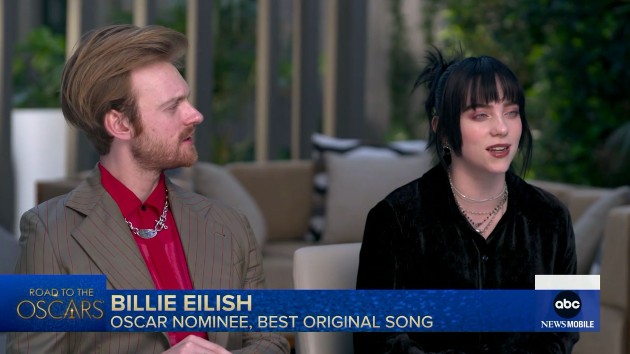
Billie Eilish and her brother and collaborator FINNEAS are nominated for their first Oscar for “No Time to Die,” the theme song from the James Bond movie of the same name. At the Oscar nominees luncheon on Monday, they told ABC’s Good Morning America they thought it’d never happen.
“We were certain we’d never be nominated for an Oscar,” FINNEAS told GMA. “Our dreams were so small.”
Billie added, “It’s true, it’s really true.”
The nomination is special to the siblings, because, as they note, they always tuned in to the Academy Awards as kids.
“The Oscars was like a family event at our house,” Billie said. “We would have friends over every year, and you get dressed and eat food. And it’s so weird to think that that’s what this is.”
Of course, it won’t be the first time the two have attended the Oscars: In 2020, they sang the Beatles’ “Yesterday” during the “In Memoriam” segment of the show. Billie noted that it was quite the memorable experience.
“When I did the ‘In Memoriam’ piece, I was looking out into, like, Leonardo DiCaprio. I mean, that’s all I have to say,” she said. “Just seeing faces that I have seen my entire life looking at me — yeah, it was very scary and cool and unbelievable.”
In what may be yet another sign that Billie and FINNEAS and “No Time to Die” are the favorites to win the gold, on Tuesday in Los Angeles, they picked up the award for Outstanding Original Song for a Dramatic or Documentary Visual Media Production at the Society of Composers and Lyricists Awards. It’s also won a Grammy and a Golden Globe.