
Decadeslong gap in gun violence research funding has lasting impact

Decadeslong gap in gun violence research funding has lasting impact
ABC News

(NEW YORK) — This report is a part of “Rethinking Gun Violence,” an ABC News series examining the level of gun violence in the U.S. — and what can be done about it.

Gun violence is an endemic problem in the United States — once again getting worse in some areas after many years of declines and persistent at high levels in others.

Despite being one of the leading causes of death, one thing that’s difficult to know is the scope of the problem, fueled in part by a more than a two-decade-long prohibition — recently changed — on the Centers for Disease Control and Prevention using federal funds to “advocate or promote gun control.”

It wasn’t always this way — the CDC in 1983 adopted a public health approach to gun violence.

“At that point in time in 1983, there were two types of frequent injury deaths. One was motor vehicle crashes, and the other was gun violence,” Dr. Mark Rosenberg, CEO of the Task Force for Global Health and former member of CDC’s National Center for Injury Prevention and Control, told ABC News.

During the 1990s, public and private programs conducted gun-related research — among them was the CDC’s Injury Prevention Program, where Rosenberg worked, and the Violence Prevention Research Program at the University of California, Davis.

But in 1996, Congress passed an amendment to the Omnibus Consolidated Appropriations Bill. The bill modification, commonly known as the Dickey Amendment, prohibited the use of federal funds to “advocate or promote gun control,” leading to the elimination of all CDC funding to conduct firearm-related research — having a lasting impact still limiting what we know today about gun violence.

Even though the funding spigot has recently been turned back on, researchers are still feeling the effects of the lack of data to study gun violence. Researchers say the gun violence problem is urgent and requires an outsized solution detached from politics.

Watch ABC News Live on Mondays at 3 p.m. to hear more about gun violence from experts during roundtable discussions. And check back next week, when we look into what some gun owners say could solve the gun violence issue.

“If we can understand the causes, we can change the effects and we can change the effects for the better, so science is a way to understand the causes and the effects and the way to link them,” Rosenberg told ABC News.

Here’s what to know about the data issue around gun violence and what advocates say can be done:

Impact of the Dickey Amendment

In the early 1990s, the CDC had a $2.6 million budget dedicated to gun violence research both for internal research and for external studies.

“We started looking at, what’s the problem,” Rosenberg told ABC News. The agency studied the number of people dying from gun violence, the weapons used and the causes behind it.

Dr. Garen Wintemute, head of the Violence Prevention Research Program at the University of California, Davis, says the program received two grants at the time to conduct much-needed research on firearms.

“All of these grants made use of unique data that are collected in California,” said Wintemute, who explained to ABC News that the organization was linking gun purchases with criminal records as part of its prevention research.

But everything changed when the Dickey Amendment was introduced by former Rep. Jay Dickey, R-Ark.

Four years before the Dickey Amendment was enacted, the CDC had published its first study on gun violence. The report looked at the correlation between safety and guns, finding that having a weapon in a household didn’t necessarily result in safer outcomes, Rosenberg said.

“These results weren’t pleasing to the NRA. And so they stepped up their attack on our research program,” Rosenberg told ABC News.

ABC News reached out to the National Rifle Association requesting comment on the allegations made by Dr. Rosenberg but has not heard back.

The Dickey Amendment reallocated the $2.6 million away from gun research to other health research on subjects like traumatic brain injury, according to Wintemute.

Researchers fought the effects of the amendment, which prohibited advocacy for gun control — but which had an impact beyond advocacy because experts said they viewed vague language in the amendment as a “threat.”

“This Dickey Amendment had a real chilling effect,” Rosenberg told ABC News. “It was enough to discourage individual researchers and, at the same time, Congress took away the money we were using for the research we were doing.”

The CDC sent ABC News a statement saying it was “subject to appropriations language that states that none of the funds made available to CDC may be used to ‘advocate or promote gun control.”

“The lack of dedicated and sustained research funding for firearm injury… limited our ability to conduct research to gain understanding of how best to prevent firearm-related injuries and deaths relative to other public health problems,” it said.

Shortage of funds

Wintemute’s program suffered from a shortage of federal funds after the amendment passed. Although it was able to continue doing some research through private funding, that work was limited. He originally had around 12 people on his team but says he was left with only four, including himself, limiting the program’s reach.

While The Department of Justice still allocated some funds to firearm research under the National Institute of Justice (the DOJ’s research arm), Wintemute said it was insufficient.

For example, in 2004, a total of $461,759 was granted by the agency to three different institutes for gun-related research — a far cry from the millions normally required for extensive study.

“We had to revert to simpler, more descriptive studies that made use of available data. There wasn’t money to go out and collect data writ large,” Wintemute said.

Other institutions conducting research were also affected.

“Because of the Dickey Amendment, we had dropped firearm injuries from our portfolio,” said Dr. Frederick Rivara, an epidemiologist and professor at the University of Washington, who was conducting research on injury prevention, including firearm-related injuries.

“It really discouraged any serious firearm research,” Rivara said.

This gap in gun research led to a shortage of people familiar with the subject and a lack of data still felt by today’s experts.

“It’ll be another five to 10 years before we have anything like an adequate number of experienced researchers on the case,” Wintemute said.

Research resumes

The need for research and data collection was finally re-addressed by the federal government after the Parkland mass shooting in 2018 that left 17 dead.

After the mass shooting, an omnibus bill was signed by President Donald Trump clarifying that restricting the use of federal funds to advocate or promote gun control doesn’t ban research.

In 2019, Congress began to again allocate funds for research and data collection on gun violence and injuries.

Although the Dickey Amendment remains in place, Dickey, its author who died in 2017, saw the consequences of it on gun-related research and changed his mind, according to Rosenberg — who later became Dickey’s friend.

“Jay Dickey eventually saw the disastrous consequences of gun violence…with mass shootings with rising numbers of gun homicides and gun suicides,” Rosenberg told ABC News. “He switched his position.”

In an op-ed co-authored with Rosenberg in 2012, Dickey says he “served as the NRA’s point person in Congress” to cut the gun violence research budget.

“We were on opposite sides of the heated battle 16 years ago, but we are in strong agreement now that scientific research should be conducted into preventing firearm injuries and that ways to prevent firearm deaths can be found without encroaching on the rights of legitimate gun owners,” reads a section of the piece published in The Washington Post.

More funds needed

Federal funds are now available to study gun violence, but organizations working on policy recommendations are still struggling to conduct it.

“There is more money for research now. But what is missing is datasets,” said Josh Horwitz, executive director of the Educational Fund to Stop Gun Violence, referring to datasets at the federal level that could help in the research on firearms. “We destroy background check records at the federal level in 24 hours… how do you suppose to understand who’s purchasing firearms and what the implications are, if you can’t examine that data,” he added.

The nonprofit, affiliated with the Coalition to Stop Gun Violence located in Washington D.C., focuses on looking for evidence-based policy solutions and programs that can reduce gun-related violence.

“The data deficit has hurt us because we don’t understand all the solutions,” Horwitz told ABC News.

Despite the lack of research, experts say there is still a path forward for finding solutions to the high levels of gun violence plaguing the country.

“This is a solvable problem,” Rosenberg said. “We can find out what are the patterns, what’s the problem, we can find out the causes, we can find out what works to both reduce gun violence and protect gun rights.”

The key to finding possible solutions is focusing on science as opposed to politics, researchers say.

“Science is not advocacy, science is understanding things as they are,” Wintemute said.

While the landscape for gun-related research has improved, there is still a long way to go, Wintemute said.

For fiscal year 2022, Congress approved at least $25 million to fund gun violence research, according to the CDC. And although that represents an increase of $12.5 million compared with the last fiscal year, more resources are needed, according to Wintemude.

“Congress has not followed through,” he said.

He believes the budget for gun-related research has to match the extent of the problem and also help make up for the Dickey Amendment’s toll, including the gaps in data and expertise it created.

“To help get history out of the way and let us attack the problem with a program of research that’s adequate to the size of the problem itself we need to do away with the Dickey Amendment, even as amended,” he added.

Copyright © 2021, ABC Audio. All rights reserved.
Steve Perry says his Christmas album ‘The Season’ is his way of “giving back”

Steve Perry says his Christmas album ‘The Season’ is his way of “giving back”
Jeff Wack/Fantasy Recordings

Steve Perry‘s first Christmas album, The Season, arrives today, and finds the ex-Journey frontman putting his own stamp on holiday classics like “Winter Wonderland,” “Silver Bells” and “The Christmas Song”…gently.

“I’ve always loved these songs since I was a child, and I was really…careful to make sure that the original emotional reverence that meant so much to me when I was young stays intact,” Perry tells ABC Audio. “And so I wanted to do them a little bit different. I wanted to make them mine, but I didn’t want to walk too far away from the melodic structure…that I loved about them.”

Perry says The Season is his way of bringing holiday cheer to everyone who’s struggled through the pandemic.

“The last year and eight months or two years have been so difficult for so many, including myself,” Perry admits. “And given me such a different respect for so many things.”

He continues, “Honestly, I’m not in the music business to make money. At this point, these records I’ve been making, solo-wise, are almost like just giving back to what I’ve been given so much [of].”

To that end, Steve thinks that one particular song really sums up with the project is all about.

“For this particular period, this Christmas…it has to be ‘I’ll Be Home for Christmas,'” Perry notes. “Because it’s something everybody in their heart wishes they could have done [last year]. And perhaps now, what we’ve all been through has refreshed our reverence for how important it is to go home for Christmas.”

And does Perry see more holiday music in his future?

He laughs, “If I can pull it off — if Uncle Steve is still here — I might do that, yes!”

Here’s The Season‘s full track list:

“The Christmas Song”
“I’ll Be Home for Christmas”
“Auld Lang Syne”
“Winter Wonderland”
“What Are You Doing New Year’s Eve”
“Santa Claus Is Coming to Town”
“Silver Bells”
“Have Yourself a Merry Little Christmas”

Copyright © 2021, ABC Audio. All rights reserved.

Jay Ellis says real-life experiences helped set the tone for episode three of ‘Insecure’

Jay Ellis says real-life experiences helped set the tone for episode three of ‘Insecure’
Photograph by Merie W. Wallace/HBO

Jay Ellis says he stepped into the fifth and final season of Insecure with some real life connections to his character Lawrence. 

Ellis tells ABC Audio that when he started to film the new season, he and co-star Christina Elmore, who plays his ex and soon-to-be baby mother Condola, both found themselves identifying with their characters because they were both new parents in real life.

“At the time, Christina and I were the only parents on set,” he says, before explaining some of the things that new parents say to their partners. “So I think there were a lot of things that we were like, ‘Oooh, if you ever! Oooh, you bet not never — Ooh!’ … Especially new parents [who] don’t even realize they’re doing it.”

As first-time parents, Ellis says he and Elmore could easily empathize with their characters and the challenges they faced in co-parenting.

“We were realizing all these things that come up when you’re new parents that could only be 20 times more difficult if you and someone you’re co-parenting with aren’t on the same page,” he shares. “So… a lot of that stuff… came out as we got into shooting episode [three]. And just the feeling of, ‘What does it feel like for a new mother to be away from her kid, or for a new father, to be away from his kid?'”

Ellis believes that those real life connections are what make Issa Rae‘s HBO comedy series so relatable.

“Season after season, Issa and Prentice Penny would bring us into the room and they would tell us what the arc was for the season and we would talk about [our] stories — [and] how [to] infuse [them with]… what our characters were going through.”

Insecure airs Sunday on HBO at 10 p.m. ET.

Copyright © 2021, ABC Audio. All rights reserved.

‘Happy Face Killer’s’ daughter believes he would kill again if released

‘Happy Face Killer’s’ daughter believes he would kill again if released
ABC News

(NEW YORK) — Notorious serial killer Keith Jesperson, better known by the “Happy Face Killer” nickname he was given in the ’90s, has spent decades behind bars but his daughter believes he would kill again if released from prison today.

“I sometimes now wonder, if he was freed now, if he was released, would he kill again? And I believe he would,” Melissa Moore told “20/20” in a new interview. “I don’t believe my dad is sorry at all … what he is sorry about, though, is that he got caught.”

Jesperson, now 66, is serving five non-consecutive life sentences in Oregon’s state penitentiary.

A Canadian-born long-haul truck driver and divorced father of three, Jesperson claimed to have killed eight women in five states: Washington, California, Florida, Wyoming and Oregon.

Watch the full story on “20/20” TONIGHT at 9 p.m. ET on ABC

His killing spree spanned from 1990 until 1995, when he turned himself into authorities. At the time, he was being investigated for the murder of his last known victim, 41-year-old Julie Winningham, who some described as his girlfriend.

In a 2010 interview with ABC News, Jesperson equated committing murder to “shoplifting.” When ABC News’ Juju Chang challenged him on that framing, Jesperson doubled down, saying his killings were “everything like shoplifting.”

“It became a nonchalant type thing, because I got away with it,” he continued. “It is everything like shoplifting. You’re breaking the law but you’re getting away with it. And so, there’s a thrill of getting away with it.”

He was dubbed the “Happy Face Killer” for the smiley face drawings he included on a letter he sent to a Portland, Oregon, newspaper, in which he bragged about his crimes.

“It’s just a moment in time when situations present themselves, and you become what you are,” Jesperson told ABC News in a previous interview. “I’m sorry it happened, [I] wish it never happened … it’s done, it’s over with.”

After Jesperson came forward in March 1995, he pleaded guilty to first-degree murder charges for his first known victim, 23-year-old Taunja Bennett, and Winningham. Both women’s bodies were found on opposite sides of the Columbia River from each other.

“What really stood out to me about my father is that once he killed Taunja Bennett, it’s like he got a taste for blood and power and control that he’s probably never had in his life and that excited him. So much so that he seemed to start killing very rapidly again after Taunja,” Moore said.

Jesperson was linked to murdering six other women, some of which remain unknown to this day: an unidentified woman who Jesperson said was named “Claudia” in August 1992 near Blythe, California; Cynthia Lynn Rose in September 1992 in Turlock, California; Lori Ann Pentland in November 1992 in Salem, Oregon; an unidentified woman who Jesperson said was named “Carla” in June 1993 in Santa Nella, California; an unidentified woman who Jesperson said was named “Suzanne” in September 1994 in Crestview, Florida; and Angela Subrize in January 1995 in Laramie County, Wyoming.

Moore believes her father has no remorse. Even now, she said, if her father could go back in time to change anything, it would be to have never turned himself in so he could keep killing.

“I believe he would be killing more women” if he were a free man, she said.

Growing up, Moore said the father she knew as a young child wasn’t violent. He was a man who carried her on his shoulders and made her feel “on top of the world,” she said, someone who made up bedtime stories about a princess and tucked her in at night.

One of the last things he bought her, Moore said, was a karaoke and music recording system for her 10th birthday. Shortly after that, her parents got divorced and that’s when she said her father changed.

Dr. Robert Schug, a forensic psychologist, has spoken to Jesperson multiple times. He said that Jesperson’s violent outbursts may have stemmed from his divorce.

“Keith mentions this period of his marriage when things really went south, so all of this really starts creating a very turbulent emotional period for the entire family,” Schug said. “But, particularly for Keith.”

Moore said she thought her father unleashed his anger over the divorce into his killing of Bennett.

“Then after that release and that excitement and the thought that he got away with it, plus two other people getting the blame, he was free to kill again, and he did very quickly,” she said.

A jury first convicted a Portland, Oregon, woman named Laverne Pavlinac for Bennett’s murder in 1990, largely based on her detailed confession to police in which she falsely claimed she helped her boyfriend John Sosnovske rape and kill the young woman.

Sosnovske later pleaded no contest to the murder charge.

In reality, neither had anything to do with the crime. Jesperson told investigators one of the reasons he wanted to come forward was he wanted credit for Bennett’s murder and to get Pavlinac and Sosnovske out of prison. The two were released in 1995.

It had been more than 15 years since Moore spoke to her father until she said he called her this past Father’s Day. With all the time that had passed, she decided to accept the call.

“It was interesting to hear his voice again, and just that old, familiar voice. It’s aged … He sounds more like my grandfather,” Moore said. “As we signed off, he said, ‘Goodbye, my daughter,’ and it definitely asserted that he wanted to control that I would have a relationship with him.”

Now a parent herself, Moore said her children are curious about their grandfather. They had visited him in prison when they were young, but they have no memory of the meeting. In letters to ABC News, Jesperson expressed how much he would like to reunite with his family.

“For years, I have reached out to my children to be a part of their lives,” Jesperson wrote in one of these letters. “They’re in my thoughts daily and I love them and am proud of them.”

Still, Moore said she doesn’t want her children to have a relationship with her father.

“I don’t want my dad to get into the psyche of my children and hurt them in any way because he is manipulative. He is a psychopath. He has the potential, still, to hurt, even if not with physical violence or murder, but with his words,” she said.

Moore’s 21-year-old daughter Aspen Moore, who said she learned the truth about her grandfather when she was about 10 years old, agrees that she doesn’t want to meet him.

“I think that he has excuses for his actions,” she said. “I don’t feel that his actions can be just brushed off.”

Melissa Moore maintains she doesn’t want to have a relationship with her father and said there was nothing he could offer her to bring her “any kind of closure.”

“There isn’t going to be closure,” she said. “But I’m okay with that. I’m content with my life, and I don’t need him to say sorry. I don’t need him to ask for forgiveness, and I frankly wouldn’t believe in his request for forgiveness.”

Copyright © 2021, ABC Audio. All rights reserved.

Lorde releases deluxe ‘Solar Power’ album featuring two new songs

Lorde releases deluxe ‘Solar Power’ album featuring two new songs
ABC/Paula Lobo

Lorde has released a deluxe version of her new album Solar Power.

The expanded set includes two previously unreleased songs from the Solar Power sessions: “Helen of Troy” and “Hold No Grudge.”

“These songs were fun explorations on the album journey,” Lorde shares. “They didn’t quite fit into the track list for whatever reason but they’re both big tunes.”

The deluxe Solar Power album is available now via digital outlets.

Lorde first released Solar Power, her third studio album, this past August. She’ll launch a world tour in support of the record in 2022.

(Videos contain uncensored profanity.) 

Copyright © 2021, ABC Audio. All rights reserved.

Kelly Clarkson hosting star-studded Christmas TV special on December 1

Kelly Clarkson hosting star-studded Christmas TV special on December 1
Weiss Eubanks/NBCUniversal

Kelly Clarkson‘s got a new Christmas album called …When Christmas Comes Around, so of course, she’s going to promote it with a Christmas TV special.

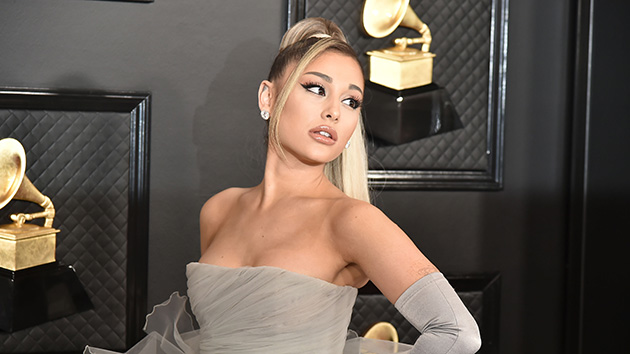
Kelly Clarkson Presents: When Christmas Comes Around will premiere December 1 at 10 p.m. ET/PT on NBC. It’ll feature guest stars like Ariana Grande and country star Brett Eldredge — both of whom are on her album — plus Jay Leno, Melissa McCarthy, Amy Poehler, Leslie Odom Jr. and even Santa.

Kelly will also present some “everyday heroes” with “life-changing surprises.”  And as part of the special, Wayfair, the company that Kelly partnered with for her home collection, is donating to a deserving organization that helps support communities in need.

In a statement, Kelly says, “People celebrate the holidays in different ways and that is the inspiration behind the original songs and the curated classics that are featured in this special. No matter what your heart is feeling this holiday season, I hope that this hour brings you joy and happiness exactly where you are.”

Kelly’s last holiday special was 2013’s Kelly Clarkson’s Cautionary Christmas Music Tale, also on NBC.

Copyright © 2021, ABC Audio. All rights reserved.

Slipknot takes on the internet echo chamber with “The Chapeltown Rag”

Slipknot takes on the internet echo chamber with “The Chapeltown Rag”
Roadrunner Records

It’s been two years since Slipknot delighted fans with new music and, on Friday, the dry spell finally came to an end with their new single, “The Chapeltown Rag.” 

The punishing new single blends frontman Corey Taylor‘s signature growls and wails into a frenetic mash of guitar riffs and punishing drums. 

The masked metallers paint the single around the chaos of misinformation, calling out those who cannot handle the truth and instead turn to a “Scandalous know it all – feedback chamber / Nobody wants the proof – they want a number.”

“All the ligatures are getting tight, like a style / Murder another mouth before the trial / Scalpel and then you scalp em to f***** death / Kills for the other vampires and surrogates / It’s a ploy for attention and evidence / All your f****** monsters are flaws in your common sense,” the band criticizes in the vitriolic lyrics, who close on a warning that “When everything is God online… nothing is.”

The frenetic single is named after the seemingly sleepy West Yorkshire suburb of Chapeltown, which was actually the playground of serial killer Peter Sutcliffe, dubbed the “Yorkshire Ripper,” in the 1970s.  Sutcliffe was the subject of a Netflix documentary that Taylor saw and was inspired to create something around it.

“The Chapeltown Rag” is the first new Slipknot song to follow the band’s 2019 album, We Are Not Your Kind.  They will also perform the song live tonight at their headlining set at Knotfest Los Angeles.

(Video contains uncensored profanity.)

Copyright © 2021, ABC Audio. All rights reserved.

Green Day drops infectious new single “Holy Toledo!”

Green Day drops infectious new single “Holy Toledo!”
Courtesy of Green Day

If you’ve been searching for a new, upbeat track to soundtrack your weekend, look no further than Green Day‘s infectious new single, “Holy Toledo!,” which they released Friday… just don’t listen too closely to the lyrics.

The rockers once again invoke their clever happy song/dark lyrics format for their latest offering.  “Holy Toledo!” rides a whimsical yet nostalgic ska-like beat and, while the music presents itself as the perfect tune to sway your shoulders to, the lyrics paint a completely different picture.

“We’re hell raisers, death wish cravers/ We’re running with razor blades/ Party favors, sex with strangers/ We don’t care what the neighbors say,” the Grammy winners celebrate in the chorus, as they sing about “crawling out of the dead man’s bed” all to catch the high of getting “sick again.”

The single was created for the rom-com Mark, Mary & Some Other People, which follows a newlywed couple exploring the world of ethical non-monogamy in an attempt to spice up their love life.  The movie is in theaters and streaming on-demand now.

“Holy Toledo!” follows Green Day’s previously released singles “Pollyanna” and “Here Comes the Shock.”  The punk trio also released a cover of the KISS classic “Rock and Roll All Nite,” which was recorded during their Hella Mega tour with Fall Out Boy and Weezer.


Copyright © 2021, ABC Audio. All rights reserved.

Anna Faris fans drag Chris Pratt over praising his “healthy” daughter

Anna Faris fans drag Chris Pratt over praising his “healthy” daughter
Rich Polk/Getty Images for Disney

Chris Pratt found himself in hot water yesterday by not only angering fans of his ex-wife Anna Faris, but also took some heat from his own followers for calling his baby daughter “healthy.”

The Jurassic World star recently took to Instagram to mark wife Katherine Schwarzenegger‘s birthday ahead of schedule, but some took issue with one of his compliments when speaking about their daughter, one-year-old Lyla.

Some believe Pratt’s remark, “She’s given me an amazing life, a gorgeous healthy daughter,” is a veiled dig at his ex, whom he divorced in 2018.

He and Faris share a nine-year-old son, Jack, who was born premature and suffers from several medical issues.

Some of his fans admitted the remark made them “wince,” but felt that was not the actor’s intention. Meanwhile, others said the word seems deliberate considering his son’s traumatic birth.

Faris previously opened up about Jack’s medical issues and his premature birth in her Anna Faris Is Unqualified podcast, and said in 2018, “Jack had a few surgeries — he had a few hernia surgeries, he’s had a few eye surgeries and he had a little heart issue as well,” according to E! News.

The Scary Movie star revealed Jack was born “two months early” and weighed three pounds and 12 ounces.  She said the experience inspired her and Pratt to become supporters of the Global Alliance to Prevent Prematurity and Stillbirth (GAPPS).

Faris nor Pratt have responded to the controversy and the Guardians of the Galaxy star has yet to change the language in his controversial post.

Copyright © 2021, ABC Audio. All rights reserved.

Silk Sonic delivers smooth new single, “Smokin Out the Window”

Silk Sonic delivers smooth new single, “Smokin Out the Window”
Harper Smith

Silk Sonic — the duo of Bruno Mars and Anderson .Paak — are back with the third single from their upcoming debut album.

As with their previous singles “Leave the Door Open” and “Skate,” “Smokin Out the Window” nods to the classic sounds of ’70s soul, and a retro video features Bruno, Anderson and their backup singers performing choreography on the stage set of a non-existent TV show.

The comical song about heartbreak finds the guys singing about a woman who has them “paying her rent, paying for trips, diamonds on her neck, diamonds on her wrist,” only to find that she’s cheating. 

They sing, “I thought that girl belonged to only me/But I was wrong/’Cause she belong to everybody.”

Silk Sonic’s debut album An Evening with Silk Sonic is out November 12.

(Video contains uncensored profanity.)


Copyright © 2021, ABC Audio. All rights reserved.