Lil Baby is maintaining his top spot on the music charts.
Thanks to his latest album, It’s Only Me,the rapper landed at number one on the Billboard 200 chart for the third time.
The 23-track collection debuted at the top of the charts after earning 216,0000 equivalent album units in the U.S. the first week, according to Billboard. It also nabbed the title for third-largest streaming week for an album in 2022.
Previous number-one projects for the Atlanta rapper include The Voice of the Heroes, a 2021 collaboration album with LilDurk,and My Turn in 2020. With features from Gunna, 42Dugg, MoneybaggYo and others, My Turn holds multiple chart-topping singles, including the Grammy-nominated track “The Bigger Picture,” which was released in the wake GeorgeFloyd‘s murder.
It’s Only Me was released early September and includes features from YoungThug, Jeremih, Future and more.
(ST. LOUIS) — Two students were injured in a shooting at a St. Louis, Missouri, high school Monday morning, according to the school district.
The suspect “was quickly stopped by police” inside the Central Visual and Performing Arts school following the shooting, according to the St. Louis Public School District.
Students are being evacuated from the building, the district said.
The injured students’ conditions were not immediately clear.
Paramore opened their headlining set at Las Vegas’ When We Were Young festival over the weekend with a live debut of a long-requested rarity.
To begin the show, Hayley Williams and company delivered a performance of the song “All I Wanted” for the very first time. The closing track off of 2009’s Brand New Eyes, “All I Wanted” has become one of Paramore’s most beloved songs despite never before making into the band’s set list. Even Billie Eilish called it her favorite Paramore song.
Excitement over the song’s long-awaited live debut caused “All I Wanted” to trend on Twitter Sunday night and into Monday morning.
You can watch fan-shot footage of the performance posted to YouTube by user Petals for Armor.
Paramore’s set was one of the many anticipated sets of When We Were Young, which got off to a rough start when its first day, Saturday, was canceled due to dangerously high winds. The second day, Sunday, took place as scheduled, featuring performances from My Chemical Romance, Bring Me the Horizon, Jimmy Eat World and Avril Lavigne.
When We Were Young will return for a third day on October 29.
To reintroduce the brand, the guitar legend has teamed up with veteran shoe executives, Gary Rich and Rick Gelber — who both previously worked with Santana on his footwear line — for a new partnership under the company name Jubilation LLC.
The line will offer feature a lifestyle collection including casual shoes, dress shoes, boots and fashion sneakers that feature leather from Brazil and Italy. The footwear will sell for a retail price ranging between $100 and $250.
Sales of the footwear will benefit The Milagro Foundation, which was established by Santana and his family to provide financial assistance to various community-based charities concerned with the well-being of underprivileged children.
The line will be available to purchase exclusively at CarlosShoes.com.
“It is an honor to partner with Gary and Rick to bring radiance, elegance, and style back to the forefront of the brand, while at the same time making a difference in the lives of children through the Milagro Foundation,” says Carlos. “We know that these shoes will inspire and compliment the confidence and light within every woman wearing them.”
Adds Rich, “From our first meeting back in 2000, we connected with Carlos and created instant synergy and great energy. It’s fitting today that the three of us join forces again to form this partnership and relaunch the brand back into the marketplace.”
Santana also notes, “It is a blessing to be a blessing. Women who wear our shoes are self-aware, self-confident, and know how to embrace their individuality and have fun. We invite you all to dance through life with us.”
(MINNEAPOLIS) — One of two former police officers scheduled to go on trial Monday on charges stemming from the death of George Floyd pleaded guilty as part of an agreement with prosecutors, a court official told ABC News.
J. Alexander Kueng, 29, pleaded guilty Monday morning to one count of aiding and abetting in manslaughter after prosecutors and Kueng’s defense attorney agreed to recommend a sentence of 42 months in prison, a spokesperson for the Hennepin County Courts said.
The plea was announced just as a joint state trial for Kueng and Tou Thao, 34, was to begin with jury selection. The trial comes after the two former Minneapolis police officers reported to separate prisons this month to begin their federal sentences.
Both men had pleaded not guilty to charges of aiding and abetting in second-degree unintentional murder and aiding and abetting in manslaughter stemming from the Memorial Day 2020 death of Floyd, which ignited massive protests across the nation and world.
The trial in Hennepin County District Court in Minneapolis begins Monday with jury selection, which is scheduled to take three weeks, a spokesperson for the court told ABC News.
Opening statements in the trial are scheduled to get underway on Nov. 7.
The state trial was initially scheduled for June 2022, but Judge Peter Cahill delayed it over concerns it would be difficult to seat an impartial jury given the pretrial publicity. Earlier his year, Thao, Kueng and a third defendant, former Minneapolis police officer Thomas Lane, were convicted on federal civil rights charges stemming from Floyd’s death and Lane later pleaded guilty to state charges.
At the time of his decision, Cahill said postponing the trial should “diminish the impact of this publicity on the defendants’ right and ability to receive a fair trial from an impartial and unbiased jury.”
Lane, 39, pleaded guilty in May to state charges of aiding and abetting second-degree manslaughter. In exchange for the plea, state prosecutors agreed to dismiss the top charge against him of aiding and abetting second-degree unintentional murder. Lane was sentenced in September to three years in prison, which he is serving concurrently with his federal sentence of 2 1/2 years.
Kueng, Thao and Lane were convicted in February by a federal jury on charges of violating George Floyd’s civil rights by failing to intervene or provide medical aid as their senior officer, Derek Chauvin, kneeled on the back of Floyd’s neck, while he was handcuffed, for more than nine minutes.
Kueng, a rookie cop at the time of Floyd’s death, was sentenced to three years in federal prison, followed by two years of supervised release. Thao, who had been a nine-year veteran of the Minneapolis Police Department at the time of Floyd’s death, was sentenced to 3 1/2 years in prison, also followed by two years of supervised release.
Floyd suffered critical injuries when he was placed in handcuffs and in a prone position on the pavement after being accused of attempting to use a fake $20 bill at a convenience store to buy cigarettes. Videos from security, police body cameras and civilian cell phone cameras showed Floyd begging for his life and complaining he could not breathe as Chauvin held his knee on the back of his neck, rendering him unconscious and without a pulse, according to prosecutors. Floyd was taken to a hospital and pronounced dead.
Chauvin was convicted in state court last year of second-degree unintentional murder, third-degree murder and second-degree manslaughter. He was sentenced to more than 22 years in prison.
While Chauvin’s state trial was livestreamed gavel-to-gavel due to concerns over the COVID-19 pandemic limiting the public’s access to the courtroom, cameras are not being allowed at the trial for Kueng and Thao. Cahill ruled in April that conditions “are materially different from those the Court confronted from November 2020 through April 2021 with the Chauvin trial.”
The 46-year-old Chauvin also pleaded guilty in December to federal charges of violating Floyd’s civil rights and was sentenced in July to 21 years in federal prison.
During their federal trial, Lane, Kueng and Thao each took the witness stand and attempted to shift the blame to Chauvin, who was a 19-year veteran of the Minneapolis Police Department. Lane told the jury that Chauvin “deflected” all his suggestions to help Floyd, while Kueng testified that Chauvin “was my senior officer and I trusted his advice” and Thao attested that he “would trust a 19-year veteran to figure it out.”
(NEW YORK) — Math scores among fourth and eighth grade students across the country experienced their largest decline in decades, according to results from the National Assessment of Educational Progress (NAEP), known as the “Nation’s Report Card.”
Peggy Carr, commissioner of the National Center for Education Statistics (NCES), which conducted the study, said in a statement that the results reflect the “profound toll” the pandemic took on student learning.
“The results also underscore the importance of instruction and the role of schools in both students’ academic growth and their overall well-being,” Carr said. “It’s clear we all need to come together—policymakers and community leaders at every level—as partners in helping our educators, children, and families succeed.”
NCES compared students’ NAEP scores during the COVID-19 pandemic to pre-pandemic performance on the 2019 NAEP assessments. NCES has administered the assessments in math and reading since the early 1990s. About 450,000 students from more than 10,000 schools participated in the 2022 exams.
Compared to 2019, the average fourth grade math assessment scores decreased by 5 points and the average eighth grade assessment scores decreased by 8 points, according to the results.
On average, fourth and eighth grade students’ reading scores also declined but not as sharply as the math assessment scores. Compared to 2019, the average fourth and eighth grade reading scores decreased by three points each.
Fourth grade students of color, specifically, experienced more dramatic declines. For example, the average math score for Black and Hispanic fourth grade students dropped the most compared to other racial and ethnic groups. The average reading score for American Indian/Alaska native fourth grade students plummeted by the largest margin.
The northeast region saw the largest decline in average scores for both math and reading during the pandemic.
For many parents and educators, the recent NAEP results confirm fears of the pandemic’s long-term consequences for students’ academic progress.
Remote learning also laid bare existing racial and class disparities in education caused by lack of access to reliable technology and child care support for full-time working parents. Students of color were also more likely to continue remote learning for longer periods of time and were also more likely to have lost a parent or caregiver compared to their white peers during the pandemic.
Last month, NCES reported that math and reading test scores among the nation’s 9-year-olds also plummeted during the first two years of the pandemic, with reading scores falling by the largest margin in more than 30 years.
(NEW YORK) — After the pandemic hit the U.S. in early 2020, Chris Pernell, MD was on TV screens across the country, emerging as a leading voice on COVID-19’s disproportionate impact on people of color.
Earlier this year, backed by more than 100 New Jersey state leaders, Pernell — University Hospital’s inaugural chief strategic integration and health equity officer — was ready to throw her hat in the ring for the Newark hospital’s CEO search.
Instead, last month, she left her job at the hospital entirely.
Tasked with advancing diversity, equity and inclusion initiatives at the hospital, Pernell said the conditions she fought to change — discrimination and racial bias in medicine — were ultimately why she chose to resign.
In interviews with ABC News, three Black physicians, ranging from a former resident to a hospital executive, shared allegations of being systematically pushed out of their workplaces. One claimed they were terminated without justification. Others said they resigned of their own volition due to an untenable work climate.
All of them cited racial discrimination as one reason for their departure, which they said was enabled and exacerbated by the medical field’s competitive culture, hierarchical structure and often exploitative nature.
They also pointed to the existing underrepresentation of Black doctors, who constitute only 5% of all practicing physicians nationwide, according to the Association of American Medical Colleges. Recent census data, meanwhile, shows that Black people make up around 12% of the U.S. population.
This shortage of Black doctors has been linked to reduced access to medical care, less effective medical care, and worse outcomes, especially among Black patients, according to the American Medical Association.
In August, the advocacy organization Black Doc Village launched a national campaign dubbed #BlackDocsBelong to bring awareness to the shortage of Black physicians and high rate of dismissals among Black medical residents.
While Black residents constitute around 5% of all residents, they accounted for nearly 20% of those dismissed in 2015, according to a report by the Accreditation Council for Graduate Medical Education.
In prestigious specialty fields, like surgery, the disparities can be even more pronounced, per ACGME’s analysis.
Vanessa Grubbs, MD, the Black Doc Village president, said the organization specifically strives to advocate and support Black physicians by “interrupting the system” that continually pushes them out.
“This is about increasing the number of Black physicians so that we can improve the health of the Black community,” she told ABC News.
Pernell, meanwhile, said she knows she’s not alone.
“My story is not unique across the larger field of healthcare and life in general,” she said.
The personal cost of calling out alleged racism in health care
Rosandra Daywalker, MD graduated from medical school at the top of her class in 2015, matching with the University of Texas Medical Branch’s otolaryngology program for her residency.
At the time, Daywalker said she was the only Black trainee there. Nevertheless, she said she excelled in the program, boasting a spotless record and receiving stellar evaluations.
But after Daywalker voiced concerns about how a Black patient was treated by a white faculty member during a morbidity and mortality conference — and that same faculty member later became her direct supervisor — she said things began to change.
“Overnight, I become someone who doesn’t like feedback,” she said. “You start to see him inject these words like I’m ‘unprofessional’ or that I’m ‘incompetent.'”
From there, Daywalker claimed she endured differential treatment from the supervisor, including him unnecessarily delaying her clinical rotations.
She said the faculty member also frequently manufactured lies about her, casting her into an “angry Black woman” stereotype by “falsely accusing her of being angry and looking like she wanted to assault him,” according to a lawsuit she filed against UTMB.
His hostility towards her came to a head when she was unexpectedly placed on a performance improvement plan, Daywalker said.
“This is what they do. If they don’t have a real reason to get rid of you to fire you, they will make things so bad that you have no choice but to leave,” Daywalker claimed.
Daywalker said the hostile work environment, which she said posed concerns for her own safety, and the toll it took on her health made leaving UTMB her only option.
While Daywalker was not fired because she said UTMB had no basis to do so, after more than three years of training, the Texas Workforce Commission determined she resigned “for good cause,” meaning for a work-related reason that would make an individual who wants to remain employed leave employment, such as unsafe working conditions.
Daywalker left her residency in 2018. She has since filed a lawsuit against UTMB alleging violations of the Civil Rights Act and the Family Leave Act.
UTMB declined to comment on Daywalker’s allegations due to ongoing litigation. In court papers, it has denied her claims and contends it “had legitimate, non-discriminatory, and non-retaliatory reasons for all employment actions affecting Daywalker that she contends were unlawful.”
Daywalker is not the only physician who said they were retaliated against for speaking out about racism in healthcare.
Pernell, the only Black woman on University Hospital’s senior executive leadership group, said her efforts to implement DEI-related reforms at the hospital were often demeaned and unfairly scrutinized.
When she began publicly criticizing the Trump administration’s pandemic response and sharing her personal story of losing her father to COVID-19, Pernell said she was told other hospital executives didn’t approve of her “mouthing off” on TV.
She said University Hospital subsequently launched an investigation into her conduct, accusing her of misusing hospital resources for her media appearances.
“[It was] as if I, a Black woman who had experienced loss and hurt and grief in this pandemic, should not speak about it — and speak about it from the auspices of also being a Black physician, leader and executive,” Pernell said.
“Organizations look for people who look differently from them, but they don’t want people to think differently from them,” she added.
Pernell said the investigation lasted through January 2021. Not long after, University Hospital commenced its search for a new CEO. At the time, more than 100 leaders from across the state signed an open letter endorsing her for the position.
But Pernell said she was never able to apply because she was under yet another investigation, this time accusing her of pressuring other staff members to support her CEO candidacy, which she denies.
Pernell said the investigations were “baseless” attempts to “inflict reputational harm” as her profile rose, making her less competitive as a CEO candidate.
In her final conversation with the hospital’s interim CEO and chief legal officer, she recalled telling them, “I want you to be able to hold space for what a Black woman experiences and the level of scrutiny around just a desire to apply.”
University Hospital did not directly address Pernell’s account. But its board of directors wrote in a statement to ABC News that the hospital is “committed to creating a diverse, equitable and inclusive environment,” has identified “specific, measurable steps in furtherance of that goal,” is “very proud” of its progress and continues “to pursue this goal in earnest.”
Some Black physicians say racial bias can intensify workplace competition
Other physicians told ABC News that they were similarly antagonized once perceived as professional threats, which they say racial bias heightened — on top of the medical field’s already cutthroat culture.
In March 2018, Dare Adewumi, MD began working at Wellstar Cobb Hospital in Austell, Georgia, where he said he was recruited to singlehandedly “restart” the neurosurgery program. Previously, the hospital had no neurosurgeons and referred patients elsewhere, including Wellstar Kennestone Hospital, where Adewumi’s supervisor worked.
However, as his practice flourished, Adewumi said he began receiving an influx of “letters of inquiry,” all but one filed by colleagues, questioning his surgical approaches and technique. He said his white colleagues did not receive similar criticism, even when they had worse patient outcomes.
He also said the complaints sent out for external review found that he did not deviate from the appropriate standard of care.
Before arriving at Wellstar, Adewumi said he had completed two fellowships on spine and brain tumors, where he learned several difficult-to-master techniques. He suspected there were “elements of jealousy” and competition at play among his Wellstar colleagues, he said, “especially [me] being a dark-skinned Nigerian who is now doing these big complex surgeries that would intimidate others.”
Adewumi said his presence at Wellstar Cobb also diverted lucrative surgeries away from his colleagues at Wellstar Kennestone.
After he raised concerns about the letters, Adewumi said a hospital system executive suggested he resign. Adewumi refused.
He said Wellstar then proposed an “action plan,” framed as a way for him to “build camaraderie” with the other hospital system neurosurgeons. Adewumi said he obliged, quickly completing many of the requirements and garnering praise from medical executive committee leaders for his progress and “good attitude.”
Despite this, two months later, in October 2019, he was fired “for no cause” because “certain relationships were not properly fostered,” Adewumi said he was told.
With Adewumi’s action plan incomplete, the hospital refused to give him a “letter of good standing,” which he needs for another hospital to credential him.
In March 2020 when hospitals were slammed at the height of the pandemic, Adewumi said he emailed Wellstar administrators offering to return temporarily as a volunteer, which would allow him to complete his action plan. But Wellstar declined his offer.
To this day, Adewumi is still unable to find full-time employment as a neurosurgeon because of the unfinished action plan. He has filed a lawsuit against Wellstar, alleging violations of the Civil Rights Act.
“Imagine going through 15 years of learning how to do something and dedicating your entire livelihood to this and then having it snatched away from you because you’re the wrong color,” Adewumi said.
In court papers, the hospital has denied the allegations. Wellstar’s attorney William Hill wrote in a statement to ABC News that Adewumi’s case is “not about race” and denied that Wellstar discriminated against him. He added, “The evidence at trial will show that Dr. Adewumi’s allegations have no merit and that Dr. Adewumi continues to ignore the legitimate business and medical professional reasons for not continuing his employment.”
Fixing a flawed system
The physicians interviewed said the trend of Black doctors leaving medicine can’t be blamed on just a handful of “bad actors.”
“There’s a hierarchical structure in medicine,” Adewumi said. “Especially in surgery, there’s militaristic approach to it as well, where you simply do your job, you shut up, you don’t complain.”
“It’s very easy to then be downtrodden and then be trained to tolerate being treated that way,” he added, “You don’t even realize that you’re being stepped on more than other colleagues are being stepped on.”
Daywalker added that employee remediation processes are inconsistent and unevenly enforced across hospitals, with minimal oversight and accountability.
Pernell noted that the loss of already underrepresented Black doctors also has detrimental consequences for access to and quality of patient care overall.
“When you have Black leaders who are being denied the use of their practice, denied the use of their professional power, it only further exacerbates the inequities in the system that lead to disparate outcomes for Black patients,” Pernell said.
In August, a group of physicians, medical students, and patients staged a protest in front of Kaiser Permanente School of Medicine in Pasadena, California, to kick off the #BlackDocsBelong national awareness campaign.
On a policy level, Grubbs said the group is calling for greater accountability and transparency measures, as well as financial incentives for hospitals to graduate Black residents. The campaign also includes a project to collect concrete data on the rate of Black physician dismissals, as well as their stories.
“Everyone tries to dismiss a story here and there,” Grubbs said. “But if we put all our stories together, that’s where the power is to make change.”
After leaving UTMB, Daywalker completed an occupational and environmental medicine residency. She is now a PhD student studying total worker health, writing her dissertation on envisioning an inclusive workplace model that precludes rather than empowers the discriminatory practices she said she faced.
“We normalize — and even glorify — poor working conditions and traumatic experiences in medicine,” Daywalker said. “Why is that? Our resources, access, and knowledge have evolved, so why hasn’t our idea of what it means to become and remain a physician?”
“How do we set up organizational culture, systems level policies, practices, procedures to ensure wellbeing and safety for everybody? That starts with listening to the most marginalized,” she added.
ABC and Dick Clark Productions announced Monday morning that Wayne Brady will be taking the reins as host of this year’s American Music Awards.
The awards show will air live from the Microsoft Theater at the L.A. Live venue in Los Angeles on Sunday, November 20, starting at 8 p.m. ET on ABC.
The broadcast will also be available for streaming the next day on Hulu.
Voting is now open at both VoteAMAs.com and Twitter in all award categories, save for Favorite K-Pop Artist; voting for that category opens Tuesday, Nov. 1.
The “ecstatic and honored” Dancing with the Stars competitor explained in the announcement, “As a musician and music lover, it’s amazing to be part of a night where music fans make their voices heard!”
Brady added, “It’s a big show, so I’m bringing it all … The funny, the music and the moves!”
Cardi B. hosted the festivities last year, but Brady will also be succeeding hosts including Eddie Murphy, Tracee Ellis Ross, Cedric the Entertainer, Jimmy Kimmel and Norm McDonald.
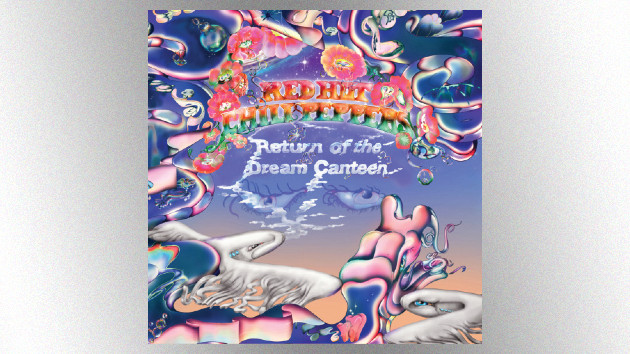
Red Hot Chili Peppers have earned aBillboard chart rarity with their new album, Return of the Dream Canteen.
The latest effort from the “Californication” rockers — and their second of 2022 — sold 56,000 copies in its debut frame, making it the best-selling record of the week. Having already led the Top Album Sales ranking earlier this year with April’s Unlimited Love, the Peppers are the first rock band in 17 years to have earned two #1-selling records in the span of 12 months.
The last rock band to accomplish that feat was System of a Down, who earned two #1 albums in 2005 with Mezmerize and Hypnotize. Those two records remain the most recent System of a Down albums.
On the Billboard 200, which also incorporates streaming data into its ranking along with traditional album sales, Return of the Dream Canteen debuts at #3 with a total of 63,000 equivalent album units. Unlimited Love debuted at #1 on the Billboard 200.
Elsewhere on this week’s Billboard 200, The 1975‘s new album Being Funny in a Foreign Language starts at #7, giving Matty Healy and company their fourth-straight top 10 record.
In the U.K., Being Funny debuted at #1 on the Official Albums Chart. Every one of The 1975’s five albums has bowed at #1 in their home country.
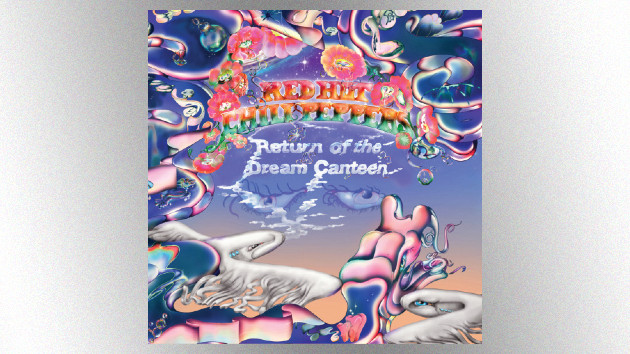
Red Hot Chili Peppers have earned aBillboard chart rarity with their new album, Return of the Dream Canteen.
The latest effort from the “Californication” rockers — and their second of 2022 — sold 56,000 copies in its debut frame, making it the best-selling record of the week. Having already led the Top Album Sales ranking earlier this year with April’s Unlimited Love, the Peppers are the first rock band in 17 years to have earned two #1-selling records in the span of 12 months.
The last rock band to accomplish that feat was System of a Down, who earned two #1 albums in 2005 with Mezmerize and Hypnotize. Those two records remain the most recent System of a Down albums.
On the Billboard 200, which also incorporates streaming data into its ranking along with traditional album sales, Return of the Dream Canteen debuts at #3 with a total of 63,000 equivalent album units. Unlimited Love debuted at #1 on the Billboard 200.