: Frank Beard of ZZ Top performs on stage at Viejas Casino & Resort on November 02, 2025 in Alpine, California. (Photo by Daniel Knighton/Getty Images)
Several artists have paid tribute to ZZ Top drummer Frank Beard, who passed away at age 77.
Lynyrd Skynyrd wrote on social media that Beard “was one of a kind,” noting he was “A hell of a drummer, a true original, and most importantly to us, a great friend.”
Fellow drummers Matt Sorum, formerly of Guns N’ Roses, and Brad Wilk, of Rage Against the Machine, both wrote of Beard’s skill.
Sorum called Beard, “The backbone of ZZ Top for 57 years with the best shuffle known to man,” noting, “It might sound easy but possibly one of the hardest things I’ve ever try to learn and still trying.” He added that Beard “was born with it in his blood.”
Meanwhile, Wilk wrote that his first experience with ZZ Top was when he was in high school and saw a show on the Eliminator tour. “My mind was BLOWN! Watching his two hand shuffle live was immense,” he wrote.
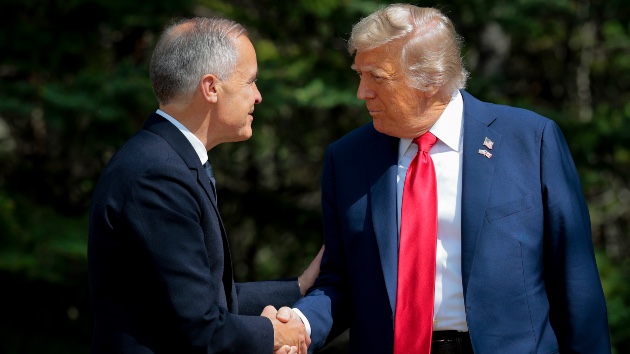
Canadian Prime Minister Mark Carney greets U.S. President Donald Trump at the official welcome ceremony during the G7 Leaders’ Summit on June 16, 2025 in Kananaskis, Alberta. (Photo by Chip Somodevilla/Getty Images)
(NEW YORK) — President Donald Trump said he is pausing for three days the new 50% tariffs on Canadian goods set to go into effect early Wednesday, citing a deal between the U.S. and Canada.
“I have paused the 50% Tariffs against Canada, that were scheduled to kick in tomorrow morning for a three day period, based on the fact that Canada and the U.S.A., subject to the finalization of documents, have a DEAL,” Trump said in a social media post.
The new tariffs, targeting dozens of products from hockey sticks to wine, were set to go into effect at 12:01 a.m. ET on Wednesday.
The U.S. Trade Representative’s official account on X responded to Trump’s announcement, providing a bit of insight into what a final deal might entail.
“The deal will include comprehensive market access for all American goods, economic security commitments, digital trade alignment, and many important provisions that will continue to protect our market and American workers, along with our Canadian partners,” the USTR posted.
While the president did not offer specifics about the deal, he did suggest that it might include a renewed effort to build the Keystone Pipeline, despite the project being canceled in 2021 after years of criticism about the project’s environmental impact.
“Keystone XL Pipeline, long ago killed by Sleepy Joe Biden, may be awoken from the grave!” Trump added in the post.
Due to exemptions on key goods, the tariffs were expected to hit only a fraction of U.S. imports from Canada.
Still, the list of affected goods features an array of food items such as dairy products, honey, whey protein and molasses; as well as alcoholic beverages like whiskey and vodka.
It all comes weeks after Trump imposed sweeping new tariffs on 60 trade partners, including the European Union. Those levies ramped up an effort to reconstruct far-reaching duties struck down by the Supreme Court earlier this year.
Unlike previous tariffs, the new Canada tariffs would have applied to products compliant with the United States-Mexico-Canada Agreement, or USMCA, a free trade agreement. The levies included significant exemptions, however, leaving out some top Canadian imports such as oil, gas and potash.
Trump first announced the tariffs in a series of executive orders last month, saying the move had been made in retaliation for Canadian policies he considers discriminatory against U.S. exports.
“President Trump is offsetting the burden and disadvantage on U.S. commerce from Canada’s discriminatory treatment of U.S. commerce and is leveling the playing field for crucial American exports–cars, alcohol, and dairy,” the White House said at the time.
In a statement last month, Canadian Prime Minister Mark Carney criticized a flurry of U.S. tariffs put forward since last year, saying Canada has “merely matched those measures.”
“This trade dispute has raised costs for families, particularly in the U.S. Canada stands ready to engage intensively to address outstanding issues with the U.S. to the mutual benefit of our citizens,” Carney said.
Trump has carried out on-again, off-again trade negotiations with Canada since he took office, aiming to resolve a dispute that began with tariffs announced by Trump early in his second term.
Trump sought to impose the tariffs under a legal authority enshrined in section 338 of the Tariff Act of 1930, which allows the president to enact levies up to 50% for countries found to have discriminated against the U.S. relative to their treatment of other nations.
The provision has never been invoked before, meaning the move lacks judicial precedent, Abigail Watt, an economist at UBS, said in a memo shared with ABC News.
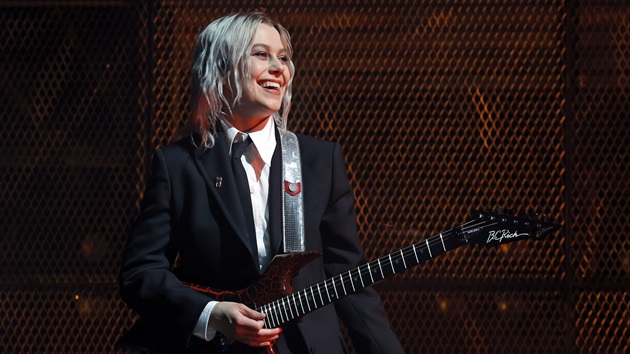
Phoebe Bridgers performs at during the 2023 Coachella Valley Music and Arts Festival on April 22, 2023 in Indio, California. (Frazer Harrison/Getty Images for Coachella)
We don’t know if a doctor put their hands over her liver, but Phoebe Bridgers has been sidelined due to another organ-related ailment.
The “Lost Boys” artist announced in an Instagram Story Wednesday that she’s been diagnosed with appendicitis, forcing her to postpone her run of intimate U.K. shows.
“I got appendicitis for my birthday,” Bridgers wrote in the post. “Everything in the UK this week will have to move but I’ll make it up to you!!!!”
Bridgers performed in London on Monday, which was her birthday, and was scheduled to play shows on Wednesday, Thursday and Friday.
While appendicitis is not a great birthday present, Bridgers got a better one from Taylor Swift, who praised her new album, Lost Weekend, as an “absolute triumph.”
Bridgers will launch a sold-out U.S. arena tour in support of Lost Weekend in September.
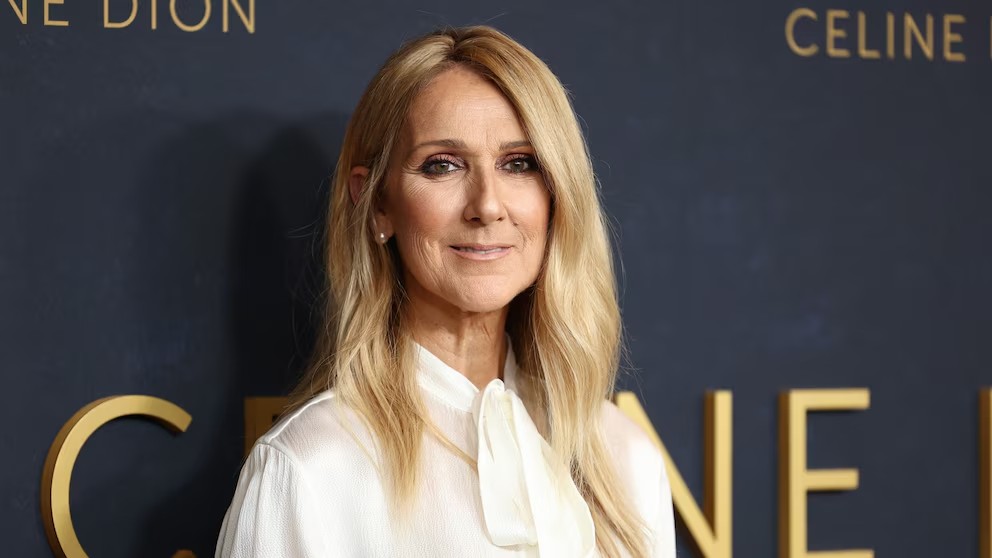
Céline Dion attends the ‘I Am: Celine Dion’ New York special screening at Alice Tully Hall on June 17, 2024 in New York City. (Cindy Ord/Getty Images)
Celine Dion is preparing for her return to the stage this fall in Paris.
The Grammy-winning singer, 58, who was diagnosed with stiff-person syndrome in 2022, shared an update on her condition and preparations for her upcoming five-week Paris residency in a new interview with Harper’s Bazaar, published Tuesday.
Dion, the outlet noted, has performed only once in the past six years, taking the stage at the 2024 Paris Olympics. Her upcoming residency, which kicks off Sept. 12, will mark a major return to performing after her health challenges led her to cancel shows and suspend her 2023 European Courage World Tour.
Stiff-person syndrome is a rare neurological disorder that can cause muscle stiffness and spasms and is thought to be an autoimmune condition, according to the National Institutes of Health. It can cause symptoms including rigidity and stiffness of certain areas of the body causing unsteadiness, slower movements, and difficulties walking.
Treatments are available to help with symptoms, although there is currently no cure for the condition.
Dion told Harper’s Bazaar she experienced symptoms for 17 years before receiving a formal stiff-person syndrome diagnosis in 2022.
To prepare for her Paris shows, Dion committed to an intense training routine — 90-minute Pilates sessions three times a week and ballet classes with a local company two other days each week — and rehabilitation, which includes “new meds, physical therapy, vocal therapy, [and] immunotherapy,” according to the outlet.
The “My Heart Will Go On” singer first announced her Paris residency in March. Speaking with Harper’s Bazaar, she added that the upcoming residency is a gift to her fans.
“It’s been so long, I would like to offer them something to show how I’ve missed them,” she said.
The return comes after Dion gave fans an intimate look at her health journey in the 2024 documentary I Am: Celine Dion, which documented how stiff-person syndrome affected her body and voice.
“They paid for tickets. They bought my records. They gave me that luxury. So the least I can do is tell them that I’m alive,” she said, referring to her decision to do the documentary.
Now, Dion said she is embracing being back in public and returning to work after years of navigating her condition. And she has an explanation for why her fans have stood by throughout her struggles.
“It’s got to be because I’m an open book,” she told the magazine. “I’m honest, and it’s not always pretty. Sometimes it’s happy things, sometimes it’s sad, but it’s called life.”
South Korean soldiers participate in an anti-terrorism exercise, linked to the ongoing joint military drills known as Ulchi Freedom Shield (UFS), at Lotte Hotel World on Aug. 19, 2026 in Seoul, South Korea. (Chung Sung-jun/Getty Images)
(LONDON) — South Korea’s Joint Chiefs of Staff (JCS) confirmed that ongoing joint military drills with U.S. forces would end early, following President Donald Trump’s announcement Sunday that he had ordered the Pentagon to “substantially reduce” the exercises.
The annual U.S.-South Korea Ulchi Freedom Shield began Monday. On Wednesday, South Korea’s Joint Chiefs of Staff said in a statement that, in response to a U.S. proposal, “the allies agreed to adjust parts of the exercise, including its duration and scale.”
The drills will now end Aug. 21, six days earlier than originally planned. The two sides also agreed to scale back some combined field training exercises, the details of which are still under discussion, the JCS said.
“Going forward, South Korea and the United States will discuss and implement various measures to achieve the objectives of the UFS exercise and maintain a strong combined defense posture,” the statement added.
A Pentagon official told ABC News that the exercise had been “substantially reduced” on “direction from the president and secretary of war.”
“The exercise will conclude on Aug. 21, one week earlier than scheduled. Associated live-training events have been reduced, with certain events canceled or converted to simulations,” the official said. “These adjustments preserve essential readiness and training objectives. There will be no degradation to U.S. training objectives.”
Trump ordered the drills scaled back, citing his “very good” relationship with North Korea’s Supreme Leader Kim Jong Un. Pyongyang routinely protests joint U.S.-South Korean exercises, framing their military cooperation as undermining stability on the Korean Peninsula.
This week, Pyongyang described Ulchi Freedom Shield as an “open threat” to North Korea.
On Sunday, Trump criticized the annual military exercise as “inappropriate and hostile” toward North Korea, a country he said has been “unthreatening and respectful” toward the United States during his presidency.
“Based on my very good relationship with Kim Jong Un, of North Korea, I am not happy with the fact that the United States has, long ago, agreed to participate in Joint Military Exercises with South Korea,” Trump wrote on his social media platform.
“Therefore, and based on the fact that it is too late to cancel, I have instructed Secretary of War, Pete Hegseth, to substantially reduce the Joint Military Exercises!” he said.
South Korea is a longtime U.S. ally and hosts roughly 28,500 U.S. troops. The U.S. presence on the peninsula has traditionally been intended to prevent a resumption of cross-border hostilities, with the Korean War of 1950-53 having never officially ended.
In 2006, North Korea tested its first nuclear weapon and has since been expanding its atomic weapons stockpile — despite international condemnation and sanctions led by successive U.S. administrations — alongside a ballistic missile research program which has produced munitions capable of reaching the continental U.S.
In recent decades, the U.S. presence in South Korea has also become an important point of leverage in the strategic contest between Washington and Beijing, the latter having long served as Pyongyang’s prime patron.
ABC News’ Joohee Cho, Desiree Adib, Will Gretsky and Steve Beynon contributed to this report.
Democratic Congressional candidate Rep. Debbie Wasserman Schultz speaks with voter Camille Edwards as she campaigns outside of the Kings Point Clubhouse polling station, August 18, 2026, in Tamarac, Florida. Joe Raedle/Getty Images
(WASHINGTON) — Several high-profile primary races Tuesday tested how much President Donald Trump’s endorsement can do for a scandal-marred candidate, showed the impact of Republicans’ mid-decade redistricting and highlighted the continued battle between established Democratic candidates and progressive challengers.
Here are takeaways from Tuesday’s primaries:
Trump endorsement can’t lift Mills
Embattled and scandal-ridden Republican Rep. Cory Mills lost his reelection bid in Florida Tuesday, defeated by challenger Ryan Elijah, a former TV news anchor and NFL sideline reporter.
Mills faces a House Ethics Committee investigation; a judge issued a restraining order against him last year after he was accused by his former girlfriend of threatening to distribute sexually explicit videos of her; and in July, ABC News reported that the embattled congressman was also under investigation by the Department of Justice, in part about his finances. Mills has denied the allegations.
Mills’ loss suggests that Republicans have limits when it comes to how long they can stand behind a candidate carrying too much baggage. Despite the scandals that have followed him, Mills still retained Trump’s endorsement.
Putting aside differences before November
Republican Rep. Byron Donalds unsurprisingly secured his party’s nomination in the gubernatorial race in Florida. Donalds’ campaign has received immense support among Republicans and Trump’s endorsement.
Donalds now faces the task of uniting his party after what was a bruising primary. Donalds said he received congratulatory calls from his competitors, Paul Renner and James Fishback. In his victory speech, Donalds called for Florida Republicans to come together.
“But tonight the primary is over. Tonight we put aside our differences. Tonight we are one united Republican Party,” Donalds said.
Wasserman Schultz promises representation matters
Democratic Rep. Debbie Wasserman Schultz won her primary in Florida’s historically Black 20th Congressional District that was redrawn this year by the Republican-controlled legislature.
Her decision to run in the district drew criticism from her four Black opponents and other Black Democrats who have already been impacted by Republican redistricting efforts in southern states.
In her victory speech, Wasserman Schultz referenced redistricting Republicans hope will improve their chances of retaining the House in November. She promised the redrawn majority-minority district that increasing representation is among her top priorities.
“This is such a difficult and fraught time in our country. There is so much at stake in this moment, and I want people to know that representation matters. It matters, and I will fight to make sure that representation counts again,” she said Tuesday evening. Moskowitz fends off challenge from DSA candidate
In the Democratic primary for Florida’s 25th District, two-term incumbent Rep. Jared Moskowitz, who was also running in a redrawn district, fended off a challenge from Democratic Socialists of America candidate Oliver Larkin.
The race highlighted how support for Israel is becoming prominent issue in this year’s election as more Democrats have become less supportive. Moskowitz has been a staunch supporter of Israel while Larkin has called for the U.S. to cut off aid.
The race was a continuation of established Democratic candidates facing challenges from progressives, as seen in the Senate race in Michigan.
Moskowitz now faces a competitive general election in November, as his seat is one Republicans see as a top pickup opportunity.
Olivia Colman has joined the cast of Only Murders in the Building. The Oscar winner has joined the season 6 cast of the comedy whodunnit series. The news was announced to Instagram on Tuesday. Selena Gomez and Meryl Streep made a cheeky video where they revealed Colman’s casting, but only after Martin Short pretended like he was the exciting new cast member. Gomez and Streep had to remind Short that he, of course, is one of the show’s original stars. “Marty, you’re already in the show,” they told him, before pulling Colman on screen … Disney is the parent company of ABC News and Hulu.
The trailer for Slow Horses season 6 has arrived. Sir Gary Oldman once again stars as Jackson Lamb in this look at the sixth season of the espionage drama. The new season premieres on Apple TV Sept. 16. Kristin Scott Thomas, Jack Lowden and Saskia Reeves also star …
Jack Reynor has found his next part. Deadline reports the actor will star alongside Lily James in the horror film Seasons. The Amazon MGM Studios film is based on a viral horror short story by Matt Query and Harrison Query. It follows a husband and wife who buy their dream ranch only to learn it is filled with ancient spirits. Drew Hancock is set to direct from a script he also wrote …
Pearl Jam’s massive 1991 debut album, Ten, celebrates its 35th anniversary on Aug. 27.
“Ten to me is deep in my heart,” guitarist Mike McCready tells ABC Audio. “It’s a record that sounded like a band that was together for many years but wasn’t, in my mind.”
Indeed, the members of the original Pearl Jam lineup — McCready and guitarist Stone Gossard, bassist Jeff Ament, vocalist Eddie Vedder and drummer Dave Krusen — had already been a part of several other bands, including Green River, Mother Love Bone and Temple of the Dog.
“It’s the combination of efforts of those five guys that had been in a bunch of bands for a long time, and then all coalesced into one,” McCready says.
In recording Ten with Pearl Jam, McCready sensed its significance pretty much from day one.
“Ten was the example of the first situation I was in when everything was firing on all cylinders,” McCready says. “From the first day Ed showed up and we worked on ‘Once,’ and the five of us were in the room, I knew this was gonna be special. I didn’t know to the extent, but we all knew it was gonna be something.”
That “something” turned into a defining and seminal record of the ’90s grunge and alternative scene on the way to earning Diamond certification by the RIAA and spawning classic singles including “Even Flow,” “Alive” and “Jeremy.”
Three-and-a-half decades later, McCready calls performing Ten songs live a “mythical,” “spiritual” experience.
“We feel that the crowd has lifted ‘Alive’ and ‘Even Flow’ and these songs to a song that’s bigger than when we first recorded it,” McCready says. “It’s more of a universe in itself.”
Kanye West has released the music video for Bully track “Ok” featuring Don Toliver. The visual shows doctors removing objects from Ye’s decapitated body, with Toliver appearing for his verse. He eventually resuscitates Ye by reattaching his head. A duel unfolds in the background as Ye sharpens his sword before the two rappers end the video staring into the camera. The clip is the latest directed by Ye’s wife, Bianca Censori, following “Father,” “King” and “Gemini Season.”
Omarion dropped a visualizer for his song “Reason” from O2,featuring the singer in all black alongside his leading lady, who matches his look as he dances and rides in his luxury car.
“Tell Everybody” that Davido’s music video is out now, featuring Leon Thomas. It features him performing in a luxury residence, with dancers showcasing their skills. He later plays the drums on the steps while wearing a crown. The song is featured on Davido’s new album, Oriadé, which means the head that wears the crown.
Solange paid tribute to her Bring It On: All Or Nothing costar Hayden Panettiere following her death. Over a screenshot of them from the 2006 film, she wrote in her Instagram Story, “rest in peace hayden. in peace, because you are so deserving of it. we had so many parallels in our lives, and the world watched u so courageously live in your radical truth telling your story. we watched your endless quest for vulnerability, and healing.”
“i salute your journey and i honor the work we created together that became something that really means something to people… reaching people we couldn’t have ever imagined at the time, as two young girls, trying to keep looking to the light,” she continued. “the light surrounds you now. rest easy hayden.”