Grateful Dead fans are getting their first peek at the band’s upcoming 11th annual Meet-Up At The Movies screening.
This year’s screening highlights the band’s June 22, 1991, concert at Chicago’s Soldier Field, the first time they ever played the venue. A just-released clip of the concert shows them performing the In The Dark track “Hell in a Bucket.”
The concert features the Dead’s Jerry Garcia, Bob Weir, Phil Lesh, Bill Kreutzmann and Mickey Hart, along with Bruce Hornsby and Vince Welnick on keyboards, taking the place of Brent Mydland, who had passed away a year earlier. It features performances of such songs as “Shakedown Street,” “Playing In The Band” and “Terrapin Station.”
This year’s Meet-Up At The Movies will screen in select theaters worldwide on June 22 and 24. Tickets are on sale now.
(WASHINGTON) — With the end of the last major Trump-era Title 42 border restrictions Thursday, the Biden administration will revert to processing all migrants as was done before the pandemic.
Authorities will now rely more heavily on immigration law as defined under Title 8 of the U.S. Code. The law outlines processes for deportation and carries strict penalties, including five- and 10-year bans on reentry for those deported.
It will be a significant departure from the use of Title 42, a section of public health law that allowed for fast-track expulsions during the pandemic and carries no such consequences.
Title 8 versus Title 42 — what’s the difference?
For starters, Title 42 is not traditional immigration law. But it has major implications for immigrants at the border and has been used more than 2.8 million times to expel migrants — a sizable number of enforcement actions in just over three years.
The use of Title 42 has been controversial ever since the Trump administration invoked it as a COVID-19 precaution in March 2020. Given the fast-track nature of the expulsions — which often took place in a matter of hours or less — immigrant advocates say its use has been an illegal violation of the rights of migrants to seek asylum on U.S. soil.
“The sunset of Title 42 is long overdue and ends a shameful period in our country’s history,” said Jill Marie Bussey, director for public policy at Lutheran Immigration and Refugee Service. “We unequivocally affirm the legal right of individuals to seek protection at our borders and stand in solidarity with those who are most vulnerable, including children and families.”
Bussey urged the Biden administration not to replicate Title 42 with its plans to ramp up deportations under Title 8.
Title 8, which includes decades-old immigration legislation, outlines processes for handling migrants at the border. And while this section of the U.S. Code dictates expedited deportation protocols, it typically allows more time for migrants to lodge asylum claims than what they were afforded under Title 42.
The Biden administration has been working to speed up Title 8 processes by surging hundreds of asylum officers to the border in an effort to more quickly adjudicate humanitarian claims while applying the consequences Title 42 does not carry.
How effective is Title 8 compared to Title 42?
While authorities have anticipated an unmanageable surge of migration when the Title 42 order ends, some evidence shows its use causes more repeat border crossings. Under Title 42, migrants are not subjected to the five- and 10-year bars on reentry.
The use of Title 42 at the border came from an order by the Centers for Disease Control and Prevention, which was reportedly protested by public health experts there.
The CDC moved to repeal the Trump-era order last year. However, Republicans quickly filed legal challenges to keep it in place. The Biden administration has continued to rely on Title 42 to manage the border. Earlier this year, the administration struck a deal with Mexico to send non-Mexican migrants from some countries back across the border. U.S. officials have said that process will continue even after Title 42 ends.
What happens when Title 42 expires — and when does that happen?
Title 42 expires at 11:59 p.m. ET Thursday, and officials will immediately return to processing under existing Title 8 guidelines. Barring further legal action, the end of the national coronavirus emergency declaration will mean the end of the Title 42 order and a full return to Title 8.
Authorities at the border never stopped using Title 8, even as the pandemic largely shutdown global travel in 2020. But its use has increased ever since, and it will once again be the primary authority for managing migrants.
Both sections of the U.S. Code are decades old, and there is broad consensus that truly fixing the U.S. immigration system will require new legislation from Congress. Despite calls from top officials across administrations, including Biden’s Homeland Security Secretary Alejandro Mayorkas, Congress has so far failed to pass any reform.
Immigration authorities have been working on overdrive to manage the historic levels of unauthorized migrant crossings in recent years. Along with the deportation consequences under Title 8, the Biden administration has rolled out limited legal pathways to parole some migrants into the U.S. from abroad.
“We are taking this approach within the constraints of a broken immigration system that Congress has not fixed for more than two decades and without the resources we need: personnel, facilities, transportation, and others that we have requested of Congress and that we were not given,” Mayorkas said Wednesday.
(WASHINGTON) — The U.S. Supreme Court on Thursday rejected a challenge to California’s Proposition 12, a statewide ban on the sale of pork from pigs housed in cages or crowded group pens that prevent them from turning around freely.
The ruling, which animal welfare advocates hailed as a “watershed moment,” could have a major impact on thousands of farmers, millions of pregnant pigs — and the prices Americans pay at the grocery store for one of the country’s most popular meats.
Justice Neil Gorsuch, writing for a five-justice majority, said that California voters overwhelmingly endorsed the “ethical pork” law in 2018 and have the right to decide what products appear on store shelves.
“Companies that choose to sell products in various States must normally comply with the laws of those various States,” Gorsuch wrote in the opinion. “While the Constitution addresses many weighty issues, the type of pork chops California merchants may sell is not on that list.”
“States have long enacted laws aimed at protecting animal welfare,” Gorsuch wrote. “Proponents hoped that Proposition 12 would go a long way toward eliminating pork sourced in this manner from the California marketplace.”
Proposition 12, which was approved four years ago but has not yet taken effect due to legal challenges, outlaws pork derived from mother pigs housed in less than 24-square-feet.
The nation’s $20 billion pork industry had argued that the restrictions violate the Constitution’s dormant Commerce Clause by significantly impacting farmers outside of California and their ability to sell in one of the largest markets.
California consumes 13% of U.S. pork, the largest market in the country, but produces just 1%, according to the U.S. Department of Agriculture.
Farmers in heavy pork-producing states like Iowa, Minnesota and North Carolina had warned it will cost billions of dollars to retool their operations to comply with California’s law, resulting in less efficient and environmentally sustainable production. Most American pork is produced in facilities that do not meet Prop 12 standards, the industry says.
“We are very disappointed with the Supreme Court’s opinion. Allowing state overreach will increase prices for consumers and drive small farms out of business, leading to more consolidation,” said Scott Hays, a Missouri pork producer and president of the National Pork Producers Council, which sued California.
The high court decision affirms rulings of two lower courts that found the out-of-state pork producers had failed to state a valid claim against California as a matter of law.
But several dissenting justices and outside legal scholars say the Court’s decision keeps the door open to a future legal challenge against Prop 12 on different grounds.
“We are still evaluating the Court’s full opinion to understand all the implications. NPPC will continue to fight for our nation’s pork farmers and American families against misguided regulations,” Hays said.
Chief Justice John Roberts and Justices Samuel Alito, Brett Kavanaugh and Ketanji Brown Jackson dissented in part from the Gorsuch opinion.
“I would find that the petitioners have plausibly alleged a substantial burden against interstate commerce and would therefore vacate the judgment and remand the case for the court below to decide whether petitioners have stated a claim,” Roberts wrote.
Last year, ABC News got a rare inside look at three commercial pork farms on both sides of the Prop 12 debate.
“When you need to make changes just to comply with the California market, I’m very worried about what our long-term success would be,” third-generation Minnesota pork farmer Mike Boerboom said at the time.
His farm, which raises more than 400,000 pigs a year, is not Prop 12 compliant. “We’ve been raising pigs in confinement for 40 years,” he said.
The Biden administration took the side of pork farmers, concerned that a single state should not be allowed to excessively disrupt a major American industry.
But even before the Court’s decision, there were signs market forces and consumer preferences have nudged producers toward what animal advocates consider more ethical practices.
“We believe that that creates a healthier animal, and a healthier animal equates to healthier product to eat,” said John Jovaag of Austin, Minnesota, whose farm is part of the Niman Ranch network of family farmers who specialize in certified “humanely-raised” pigs and other animals.
“They need more farmers doing it this way to meet the demand,” Ruth Jovaag said of rapidly evolving consumer preferences. “There’s not enough supply.”
Major pork producers like Hormel and Tyson Foods — who initially opposed Prop 12 — say they are preparing to comply with at least parts of the law because of growing demand for humanely raised meat.
“This is a truly watershed moment for animal welfare,” said Chris Oliviero, general manager of Niman Ranch in a statement on the Supreme Court decision. “Since day one, Niman Ranch has been one of the only companies to ban the use of crates for raising hogs and today our more than 500 independent family farmer partners proudly raise their pigs 100% crate free.”
Kitty Block, president and CEO of the Humane Society of the U.S., which helped enact and defend Proposition 12, said the law is now “the nation’s strongest farm animal welfare law.”
“We’re delighted that the Supreme Court has upheld California Proposition 12,” Block said in a statement, “and made clear that preventing animal cruelty and protecting public health are core functions of our state governments.”
(GRAND RAPIDS, Mich.) — A Michigan school district has banned students from bringing backpacks to school after a third grade student brought a loaded handgun to campus — the second time that it has happened in the last two weeks.
Grand Rapids Public Schools said the decision came after it confiscated the handgun from the 8-year-old’s backpack on Wednesday, the fourth time the district has found a student at school with a gun this academic year. In three of the four incidents, guns were confiscated from elementary school students, including the incident last week.
“This is not a decision we’ve taken lightly and we know this poses a significant inconvenience for our families. I am more than frustrated that a decision like this is necessary, but we must put safety first,” Grand Rapids Public Schools Superintendent Leadriane Roby said in a statement.
The district said the policy will remain in effect “until further notice.”
“Here we are again, and I will just say that I am frustrated, I am sad and I am angry that this continues to happen,” Roby said at a press conference Wednesday.
Another student realized there was a gun at school when the 8-year-old dropped their backpack. When the student picked up the bag, they realized it was heavier than it should have been and reported it to a teacher, Larry Johnson, the district’s executive director of public safety and school security, told reporters at a press conference.
The teacher then took immediate action to investigate and school officials discovered there was a weapon inside the bag, Johnson said. The incident was then reported to local police.
“I’m happy that we didn’t have a tragedy, but I’m frustrated that parents are not listening and we need them to listen and secure these weapons,” Johnson said.
Johnson said there was nothing in the 8-year-old’s history that would indicate they would bring a weapon to school.
“Now is the time to step up before we have a tragedy in this community. This is unacceptable. We will not continue to tolerate it,” Johnson said.
Grand Rapids Police Chief Eric Winstrom told reporters that he anticipates there will be criminal charges in this incident and the prior incident last week when a 7-year-old brought a gun to school. He said the charges will not be against the children.
Winstrom called on parents to check their students’ backpacks before they go to school to insure the city can avoid a tragedy.
“Any child that had picked up that bag that manipulated the trigger — even through the bag — could have fired that handgun and it could have easily killed someone. So, that 8-year-old is a victim. I’m just thankful that we’re not talking about any other victims today,” Winstrom said.
Johnson said the district will deal with the students in a disciplinary manner as they see appropriate.
The district said it is working on enhancing its security protocol and it will be modifying its rules as needed. Johnson said the district will be enhancing its cameras and has invested in secured entryways.
Grand Rapids Mayor Rosalyn Bliss called on parents to keep guns out of the hands of children, saying the city cannot do it alone.
“We can only do so much,” she said at a press conference. “Keeping our kids safe and keeping guns out of the hands of children, that is all of our responsibility. Every single community member, every single parent, needs to step up and be a part of this solution.”
Grand Rapids isn’t the only school in Michigan to recently ban backpacks. Flint Community Schools, about two hours east of Grand Rapids, made a similar move to disallow backpacks in late April.
Before season 2 of Netflix’s hit teen romance Heartstopper debuts this summer, fans in the U.S. can see where the story of Charlie Spring and Nick Nelson first began.
Solitaire, the 2014 debut novel from Heartstopper creator Alice Oseman, has a brand new edition now available in the U.S. for the first time.
“Now that Hearstopper has found such a huge audience and it’s done so well, I know there are so many people who want to know more about Tori Spring, Charlie’s older sister, who is the protagonist of Solitaire,” the British author tells ABC Audio. “So yeah, I’m really excited for people to get to experience that.”
The novel introduced the Nick and Charlie characters, played by Kit Connor and Joe Locke in the show. Jenny Walser plays Tori in the series and also voices the Solitaire audiobook.
Heartstopper fans will have even more to look forward to, with season 2 premiering on August 3, and volumes 5 and 6 of the graphic novels on the way. Oseman says there are “so many things” she’s excited for in season 2, but teases one thing in particular.
“So we’re going to Paris,” she says. “And I feel like lots of people know that in Volume 3 of the books, the characters all go to Paris. So that’s what we’ll be doing in season 2, seeing the sights of Paris, drama in Paris … We got to film in Paris, as well, so it looks stunning and I can’t wait for people to see it.”
(NEW YORK) — Shares of PacWest Bancorp plummeted more than 20% in early trading on Thursday after the regional lender said it faced a sizable withdrawal of deposits last week, renewing concern over financial trouble in the aftermath of a string of major bank collapses.
The sharp decline of PacWest stock prompted a pause in trading of the company’s shares minutes after the market opened on Thursday morning, but trading later resumed.
PacWest said in a securities filing on Thursday that the bank lost 9.5% of deposits last week, marking a turnabout after the company said at the outset of this month that deposits remained stable.
While noting the deposit flight, PacWest said that as of Wednesday it retained $15 billion in immediately-available cash if needed to fulfill further withdrawals. The liquidity far exceeds total uninsured deposits, which amount to $5.2 billion, the bank said.
PacWest did not immediately respond to ABC News’ request for comment on the stock decline.
The Los Angeles-based midsized lender said last week that it is exploring “all options” as it weighs offers from potential investors as well as the sale of a $2.7 billion loan portfolio.
In the statement last week, the company rejected concern about a sudden run on deposits, saying it had “not experienced out-of-the-ordinary deposit flows” after the seizure and sale of First Republic two days prior.
The significant withdrawal of deposits mostly took place in the days following the announcement last week, PacWest said on Thursday.
In all, PacWest stock has fallen more than 80% this year, erasing hundreds of millions of dollars in value.
The financial distress at PacWest follows the collapse within weeks of three of the nation’s 30-largest banks.
As the Fed aggressively hiked interest rates over the past year, the value of long-term Treasury and mortgage bonds dropped, punching a hole in the balance sheets at some regional banks.
The failure of Silicon Valley Bank in March sent shockwaves through the financial system that days later helped bring down New York City-based Signature Bank. Last Monday, First Republic fell under government control before a sale to JPMorgan Chase.
While high interest rates contributed to the collapses, each of the banks also retained a sizable portion of uninsured depositors, who tend to panic without a government backstop for their funds.
Addressing concern about deposits that lack government protection, PacWest said last week that insured deposits make up 75% of its holdings, which marks a sharp increase from the end of last year, when just 48% of its deposits were insured.
Stock prices at some other regional banks held steady or increased in early trading on Thursday, suggesting that the financial fallout remained limited to PacWest. Phoenix-based Western Alliance Bancorp shares rose about 5%; while Salt Lake City-based Zions Bancorp inched down less than 1%.
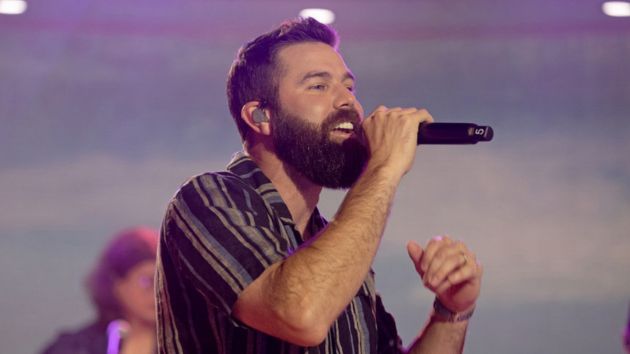
Jordan Davis is up for Male Artist of the Year at the 2023 ACM Awards. Though this is his first time receiving a nod in that category, he’s already planned where to keep the trophy, should he win.
“It’s going front and center,” Jordan tells ABC Audio. “It’s going to be right there in the front. Truly, to come away with this award would be really, really special. There’s been a lot of really talented artists and artists that I’ve looked up to that have won this one. So to win this would be awesome.”
In addition to being nominated, Jordan’s also got a performance spot, which arrived as a pleasant surprise after the nomination.
“It was kind of a last-minute add-on, which I’m super grateful for. I think some things got shifted around in the show and they had a spot open up,” shares the “Next Thing You Know” singer. “I was on the couch watching basketball expecting to just come down here and present and be nominated. And they offered me that and I jumped at it.”
Regardless of whether or not Jordan wins, he’s excited about all the parties and hangouts that’ll happen at the ACMs, especially with his pregnant wife, Kristen, along for her final outing before giving birth.
“She’s like five weeks out,” Jordan reveals. “So this is her last hurrah before we keep her at home until [the] baby comes. Hey, what better way to do it than here at the ACMs?”
The 58th Academy of Country Music Awards, hosted by Dolly Parton and Garth Brooks, streams live on Prime Video Thursday, May 11, at 7 p.m. ET.
If you were wondering, Nicki Minaj will be releasing an album this year. She revealed the news Wednesday while responding to a tweet from a fan.
Nicki had been sharing lyrics from her song “Seeing Green” after asking fans, “Why y’all let dem get me on #SeeingGreen like dat?” A fan then mentioned her song “Fractions,” and she responded by sharing her thoughts on that track and some of the others she’s released since then.
“Oh yes fractions warned, SFG (Super Freaky Girl) did what fractions warned. Red Ruby Da Sleeze MOTHERED so hard & is now the standard,” she tweeted. She then teased her upcoming album, writing, “NM5 is the best thing that will come out of 2023 & will raise the bar to new & unreachable heights.”
The project, she added, will be accompanied by a tour that “will be hailed as ‘genius.'”
Nicki has been teasing her fifth album for quite some time. Back in September, she told i-D, “I’m not gonna say when it’s gonna come out, but the album will be out soon.” Now, fans know it will drop sometime in 2023.
The Portokalos family is back in the new trailer to My Big Fat Greek Wedding 3.
Nia Vardalos, who was nominated for an Oscar for her screenplay for the blockbuster film, writes, directs and stars in the threequel.
This time around, her character, Toula, and the rest of her big family travel to Greece to fulfill her father’s dying wish for her to retrace his roots. Actor Michael Constantine, who played Toula’s father, Gus, died in 2021.
Toula and her husband, Ian (John Corbett), take along returning cast members Andrea Martin, Gia Carides, Louis Mandylor, Elena Kampouris, Maria Vacratsis, Joey Fatone and Lainie Kazan on the trip, which will culminate with a big fat Greek family reunion.
Once again, Tom Hanks and wife Rita Wilson produce the movie, spun from Vardalos’ hit one-woman play.
The 2002 original became the highest-grossing romantic comedy of all time, earning a total of $368 million. It led to a short-lived TV show, My Big Fat Greek Life, starring the movie’s main players, in 2003. A big-screen sequel, My Big Fat Greek Wedding 2, hit theaters in 2016.
My Big Fat Greek Wedding 3 opens in theaters on September 8.
Since the Black Album days, Metallica concerts have featured a “snake pit” section — a limited capacity, enclosed area right near the stage reserved for the luckiest of fans. As drummer Lars Ulrich tells Apple Music’s Zane Lowe, Metallica wanted the “snake pit” to feel like an exclusive experience at a great restaurant.
“One of our managers back in New York in the late ’80s/early ’90s [had] the idea that when you would go to a restaurant, that the best seat in the restaurant was actually not in the house, but the best seat was in the kitchen,” Ulrich explains in a clip posted by RollingStone.com. “So in crazy, cool restaurants, if you could somehow get into the kitchen and eat in the kitchen, you were in there where all the action was.”
The interview took place as Ulrich walked Lowe through the empty stadium in Amsterdam where Metallica kicked off their M72 world tour in April.
“This is the most pristine large-scale concert production I’ve ever seen,” Lowe remarks. “This makes U2 look sloppy.”
The M72 tour, which supports Metallica’s new 72 Seasons album, comes to the U.S. in August.