Tim Very of Manchester Orchestra performs on stage at North Island Credit Union Amphitheatre on July 19, 2025 in Chula Vista, California. (Daniel Knighton/Getty Images)
Manchester Orchestra drummer Timothy Very has died, the band confirmed in an Instagram post Saturday.
“The entire Manchester Orchestra family has been devastated by the sudden passing of our brother, Timothy Very,” the post reads. “The most beloved human being any of us were lucky enough to know in this life. We’ve all been dreading sharing this news as we are all still in absolute disbelief.”
Very joined Manchester Orchestra in 2011. He played on their last four albums — 2011’s Simple Math, 2014’s Cope, 2017’s A Black Mile to the Surface and 2021’s The Million Masks of God — and their 2023 EP, The Valley of Vision.
“Tim was instantly likable and interacted with everyone he met with kindness and warmth,” Manchester Orchestra says. “His laugh was infectious and he immediately made people feel invited and encouraged. His humor and energy were the very foundation that held together the entire MO universe. Strangers quickly became friends and friends became family.”
“He had an undeniable light that was only matched by his dedication and love for the craft that he was clearly put on earth to do,” the band continues. “No words can ever do him justice. Please know, if you are someone who loved Tim, he loved you too. The only thing that Tim loved more than creating music was being with his family. You’d be pressed to find a more joyful dad.”
The post concludes, “We love you Tim, thank you for loving us. You are a force of positivity that will be a constant presence in the rest of our days.”
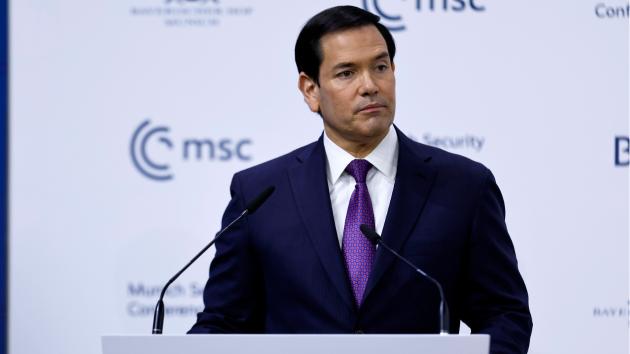
U.S. Secretary of State Marco Rubio delivers a key note speech at the 62nd Munich Security Conference on February 14, 2026 in Munich, Germany. (Johannes Simon/Getty Images)
(NEW YORK) — Secretary of State Marco Rubio delivered a bluntly worded, but ultimately conciliatory, speech Saturday to leaders of Western nations, saying the Trump administration does not want to dismantle its traditional alliances.
However, during his speech at the Munich Security Conference, he called on European countries to adopt the administration’s right-wing polices on mass migration and do more for their own defense.
“Our destiny is and always will be intertwined with you,” Rubio said to prolonged applause. “We do not seek to separate but to reinvigorate an old friendship.”
His speech’s message appeared to be a greatly moderated version of the one given by Vice President JD Vance last year, where he attacked European countries as oppressive.
Rubio repeated many of the same political criticisms that Vance made, telling European countries they and the United States previously had fallen victim to a liberal “dangerous delusion.”
He told them they must get control over mass migration, stop being ashamed of their colonial histories and give up on what he called a “climate cult.”
But he repeated the message that the U.S. wanted to reinvigorate the power of the West “together.”
“And while we are prepared, if necessary, to do this alone, it is our preference and it is our hope to do this together with you, our friends here in Europe,” Rubio said.
Rubio defended the administration as seeking to unapologetically reinvigorate the West, speaking nostalgically of “great western empires.”
“We do not want our allies to be weak, because that makes us weaker. We do not want our allies to be shackled by guilt and shame,” he said. “We do not want allies to rationalize the broken status quo.”
He said the U.S. has “no interest in being the polite caretaker of managed decline.”
The chairman of the conference, Wolfgang Ischinger, later thanked Rubio for his “message of reassurance.”
“I’m not sure you heard the sigh of relief in this hall,” Ischinger told Rubio on stage.
During an interview with Bloomberg TV directly after the speech, Rubio said he thought he gave the “same message” that Vance delivered at the conference last year.
“I think what the vice president said last year, very clearly, was that Europe had made a series of decisions internally that were threatening to the alliance and ultimately to themselves, not because we hate Europe or we don’t like Europeans, but because, what is it that we fight for? What is it that binds us together?” Rubio said in the interview.
“And ultimately, it’s the fact that we are both heirs to the same civilization, and it’s a great civilization, and it’s one we should be proud of,” Rubio added.
The secretary continued to moderate that message, however, saying his own remarks were meant to explain that, “when we come off as urgent or even critical about decisions that Europe has failed to make or made, it is because we care.”
A security contractor hired by U.S. Immigration and Customs Enforcement (ICE), checks the mouth of a Honduran immigration detainee from Honduras before a deportation flight to San Pedro Sula, Honduras on February 28, 2013 in Mesa, Arizona. (John Moore/Getty Images)
(NEW YORK) — The Trump administration’s deportations to third countries last year are estimated to have cost taxpayers “upward of $40 million,” with some third-country migrants costing more than $1 million each, according to a Democratic congressional report released Friday.
The 30-page report is the result of a ten-month review by Democrats on the Senate Foreign Relations Committee, who examined third-country deportations undertaken by the administration.
In particular, the report found that over $32 million was sent directly to Equatorial Guinea, Rwanda, El Salvador, Eswatini, and Palau — with some funds sent before any third-country national arrived.
“The total costs of the Trump Administration’s third country deportations through January 2026 are unknown but are likely upward of $40 million,” the report said.
Tommy Pigott, a spokesman for the State Department, did not comment directly on the figures used in the report.
“Contrary to what they might have hoped, this report only underlines much of the unprecedented work that the Trump administration has done to enforce our immigration laws. Astonishingly, some in Congress still want to go back to a time just 14 months ago when cartels had free rein to poison Americans and our border was open,” he said in a statement.
The report analyzed the sums in comparison to the number of third country nationals actually received, and concluded that the administration “paid at least one country more than $1 million per third country national received.”
For example, the report found that the administration paid the Rwandan government $7.5 million “in exchange for agreeing to accept third-country nationals.” As of Jan. 2026, Rwanda received seven third-country nationals, with each migrant costing approximately $1.1 million, the report said.
El Salvador was found to have received the most migrants, with approximately 250 third country nationals costing $20,755 per migrant. The majority of those people deported to El Salvador were Venezuelan nationals who were then sent onward to Venezuela several months later, according to administration officials.
The findings also show that Palau had not received any third-country nationals as of January, yet they have already received $7.5 million from the U.S.
According to a U.S. official quoted in the report, deportation deals with some countries were intended to communicate a “threat” to migrants.
“With countries like Palau or Eswatini, the point is that the Administration can threaten people that they will literally be dropped in the middle of nowhere,” the U.S. official allegedly said.
“The point is to scare people,” he allegedly added.
The Democrats’ report also homes in on the high sums of money dedicated to transporting migrants from the U.S. to third countries, with the administration “frequently using military aircraft that can cost more than $32,000 per hour.”
At times, the administration paid “twice” for migrants’ travel — “once to remove them to a third country and then again to fly them to their home country,” the report said.
This occurred due to a lack of sufficient notice provided to migrants’ home countries, the report said, arguing that this is “needlessly wasting taxpayer funds.”
Despite these significant costs, the report found that a “relatively small number of migrants” were ultimately removed to third countries, therefore leaving “little measurable impact on [the administration’s] deportation agenda.”
The report also highlights an apparent lack of oversight in terms of monitoring foreign governments’ compliance, especially with countries that have historically high records of human rights violations and corrupt governments.
“Without oversight, it is unknown whether U.S. funds are facilitating corruption or other abuses,” the report said.
It is also “challenging” for the State Department to track such funds, the report said, alleging that the administration sends such money directly to foreign governments rather than utilizing “trusted third-party implementing partners.”
“In at least one country, U.S. officials told [Democrats on the Senate Foreign Relations Committee] that Trump Administration officials instructed them not to follow up on how deportees were being treated,” the report alleged, adding that many of the agreements rely on “blanket language” for assurances.
The report criticizes the administration for making “secret deals” with foreign countries in order to establish agreements about accepting third-country nationals.
“Dozens” of other countries are currently being pursued to agree to deals, the report said.
Sen. Jeanne Shaheen, the top Democrat on the Senate Foreign Relations Committee, slammed the administration for engaging in policy that she calls the “epitome” of “fraud, waste and abuse.”
“This report outlines the troubling practice by the Trump Administration of deporting individuals to third countries — places where these people have no connection — at great expense to the American taxpayer and raises serious questions,” she said in a statement.
(NEW YORK) — Severe weather is headed to the deep South, from Texas to Mississippi, with damaging winds, possible tornadoes and some large hail forecast.
A powerful storm system will move out of the Rockies on Saturday and will bring the severe weather across the deep South.
Storms will move into Dallas, Texas, late Saturday morning, with some gusty winds and very heavy rain.
The storms will move through Houston between 7 and 9 p.m. Saturday with damaging winds, a threat for an isolated tornado and some heavy rain.
New Orleans, Louisiana, and Jackson, Mississippi, will see storms moving through between midnight and 2 a.m. Damaging winds, isolated tornado and heavy rain is possible.
Storms move through Birmingham and Montgomery, Alabama, early Sunday morning from 5 to 8 a.m. with gusty winds and heavy rain.
Atlanta gets storms and heavy rain mid to late morning Sunday, but severe weather with tornado threat will stay south into Albany, Georgia, to Panama City, Tallahassee, Gainesville, Florida
This same storm system with severe weather will also bring heavy rain from Texas all the way to the Carolinas with a chance for flash flooding.
The highest threat for flash flooding will be from just east of Dallas, Texas, to Little Rock, Arkansas and into Memphis, Tennessee.
Locally some areas could get 2 to 4 inches of rain in a short period of time, causing flash flooding.
After a very dry period for the entire western U.S., a very active storm track has its eyes set on the West.
Starting Sunday afternoon, a series of storms will pound the West from California to Colorado with very heavy snow in the mountains and heavy rain and flooding for coastal California.
The highest threat for flash flooding and debris flow will be from just south of the San Francisco Bay area down to Los Angeles.
Sunday through Friday, some areas in California could see 3 to 6 inches of rain, which is expected to cause flash flooding and debris flow.
The Sierra Nevada Mountains, in California, some areas could see 3 to 6 feet of snow. The Rockies could also see several feet of snow next week.
Russian opposition leader Alexei Navalny attends a rally in support of political prisoners in Prospekt Sakharova Street in Moscow, Russia on September 29, 2019. (Sefa Karacan/Anadolu Agency via Getty Images)
(NEW YORK) — Russian opposition leader Alexei Navalny was poisoned with a rare lethal toxin found in poison dart frogs from South America, according to a joint statement from the UK, France, Sweden, the Netherlands and Germany.
The European partners said they are confident in their determination based on analyses of samples from Navalny which confirmed the presence of the lethal toxin, Epibatidine.
“Navalny died while held in prison, meaning Russia had the means, motive and opportunity to administer this poison to him,” the statement read.
Alexei Navalny’s widow, Yulia Navalnaya, said in a social media post she “was certain from the first day that my husband had been poisoned, but now there is proof: Putin killed Alexei with chemical weapon.”
Navalnaya said she is grateful to the countries who have worked on the investigation.
“Vladimir Putin is a murderer. He must be held accountable for all his crimes,” she said.
Russian officials did not immediately comment on the report.
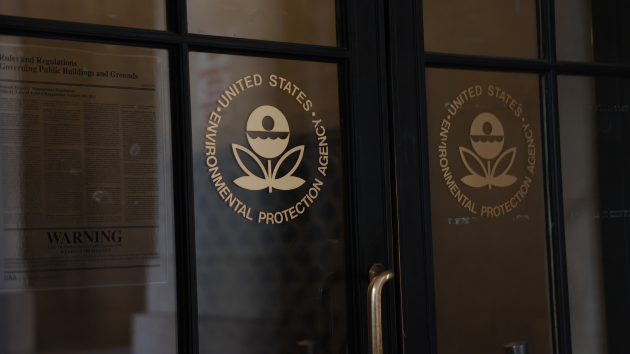
The Environmental Protection Agency (EPA) headquarters is seen on February 13, 2026 in Washington, DC. (Michael M. Santiago/Getty Images)
(WASHINGTON) — The Trump administration walked back an Obama-era environmental decision that has been the legal basis for establishing federal regulation of greenhouse gas emissions.
The Environmental Protection Agency (EPA) said on Thursday it was rescinding the 2009 endangerment finding, which determined that six key greenhouse gases threaten human health and welfare.
The regulations that resulted cover everything from vehicle tailpipe emissions to the release of greenhouse gases from power plants and other significant emission sources.
President Donald Trump called the move “the single largest deregulatory action in American history” and said the repealed finding had “no basis in fact” and “no basis in law.”
The endangerment finding stemmed from the 2007 Supreme Court decision Massachusetts v. EPA, which held that the EPA could regulate greenhouse gases from motor vehicles under the 1970 Clean Air Act because those gases are air pollutants.
Some environmental scientists disagree, telling ABC News that the rescission is concerning and could have major implications for health. They add that decades of research has shown the impact climate change has on human health.
“The evidence is so overwhelming,” Dr. Ana Navas-Acien, chair of the department of environmental health sciences at Mailman School of Public Health at Columbia University, told ABC News.
“The scientific evidence showing the connection between greenhouse emissions, climate change and then the related health effects — it’s massive, it’s substantial, it has been reviewed by independent organizations,” she said. “So, the fact that this body of evidence has become so well established, it just speaks to the level of rigorous science that has been done.”
How greenhouse gases, climate change impact health
Research has shown that greenhouse gases — such as carbon dioxide and nitrous oxide — drive climate change, and, in turn, can harm human health by exposing people to events including wildfire smoke, extreme heat, flooding and waterborne diseases.
For example, rising temperatures have direct harms on health by increasing risk of dehydration and causing more stress on the heart.
During heat waves, the risk of death from heart attack increases by 64%, according to a 2024 study from researchers at Yale School of the Environment.
Additionally, a 2025 study from Yale School of Public Health found that between 2000 and 2020, there were more than 3,400 preventable deaths in the contiguous U.S. due to high temperatures.
The World Health Organization has warned there will be an estimated 250,000 additional deaths around the world annually from 2030 to 2050 due to climate change-related heat exposure.
“We have recent studies showing heat exposure can lead to heart attack events … and it goes beyond just the cardiovascular system,” Kai Chen, an associate professor of epidemiology at Yale School of Public Health and faculty director of the Yale Center on Climate Change and Health, told ABC News. “It goes beyond these kinds of physical conditions or physical health, [also] impacting our mental health.”
High temperatures can also negatively impact the quality and quantity of sleep, which can raise levels of cortisol in the body.
Studies have also shown that extreme heat can exacerbate conditions such as depression, anxiety and suicide ideation. For the latter, a 2023 meta-analysis found that even a slight bump in the average monthly temperature can lead to increases in suicide and suicidal behavior.
“So, really, heat can lead to a broad spectrum of diseases,” Chen added.
In recent decades, wildfires in the western U.S. have become larger, more intense, and more destructive due to a combination of factors, including human-amplified climate change and rapid urbanization, according to the federal government’s Fifth National Climate Assessment.
The same report found that these fires are worsening air quality in many part of the country due to wildfire smoke, which is a mixture of gases, water vapor, air pollutants and fine particulate matter. The latter, known as PM2.5, is at least 30 times smaller in diameter than a human hair.
Experts say these particles are of concern because they are too small to be seen with the naked eye and can easily enter the nose and throat. They can travel to the lungs and even circulate in the bloodstream.
PM2.5 can cause both short-term health effects, even for healthy people, including irritation of the eyes, nose and throat; coughing, sneezing; and shortness of breath and long-term effects such as worsening of conditions such as asthma, heart disease or chronic obstructive pulmonary disease flare-ups.
“Recent evidence has shown that the fine particulate matter in the air can also impact dementia and cognitive function,” Chen said. “It can also affect birth outcomes, leading to pre-term birth and low birth weight. So, air pollution is a major risk factor.”
Regulating fossil fuel combustion reduced PM2.5-related deaths by approximately 54% from 1990 to 2010, according to 2018 joint study from researchers in the U.S. and China.
Short- and long-term implications
Navas-Acien believes that, in the short-term, the rescinding of the endangerment finding will lead to higher pollution levels.
“Higher pollution levels, if we allow that to happen, that means more pollutants in the air that we breathe, in the water that we drink, in the food that we eat,” she said. “And that’s going to result in a higher burden of chronic diseases and even not just chronic disease, but also like heart attacks.”
Research has shown that in the days following an increased level of air pollutants, there are more visits to emergency rooms and hospital admissions for cardiorespiratory events, according to Navas-Acien.
“So that tells you that the impacts of pollution, in the short term, are very rapid,” she added.
In the absence of federal protections, Navas-Acien and Chen said state and local leaders can take actions to reduce greenhouse gas emissions and improve air quality.
On the individual level, to protect yourself, the experts recommend frequently checking the air quality in your area, wearing a mask if air pollution levels are high and supporting the creation of urban green spaces to combat climate change.
Chen said the EPA rescinding the endangerment finding is “very concerning” because “the scientific evidence has not become weaker, but actually became much stronger, showing the health harms from the climate change stirring from the greenhouse gas emissions. This rollback of policy will actually be threatening millions of Americans’ lives.”
“Climate change is impacting our health right now,” Chen continued. “It’s not a political debate. It is science and the science is clear. We need to take action.”
Life of Agony performs at The O2 Institute Birmingham on March 2, 2025 in Birmingham, England. (Katja Ogrin/Redferns)
Life of Agony has released a live video for the band’s cover of “Don’t You (Forget About Me).”
The “River Runs Red” outfit put their spin on the ’80s classic, which was originally recorded by Simple Minds for the soundtrack to The Breakfast Club, for their 1995 album, Ugly. However, they never played it live until their 2025 tour celebrating the 30th anniversary of Ugly.
“Bringing it to the stage after all these years — and experiencing the live energy of the crowd — made the song one of the highlights of the set every night,” says bassist Alan Robert.
You can watch Life of Agony’s live “Don’t You (Forget About Me)” video on YouTube.
“Don’t You (Forget About Me)” was also just covered by Black Stone Cherry for their upcoming EP, Celebrate, due out March 6.
Dirty Heads have premiered a new song called “Seven Seas.”
“It feels like the universe is throwing some heavy waves our way right now,” says vocalist Jared Watson in a statement. “A lot of people close to me, including myself, have been feeling it. But every time I connect with my friends, I’m reminded that no matter what we’re each carrying, there’s always room to support one another.”
He adds, “‘Seven Seas’ is about that bond — being there for your friends and family, through anything.”
“Seven Seas” follows Dirty Heads’ 2022 album, Midnight Control, and its 2023 deluxe edition. The deluxe includes the single “Rescue Me,” which interpolates the Red Hot Chili Peppers hit “Dani California.”
Spotify considers the streaming era to have started in 2015, and now it has identified a list of 30 “Classic Pop Albums of the Streaming Era,” based on a survey of Spotify music editors.
The albums aren’t ranked, but they include some of the biggest albums of the past 10 years: Adele’s 25; Ariana Grande’s thank u, next; Bruno Mars’ 24K Magic; The Weeknd’s Starboy; Charli XCX’s Brat; Ed Sheeran’s Divide; Dua Lipa’s Future Nostalgia; Harry Styles’ Harry’s House; Olivia Rodrigo’s SOUR; Justin Bieber’s Purpose; Sabrina Carpenter’s Short n’ Sweet; and Carly Rae Jepsen’s Emotion.
The only artists with more than one album on the list are Billie Eilish and Taylor Swift. Billie’s WHEN WE ALL FALL ASLEEP, WHERE DO WE GO? is included, as is HIT ME HARD AND SOFT. Taylor’s albums are Reputation and Lover.
And a couple of albums that you might not expect are also on the list: Jessie Ware’s What’s Your Pleasure?, Kacey Musgraves’ Golden Hour,Revival by Selena Gomez and Oil of Every Pearl’s Un-Insides by the late artist SOPHIE.
Albums were chosen by “overall quality, execution, and cultural resonance,” as opposed to stream counts or “popularity,” the press release states.
“Together, these albums showcase a generation of artists using pop as a vehicle for experimentation and unfiltered emotion,” a statement notes. “They capture what pop can become when given space to mature: ambitious, expressive, and enduring.”
‘Idols’ album artwork. (Locomotion/Capitol Records)
Yungblud has achieved a career-first with his song “Zombie.”
The current single off the English artist’s latest album, 2025’s Idols, has hit #1 on the Billboard Alternative Airplay chart, marking the first Yungblud track to achieve that feat.
Yungblud’s previous peak on the ranking was #6, which he reached in 2022 with the song “Fleabag.”
“Zombie” is accompanied by a video starring Florence Pugh. Yungblud also released an alternate version of the song in collaboration with The Smashing Pumpkins.
Yungblud will launch a U.S. tour in support of Idols in May.
In case you’re curious, the 1994 Cranberries song “Zombie,” which has no relation to the Yungblud track, also hit #1 on Alternative Airplay.