A general view of a Mosque in Mogadishu on March 4, 2025. (Photo by Hassan Ali Elmi/ AFP via Getty Images)
(LONDON) — The U.S. embassy in Somalia has warned Americans that they are tracking “credible information” regarding potentially imminent terror attacks “against multiple locations in Somalia including Mogadishu’s Aden Adde International Airport,” officials said.
The U.S. embassy in Somalia’s capital city of Mogadishu said that all movements of embassy personnel have been canceled until further notice in a statement released on Tuesday.
“The U.S. Department of State level four travel advisory (“do not travel”) for Somalia remains in effect due to crime, terrorism, civil unrest, health issues, kidnapping, and piracy,” U.S. officials said.
“The U.S. Embassy in Somalia reminds U.S. citizens that terrorists continue to plot kidnappings, bombings, and other attacks in Somalia,” the statement continued. “They may conduct attacks with little or no warning, targeting airports and seaports, checkpoints, government buildings, hotels, restaurants, shopping areas, and other areas where large crowds gather and Westerners frequent, as well as government, military, and Western convoys.”
Shortly after Donald Trump’s return to the White House, the United States used manned fighter jets to conduct an airstrike against Islamic State targets in Somalia in early February.
President Donald Trump and Defense Secretary Pete Hegseth confirmed the airstrike, claiming no civilians were harmed in the attack. No details were released about the targets aside from the president labeling the target as a “Senior ISIS Attack Planner.”
Hegseth said the airstrikes were carried out “at President Trump’s direction and in coordination with the Federal Government of Somalia.”
The embassy warned that potential methods of attack include, but are not limited to, car bombs, suicide bombers, individual attackers and mortar fire.
“The U.S. government has extremely limited ability to provide emergency services to U.S. citizens in Somalia due to the lack of a permanent consular presence in Somalia,” officials said.
The embassy warned Americans who are still in Somalia to continue to exercise vigilance, review your personal security plans, notify a trusted person of your travel and movement plans and to avoid all large crowds, gatherings and demonstrations.
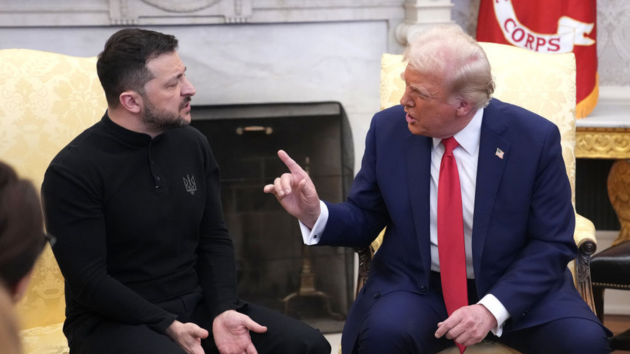
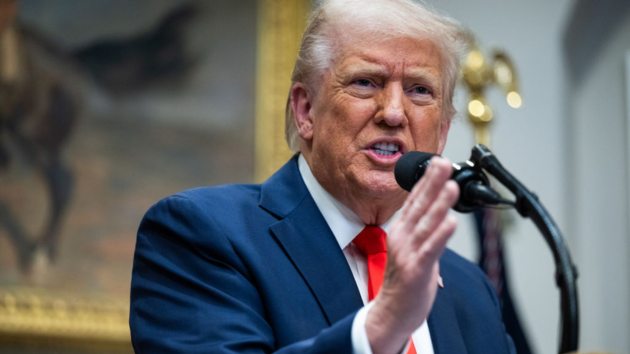
(WASHINGTON) — President Donald Trump signaled another twist in the back-and-forth over his effort to force a negotiated end to the Ukraine-Russia war during his speech Tuesday night.
As he first mentioned Ukraine 90 minutes into his address, Trump provided an update following last week’s blowup in the Oval Office between him and Ukrainian President Volodymyr Zelenskyy.
Zelenskyy left the White House after the shouting match and did not sign an anticipated deal that would have given the U.S. rare minerals from Ukraine.
Trump claimed during his speech Zelenskyy sent him a letter just before his speech indicating that he was ready to come back to the negotiating table and was willing to sign the agreement to give the U.S. access to Ukraine’s rare materials.
“Nobody wants peace more than the Ukrainians, he said. My team and I stand ready to work under President Trump’s strong leadership to get a peace that lasts. We do really value how much America has done to help Ukraine,” Trump claimed the letter said.
Zelenskyy and Ukrainian officials didn’t immediately comment, The letter hasn’t been released by the White House or Ukrainian officials.
Trump indicated to top advisers he wanted to get the deal done before the speech, sources told ABC News.
ABC News’ Katherine Faulders contributed to this report.
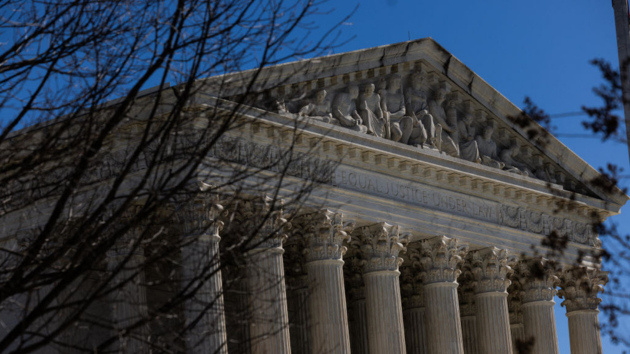
(WASHINGTON) — The Supreme Court on Tuesday appeared likely to block a historic $10 billion lawsuit against U.S. gun makers as both conservative and liberal justices raised concerns about allowing the government of Mexico to hold firearm manufacturers liable for cartel violence south of the border.
Federal law grants broad immunity to the gun industry, in part to protect companies from costly litigation that could drive them out of business. Mexico alleges the law creates an exception for “aiding and abetting” the illicit sale and trafficking of guns, which the companies deny.
Mexico has only one gun store but is awash in millions of American-made weapons, most funneled into the country by straw purchasers in the United States. The country claims the companies, including Smith & Wesson, Glock, Beretta and Colt, knowingly distribute and market their guns to be trafficked.
By one estimate, at least 200,000 guns flow south of the border each year. The country is seeking $10 billion in damages and court-mandated safety requirements around the marketing and distribution of guns.
“The laws broken here are designed to keep guns out of criminals’ hands. Those violations put guns in criminals’ hands and those criminals harmed Mexico,” Cate Stetson, Mexico’s attorney, told the Supreme Court.
“These acts were foreseeable,” she added. “This court need not vouch for Mexico’s allegations, but it must assume they are true. … Mexico should be given a chance to prove its case.”
Many of the justices seemed unconvinced by Mexico’s case should be allowed to move forward.
Justice Sonia Sotomayor suggested the alleged harms from cartel violence roiling Mexico are too far removed from the manufacturers’ decisions to distribute their products.
“We have repeatedly said mere knowledge is not enough [for liability],” Sotomayor said. “You have to aid and abet in some way. You have to intend and take affirmative action to … participate in what they’re doing.”
Justice Elena Kagan questioned what she perceived as a lack of specificity in Mexico’s allegations.
“There are lots of [gun] dealers. And you’re just saying [the gunmakers] know that some of them [engage in trafficking]. But which some of them? I mean, who are they aiding and abetting in this complaint?” Kagan said.
After Stetson alleged deliberate marketing of guns to cartels, Chief Justice John Roberts voiced skepticism of the claim.
“I mean, there are some people who want the experience of shooting a particular type of gun because they find it more enjoyable than using a BB gun,” he said. “And I just wonder exactly what the defendant, the manufacturer, is supposed to do in that situation. You say no, he shouldn’t be marketing a particular legal firearm because they’re going to go into Mexico at a higher percentage than others?”
Justice Brett Kavanaugh raised concern about the broader implications of a decision allowing Mexico’s suit to go forward.
“What do you do with the suggestion on the other side … that your theory of aiding and abetting liability would have destructive effects on the American economy in the sense that … lots of sellers and manufacturers of ordinary products know that they’re going to be misused by some subset of people?” he asked. “They know that to a certainty, that it’s going to be pharmaceuticals, cars, what — you can name lots of products. So that’s a real concern, I think.”
Stetson replied, “If you have a product manufacturer of a dangerous product that is alleged to have done all of the things knowing who they’re selling to and what is being done with that product, then and only then, I think, that product manufacturer … has a problem.”
More than 160,000 people in Mexico were killed by guns between 2015 and 2022, according to an analysis by Everytown for Gun Safety.
A large majority of guns involved in the shootings came from U.S. border states. More than 40% of illegal guns seized in Mexico over a five-year period came from Texas, according to a U.S. Government Accountability Office report.
In 2023 alone, more than 2,600 firearms were seized going south into Mexico, up 65% from the year before, according to the Department of Homeland Security, and 115,000 rounds of ammunition were captured headed the same direction, up 19% from 2022.
A federal district court dismissed Mexico’s case in 2022 citing immunity under federal law. The 1st U.S. Circuit Court of Appeals reversed that decision in early 2024, saying Mexico had made a plausible case for liability under the law’s exception.
The Supreme Court is expected to decide by the end of June whether or not a liability case can move forward.
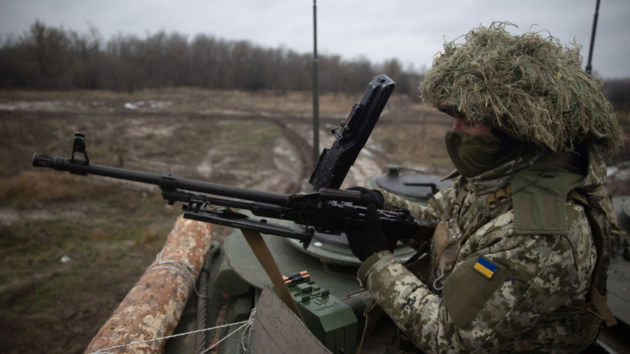
(LONDON) — President Donald Trump directed his administration to “pause” all military aid to Ukraine, two White House officials told ABC News on Monday, following last week’s combative Oval Office meeting with Ukrainian President Volodymyr Zelenskyy and with Trump pressuring Kyiv into accepting a peace deal to end Russia’s invasion of the country.
The freeze in American aid poses a severe strategic problem for Ukraine, which has become reliant on military and economic support from its Western partners as it tries to repel Russia’s three-year-old invasion and stave off President Vladimir Putin’s push for a peace deal beneficial to Moscow. Experts say that Ukraine and its European partners now produce most of the weaponry destined for the battlefield. But there are crucial American systems that Kyiv will struggle to replace.
“It’s shocking,” Oleksandr Merezhko, a member of the Ukrainian parliament and the chair of the body’s foreign affairs committee, told ABC News. “Until the last moment I hoped that Trump wouldn’t do it because he wants to be popular and such a move would definitely cause a backlash.”
“Trump is helping Putin to kill Ukrainians,” he added.
A White House official told ABC News that Trump has been clear that he is focused on peace. “We need our partners to be committed to that goal as well,” they said. “We are pausing and reviewing our aid to ensure that it is contributing to a solution.”
“It looks like Trump is trying to make a deal with Russia over the heads of Ukraine and Europe at the cost of Ukraine,” Merezhko said. “He doesn’t apply leverage over the aggressor but is trying to force the victim, the weaker party, to accept demands of the aggressor.”
“If Trump has a different plan in mind he should have at least talked to Zelenskyy about it behind closed doors, which never happened,” the lawmaker said.
Fellow member of parliament Oleksiy Goncharenko told Sky News that “thousands of people will die” due to the “catastrophic” decision.
Allied leaders and officials — already mobilizing to provide more aid and political backing for Ukraine in response to the Trump administration’s skepticism — also expressed concern over the White House decision.
“We need the Americans militarily,” Finnish Foreign Minister Elina Valtonen said during a Chatham House think tank event in London on Tuesday when asked about the aid pause. “On the battlefield, Russia has not really been advancing in recent months,” she added. “This definitely shouldn’t be a moment where we give in.”
Benjamin Haddad, The French minister delegate for Europe, said the pause to U.S. aid “means moving peace further away.” He added, “To end the war, pressure must be put on the aggressor, Russia,” suggesting European nations must now mobilize to fill the gap left by the U.S.
In Russia, meanwhile, Kremlin spokesperson Dmitry Peskov told journalists, “It is obvious that the U.S. has been the main supplier of this war so far,” as quoted by the state-run Tass news agency. “If the U.S. stops being one or suspends supplies, this will probably be the best contribution to the cause of peace,” Peskov said.
Two officials familiar with the matter told ABC News that around 90% of the military equipment committed to Ukraine by past Presidential Drawdown Authority packages have already been delivered to the country.
That includes the vast majority of critical munitions and anti-armor systems — such as Javelin anti-tank weapons — they said, adding that most of what is still in the pipeline are armored vehicles that take longer to refurbish. Those were expected to be ready for delivery in the coming months, with all PDA equipment previously on track for delivery by August 2025.
A steady flow of arms is still set to move from the U.S. to Ukraine for at least the next several years thanks to contracts Kyiv signed with private American companies for newly produced weapons.
Many — if not most — of those contracts have been paid. The Trump administration could still attempt to disrupt those shipments through the use of emergency authorities, but there is currently no indication it is trying to do so.
Exactly what equipment earmarked for Ukraine will now be frozen in place is not clear.
Among former President Joe Biden’s final four PDA packages announced in December and January — collectively worth some $3 billion — were missiles and support equipment for Ukraine’s U.S.-made F-16 fighter jets, rockets for use by American-made HIMARS systems, artillery munitions and surface-to-air missiles for Ukrainian air defense batteries.
Malcolm Chalmers, the deputy director-general of the Royal United Services Institute think tank in the U.K., told ABC News that recent estimates indicate the U.S. share of all military hardware sent to the front has fallen to around 20%, with 25% coming from Europe and 55% domestically produced in Ukraine.
But the 20% accounted for by the U.S. “is the most lethal and important,” Chalmers said. “Ukraine will not collapse — they already experienced an aid cutoff last year. But the effect will be cumulative.”
The Washington-based Institute for the Study of War suggested that the suspension of U.S. aid will encourage Putin “to continue to increase his demands and fuel his conviction that he can achieve total victory through war.”
Mykola Bieleskov, an analyst at Ukraine’s National Institute for Strategic Studies, told ABC News that Ukraine can keep fighting at the current tempo for six months to a year while Europe and Kyiv try to ramp up production to fill the gap.
A member of Ukraine’s parliamentary defense committee, Fedir Venislavskyi, told Ukrainian media that Kyiv has a resilience reserve of about six months — even without systematic support from the U.S.
Still, Venislavskyi said the situation will be complicated by any freeze in U.S. aid, adding that work is currently underway to find alternative sources of supply for critically important weaponry.
ABC News’ Rachel Scott, Michelle Stoddart, Shannon Kingston and Luis Martinez contributed to this report.
(MEXICO CITY) — There is only one gun store in the entire country of Mexico, yet America’s southern neighbor is awash in violent crimes perpetrated with millions of firearms made in the United States.
In a historic case on Tuesday, the Supreme Court will consider whether American gun manufacturers, including Smith & Wesson, Glock, Beretta and Colt, can be held liable for allegedly “aiding and abetting” the illicit flow of weapons across the border.
The high court has never before taken up the issue of the sweeping gunmaker immunity found in a 2005 federal law aimed at protecting the industry. Its decision could have a significant impact on firearm companies and the victims of gun violence pursuing accountability.
The government of Mexico is seeking $10 billion in damages and court-mandated safety mechanisms and sales restrictions for U.S.-made guns. The justices will decide whether the case can move forward under an exception in the law.
“Between 70-90% of the crime guns in Mexico are illegally trafficked from the U.S.,” said Jonathan Lowy, an attorney representing the Mexican government. “Essentially, Mexico’s gun problem and the problem of armed cartel violence is almost entirely a result of this crime — a gun pipeline from the U.S. gun manufacturers ultimately to the cartels.”
The Protection of Lawful Commerce in Arms Act of 2005 broadly bars lawsuits against any gun manufacturer over the illegal acts of a person using one of a manufacturer’s guns. But it does create an exception for claims involving a gun company’s alleged violation of rules governing the sale and marketing of firearms.
Mexico alleges the manufacturers have for years knowingly marketed and distributed their weapons to border community dealers who participate in illegal gun trafficking into Mexico.
“The law is clear that any person or company can be responsible for the foreseeable consequences of their actions and, in this case, of their deliberate actions,” Lowy said.
The gun companies, which declined ABC News’ request for an interview, said in court documents that the exception does not apply and the case should be dismissed, in part, because the alleged link to crimes in Mexico is too diffuse and far removed.
“Mexico’s alleged injuries all stem from the unlawful acts of foreign criminals,” the gun companies argued in their Supreme Court brief.
The court has “repeatedly held that it requires a direct connection between a defendant’s conduct and the plaintiff’s injury,” the companies claimed. “Thus, the general rule is that a company that makes or sells a lawful product is not a proximate cause of harms resulting from the independent criminal misuse of that product.”
More than 160,000 people in Mexico were killed by guns between 2015 and 2022, according to an analysis by Everytown for Gun Safety.
A large majority of guns involved in the shootings came from U.S. border states. More than 40% of illegal guns seized in Mexico over a five-year period came from Texas, according to a U.S. Government Accountability Office report.
In 2023 alone, more than 2,600 firearms were seized going south into Mexico, up 65% from the year before, according to the Department of Homeland Security, and 115,000 rounds of ammunition were captured headed the same direction, up 19% from 2022.
“In its zeal to attack the firearms industry, Mexico seeks to raze bedrock principles of American law that safeguard the whole economy,” the companies wrote in their brief. “It is the criminal who is responsible for his actions, not the company that made or sold the product.”
A federal district court dismissed Mexico’s case in 2022 citing the PLCAA protections. The 1st U.S. Circuit Court of Appeals reversed that decision in early 2024, saying Mexico had made a plausible case for liability under the law’s exception.
The Supreme Court will decide whether to affirm that judgment and allow the case to continue toward what would be a first-of-its-kind trial.
Mexico, in the meantime, announced it will expand its lawsuit after the Trump administration designated six Mexican cartels as Foreign Terrorist Organizations.
“You will also see an expansion of this lawsuit for the complicity of those who sell weapons, which are [then] introduced into our country,” Mexican President Claudia Sheinbaum told reporters last month.
In essence, Mexico will argue that American gun manufacturers aren’t just enabling ordinary gun crime but terrorism, by the U.S. government’s own characterization.
The Supreme Court is expected to deliver an opinion in the case, Smith & Wesson Brands v. Estados Unidos Mexicanos, by the end of June.
ABC News’ Matt Rivers and Patty See contributed to this report.
North Korean defector Ryu Seong-hyeon in Seoul, South Korea. (ABC News)
(SEOUL) — A former sergeant in the North Korean military says that few of Pyongyang’s soldiers have been captured fighting against Ukraine because they’re told their families will be executed if they are caught alive.
“Most soldiers will kill themselves before they’re killed by the enemy, it’s the biggest shame to be captured,” the former soldier, Ryu Seong-hyeon, told ABC News.
Ryu defected to South Korea in 2019, running across a minefield in the demilitarized zone that separates the two Koreas.
Pyongyang has deployed more than 12,000 soldiers to Russia to fight in the Ukraine war, according to US estimates, with experts claiming Russian forces have also used North Korean weapons.
An estimated 300 North Korean soldiers have died in the fighting, and over 2,700 have been wounded, Seoul’s National Intelligence Service told lawmakers in a closed briefing last week.
Pyongyang has deployed more than 12,000 soldiers to Russia to fight in the Ukraine war, according to US estimates, with experts claiming Russian forces have also used North Korean weapons.
An estimated 300 North Korean soldiers have died in the fighting, and over 2,700 have been wounded, Seoul’s National Intelligence Service told lawmakers in a closed briefing last week.
South Korea’s spy agency told journalists Thursday that an unknown number of additional North Korean soldiers have been sent to the frontlines in Russia’s western Kursk region since early February, after a near month-long lull in fighting against Ukrainian troops, who launched a surprise offensive across the border last August.
Ukrainian President Volodymyr Zelenskyy announced in January that his forces had captured two North Korean soldiers, marking the first time that Ukraine had captured Pyongyang’s troops alive.
In a nearly 3-minute video released by Ukraine following the capture of the two North Korean troops, one of the soldiers says he wants to remain in Ukraine when asked if he wishes to return home. The Korean translator asks, “Did you know you were fighting in a war against Ukraine?” The soldier shakes his head.
South Korean intelligence assessed that the two soldiers were with the Reconnaissance General Bureau, a key North Korean military intelligence agency.
“If the soldiers are captured and tell information to the enemy, their families will be punished, go to a political prison camp, or worse, they will be executed in front of the people,” said another North Korean defector, Pak Yusung.
‘They just die like a dog’
Pyongyang’s soldiers have struggled to adapt to the modern battlefield, the North Korean defectors suggested, as videos released by the Ukrainian military appear to show North Korean soldiers being chased down by attack drones.
Ryu and Pak defected long before the fighting that’s underway in Russia, but they said that, in their experience, most of the soldiers would not have seen a drone in their life.
“Before they go they don’t have any practice in how to defend against a drone or how to fight Ukrainians, that’s why they just die like a dog,” Ryu said. “They don’t have the skill, the language or the information.”
Pak and Ryu’s analysis lines up with information released by South Korean intelligence, which said North Korea has clearly instructed the soldiers to kill themselves to avoid being captured alive.
Seoul’s spy agency also said it attributes the “massive casualties” of North Korean soldiers to their “lack of understanding of modern warfare,” including their “useless” act of shooting at long-range drones, based on the agency’s analysis of a recent combat video.
Ryu, who was about 110 lbs. at the time of his defection, said if he were still a North Korean soldier, he would also want to go: “If I went to Ukraine, I could eat food, and I could see another country.” He said there are also big financial incentives, and the soldiers would have no idea that their chances of dying were so high.
Selling lies
Ryu and Pak said North Korean soldiers were being sold a lie. “From a young age they’re told to hate the American ‘wolves’, and now they are told they are finally killing Americans,” the defectors said.
Ryu said in his experience with the Korean air force, about 50% of the pilots were only trained in theory, and did not have experience flying a fighter jet.
Pak, who is a researcher at the North Korea Institute, said Kim would be receiving critical technology in exchange for the manpower, in what should be a deeply worrying sign for the world, Kim also gets more real combat experience in case of a war on the peninsula.
“If Russia wins the war, it will empower the dictator alliance,” Pak said.
“This is just the start. If the Ukraine war keeps going, Kim will keep sending soldiers. Inside North Korea more people will start knowing and that could be a threat to Kim.”
When asked what they could possibly do about it when living in a dictatorship controlled by fear, Pak said, “Think about it: your sons died on the battlefield and not for your own country.”
Ryu added, “You cannot send so many people to the labor camps.”
Pak and his team of four North Korean defectors, Voices of North Korean Youth, have been trying to push the international community to condemn Russia and North Korea with one voice, and also called for the International Criminal Court to hold Kim Jong Un accountable.
(ROME) — Pope Francis “slept all night” following Monday’s medical intervention amid two episodes of “acute respiratory failure,” the Vatican said Tuesday.
“The pope slept all night, now he continues his rest,” the Holy See, the Vatican’s press office, said in a brief update.
The episodes on Monday were caused by a “significant accumulation of endobronchial mucus and consequent bronchospasm,” the Vatican said.
According to doctors, acute respiratory failure indicates the pope was not responding to oxygen therapy. Endobronchial mucus means there is mucus and fluid in the deep parts of the lung or lungs, causing a bronchospasm, also known as a coughing attack, doctors said.
The pope’s prognosis “remains reserved,” the Vatican said in its Monday evening update.
Francis, who has led the Catholic Church since 2013, was admitted to Rome’s Gemelli Hospital on Feb. 14 and was diagnosed with bilateral pneumonia. The 88-year-old pontiff had a bronchospasm attack on Friday, church officials said.
ABC News’ Youri Benadjaoud contributed to this report.
This is a developing story. Please check back for updates.
Annabelle Gordon for The Washington Post via Getty Images
(WASHINGTON) — President Donald Trump directed his administration to “pause” military aid to Ukraine after the contentious Oval Office meeting with Ukrainian President Volodymyr Zelenskyy on Feb. 28, two White House officials told ABC News.
A White House official said Trump has been clear that he is focused on peace and added, “We need our partners to be committed to that goal as well. We are pausing and reviewing our aid to ensure that it is contributing to a solution.”
The move came hours after Trump told ABC News that Zelenskyy needed to be “more appreciative.”
Senior Politics Correspondent Rachel Scott asked Trump on Tuesday: “What do you need to see from President Zelenskyy to restart these negotiations?”
“Well, I just think he should be more appreciative because this country has stuck with them through thick and thin,” the president responded.
It’s difficult to know exactly how the pause could impact the flow of previously granted aid.
In the last few months of former President Joe Biden’s administration, it announced four Presidential Drawdown Authority packages to Ukraine.
The packages totaled $3 billion in weapons from the Pentagon’s inventory, and they were meant to be provided to Ukraine as quickly as possible following the announcements in December and January.
About 90% of arms committed to Ukraine by past PDA packages have already been delivered to the country, according to two U.S. officials familiar with the matter.
That includes the vast majority of critical munitions and anti-armor systems, they say, adding that most of the what’s left to go through the pipeline are armored vehicles that take longer to refurbish, with all PDA equipment previously on track for delivery by August 2025.
However, a steady flow of arms is still set to move from the U.S. to Ukraine for at least the next several years due contracts Kyiv signed with private American companies for newly produced weapons. Many if not most of those contracts have been paid.
The Trump administration could still attempt to disrupt those shipments through the use of emergency authorities, but there’s no indication it is trying to do that at present.
Additionally, there is still a chance for negotiations to resume between the U.S. and Ukraine, as Vice President JD Vance implied during an appearance on Fox News’ “Hannity” on Monday.
Vance was asked if the administration would welcome Zelenskyy back if he were willing to come back to the negotiating table. Vance said yes — if Zelenskyy were willing to “engage seriously.”
“I think that if he called and had a serious proposal for how he was going to engage in the process — look, there are details that really matter, that we’re already working on with the Russians,” Vance said.
“He needs to engage seriously on the details,” he added, though it was unclear if he was strictly referring to the raw minerals deal that the U.S. is pursuing with Ukraine, land concessions or other details that may be impacting negotiations.
“I think once that happens, then absolutely, we want to talk,” the vice president said.
Also in dispute is the amount of aid that the U.S. has already given Ukraine. Trump has repeatedly claimed, inaccurately, that the United States has spent some $350 billion toward Ukraine, while other sources put the figure well under $200 billion, including bilateral aid.
ABC News’ Shannon Kingston, Luis Martinez and T. Michelle Murphy contributed to this report.
A passenger at Boston Logan was stung by a scorpion while retrieving her luggage in the baggage claim area of customs, according to police. (Massport)
(BOSTON) — A passenger at Boston Logan was stung by a scorpion while retrieving her luggage in the baggage claim area of customs, according to police.
The incident occurred at approximately 7:30 p.m. on Sunday evening while she was at Logan Airport Terminal E picking up her bags after flying back from Mexico when she was suddenly stung on her finger by a scorpion, according to statements from the Massachusetts State Police and Boston EMS.
She was taken to a nearby hospital for immediate treatment, according to the police and Boston EMS.
Authorities did not immediately disclose her condition following the sting and it is unclear how the scorpion ended up on her bag at the airport.
“While most scorpion stings are not serious, medical attention may be needed for pain management and wound care, including preventive tetanus vaccine,” according to the Centers for Disease Prevention and Control. “Young children may be more likely to develop neurologic symptoms and need urgent treatment.”
Scorpions are not typically found in the Boston area but over 2,000 species of the predatory arachnids exist worldwide, according to the Mayo Clinic.
“Scorpions can be found on every continent except Antarctica but are most commonly seen in subtropical and tropical areas of the world,” the CDC says. “Scorpion stings often cause intense pain and redness, but venom from some species can cause severe illness, affecting the heart, nervous system, and other organs. Manifestations include agitation, arrhythmias, bleeding and other coagulation disorders, pancreatitis, uncontrollable muscle spasms, shock, and even death.”
(ROME) — Pope Francis suffered two episodes of “acute respiratory failure” on Monday, the Vatican said.
The episodes were caused by a “significant accumulation of endobronchial mucus and consequent bronchospasm,” the Vatican’s press office said in a brief statement.
Two bronchoscopies were performed on the pontiff, with “the need to aspirate abundant secretions.” Non-invasive mechanical ventilation was resumed on Francis and he continues to be “alert, oriented and cooperative,” the Vatican said.
His prognosis “remains reserved,” the Vatican said.
Earlier Monday, the Vatican said the pope “rested well” overnight, his 17th night in Rome’s Gemelli Hospital.
“The pope rested well all night,” the Holy See, the Vatican’s press office, said in a brief statement.
The pope’s clinical condition had on Sunday remained “stable,” the church said. Vatican sources told ABC News on Sunday that the pope had eaten breakfast with coffee and continued his treatment. He read the daily newspapers, as usual, the sources said.
Francis, who has led the Catholic Church since 2013, was admitted to Gemelli on Feb. 14 and was diagnosed with bilateral pneumonia.
The 88-year-old pontiff had been in stable condition on Saturday, church officials said, following a bronchospasm attack on Friday.
This is a developing story. Please check back for updates.