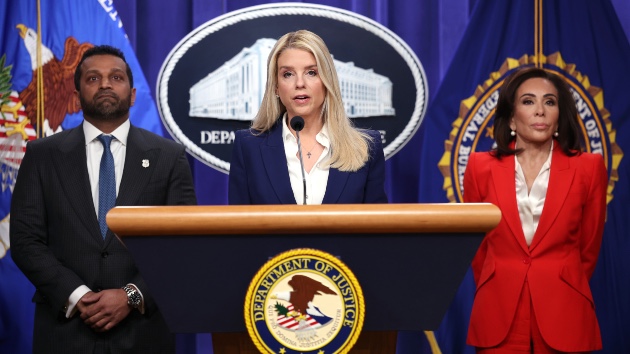
U.S. Attorney General Pamela Bondi (C), Federal Bureau of Investigation (FBI) Director Kash Patel (L) and U.S. Attorney for Washington, DC Jeanine Pirro make a press announcement at the Department of Justice on February 6, 2026 in Washington, DC. Bondi announced the FBI has captured and extradited Zubayr al-Bakoush, a suspect in the 2012 attack on the US Embassy in Benghazi, Libya. (Photo by Kevin Dietsch/Getty Images)
(NEW YORK) — A suspect in the 2012 terrorist attack on the U.S. embassy in Benghazi, Libya, has been arrested and brought back to the United States, Attorney General Pam Bondi said Friday.
Zubayr al-Bakoush was brought back to Andrews Air Force Base at 3 a.m., she said.
On Sept. 11, 2012, a group of men stormed into the diplomatic compound in Benghazi. Four Americans were killed in the attack.
The suspect is charged with the murder of Ambassador Chris Stevens and three others, according to the U.S. attorney.
“Bakoush was first charged by complaint in 2015 which was sealed for 11 years, an indictment, an eight count indictment, has been unsealed, and it charges Bakoush with the murder of Ambassador Chris Stevens, the murder of State Department employee Sean Smith, the attempted murder of State Department Special Agent Scott Wicklund and conspiracy to provide materials for terrorists and support that resulted in the death of four Americans, as well as arson at the special mission,” U.S. Attorney Jeannine Pirro said alongside the Bondi and FBI Director Kash Patel.
This is a developing story. Please check back for updates.
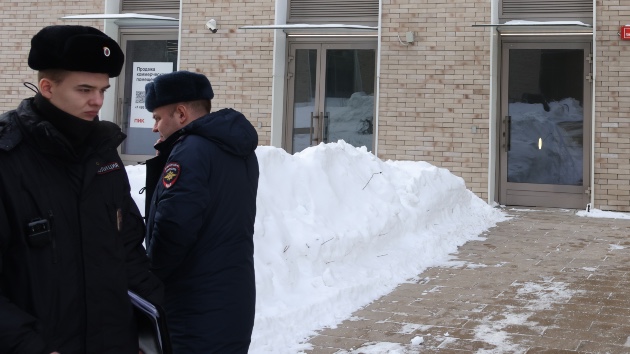
Russian Police officers walk next to the entrance of a residential building on Volokolamsk Highway, where an assassination attempt on General Lieutenant Alexeyev (Alekseev) was made earlier in the morning, on February 6, 2026, in Moscow, . (Photo by Contributor/Getty Images)
(LONDON) — Lt. Gen. Vladimir Alexeyev, a high-ranking Defense Ministry official, was shot and injured in an ambush-style attack on Friday in a residential area of Moscow, according to the Investigative Committee of Russia and state-affiliated media.
“According to investigators, on Feb. 6, 2026, in a residential building located on Volokolamskoye Highway in Moscow, an as-yet-unidentified individual fired several shots at a man and fled the scene,” Svetlana Petrenko, the committee’s spokesperson, said in Russian on the Telegram messaging app.
The victim was transported to a local hospital, Petrenko said. She did not immediately describe the extent of his injuries.
State-affiliated news outlet TASS identified the victim as Alexeyev, adding that a criminal investigation had been launched.
“Special services are currently doing their job,” Kremlin spokesperson Dmitry Peskov said. “Of course, this has been reported to the head of state. We wish the general a speedy recovery.”
Sergey Lavrov, Russia’s foreign minister, claimed without evidence that Ukraine and its president, Volodymyr Zelenskyy, may be responsible for the shooting. He suggested that it may be an attempt by Ukraine to disrupt negotiations between Washington, Kyiv and Moscow.
“The regime is ready to do anything to convince its Western sponsors not to lag behind the United States in their desire to derail the process of achieving a just settlement,” Lavrov told reporters at a briefing on Friday.
ABC News’ Joe Simonetti, Dragana Jovanovic and Anna Sergeeva contributed to this report.
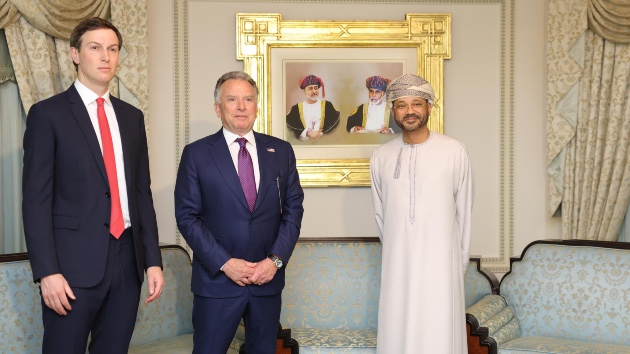
In this handout photo released by the Omani Ministry of Foreign Affairs on Feb. 6, 2026, Omani Foreign Minister Sayyid Badr Hamad Al Busaidi, US President Donald Trump’s Special Representative for the Middle East, Steve Witkoff and U.S. negotiator Jared Kushner meet ahead of the US-Iran talks, in Muscat, the capital of Oman. (Photo by Oman Foreign Ministry/Anadolu via Getty Images)
(LONDON) — Negotiating teams from the United States and Iran are expected to meet on Friday in Oman, marking a reopening of nuclear talks following weeks of tensions and threats, as leaders in Tehran oversaw a deadly crackdown on widespread protests.
The U.S. side will be led by President Donald Trump’s Middle East envoy, Steve Witkoff, and Trump’s son-in-law Jared Kushner, according to the White House.
“The President has obviously been quite clear in his demands of the Iranian regime,” Karoline Leavitt said on Thursday during a press briefing. “Zero nuclear capability is something he’s been very explicit about.”
Iranian state-run media published photos and videos early on Friday of Foreign Minister Abbas Araghchi in the Omani capital, where he met with his local counterpart.
“Iran enters diplomacy with open eyes and a steady memory of the past year. We engage in good faith and stand firm on our rights,” Araghchi said on social media on Friday.
The talks, which were expected to begin at 10 a.m. local time, followed weeks of escalating tension between the U.S. and Iran, fueled in part by massive protests that have roiled Iran.
Those protests began in Tehran in late December in response to the collapse of the Iranian currency and the worsening of economic conditions, and then quickly took on a political character — with crowds on the streets openly calling for regime change.
Iranian authorities responded by launching a brutal crackdown on protests, according to observers. At least 6,495 protesters, along with hundreds of members of the state’s security forces, have been killed, according to the U.S.-based Human Rights Activist News Agency, an activist group. The group said it was reviewing thousands of other cases of possible deaths. ABC News cannot independently verify those figures.
As those protests escalated in January, Trump voiced concern for the protesters, saying, “I have cancelled all meetings with Iranian Officials until the senseless killing of protesters STOPS. HELP IS ON ITS WAY.”
Trump later in January said a “massive Armada” was heading toward the region. He warned Tehran to make a nuclear deal, saying another U.S. attack would be “far worse” than the U.S. strike on nuclear sites within Iran in June of last year.
The Iranian foreign minister responded by saying the country’s military had “their fingers on the trigger.”
Those tensions had to some extent begun to thaw by last week, when Iran’s president, Masoud Pezeshkian, said he had instructed Araghchi to pursue “fair and equitable” talks with Washington. The White House had sought help from regional allies, who assisted in bringing Iran back to the negotiating table, according to both countries.
Araghchi said on Friday that any commitments made between the two countries “need to be honored,” adding, “Equal standing, mutual respect and mutual interest are not rhetoric — they are a must and the pillars of a durable agreement.”
Members of the Trump administration last held a series of nuclear talks with Iran in April and May 2025 in Oman. A round of those talks planned for June was scuttled after Israel launched aerial strikes on Iran, an attack that the U.S. later joined.
Senior U.S. officials have continued publicly voicing concerns about the Iranian leadership in the days since the latest round of talks were announced.
“The Iranian regime does not reflect the people of Iran, nor their culture rooted within a deep history,” Secretary of State Marco Rubio said on Thursday. “I know of no other country where there’s a bigger difference between the people who lead the country and the people who live there.”
The virtual U.S. Embassy in Iran posted on Thursday a security alert again calling for all U.S. citizens to depart Iran, provided it’s safe for them to do so.
“If you cannot leave, find a secure location within your residence or another safe building,” the alert said.
Leavitt on Thursday said Trump was seeking a deal with Iran, but, she added, “I would remind the Iranian regime that the President has many options at his disposal, aside from diplomacy, as the commander in chief of the most powerful military in the history of the world.”
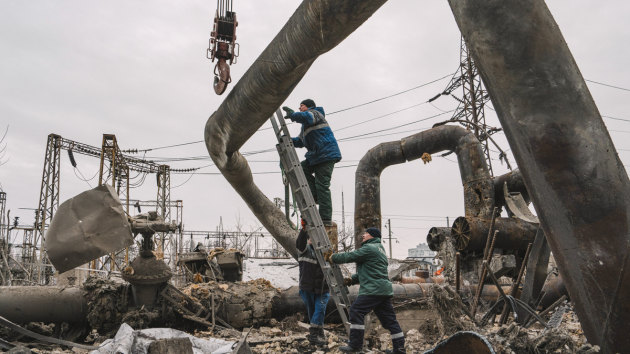
Workers clear damaged pipework at the Darnytsia Thermal Power Plant following Russian air strikes in Kyiv, Ukraine, on Wednesday, Feb. 4, 2026. (Andrew Kravchenko/Bloomberg via Getty Images)
(LONDON) — Trilateral talks between American, Ukrainian and Russian negotiators concluded in the United Arab Emirates on Thursday, with Moscow and Kyiv exchanging hundreds of prisoners of war and the U.S. and Russia agreeing to “reestablish high level military-to-military dialogue.”
Ukrainian President Volodymyr Zelenskyy said on Wednesday that Kyiv expected an exchange of prisoners of war with Russia “in the near future,” following the first round of talks in Abu Dhabi.
U.S. President Donald Trump’s peace envoy, Steve Witkoff, posted to X on Thursday morning with more details of the exchange, which he said would involve 314 prisoners and would be the first such exchange for five months.
“This outcome was achieved from peace talks that have been detailed and productive,” Witkoff wrote. “While significant work remains, steps like this demonstrate that sustained diplomatic engagement is delivering tangible results and advancing efforts to end the war in Ukraine.”
United States European Command later released a statement saying that, following the talks in the UAE, U.S. and Russian negotiators had also agreed “to reestablish high level military-to-military dialogue,” which has been suspended since late 2021.
“Maintaining dialogue between militaries is an important factor in global stability and peace, which can only be achieved through strength, and provides a means for increased transparency and de-escalation,” EUCOM said. “This channel will provide a consistent military-to-military contact as the parties continue to work towards a lasting peace.”
The prisoner of war exchange took place soon after the conclusion of Thursday’s meetings. Zelenskyy posted a video of the returning Ukrainian soldiers. “Today’s exchange came after a long pause, and it is critical that we were able to make it happen,” the Ukrainian president wrote on X.
Kyrylo Budanov, formerly the head of Ukrainian military intelligence and now serving as the head of Zelenskyy’s presidential office, confirmed in a post to X that 157 Ukrainian prisoners of war had been returned to Ukraine. Of those freed, 139 had been held since 2022, Budanov said.
The Russian troops involved were released into Belarus — which has provided extensive support for Moscow’s invasion of Ukraine. They were expected to travel to medical facilities in Russia for treatment and rehabilitation, the Russian Defense Ministry said in a statement.
Zelenskyy’s office told ABC News that Thursday’s talks in Abu Dhabi had ended by around 4 p.m. local time — 7 a.m. ET.
The Ukrainian delegation included Rustem Umerov, the secretary of Ukraine’s National Security and Defense Council, Budanov, and and Andrii Hnatov, the chief of the General Staff.
The Russian team included Kiril Dmitriev, the CEO of the Russian Direct Investment Fund, and Igor Kostyukov, the head of the GRU military intelligence service.
The U.S. delegation was led by presidential peace envoy Steve Witkoff and Jared Kushner, Trump’s son-in-law.
Umerov said in a post to Telegram that Wednesday’s “work was substantive and productive, with a focus on specific steps and practical solutions.”
Dmitriev — who has been a leading figure in Moscow’s direct negotiations with the Trump administration through Witkoff — told reporters after Wednesday’s talks that there “is certainly progress, and good, positive movement forward,” as quoted by Russia’s state-run Tass news agency.
Dmitriev also criticized what he said were “warmongers from Europe, from Britain,” who he alleged “are constantly trying to hinder this process.”
Secretary of State Marco Rubio on Wednesday urged patience when speaking with reporters. “For the first time in a very long time we have technical military teams from both Ukraine and Russia meeting in a forum that we’ll also be involved with,” Rubio said in a video posted to the State Department’s X page.
“Progress is probably not going to be known, even via leaks, until we really have a breakthrough. Our goal is to remain committed,” Rubio added.
Zelenskyy said on Wednesday that Kyiv is focused on a clear and lasting end to the war. “Russia must be ready for this. And partners must also be ready to ensure it in real terms with their real guarantees — security guarantees — and their real pressure on the aggressor,” he said in an evening address.
“It must be felt now — people in Ukraine must feel that the situation is genuinely moving toward peace, toward an end to the war, and not toward a scenario in which the Russians exploit everything to their advantage and continue their strikes,” he added
“There must be no rewards for the aggressor — if any reward is given to the aggressor, Russia will, over time, break any agreement,” Zelenskyy said.
Both Moscow and Kyiv described the first round of trilateral talks last month as constructive.
Among the key areas of divergence are the fate of Ukraine’s eastern Donbas region, which Russia has partially occupied and from which Moscow is demanding a full Ukrainian military withdrawal.
Also under discussion is control of the Zaporizhzhia Nuclear Power Plant in southern Ukraine, which was occupied by Moscow’s forces since March 2022.
So too are post-war Western security guarantees for Ukraine, without which Kyiv says Moscow will be able to launch a new round of aggression in the future.
Meanwhile, both Russia and Ukraine continued to exchange long-range missiles and drone attacks overnight into Thursday morning.
Ukraine’s air force said Russia launched two missiles and 183 drones into the country overnight, of which 156 drones were shot down or suppressed. The missiles and 22 drones impacted across 16 locations, the air force said.
Ukraine’s State Emergency Service (SES) reported drone impacts in several districts of Kyiv. City Mayor Vitali Klitschko said at least two people were injured. The SES also said attacks were recorded in the northeastern border city of Sumy and the central Dnipropetrovsk region.
Russia’s Defense Ministry said its forces shot down 95 Ukrainian drones overnight.
At least one person was injured in Russia’s southeastern Rostov, local Gov. Yuri Slyusar said in a post to Telegram.
Ukraine’s General Staff said in a statement that its forces struck targets on Russian-controlled territory including a training site in occupied Zaporizhzhia, a logistics hub in occupied Donetsk and an electronic warfare facility in Russia’s western Bryansk region.
Meanwhile, both Ukrainian and Russian military bloggers reported that unauthorized Starlink satellite communications terminals in use by Russian forces had been disrupted or disconnected, following a public appeal by Kyiv to Starlink producer SpaceX and its owner Elon Musk.
Ukrainian Defense Minister Mykhailo Fedorov said on Telegram that Kyiv has been working with SpaceX to verify Starlink terminals in use by Ukrainian forces, allowing them to remain operational.
Starlink terminals have been widely used by both sides during the ongoing conflict to enhance battlefield connectivity. Ukrainian officials have also accused Russia of using Starlink’s network to guide attack drones in strikes deep inside Ukraine, including on civilian targets.
ABC News’ Fidel Pavlenko, Kevin Shalvey, Somayeh Malekian and Othon Leyva contributed to this report.
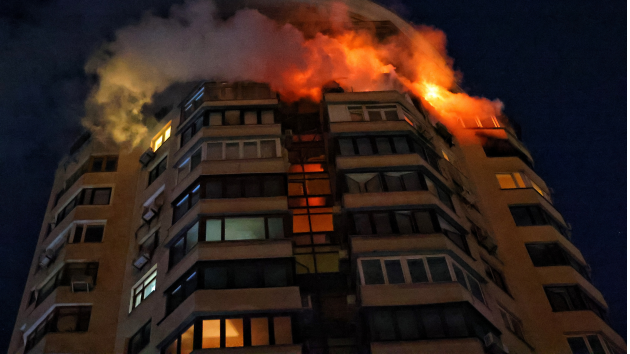
The upper floors of a multi-storey building burn after debris from a Russian drone falls on February 3, 2026 in Kyiv, Ukraine. (Yan Dobronosov/Global Images Ukraine via Getty Images)
(LONDON) — American, Ukrainian and Russian representatives gathered again in the United Arab Emirates on Wednesday for the next round of trilateral talks regarding a possible end to Moscow’s full-scale invasion of its neighbor, the fourth anniversary of which will come later this month.
The talks in Abu Dhabi are expected to run until Thursday. The negotiations are the second instalment of the trilateral format, the first also having been held in Abu Dhabi last month.
Both Moscow and Kyiv described the first round of trilateral talks as constructive, but key areas of disagreement remain.
Among them are the fate of Ukraine’s eastern Donbas region, which Russia has partially occupied and from which Moscow is demanding a full Ukrainian military withdrawal — a proposal rejected by Kyiv.
Control of the Zaporizhzhia Nuclear Power Plant in southern Ukraine — occupied by Moscow’s forces since March 2022 — is also an important point of discussion.
Another unresolved issue is the nature of post-war Western security guarantees for Ukraine, without which Kyiv says Moscow will be able to launch a new round of aggression in the future. The binding involvement of American forces in those security guarantees is a key Ukrainian demand.
Russia has consistently said it will not accept the deployment of any NATO troops in Ukraine post-war. But following talks with U.S. President Donald Trump’s peace envoy Steve Witkoff over the weekend, Russian negotiator Kirill Dmitriev said, “Some security guarantees in some form may be acceptable.”
Rustem Umerov, the secretary of Ukraine’s National Security and Defense Council and the leader of Kyiv’s delegation, said in a post to Telegram on Wednesday that the latest round of talks were underway.
“The negotiation process started in a trilateral format — Ukraine, USA and Russia,” Umerov wrote. “Next, work will continue in separate groups by areas, after which a repeated joint synchronization of positions is planned.”
Kremlin spokesperson Dmitry Peskov, meanwhile, told journalists on Wednesday that Moscow “is continuing its special military operation. The door to a peaceful settlement is open, and Russia remains open,” he said, as quoted by Russia’s state-run Tass news agency.
The delegations gathered on Wednesday as Ukraine reeled from a major Russian drone and missile bombardment on Monday night, which Ukrainian officials said caused serious damage to the country’s energy grid.
This winter has seen intense and sustained Russian strikes on Ukrainian energy infrastructure, prompting regular blackouts for millions of Ukrainians amid below-freezing temperatures.
On Thursday, Trump said he had secured a week-long Russian commitment to halt attacks on Ukrainian energy targets. Moscow confirmed the agreement, but said the pause only extended until Sunday. Kyiv said it would also pause attacks on Russian energy infrastructure.
Ukrainian President Volodymyr Zelenskyy suggested on Tuesday that Monday night’s strikes violated the supposed week-long pause. The Ukrainian president also said, “The work of our negotiating team will be adjusted accordingly.”
Trump, though, told reporters later on Tuesday that the agreement only stretched from “Sunday to Sunday,” adding that Russian President Vladimir Putin “kept his word on that.”
“You know, one week is, we’ll take anything because it’s really, really cold over there. But it was on Sunday and he went from Sunday to Sunday,” Trump said.
Zelenskyy said on Tuesday, “Last night, Russia broke its promise, that means either Russia now believes a week has fewer than four days instead of seven, or it is genuinely betting only on war and simply waited for the coldest days of this winter.”
Zelenskyy also said in a post to Telegram that Kyiv is waiting for “the reaction of the United States of America to the Russian strikes.”
Zelenskyy suggested that the attacks undermined any hope of successful talks. “This also speaks volumes about any other promises Russia has made or might still make. If their word doesn’t hold even now, what can be expected next?” he said in a post to Telegram.
“They lied before this war as well, and Russia launched the full-scale war, trying to deceive everyone about their intentions and about Ukraine. Even now, in these details, in these agreements with the United States, Russia resorts to deception again,” Zelenskyy wrote.
Both Russia and Ukraine continued their long-range attacks overnight into Wednesday.
Ukraine’s air force said Russia launched 105 drones into the country overnight, of which 88 were shot down or suppressed. Seventeen drones impacted across 14 locations, the air force said.
Russia’s Defense Ministry, meanwhile, said its forces shot down 24 Ukrainian drones overnight.
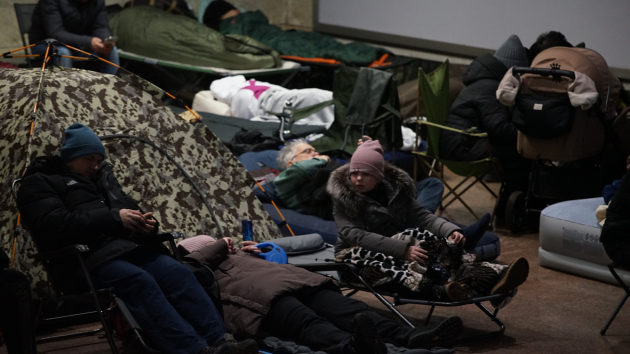
Kyiv residents shelter at the Dorohozhychi subway station amid a Russian drone-and-missile strike on February 3, 2026 in Kyiv, Ukraine. (Ihor Kuznietsov/Global Images Ukraine via Getty Images)
(LONDON) — Ukrainian President Volodymyr Zelenskyy urged “maximum pressure” on Russia from the international community after Moscow fired hundreds of drones and missiles into Ukraine overnight into Tuesday morning, in a major attack that Zelenskyy said focused on the country’s critical energy infrastructure.
Ukraine’s air force said Russia launched 71 missiles and 450 drones into the country overnight, of which 38 missiles and 412 drones were shot down or suppressed. Twenty-seven missiles and 31 drones impacted across 27 locations, the air force said.
The strike was the largest reported by the Ukrainian air force of the year so far, and the largest overall number of munitions launched in a single night since the night of Dec. 27.
The number of missiles fired on Monday night was also unusually high, and the largest total for a single night since April 24, according to air force data analyzed by ABC News.
Russia’s Defense Ministry said in a post to Telegram that its forces “carried out a massive strike” on “Ukraine’s military-industrial complex and energy facilities used in their interests, as well as places of storage and assembly of long-range unmanned aerial vehicles.”
Zelenskyy said in a post to Telegram that the regions of Sumy, Kharkiv, Kyiv, Dnipro, Odesa and Vinnytsia were attacked, with energy infrastructure and residential buildings among those hit. At least nine people have so far been confirmed injured, the president said.
“Taking advantage of the coldest days of winter to terrorize people is more important to Russia than resorting to diplomacy,” Zelenskyy said. “This clearly demonstrates what is needed from partners and what can help. Timely delivery of missiles for air defense systems and protection of normal life is our priority. Without pressure on Russia, there will be no end to this war.”
“Right now, Moscow is choosing terror and escalation, and that is why maximum pressure is needed,” Zelenskyy added.
Ukrainian Energy Minister Denys Shmyhal said that thermal power plants powering parts of Kyiv, Kharkiv and Dnipro were among the targets of the strike. “The targets were not military. They were exclusively civilian,” Shmyhal wrote on Telegram.
DTEK, Ukraine’s largest private energy firm, said Russian strikes inflicted “significant” damage on its power plants, in what it said was “the ninth massive attack on the company’s thermal power stations since October 2025.”
Emergency power outages were implemented in Kyiv’s Dnieper and Darnytsia districts, DTEK said. Energy infrastructure was also damaged in Odesa, DTEK added.
Ukraine’s state energy company Ukrenergo reported “a significant number of power outages in Kyiv, Kyiv, Kharkiv, Vinnytsia and Odesa regions,” which it attributed to the “massive” overnight attack. “There are also damaged energy facilities in several regions,” Ukrenergo wrote on Telegram.
Moscow’s latest strikes came after the expiry of a brief pause in attacks on energy infrastructure agreed to by both Moscow and Kyiv following a request from U.S. President Donald Trump. Russia said that the pause expired on Sunday.
This winter — the fourth of Russia’s full-scale invasion — has seen Moscow intensively target Ukraine’s energy infrastructure, wreaking havoc on the national grid and precipitating rolling and extended blackouts for millions of Ukrainians.
Monday night saw temperatures drop as low as -14 F in some parts of Ukraine.
Ukrainian Foreign Minister Andrii Sybiha suggested on X that Russian President Vladimir Putin “waited for the temperatures to drop and stockpiled drones and missiles to continue his genocidal attacks against the Ukrainian people.”
Zelenskyy later made the same allegation in a post to Telegram. “The Russian army took advantage of the American proposal to pause the strikes for a short period, not to support diplomacy, but simply to stockpile missiles and wait for the coldest days of the year,” he said.
Russia launched its latest major strike despite an upcoming round of trilateral peace talks with U.S. and Ukrainian representatives in the United Arab Emirates, which are due to resume on Wednesday and continue into Thursday.
“Every such strike by Russia confirms that the attitude in Moscow has not changed: they are still counting on war and the destruction of Ukraine, and they do not take diplomacy seriously,” Zelenskyy said. “The work of our negotiating team will be adjusted accordingly.”
NATO Secretary-General Mark Rutte visited Kyiv on Tuesday to meet with Zelenskyy and address the Ukrainian parliament. Rutte told Ukrainian representatives that “important progress has been made” in trilateral U.S.-Ukraine-Russia talks.
“But Russia continues to attack, as it did last night,” Rutte added. “This demonstrates their lack of seriousness about peace.”
Monday night’s attack prompted the scrambling of NATO fighter jets in Poland, which borders Ukraine to the country’s west. Poland’s Armed Forces Operational Command Operational Command said that no violation of the nation’s airspace was recorded.
German fighter jets and Dutch anti-air defense systems were among the assets put on alert, the command said.
Russia’s Defense Ministry, meanwhile, said its forces downed at least 10 Ukrainian drones overnight.
The General Staff of the Ukrainian Armed Forces confirmed in a post to Telegram that it struck several targets on Russian-held territory overnight into Tuesday.
Ukraine’s targets included a drone training and production site in occupied Zaporizhzhia, a concentration of Russian forces in the western Russian border region of Belgorod and an electronic warfare site in occupied Donetsk, the General Staff said.
(LONDON) — The Rafah crossing between Gaza and Egypt has reopened to limited pedestrian traffic, Israeli authorities confirmed Monday.
The reopening is the first step in implementing the second phase of President Trump’s Gaza peace plan. The crossing has been completely closed to Palestinians in Gaza since May 2024. Egypt has not allowed unfettered access to its territory through the crossing.
“Following the arrival of the EUBAM teams on behalf of the European Union, the Rafah crossing has now opened to the movement of residents, for both entry and exit,” an Israeli security official told ABC News.
The first group of Palestinians returning from Egypt has arrived in the Gaza Strip. Khaled Megawer, Egypt’s North Sinai governor general, said 50 Palestinians were expected to cross into Egypt on Monday.
Raeed Al-Nemes, a Palestinian Red Crescent Society (PRCS) spokesperson, told ABC News that a total of 15 Palestinians – including five Palestinian patients and 10 relatives – left Gaza via the Rafah crossing on Monday.
“The health situation in Gaza is extremely dire,” he said, calling on international organizations and the National Gaza Administration Committee to pressure Israel to allow a larger number of patients to travel abroad for treatment.
On Sunday night, the Israeli Army released video and pictures of a new Israel Defense Forces security checkpoint it will use for Gazans entering Rafah. In a statement, the IDF said “forces have completed in recent days the establishment of the ‘Regavim’ designated checkpoint, which is managed by the security establishment in the area under IDF control.”
The IDF added, “The security establishment forces at the checkpoint check the identities of those entering against lists approved by the Israeli security establishment and carry out a strict inspection of their luggage.”
Israel said it will approve the names of all Gazans entering or leaving the area according to terms reached under Trump’s 20-point peace plan.
The Egyptian Ministry of Health announced Monday that 150 hospitals and approximately 300 ambulances were ready to receive injured and wounded Palestinians.
About 22,000 injured Gazans need medical evacuation, a Hamas spokesperson said Sunday.
On the other side of the crossing, about 10,700 Palestinians who have been evacuated to seek treatment outside Gaza through the World Health Organization will return to the territory after their treatment, the PRCS spokesman said.
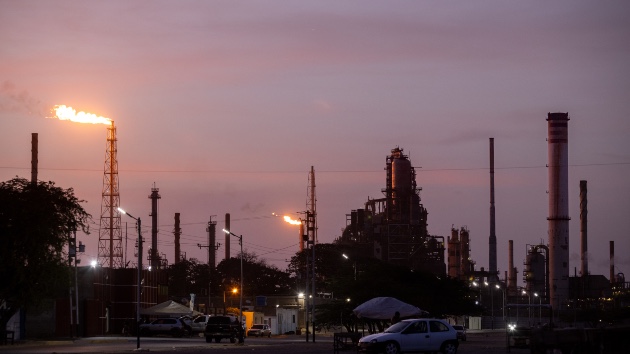
The Petroleos de Venezuela SA (PDVSA) Amuay oil refinery at the Paraguana Refinery Complex in Punto Fijo, Falcon State, Venezuela. (Photographer: Betty Laura Zapata/Bloomberg via Getty Images)
(NEW YORK) — Venezuela’s interim president Delcy Rodriguez announced on Sunday that the country’s first shipment of liquefied petroleum gas had been exported.
The announcement in a post on her Telegram channel on Sunday comes almost a month after President Donald Trump ordered a military operation that led to the capture of Venezuela’s former President Nicolas Maduro, who now faces federal charges in the U.S.
Rodriguez, Maduro’s former vice president, was sworn in as the interim president after his capture in January.
Rodriguez said the ship, the Chrysopigi Lady, had set sail from Venezuela “with the first shipment of Liquefied Petroleum Gas,” in a post, originally in Spanish.
The Singapore-flagged Chrysopigi Lady left from a port in northern Venezuela on the evening of Feb. 1 and is set to arrive in Providence, Rhode Island, according to marinetraffic.com.
“Proud to share this moment: the vessel Chrysopigi Lady has set sail from Venezuela with the first shipment of Liquefied Petroleum Gas,” Rodriguez said in the post. “We are marking this historic milestone by exporting the country’s first molecule of gas; an achievement for the well-being of the people of Venezuela.”
Rodriguez faces key tests in the weeks ahead. Since becoming the country’s de facto leader, she has struggled with her new twin responsibilities of maintaining order at home and managing diplomatic relations with the United States who conducted a military operation on her country’s soil weeks ago.
Last week, Rodriguez appeared to struggle publicly with the appropriate tone to both satisfy Washington and assert Venezuela’s independence.
Rodriguez said Venezuela has “opened a space for political dialogue,” but warned “those who seek to perpetuate harm and aggression against the people of Venezuela should stay in Washington,” in public comments during a ceremony recognizing her as Venezuela’s Commander-in-Chief in Caracas on Jan. 28.
Rodriguez also said “no one” in Venezuela surrendered during the military operation on Jan. 3. “That is why I say honor and glory to the heroes and heroines of January 3, 2026,” she said during the ceremony on Jan. 28.
About 100 people overall were killed during the U.S. military operation on Jan. 3, Venezuela’s interior minister, Diosdado Cabello, said on Jan. 8, according to Reuters. Out of the 100, 32 Cuban security officials were killed during the attack, the Cuban government confirmed on Jan. 4.
(NEW YORK) — Two people are dead from a shooting in the Cree First Nation community of Mistissini in northern Quebec, Canada, officials said, adding that it is not considered an active shooter situation.
Two men in their 30s who live in the Mistissini community were found fatally shot in a car overnight, according to Hugues Beaulieu, a spokesperson for Quebec’s provincial police, the Sureté du Québec.
Although no arrest has been made, there is no active threat to the general population, Beaulieu told ABC News, explaining that police are working under the theory that the murders were related to organized crime and drug trade.
The community’s chief, Michael Petawabano, said earlier that all schools and community buildings were closed and residents were advised to remain in their homes.
The remote town has a population of roughly 4,000 people.
“Our hearts are heavy with grief for the lives lost and the families affected by this tragedy,” Petawabano said in a statement. “We ask all community members to remain calm, stay indoors, and cooperate fully with police as they conduct their investigation.”
“The lockdown will remain in effect until law enforcement confirms it is safe to resume normal activities,” Petawabano said.
(NEW YORK) — Two people are dead from a shooting in the Cree First Nation community of Mistissini in northern Quebec, Canada, officials said, adding that it is not considered an active shooter situation.
Two men in their 30s who live in the Mistissini community were found fatally shot in a car overnight, according to Hugues Beaulieu, a spokesperson for Quebec’s provincial police, the Sureté du Québec.
Although no arrest has been made, there is no active threat to the general population, Beaulieu told ABC News, explaining that police are working under the theory that the murders were related to organized crime and drug trade.
The community’s chief, Michael Petawabano, said earlier that all schools and community buildings were closed and residents were advised to remain in their homes.
The remote town has a population of roughly 4,000 people.
“Our hearts are heavy with grief for the lives lost and the families affected by this tragedy,” Petawabano said in a statement. “We ask all community members to remain calm, stay indoors, and cooperate fully with police as they conduct their investigation.”
“The lockdown will remain in effect until law enforcement confirms it is safe to resume normal activities,” Petawabano said.