
In Lebanon, a brewing disaster that could outlast the war in Iran

In Lebanon, a brewing disaster that could outlast the war in Iran
Residential and commercial buildings damaged by Israeli Air strikes that were targeting the Hezbollah affiliated al-Qard al-Hassan financial institution on March 22, 2026 in Tyre, Lebanon. (Photo by Guy Smallman/Getty Images)

(LONDON) — The escalating Israeli operation against the Iranian-backed Hezbollah militia in Lebanon may prove to be the most intractable theater of the wider U.S.-Israeli confrontation with Iran, analysts who spoke with ABC News warned.

But the showdown unfolding in Lebanon could pose an existential threat to both Hezbollah and the Lebanese state, experts said, with the latter having long struggled to rein in the powerful militia but now facing growing pressure — and threats — from Israel to do more despite the danger of civil instability.

The technocratic government that came to power in Beirut on a wave of optimism in February 2025 is now facing “the worst possible combination of factors,” Emile Hokayem of the International Institute for Strategic Studies think tank told ABC News during a recent webinar hosted by the U.K.-based Chatham House think tank.

Lebanon “is a secondary front at the moment that is likely to burn for longer both because the Israelis see the political-military opportunity, but also the Iranians see it as a place where they can bleed and distract the Israelis,” Hokayem added.

Cascading crises
Even before the latest round of violence erupted, observers were noting rising discontent with Hezbollah among the wider Lebanese population and their elected representatives. 

The recent scars of Hezbollah’s activities were all too visible. On the edges of Beirut’s stylish downtown area and the trendy Mar Mikhael neighborhood is the devastated port area, wrecked by a massive explosion in 2020, with efforts to apportion responsibility for the disaster allegedly repeatedly stymied by Hezbollah. While some blame Hezbollah, others blame the entire political ruling class and the systemic corruption in the country.

Villages across the Hezbollah-dominated south and east of the country lay in ruins from Israeli missiles, bombs and artillery shells fired in clashes since Hezbollah attacked Israel in solidarity with Hamas after the latter’s deadly surprise Oct. 7, 2023, attack on Israel. In a U.S.-brokered ceasefire between Israel and Lebanon in 2024, the Israeli army partially withdrew, holding on to five positions in southern Lebanon.

Parts of Beirut’s southern Dahiyeh area — a longtime Hezbollah stronghold — were cratered, with giant posters of its slain totemic leader Hassan Nasrallah, who was killed in a massive 2024 Israeli airstrike on the city, seen by ABC News late last year rising above the arterial road which runs through the area from the airport to the rest of the city.

The conflict significantly degraded Hezbollah’s capabilities, apparently setting the stage for Lebanon to appoint a new government with fewer ties to the group — led by Prime Minister Nawaf Salam and President Joseph Aoun — after more than two years of a caretaker cabinet amid a political deadlock.

Neither were formally endorsed by Hezbollah. Aoun, the country’s former army chief, and his new government said they were committed to disarming Hezbollah, appealing to foreign partners to help.

Many observers suggested Hezbollah appeared to be in a historically weak position from late 2024 into early 2026. Its patrons in Tehran were themselves weakened by confrontations with Israel and, later, the U.S. Discontent inside Iran exploded into multiple rounds of anti-government protests, with Tehran’s funding and direction of foreign proxy forces a common grievance among demonstrators.

The fall of Tehran-aligned and Hezbollah-bolstered Syrian President Bashar al-Assad across the border in December 2024 robbed Hezbollah of strategic depth, vital arms smuggling routes and financial opportunities. Nasrallah — an icon of the Iran-directed “Axis of Resistance” — was dead, as were many of the group’s most senior military and strategic minds, according to long-time observers of the group.

Meanwhile, strikes that Israel described as targeted against Hezbollah personnel and infrastructure in Lebanon continued, killing hundreds of people despite the November 2024 ceasefire deal. Hezbollah did not respond, apparently pursuing a policy of strategic patience that some observers interpreted as operational weakness.

Before the outbreak of its latest war with Israel in 2023, estimates of Hezbollah’s military strength ranged from 30,000 to more than 50,000 personnel. Its parliamentary party won 15 seats in the last Lebanese legislative elections in 2022, securing around 20% of all votes to the tune of nearly 360,000 ballots, according to data from Lebanon’s Interior Ministry.

Aoun’s government took some steps to curtail Hezbollah’s uniquely powerful position, in which it had been able to establish — with Iranian help — what analysts often described as “a state within a state.” 

The Lebanese Armed Forces claimed in January to have completed the first phase of the plan to disarm all non-state groups in the area south of the Litani River — around 18 miles north of Israel’s border — as part of the 2024 ceasefire deal.

Those efforts continued after the U.S. and Israel launched their latest military campaign against Iran in late February. In early March, the Lebanese government declared all military activities by Hezbollah illegal. The army also set up checkpoints to search vehicles headed south for weapons.

But the idea of the state’s open confrontation with the Iranian-backed militia group prompts fears of a slide back into the bloody anarchy of the 1975-1990 civil war that killed more than 100,000 people and devastated the young nation.

Sectarian tensions are again rising in Lebanon. Last month, Salam criticized the country’s sectarian political system — designed to ensure power sharing between the country’s ethnic and religious groups — as “a source of harm both for the state and for the citizens.”

The state’s forces, while popular, are broadly considered to be weak relative to other regional militaries and non-state actors. Meanwhile, despite its recent setbacks, Hokayem said Hezbollah remains “a very powerful coercive force domestically in Lebanon, where they can punish, intimidate and possibly assassinate their enemies.”

Hezbollah’s new leader, Naim Qassem, said in August that the group would not surrender its weapons to the state, warning there would be “no life in Lebanon” if its arms were taken by force.

“I wouldn’t be surprised if we see, in addition to communal violence, more targeted hits — including assassinations — inside the country,” Hokayem said of intensifying Hezbollah activity. “If the military, the security forces are not able to prevent that or contain this, then you can easily see a loss of trust in central institutions, which is already very low.”

“Given the trajectory of events, more likely than not the state will weaken despite what some people in Washington say or would like to believe,” he added.

A ‘prolonged’ conflict
Israeli forces are now moving deeper into southern Lebanon, with the Israel Defense Forces having issued a series of “urgent” warnings for the full evacuation of the country south of the Zahrani River, which sits around 36 miles north of the border. That order came on top of an evacuation order for all residents south of the Litani River — 18 miles north of the border — and for all residents in the southern Beirut suburbs.

Human Rights Watch said that more than a million people have been forced to flee their homes — nearly one-fifth of the entire population of the country. More than 1,000 people have been killed by Israeli attacks in Lebanon in the latest round of fighting, the country’s health ministry said.

Israel’s aggressive policy in Lebanon came after Hezbollah fired on northern Israel on March 2, joining Tehran in its response to the U.S.-Israeli campaign launched against Iran on Feb. 28.

Hezbollah defied assessments it had been substantially weakened by its two-year involvement in the war in Gaza, firing rockets and drones daily toward northern Israel. 

The IDF said this week that Hezbollah had fired over 2,000 projectiles toward Israel so far. That fire has killed four people — two civilians and two soldiers.

IDF Lt. Gen. Eyal Zamir said on March 22 that the Israeli operation “has only just begun,” describing the nascent campaign as “a prolonged operation.” As of March 24, the IDF had destroyed multiple bridges spanning the Litani River.

Israeli Defense Minister Israel Katz said he instructed the IDF to “accelerate the destruction of Lebanese homes in the line of contact villages, to thwart threats to Israeli communities, in accordance with the model of Beit Hanoun and Rafah,” referring to Israel’s destruction of Gaza towns during the war on Hamas.

Katz said troops would seize and hold southern Lebanon up to the Litani River to create what he called a “defensive buffer.”

More extreme voices have demanded a permanent occupation. Far-right Israeli Finance Minister Bezalel Smotrich, for example, said the Litani should form “the new Israeli border,” in an echo of longheld ambitions of Israeli ultranationalists.

Lebanon’s president described the destruction of the bridges over the Litani and continued Israeli strikes elsewhere as a “dangerous escalation and flagrant violation of Lebanon’s sovereignty.” The measures, Aoun said, “are considered a prelude to a ground invasion.”

But there appears little hope of relief from Beirut’s two prime foreign partners — the U.S. and France — Hokayem said. “The Americans essentially have washed their hands of Lebanon,” he said, citing frustration with the government’s inability or unwillingness to rein in Hezbollah.

“In Washington there are people who have this illusion that you can break the back of Hezbollah, if only there was a bit more spine in some in Beirut,” Hokayem said. “It’s very difficult to see that.”

Barbara Leaf, who served as the assistant secretary of state for near eastern affairs under President Joe Biden, said during the Chatham House event that the U.S. had taken a “hectoring” approach with the new Lebanese government. The message, Leaf said, is, “Take care of Hezbollah, and if not, the Israelis will.”

The U.S. Department of State has urged all Americans in Lebanon — of whom there were around 86,000 in 2022, according to the State Department — to leave the country as soon as possible.

Earlier this month, President Donald Trump said of the situation in Lebanon, “We’re working on it very hard. We love Lebanon. We love the people of Lebanon, and we’re working very hard.” Hezbollah, he said, “has been a disaster for many years.”

Days later, Trump again said Hezbollah has been “a big problem” that was “rapidly being eliminated” by Israeli military action.

With clear U.S. backing, Israeli leaders appear set on a decisive operation in Lebanon, which forms one theater of Prime Minister Benjamin Netanyahu’s drive to create what he calls a “new Middle East” shorn of Iranian influence.

Those ambitions will require a long-term presence on Lebanese territory, Yezid Sayigh, of the Malcolm H. Kerr Carnegie Middle East Center think tank in Beirut, wrote in early March. “A complementing Lebanese effort is necessary, hence the effort to force the Lebanese government’s hand one way or the other,” he added.

But the ongoing operation may undermine the very partners Israel needs in Beirut, Hokayem said. “A Lebanon in which so much territory is occupied will struggle to enter any kind of genuine peace negotiations with Israel,” he said.

“I don’t think they could be a central authority with enough strength and legitimacy,” he added.

Faced with yet another national crisis, many in Lebanon are pessimistic. The country must consider “the worst-case scenarios,” political scientist Ziad Majed wrote earlier this month.

This means, Majed said, huge destruction in Hezbollah’s heartlands in the south, the eastern Bekaa Valley and southern Beirut combined with a military occupation blocking hundreds of thousands of displaced people from returning to their homes.

Such a scenario, Majed warned, could “lead to suffocating living crises and social and political tensions that many might exploit for political opportunism, incitement and other forms of sectarian conflict.”

Copyright © 2026, ABC Audio. All rights reserved.
Bail granted for 2 arrested in connection with London ambulance arson, police say

Bail granted for 2 arrested in connection with London ambulance arson, police say
A Police forensic team carry out investigations at a location near to the scene after four Hatzola ambulances were set on fire overnight next to Machzike Hadath Synagogue, on March 23, 2026 in the Golders Green area of London, England. (Photo by Leon Neal/Getty Images)

(LONDON) — Two men who were arrested as part of an investigation into an arson attack on a Jewish charity’s ambulances in the north London neighborhood of Golders Green have been released on bail, British police said on Thursday.

The men, both British nationals, were taken into custody Wednesday morning at separate addresses in northwest and central London.

They were arrested on suspicion of arson with intent to endanger life and both were taken to a London police station before being released on bail, according to London’s Metropolitan Police Service.

Four ambulances used by Hatzola, a volunteer-led ambulance service in north London, were set on fire at about 1:30 a.m. on Monday morning, police said. Three masked or hooded individuals were seen setting the fires, police said. Investigators said that they were combing through hours of CCTV footage related to the case, in part to “trace the suspects’ movements.”

Police said on Thursday that the investigation was ongoing and searches were carried out at both the addresses in northwest and central London, as well as at two other addresses in northwest London on Wednesday.

Cmdr. Helen Flanagan, head of Counter Terrorism Policing London, which is leading the investigation, said they are continuing “to work to try and identify all of those involved in this appalling attack and the investigation team is working around the clock to do this.”

“Although the two men have been released from police custody, there are strict bail conditions in place while we continue to investigate their suspected involvement in this incident,” she added. “I can reassure the public that we will be closely monitoring these while we carry out further enquiries.”

Detective Chief Superintendent Luke Williams, who leads policing in northwest London, said “an enhanced, bespoke policing plan and activity, which is particularly focused around vulnerable areas right across London, will continue over coming days and weeks.”

“This includes specialist officers and capability being deployed alongside local officers to help protect certain locations and will also involve highly visible armed police patrols to serve as a deterrent to anyone seeking to cause our communities harm,” Williams noted. “I must stress that these are precautionary and not in response to any specific threat, and we continue to work alongside our colleagues in Counter Terrorism policing to support their investigation. We will also continue to work closely with local communities and our partners to listen to their concerns and respond to these.”

Copyright © 2026, ABC Audio. All rights reserved.
US moved over 1,000 refugees to base in Doha almost 2 years ago. Now it’s been targeted

US moved over 1,000 refugees to base in Doha almost 2 years ago. Now it’s been targeted
Sgt. Juan Miranda, culinary specialist, 155th Combat Sustainment Support Battalion, files in Afghan Special Immigrants into the dining facility, August 20, 2021 at Camp As Sayliyah, Qatar. (Sgt. Jimmie Baker/US Army via Getty Images)

(NEW YORK) — More than 1,100 Afghan refugees and family members of active duty U.S. military personnel are stranded on an unused Doha military base that has become a target since the start of the U.S.-Israel war with Iran, according to U.S. non-profit organization Afghan Evac.

Qatar Armed Forces have been intercepting incoming attacks from Iran, but residents at the facility, known as Camp As Sayliyah, told ABC News they have been hiding in buildings during the attacks and were not initially given bunkers or proper protections to take cover.

During those weeks, they said shrapnel would fall into their bedrooms, even locations where young children were. Since the war broke out, refugees sent ABC News recordings in secret, outlining what they say are the dire conditions at the camp. They asked for their faces to be hidden and their voices altered, due to their fear of being deported or reprimanded.

Three weeks later, ABC News received videos where residents show how the camp installed new concrete walling near the entrances and exits of buildings. They say workers urge residents to enter the bunkers in the “event of a duck and cover alert.”

In response to the residents’ claims of terrible conditions, a spokesperson for the a U.S. State Department, which administers the base, also told ABC News they are “addressing all related operational concerns” including “the safety and security of American citizens as well as the safety of residents at Camp As Sayliyah.”

Mahidewran, a young Afghan mother, told us that her child’s first steps were taken in the camp, where the family has been for more than a year, and that raising her child there has been difficult.

“I’m not always able to provide her with the foods she needs or the toys she loves,” she said.

Her daughter was about to turn 1 when they were initially brought to Camp As Sayliyah, and now she is turning 2.

Apart from raising a child on a former military base, she faces another unlikely challenge: war.

Mahidewran told ABC News sirens go off every few hours in the camp, warning residents to take cover in their buildings.

“I left [Afghanistan] through a legal process by the United States, and when they transferred me to Qatar, we were given safety, an opportunity to rebuild our lives,” she told ABC News.

Ahmad, who said he fought against terrorism alongside the U.S. as a member of the Afghan Command forces, told ABC News his son sleeps under the bed, fearing for his life as missiles continue to fire at the camp.

He said he’s been living at Camp As Sayliyah with his children for more than 18 months, and despite being brought to Doha by the U.S. government, his entire family remains in limbo, not knowing where they will go next. ABC News spoke to refugees who shared similar stories to Ahmad’s — saying they were promised a better life in return for risking theirs when working for the U.S. government.

From July to August 2021, the U.S. evacuated more than 100,000 people out of Afghanistan during Operation Allies Refuge, following the withdrawal of U.S. troops during the Biden-Harris administration.

Nearly five years later, the Trump administration has halted relocation and refugee resettlement efforts, impacting many of those who had already been vetted and cleared to travel to the U.S., according to AfghanEvac. The reports detailing the operation have since been deleted from the State Department website.

Refugees at Camp As Sayliyah said that the U.S. government’s promise of a better life on American soil was broken and that being caught in another war brings them back to the terrifying moments they experienced in Afghanistan.

“We came from a country that was under war for 48 years, before living here we were living in constant fear and anxiety,” Farishta, a teenager living on the base with her parents, told ABC News.

When ABC News spoke with Farishta, she said she was still living in a state of fear and that a worker at the camp threatened her with deportation to Afghanistan if she spoke to a journalist again.

Farishta said she has lived at Camp As Sayliyah for 15 months and often dreams of her future, hoping to further her education.

“I feel hopeless because I am a girl who has been deprived of education and whose future is uncertain,” she said.

“Afghan Nationals at the camp do not currently have a viable pathway to the United States,” the department said.

The plan is to relocate the population to a third country by March 31, according to the department. It said this “is a positive resolution that provides safety for these remaining people to start a new life outside of Afghanistan.”

The State Dept said the “Trump administration has no plans to send these” Afghan refugees back to their home country.

However, those people ABC News spoke to said they have not been told what country they would be going to or when.

Afghan Evac said it has been advocating for refugees at the camp, writing several letters to the State Department, urging the government not to leave the residents at Camp As Sayliyah behind.

According to Afghan Evac, 800 of the people at the camp are fully vetted and approved refugees who were cleared to travel to the U.S. The camp’s residents are mainly women and children, it said.

Shawn VanDiver, the president of Afghan Evac, claimed that there was a pathway and that the State Department closed it off.

“There is no structural or legal barrier preventing these individuals from coming from the United States. The absence of a ‘viable pathway’ is a policy choice, not an inevitability,” he told ABC News.

Copyright © 2026, ABC Audio. All rights reserved.

2 arrested in connection with London arson attack on Jewish charity’s ambulances, police say

2 arrested in connection with London arson attack on Jewish charity’s ambulances, police say
Firefighters at the scene in Highfield Road, Golders Green, London, after an apparent arson attack on four ambulances belonging to the Jewish Community Ambulance service in London. The Metropolitan Police confirmed the incident is being treated as an antisemitic hate crime. Picture date: Monday March 23, 2026. (Photo by Jonathan Brady/PA Images via Getty Images)

(LONDON) — Two men were arrested in connection with an arson attack on a Jewish charity’s ambulances in the north London neighborhood of Golders Green, British police said on Wednesday.

The men — aged 47 and 45 — were taken into custody Wednesday morning at separate addresses in northwest and central London, police said.

Both were arrested on suspicion of arson with intent to endanger life and have been taken to a London police station where they’re being held, according to London’s Metropolitan Police Service, which noted that its officers are conducting searches at the two addresses.

Four ambulances used by Hatzola, a volunteer-led ambulance service in north London, were set on fire just about 1:30 a.m. on Monday morning, police said. Three masked or hooded individuals were seen setting the fires, police said.

Investigators said that they were combing through hours of CCTV footage related to the case, in part to “trace the suspects’ movements.”

“This appears to be an important breakthrough in the investigation, but we’re also mindful that CCTV footage of the incident suggests there were at least three people involved,” Cmdr. Helen Flanagan, Head of Counter Terrorism Policing London, who is leading the investigation, said in a statement.

An investigations was still underway, Flanagan added, saying the Met would “seek to arrest all of those who may have been involved.”

Officials said that the arson attack was being treated as an antisemitic hate crime, although it had not as been designated a terrorist incident as of the police’s most recent update, which was published on Monday.

Prime Minister Keir Starmer described the attack as “horrifying,” saying on social media on Monday that it appeared to be a “shocking antisemitic arson attack.”

“An attack on our Jewish community is an attack on us all,” Starmer said. “We will fight the poison that is antisemitism.”

Copyright © 2026, ABC Audio. All rights reserved.

American held captive in Afghanistan released, Taliban says

American held captive in Afghanistan released, Taliban says

(LONDON) — An American held in Afghanistan has been freed, the Taliban said Tuesday.

Dennis Coyle of Colorado was released after a letter from his family was sent requesting his release on the occasion of Eid Al-Fitr, the Taliban foreign ministry said. His period of detention was then deemed “sufficient” and his release was approved by a court, according to the ministry.

The Taliban claimed Coyle had been detained for “violating the applicable laws of Afghanistan.”

The Taliban thanked the United Arab Emirates for helping to facilitate Coyle’s release.

Earlier this month, U.S. special envoy for hostage response Adam Boehler said three innocent Americans were currently being held in Afghanistan.

This is a developing story. Please check back for updates.

Copyright © 2026, ABC Audio. All rights reserved.
Jewish volunteer ambulances set on fire in London investigated as hate crime: Police

Jewish volunteer ambulances set on fire in London investigated as hate crime: Police
Firefighters at the scene in Highfield Road, Golders Green, London, after an apparent arson attack on four ambulances belonging to the Jewish Community Ambulance service in London. (Photo by Jonathan Brady/PA Images via Getty Images)

(LONDON) — The Metropolitan Police in London is investigating an apparent arson attack on four ambulances belonging to the Jewish community ambulance service, Hatzalah, in the early hours of Monday morning.

Officials said the arson attack is being treated as an antisemitic hate crime.

No injuries were reported and the fires have been put out, police said. Nearby houses were evacuated as a precaution.

“This is a deeply shocking antisemitic arson attack,” Prime Minister Keir Starmer said on social media. “My thoughts are with the Jewish community who are waking up this morning to this horrific news. Antisemitism has no place in our society.”

Police Superintendent Sarah Jackson said in a statement that no arrests have been made, but they believe there are three suspects involved.

“We know this incident will cause a great deal of community concern and officers remain on scene to carry out urgent enquiries,” Jackson said. “We are in the process of examining CCTV and are aware of online footage. We believe we are looking for three suspects at this early stage.”

Police said there were reports of explosions in the fire, which they said is believed to be linked to gas canisters on the ambulances.

Copyright © 2026, ABC Audio. All rights reserved.
What to know about South Pars, the largest natural gas field in the world and lifeline for Iran, after Israeli strike

What to know about South Pars, the largest natural gas field in the world and lifeline for Iran, after Israeli strike
The Iran South Pars Gas Complex Company is pictured on Thursday, June 23, 2005 in Assaluyeh, Iran. Ramin Talaie/Bloomberg via Getty Images

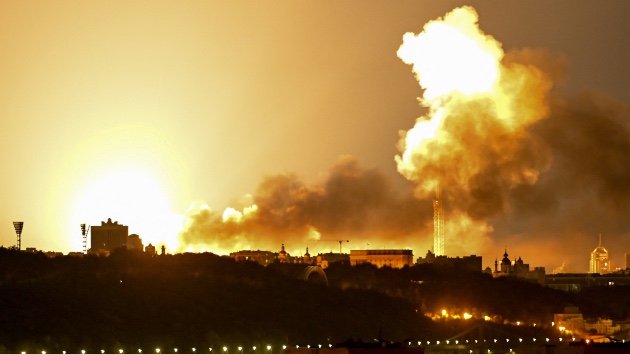
(LONDON) — Israel’s strike on the world’s largest natural gas field could severely impact Iran’s energy sector and several nearby Gulf states, energy experts told ABC News.

On Wednesday, Israel launched air strikes on South Pars, a natural gas field that covers about 3,700 square miles and serves as a vital source of fuel for Iran. It is located offshore in the Persian Gulf and contains about 1,800 trillion cubic feet of usable gas, according to the U.S. Energy Information Administration.

South Pars accounts for about 70% of the gas Iran consumes, Ira Joseph, a senior research associate at the Center on Global Energy Policy at Columbia University, told ABC News.

David G. Victor, a professor of innovation and public policy at the University of California at San Diego, agreed on the importance of South Pars to Iran.

“It’s the single most important natural gas field to Iran,” he told ABC News. “If you start tanking the Iranian economy, eventually, other parts of that infrastructure are going to start falling apart too.”

South Pars is part of a giant gas field that transverses to other nations — another section, the North Dome, is part of the same natural gas field but lies in Qatari territorial waters.

Combined, South Pars and the North Field account for about 10% of the gas traded in the world and about 20% of the world’s liquified natural gas (LNG) annual exports, Joseph noted.

Iran also exports gas into Turkey, Iraq and Central Asia — so those exports have been disrupted by the war, according to Joseph. Turkey acquires up to 15% of its gas from Iran, he added.

The U.S. is relatively insulated from natural gas price shocks due to the strikes on Iran’s gas fields because the U.S. is a big producer and doesn’t have enough export capacity to fully link itself to Asian and European markets, Catherine Wolfram, a professor of energy economics at the Massachusetts Institute of Technology, told ABC News.

Countries like Japan, Korea and the Europeans who are dependent on imports will take a big hit to their supply as a result of the attack on South Pars, she said.

But the impacts of the strikes on the South Pars field extend “far beyond” energy prices, Naho Mirumachi, a professor of environmental politics at King’s College in London, told ABC News.

The current volatility of gas production can have “serious” impacts on agriculture and the global production of food, especially since natural gas is vital for fertilizer production, she noted. Fertilizer shortages or higher prices of fertilizer will likely translate to increases in food costs, according to Mirumachi.

“Food production cannot wait for gas production to return to normal, so farmers and businesses could face declining crop yields,” she said.

There has never been an attack of this magnitude on South Pars field because of a historical understanding within the region to not disrupt or inhibit each other’s vital infrastructure, according to the University of California’s Victor.

“There had been a kind of norm that exists in many wars, which is, don’t attack each other’s vital infrastructure,” he said. “Both sides had an interest in not obliterating each other’s energy infrastructure and then causing this enormous harm in the global market.”

The strike on South Pars triggered an escalation of attacks on oil and gas facilities in the region.

Iran launched a series of retaliatory strikes against the vital energy infrastructure in nearby Gulf states. It issued evacuation orders for several energy assets in Qatar, Saudi Arabia and the United Arab Emirates, before hitting the world’s largest LNG terminal — an import and export facility — at Ras Laffan in Qatar.

“Targeting energy infrastructure constitutes a threat to global energy security, as well as to the peoples of the region & its environment,” a spokesperson for the Qatari Ministry of Foreign Affairs wrote in a post on X on Wednesday.

In a social media post late Wednesday, President Donald Trump said neither the U.S. nor Qatar was aware Israel would attack the South Pars Gas Field, calling for Israel to not do so again unless Iran continues attacking Qatar’s LNG facilities.

“NO MORE ATTACKS WILL BE MADE BY ISRAEL pertaining to this extremely important and valuable South Pars Field unless Iran unwisely decides to attack a very innocent, in this case, Qatar,” Trump said.

Iran warned that it would target energy facilities throughout the region.

The attacks on energy centers began on March 7, with Israeli air strikes on major Iranian oil storage facilities causing “black rain” to fall on the Tehran, Iran’s capital with nearly 10 million residents. The Israeli military said the facilities were struck because they were “used by the Military Forces of the Iranian Terror Regime in Tehran.”

On March 11, the International Energy Agency announced it would release 400 million barrels of oil from its strategic reserve — the largest-ever release of reserve oil in the group’s history — in response to the blockade on the Strait of Hormuz. A fifth of the global oil supply passes through the waterway, which lies between the Persian Gulf and the Gulf of Oman.

The U.S. also executed a strike on Kharg Island on March 13. The small island is situated in the Persian Gulf, off the southwestern coast of Iran, and processes 90% of Iranian oil exports.

Every military target on Kharg Island was “obliterated,” Trump said in a social media post. But its oil infrastructure was left intact.

The conflict has sent energy prices soaring, with Brent crude — the international standard for oil — peaking at $119 per barrel on Thursday morning.

Copyright © 2026, ABC Audio. All rights reserved.
Multiple waves’ of unauthorized drones recently spotted over strategic US Air Force base

Multiple waves’ of unauthorized drones recently spotted over strategic US Air Force base
A cargo plane comes into land with two US Air Force B-1 bombers in the foreground at RAF Fairford on March 11, 2026 in Fairford, England. (Photo by Christopher Furlong/Getty Images)

(NEW YORK) — A drone sighting that temporarily raised alarms at one of the United States Air Force’s largest and most strategic airfields earlier this month was more extensive, and potentially more dangerous, than first reported, according to a confidential internal briefing document reviewed by ABC News.

Barksdale Air Force Base in Louisiana said it was under a shelter-in-place order March 9 after “a report of an unmanned aerial system operating over the installation.”

The sighting raised concerns because Barksdale houses long-range B-52 bombers and plays a critical role in command and control of the Air Force nuclear defense capabilities.

The shelter-in-place order was lifted later that day but the unauthorized drone flights continued for nearly a week.

“Barksdale Air Force Base detected multiple unauthorized drones operating in our airspace during the week of March 9th,” Capt. Hunter Rininger of the 2nd Bomb Wing said in a statement provided to ABC News. The additional drone incursions had not been previously reported.

According to the confidential briefing document dated March 15, the drones came in waves and entered and exited the base in a way that may suggest attempts to “avoid the operator(s) being located.” Lights on the drones suggested the operators “may be testing security responses” at the base.

“Between March 9-15, 2026, BAFB Security Forces observed multiple waves of 12-15 drones operating over sensitive areas of the installation, including the flight line, with aircraft displaying non-commercial signal characteristics, long-range control links and resistance to jamming,” the document said. “After reaching multiple points across the installation, the drones dispersed across sensitive locations on the base.”

According to the document there was no drone activity detected on March 13 and 14 and it’s not clear if there has been activity since.

The flights lasted around four hours each day and the drones used varied routes of ingress and deliberate maneuvering within restricted airspace.

“Certainly, it seemed to be more than just your average drone enthusiast who just pushed it too far,” said ABC News contributor Mick Mulroy, a former deputy assistant secretary of defense. “It looked like this was deliberate and intentional to see just how they would react.”

The briefing includes a determination that the drones were different than what the typical consumer could purchase off the shelf. They appeared to be custom built and required “advanced knowledge” of signal operations.

The analysts said “with high confidence” they expected unauthorized drones to continue to operate in and around Barksdale Air Force Base in the immediate future.

“The drone incursions at BAFB pose a significant threat to public safety and national security since they require the flight line to be shut down while also putting manned aircrafts already inflight in the area at risk,” the document said.

The FAA referred ABC News to the military for comment. The Louisiana State Police, which is also assisting the investigation, declined to comment.

“Flying a drone over a military installation is not only a safety issue, it is a criminal offense under federal law. We are working closely with federal and local law enforcement agencies to investigate these incursions. The security of our installation and the safety of our people are top priorities, and we will continue to vigilantly monitor our airspace,” Capt. Rininger’s statement said.

Copyright © 2026, ABC Audio. All rights reserved.

Israel destroys building in Beirut amid escalating effort to destroy Iran proxy Hezbollah

Israel destroys building in Beirut amid escalating effort to destroy Iran proxy Hezbollah
A view of the structural damage following air strikes carried out by the Israeli military in the Balata Street and El Basta areas of central Beirut, Lebanon on March 18, 2026. (Houssam Shbaro/Anadolu via Getty Images)

(LONDON) — Around 4 a.m. Wednesday, the Israel Defense Forces posted an image of several blocks in Beirut’s Bashoura neighborhood, saying in an accompanying “urgent warning” that people inside a building outlined in red should leave immediately. 

“To everyone present in the building marked in red on the attached map and the adjacent buildings: You are located near a facility affiliated with the terrorist Hezbollah organization, which the Israel Defense Forces will act against,” Avichay Adraee, an IDF spokesperson, said in the Arabic-language post on social media. 

About an hour later an Israeli airstrike targeted the building, reducing it to rubble.

It was not immediately clear whether anyone was inside the building at the time of its destruction. The Lebanese Ministry of Health on Wednesday said at least 10 people had been killed in overnight Israeli strikes on the capital, but did not detail where those killings had taken place. Another 27 people were injured, the ministry said.

The Israeli strikes came amid an escalation of Israel’s efforts to stamp out Hezbollah, an Iranian proxy based in Lebanon and designated by Israel and the United States as a terrorist organization. 

Hezbollah on March 2 began firing missiles south into Israel, an act that it said was in support of Iran. Those launches, which effectively marked the end of a fragile ceasefire that began in November 2024, came two days after the United States and Israel launched joint airstrikes on Tehran. 

The Israeli Air Force has since retaliated by carrying out strikes on the Lebanese capital and elsewhere in Lebanon, striking targets that Israel describes as Hezbollah-related.

Health officials in Lebanon said at least 912 people have been killed in strikes, along with more than 2,000 people who have been injured. Hundreds of thousands of people have been displaced by the conflict, officials said.

Among the Israeli targets have been buildings and sites throughout Lebanon associated with the Al-Qard al-Hasan Association, an organisation said to finance Hezbollah’s operations. Israel, as it posted a grainy video showing an eagle-eyed view the Bashoura-building strike, said it had overnight targeted that group. It did not explicitly link the al-Hasan group to the destroyed building.

Hezbollah has also continued targeting Israel, firing between 50 and 60 rockets overnight into the country’s north, according to the IDF. Most were intercepted, but several made direct hits, damaging property and setting fires, Israel said. Emergency medical services reported no fatalities, but several light injuries.

Israel’s air force has also over the last two weeks targeted sites across Southern Lebanon.

Israel also said on Monday it had begun a “limited and targeted” ground operation across its northern border, where it says it’s seeking to destroy Hezbollah “strongholds.” The IDF added on Tuesday that it was seeking to create an “additional layer of security for residents of northern Israel.”

Telling Lebanese residents they will not be allowed to return to southern Lebanon, Defense Minister Israel Katz has signaled Israel may carve out a buffer zone inside Lebanese territory.

“In recent days, IDF troops from the 36th Division have begun limited and targeted ground operations aimed at enhancing the forward defense area,” the IDF said in a statement. “The troops are continuing efforts to establish the forward defensive posture in order to remove threats and create an additional layer of security for residents of northern Israel.”

Israel on Wednesday issued a broad warning for anyone in southern Lebanon, saying residents south of the Litani River — which is seen in part as a geographic boundary between northern and southern Lebanon — should move north as quickly as they could.

The IDF was expecting to target “crossings” on that river, meaning bridges, in the coming hours, Israel said, adding that it was being “compelled” to carry out those strikes because of Hezbollah’s activities “with the support of the civilian population.” 

“For your safety and the safety of your families, immediately move to areas north of the Litani River,” the IDF said on social media on Wednesday. “Remaining south of the Litani River may endanger your lives and the lives of your families. Please note: any movement southward may endanger your lives.”

“Accordingly, and to prevent the transfer of reinforcements and combat means, the Defense Army intends to attack crossings on the Litani River starting from midday hours today,” Adraee, the IDF spokesperson, said on social media.

It was unclear how civilians remaining in the south would be able evacuate to the north if river crossings were destroyed.

Copyright © 2026, ABC Audio. All rights reserved.

Head of London’s Metropolitan Police pushes for unredacted Epstein files

Head of London’s Metropolitan Police pushes for unredacted Epstein files
Prince Andrew, Duke of York attends the traditional Easter Sunday Mattins Service at St George’s Chapel, Windsor Castle on April 20, 2025 in Windsor, England. (Photo by Max Mumby/Indigo/Getty Images)

(NEW YORK) — One month after the arrest of former Prince Andrew, the head of London’s Metropolitan Police is pushing U.S. officials for unredacted material from the Epstein files.

In an interview with ABC News’ chief investigative correspondent Aaron Katersky, Metropolitan Police Commissioner Sir Mark Rowley said his office is in communication with the Department of Justice to access the original documents related to ongoing investigations of both Andrew Mountbatten-Windsor and former British ambassador to the U.S. Peter Mandelson.

“Of course, there’s a big body of that evidence … in the United States in all those files and at some stage we’re going to need the unredacted evidence,” Rowley said. “We need the original copy and where did it come from and that’s going to be necessary if we get to the stage of court cases.”

While Department of Justice officials have repeatedly insisted that there is nothing more to investigate stateside about the convicted sex offender and his co-conspirator Ghislaine Maxwell, officials in the United Kingdom are carrying out unprecedented investigations into both Mountbatten-Windsor and Mandelson on suspicion of misconduct in public office.

Emails released earlier this year by the Department of Justice suggested that both Mountbatten-Windsor and Mandelson appeared to share sensitive information with Epstein stemming from their roles as the U.K. trade envoy and business secretary, respectively.

In one email released by the Department of Justice and referenced by Rowley, Mandelson appeared to confirm the timing of an impending bailout with Epstein during the European Union’s sovereign debt crisis.

“It looks like it was shared with Epstein so we’re looking at that as to whether that’s a criminal offense and then colleagues in Thames Valley are looking at other documents that Andrew Mountbatten-Winsor potentially shared,” Rowley said.

According to Rowley, his department is also assessing “a whole range of suggested sexual allegations” to determine if any “merit a criminal investigation.”

Suspicion about Mountbatten-Windsor began years ago following the publication of a photograph showing the former prince with his arm around the waist of Virginia Guiffre, who said she was 17 years old at the time of the photograph. Before she died by suicide last year, Guiffre alleged that Epstein trafficked her in 2001 to have sex with the former prince. Mountbatten-Windsor has long denied wrongdoing and told the BBC in 2019 that the allegations are not credible.

When asked about the allegations made by Guiffre, Rowley claimed that the information they received from Guiffre during four recorded interviews could not support an investigation.

“With Virginia Guiffre, we did four of those interviews with her … .and those interviews didn’t give us any evidence or any allegations of sexual offending or trafficking that we could investigate in the UK,” he said. “That’s why that investigation didn’t go forward.”

However, Rowley said he hopes the renewed look at the allegations against Mountbatten-Windsor helps improve the public’s trust that law enforcement is willing to scrutinize anyone regardless of their title or status.

“Those investigations all go wherever the evidence takes them — quite comfortable with investigating sort of famous or powerful people. I think it’s really important for policing to do that, that sense of operating without fear or favor. The law applies equally to everyone, and those cases will go, say, wherever the evidence leads us to,” he said.

Rowley said the investigation into Mountbatten-Windsor comes as the Metropolitan Police is increasingly targeting sexual and domestic violence.

“We’ve developed tactics to be much more proactive and targeting the most dangerous men who pose a threat to women and children just like we do terrorists and organized crime. So, a combination of factors has seen the rates steadily coming down,” he said. “We’re making big progress and most of all — at the center of all this that matters to me and matters to policing — is trust in the police’s building in London.”

Rowley also touted some of the technology used by the Metropolitan Police to lower crime rates such as facial recognition, which he said has allowed officers to identify violent offenders while minimizing intrusion to the broader public.

While he acknowledged that the technology has raised privacy concerns, Rowley argued that the focus on targeting violent offenders using the technology can help improve the public trust — something he says is foundational to the Metropolitan Police’s 200-year history.

“[Policing] should start from the idea of having the consent of people in a democracy and use the minimum force necessary and be focused on the prevention of crime, and those ideas still guide us today,” he said.

Rowley said he hopes being upfront with the public about the work of the Metropolitan Police — from low-level street crimes to allegations against some of the most prominent people in British society — can renew the public’s trust in law enforcement.

“Policing in the UK will operate without fear or favor, that’s the fundamental principle. I think if you don’t have that, you’re never going to have the trust and confidence of the public in policing, so that’s really important to me,” he said.

Copyright © 2026, ABC Audio. All rights reserved.