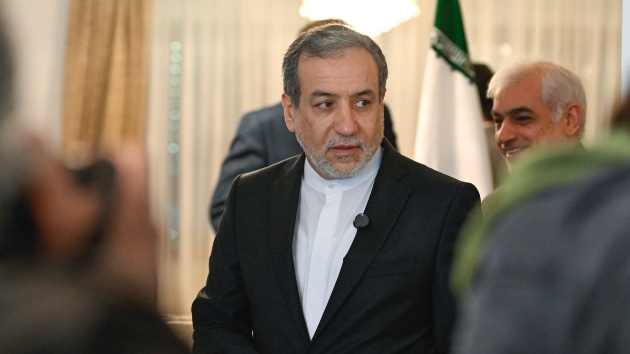
(LONDON) — Iranian Foreign Minister Abbas Araghchi reacted to President Donald Trump’s remarks about Iran, calling them “pure deception.”
Trump described Tehran as the “most destructive force” in the region during a speech on Tuesday in Riyadh, Saudi Arabia, and accused Iranian leaders of being “focused on stealing their people’s wealth” to fund regional proxies.
“It is America that has prevented the progress of the Iranian nation through its sanctions over the past forty-odd years, with its own pressures and military and civilian threats; the one responsible for the economic problems is America,” Araghchi said to the press on the sidelines of the government board meeting, as the semi-official Fars News Agency reported.
Trump’s criticisms of the Islamic Republic came a few days after the fourth round of Iran-U.S. nuclear talks in Muscat, which Tehran described as “difficult but useful.” Washington said was “encouraged” by its outcome.
“The fact that Trump is applying maximum pressure in this very meeting and then addressing Iran’s economic problems is not entirely correct,” the Iranian foreign minister said.
Addressing Trump’s comments on Iran’s regional presence, Araghchi reiterated Tehran’s position that Israel is the source of threat in the region with the strikes and killing in the Gaza Strip, where the Israel Defense Forces say that they are fighting Hamas militants.
America presenting “Iran as a threat is pure deception and a substitution of threats,” Araghchi said.
Iranian foreign minister said that Iran is waiting for Omani authorities to announce the time and place of the next round of negotiations, saying Tehran’s approach is to pursue dialogue.
(NEW YORK) — Carbon dioxide may be a naturally occurring substance on Earth, but too much of its presence has contributed to global warming, climate scientists say.
Carbon dioxide, known by the chemical formula CO2, is a gas produced by various natural processes, including respiration in animals and plants, volcanic eruptions, wildfires and the decay of organic matter.
But human activity since the 1800s, namely the use of fossil fuels for energy, is overwhelming the planet’s natural carbon sinks, such as oceans and forests. Therefore, the heat-trapping gas causes global temperatures to rise as more of it accumulates in the Earth’s atmosphere.
“CO2 is rising right now because of the emissions that we’re putting into the atmosphere, and it’s rising very rapidly,” Bärbel Hönisch, professor of earth and environmental sciences at the Columbia Climate School’s Lamont-Doherty Earth Observatory, told ABC News. “And carbon dioxide is a greenhouse gas, and so it heats the atmosphere.”
But the invisible gas is also critical for life on Earth. Plants breathe it in, and humans breathe it out.
The goal of climate mitigation isn’t to remove CO2 from the atmosphere completely, but to even out the unnatural surplus instead, said ABC News Chief Meteorologist and Chief Climate Correspondent Ginger Zee.
“We want to get back to the natural amount of CO2,” Zee said.
The consequences of extra CO2 in the atmosphere extends beyond the climate itself. As excess greenhouse gases heat the planet, the ocean becomes more acidic, impacting marine life, Hönisch said. In addition, climate change is fueling rapid growth of certain types of algae, further collapsing ecosystems, Hönisch added.
“Climate is a combination of different components that must be just right for life to exist on our planet,” she said.
Humans have injected more than 1.5 trillion tons of CO2 into the atmosphere since the Industrial Revolution, when the use of fossils fuels began to skyrocket, according to the Global Carbon Budget.
Historical levels of climate change are determined by a number of processes. Samples of ice, lake and seafloor cores indicate how much carbon dioxide existed at different periods on the planet. In addition, more than six decades of CO2 measurements have been taken at the Mau Loa Observatory on Hawaii’s Big Island, home to the largest active volcano in the world.
The Keeling Curve, a graph that plots concentrations of CO2 in the atmosphere over time, uses measurements taken at Mau Loa Observatory, starting in 1958.
In 2024, CO2 levels in Earth’s atmosphere reached the highest ever recorded, according to the National Oceanic and Atmospheric Administration.
Curbing the emissions of greenhouse gases from fossil fuel use is key for limiting the impacts of a warming world, such as more frequent and intense extreme weather events and rising sea levels, climate scientists say.
(FRY, GREECE) — A 6.1 magnitude earthquake was reported near Greece early Wednesday local time, according to the United States Geological Survey.
Greek Emergency Management warned of a possible tsunami risk following the quake, which the agency reported as occurring nearly 30 miles southeast of Kasos as a 5.9 magnitude earthquake.
“Move away from the coast immediately,” Greek Emergency Management said.
The USGS said the epicenter is located over 9 miles south of Fry, Greece.
This is a developing story. Please check back for updates.
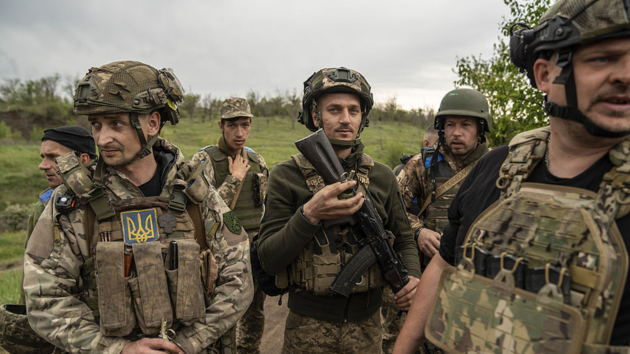
(LONDON) — Moscow on Wednesday said it would send a delegation to Istanbul to meet with Ukrainian officials, potentially bringing diplomats from the two at-war countries together for the first known in-person direct talks in more than three years.
Kremlin spokesperson Dmitry Peskov confirmed on Wednesday that Russian diplomats would travel to Turkey, but didn’t detail which officials would be present.
The confirmation followed an act of one-upmanship from President Volodymyr Zelenskyy of Ukraine, who on Wednesday said he would be willing to meet personally with Russian President Vladimir Putin, should the latter decide to travel to Turkey.
“We are ready for such direct diplomacy to put an end to killings and advance real peace,” Zelenskyy said on social media “And this must certainly be discussed with the person who makes decisions in Russia.”
Peskov, who spoke in Moscow on Wednesday, wouldn’t confirm which Russian officials would be present. Putin had on Sunday proposed the direct talks.
This is a developing story. Please check back for updates.
(CAIRO) — Egypt’s Ministry of Tourism and Antiquities announced this week it had successfully recovered a rare trove of smuggled artifacts from the United States, concluding a three-year diplomatic effort between the countries.
Gilded coffin lids from the Pharaonic era, gold funerary masks and what’s believed to be fragments of Queen Hatshepsut’s ancient temple were among the 25 items accepted in Cairo on Monday.
The items spanned centuries and included a range of styles from different eras of ancient Egyptian civilization, the ministry said.
A portrait of a mummy from Faiyum, Egypt, a gold coin from the reign of Ptolemy I — a Greek general and successor of Alexander the Great — and jewelry pieces that date back 2,400 years were also among the items returned, according to the ministry.
The pieces were recovered in New York City in coordination between Egypt’s consulate, the New York District Attorney’s Office and American security agencies, the Egyptian antiquities ministry said in a press release.
Officials did not specify how the artifacts were smuggled from Egypt or how they surfaced in America, but said the recovery was part of a continued effort to “combat illegal trade in cultural properties.”
Similarly, in 2016 the U.S. returned a collection of stolen artifacts to Egypt, including an ancient wooden sarcophagus, a mummy shroud and mummified hand.
“While we recognize that cultural property, art, and antiquities are assigned a dollar value in the marketplace, the cultural and symbolic worth of these Egyptian treasures far surpasses any monetary value to the people of Egypt,” U.S. Immigration and Customs Enforcement Director Sarah R. Saldaña in a statement at the time.
That same year, Immigration and Customs Enforcement had returned more than 200 artifacts to India, as well as a stolen copy of Christopher Columbus’ 1493 letter describing his discoveries in the Americas to Italy.
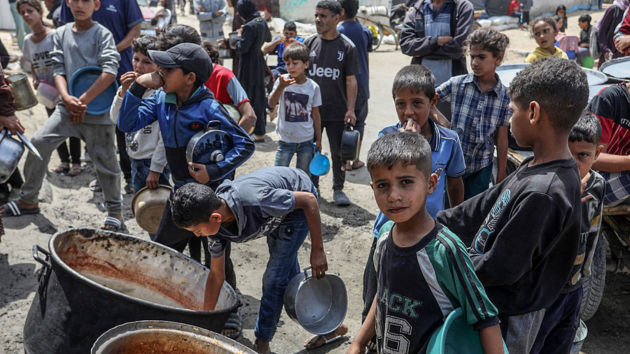
(GAZA) — Gaza’s entire population is experiencing critical levels of hunger amid the ongoing Israel-Hamas war and the third month of Israel cutting off aid to the strip, according to a report published Monday.
Gaza’s 2.1 million residents will face a “crisis” level of food insecurity — or worse — from now through the end of September, according to a new report from the Integrated Food Security Phase Classification partnership, whose members include the World Health Organization.
“Crisis” is the third-highest level of food insecurity, out of five, according to the IPC classification system. This is when households are either struggling to access food and are seeing cases of malnutrition or “are marginally able to meet minimum food needs but only by depleting essential livelihood assets,” according to the IPC.
Of the entire population, three-quarters of Gaza’s population are already classified at the “emergency” or “catastrophe” levels, which are the two worst stages of food insecurity, per the IPC.
The report projected that by the end of September, about 470,000 people Gaza, equivalent to about 22% of the population, will be classified as living under “catastrophe,” which is equivalent to famine levels of starvation.
In the previous IPC report, released in October 2024, 12% of the population was projected to be under classified as living under “catastrophe.”
The IPC said famine is classified when an area has 20% of households facing an extreme lack of food, 30% of children suffering from acute malnutrition, and two of every 10,000 people dying each day due to starvation or a combination of malnutrition and disease.
In a press release, the WHO said the situation in Gaza is “one of the world’s worst hunger crises, unfolding in real time.”
“We do not need to wait for a declaration of famine in Gaza to know that people are already starving, sick and dying, while food and medicines are minutes away across the border,” WHO Director-General Dr. Tedros Adhanom Ghebreyesus said in a statement on Monday. “Today’s report shows that without immediate access to food and essential supplies, the situation will continue to deteriorate, causing more deaths and descent into famine.”
Ingredients have started running out in Gaza, and some food relief organizations have already closed.
In late April, the United Nations’ World Food Programme said it had delivered its last remaining food stocks to hot meal kitchens in Gaza, and it expected to fully run out of food in the coming days.
Additionally, the nonprofit group World Central Kitchen announced on Wednesday that it had run out of supplies and ingredients needed to cook meals or bake bread in Gaza.
“Families in Gaza are starving while the food they need is sitting at the border. We can’t get it to them because of the renewed conflict and the total ban on humanitarian aid imposed in early March,” Cindy McCain, executive director of the United Nations World Food Programme, said in a statement. “It’s imperative that the international community acts urgently to get aid flowing into Gaza again. If we wait until after a famine is confirmed, it will already be too late for many people.”
The Israeli government said the blockade is meant to pressure Hamas to release its hostages, as well as the remains of those who have died, and to accept a new proposal to extend phase one of the ceasefire deal, which ended March 18.
The WHO said that since the blockade began, 57 children have died from malnutrition, citing figures from the Hamas-run Gaza Ministry of Health. If the current situation persists, an estimated 70,500 children between ages 6 months and just under 5 years old will experiencing acute malnutrition by March 2026, according to the IPC report.
Pregnant and breastfeeding women are also at risk with nearly 17,000 expected to need treatment for acute malnutrition by March 2026.
Aid workers told ABC News that malnutrition makes it harder for Gazans to heal from injuries suffered during the war, and they can also be at risk of infections or skin graft failure.
An official from President Donald Trump’s administration told ABC News there is a not-yet-finalized plan to administer the delivery of humanitarian aid in Gaza, starting with fewer than half a dozen distribution sites set up throughout the enclave.
“Our team members inside Gaza are surviving on the cheapest staples they can find — lentils, fava beans, dry chickpeas — if anything is available at all,” Kate Phillips-Barrasso, vice president of global policy and advocacy for the humanitarian organization Mercy Corps, said in a statement. “The people of Gaza are enduring one of the most harrowing humanitarian crises in recent history.”
“All barriers to food, water, and aid must be lifted now,” she said, “before even more lives are lost.”
(LONDON) — President Vladimir Putin appears to be facing a dilemma as Russian and Ukrainian representatives prepare for direct peace talks in Istanbul, Turkey, on Thursday.
Having repeatedly dodged Ukrainian and U.S. calls for a full 30-day ceasefire, the Russian leader instead offered direct talks between the Ukrainian and Russian teams in Istanbul — a proposal President Donald Trump enthusiastically backed.
The offer appeared significant — the talks, if they go ahead, will be the first direct peace negotiations between the two sides since the early weeks of Moscow’s full-scale invasion in February 2022.
Zelenskyy, though, decided to up the stakes. “I will be waiting for Putin in [Turkey] on Thursday. Personally,” he wrote in a post on X. “I hope that this time the Russians will not look for excuses.”
The offer for the two presidents to meet face to face represents a challenge to Putin, who has not met with Zelenskyy since 2019, has repeatedly sought to undermine the Ukrainian president’s legitimacy and suggested it would not be suitable for Moscow to negotiate directly with Kyiv.
“Zelenskyy has put Putin in a situation where no matter what Putin does, he loses,” Oleksandr Merezhko — a member of the Ukrainian parliament representing Zelenskyy’s party — told ABC News. “If Putin doesn’t show up in Istanbul then he loses,” Merezhko added. “The world will see that Putin doesn’t want any negotiations.”
“If Putin doesn’t show up, then imagine how it will look — on one hand the young defiant leader of a heroic country and on the other hand an old dictator, war criminal,” Merezhko added. “Putin cannot afford to look like this. So, the chances that he will show up in Istanbul are slim.”
The Kremlin has so far been silent on whether Putin will meet with Zelenskyy, while reiterating the president’s offer of direct negotiations in Istanbul. “Overall, we remain committed to a serious effort toward a long-term peaceful resolution,” Kremlin spokesperson Dmitry Peskov said on Monday.
Konstantin Kosachev — the deputy speaker of Russia’s Federation Council, the upper house of the Russian parliament — reportedly suggested Putin would not attend.
Kosachev told the Rossiya-24 TV channel — as quoted by Russia’s Interfax news agency — that Zelenskyy is trying “to shift the blame to Russia, to say: look, President Putin, whom I invited to Istanbul, refused, did not come. And then there will be all sorts of insinuations about why this happened.”
Oleg Ignatov — the International Crisis Group’s senior Russia analyst — told ABC News it would be “a big surprise” if Putin traveled to Istanbul. “Usually, Putin doesn’t just meet with anybody without preparations,” Ignatov explained.
Ahead of the last meeting between the two leaders in 2019, the Kremlin was preparing “for many months,” he added.
Putin’s offer of direct talks came after top European leaders visited Kyiv last week, expressing their support of Ukraine’s demand for a full 30-day ceasefire during which peace negotiations could resume. Putin has so far not endorsed the proposal.
President Donald Trump appeared to back both the 30-day ceasefire and Putin’s counter-offer of talks in Turkey.
First, European allies said the president endorsed the ceasefire in a phone conversation during their visit to Kyiv.
But Trump then quickly also expressed support for Putin’s offer of talks in Istanbul — an offer interpreted by Ukraine and its European partners as an effort to dodge their proposal. Trump even publicly pressed Zelenskyy to “immediately” agree to the meeting.
After Zelenskyy countered with his offer of a direct meeting with Putin, Trump even suggested he might join. “I’ve got so many meetings, but I was thinking about actually flying over there,” he told reporters at the White House on Monday.
“There’s a possibility of it, I guess, if I think things can happen, but we’ve got to get it done,” Trump said before departing for a planned visit to three Persian Gulf nations across four days. “Don’t underestimate Thursday in Turkey,” Trump added.
Ignatov, though, warned against any expectation of a breakthrough. “The Russians clearly say that they’re interested in keeping military and diplomatic pressure on Ukraine,” he said. “They clearly say that there will be long negotiations and Ukraine should be prepared for this.”
“They’re both throwing the ball to each other,” Ignatov said of Kyiv and Moscow, with Trump watching on, hungry for a peace deal he can sell as a political win.
Merezhko praised Zelenskyy for his diplomatic maneuvers. “Zelenskyy made a genius chess move which has cornered Putin,” he said. “He said. ‘Mr. Trump — you want negotiations? You’ll get it. I’m coming in person.'”
But the lawmaker said Ukrainians remain unsettled by the quick shifts in Trump’s rhetoric and concerns that the president is being influenced by Russia’s false narratives surrounding its invasion of Ukraine.
“It looks as if despite Ukraine agreeing to all Trump’s proposals — even though it’s not in our interests — he is reluctant to impose serious sanctions on Russia, constantly looking for pretext not to do it and to blame Ukraine for not wanting peace,” Merezhko said.
Secretary of State Marco Rubio spoke with counterparts from France, Germany, Poland, the U.K., Ukraine and the European Union by phone ahead of this week’s planned Istanbul meeting, State Department spokesperson Tammy Bruce said Monday.
“The leaders discussed the way forward for a ceasefire and path to peace in Ukraine,” she said.
ABC News’ Shannon K. Kingston contributed to this report.
(WASHINGTON) — All imports of live cattle, horse and bison from the southern border have been banned due to the spread of a flesh-eating pest in Mexico, the U.S. Department of Agriculture (USDA) said on Sunday.
“The protection of our animals and safety of our nation’s food supply is a national security issue of the utmost importance,” USDA Secretary Brooke Rollins said in a press release.
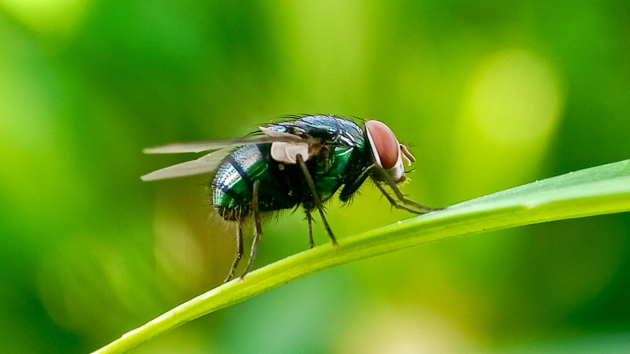
The secretary cited New World Screwworm (NWS), a parasitic fly, as the reason for the suspension of imports. The name refers to the way in which maggots screw themselves into the tissue of animals with their sharp mouth hooks, causing extensive damage and often leading to death.
Panama saw NWS infections among livestock rise from an average of 25 cases annually to over 6,500 in 2023. Since then, the disease has spread further north, breaking a previously established barrier that contained the pest to South America for decades, the USDA said.
Infections have been detected in Costa Rica, Nicaragua, Honduras, Guatemala, El Salvador and Belize.
More recently, a case was reported in Mexico late last year, which also shut down the border for live animal trade. Imports resumed earlier this year after an agreement between the U.S. and Mexico to mitigate the threat of the disease.
The continued spread and threat of NWS led to the current shutdown, which will continue on a month-by-month basis, “until a significant window of containment is achieved,” the USDA said. The disease was recently detected in remote farms about 700 miles from the U.S. border.
Eradicating the disease is possible through a technique in which male screwworm flies are sterilized and then released into the environment to mate with females until the population dies out. This process was used to rid the U.S. of NWS in the 1960s.
The eradication efforts yielded estimated economic benefits of nearly $800 million annually for American livestock producers in 1996, with an estimated $2.8 billion for the wider economy, according to the USDA.
U.S. agriculture officials are working to release sterile flies by both air and ground along parts of Southern Mexico and in other regions in Central America.
“Once we see increased surveillance and eradication efforts, and the positive results of those actions, we remain committed to opening the border for livestock trade,” Rollins said. “This is not about politics or punishment of Mexico, rather it is about food and animal safety.”
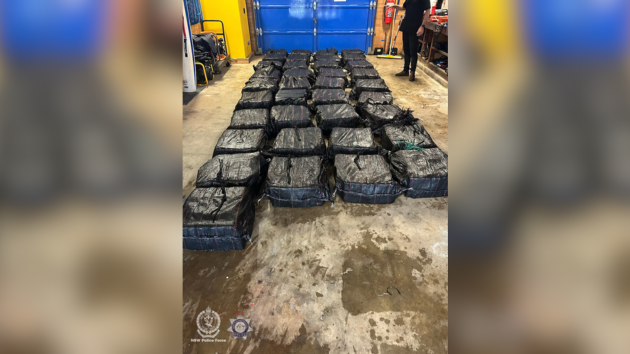
(LONDON) — Over a ton of cocaine worth close to nearly half a billion dollars has been seized from a boat off the coast of Australia, officials have confirmed.
Detectives from the Organised Crime Squad in Australia have charged five people following the seizure of the drugs from a vessel off the New South Wales coast after police there obtained potential intelligence to the drugs following a “suspicious purchase” of a 43-foot-long motor cruiser paid for by just cash in Sydney’s Sutherland Shire on April 28, according to a joint statement from the New South Wales Police Force and the Australian Federal Police (AFP).
“On Friday (9 May 2025), as the vessel travelled back to shore – towards South West Rocks – it was intercepted by the Marine Area Command about 9.30am.,” the statement said. “Two men, aged 24 and 26, were arrested on board and escorted to shore by the police vessel. They were taken to Coffs Harbour Police Station.”
Approximately 1,110 blocks of cocaine, weighing 1.039 tons were located on the vessel, police confirmed.
“The seized cocaine equates to over a million individual hits, with an estimated potential street value of $623.4 million,” (more than $400 million U.S. dollars) police said.
Three other people – aged 28, 29 and 35 – were simultaneously arrested on shore after investigators stopped two vehicles attempting to leave the South West Rocks area and they were taken to Taree Police Station.
Forensic specialists are currently examining the seized drugs and will be conducting further testing to determine the exact weight and purity of the drugs.
“The two men at Coffs Harbour were charged with supply prohibited drug – large commercial quantity and participate in criminal group,” Australian officials said. “The three men at Taree were charged with take part in supply prohibited drug – large commercial quantity and participate in criminal group.”
All five of the suspects appeared at Parramatta Bail Court on Saturday where they were all formally refused bail and mandated to appear at Coffs Harbour Local Court on July 15, authorities said.
“The AFP and NSW Police Force have a long history of disrupting criminal networks attempting to import drugs that destroy our community. Combining our resources and expertise allows us to get successful outcomes like the one we are announcing today,” AFP Assistant Commissioner Stephen Dametto said. “Australia’s vast coastline is attractive to organised crime groups, who attempt to exploit this by trying to import drugs using boats. The bad news for them is the AFP will continue to work together with our partners to target organised crime syndicates who wrongly believe they can operate with impunity.
NSW Police State Crime Commander, Acting Assistant Commissioner Jason Weinstein said these arrests are testament to how rapidly our policing resources can coordinate and stop significant amounts of drug coming into NSW.
“Whether on land or sea, NSW Police have the investigative capability to disrupt and undermine criminal enterprise,” Weinstein said. “This seizure shows how our continuous monitoring of known organised crime methodologies with industry partners, can be actioned into a successful multi-agency operation with those involved immediately arrested to prevent illicit drugs entering NSW. Our ability to pivot and protect the community is evident in this week’s actions. Make no mistake these drugs, if allowed to enter our communities, would have had devastating impacts on people’s lives and social cohesion, particularly in regional townships.”
Investigations into the origin of the drugs and the group’s alleged associates remain ongoing.
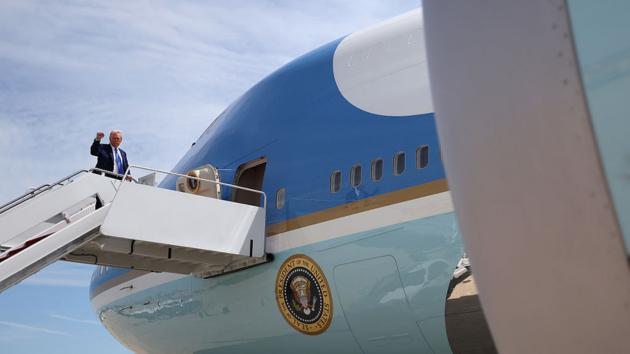
(WASHINGTON) — The Trump administration’s plan to accept a luxury jet donated by the Qatari government to use as Air Force One raises significant security concerns, intelligence experts and government officials say, as President Donald Trump said it would be “stupid” not to accept a free plane.
Trump on Monday defended the administration’s plans to receive a luxury jet donated by the Qatari government during remarks at the White House, calling the donation a “very nice gesture.”
“I would never be one to turn down that kind of an offer. I mean, I could be a stupid person and say, ‘No, we don’t want a free, very expensive airplane.’ But it was, I thought it was a great gesture,” he said.
Rhode Island Sen. Jack Reed, the top Democrat on the Senate Armed Services Committee, slammed the move, arguing that using the plane as Air Force One would “pose immense counterintelligence risks by granting a foreign nation potential access to sensitive systems and communications.”
“This reckless disregard for national security and diplomatic propriety signals a dangerous willingness to barter American interests for personal gain,” Reed said in a statement Monday. “It is an affront to the office of the presidency and a betrayal of the trust placed in any U.S. leader to safeguard the nation’s sovereignty.”
Air Force One a ‘high-value target’
The primary aircraft used in the current Air Force One fleet includes two aging Boeing 747-200 jumbo jets that have been operational since 1990. Despite flying for more than 35 years, the current pair of Air Force One jets are considered some of the safest and secure aircraft in the world.
Many of the security features on the plane remain classified. It has anti-missile defenses or countermeasure systems to protect against surface-to-air and air-to-air missiles, and the communication devices can also withstand the pulse of a nuclear blast. It is also outfitted with sophisticated communications capability to allow the president to securely run the country from the plane and protect him from cyberattacks.
“It’s designed to transport the president in a safe way and be able to withstand physical attacks, but to also ensure that the president maintains communication with military, his cabinet, other government leaders in a safe and secure manner,” said John Cohen, an ABC News contributor and former acting Homeland Security official. “Any building or vehicle or airplane that the president is located is a high-value target for foreign intelligence services who want to gather as much information about the president.”
Air Force One can also remain in the air for several days due to its ability to refuel in midair. The plane also houses a small medical facility where doctors could perform surgery if needed.
All of these systems would likely need to be installed on the Boeing 747-8 that Trump would receive as a gift from Qatar.
A jet donated by Qatar would also be a “counterintelligence nightmare,” ABC News contributor Darrell Blocker, a former CIA field operative, said.
“If you go back to almost anything that is given by a foreign government, there are regulations and restrictions and guidelines for ensuring that they’re not being bugged, and a plane would be an absolute nightmare to be able to confirm that it’s not,” Blocker told ABC News Live on Monday. “From an intelligence perspective, it’s not the brightest move.”
Blocker cited that when the U.S. embassy was being built in Moscow in the 1980s, the U.S. had to “take it down to its bare bones” because the Russians “put bugs through every room, every facility.”
“I think the people of Troy, when they accepted that horse, regretted it after the fact also,” he said.
The complexity and time needed to retrofit and inspect the plane raise questions on cost and a timeline.
“Even under the best of circumstances, it’s going to take a significant effort for the military to be satisfied that the aircraft is constructed safely, that it’s not compromised from the standpoint of intelligence collection capabilities being planted on it, and that it is built in a way that it will be able to assimilate the sensitive communications and countermeasure capabilities that are that are present on any plane that’s Air Force One,” Cohen said. “To be done right, it’s not going to happen quickly.”
“In order to adequately ensure that this airplane — which was operated by a foreign government that happens to have a relationship with Iran and China and Russia — in order to ensure that that plane has not had collection capabilities introduced into it when it was constructed, they’re gonna have to basically tear it down to the airframe,” he added.
White House working on ‘legal details’
ABC News has reached out to the White House for comment on the security concerns and has not yet received a response.
Both the U.S. Air Force and the Department of Defense referred questions to the White House when asked about the possible transfer of the Qatari-owned Boeing 747 to the Department of Defense.
House Speaker Mike Johnson said Monday he would not comment on Trump preparing to receive the jet from Qatar because he hasn’t seen the “details.”
The White House is working on the “legal details” of the Qatari government’s donation to the Defense Department, press secretary Karoline Leavitt said Monday in an appearance on Fox News.
“But, of course, any donation to this government is always done in full compliance with the law. And we commit ourselves to the utmost transparency and we will continue to do that,” Leavitt added.
Trump said during remarks at the White House on Monday that he doesn’t plan to use the plane after he leaves office. Pressed by ABC News Senior Political Correspondent Rachel Scott on what he would say to people who view the luxury plane as a personal gift to him, Trump said it was not a gift to him but “a gift to the Department of Defense.”
Sources familiar with the proposed arrangement told ABC News that the plane would be a gift that is to be available for use by Trump as the new Air Force One until shortly before he leaves office, at which time ownership of the plane will be transferred to the Trump presidential library foundation.
If a private contractor were able to complete the modifications needed to the donated plane before the end of Trump’s presidency, many of the systems installed would then need to be removed should the Trump presidential library foundation take possession of the plane upon Trump leaving office due to the sensitive nature of the technology.
Ultimately, Cohen said he suspects that members of the intelligence community and the military will assess the risk to national security and “the level of effort to minimize the risk to national security.”
“If they’re doing their job, the president’s national security team will explain to him the level of risk that exists if a foreign intelligence service were able to introduce collection capabilities that could intercept face-to-face communications on the plane, electronic communications coming from the plane,” Cohen said. “They should also be explaining to him the level of effort that it will involve in order for that risk to be mitigated. And with that information, he can then make an informed decision on whether and under what conditions to accept the airplane.”