Prince Harry, Duke of Sussex takes part in a session of Pickleball, one of the two new sports for the Invictus Games, during the Invictus “1 Year To Go” event, July 10, 2026, in Birmingham, England. (Pool/Getty Images)
(NEW YORK) — Prince Harry is set to make his first public appearances in the United Kingdom since moving back with his wife Meghan, the Duchess of Sussex, and their two children.
Harry, the younger son of King Charles III, is scheduled to attend two events late next week for the Invictus Games, a Paralympic-style competition for wounded service members that Harry founded more than a decade ago.
Then, on Sept. 21, Harry is confirmed to attend and speak at the WellChild Awards, an event in London for seriously ill children that both he and Meghan have attended on multiple occasions in the past.
From there, Harry will participate in the Clinton Global Initiative annual meeting, set to be held Sept. 22-23 in New York.
Harry was among the “featured participants” named in a lineup released Thursday by the organization, founded by former President Bill Clinton.
Neither Harry nor Meghan have made any public appearances since moving to the U.K. from California with their kids, Archie and Lilibet, in late August.
Earlier this week, Tower Bridge Studios, a podcast and film studio in London, shared a photo of Harry at its studio, captioning the photo on Instagram, “Thank you Prince Harry for choosing Tower Bridge Studios! It was an absolute pleasure to have you in our studios and signing our wall[.] we look forward to welcoming you back again.”
The studio later removed the photo of Harry from its Instagram page.
It is not known publicly where the Sussexes are living in the U.K. nor where Archie and Lilibet are enrolled in school. The family plans to stay for an “extended period of time” in the U.K., where Archie and Lilibet will attend school, according to a source familiar with the matter.
The upcoming public engagements on Harry’s calendar appear to be consistent with the type of work he has done since he and Meghan stepped away from their senior royal roles six years ago.
At that time, it was agreed that they would no longer use their Royal Highness titles, would no longer represent the monarch and would no longer receive public funds for royal duties, freeing them to earn money on their own.
According to a letter released on Sept. 8 by the head of the Royal Household, Harry and Meghan will remain “private citizens” and not be working royals while living in the U.K. The letter was sent under the direction of Harry’s father, the king.
Harry and Meghan were “surprised” by the letter, their spokesperson told ABC News on Sept. 9. The couple has not commented further.
Buckingham Palace has also not commented on the couple’s move beyond that letter.
Dr. Hussam Abu Safiya is seen in this undated photo. (Courtesy of Elyas Abu Safiya)
(WASHINGTON) — Nearly 70 Democratic and independent members of Congress are calling on Secretary of State Marco Rubio to work with the Israeli government to help secure the release of a prominent Palestinian doctor who has been held in custody for more than 500 days.
Dr. Hussam Abu Safiya, a pediatrician and director of Kamal Adwan Hospital in northern Gaza, was arrested in December 2024 and has been held by Israeli authorities since. No formal charges have been filed against him, and no trial has been held.
The Israel Defense Forces (IDF) told ABC News earlier this year that Abu Safiya “was apprehended for suspected involvement in terrorist activities, and for holding a rank in the Hamas terror organization.” The doctor, his family and advocates have denied he is a member of Hamas or that he has engaged in terrorist activities. In June, Israel’s Supreme Court rejected an appeal by Abu Safiya for his release.
Human rights groups have called for the immediate and unconditional release of Abu Safiya amid reports that he has been denied food and proper medical care and has been subjected to abuse. The Israel Prison Service told ABC News earlier this year that the allegations are “false” and said it “rejects allegations of abuse, starvation, or denial of medical treatment.”
The letter, led by Reps. Maxine Dexter, D-Ore., and Raul Ruiz, D-Calif. — and first viewed by ABC News — expressed “urgent concern” over Abu Safiya’s physical well-being.
“Given the imminent threats to Dr. Abu Safiya’s life, we urge you to do everything in your power to ensure he receives the necessary medical care,” the letter reads. “We also urge you to advocate for an end to his seemingly indefinite detention during any upcoming engagements with the Israeli government.”
During the first 14 months of the Israel-Hamas war — which began on Oct. 7, 2023, when Hamas launched a surprise terrorist attack in southern Israel — Abu Safiya became one of the most prominent voices in Gaza, speaking out on social media about the strip’s collapsing healthcare system. He documented the struggle to keep his hospital open despite multiple sieges.
“During the war in Gaza, he played a critical role in providing wounded civilians with vital medical care,” the letter reads. “Among his most notable contributions was the construction of a malnutrition unit that treated hundreds of children.”
The letter documents that Abu Safiya continued his work amid his 15-year-old son being killed during the war and suffering an injury to his thigh and back.
Since his arrest, Abu Safiya has been held in five different prisons, according to his attorneys and Physicians for Human Rights Israel (PHRI), a non-profit human rights organization representing Abu Safiya in his civil case.
Naji Abbas, director of the prisoners and detainees department at PHRI, told ABC News in June that Abu Safiya has lost 20 kilograms (44 pounds) and was denied access to high blood pressure medication for at least two months until PHRI and his private attorney appealed. During one of the most recent visits in May, Abbas said Abu Safiya told his attorneys he was suffering from scabies, a skin disease.
Abu Safiya’s personal attorney said that during a recent visit, the doctor had fresh bruises and was struggling to remain conscious, according to the human rights organization Amnesty International.
“Nothing obviates any government’s obligation to provide basic medical care and due process to detainees,” the letter reads. “We urge you to engage your Israeli counterparts to end Dr. Abu Safiya’s indefinite and dangerously inhumane detention.”
“Every day Dr. Hussam Abu Safiya is detained puts his health and safety in jeopardy,” Dexter told ABC News in a statement. “I spent my career caring for patients, and no physician should be punished for answering the call to care for people in crisis. The reports of Dr. Abu Safiya’s mistreatment and declining health require immediate action. The State Department must urgently make contact with the Israeli government to secure his release and reunite him with his family.”
In a statement to ABC News, Ruiz said he was “concerned” by reports that Abu Safiya has not received adequate care “for his deteriorating and life-threatening health conditions. I am calling on Secretary Rubio to work with the Israeli government to release Dr. Abu Safiya so he can get the urgent medical care that he needs.”
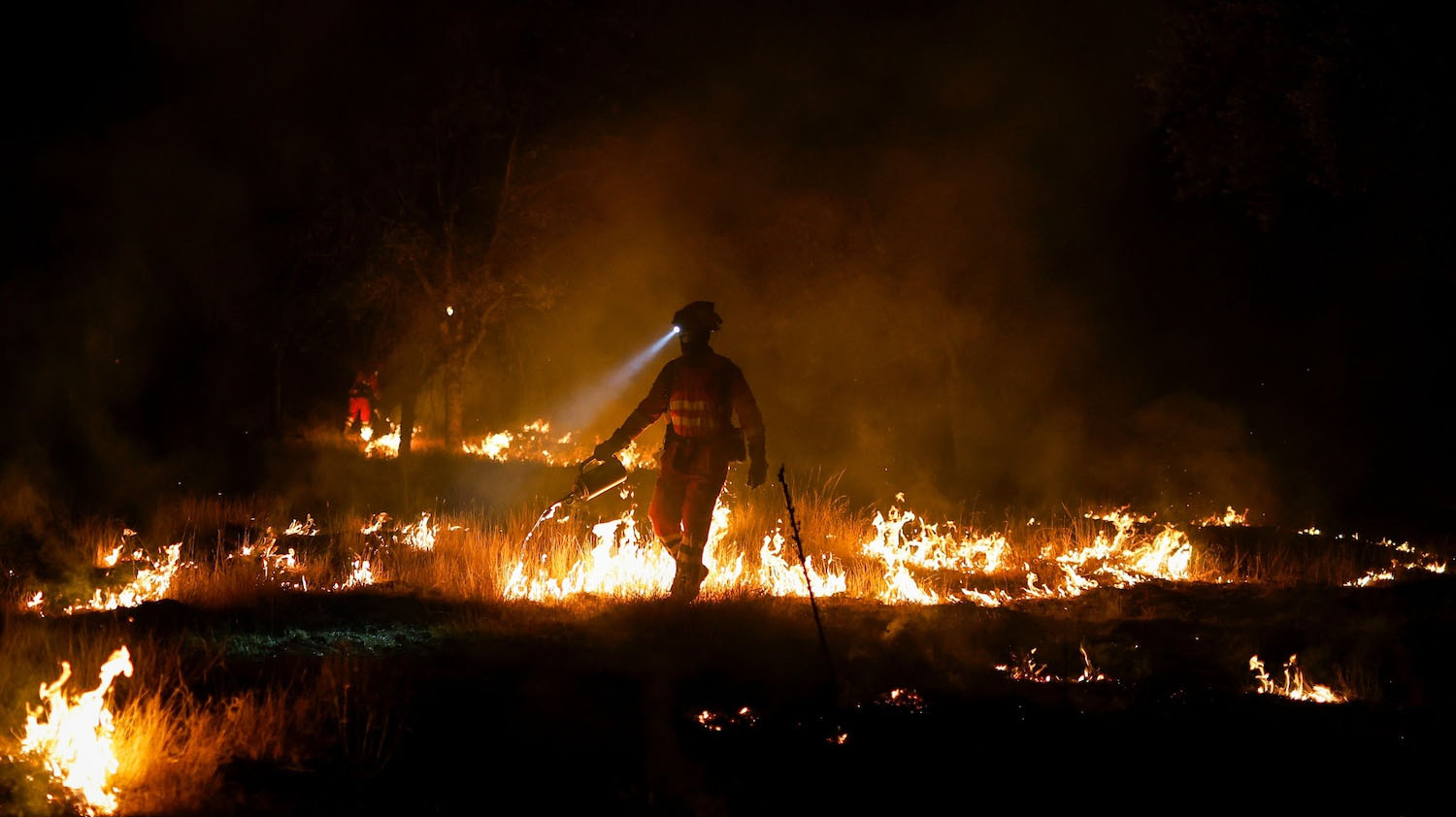
Members of the Emergency Military Unit utilize controlled burns to halt the spread of wildfires in the Madrid border region, July 28, 2026, in Cebreros, Spain. (Pablo Blazquez Dominguez/Getty Images)
(NEW YORK) — Global temperatures are once again reaching new records as potentially historic El Niño conditions continue to unfold across the central and eastern equatorial Pacific, according to a report released Wednesday.
Last month was the warmest August on record globally, surpassing 2023 and 2024, according to new data analyzedby the Copernicus Climate Change Service (C3S). The planet’s average surface air temperature was 62.5 degrees Fahrenheit.
The report said that August 2026 was a “remarkable month in the global climate record” and marks the first record-breaking month for global temperatures since January 2025.
It was not only the warmest August on record, but the joint-warmest month for the planet across all calendar months, tied with July 2023, according to the organization’s dataset, which begins in 1940.
Last month was also the first month since November 2025 to register more than 1.5 degrees Celsius warmer than the 1850-1900 pre-industrial average, reaching 1.65 degrees Celsius.
The 1.5-degree Celsius, 2.7-degree Fahrenheit, warming limit was established in the 2015 Paris Agreement and is a threshold climate scientists view as critical for avoiding the worst impacts of human-amplified climate change.
“Combined with record global sea surface temperatures and the warmest summer on record for Western Europe, these observations show how climate change is driving extremes across both the atmosphere and the oceans,” Samantha Burgess, deputy director of the Copernicus Climate Change Service, said in a statement.
“The impacts of these conditions are increasingly being felt by communities, economies and ecosystems across the world,” she added.
In the United States, a new report from the National Oceanic and Atmospheric Administration (NOAA) found that meteorological summer, which lasts from June to August, was the warmest summer on record, surpassing 1936 and 2021.
Record highs in global average temperature often occur during El Niño years, but the phenomenon isn’t the sole reason for the record-breaking warmth, climate scientists say.
Short-term El Niño temperature spikes occur on top of the long-term global warming trend, which is primarily driven by human-caused greenhouse gas emissions.
Last month, global sea surface temperatures reached an all-time high, as El Niño conditions continued to strengthen across the central and eastern equatorial Pacific, and marine heatwaves persisted around the world.
On Aug. 22, the daily average global sea surface temperature between 60 degrees south and 60 degrees north reached 69.98 degrees Fahrenheit, the highest value on record, according to Copernicus.
It surpasses the previous record of 69.96 degrees Fahrenheit set in February and March 2024, during the last El Niño event. Global sea surface temperatures also reached a record for August, setting a new monthly record for the second consecutive month.
“This record is another clear signal of an ocean under growing stress. El Niño is adding heat to the system, but it is doing so on top of decades of human-driven warming,” Burgess said.
The meteorological summer in Western Europe brought exceptionally early, persistent and intense heat waves across the region and ranked as the warmest summer on record, surpassing 2003.
The prolonged hot and dry conditions fueled devastating wildfires throughout the summer months.
Over the summer season, conditions were much drier than average in western and central Europe, southern Scandinavia and southeastern Europe, with water levels in several major rivers dropping dramatically and disrupting water supplies, irrigation and energy production in several countries.
LONDON — President Donald Trump’s special envoy Steve Witkoff hailed what he described as “very meaningful discussions” regarding the Ukraine-Russia war, saying the talks in Kyiv Sunday with Ukrainian President Volodymyr Zelenskyy were “substantive [and] important.”
Witkoff and Trump’s son-in-law, Jared Kushner, arrived in the Ukrainian capital of Kyiv on Sunday in a renewed White House push for progress on ending Russia’s full-scale invasion of its neighbor, now in its fifth year.
“President Trump asked us to convey his personal regards to you and to the people of Ukraine,” Kushner told Zelenskyy in comments before reporters, adding that Trump “wanted us to convey that he sees this as a very, very hard and complex problem, but it’s a very worthy problem worth solving.”
He added that Trump was committed not only to ending the conflict, but also to securing a lasting peace that would enable Ukraine “to build itself into the great nation that they [Ukraine] have the fullest potential to achieve.”
Zelenskyy thanked the United States for its continued support and expressed gratitude to Trump for “allowing the American group to be here in Ukraine today.”
“After the meetings in the Russian Federation, it was very important for us to have President Trump’s chief negotiators in Ukraine today,” Zelenskyy said.
The U.S. delegation traveled to Ukraine following talks in Moscow on Saturday, during which Witkoff and Kushner sat down with Russian President Vladimir Putin to discuss what a White House official told ABC News were “substantive plans for next steps” on the path toward a peace deal, despite few signs peace is any closer.
The visit to Kyiv by Witkoff and Kushner is their first during the full-scale invasion. The pair have visited Russia several times during the conflict.
They arrived from Poland by train before being welcomed by President Zelenskyy outside the historic Saint Sophia Cathedral in the center of the capital. Zelenskyy embraced the two the men before leading them inside the cathedral.
Prior to their arrival, Zelenskyy wrote in a post on X that he had met with Ukraine’s negotiating team and was expecting a “substantive conversation” with the U.S. envoys.
“Ukraine has always been and will remain constructive. We are interested in bringing the end of the war closer. Peace is needed. Security guarantees are needed. A dignified character of the postwar peace is needed. Our proposals are ready,” he wrote in a post to X.
The national security advisers of France, Germany and the U.K. were among senior European officials who also traveled to Kyiv to take part in Sunday’s talks.
A source told ABC News the American delegation was serious about the meetings in Moscow and Kyiv, adding that the visits are “not just for show.”
According to the source, the American side wants to end the war before winter, while Kyrylo Budanov, the head of Zelenskyy’s office, believes this will not be possible and that Russia will only be genuinely ready for negotiations in the spring or summer 2027.
The American negotiating pair spent more than three hours with Putin in the Kremlin on Saturday, with U.S. and Russian officials both praising the discussions.
But Putin afterward gave no sign of compromise. Kremlin aide Yuri Ushakov told the state-run Tass news agency that Putin told Witkoff and Kushner that it was necessary to eliminate “all root causes of the Ukrainian conflict,” a phrase routinely used by officials in Moscow hinting at maximalist Russian demands that Ukraine be forced to accept neutrality, cut down its military and abandon any NATO aspirations.
Putin also “noted the successes of Russian forces” in the ongoing war effort “and expressed confidence in achieving its goals,” Ushakov said.
Most experts believe Putin’s position in recent weeks has only hardened, with signs he believes Russia is winning the war and is more determined to use military force to try to force concessions from Kyiv, including by targeting its energy system this winter.
In the last two weeks, Russia has significantly intensified its air attacks on Kyiv, using jet-powered drones to relentlessly terrorize the capital.
At the start of Saturday’s meeting, Witkoff thanked Putin for hosting the American delegation and noted the “incredible” stories and memories that he, Kushner, Ushakov and Russian Direct Investment Fund CEO Kirill Dmitriev will have when they retire. “Yours will be right at the top of it all,” Witkoff said.
Witkoff also conveyed Trump’s best wishes and thanked Putin on behalf of the Gilman family for helping secure the return of Rob Gilman. Putin said that the credit belonged to Trump.
A White House official told ABC News that Kushner and Witkoff were joined by officials from the National Security Council, State Department and Treasury Department during the discussions on “proposals to bring peace to this conflict.”
Witkoff further thanked Putin for supporting what he described as a temporary “no-shoot” arrangement around Kyiv and Moscow, which allowed the American delegation to travel safely to and from Russia.
Putin and Zelenskyy have both publicly said they will not strike each other’s capitals during the American delegations visits. While no Russian strikes struck Kyiv overnight Saturday, drones were reported to have targeted the nearby city of Boryspil. Russian strikes continued in the rest of Ukraine.
The Kremlin meeting did little to encourage Ukrainians, Oleksandr Merezhko — a member of the Ukrainian parliament and the chair of the body’s foreign affairs committee — told ABC News on Sunday.
“We are expecting Trump’s envoy but I don’t have any hopes at all,” he said from Kyiv. This is something that Trump doesn’t understand — Putin believes that there is no way back for him. He has committed so many crimes that, as he believes, he can save his skin only if Ukraine capitulates.”
Merezhko said he was among those skeptical of Witkof and Kushner’s ability to chart a path to a settlement, describing the pair as “amateurs without necessary knowledge and experience.”
Both Russia and Ukraine continued long-range overnight strikes. Ukraine’s air force said Russia launched 108 drones and an unspecified number of cruise missiles into the country overnight into Sunday morning. Air defenses downed 82 drones and six cruise missiles, the air force said, with impacts reported across 11 locations.
Ukraine’s State Emergency Service reported at least one attack in the Kyiv region, where a Russian strike caused a “large-scale fire” at an infrastructure facility.
Russia’s Defense Ministry, meanwhile, said its forces downed 258 Ukrainian drones overnight, with craft reported shot down over 14 Russian regions, occupied Crimea, the Black Sea and the Sea of Azov.
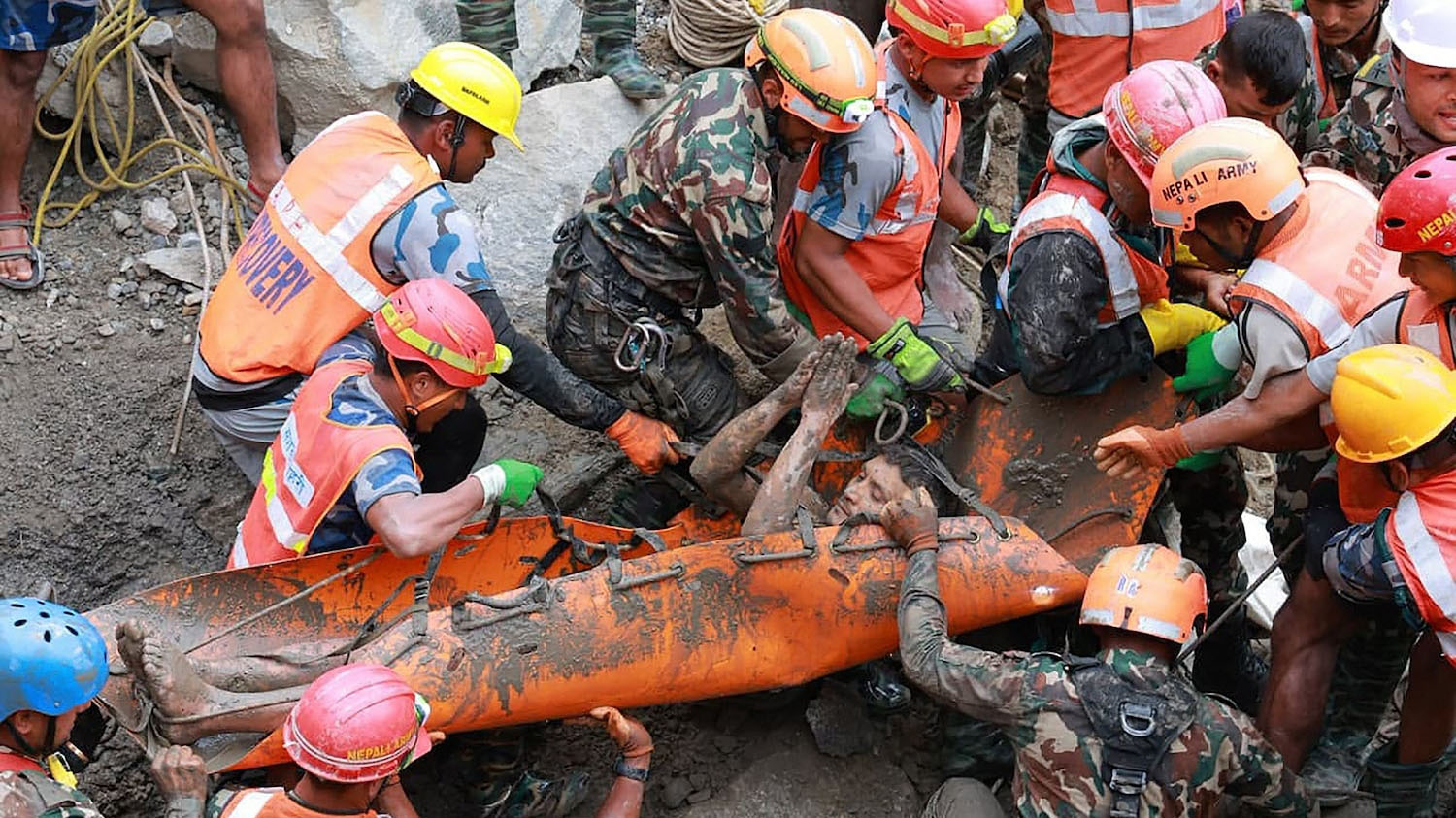
Soldiers rescue a worker alive from a tunnel during an ongoing operation at the Trishuli-3A hydropower project in Nepal’s Rasuwa district, Sept. 4, 2026. (Nepal Army)
LONDON — Two people have been rescued from a hydropower tunnel at the Trishuli 3A construction site, Nepal’s Army confirmed Friday after posting videos and images from the scene on Facebook.
Nepalese lawmaker Shri Ram Neupane, an engineer who has been involved in the search operations, also posted about the two rescues on his Facebook page, including photos and videos from the scene.
He identified the two workers rescued as Sanjay Sah and Kabir Maharjan.
In an earlier Facebook post, Neupane said rescuers had heard voices from people trapped inside the tunnel.
“It has been confirmed that more than one person’s voice has been heard from inside,” Neupane wrote in the post. “When the rescue team said, ‘Don’t panic, we are rescuing,’ a response of ‘yes’ was received from inside.”
After being rescued, Sah, a mechanical foreman, said in a video published by the Nepali Army on Friday that his responsibility was to save the lives of the others in the tunnel because he was in the control room.
“I told everyone that there was a big accident on the big dam, and asked everyone to run and in the end, I ran out of time and could not run out,” Sah said in the video, which was translated from Nepali.
At least 557 workers are missing from the Trishuli 3A hydropower projects along the Trishuli River, with about 115 believed to be trapped in the tunnel, according to the Independent Power Producers Association of Nepal.
Nepal’s Communication Minister Bikram Timilsina said officials remain hopeful that more workers will be rescued. “We are waiting for the rescue of more and more people,” Timilsina wrote on his Facebook page.
Sah said there seemed to be three or four more people still stuck in the tunnel, and possibly even more, as the tunnel is long and some may have been swept deeper inside.
Holding onto hope, Sah said he was chanting mantras while he was trapped.
The death toll following last week’s unprecedented flash flood at the Nepal-Tibet border has climbed to 1,287, with an additional 4,216 people believed to still be missing as of Thursday, officials said.
Those figures increased from 1,114 deaths and 3,916 missing people, respectively, a day earlier, according to Nepal’s National Disaster Management Authority.
Chinese state media have reported an additional 16 deaths and 546 missing people in Tibet, bringing the total death toll to 1,268 and the number of missing people on both sides of the border to 4,762.
Relief and rescue efforts are continuing, with almost all communication towers restored and nearly 12,000 people rescued through international and domestic aid.
Additionally, almost 21,500 security personnel have been mobilized in an effort to speed up search and rescue operations, with more than 5,000 people receiving treatment for injuries, officials said.
Nepali Prime Minister Shah said earlier this week that his government would begin focusing on “rehabilitation” as the length of time since the initial disaster grows.
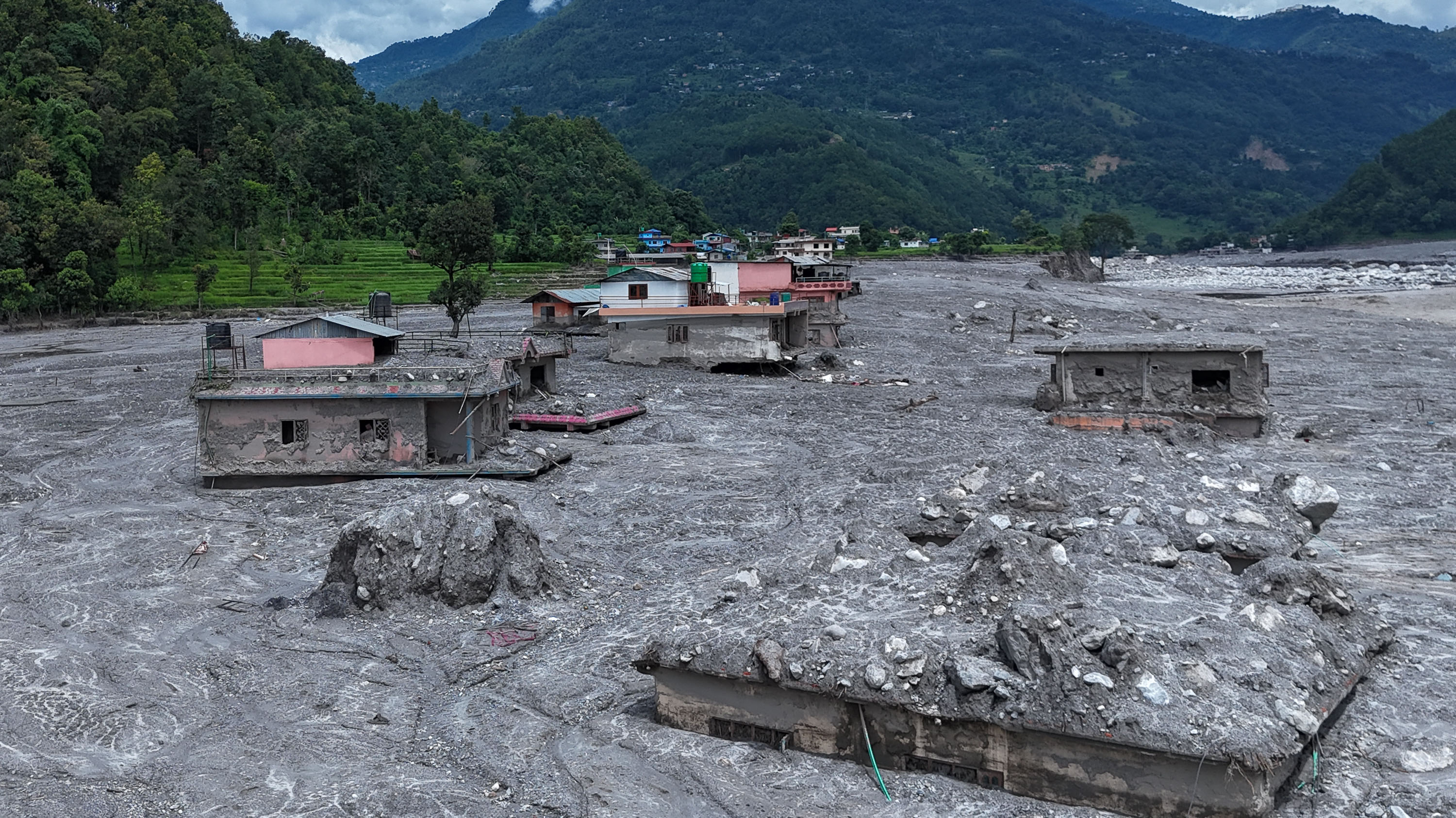
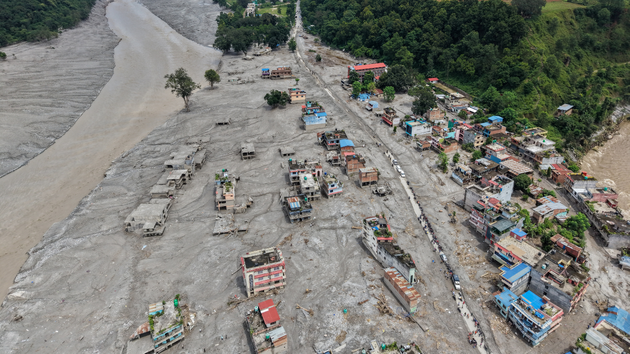
An aerial view of houses surrounded by mud, rocks and debris following flash floods on Sept. 3, 2026, in Betravati village, Rasuwa, Nepal. (Ritesh Shukla/Getty Images)
(LONDON) — The death toll following an unprecedented flash flood at the Nepal-Tibet border has climbed to 1,252, with an additional 4,216 people believed to still be missing, officials said.
These figures have increased from 1,114 and 3,916, respectively, a day earlier, according to the Nepali Government’s National Disaster Management Authority’s latest update, as of Thursday at noon.
Chinese state media have reported an additional death toll of 16, and 546 missing persons in Tibet, bringing the total death toll to 1,268, with 4,762 missing on both sides of the border.
Relief and rescue efforts are continuing, with almost all communication towers restored and nearly 12,000 people rescued thanks to international and domestic aid.
Additionally, almost 21,500 security personnel have been mobilized in attempts to speed up the search and rescue operations, with over 5,000 people receiving treatment for injuries, officials said.
Nepali Prime Minister Shah said earlier this week his government would begin focusing on “rehabilitation” as the length of time since the initial disaster grows.
The flooding, caused by part of a glacier failing, has revived conversations about anthropogenic climate change. The World Meteorological Organisationforecast on Thursday a “very strong” El Nino, which raises the risk of extreme weather.
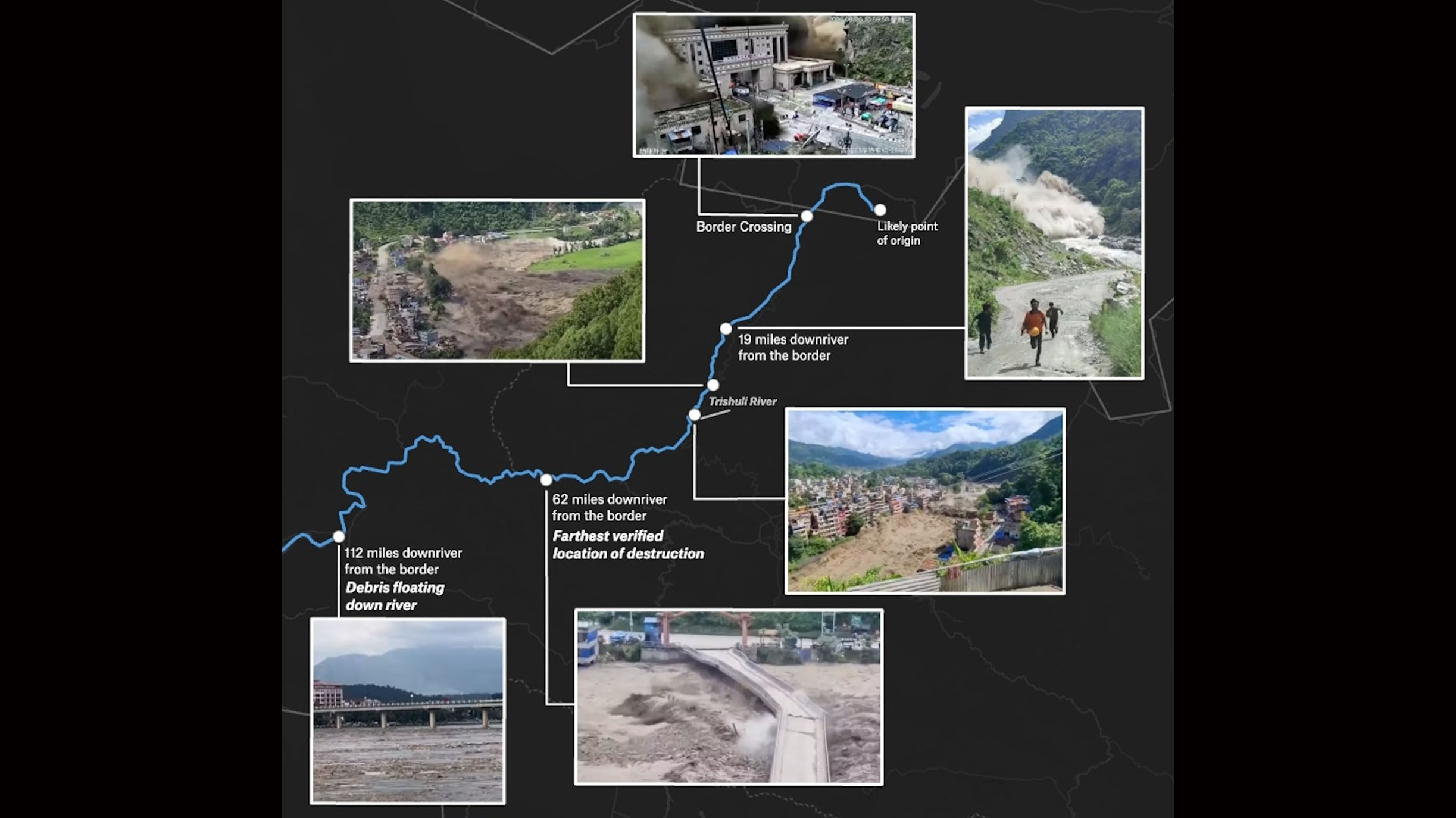
This graphic shows destruction along the path of a landslide and subsequent flash flood along the Nepal-Tibet border. (Felt Maps/ABC News)
LONDON — The death toll from last week’s flash flooding disaster in the Nepal-Tibet border region rose to at least 955 people as of Monday, according to the latest updates from Nepali and Chinese officials, with more than 4,400 people reported missing.
At least 939 bodies had been recovered in Nepal as of Monday, the Nepal National Disaster Management Authority said in a post to X. At least 3,925 people were listed missing, the authority said, marking a significant jump on Sunday’s figure.
China’s state-run Xinhua News Agency, meanwhile, said that at least 16 people had been confirmed killed on the Tibetan side of the border. Xinhua reported that another 546 people were still missing.
The missing count declined from initial reports on Monday morning local time due to a combination of finding more bodies, rescuing more people and families reporting they had found missing relatives, an official with Nepal’s National Disaster Management Authority told ABC News.
At least 85 Americans were still among the missing as of Sunday, State Department spokesperson Tommy Pigott told ABC News’ Martha Raddatz on “This Week.” Nine Americans had been evacuated, Pigott said, up from five on Friday.
“Our priority is the safety and security of the American people. As you mentioned, the remoteness of this location makes getting reliable information difficult. But our dedication remains,” Pigott added.
“We have activated from the State Department $3.6 million in emergency humanitarian assistance that includes up to three months of emergency food for up to 10,000 flood-affected households,” he said.
The flooding occurred in the northern Rasuwa district along the border with Tibet at around 8:40 a.m. local time Wednesday, authorities said. The flooding inundated areas along the Trishuli River, burying buildings and damaging bridges and roadways.
The wall of ice, water and debris that descended from the mountains on the frontier between Nepal and Tibet caused destruction at least 62 miles downriver into Nepal, an ABC News analysis of verified video and satellite images shows.
The flood was reportedly triggered by a landslide about 12 miles northeast of the Rasuwagadhi border post along the frontier, according to Nepali officials.
A 5.2-magnitude landslide was registered in Nepal on Wednesday, according to the U.S. Geological Survey.
The initial location of the glacier was a cliff about 16,000 feet high. The debris avalanche, or landslide, slid down 6,000 feet on the slope, the USGS said.
On Monday, the U.S. Embassy in Kathmandu warned Americans against all travel to the affected region, noting “flood damage, disrupted transportation and communications, search-and-rescue and recovery operations, and the risk of additional flooding and landslides.”
The embassy also urged Americans to “exercise increased caution in Nepal due to civil unrest. Some areas have increased risk.”
ABC News’ Victoria Beaule contributed to this report.
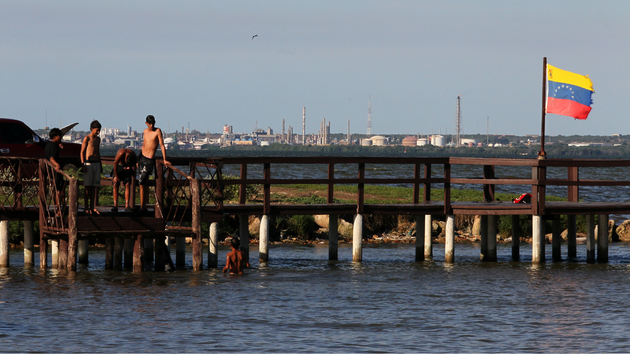
The capital of the oil state and surrounding areas offer a stark contrast between Venezuela’s oil wealth and the daily reality of communities living near the country’s energy infrastructure. (Photo by Jose Isaac Bula/Anadolu via Getty Images)
(WASHINGTON) — President Donald Trump announced Friday that the U.S. and Venezuela have reached a “historic” oil deal that he said would give the U.S. a majority control of billions of barrels of oil reserves in the Caribbean country and lower gas prices for Americans.
In a social media post, Trump called it “THE BIGGEST OIL DEAL IN WORLD HISTORY” and said it would provide majority U.S. control of more than 65 billion barrels of proven oil reserves in Venezuela.
The president claimed that the deal will serve to “substantially lower” gas prices for Americans “long into the future.”
The announcement comes as oil and gas prices continue to surge amid the Iran war, which reached the six-month mark on Friday.
“At my direction, Secretary of State Marco Rubio, and Secretary of War Pete Hegseth, working closely with Highly Respected Interim President of Venezuela, Delcy Rodriguez, and, through a partnership with private business, have secured majority U.S. control of more than 65 BILLION BARRELS of proven Oil Reserves in Venezuela, at no cost to the American Taxpayer,” Trump said in the post.
A U.S. official with knowledge of the deal told ABC News that the U.S. will have a 55% share in a joint venture with a private Venezuelan company, which will be split between equity ownership and production.
This creates the “second-largest private oil company by reserves in the world,” the official added.
The interim Venezuelan president granted the private company a 100-year lease for oil fields totaling 65 billion barrels of proven reserves, the official said.
In a statement in English posted on social media, Rodriguez hailed the agreement with the U.S. and said it would “have a significant impact on our nation’s revival.”
The U.S. official said the supply of at-cost oil produced from this company will help fill the U.S. Strategic Petroleum Reserve and also benefit the U.S. military.
The deal was negotiated by the Defense Department and State Department, according to the official.
Venezuela has been beset by economic crises for years and suffered two powerful back-to-back earthquakes in June that left more than 6,000 people dead.
Rodriguez thanked Trump and Secretary of State Marco Rubio and said the agreement represents a “historic milestone” in relations between the two countries.
“The agreement will allow for a significant increase in oil production with the participation of private operators,” Rodriguez said in the statement, saying the deal calls for the development of 17 strategic fields, with a proven potential of 65 billion barrels of oil, and an investment of more than $100 billion, and more than $209 billion in tax revenue.
“Venezuela is thus ushering in a new era of recovery, growth, production, security, and prosperity for our people,” she said in the post.
Venezuela is recognized as holding the largest proven oil reserves in the world.
Chevron, the only U.S. oil company currently operating in Venezuela, declined to comment on the president’s post.
Trump also said the deal would “greatly strengthen” the relationship between the U.S. and Venezuela.
In January, the U.S. carried out a military operation in Venezuela to capture then-President Nicolas Maduro and his wife and bring them to the U.S. to face charges including narco-terrorism and drug trafficking.
Maduro and his wife, who have pleaded not guilty, are set to go on trial in New York City, in 2027.
In a social media post, Rubio called the deal a “huge win” for both the U.S. and Venezuela.
“It demonstrates how President Trump’s bold foreign policy is driving America First wins: securing stable reserves and low-cost oil in our Hemisphere and lowering gas prices here at home,” Rubio said in the post. “For the Venezuelan people, this deal will bring nearly $100 billion in private investment, support thousands of high-paying jobs, and drive the reconstruction of Venezuela’s economy.”
An aerial photo shows houses at a town along the Trishuli River destroyed by the flash floods, amid increasing deaths and missing people, in Devighat, Nuwakot, Nepal, on August 29, 2026. (Photo by Daniel Ceng/Anadolu via Getty Images)
LONDON — The death toll continues to climb days after massive flash flooding obliterated parts of the Nepal-Tibet border region on Wednesday, with at least 682 bodies recovered across the region and over 3,000 people missing, authorities said Saturday.
As search and rescue efforts continued in Nepal on Saturday, authorities said at least 7,514 people had been rescued, including 227 foreign nationals, according to the Nepal National Disaster Management Authority.
At least 219 injured people have received treatment or have been discharged as of Saturday, according to the disaster management authority.
In Nepal, 675 people have been reported dead and 2,498 others remain missing, according to the Nepal National Disaster Management Authority.
In the Chinese region of Tibet, seven people have been reported dead and 554 others have been reported missing, according to China state news agency Xinhua.
Among the missing are 90 Americans as of Friday, according to a State Department spokesperson. The department confirmed Friday that five Americans had been evacuated, up from three on Thursday.
The number of people considered missing has fluctuated significantly as recovery efforts have accelerated.
The flooding, captured in dramatic video footage, occurred in the northern Rasuwa district along the border with Tibet at around 8:40 a.m. local time Wednesday, authorities said. The flooding inundated areas along the Trishuli River, burying some buildings and damaging bridges and roadways.
The deadly wall of water that descended from the mountains on the border between Nepal and Tibet caused destruction at least 62 miles downriver from the border in Nepal, an ABC News analysis of verified video and satellite images shows.
The flood was reportedly triggered by a landslide about 12 miles northeast of the Rasuwagadhi border post along the Nepal-China frontier, according to Nepal Disaster Management.
A 5.2-magnitude landslide was registered in Nepal on Wednesday, according to the U.S. Geological Survey.
The seismic activity from the landslide was initially erroneously reported as a 4.4-magnitude earthquake, the agency said. It is unclear what triggered the landslide.
A geophysicist at Columbia University in New York told ABC News it appeared a landslide in the Himalayas took away a large glacier, or parts of one, in the mountain pass.
The initial location of the glacier was a cliff about 16,000 feet high. The debris avalanche, or landslide, slid down 6,000 feet on the slope, the USGS said.
While it will take time to determine how severe the landslide was, the USGS estimated that more than 100 million cubic meters of ice, rock and debris were displaced in the event, Ben Mirus, a research geologist with the agency, said Thursday.
Siddarth Venkatachalam, 30, told ABC News he had spoken to his mother just two or three hours before she went missing in the floods, as it was her birthday. Venkatachalam’s mother was on a trip with his father and aunt, who are also among the Americans missing in Nepal.
“They were like excited for this trip,” Venkatachalam said, visibly in shock. “It was like a spiritual, religious like trek they’d been looking forward to and preparing for.”
The family said the three were located with Life360 on a bridge on the Tibetan border just before the flood.
In a statement, Nepal’s Office of the Prime Minister expressed “deep sorrow” over the loss of life.
“Offering heartfelt tribute to all those who lost their lives in this natural disaster, it extends its sincere condolences to the bereaved families and relatives,” the statement shared on social media said.
Meanwhile, the Nepali government on Thursday established an “Emergency Control Room … to facilitate search, rescue, information verification and consular assistance in respect of foreign nationals affected by, missing in, or otherwise connected to the flood incident,” according to Nepal’s Ministry of Foreign Affairs.
U.S. President Donald Trump was asked about the Americans currently impacted by the deadly Nepal floods in the Oval Office Thursday. He called the disaster a “terrible thing” and said the U.S. is in active communication with Nepal’s leadership and has offered to provide as much aid as necessary.
“That’s a terrible thing. No, we are sending aid, and we’ve spoken to the leadership, and we let them know anything they want will happen,” Trump said.
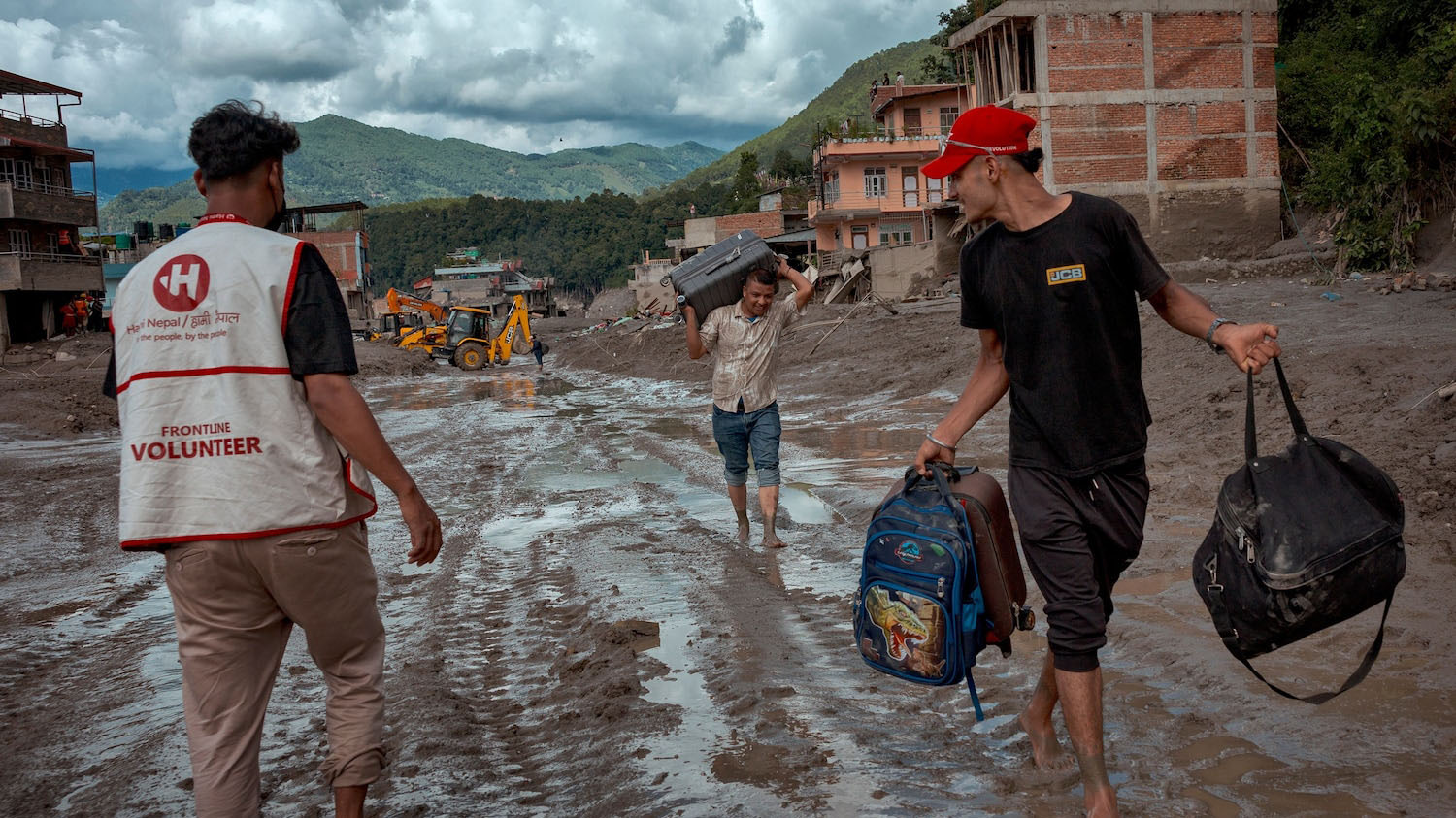
Residents carry their belongings along a road heavily covered in mud following flash floods, August 27, 2026 in Trishuli, Nepal. (Ezra Acayan/Getty Images)
LONDON — At least 358 people have been confirmed killed in the massive flash flooding that ravaged the Nepal-Tibet border region on Wednesday, emergency authorities in Nepal and China said. More than 1,300 people remained missing as of Thursday morning, authorities said.
As search and rescue efforts continued in Nepal on Thursday, police there said that at least 358 bodies had been recovered.
At least 826 people — among them 579 tourists, of whom 476 are foreign nationals and 114 Nepali nationals — were still out of contact as of Thursday morning, the Nepal National Disaster Risk Reduction and Management Authority said.
Across the border in the Chinese region of Tibet, the state-run Xinhua News Agency reported on Thursday that three people were confirmed killed with 558 others still missing, citing local officials.
The number of those considered missing fluctuated significantly as recovery efforts accelerated. The Nepal Tourism Board said that 63 Americans were among the missing.
The board said on Thursday that two Americans were among a group of 27 foreign tourists rescued from the Timure and Bhotekoshi area of Rasuwa.
The flooding, captured in dramatic video footage, occurred in the northern Rasuwa district, along the border with Tibet, at around 8:40 a.m. local time on Wednesday, authorities said, inundating areas along the Trishuli River, burying some buildings and damaging bridges and roadways.
In a statement, Nepal’s office of the prime minister expressed “deep sorrow” over the loss of life. “Offering heartfelt tribute to all those who lost their lives in this natural disaster, it extends its sincere condolences to the bereaved families and relatives,” the statement shared on social media said.
The prime minister’s office later said search and rescue operations carried out by the Nepali Army would continue through the night.
The State Department said the number of Americans among the missing and otherwise impacted by the floods fluctuated throughout the day on Wednesday.
“The United States extends its deepest condolences to the families and loved ones of those who lost their lives in the devastating flash floods in the Rasuwa district of Nepal. Our thoughts are with all those affected by this disaster,” a department spokesperson said in a statement issued later Wednesday.
The spokesperson said the State Department is “closely monitoring the situation and is deploying a disaster response advisor to the region to support response efforts. The Department will also provide $500,000 in assistance through its global award with Catholic Relief Services, supporting emergency shelter, relief items, and water, sanitation, and hygiene assistance to flood-affected communities.”
An Indian spiritual leader and entrepreneur, known as Sadhguru, said in a post to social media that 77 people who were on tours organized by his Isha Foundation were at an immigration center at the Nepal-Tibet border when the floodwaters hit.
The Isha Foundation confirmed to ABC News that 22 of those 77 people were Americans. The organization, which is headquartered in India, also has a base in McMinnville, Tennessee. The group’s coordinator told ABC News the organization has been in touch with family members in the U.S.
Three missing Americans were listed as traveling with a Nepali company called Fishtail Tours and Travel. The agency confirmed to ABC News that three American nationals are among the missing tourists traveling with them.
The flood was reportedly triggered by a landslide about 12 miles northeast of the Rasuwagadhi border post along the Nepal-China frontier, according to Nepal Disaster Management.
A 5.2-magnitude landslide was registered in Nepal on Wednesday, according to the U.S. Geological Survey.
The seismic activity from the landslide was initially erroneously reported as a 4.4-magnitude earthquake, the agency said. It is unclear what triggered the landslide.
A geophysicist at New York’s Columbia University told ABC News it appeared a landslide in the Himalayas took away a large glacier, or parts of one, in the mountain pass.
ABC News’ Desiree Adib, Somayeh Malekian, Charlotte Gardiner, Shannon Kingston, Joseph Simonetti, Dada Jovanovic, Meghan Mistry and Othon Leyva contributed to this report.