(LONDON) — An American held in Afghanistan has been freed, the Taliban said Tuesday.
Dennis Coyle of Colorado was released after a letter from his family was sent requesting his release on the occasion of Eid Al-Fitr, the Taliban foreign ministry said. His period of detention was then deemed “sufficient” and his release was approved by a court, according to the ministry.
The Taliban claimed Coyle had been detained for “violating the applicable laws of Afghanistan.”
The Taliban thanked the United Arab Emirates for helping to facilitate Coyle’s release.
Earlier this month, U.S. special envoy for hostage response Adam Boehler said three innocent Americans were currently being held in Afghanistan.
This is a developing story. Please check back for updates.
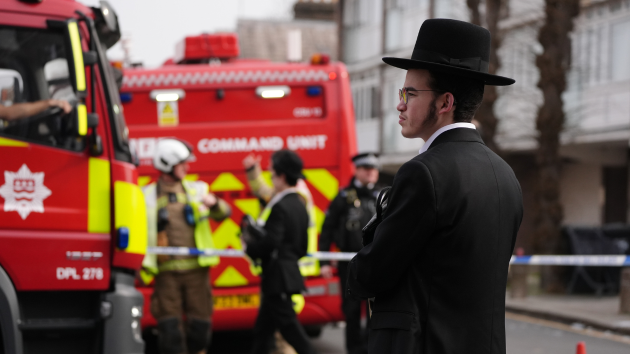
Firefighters at the scene in Highfield Road, Golders Green, London, after an apparent arson attack on four ambulances belonging to the Jewish Community Ambulance service in London. (Photo by Jonathan Brady/PA Images via Getty Images)
(LONDON) — The Metropolitan Police in London is investigating an apparent arson attack on four ambulances belonging to the Jewish community ambulance service, Hatzalah, in the early hours of Monday morning.
Officials said the arson attack is being treated as an antisemitic hate crime.
No injuries were reported and the fires have been put out, police said. Nearby houses were evacuated as a precaution.
“This is a deeply shocking antisemitic arson attack,” Prime Minister Keir Starmer said on social media. “My thoughts are with the Jewish community who are waking up this morning to this horrific news. Antisemitism has no place in our society.”
Police Superintendent Sarah Jackson said in a statement that no arrests have been made, but they believe there are three suspects involved.
“We know this incident will cause a great deal of community concern and officers remain on scene to carry out urgent enquiries,” Jackson said. “We are in the process of examining CCTV and are aware of online footage. We believe we are looking for three suspects at this early stage.”
Police said there were reports of explosions in the fire, which they said is believed to be linked to gas canisters on the ambulances.
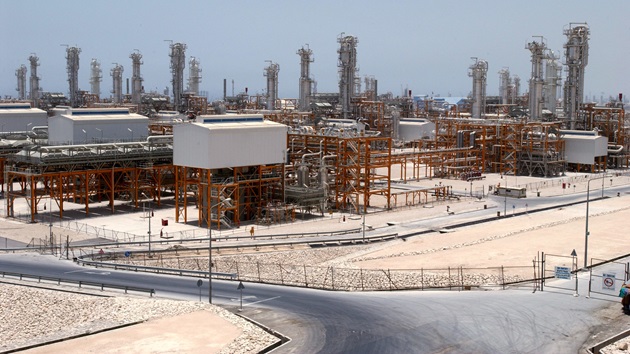
The Iran South Pars Gas Complex Company is pictured on Thursday, June 23, 2005 in Assaluyeh, Iran. Ramin Talaie/Bloomberg via Getty Images
(LONDON) — Israel’s strike on the world’s largest natural gas field could severely impact Iran’s energy sector and several nearby Gulf states, energy experts told ABC News.
On Wednesday, Israel launched air strikes on South Pars, a natural gas field that covers about 3,700 square miles and serves as a vital source of fuel for Iran. It is located offshore in the Persian Gulf and contains about 1,800 trillion cubic feet of usable gas, according to the U.S. Energy Information Administration.
South Pars accounts for about 70% of the gas Iran consumes, Ira Joseph, a senior research associate at the Center on Global Energy Policy at Columbia University, told ABC News.
David G. Victor, a professor of innovation and public policy at the University of California at San Diego, agreed on the importance of South Pars to Iran.
“It’s the single most important natural gas field to Iran,” he told ABC News. “If you start tanking the Iranian economy, eventually, other parts of that infrastructure are going to start falling apart too.”
South Pars is part of a giant gas field that transverses to other nations — another section, the North Dome, is part of the same natural gas field but lies in Qatari territorial waters.
Combined, South Pars and the North Field account for about 10% of the gas traded in the world and about 20% of the world’s liquified natural gas (LNG) annual exports, Joseph noted.
Iran also exports gas into Turkey, Iraq and Central Asia — so those exports have been disrupted by the war, according to Joseph. Turkey acquires up to 15% of its gas from Iran, he added.
The U.S. is relatively insulated from natural gas price shocks due to the strikes on Iran’s gas fields because the U.S. is a big producer and doesn’t have enough export capacity to fully link itself to Asian and European markets, Catherine Wolfram, a professor of energy economics at the Massachusetts Institute of Technology, told ABC News.
Countries like Japan, Korea and the Europeans who are dependent on imports will take a big hit to their supply as a result of the attack on South Pars, she said.
But the impacts of the strikes on the South Pars field extend “far beyond” energy prices, Naho Mirumachi, a professor of environmental politics at King’s College in London, told ABC News.
The current volatility of gas production can have “serious” impacts on agriculture and the global production of food, especially since natural gas is vital for fertilizer production, she noted. Fertilizer shortages or higher prices of fertilizer will likely translate to increases in food costs, according to Mirumachi.
“Food production cannot wait for gas production to return to normal, so farmers and businesses could face declining crop yields,” she said.
There has never been an attack of this magnitude on South Pars field because of a historical understanding within the region to not disrupt or inhibit each other’s vital infrastructure, according to the University of California’s Victor.
“There had been a kind of norm that exists in many wars, which is, don’t attack each other’s vital infrastructure,” he said. “Both sides had an interest in not obliterating each other’s energy infrastructure and then causing this enormous harm in the global market.”
The strike on South Pars triggered an escalation of attacks on oil and gas facilities in the region.
Iran launched a series of retaliatory strikes against the vital energy infrastructure in nearby Gulf states. It issued evacuation orders for several energy assets in Qatar, Saudi Arabia and the United Arab Emirates, before hitting the world’s largest LNG terminal — an import and export facility — at Ras Laffan in Qatar.
“Targeting energy infrastructure constitutes a threat to global energy security, as well as to the peoples of the region & its environment,” a spokesperson for the QatariMinistry of Foreign Affairs wrote in a post on X on Wednesday.
In a social media post late Wednesday, President Donald Trump said neither the U.S. nor Qatar was aware Israel would attack the South Pars Gas Field, calling for Israel to not do so again unless Iran continues attacking Qatar’s LNG facilities.
“NO MORE ATTACKS WILL BE MADE BY ISRAEL pertaining to this extremely important and valuable South Pars Field unless Iran unwisely decides to attack a very innocent, in this case, Qatar,” Trump said.
Iran warned that it would target energy facilities throughout the region.
The attacks on energy centers began on March 7, with Israeli air strikes on major Iranian oil storage facilities causing “black rain” to fall on the Tehran, Iran’s capital with nearly 10 million residents. The Israeli military said the facilities were struck because they were “used by the Military Forces of the Iranian Terror Regime in Tehran.”
On March 11, the International Energy Agency announced it would release 400 million barrels of oil from its strategic reserve — the largest-ever release of reserve oil in the group’s history — in response to the blockade on the Strait of Hormuz. A fifth of the global oil supply passes through the waterway, which lies between the Persian Gulf and the Gulf of Oman.
The U.S. also executed a strike on Kharg Island on March 13. The small island is situated in the Persian Gulf, off the southwestern coast of Iran, and processes 90% of Iranian oil exports.
Every military target on Kharg Island was “obliterated,” Trump said in a social media post. But its oil infrastructure was left intact.
The conflict has sent energy prices soaring, with Brent crude — the international standard for oil — peaking at $119 per barrel on Thursday morning.
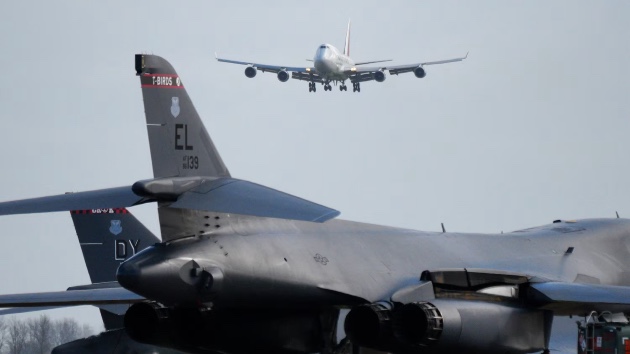
A cargo plane comes into land with two US Air Force B-1 bombers in the foreground at RAF Fairford on March 11, 2026 in Fairford, England. (Photo by Christopher Furlong/Getty Images)
(NEW YORK) — A drone sighting that temporarily raised alarms at one of the United States Air Force’s largest and most strategic airfields earlier this month was more extensive, and potentially more dangerous, than first reported, according to a confidential internal briefing document reviewed by ABC News.
Barksdale Air Force Base in Louisiana said it was under a shelter-in-place order March 9 after “a report of an unmanned aerial system operating over the installation.”
The sighting raised concerns because Barksdale houses long-range B-52 bombers and plays a critical role in command and control of the Air Force nuclear defense capabilities.
The shelter-in-place order was lifted later that day but the unauthorized drone flights continued for nearly a week.
“Barksdale Air Force Base detected multiple unauthorized drones operating in our airspace during the week of March 9th,” Capt. Hunter Rininger of the 2nd Bomb Wing said in a statement provided to ABC News. The additional drone incursions had not been previously reported.
According to the confidential briefing document dated March 15, the drones came in waves and entered and exited the base in a way that may suggest attempts to “avoid the operator(s) being located.” Lights on the drones suggested the operators “may be testing security responses” at the base.
“Between March 9-15, 2026, BAFB Security Forces observed multiple waves of 12-15 drones operating over sensitive areas of the installation, including the flight line, with aircraft displaying non-commercial signal characteristics, long-range control links and resistance to jamming,” the document said. “After reaching multiple points across the installation, the drones dispersed across sensitive locations on the base.”
According to the document there was no drone activity detected on March 13 and 14 and it’s not clear if there has been activity since.
The flights lasted around four hours each day and the drones used varied routes of ingress and deliberate maneuvering within restricted airspace.
“Certainly, it seemed to be more than just your average drone enthusiast who just pushed it too far,” said ABC News contributor Mick Mulroy, a former deputy assistant secretary of defense. “It looked like this was deliberate and intentional to see just how they would react.”
The briefing includes a determination that the drones were different than what the typical consumer could purchase off the shelf. They appeared to be custom built and required “advanced knowledge” of signal operations.
The analysts said “with high confidence” they expected unauthorized drones to continue to operate in and around Barksdale Air Force Base in the immediate future.
“The drone incursions at BAFB pose a significant threat to public safety and national security since they require the flight line to be shut down while also putting manned aircrafts already inflight in the area at risk,” the document said.
The FAA referred ABC News to the military for comment. The Louisiana State Police, which is also assisting the investigation, declined to comment.
“Flying a drone over a military installation is not only a safety issue, it is a criminal offense under federal law. We are working closely with federal and local law enforcement agencies to investigate these incursions. The security of our installation and the safety of our people are top priorities, and we will continue to vigilantly monitor our airspace,” Capt. Rininger’s statement said.
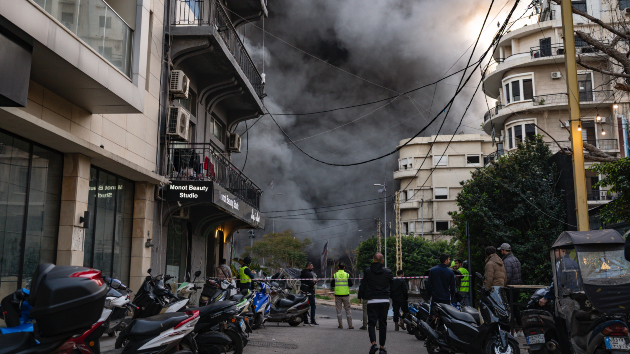
A view of the structural damage following air strikes carried out by the Israeli military in the Balata Street and El Basta areas of central Beirut, Lebanon on March 18, 2026. (Houssam Shbaro/Anadolu via Getty Images)
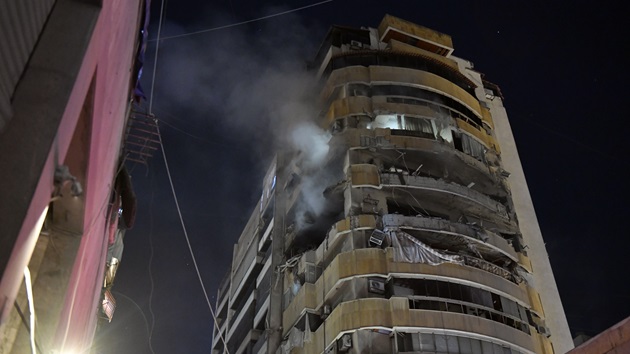
(LONDON) — Around 4 a.m. Wednesday, the Israel Defense Forces posted an image of several blocks in Beirut’s Bashoura neighborhood, saying in an accompanying “urgent warning” that people inside a building outlined in red should leave immediately.
“To everyone present in the building marked in red on the attached map and the adjacent buildings: You are located near a facility affiliated with the terrorist Hezbollah organization, which the Israel Defense Forces will act against,” Avichay Adraee, an IDF spokesperson, said in the Arabic-language post on social media.
About an hour later an Israeli airstrike targeted the building, reducing it to rubble.
It was not immediately clear whether anyone was inside the building at the time of its destruction. The Lebanese Ministry of Health on Wednesday said at least 10 people had been killed in overnight Israeli strikes on the capital, but did not detail where those killings had taken place. Another 27 people were injured, the ministry said.
The Israeli strikes came amid an escalation of Israel’s efforts to stamp out Hezbollah, an Iranian proxy based in Lebanon and designated by Israel and the United States as a terrorist organization.
Hezbollah on March 2 began firing missiles south into Israel, an act that it said was in support of Iran. Those launches, which effectively marked the end of a fragile ceasefire that began in November 2024, came two days after the United States and Israel launched joint airstrikes on Tehran.
The Israeli Air Force has since retaliated by carrying out strikes on the Lebanese capital and elsewhere in Lebanon, striking targets that Israel describes as Hezbollah-related.
Health officials in Lebanon said at least 912 people have been killed in strikes, along with more than 2,000 people who have been injured. Hundreds of thousands of people have been displaced by the conflict, officials said.
Among the Israeli targets have been buildings and sites throughout Lebanon associated with the Al-Qard al-Hasan Association, an organisation said to finance Hezbollah’s operations. Israel, as it posted a grainy video showing an eagle-eyed view the Bashoura-building strike, said it had overnight targeted that group. It did not explicitly link the al-Hasan group to the destroyed building.
Hezbollah has also continued targeting Israel, firing between 50 and 60 rockets overnight into the country’s north, according to the IDF. Most were intercepted, but several made direct hits, damaging property and setting fires, Israel said. Emergency medical services reported no fatalities, but several light injuries.
Israel’s air force has also over the last two weeks targeted sites across Southern Lebanon.
Israel also said on Monday it had begun a “limited and targeted” ground operation across its northern border, where it says it’s seeking to destroy Hezbollah “strongholds.” The IDF added on Tuesday that it was seeking to create an “additional layer of security for residents of northern Israel.”
Telling Lebanese residents they will not be allowed to return to southern Lebanon, Defense Minister Israel Katz has signaled Israel may carve out a buffer zone inside Lebanese territory.
“In recent days, IDF troops from the 36th Division have begun limited and targeted ground operations aimed at enhancing the forward defense area,” the IDF said in a statement. “The troops are continuing efforts to establish the forward defensive posture in order to remove threats and create an additional layer of security for residents of northern Israel.”
Israel on Wednesday issued a broad warning for anyone in southern Lebanon, saying residents south of the Litani River — which is seen in part as a geographic boundary between northern and southern Lebanon — should move north as quickly as they could.
The IDF was expecting to target “crossings” on that river, meaning bridges, in the coming hours, Israel said, adding that it was being “compelled” to carry out those strikes because of Hezbollah’s activities “with the support of the civilian population.”
“For your safety and the safety of your families, immediately move to areas north of the Litani River,” the IDF said on social media on Wednesday. “Remaining south of the Litani River may endanger your lives and the lives of your families. Please note: any movement southward may endanger your lives.”
“Accordingly, and to prevent the transfer of reinforcements and combat means, the Defense Army intends to attack crossings on the Litani River starting from midday hours today,” Adraee, the IDF spokesperson, said on social media.
It was unclear how civilians remaining in the south would be able evacuate to the north if river crossings were destroyed.
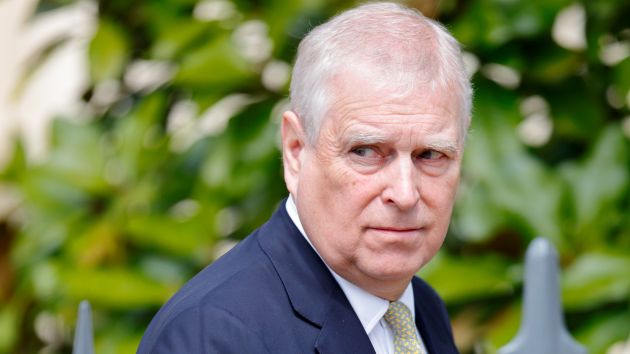
Prince Andrew, Duke of York attends the traditional Easter Sunday Mattins Service at St George’s Chapel, Windsor Castle on April 20, 2025 in Windsor, England. (Photo by Max Mumby/Indigo/Getty Images)
(NEW YORK) — One month after the arrest of former Prince Andrew, the head of London’s Metropolitan Police is pushing U.S. officials for unredacted material from the Epstein files.
In an interview with ABC News’ chief investigative correspondent Aaron Katersky, Metropolitan Police Commissioner Sir Mark Rowley said his office is in communication with the Department of Justice to access the original documents related to ongoing investigations of both Andrew Mountbatten-Windsor and former British ambassador to the U.S. Peter Mandelson.
“Of course, there’s a big body of that evidence … in the United States in all those files and at some stage we’re going to need the unredacted evidence,” Rowley said. “We need the original copy and where did it come from and that’s going to be necessary if we get to the stage of court cases.”
While Department of Justice officials have repeatedly insisted that there is nothing more to investigate stateside about the convicted sex offender and his co-conspirator Ghislaine Maxwell, officials in the United Kingdom are carrying out unprecedented investigations into both Mountbatten-Windsor and Mandelson on suspicion of misconduct in public office.
Emails released earlier this year by the Department of Justice suggested that both Mountbatten-Windsor and Mandelson appeared to share sensitive information with Epstein stemming from their roles as the U.K. trade envoy and business secretary, respectively.
In one email released by the Department of Justice and referenced by Rowley, Mandelson appeared to confirm the timing of an impending bailout with Epstein during the European Union’s sovereign debt crisis.
“It looks like it was shared with Epstein so we’re looking at that as to whether that’s a criminal offense and then colleagues in Thames Valley are looking at other documents that Andrew Mountbatten-Winsor potentially shared,” Rowley said.
According to Rowley, his department is also assessing “a whole range of suggested sexual allegations” to determine if any “merit a criminal investigation.”
Suspicion about Mountbatten-Windsor began years ago following the publication of a photograph showing the former prince with his arm around the waist of Virginia Guiffre, who said she was 17 years old at the time of the photograph. Before she died by suicide last year, Guiffre alleged that Epstein trafficked her in 2001 to have sex with the former prince. Mountbatten-Windsor has long denied wrongdoing and told the BBC in 2019 that the allegations are not credible.
When asked about the allegations made by Guiffre, Rowley claimed that the information they received from Guiffre during four recorded interviews could not support an investigation.
“With Virginia Guiffre, we did four of those interviews with her … .and those interviews didn’t give us any evidence or any allegations of sexual offending or trafficking that we could investigate in the UK,” he said. “That’s why that investigation didn’t go forward.”
However, Rowley said he hopes the renewed look at the allegations against Mountbatten-Windsor helps improve the public’s trust that law enforcement is willing to scrutinize anyone regardless of their title or status.
“Those investigations all go wherever the evidence takes them — quite comfortable with investigating sort of famous or powerful people. I think it’s really important for policing to do that, that sense of operating without fear or favor. The law applies equally to everyone, and those cases will go, say, wherever the evidence leads us to,” he said.
Rowley said the investigation into Mountbatten-Windsor comes as the Metropolitan Police is increasingly targeting sexual and domestic violence.
“We’ve developed tactics to be much more proactive and targeting the most dangerous men who pose a threat to women and children just like we do terrorists and organized crime. So, a combination of factors has seen the rates steadily coming down,” he said. “We’re making big progress and most of all — at the center of all this that matters to me and matters to policing — is trust in the police’s building in London.”
Rowley also touted some of the technology used by the Metropolitan Police to lower crime rates such as facial recognition, which he said has allowed officers to identify violent offenders while minimizing intrusion to the broader public.
While he acknowledged that the technology has raised privacy concerns, Rowley argued that the focus on targeting violent offenders using the technology can help improve the public trust — something he says is foundational to the Metropolitan Police’s 200-year history.
“[Policing] should start from the idea of having the consent of people in a democracy and use the minimum force necessary and be focused on the prevention of crime, and those ideas still guide us today,” he said.
Rowley said he hopes being upfront with the public about the work of the Metropolitan Police — from low-level street crimes to allegations against some of the most prominent people in British society — can renew the public’s trust in law enforcement.
“Policing in the UK will operate without fear or favor, that’s the fundamental principle. I think if you don’t have that, you’re never going to have the trust and confidence of the public in policing, so that’s really important to me,” he said.
Smoke from a building in the center of the city which has been hit by the IDF after an evacuation order on March 12, 2026 in Beirut, Lebanon. (Adri Salido/Getty Images)
(NEW YORK) — As Israel continued striking Beirut on Thursday, Israel’s military is preparing to expand its activity in Lebanon, Israel Defense Minister Israel Katz said.
The IDF issued a new evacuation order on Thursday, expanding the area in the south of Lebanon from which residents have been told to leave. The area now extends past the Litani River, all the way to the Zahrani River.
“I warned the Lebanese president that if the Lebanese government does not know how to control the territory and prevent Hezbollah from threatening the northern communities and firing at Israel — we will take the territory and do it ourselves,” Katz said in remarks at a military operations center in Tel Aviv.
“The prime minister and I instructed the [Israel Defense Forces] to prepare to expand IDF activity in Lebanon and restore peace and security to the northern communities,” Katz added.
The expanded evacuation order now includes the city of Nabatieh, with a population of at least 35,000 people.
Overnight, Israeli strikes hit Beirut’s Corniche, a seafront area where many had evacuated to, following orders by the IDF to leave southern Beirut neighborhoods, a Hezbollah stronghold that the IDF has been striking and bombing in the past 12 days. At least eight people have died and dozens more were injured in the strikes, according to Lebanon’s Ministry of Public Health.
“The IDF continues to conduct extensive waves of strikes from the air and sea in the Beirut area against the Hezbollah terrorist organization … Among the targets struck were terrorist infrastructure, weapons storage facilities, central headquarters, and the IRGC Air Force headquarters in Beirut,” the IDF said in a statement Thursday.
Around 800,000 have now been driven from their homes in southern Lebanon and Beirut, according to Lebanese officials.
The Israeli military had issued an urgent evacuation notice for parts of southern Lebanon, including Beirut, on Wednesday, days after first ordering the evacuation of residents from southern Lebanon.
The two have continued to trade fire since Israel last week began carrying out intensified attacks targeting Hezbollah, Iran’s proxy force in Lebanon, following its strikes on Iran.
On Wednesday, Hezbollah announced a new operation against its neighbor, launching dozens of rockets.
Israel has responded with an intense bombardment of the Beirut suburb of Dahiyeh.
The Israel Defense Forces said Wednesday it began a “large-scale wave of strikes on Hezbollah infrastructure” after issuing an “urgent and dangerous” evacuation alert for the area.
In an update late Wednesday, the IDF said it had struck 10 Hezbollah facilities in Dahieh in 30 minutes, including an intelligence headquarters and command centers.
Since March 2, when Israel began issuing evacuation warnings amid its airstrikes, over 630 people have been killed and nearly 1,600 injured in Lebanon, according to the Lebanese health ministry.
A map shows the Strait of Hormuz on a laptop computer screen in this photo illustration in Athens, Greece, on March 3, 2026. (Photo by Nikolas Kokovlis/NurPhoto via Getty Images)
(STRAIT OF HORMUZ) — The conflict in the Strait of Hormuz intensified on Wednesday as the Iranian navy confirmed it targeted at least two of three ships struck by projectiles in the critical passage for the oil and shipping trades, and President Donald Trump said the U.S. military destroyed several “inactive” mine-laying boats in the strait.
The increased military activity in the Strait of Hormuz came just three days after President Donald Trump warned Iran in a post on his social media site that if it attempts to “stop the flow of Oil within the Strait of Hormuz, they will be hit by the United States of America TWENTY TIMES HARDER than they have been hit thus far.”
Iran’s Islamic Revolutionary Guard Corps (IRGC) announced that its navy conducted strikes on two commercial vessels in the Strait of Hormuz on Wednesday morning.
An IRGC spokesperson said in a statement that its navy struck the ships Express Room and the Mayuree Naree because both commercial vessels were allegedly “ignoring alerts and warnings from the IRGC Navy.”
“Every vessel intending to pass must obtain permission from Iran,” IRGC naval commander Adm. Alireza Tangsiri said in a social media post on Wednesday.
The Express Room, a container ship sailing under the Liberian flag, was struck by Iranian projectiles after allegedly “ignoring warnings from the IRGC Navy and came to a halt in its position,” the IRGC spokesperson said.
The Thai-flagged container ship Mayuree Naree was targeted for allegedly “ignoring alerts and warnings from the IRGC Navy and unlawfully insisting on transiting the Strait of Hormuz, according to the IRGC spokesperson.
Thai officials reported that three crew members were missing from the vessel following the attack.
“The Strait of Hormuz is, without a doubt and without a moment’s neglect, under the intelligent management of the brave naval forces of the IRGC. American aggressors and their allies have no right of passage,” the Iranian spokesperson said.
Earlier Wednesday, the U.K. Maritime Trade Operations Center (UKMTO) said it had received reports that three ships came under attack in the Strait of Hormuz. It did not identify the vessels, nor did it say at the time who was responsible for the attacks.
The UKMTO said one container ship was struck about 11 nautical miles north of Oman, in the passage that connects the Persian Gulf and the Gulf of Oman.
“The vessel has requested assistance and the crew are evacuated,” the UKMTO said.
The other two container ships, according to the UKMTO, were also struck by projectiles early Wednesday. One was hit about 25 nautical miles northwest of the United Arab Emirates port city of Ras Al Khaimah, while the other was stuck northwest of Dubai, according to the UKMTO.
Meanwhile, the U.S. Central Command (CENTCOM) released videos overnight showing attacks being carried out on Tuesday on what it described as “multiple Iranian naval vessels, March 10, including 16 minelayers near the Strait of Hormuz.”
“To date, we have struck more than 5,500 targets inside Iran, including more than 60 ships, using a variety of precision weapons systems,” CENTCOM Commander Adm. Brad Cooper said in a video post Wednesday.
While taking questions from reporters on Wednesday on the South Lawn of the White House before heading to an event in Kentucky, Trump said, “Look, we took out just about all of their mine ships in one night.”
“We’ve knocked out their navy. We’ve knocked out their air force. We’ve knocked out all of their air defense,” Trump also said.
When asked by a reporter if he’s encouraging CEOs of various oil companies to use the Strait of Hormuz, Trump responded, “Yeah, I think they should. I think they should use the Strait.”
Asked if there are any mines laid in the Strait of Hormuz, the president said, “We don’t think so.”
In a social media post on Tuesday, Trump said, “If Iran has put out any mines in the Hormuz Strait, and we have no reports of them doing so, we want them removed, IMMEDIATELY!”
“If for any reason mines were placed, and they are not removed forthwith, the Military consequences to Iran will be at a level never seen before,” Trump said in the post.
CENTCOM issued a warning to Iranian civilians on Wednesday to avoid all port facilities where it said Iranian naval forces are carrying out military operations along the Strait of Hormuz. CENTCOM said Iranian dockworkers, administrative personnel and crews of commercial vessels “should avoid Iranian naval vessels and military equipment.
“The Iranian regime is using civilian ports along the Strait of Hormuz to conduct military operations that threaten international shipping. This dangerous action risks the lives of innocent people,” CENTCOM said in its warning.
A spokesperson for Iran’s armed forces said Wednesday that if Iran’s ports are threatened, “all ports and docks in the region will be our legitimate targets.”
In an interview with the Iranian state television, Gen. Abolfazl Shekarchi denied claims that the country’s naval forces are hiding in economic ports, and threatened heavier operations if Iran’s ports are targeted.
The chaos unfolding across the global economy stems in large part from the narrow but crucial waterway along the southern coast of Iran, which connects the Gulf of Oman to the Persian Gulf.
The Strait of Hormuz facilitates the transport of about one-fifth of the global supply of crude oil and liquid natural gas. Those products hold major implications for the prices of gasoline, plastics and European electricity, among a host of other goods.
The passage, which at its narrowest point is just 21 miles wide, is the only shipping route that stretches from the Persian Gulf to the open ocean, making it a key travel hub for goods originating in oil-rich Gulf countries like Saudi Arabia, Qatar and Iran.
Wednesday morning, the International Energy Agency said it would release 400 million barrels of oil from its strategic reserve, marking the largest oil release in the group’s history as the global economy grapples with soaring oil prices in the wake of the U.S.-Israeli war with Iran, and traders fear a prolonged blockade of the maritime passage.
Before the war, roughly 20 million barrels of oil passed through the Strait or Hormuz each day, but tanker traffic has now “all but stopped,” Fatih Birol, executive director of the IEA, said at a press conference on Wednesday.
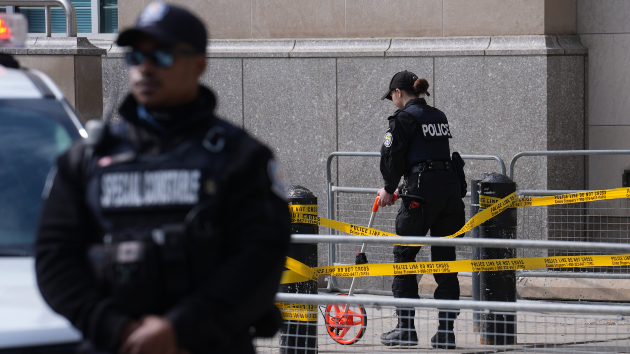
A general view shows Toronto police securing the area after a âfirearm dischargeâ at the US Consulate in Toronto, Ontario, Canada on March 10, 2026. (Mert Alper Dervis/Anadolu via Getty Images)
(TORONTO) — Investigators are looking for two suspects and clues after shots were fired at the U.S. consulate in Toronto on Tuesday morning.
There were people inside the building at the time, but no one was injured, Toronto Police Service Deputy Chief Frank Barredo said. Officers got a call about the shooting around 5:29 a.m., and found shell casings and damage to the building when they arrived, he noted.
Witnesses observed two people emerging from a white Honda CR-V and discharge a handgun at the consulate before driving away, according to Barredo.
“This is very early in the investigation. It is very active, and we are aggressively assigning investigative resources to determine what happened and to bring the offenders to justice,” he told reporters.
Chris Leather, the chief superintendent for the Royal Canadian Mounted Police (RCMP) Ontario Criminal Operations, told reporters that it is “being treated as a national security incident,” and prompted increased security around embassies in Toronto and Ottawa.
“There will be no tolerance for any form of intimidation, harassment, or harmful targeting of any communities or individuals in Canada. We want to ensure that everyone’s safety and security remain at the forefront of everything we do,” he said.
Leather noted that it was too early to determine if the shooting was linked to the U.S.-Israeli war with Iran.
The RCMP is in communication with the FBI and other U.S. agencies, Leather said.
He noted that recent incidents in Toronto and elsewhere have prompted a need for heightened vigilance and security around diplomatic missions, expressing hope that these measures will help “bring the temperature down in the coming days and weeks.”
(PARIS) — A “criminal explosion” struck a synagogue in the Belgian city of Liège at around 4 a.m. local time on Monday in a “violent act of antisemitism,” a local government spokeswoman confirmed to ABC News.
The explosion caused “material damage” but there were no casualties and the site, the official said, “has been secured.”
An investigation by Belgium’s Federal Police force is “ongoing.”
Liège’s mayor, Willy Demeyer, strongly condemned the antisemitic attack and said “external conflicts” cannot be imported into the city.
This is a developing story. Please check back for updates.