Automobiles pass a former postal and telegraph building, where Bank of America Corp. is leasing space for 400 workers, in Paris, France, on Wednesday April 10, 2019. (Photographer: Christophe Morin/Bloomberg via Getty Images)
(NEW YORK) — Authorities in France are investigating an attempted terror attack in which a man allegedly tried to detonate an explosive device in Paris, according to officials.
French Interior Minister Laurent Nuñez congratulated French police for thwarting the “violent” attack in Paris overnight Saturday, where the suspect attempted to set off the explosive outside the Bank of America building in the central part of the city.
The “swift intervention” of police prevented the attack, which Nuñez described as “of a terrorist nature” in a post on X.
“Vigilance remains at a very high level,” Nuñez wrote. “I commend all the security and intelligence forces fully mobilized under my authority in the current international context.”
Police had noticed two men with a shopping bag outside the building, RTL France, a French radio station, reported.
One of the bags contained a bag of liquid taped to a large firework, according to the report. Police said they approached the pair when one of the suspects attempted to set fire to the device.
One suspect was arrested on Saturday in the early morning hours, but the other suspect escaped, RTL France reported.
Additional details were not immediately available.
The National Anti-Terrorist Prosecutor’s Office is leading in the investigation, Nuñez said.
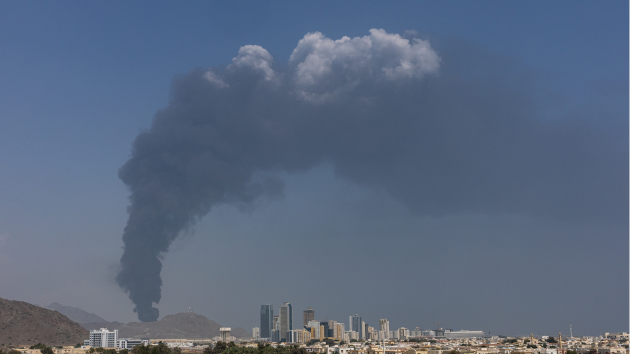
Smoke rises after an explosion in the industrial zone, caused by debris after interception of a drone by air defence, according to the Fujairah media office on March 05, 2026, in Fujairah, United Arab Emirates. (Photo by Christopher Pike/Getty Images)
(NEW YORK) — On Feb. 28, the United States and Israel launched massive strikes on Iran in an operation targeting military and government sites that President Donald Trump has said could last as little as four weeks.
One month later, both countries remain engaged in a war that has impacted the wider Gulf region, killing thousands of people, as the Pentagon is preparing to surge thousands of troops to the Middle East, according to U.S. officials.
As the U.S. enters its fifth week of the conflict, here’s a look at how we got here, where things stand and where they may go from here.
Negotiations break down Operation Epic Fury began months after the U.S. and Israel carried out strikes on nuclear weapons facilities in Iran, with Trump declaring at that time that the regime’s nuclear capabilities had been “obliterated.”‘
In the weeks leading up to the Feb. 28 strikes, the U.S. tried to negotiate with the Iranian regime to reach a nuclear deal, with Trump saying he was weighing whether to strike. A day before launching Operation Epic Fury against Iran, Trump said he was “not happy” with the negotiations.
Ayatollah Ali Khamenei was among those killed in Tehran in the initial strikes, with his son Mojtaba Khamenei later chosen to succeed him.
Trump said at the start of the “major combat operations,” which occurred without Congressional approval, that they were to “defend the American people by eliminating imminent threats from the Iranian regime,” and he called on the Iranian people to depose the regime.
In the weeks since, more than 1,440 civilians, including at least 217 children, have died from U.S. and Israeli strikes in Iran as of March 23, according to a report from several human rights groups. Iranian officials have blamed the U.S. for a missile strike on an Iranian elementary school that killed nearly 170 people. The Trump administration has said it is investigating the incident.
Regional allies attacked Iran retaliated against the strikes with missile and drone attacks targeting Israel, regional U.S. bases and multiple Gulf nations, primarily targeting U.S. interests in the region.
Thirteen American servicemembers have been killed since the war began, including seven from retaliatory strikes in Kuwait and Saudi Arabia and six from an aircraft crash in Iraq. Over 300 troops have also been injured, a U.S. official said Friday.
Iran has also launched a series of retaliatory strikes against the energy infrastructure in several Gulf states after Israel hit its largest gas field — in what one Qatari official called a “dangerous escalation.”
Experts say the strikes and the threat of further attacks risk throwing global energy markets into a state of protracted chaos.
Amid the conflict, Israel has also intensified its long-running strike campaign against the Iran-backed Hezbollah militia in Lebanon and expanded its ground operations in the south of the country. More than 1,000 people have been killed and thousands more injured in Lebanon amid this escalation, according to Lebanese officials.
In response to the U.S.-Israeli strikes, Iran has effectively closed the Strait of Hormuz, a vital maritime passage for the oil and shipping trades, threatening an energy crisis.
Iran has attacked several oil tankers since the war began in late February, halting nearly all shipping traffic. The supply shock has sent the price of oil surging.
Trump has threatened to attack Iran’s power plants if it doesn’t fully reopen the strait, since extending the deadline to do so to April 6.
US’ expansive aims Trump’s stated goals in Iran have shifted and expanded in the weeks since the conflict began, from talks of regime change and peace throughout the Middle East to, more recently, reopening the Strait of Hormuz.
Among other key aims, the U.S. military has said Iran’s navy and ballistic missile stocks and production capabilities have been degraded by airstrikes.
Making sure Iran does not obtain a nuclear weapon has been another major goal of Trump’s. Iran’s intent to build a nuclear weapon, according to Trump, was a central justification for the war.
Trump has suggested that Americans could go in to seize Iran’s enriched uranium. Experts previously told ABC News that a large American force on the ground would likely be needed to take the nuclear material but would carry a lot of risk.
During a Cabinet meeting on Thursday, Vice President JD Vance emphasized the importance of preventing Iran from obtaining a nuclear weapon and warned that there are “further military options” possible.
Where things go from here The White House has said “productive” negotiations have been ongoing between the U.S. and Iran, while officials in Tehran have publicly denied that any talks have taken place.
The U.S. has presented Iran with a 15-point framework for a peace deal via Pakistan, according to White House special envoy Steve Witkoff. As of Friday, the U.S. has not received a response from Iran, according to Secretary of State Marco Rubio. Sources previously told ABC News the plan addressed Iran’s ballistic missile and nuclear programs as well as maritime routes.
The negotiations come as the U.S. is preparing to surge as many as 5,000 troops to the Middle East, according to two U.S. officials, and the Pentagon is seeking $200 billion in supplemental funding for the war. The funding request has been met with bipartisan skepticism from some lawmakers.
Rubio on Friday declined to answer questions from reporters on whether the U.S. planned to deploy ground troops in Iran. Though he said the U.S. can achieve its goals without putting boots on the ground.
Trump, who has said he believed the war could last up to four weeks, and at other times four to six weeks, said this week that the operation is “ahead of schedule” and should end soon. Rubio told reporters Friday that the operation could end in a “matter of weeks, not months.”
The Israel Defense Forces said Friday they need “a few more weeks” to fully degrade Iranian military capabilities, such as missile-launchers, a senior Israeli security official told ABC News.
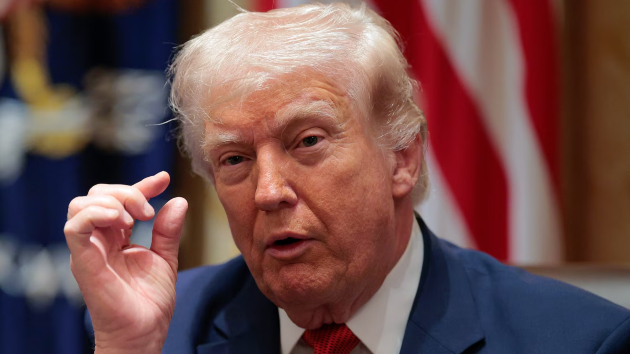
President Donald Trump gestures as he speaks during a Cabinet meeting in the Cabinet Room of the White House, March 26, 2026 in Washington. (Chip Somodevilla/Getty Images)
(NEW YORK) — The Israel Defense Forces need “a few more weeks” to fully degrade Iranian military capabilities, such as missile-launchers, a senior Israeli security official told ABC News.
The Israeli security official poured cold water on the idea that a substantive deal between the United States and Iran could be reached within President Donald Trump’s earlier deadline of this weekend. Trump said Thursday that he was postponing plans to target Iran’s power plants until April 6 citing ongoing talks.
The Iranians “are very well-trained negotiators,” the security official said. “They won’t agree in a few days to end all the actions.”
The senior Israeli security official, who spoke to ABC News on the condition of anonymity as he was not authorized to speak to the media, said he was worried that U.S.-Iran talks could lead to a deal which does not extract significant enough concessions from the Iranians.
The Israeli security official said that if he were advising U.S. negotiators he would ask “to see actions [from the Iranians] that can be measured.”
“For example, giving [up] all the 400 kilograms of enriched uranium,” he added.
Iran has previously denied U.S. and Israeli accusations that it was enriching uranium to near weapons-grade level, with an ultimate aim of producing nuclear weapons.
The Israeli official spoke to ABC News on Tuesday, the day after Trump posted on his social media platform that there had been “very good and productive conversations” between the U.S. and Iran “regarding a complete and total resolution of our hostilities in the Middle East.”
Iranian officials have denied — at least publicly — that negotiations with the U.S. are taking place. On Wednesday, Iran’s Foreign Ministry spokesman, Esmaeil Baqaei, told Indian TV that there were “no talks or negotiations” between Iran and the United States.
“No one can trust U.S. diplomacy,” Baqaei added.
However, on Thursday a Reuters report quoted an Iranian official as saying that a U.S. proposal for ending the war was “one-sided and unfair.”
The White House said in a statement that the U.S. military had been “decimating Iran’s military capabilities with overwhelming firepower, skill, lethality, and force.”
“The United States is winning very decisively and way ahead of schedule,” a White House official said.
“We have taken major strides towards completing our military objectives, to the point that we are close to completing them,” the White House added.
On Thursday, Trump announced a further pause in plans to hit Iran’s power plants, again citing talks that he said were “going very well.”
An Israeli military official who was authorized to speak with journalists told reporters during a briefing Wednesday that the Israeli Air Force had conducted 8,500 strikes in Iran since the end of February and had destroyed some 400 Iranian ballistic missiles and 335 missile-launchers, which equated, he said, to about 70% of Iran’s overall arsenal of missile-launchers.
However, when the military official was pressed by reporters on the extent to which the IDF’s military operations and goals were outstanding in the war, he declined to give details, stressing that the U.S. and Israeli militaries were “well-coordinated” and working “shoulder-to-shoulder.”
“We are achieving more and more of our objectives,” said the military official , who is part of the IDF division that coordinates operations deep inside enemy territory.
“War is not a one bang and it’s over. It’s an ongoing machine,” he added.
The senior Israeli security official who spoke anonymously to ABC News said the speaker of Iran’s Parliament, Mohammad-Bagher Ghalibaf, was leading the talks with the Trump administration.
Ghalibaf’s apparent leading role in negotiations, which has not been confirmed by the U.S. or Iran, was first reported by Axios.
On Monday, Trump refused to confirm which senior Iranian official the U.S. was in talks with, telling reporters, “I don’t want him to be killed” and referring to the Iranian lead negotiator as “a top person.”
The senior Israeli security official described Ghalibaf, who is a former commander of the Islamic Revolutionary Guard’s Air Force, as “an extremist” and “not Mother Teresa” and told ABC News that Israel would refrain from attempting to kill Ghalibaf while the talks continue.
“He has this kind of insurance [policy] as long as he talks,” the official said, adding, “no one is secure in Iran.”
Asked by a reporter if the IDF was holding off on any attempts to kill Ghalibaf, the military official did not comment directly about Ghalibaf but stressed that, in terms of its list of targets, the IDF would accept and follow any political decisions.
Earlier this week, the Trump administration sent a 15-point plan to Iran end the war, via Pakistan, which has emerged as a key mediator, two sources familiar with the plan told ABC News Tuesday.
Those sources said the plan addresses Iran’s ballistic missile and nuclear programs as well as maritime routes but would not provide any other details including which Iranian officials the proposal was sent to. It is also unclear whether Israel has signed onto the proposal.
While diplomatic efforts continue, the Pentagon is preparing to deploy as many as 5,000 additional troops to the Middle East, with some of those forces already in transit.
The troops are a mix of U.S. Army paratroopers and Marines.
However, exactly when the troops will arrive or where they will land is not clear.
Trump has indicated that the negotiations between U.S. and Iranian officials have, in part, been focused on Iran’s control over the Strait of Hormuz.
Iran’s stranglehold over that narrow waterway, through which around a fifth of the world’s oil and gas normally passes, has caused a spike in energy prices and volatility in trading on financial markets.
The senior Israeli security official who spoke anonymously with ABC News said Israel was working on the assumption that Iran had laid naval mines in the Strait of Hormuz.
The Israeli official stressed that locating naval mines and disarming them is a “complicated” task.
“If one big oil tanker were exploded by a few naval mines, it would play havoc with markets, as well as the insurance for shipping companies, and would send the price of oil skyrocketing,” the Israeli official said.
“If Iran says they have mined the Strait of Hormuz then the basic assumption we must have as commanders … is that they have mined the Strait of Hormuz,” said the Israeli military official who briefed reporters.
In possible talks Israel wants the U.S. to press Iran to give up what remains of its enriched uranium and rein in its proxies in the region, the senior Israeli security official stressed.
That Israeli official suggested that it would not be possible to seize Iran’s enriched uranium by military force.
The two U.S. Marine Expeditionary Units which are being deployed to the Middle East, “don’t have the engineering tools” to conduct an operation to “pull out” Iran’s remaining enriched uranium from underground sites, he said.
Asked about this issue on the briefing with reporters, the military official declined to comment.
The Pentagon declined to comment about the senior Israeli official’s assessment of remaining objectives in the war and the U.S. military’s capabilities.
The White House said the war on Iran was “a conditions-based operation” and said it would conclude when the president “determines that our objectives are met.”
An American Airlines Airbus A321 airplane arrives at Los Angeles International Airport from Washington D.C., March 7, 2026, in Los Angeles. (Kevin Carter/Getty Images)
(COLOMBIA) — An American Airlines flight attendant has been reported missing in Colombia, according to officials.
Eric Fernando Gutiérrez Molina landed on March 21 on a flight from Miami to Medellin, Colombia, according to the Medellin security secretary.
Authorities believe he may have been drugged and are investigating that claim.
He was last seen early Sunday morning after a party at a club in the Medellín neighborhood of El Poblado, with a man and a woman, according to the security secretary.
“We are actively engaged with local law enforcement officials in their investigation and doing all we can to support our team member’s family during this time,” American Airlines said in a statement.
A State Department spokesperson said, “We are aware of these reports and are closely tracking the situation.”
“The Trump Administration has no greater priority than the safety and security of Americans, and the State Department stands ready to provide all consular assistance to Americans in need abroad,” the spokesperson said.
This is a developing story. Please check back for updates.
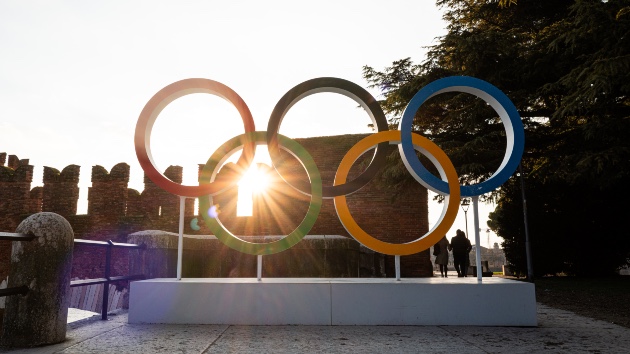
Olympic rings stand in front of Ponte di Castelvecchio on day fourteen of the Milano Cortina 2026 Winter Olympic games on February 20, 2026 in Verona, Italy. (Photo by Claudio Lavenia/Getty Images)
(LONDON) — Transgender women athletes cannot participate in female Olympic events, the International Olympic Committee said on Thursday, as the committee announced a new policy limiting eligibility for female events to biological females.
The policy will begin for the 2028 Olympics in Los Angeles.
The committee said the decision was “evidence‑based and expert‑informed,” and “protects fairness, safety and integrity in the female category.”
The IOC said eligibility will be “determined on the basis of a one‑time SRY gene screening.”
The committee said “athletes with an SRY-positive screen, including XY transgender and androgen-sensitive XY-DSD athletes, continue to be included in all other classifications for which they qualify. For example, they are eligible for any male category, including in a designated male slot within any mixed category, and any open category, or in sports and events that do not classify athletes by sex.”
IOC President Kirsty Coventry said in a statement that the new policy “is based on science and has been led by medical experts.”
“At the Olympic Games, even the smallest margins can be the difference between victory and defeat,” she said. “So, it is absolutely clear that it would not be fair for biological males to compete in the female category. In addition, in some sports it would simply not be safe.”
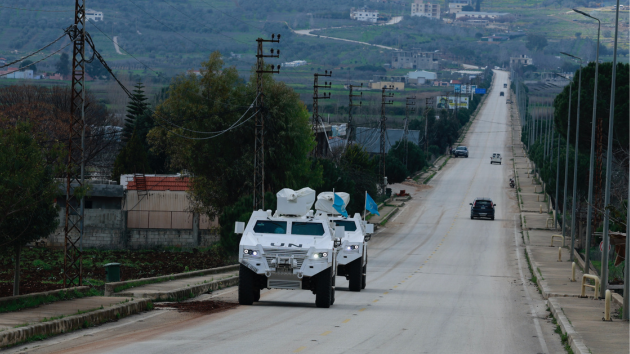
Lebanese army forces carry out efforts to reinforce their positions at the Serde area, accompanied by the United Nations Interim Force on February 25, 2026, in Marjayoun, Lebanon. (Photo by Ramiz Dallah/Anadolu via Getty Images)
(LONDON) — United Nations peacekeepers operating in southern Lebanon have been fired upon around 20 times since the resumption this month of hostilities there between Israel and the Iranian-backed Hezbollah militia, a spokesperson for the force told ABC News.
Around 7,500 personnel from 48 countries make up the U.N. Interim Force in Lebanon (UNIFIL) mission, tasked with monitoring the cessation of hostilities between Israel and Hezbollah in support of the Lebanese Armed Forces (LAF).
UNIFIL peacekeepers have regularly been caught in the crossfire between the warring sides in recent years, with intense bouts of violence in southern Lebanon touched off by the Oct. 7, 2023, attack by Iranian-backed Hamas militants into southern Israel and the subsequent war in the Hamas-ruled Gaza Strip, which Hezbollah joined in support of Hamas.
Limited respite secured by a November 2024 ceasefire deal between Israel and Hezbollah has now given way to another round of conflict, sparked by the joint U.S.-Israeli attack on Iran in late February. Hezbollah joined the conflict on March 2, firing projectiles into northern Israel, seemingly in support of their patrons in Tehran.
Hezbollah leader Naim Qassem said the attacks were a response to Israeli “transgressions” since the signing of the 2024 ceasefire, which he described as “excessive.”
The Israel Defense Forces said this week that the group had fired over 2,000 rockets and drones toward northern Israel during the conflict to date. A 27-year-old Israeli woman was killed by a Hezbollah rocket on Tuesday.
More than 1 million people in Lebanon have been displaced by Israel’s offensive and evacuation orders, according to U.N. data. More than 1,000 people have been killed by Israeli attacks in Lebanon in the latest round of fighting, the country’s health ministry said.
Peacekeepers are now back in the line of fire from both sides. Of the roughly 20 firing incidents so far recorded since Feb. 28, UNIFIL spokesperson Kandice Ardiel told ABC News that a preliminary count found that around 60% were of unknown origin, 25% were attributed to the IDF and 15% to non-state actors on the Lebanese side — “most likely” Hezbollah.
Four UNIFIL peacekeepers have so far been injured in two separate incidents, Ardiel said. Three of the injuries were minor and one was severe. The peacekeeper who sustained severe injuries is now in a stable condition, she said.
UNIFIL has not yet established responsibility for the incidents that caused casualties, Ardiel added.
However, the IDF has acknowledged responsibility for one incident, when it said that on March 6 an Israeli tank mistakenly fired on a UNIFIL position, wounding Ghanaian peacekeepers.
Hezbollah is not known to have claimed responsibility for any recent attacks on UNIFIL forces.
Ardiel credited UNIFIL’s security measures for the relatively low number of casualties to date.
Even the force’s headquarters in the coastal city of Naqoura, she said, “has been hit with bullets, shrapnel, fragments of intercepted projectiles.” On Monday, the headquarters was also struck by “a rocket fired by a non-state actor — likely Hezbollah,” Ardiel said.
UNIFIL was first deployed to Lebanon in 1978, tasked with monitoring the ceasefire that ended an Israeli incursion into the south of the country.
Since 2006, UNIFIL has been tasked with monitoring the cessation of cross-border hostilities following a major conflict between the IDF and Hezbollah and supporting the planned — but ultimately unrealized — Hezbollah withdrawal from the area and the redeployment of the LAF in its place. That plan was set out by U.N. Security Council resolution 1701.
The U.S.-brokered 2024 ceasefire between Israel and Hezbollah restated UNIFIL’s role in supporting the LAF’s disarmament of all non-state armed groups — prime among them Hezbollah — south of the Litani River. The LAF claimed to have achieved the first phase of this plan in January, but Hezbollah’s daily fire toward Israel seems to undercut those claims.
Israeli forces retained control of five positions on Lebanese territory and continued strikes against alleged Hezbollah targets all across Lebanon despite the ceasefire deal. Hezbollah was vocally critical of the continued Israeli presence and attacks but did not retaliate.
The resumption of hostilities earlier this month prompted a major new Israeli campaign. Israeli Defense Minister Israel Katz said he instructed the IDF to “accelerate the destruction of Lebanese homes in the line of contact villages, to thwart threats to Israeli communities, in accordance with the model of Beit Hanoun and Rafah,” referring to Israel’s destruction of Gaza towns during operations against Hamas.
Katz sent thousands of additional troops into southern Lebanon, vowing to seize the territory up to the Litani River to create what he called a “defensive buffer.” The effort included the destruction of several bridges along the Litani, which Katz claimed were being used by Hezbollah.
Ardiel said the destruction of those bridges — which she described as “vital arteries” — would complicate UNIFIL and LAF efforts in the area.
“While peacekeepers are well-prepared and supplied and can continue daily activities, we rely on these arteries for essential logistical movements, including troop rotations,” Ardiel said, urging all actors to avoid harm to civilians and damage to civilian infrastructure.
UNIFIL troops, she added, have facilitated the safe movement of around 100 civilians from dangerous areas.
UNIFIL peacekeepers remain in all their positions, Ardiel said, but, “due to the volatile and dangerous security situation, our movements are heavily restricted. We are no longer conducting patrols in the way we used to, so our monitoring is more limited than it was before.”
“Our patrols are now focused on areas around our positions, to ensure our peacekeepers are safe and discourage armed groups from using our positions as cover for their activities,” she added.
Residential and commercial buildings damaged by Israeli Air strikes that were targeting the Hezbollah affiliated al-Qard al-Hassan financial institution on March 22, 2026 in Tyre, Lebanon. (Photo by Guy Smallman/Getty Images)
(LONDON) — The escalating Israeli operation against the Iranian-backed Hezbollah militia in Lebanon may prove to be the most intractable theater of the wider U.S.-Israeli confrontation with Iran, analysts who spoke with ABC News warned.
But the showdown unfolding in Lebanon could pose an existential threat to both Hezbollah and the Lebanese state, experts said, with the latter having long struggled to rein in the powerful militia but now facing growing pressure — and threats — from Israel to do more despite the danger of civil instability.
The technocratic government that came to power in Beirut on a wave of optimism in February 2025 is now facing “the worst possible combination of factors,” Emile Hokayem of the International Institute for Strategic Studies think tank told ABC News during a recent webinar hosted by the U.K.-based Chatham House think tank.
Lebanon “is a secondary front at the moment that is likely to burn for longer both because the Israelis see the political-military opportunity, but also the Iranians see it as a place where they can bleed and distract the Israelis,” Hokayem added.
Cascading crises Even before the latest round of violence erupted, observers were noting rising discontent with Hezbollah among the wider Lebanese population and their elected representatives.
The recent scars of Hezbollah’s activities were all too visible. On the edges of Beirut’s stylish downtown area and the trendy Mar Mikhael neighborhood is the devastated port area, wrecked by a massive explosion in 2020, with efforts to apportion responsibility for the disaster allegedly repeatedly stymied by Hezbollah. While some blame Hezbollah, others blame the entire political ruling class and the systemic corruption in the country.
Villages across the Hezbollah-dominated south and east of the country lay in ruins from Israeli missiles, bombs and artillery shells fired in clashes since Hezbollah attacked Israel in solidarity with Hamas after the latter’s deadly surprise Oct. 7, 2023, attack on Israel. In a U.S.-brokered ceasefire between Israel and Lebanon in 2024, the Israeli army partially withdrew, holding on to five positions in southern Lebanon.
Parts of Beirut’s southern Dahiyeh area — a longtime Hezbollah stronghold — were cratered, with giant posters of its slain totemic leader Hassan Nasrallah, who was killed in a massive 2024 Israeli airstrike on the city, seen by ABC News late last year rising above the arterial road which runs through the area from the airport to the rest of the city.
The conflict significantly degraded Hezbollah’s capabilities, apparently setting the stage for Lebanon to appoint a new government with fewer ties to the group — led by Prime Minister Nawaf Salam and President Joseph Aoun — after more than two years of a caretaker cabinet amid a political deadlock.
Neither were formally endorsed by Hezbollah. Aoun, the country’s former army chief, and his new government said they were committed to disarming Hezbollah, appealing to foreign partners to help.
Many observers suggested Hezbollah appeared to be in a historically weak position from late 2024 into early 2026. Its patrons in Tehran were themselves weakened by confrontations with Israel and, later, the U.S. Discontent inside Iran exploded into multiple rounds of anti-government protests, with Tehran’s funding and direction of foreign proxy forces a common grievance among demonstrators.
The fall of Tehran-aligned and Hezbollah-bolstered Syrian President Bashar al-Assad across the border in December 2024 robbed Hezbollah of strategic depth, vital arms smuggling routes and financial opportunities. Nasrallah — an icon of the Iran-directed “Axis of Resistance” — was dead, as were many of the group’s most senior military and strategic minds, according to long-time observers of the group.
Meanwhile, strikes that Israel described as targeted against Hezbollah personnel and infrastructure in Lebanon continued, killing hundreds of people despite the November 2024 ceasefire deal. Hezbollah did not respond, apparently pursuing a policy of strategic patience that some observers interpreted as operational weakness.
Before the outbreak of its latest war with Israel in 2023, estimates of Hezbollah’s military strength ranged from 30,000 to more than 50,000 personnel. Its parliamentary party won 15 seats in the last Lebanese legislative elections in 2022, securing around 20% of all votes to the tune of nearly 360,000 ballots, according to data from Lebanon’s Interior Ministry.
Aoun’s government took some steps to curtail Hezbollah’s uniquely powerful position, in which it had been able to establish — with Iranian help — what analysts often described as “a state within a state.”
The Lebanese Armed Forces claimed in January to have completed the first phase of the plan to disarm all non-state groups in the area south of the Litani River — around 18 miles north of Israel’s border — as part of the 2024 ceasefire deal.
Those efforts continued after the U.S. and Israel launched their latest military campaign against Iran in late February. In early March, the Lebanese government declared all military activities by Hezbollah illegal. The army also set up checkpoints to search vehicles headed south for weapons.
But the idea of the state’s open confrontation with the Iranian-backed militia group prompts fears of a slide back into the bloody anarchy of the 1975-1990 civil war that killed more than 100,000 people and devastated the young nation.
Sectarian tensions are again rising in Lebanon. Last month, Salam criticized the country’s sectarian political system — designed to ensure power sharing between the country’s ethnic and religious groups — as “a source of harm both for the state and for the citizens.”
The state’s forces, while popular, are broadly considered to be weak relative to other regional militaries and non-state actors. Meanwhile, despite its recent setbacks, Hokayem said Hezbollah remains “a very powerful coercive force domestically in Lebanon, where they can punish, intimidate and possibly assassinate their enemies.”
Hezbollah’s new leader, Naim Qassem, said in August that the group would not surrender its weapons to the state, warning there would be “no life in Lebanon” if its arms were taken by force.
“I wouldn’t be surprised if we see, in addition to communal violence, more targeted hits — including assassinations — inside the country,” Hokayem said of intensifying Hezbollah activity. “If the military, the security forces are not able to prevent that or contain this, then you can easily see a loss of trust in central institutions, which is already very low.”
“Given the trajectory of events, more likely than not the state will weaken despite what some people in Washington say or would like to believe,” he added.
A ‘prolonged’ conflict Israeli forces are now moving deeper into southern Lebanon, with the Israel Defense Forces having issued a series of “urgent” warnings for the full evacuation of the country south of the Zahrani River, which sits around 36 miles north of the border. That order came on top of an evacuation order for all residents south of the Litani River — 18 miles north of the border — and for all residents in the southern Beirut suburbs.
Human Rights Watch said that more than a million people have been forced to flee their homes — nearly one-fifth of the entire population of the country. More than 1,000 people have been killed by Israeli attacks in Lebanon in the latest round of fighting, the country’s health ministry said.
Israel’s aggressive policy in Lebanon came after Hezbollah fired on northern Israel on March 2, joining Tehran in its response to the U.S.-Israeli campaign launched against Iran on Feb. 28.
Hezbollah defied assessments it had been substantially weakened by its two-year involvement in the war in Gaza, firing rockets and drones daily toward northern Israel.
The IDF said this week that Hezbollah had fired over 2,000 projectiles toward Israel so far. That fire has killed four people — two civilians and two soldiers.
IDF Lt. Gen. Eyal Zamir said on March 22 that the Israeli operation “has only just begun,” describing the nascent campaign as “a prolonged operation.” As of March 24, the IDF had destroyed multiple bridges spanning the Litani River.
Israeli Defense Minister Israel Katz said he instructed the IDF to “accelerate the destruction of Lebanese homes in the line of contact villages, to thwart threats to Israeli communities, in accordance with the model of Beit Hanoun and Rafah,” referring to Israel’s destruction of Gaza towns during the war on Hamas.
Katz said troops would seize and hold southern Lebanon up to the Litani River to create what he called a “defensive buffer.”
More extreme voices have demanded a permanent occupation. Far-right Israeli Finance Minister Bezalel Smotrich, for example, said the Litani should form “the new Israeli border,” in an echo of longheld ambitions of Israeli ultranationalists.
Lebanon’s president described the destruction of the bridges over the Litani and continued Israeli strikes elsewhere as a “dangerous escalation and flagrant violation of Lebanon’s sovereignty.” The measures, Aoun said, “are considered a prelude to a ground invasion.”
But there appears little hope of relief from Beirut’s two prime foreign partners — the U.S. and France — Hokayem said. “The Americans essentially have washed their hands of Lebanon,” he said, citing frustration with the government’s inability or unwillingness to rein in Hezbollah.
“In Washington there are people who have this illusion that you can break the back of Hezbollah, if only there was a bit more spine in some in Beirut,” Hokayem said. “It’s very difficult to see that.”
Barbara Leaf, who served as the assistant secretary of state for near eastern affairs under President Joe Biden, said during the Chatham House event that the U.S. had taken a “hectoring” approach with the new Lebanese government. The message, Leaf said, is, “Take care of Hezbollah, and if not, the Israelis will.”
The U.S. Department of State has urged all Americans in Lebanon — of whom there were around 86,000 in 2022, according to the State Department — to leave the country as soon as possible.
Earlier this month, President Donald Trump said of the situation in Lebanon, “We’re working on it very hard. We love Lebanon. We love the people of Lebanon, and we’re working very hard.” Hezbollah, he said, “has been a disaster for many years.”
Days later, Trump again said Hezbollah has been “a big problem” that was “rapidly being eliminated” by Israeli military action.
With clear U.S. backing, Israeli leaders appear set on a decisive operation in Lebanon, which forms one theater of Prime Minister Benjamin Netanyahu’s drive to create what he calls a “new Middle East” shorn of Iranian influence.
Those ambitions will require a long-term presence on Lebanese territory, Yezid Sayigh, of the Malcolm H. Kerr Carnegie Middle East Center think tank in Beirut, wrote in early March. “A complementing Lebanese effort is necessary, hence the effort to force the Lebanese government’s hand one way or the other,” he added.
But the ongoing operation may undermine the very partners Israel needs in Beirut, Hokayem said. “A Lebanon in which so much territory is occupied will struggle to enter any kind of genuine peace negotiations with Israel,” he said.
“I don’t think they could be a central authority with enough strength and legitimacy,” he added.
Faced with yet another national crisis, many in Lebanon are pessimistic. The country must consider “the worst-case scenarios,” political scientist Ziad Majed wrote earlier this month.
This means, Majed said, huge destruction in Hezbollah’s heartlands in the south, the eastern Bekaa Valley and southern Beirut combined with a military occupation blocking hundreds of thousands of displaced people from returning to their homes.
Such a scenario, Majed warned, could “lead to suffocating living crises and social and political tensions that many might exploit for political opportunism, incitement and other forms of sectarian conflict.”
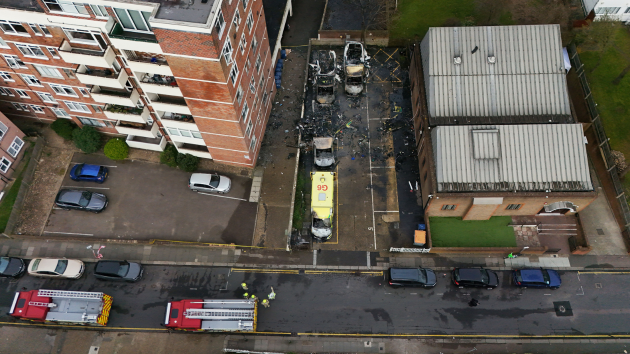
A Police forensic team carry out investigations at a location near to the scene after four Hatzola ambulances were set on fire overnight next to Machzike Hadath Synagogue, on March 23, 2026 in the Golders Green area of London, England. (Photo by Leon Neal/Getty Images)
(LONDON) — Two men who were arrested as part of an investigation into an arson attack on a Jewish charity’s ambulances in the north London neighborhood of Golders Green have been released on bail, British police said on Thursday.
The men, both British nationals, were taken into custody Wednesday morning at separate addresses in northwest and central London.
They were arrested on suspicion of arson with intent to endanger life and both were taken to a London police station before being released on bail, according to London’s Metropolitan Police Service.
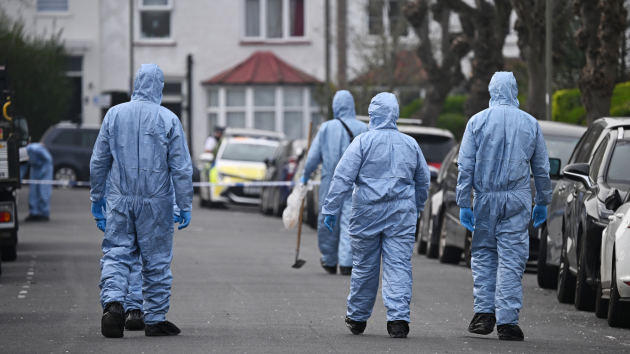
Four ambulances used by Hatzola, a volunteer-led ambulance service in north London, were set on fire at about 1:30 a.m. on Monday morning, police said. Three masked or hooded individuals were seen setting the fires, police said. Investigators said that they were combing through hours of CCTV footage related to the case, in part to “trace the suspects’ movements.”
Police said on Thursday that the investigation was ongoing and searches were carried out at both the addresses in northwest and central London, as well as at two other addresses in northwest London on Wednesday.
Cmdr. Helen Flanagan, head of Counter Terrorism Policing London, which is leading the investigation, said they are continuing “to work to try and identify all of those involved in this appalling attack and the investigation team is working around the clock to do this.”
“Although the two men have been released from police custody, there are strict bail conditions in place while we continue to investigate their suspected involvement in this incident,” she added. “I can reassure the public that we will be closely monitoring these while we carry out further enquiries.”
Detective Chief Superintendent Luke Williams, who leads policing in northwest London, said “an enhanced, bespoke policing plan and activity, which is particularly focused around vulnerable areas right across London, will continue over coming days and weeks.”
“This includes specialist officers and capability being deployed alongside local officers to help protect certain locations and will also involve highly visible armed police patrols to serve as a deterrent to anyone seeking to cause our communities harm,” Williams noted. “I must stress that these are precautionary and not in response to any specific threat, and we continue to work alongside our colleagues in Counter Terrorism policing to support their investigation. We will also continue to work closely with local communities and our partners to listen to their concerns and respond to these.”
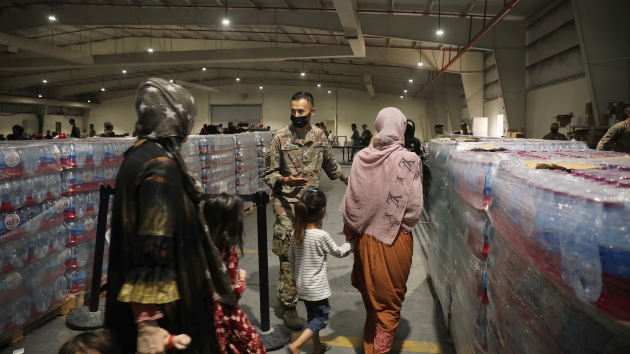
Sgt. Juan Miranda, culinary specialist, 155th Combat Sustainment Support Battalion, files in Afghan Special Immigrants into the dining facility, August 20, 2021 at Camp As Sayliyah, Qatar. (Sgt. Jimmie Baker/US Army via Getty Images)
(NEW YORK) — More than 1,100 Afghan refugees and family members of active duty U.S. military personnel are stranded on an unused Doha military base that has become a target since the start of the U.S.-Israel war with Iran, according to U.S. non-profit organization Afghan Evac.
Qatar Armed Forces have been intercepting incoming attacks from Iran, but residents at the facility, known as Camp As Sayliyah, told ABC News they have been hiding in buildings during the attacks and were not initially given bunkers or proper protections to take cover.
During those weeks, they said shrapnel would fall into their bedrooms, even locations where young children were. Since the war broke out, refugees sent ABC News recordings in secret, outlining what they say are the dire conditions at the camp. They asked for their faces to be hidden and their voices altered, due to their fear of being deported or reprimanded.
Three weeks later, ABC News received videos where residents show how the camp installed new concrete walling near the entrances and exits of buildings. They say workers urge residents to enter the bunkers in the “event of a duck and cover alert.”
In response to the residents’ claims of terrible conditions, a spokesperson for the a U.S. State Department, which administers the base, also told ABC News they are “addressing all related operational concerns” including “the safety and security of American citizens as well as the safety of residents at Camp As Sayliyah.”
Mahidewran, a young Afghan mother, told us that her child’s first steps were taken in the camp, where the family has been for more than a year, and that raising her child there has been difficult.
“I’m not always able to provide her with the foods she needs or the toys she loves,” she said.
Her daughter was about to turn 1 when they were initially brought to Camp As Sayliyah, and now she is turning 2.
Apart from raising a child on a former military base, she faces another unlikely challenge: war.
Mahidewran told ABC News sirens go off every few hours in the camp, warning residents to take cover in their buildings.
“I left [Afghanistan] through a legal process by the United States, and when they transferred me to Qatar, we were given safety, an opportunity to rebuild our lives,” she told ABC News.
Ahmad, who said he fought against terrorism alongside the U.S. as a member of the Afghan Command forces, told ABC News his son sleeps under the bed, fearing for his life as missiles continue to fire at the camp.
He said he’s been living at Camp As Sayliyah with his children for more than 18 months, and despite being brought to Doha by the U.S. government, his entire family remains in limbo, not knowing where they will go next. ABC News spoke to refugees who shared similar stories to Ahmad’s — saying they were promised a better life in return for risking theirs when working for the U.S. government.
From July to August 2021, the U.S. evacuated more than 100,000 people out of Afghanistan during Operation Allies Refuge, following the withdrawal of U.S. troops during the Biden-Harris administration.
Nearly five years later, the Trump administration has halted relocation and refugee resettlement efforts, impacting many of those who had already been vetted and cleared to travel to the U.S., according to AfghanEvac. The reports detailing the operation have since been deleted from the State Department website.
Refugees at Camp As Sayliyah said that the U.S. government’s promise of a better life on American soil was broken and that being caught in another war brings them back to the terrifying moments they experienced in Afghanistan.
“We came from a country that was under war for 48 years, before living here we were living in constant fear and anxiety,” Farishta, a teenager living on the base with her parents, told ABC News.
When ABC News spoke with Farishta, she said she was still living in a state of fear and that a worker at the camp threatened her with deportation to Afghanistan if she spoke to a journalist again.
Farishta said she has lived at Camp As Sayliyah for 15 months and often dreams of her future, hoping to further her education.
“I feel hopeless because I am a girl who has been deprived of education and whose future is uncertain,” she said.
“Afghan Nationals at the camp do not currently have a viable pathway to the United States,” the department said.
The plan is to relocate the population to a third country by March 31, according to the department. It said this “is a positive resolution that provides safety for these remaining people to start a new life outside of Afghanistan.”
The State Dept said the “Trump administration has no plans to send these” Afghan refugees back to their home country.
However, those people ABC News spoke to said they have not been told what country they would be going to or when.
Afghan Evac said it has been advocating for refugees at the camp, writing several letters to the State Department, urging the government not to leave the residents at Camp As Sayliyah behind.
According to Afghan Evac, 800 of the people at the camp are fully vetted and approved refugees who were cleared to travel to the U.S. The camp’s residents are mainly women and children, it said.
Shawn VanDiver, the president of Afghan Evac, claimed that there was a pathway and that the State Department closed it off.
“There is no structural or legal barrier preventing these individuals from coming from the United States. The absence of a ‘viable pathway’ is a policy choice, not an inevitability,” he told ABC News.
Firefighters at the scene in Highfield Road, Golders Green, London, after an apparent arson attack on four ambulances belonging to the Jewish Community Ambulance service in London. The Metropolitan Police confirmed the incident is being treated as an antisemitic hate crime. Picture date: Monday March 23, 2026. (Photo by Jonathan Brady/PA Images via Getty Images)
(LONDON) — Two men were arrested in connection with an arson attack on a Jewish charity’s ambulances in the north London neighborhood of Golders Green, British police said on Wednesday.
The men — aged 47 and 45 — were taken into custody Wednesday morning at separate addresses in northwest and central London, police said.
Both were arrested on suspicion of arson with intent to endanger life and have been taken to a London police station where they’re being held, according to London’s Metropolitan Police Service, which noted that its officers are conducting searches at the two addresses.
Four ambulances used by Hatzola, a volunteer-led ambulance service in north London, were set on fire just about 1:30 a.m. on Monday morning, police said. Three masked or hooded individuals were seen setting the fires, police said.
Investigators said that they were combing through hours of CCTV footage related to the case, in part to “trace the suspects’ movements.”
“This appears to be an important breakthrough in the investigation, but we’re also mindful that CCTV footage of the incident suggests there were at least three people involved,” Cmdr. Helen Flanagan, Head of Counter Terrorism Policing London, who is leading the investigation, said in a statement.
An investigations was still underway, Flanagan added, saying the Met would “seek to arrest all of those who may have been involved.”
Officials said that the arson attack was being treated as an antisemitic hate crime, although it had not as been designated a terrorist incident as of the police’s most recent update, which was published on Monday.
Prime Minister Keir Starmer described the attack as “horrifying,” saying on social media on Monday that it appeared to be a “shocking antisemitic arson attack.”
“An attack on our Jewish community is an attack on us all,” Starmer said. “We will fight the poison that is antisemitism.”