

RFK Jr. cuts COVID-19 vaccine recommendation for healthy kids, pregnant women

RFK Jr. cuts COVID-19 vaccine recommendation for healthy kids, pregnant women
Chip Somodevilla/Getty Images

(WASHINGTON) — Health and Human Services Secretary Robert F. Kennedy Jr. on Tuesday announced the removal of the COVID-19 vaccine from the Centers for Disease Control and Prevention’s immunization schedule for healthy children and pregnant women — a move that could alter guidance for doctors as well as some insurance coverage.

This is a developing story. Please check back for updates.

Copyright © 2025, ABC Audio. All rights reserved.

Trump to push for end to all federal agencies’ Harvard contracts

Trump to push for end to all federal agencies’ Harvard contracts
Kayla Bartkowski/Getty Images

(WASHINGTON) — The White House General Services Administration is expected to send a letter to federal agencies on Tuesday asking them to “identify any contracts with Harvard, and whether they can be canceled or redirected elsewhere,” a senior administration official told ABC News.

The move comes as President Donald Trump continues his attack on the school as the university has not complied with the administration’s demands over providing data on its international students. It comes after the president announced over the weekend that he is considering allocating $3 billion away from Harvard to other trade schools, the latest in his battle with the Ivy League school.

Harvard filed a lawsuit against the administration last week over the order that prevented the school from admitting international students.

The administration argues in the letter, obtained by ABC News, that being a contractor of the federal government “comes with the deep responsibility and commitment to abide by all federal laws and ensure the safeguarding of taxpayer money.”

The letter goes on to allege that Harvard “continues to engage in race discrimination, including in its admissions process and in other areas of student life” — some of the diversity, equity and inclusion practices that the Trump administration has worked to curtail.

The letter also alleges that the university has “potential discriminatory hiring practices and possible violations of Title VII of the Civil Rights Act of 1964.” The letter also takes issue with what they say is Harvard’s “disturbing lack of concern for the safety and wellbeing of Jewish students,” according to the administration official — a reference to instances of antisemitism on campus.

The letter says that agencies should “consider its contracts with Harvard University and determine whether Harvard and its services efficiently promote the priorities of the Agency.” It also instructs agencies to have a list of contracts with the university and the action the agency will take on it by June 6.

“We recommend that your agency terminate for convenience each contract that it determines has failed to meet its standards, and transition to a new vendor those contracts that could be better serviced by an alternative counterparty. Going forward, we also encourage your agency to seek alternative vendors for future services where you had previously considered Harvard,” the letter adds.

The school hasn’t immediately commented about the letter.

The New York Times first reported the letter.

This is a developing story. Please check back for updates.

ABC News’ Ivan Pereira contributed to this report.

Copyright © 2025, ABC Audio. All rights reserved.

Trump to call on federal agencies to cancel Harvard contracts: Source

Trump to push for end to all federal agencies’ Harvard contracts
Kayla Bartkowski/Getty Images

(WASHINGTON) — The White House General Services Administration is expected to send a letter to federal agencies on Tuesday asking them to “identify any contracts with Harvard, and whether they can be canceled or redirected elsewhere,” a senior administration official told ABC News.

The move comes as President Donald Trump continues his attack on the school as the university has not complied with the administration’s demands over providing data on its international students. It comes after the president announced over the weekend that he is considering allocating $3 billion away from Harvard to other trade schools, the latest in his battle with the Ivy League school.

The New York Times first reported the letter.

Harvard filed a lawsuit against the administration last week over the order that prevented the school from admitting international students.

This is a developing story. Please check back for updates.

Copyright © 2025, ABC Audio. All rights reserved.

Trump pardons Virginia sheriff convicted of federal bribery charges

Trump pardons Virginia sheriff convicted of federal bribery charges
Prasit photo/Getty Images

(WASHINGTON) — President Donald Trump on Monday granted an unconditional pardon to a Virginia sheriff who had been convicted of federal bribery charges and sentenced to 10 years in federal prison.

Scott Jenkins, who had been the sheriff of Culpeper County, Virginia, was set to report to jail on Tuesday.

“Sheriff Scott Jenkins, his wife Patricia, and their family have been dragged through HELL by a Corrupt and Weaponized Biden DOJ,” Trump wrote in a statement on Truth Social. “In fact, during his trial, when Sheriff Jenkins tried to offer exculpatory evidence to support himself, the Biden Judge, Robert Ballou, refused to allow it, shut him down, and then went on a tirade.”

“As we have seen, in Federal, City, and State Courts, Radical Left or Liberal Judges allow into evidence what they feel like, not what is mandated under the Constitution and Rules of Evidence,” he added. “This Sheriff is a victim of an overzealous Biden Department of Justice, and doesn’t deserve to spend a single day in jail.”

Jenkins faced a jury trial in late 2024 but wasn’t sentenced until March 2025 under the Trump administration. Acting U.S. Attorney Zachary T. Lee, who represented the U.S. government, and therefore the Trump administration, in the case, is still serving as the acting U.S. attorney for the Western District of Virginia.

Trump praised Jenkins as “a wonderful person, who was persecuted by the Radical Left ‘monsters,’ and ‘left for dead.’ This is why I, as President of the United States, see fit to end his unfair sentence, and grant Sheriff Jenkins a FULL and Unconditional Pardon. He will NOT be going to jail tomorrow, but instead will have a wonderful and productive life.”

Jenkins was convicted by a jury in December 2024 on charges including one count of conspiracy, four counts of honest services fraud and seven counts of bribery concerning federally funded programs.

Lee wrote in a March sentencing memo that Jenkins repeated violated the public’s trust “by exploiting his official powers for personal gain.”

“After he was caught, he sought to manipulate the judicial process and to evade responsibility for his crimes by lying to the Court and the jury,” Lee added.

“In sum, Jenkins’ lies and abuses of power in the instant case are not an aberration,” he said. “Since his early days in law enforcement, Jenkins has displayed a shocking disregard for his ethical and legal responsibilities.”

The Department of Justice had said in a press release in March that he had received over $75,000 in cash payments for “appointing numerous Northern Virginia businessmen as auxiliary deputy sheriffs within his department.”

“Scott Jenkins violated his oath of office and the faith the citizens of Culpeper County placed in him when he engaged in a cash-for-badges scheme,” Lee said at the time.

“We hold our elected law enforcement officials to a higher standard of conduct and this case proves that when those officials use their authority for unjust personal enrichment, the Department of Justice will hold them accountable,” he added.

Copyright © 2025, ABC Audio. All rights reserved.
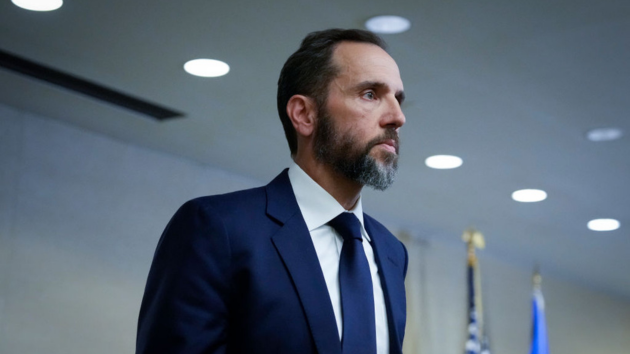
Former New York Rep. Charles Rangel, who spent four decades in Congress, dies at 94

Former New York Rep. Charles Rangel, who spent four decades in Congress, dies at 94
Seth Wenig-Pool/Getty Images

(WASHINGTON) — Former New York Rep. Charles Rangel, a founding member of the Congressional Black Caucus who spent more than four decades in the House, died on Monday, according to his family. He was 94 years old.

Rangel, a Democrat, served in the House from 1971 until 2017, spending part of his tenure as the chairman of the House Ways and Means Committee.

“A towering figure in American politics and a champion for justice, equity, and opportunity, Congressman Rangel dedicated over four decades of his life to public service,” his family said in a statement about his death.

While in Congress, Rangel — often referred to as the “Lion of Lenox Avenue” by his Harlem district — achieved many notable firsts during his 46 years in Congress: he was a founding member of the Congressional Black Caucus in 1971 and became the first Black chair of the Ways and Means Committee in 2007.

He stepped down from leading the Ways and Means Committee amid an ethics scandal for violating House rules. Rangel was accused of 13 counts of violating those rules, but emphatically denied any wrongdoing. Ultimately, Rangel was found to have violated 11 separate rules of the House and was censured — a public shaming in the well of the chamber. That vote made him the 23rd member of the House to be censured — and the first in nearly 30 years.

Still, after he being embroiled in the scandal, Rangel was reelected and went on to serve two more terms in Congress — and was still widely respected. As he was censured, he talked about being wounded in the Korean War — for which he received a Purple Heart and Bronze Star with Valor — and not having another bad day since.

After leaving Congress, Rangel served as statesman-in-residence at The City College of New York, its website said.

“Rangel was a war hero, history-making congressman, and master lawmaker,” the college wrote in an obit for Rangel, later adding that he was “recognized as one of the hardest working legislators in Congress.”

His family added that his legacy lives on through the school’s Charles B. Rangel Center for Public Service, “which continues to inspire and train new generations of public servants.”

‘Transformational force of nature’

After news of his death, tributes came in from those who worked with the former congressman.

The Congressional Black Caucus mourned the passing of one of its “trailblazing” founders, calling him “the very definition of a life devoted to public service.”

“His legacy is one of tireless advocacy, historic firsts, and unwavering dedication to justice and equality. May he rest in power and everlasting peace,” Congressional Black Caucus Chair Yvette Clarke said in a statement.

House Minority Leader and fellow New Yorker Hakeem Jeffries honored Rangel Monday morning, acknowledging his service in the military and Congress in a post on X.

“Rep. Charlie Rangel was a phenomenal patriot, hero, statesman, leader, trailblazer, change agent & champion for justice. The Lion of Lenox Ave was a transformational force of nature. Harlem, NYC & America are better today because of his service. May he forever rest in power,” Jeffries posted on X.

Senate Minority Leader Chuck Schumer posted to X on Monday that Rangel “was a great man, a great friend, and someone who never stopped fighting for his constituents and the best of America.”

“The list of his accomplishments could take pages, but he leaves the world a much better place than he found it,” Schumer said.

Rep. Nancy Pelosi, the former speaker of the House, called Rangel “an impactful legislator and a lifelong voice for the voiceless and champion of the oppressed.”

“Throughout his decades of public service, Chairman Rangel was a skilled, relentless advocate for justice, for equality and for the people of Harlem,” Pelosi said in a statement. “May it be a comfort to his loving wife Alma, their beloved children Steven and Alicia and the entire Rangel family that so many mourn their loss and are praying for them at this sad time.”

Copyright © 2025, ABC Audio. All rights reserved.

New Jersey governor race heats up ahead of primary — with Trump’s impact on the line

New Jersey governor race heats up ahead of primary — with Trump’s impact on the line
Tom Williams/CQ-Roll Call, Inc via Getty Images

(NEW JERSEY) — New Jersey is set to hold its gubernatorial elections this year, with hotly contested primaries set for next month — and many experts are saying the high-stakes race could be a harbinger for the mood of the country ahead of 2026’s critical midterm elections.

“This is going to be the first real test for the potential Democratic backlash against the Trump administration. We’ve seen a little bit from special elections that Democratic voters are motivated to turn out. Does that continue going forward in the fall in New Jersey?” Daniel Bowen, a political science professor at The College of New Jersey, told ABC News.

Brigid Callahan Harrison, the chair of the Political Science and Law Department at Montclair State University, told ABC News that the race might not only be a “bellwether” for how voters feel about President Donald Trump and the upcoming midterms, but that it could indicate both how partisan allegiances are shifting in New Jersey and the strength of Trump’s endorsement of Republican candidate Jack Ciattarelli.

Harrison points to Kamala Harris’ small margin of victory in New Jersey, too. Harris won New Jersey by around 6 percentage points in 2024; then-Vice President Joe Biden won the state by about 16 percentage points in 2020.

At stake in the race are also issues in New Jersey such as immigration enforcement and sanctuary cities, and the cost of housing and general affordability — issues that have divided and animated Americans around the country and that are set to take center stage in the midterms as well.

Democrats contend with a crowded field

The Democratic primary features six figures hoping to succeed incumbent and term-limited Democratic Gov. Phil Murphy and to keep the governorship blue.

Polling shows that U.S. Rep. Mikie Sherrill, who represents the state’s 11th Congressional District, is leading the pack. Sherrill’s experience as a former U.S. Navy helicopter pilot and network of political supporters from a previous run for Congress work in her favor, Harrison said.

Another Democratic candidate, Josh Gottheimer, has represented New Jersey’s 5th Congressional District since 2017. The former political operative is widely seen as a moderate. Similar to other candidates, Gottheimer is positioning himself as ready to take on Trump. He has also framed himself as being the best one to tackle affordability in the state.

Newark Mayor Ras Baraka was an educator in Newark Public Schools and a member of the city council before being elected mayor for the first time in 2014. He was arrested earlier this month while joining members of Congress at an Immigration and Customs Enforcement detention center in Newark. Trespassing charges against Baraka have since been dismissed.

Steven Fulop was first elected mayor of Jersey City in 2013. The ex-Goldman Sachs investment banker and former Marine has overseen population growth, increased development and municipal reforms.

Steve Sweeney, a former ironworker who served as New Jersey’s state Senate president for more than a decade, spent two decades as a lawmaker in that chamber before losing to a Republican in 2021. He has touted his strong support from unions and experience as a legislator.

Sean Spiller, the president of the New Jersey Education Association — the state’s largest teacher’s union — has pointed to his experience as the former mayor of the city of Montclair as evidence that he is able to take on issues such as affordable housing and investing in childcare.

As the June 10 primary gets closer, experts say they’re all facing some of the same headwinds. After New Jersey eliminated its old primary ballot design, which used to allow most county parties to give preferential placement to their endorsed candidates, candidates now must focus more on their own get-out-the-vote operations, Harrison said.

“Nobody’s run in a race like this,” she said.

Republicans play the Trump card — as he endorses a returning challenger

Republicans are hoping to flip New Jersey’s governorship red — and point to the closer-than-expected margin between Trump and Harris in 2024 as evidence that it’s in reach.

A recent New Jersey Republican Party fundraising email encouraged voters to “finish the job” and “flip New Jersey red, for good.”

Experts said the presidential results might not necessarily indicate how competitive the gubernatorial race will be. Bowen said that New Jersey’s off-cycle gubernatorial elections often show voters largely voting against the incumbent party in power in the White House, although he added that Republicans also see the race as intertwined with Democratic incumbent Murphy finishing up his time in office.

Still, most of the Republican candidates have been eager to align themselves with Trump.

Trump has endorsed the Republican front-runner Ciattarelli in the race that the president wrote is being “closely watched by the entire World.”

Ciattarelli has been involved in local politics for decades, serving various roles including councilman and state assemblyman. He has had his sights on governor since 2017, where he ran for the first time but lost the primary. Ciattarelli succeeded in clinching the Republican nomination in 2021, but ultimately lost to Murphy.

Ciattarelli, who says his top priority is making the state more affordable, has shifted his stance on Trump over the years. In 2015, he issued a statement calling Trump “out of step with American values” and “not fit” to be president. But he now supports the president, and endorsed Trump in the 2024 election.

Trump, recently wrote on his social media platform that Ciattarelli, “after getting to know and understand MAGA, has gone ALL IN, and is now 100% (PLUS!)”

After the endorsement, Ciattarelli told Fox News that he will support the president’s agenda. He has acknowledged his previous comments about Trump, too, but compared himself to Vice President JD Vance — who at one point also did not support the president but is now vice president under Trump.

Ashley Koning, the director of the Eagleton Center for Public Interest Polling at Rutgers University, told ABC News that Trump’s endorsement could help encourage undecided Republican voters to favor Ciattarelli. She said the center’s polling showed that with Republican voters who were split, about half said an endorsement from Trump would make them more likely to vote for that candidate.

Conservative talk show host Bill Spadea previously ran unsuccessful campaigns for the U.S. House and the state assembly, and has said he isn’t afraid to call out both parties. He has expressed a desire to end taxpayer subsidies for Planned Parenthood and replicate the Department of Government Efficiency in New Jersey, in addition to promising to combat illegal immigration and increase affordability. Still, he said he has disagreed with Trump on “multiple occasions.”

Jon Bramnick, a former state senator, appears to be less supportive of Trump. Last April, he made it clear that he would not vote for Trump in the 2024 presidential race, though he also said he probably wouldn’t vote for the Democratic candidate either.

Still, some of Bramnick’s positions reflect stances similar to Trump’s. In addition to branding himself as the “toughest candidate on immigration,” Bramnick also seeks to end sanctuary state policies in New Jersey, and introduced the “New Jersey Laken Riley Act,” which intends to align the state’s law with Trump’s legislation.

Mario Kranjac, the former mayor of the town of Englewood Cliffs, is running a pro-Trump campaign, branding himself as a “political outsider.” Justin Barbera, a contractor, is also running a pro-Trump campaign, telling the New Jersey Monitor he is guided by his military and Christian background.

Even with Ciatterelli standing out as the front-runner, Bowen said that nothing is certain until the primary wraps.

“It certainly looks like the race is Ciatterelli’s to lose at this point — although, of course, in a primary, anything can happen,” Bowen said.

Copyright © 2025, ABC Audio. All rights reserved.
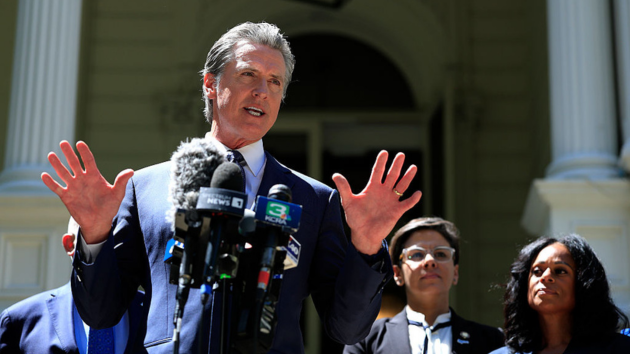
Protesters decry ‘crypto corruption’ as Trump fetes top investors in his crypto meme coin

Protesters decry ‘crypto corruption’ as Trump fetes top investors in his crypto meme coin
Alex Wong/Getty Images

(STERLING, VA.) — Calling them “pioneers,” President Donald Trump praised the top investors in his cryptocurrency meme coin at an exclusive black-tie dinner Thursday as protesters outside the event chanted and displayed signs blasting the gala as a pay-for-play event.

Two hundred and twenty cryptocurrency traders, including many from overseas, pumped tens of millions of dollars into Trump’s meme coin to gain admission to the gala through a contest that awarded invitations to the top investors — with at least some of the funds flowing directly into the Trump family’s coffers.

Among those spotted arriving for the event at Trump’s private golf club outside Washington were Lamar Odom of the NBA and “Keeping Up With the Kardashians” fame, controversial cryptocurrency mogul Justin Sun, and Kendall Davis, an Austin-based cryptocurrency investor, who told ABC News that he “came here to advocate for things to be done right in the crypto space.”

The top 220 holders of Trump’s meme coin — a type of digital currency that’s often based on an internet meme — collectively spent upwards of $140 million for a seat at the table on Thursday, according to an analysis by the data analytics firm Nansen. According to CNBC’s reporting of blockchain analytics firm Chainalysis’ data, 58 crypto wallets had made millions from their Trump coin investments as of May 6 — while roughly 764,000 crypto wallets had lost money.

White House Press Secretary Karoline Leavitt said the gala was not a White House event and that the president was attending in a personal capacity. The White House did not release a list of the event’s attendees.

Protesters outside the event — which included Sen. Jeff Merkley, D-Ore. — chanted slogans and displayed signs reading “Stop Trump’s Crypto Corruption” and “America is not for sale” as attendees made their way into the venue.

Trump, addressing attendees at the dinner, said that he always puts the country “way ahead of the business” and added, “You can’t say that about Hunter Biden and Joe Biden,” according to social media posts.

On the topic of cryptocurrency, Trump attacked the previous administration and touted his own administration’s support of crypto.

“The Biden administration persecuted crypto innovators, and we’re bringing them back into the USA where they belong. They were fleeing. They were leaving our country,” Trump was seen saying in a social media video posted by an attendee.

Many of the dinner guests were overseas investors, and several of them told ABC News they had flown into the country just for a chance to see the president of the United States.

One attendee, who asked that he not be identified, told ABC News he flew in from Taiwan for the dinner.

“The second day Trump made the announcement about the dinner, I bought a bunch of tokens,” he said. The attendee said he didn’t have anything specific he wanted to hear from Trump, but that he wanted to attend the dinner because “I just think to have opportunity to come to an event like this is very rare.”

Another attendee, who asked to be identified only by his first name, Alex, told ABC News he is an investment banker from Moscow, Russia, who currently resides in Cancun.

He said he didn’t understand much of what Trump spoke about at the dinner because of the language barrier, but that he’s a supporter of Trump and that he was happy to see him.

Attendee Bryce Paul, in a video he posted to social media, likened Trump’s meme coin gala to crypto’s “Iwo Jima” moment — where attendees would be “raising the flags, behind the enemy lines, right here in the swamp of D.C.”

“I’m just one of 220 people that are invited,” Paul said. “There’s no media, there’s no recording, there are no plus-ones. It’s just truly some of the most influential figures in crypto, in policy, and of course, the man himself.”

Copyright © 2025, ABC Audio. All rights reserved.

Judge says Trump has power to impose tariffs, but punts lawsuit to different court

Judge says Trump has power to impose tariffs, but punts lawsuit to different court
Chip Somodevilla/Getty Images

(WASHINGTON) — Donald Trump’s sweeping tariffs may be able to survive a legal challenge, thanks in part to a Japanese zipper company that sued the Nixon administration 50 years ago.

Earlier this week, a federal judge in Florida nominated by Donald Trump suggested the president has the authority to unilaterally impose tariffs — basing his ruling on the precedent from a 1970s court case — but stopped short of issuing an order affirming the president’s right to impose sweeping tariffs.

In a largely technical ruling issued on Tuesday, U.S. Judge T. Kent Wetherell II transferred one of the first lawsuits challenging Trump’s tariffs to a different federal court while also weighing in on the legality of the controversial tariffs. Florida-based planner company Emily Ley Paper sued over the tariffs in April, asking Wetherell to invalidate them because Trump lacks the power to impose tariffs himself.

According to the judge, the International Emergency Economic Powers Act of 1977 gives Trump the authority to set tariffs for reasons other than raising revenue. Wetherell wrote that Trump’s justification for the tariffs — both stemming the flow of illicit drugs into the country and resolving a trade imbalance — is sufficient to satisfy the terms set by Congress.

“This is a civil action commenced against the United States and it ‘arises out of’ a federal law—IEEPA—so the dispositive question framed by the parties’ filings is whether IEEPA ‘provid[es] for … tariffs,'” he wrote. “Defendants contend that it does; Plaintiffs contend that it doesn’t. The Court agrees with Defendants …”

The decision is at best a symbolic victory for the Trump administration, which is fending off a half dozen lawsuits challenging the legality of the recent “Liberation Day” tariffs.

Judge Wetherell ultimately decided to transfer the case from a federal court in Florida to the Court of International Trade in New York, meaning that, despite his favorable view of the tariffs, he won’t be the one deciding the case.

But the decision marks the first time a federal judge has suggested Trump’s imposition of tariffs falls within his authority as president, offering a positive sign that the Trump administration may find a receptive audience at the Court of International Trade. During two hearings over the last week, judges at the Court of International Trade have wrestled with the same question about Trump’s authority.

The question comes down to the interpretation of the 1970s law that Trump used to impose his tariffs. The IEEPA gives the president the right to “regulate” imports but does not explicitly mention tariffs. Lawyers challenging the tariffs have argued that Trump’s interpretation of the law oversteps his authority by treading into an issue controlled by Congress, but the Trump administration has pointed judges to a court decision related to the IEEPA’s legal predecessor — the Trading with the Enemy Act of 1917 — to guide the way.

Back when President Richard Nixon confronted the country’s 1971 economic crisis with steep tariffs on Japanese goods, a zipper company based in Japan called Yoshida sued Nixon over the tariffs.

The Court of Customs and Patent Appeals, the predecessor to the Court of International Trade, sided with the government and held that the TWAE gives the president the power to impose tariffs.

According to Wetherell, the same reasoning would apply 50 years later to the IEEPA, meaning Trump has the power to impose tariffs without the help of Congress. “The reasoning in Yoshida is persuasive, and the Court sees no reason why it would not apply to IEEPA because the operative language of IEEPA is identical to the operative language in TWEA,” the judge wrote.

Despite losing its legal battle, Yoshida remains in business today. Now operating under the name YKK, it produces more zippers than any other company in the world.

Copyright © 2025, ABC Audio. All rights reserved.
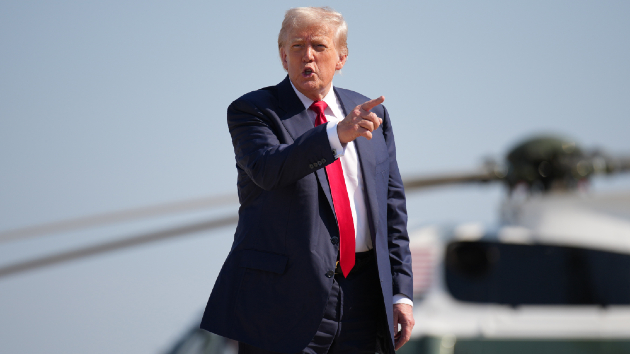
Senate likely to change House-passed megabill advancing Trump’s agenda

Senate likely to change House-passed megabill advancing Trump’s agenda
ABC News

(WASHINGTON) –House Republicans approved the “One Big Beautiful Bill Act” encompassing President Donald Trump’s legislative agenda early Thursday. But clearing the House is just the first hurdle for the bill, which will also have to pass muster with a Senate Republican conference that is already telegraphing that changes to it are coming.

Trump is pushing for swift action on his megabill, urging senators in a post on X to act “as soon as possible” after the narrow victory in the House.

“We can celebrate this pass in the House for a couple of hours, but now it’s time for the Senate to get to work,” White House press secretary Karoline Leavitt said during Thursday’s White House press briefing. “The president has great relationship with … Senate Majority Leader [John] Thune, and of course, so many friends on the Senate side of the Hill. And he’s expecting them to get busy on this bill and send it to his desk as soon as possible.”

Senate Republicans say they’re clear-eyed about wanting to pass Trump’s legislative agenda into law as swiftly as they can, but have every intention of modifying the bill to leave their own distinct mark on the package and working to change things they object to.

Majority Leader Thune said Wednesday that “there are things that we need to adjust or modify or change,” adding that Speaker Mike Johnson “fully understands and accepts that.”

Chief among the issues GOP senators have raised about the bill is that it adds trillions of dollars to the national debt.

“[The] House bill is going to add about $4 trillion to the debt ceiling. The Senate bill adds $5 trillion. There’s nothing fiscally conservative about expanding the debt ceiling more than we’ve ever done it before,” Republican Sen. Rand Paul said Thursday. “This will be the greatest increase in the debt ceiling ever, and the GOP owns this now … the deficit this year will be $2.2 trillion the GOP owns that now too.”

Some Senate Republicans are calling for steeper spending cuts so that raising the debt limit would not be part of this bill.

Republican Sen. Ron Johnson, a notable fiscal hawk, has also signaled strongly that he would not support the bill in its current form, given that it raises the deficit.

“It’s so far off the mark. It’s so bad. I’ve been trying to interject reality. I’ve been trying to interject facts and figures,” Ron Johnson told reporters on Wednesday afternoon at the Capitol, as the House was still advancing the bill through the Rules Committee.

“Currently the fiscal situation is not even in the conversation in the House debate. We’re missing the forest talking about twigs and leaves. Medicaid, that’s, that’s a tree. That’s a big enough issue. But all this, all this, all these little tweaks they’re trying to make to get the deal completely ignores the elf in the room.. which says, on average, I mean, current [Congressional Budget Office] estimate, on average, we’ll have a $2.2 trillion deficit, per year,” Sen. Johnson added.

A few GOP Senators seemed more supportive of the bill, but noted there was significant work needed to be done in order to pass through the upper chamber.

Republican Sen. Thom Tillis said “a lot of it looks pretty good,” adding that it’s a “good start.”

“Still, I think there’s some opportunities for more efficiency, some more savings, and we have to look at the specifics of some of the renewable investment tax credits and production tax credits, and I think that even if we’re going to revise them, we’ve got to make sure that businesses who believe the government was setting this as a priority don’t have a lot of stranded costs,” he added.

If the bill is retooled by the Senate, it risks a complicated path for the speaker down the road when the bill goes back to the House. Republicans have set a Fourth of July deadline for both chambers to pass the bill and get it to Trump’s desk.

Passing this massive package through the Senate is also no cakewalk for Thune, who will only be able to afford to lose three of his members if it comes up for a vote on the Senate floor.

The House-passed bill includes new tax cuts, cuts to social safety net programs and changes to the food assistance program, SNAP — all of which have led Democrats to lambaste the legislation for creating benefits for some of the richest Americans and cuts for some of the poorest.

Minority Leader Chuck Schumer slammed the bill in a post on X Thursday morning.

“This is not one big, beautiful bill. It’s ugly,” Schumer said. “There’s nothing beautiful about stripping away people’s healthcare, forcing kids to go hungry, denying communities the resources they need, and increasing poverty.”

Democratic Sen. Patty Murray called the bill a “scam” in a post on X, urging all Republicans to vote no.

“House Republicans don’t want you to know they just passed a bill that makes health care MORE expensive and kicks MILLIONS off Medicaid, all to pass tax cuts for billionaires & giant corporations,” Murray wrote. “We need to make sure America knows. And we need to kill this bill in the Senate.”

Leavitt criticized Democrats as being “out of touch” with Americans.

“Every single Democrat in the House of Representatives who voted against all of these common sense and massively popular policies,” Leavitt said during Thursday’s White House press briefing. “The Democrat Party has never been more radical and out of touch with the needs of the American people.”

The Senate will also have to contend with the rules governing what can be included in such a package. Making sure that the bill passes muster with the Senate parliamentarian could lead to additional changes to the bill that Mike Johnson will eventually have to sell to his conference in the House.

As Trump now prepares to negotiate with Senators, Leavitt told ABC News Chief White House Correspondent Mary Bruce that she was not aware if those conversations had started already.

What did GOP holdouts get?

Speaker Johnson had to work with his right flank to get the megabill passed in the House, which he managed to do by one vote. So what changed to get those more than a dozen holdouts on board?

Not much, several hard-liners told ABC News.

After laboring for days to push for steeper spending cuts and repeatedly railing against the spending that added to the bloated national deficit, many of the holdouts caved.

“The Freedom Caucus was instrumental, and we held it out as long as we could to get the cuts, as long as we could. We couldn’t do it any longer. We live to fight another day,” Republican Rep. Ralph Norman, a key holdout, told reporters.

Norman says there was no specific deal struck between Trump, the speaker and the hard-line holdouts — even after a high-stakes, last-ditch meeting at the White House Wednesday.

Chair of the House Freedom Caucus, Andy Harris, wouldn’t give the bill his vote. He voted “present.”

Republican Rep. Keith Self, another hard-liner, told ABC News that he waited until the last minute to vote yes on the bill. He didn’t fully support the bill, but didn’t want to be the one to tank it.

“We got something … I would have preferred to go further too, to be honest with you, but we did what we could, and we fought the good fight,” Self said.

That number of “more than a dozen” holdouts also included Republicans from states like New York and California, pushing for a higher cap on the state and local tax deduction. Speaker Johnson raised that cap from its proposed $30,000 to $40,000, and increasing 1% a year thereafter. That was enough to get their support.

But, for the spending hawks, it’s unclear how they can characterize this as a win.

Leavitt said Thursday that she believes that Trump would want to see the two Republican representatives who voted no on the bill — Reps. Thomas Massie and Warren Davidson — should be primaried.

“I don’t think he likes to see grandstanders in Congress. What’s the alternative? I would ask those members of Congress. Did they want to see a tax hike? Did they want to see our country go bankrupt? That’s the alternative by them trying to vote no,” Leavitt said.

ABC News’ Sarah Beth Hensley contributed to this report.

Copyright © 2025, ABC Audio. All rights reserved.

Trump administration bars Harvard from enrolling international students

Trump administration bars Harvard from enrolling international students
Andrew Lichtenstein/Corbis via Getty Images

(WASHINGTON) — The Trump administration has barred Harvard from allowing international students to enroll at the university, after the school lost its ability to use the Student and Exchange Visitor Program.

The SEVP program allows for noncitizens to study at the university under a specific visa.

“As a result of your refusal to comply with multiple requests to provide the Department of Homeland Security pertinent information while perpetuating an unsafe campus environment that is hostile to Jewish students, promotes pro-Hamas sympathies, and employs racist ‘diversity, equity, and inclusion’ policies, you have lost this privilege,” Department of Homeland Security Secretary Kristi Noem wrote in a letter to the university.

Harvard said the move by the Trump administration is not legal.

“The government’s action is unlawful. We are fully committed to maintaining Harvard’s ability to host our international students and scholars, who hail from more than 140 countries and enrich the University – and this nation – immeasurably. We are working quickly to provide guidance and support to members of our community,” the school said in a statement on Thursday. “This retaliatory action threatens serious harm to the Harvard community and our country, and undermines Harvard’s academic and research mission.”

Noem wrote to Harvard in April requesting a tranche of information be given to DHS in order for the school to retain its SEVP status.

According to the letter, she asked Harvard to give information over on student visa holder’s “known” illegally activity; violent activity; threats to students or faculty; disciplinary actions taken as a result of being involved in a protest; information on whether the student obstructed the school’s learning environment; and the coursework that the student is taking to maintain the visa status.

Noem said the school did not provide adequate information in response, and that it is a “privilege, not a right” for students to study at American universities.

“The revocation of your Student and Exchange Visitor Program certification means that Harvard is prohibited from having any aliens on F- or J- nonimmigrant status for the 2025-2026 academic school year.,” she writes. “This decertification also means that existing aliens on F- or J- nonimmigrant status must transfer to another university in order to maintain their nonimmigrant status.”

Noem said that “consequences must follow to send a clear signal to Harvard and all universities that want to enjoy the privilege of enrolling foreign students, that the Trump Administration will enforce the law and root out the evils of anti-Americanism and antisemitism in society and campuses.”

This is a developing story. Please check back for updates.

Copyright © 2025, ABC Audio. All rights reserved.