
Americans increasingly concerned about government shutdown, more blame Republicans and Trump than Democrats: Poll

Americans increasingly concerned about government shutdown, more blame Republicans and Trump than Democrats: Poll
Kent Nishimura/Getty Images

(WASHINGTON) — Thursday marks the 30th day of the federal government shutdown and the American public has grown more concerned about the shutdown throughout the month and more disapprove of how President Donald Trump is handling the federal government, according to an ABC News/Washington Post/Ipsos poll conducted using Ipsos’ KnowledgePanel.

More Americans blame Trump and the Republicans in Congress than the Democrats for the shutdown, the poll finds.

Three-quarters of Americans say they are concerned about the government shutdown, up from two-thirds who said the same on the first day of the shutdown in a Washington Post poll. Now, 43% of Americans say that they are “very” concerned about the shutdown, up from 25% on Oct. 1.

Nearly half of Americans, 45%, say Trump and congressional Republicans are responsible for the shutdown, while 33% say congressional Democrats are responsible and another 22% are not sure. That is barely a shift from the Post’s poll on Oct. 1 when 47% blamed Trump and Republicans, 30% blamed Democrats and 23% were unsure at the onset of the shutdown.

Democrats are more united, saying that Trump and Republicans are to blame for the shutdown (81%) than Republicans saying Democrats are to blame (72%). Twice as many independents say Trump and Republicans are responsible (46%) than Democrats (23%).

Majorities across partisan lines say they are concerned about the shutdown: Nearly nine in 10 Democrats along with over seven in 10 independents and over six in 10 Republicans are concerned about the shutdown, but more Democrats say they are “very” concerned (62%) than independents (43%) or Republicans (26%).

Concern over the shutdown is higher among women, with 81% voicing concern, compared with 68% of men.

And a growing share of Americans disapprove of how Trump is managing the federal government. In all, 63% disapprove today, up from 57% in April and 54% in February. Just over a third (36%) approve in the most recent poll.

The ABC/Post/Ipsos poll asked Americans to explain why they think either Trump and Republicans or Democrats are to blame for the federal government shutting down. Here are some of their written responses:

“They won’t budge on the concerns of healthcare premiums skyrocketing for all Americans. He is not for all Americans, only his interests matter,” said a 65-year-old Democratic woman in Wisconsin.

“They seem more interested in keeping power than working for the country’s benefit,” said a 78-year-old Republican-leaning independent man in Oregon.

“They control all of the portions of the federal government,” said a 45-year-old Democratic man in Tennessee.

“Trump is the president and the Republicans hold the majority. Not only that, Speaker Johnson let out the House on vacation, and Trump/Republicans won’t even try to work with Democrats on the loss of healthcare funding that is going to hurt millions of people,” said a 34-year-old Democratic woman in Minnesota.

“Trump said it himself a few years ago that it’s the President’s job to bring the 2 sides together,” said a 59-year-old Democratic-leaning independent woman in Pennsylvania.

“President Trump and the Maga GOP are refusing to negotiate over the Affordable Care Act expiration regardless of the negative impact on many of their supporters and they have no alternative plans for keeping the cost of healthcare from rising,” said a 69-year-old Democratic woman in Virginia.

“The Republicans control Congress. They won’t negotiate. Of course they’re responsible. We cannot take healthcare away from millions of Americans,” said a 40-year-old Democratic woman in Iowa.

“They refuse to negotiate in good faith,” said a 78-year-old Democratic-leaning independent man in Ohio.

Among those blaming Democrats:

“They want healthcare for illegal immigrants to be paid for out of my pocket. Not right,” said a 78-year-old Republican woman in Oregon.

“Because they will not budge,” said a 37-year-old Republican-leaning independent woman in Arizona.

“They want to negotiate subsidies on health care, but they do not want to conduct the negotiation within the relevant House and Senate committees. They are holding all of the government hostage over one issue,” said a 78-year-old Republican man in South Carolina.

“They voted down the continuation resolutions multiple times,” said a 56-year-old Republican-leaning independent man in Nebraska.

“The Democrats are the ones who will not budge on coming to an agreement,” said a 43-year-old independent woman in Texas.

“The Democrats have supported the items in the continuing resolution and are demanding things that continue to build the debt,” said a 69-year-old Republican-leaning independent man in California.

“Republicans offered and passed a clean bill with no Republican additions and Democrats continually vote no,” said a 76-year-old Republican man in Texas.

Methodology: This ABC News/Washington Post/Ipsos poll was conducted online via the probability-based Ipsos KnowledgePanel® Oct. 24-28, 2025, in English and Spanish, among a random national sample of 2,725 U.S. adults and has a margin of error of plus or minus 1.9 percentage points, including the design effect. Error margins are larger for subgroups. 

Copyright © 2025, ABC Audio. All rights reserved.
Americans largely oppose Trump tearing down White House East Wing to make way for his ballroom: Poll

Americans largely oppose Trump tearing down White House East Wing to make way for his ballroom: Poll
Alex Wong/Getty Images

(WASHINGTON) — Most Americans oppose the demolition of the White House’s East Wing to make way for President Donald Trump’s ballroom, according to an ABC News/Washington Post/Ipsos poll conducted using Ipsos’ KnowledgePanel.

A 56% majority of Americans oppose the Trump administration tearing down the East Wing of the White House as part of the construction of a 90,000-square-foot ballroom paid for by $300 million in private donations, including 45% who “strongly” oppose it, the poll finds.

Just 28% of Americans support it, with 15% strongly supporting the East Wing being torn down for a ballroom, the poll found. Another 16% say they are not sure.

Support breaks down by party lines, with a 62% majority of Republicans in support and 88% of Democrats opposed. A 61% majority of independents oppose the East Wing tear town and ballroom, with nearly half opposing it strongly, according to the poll.

Opinions are much stronger among Democrats: 78% of Democrats strongly oppose the teardown and ballroom, a much smaller 35% of Republicans strongly support it.

A majority of liberals (76%) and about half of moderates (51%) strongly oppose the East Wing teardown and ballroom, while just about a third of conservatives (34%) support it strongly.

Strong support peaks among strong Trump approvers, with 58% saying they strongly support the teardown of the East Wing and ballroom. Among those who somewhat approve of Trump, just 11% strongly support the plan.

Among strong Trump disapprovers, 82% strongly oppose tearing down the East Wing and building a ballroom, while a much smaller 37% of those who somewhat disapprove of the president strongly oppose the plan.

Just about four in 10 conservative Republicans (42%) say they are strongly in favor of the plan. Conversely, 82% of liberal Democrats and 73% of moderate and conservative Democrats oppose it strongly.

Methodology: This ABC News/Washington Post/Ipsos poll was conducted online via the probability-based Ipsos KnowledgePanel® Oct. 24-28, 2025, in English and Spanish, among a random national sample of 2,725 U.S. adults and has a margin of error of plus or minus 1.9 percentage points, including the design effect. Error margins are larger for subgroups. The partisan divisions are 28% Democrats, 31% Republicans and 41% independents or something else.

See more details on ABC News’ survey methodology here.

Copyright © 2025, ABC Audio. All rights reserved.
Trump orders nuclear weapons testing ahead of high-stakes meeting with Xi

Trump orders nuclear weapons testing ahead of high-stakes meeting with Xi
Andrew Harnik/Getty Images

(NEW YORK) — President Donald Trump and Chinese President Xi Jinping met for their first face-to-face talks in six years with hopes of ending a monthslong trade war — a meeting that came shortly after Trump said the U.S. would “immediately” begin testing nuclear weapons, which it has not done in more than 30 years.

The meeting at an air base in Busan, South Korea, lasted roughly 1 hour and 45 minutes. Leading up to the meeting, Trump said it could last three to four hours.

The two leaders appeared to be in good spirits leaving the meeting, exchanging a brief word and shaking hands. Trump is now headed back to Washington.

There was no immediate readout of high-profile talks.

The two shared a handshake for the cameras ahead of the meeting and, in brief remarks, projected optimism about the U.S.-China relationship.

“I think we’ve already agreed to a lot of things, and we’ll agree to some more right now, but President Xi is a great leader of a great country, and I think we’re going to have a fantastic relationship for a long period of time,” Trump said.

Xi said, since Trump’s reelection, the two leaders have spoken three times on the phone.

“Given our different national conditions, we do not always see eye-to-eye with each other, and it is normal for the two leading economies of the world to have frictions now and then,” Xi said through an interpreter.

But he said the relationship between the two countries remained “stable on the whole.”

About an hour before the meeting was set to start, Trump posted on his social media platform, touting U.S. nuclear capacity and saying he had ordered the Pentagon to resume nuclear testing on an “equal basis” to other countries’ testing programs, which will begin “immediately.” 

The U.S. has “observed a voluntary moratorium on nuclear explosive testing since 1992,” according to the Congressional Research Service, though it has maintained the ability to resume the tests.

“The United States has more Nuclear Weapons than any other country,” Trump said in the post, adding “Russia is second, and China is a distant third, but will be even within 5 years.”

The post went on to say, “Because of other countries testing programs, I have instructed the Department of War to start testing our Nuclear Weapons on an equal basis. That process will begin immediately.”

After negotiations in Malaysia earlier this week, Treasury Secretary Scott Bessent said U.S. and Chinese officials agreed to a framework around trade talks. But ultimately, it’s up to the two leaders to finalize the deal.

Even if truces are made and deadlines extended, experts say any breakthrough will only offer temporary relief: short-term adjustments rather than structural change to one of the world’s most consequential relationships. 

What’s on the table in talks
Weeks ago, China announced it would dramatically expand restrictions on rare earth minerals — materials key for producing computer chips that are needed for everything including smartphones, AI systems and defense technology. The new rules mean that foreign firms must get Chinese government approval to export products that have even trace amounts of certain rare earths that originate from China.

Bessent said China has agreed to delay its restrictions by one year. But that’s not a lot of time, certainly not enough build viable alternatives to China.  

And experts say restrictions on rare earths are part of Beijing’s long-term plans. While they can delay these controls, it still gives Beijing powerful leverage for years to come.

The rare earth export restrictions are part of a “broader shift in China’s approach to economic diplomacy,” said Neil Thomas, a fellow at the Asia Society Policy Institute’s Center for China Analysis.

“It’s been studying the U.S. export control regime and absorbing the lessons of just how powerful a diplomatic tool can be. … Beijing wants Washington to reduce its own export controls on China,” Thomas said.

Tariffs are also to be a main topic of the talks.

In response to China’s rare earth controls, Trump threatened to impose additional 100% tariffs on China. Bessent says that threat is now off the table.

But Nov. 10 is another deadline: That’s when the 90-day truce on the sky-high tariffs on each country expires. Bessent says he expects an extension, but even with this truce, tariffs on goods from both countries remain in the double digits.

Trump imposed 20% tariffs on China earlier this year over claims that China has failed to crack down on exporting chemicals used to make fentanyl. Trump said he expects to lower those fentanyl tariffs. The flow of fentanyl precursor chemicals has been a longstanding challenge between the U.S. and China.

Bessent said the deal with China also addresses the concerns from American soybean farmers. China has turned to Argentina for soybeans during the trade war, a shift that has deepened financial pressure on U.S. farmers. 

Bloomberg and Reuters report that China has purchased a few soybean cargoes — its first purchases from this year’s U.S. harvest. ABC News has reached out to the White House and Treasury Department for comment. While this could be temporary relief, the long-term trend is that China has been steadily reducing its reliance on the U.S.  

Plus, the TikTok deal to keep the hugely popular app operating in the United States could be finalized during their meeting. Bessent said on Sunday his “remit was to get the Chinese to agree to approve the transaction” and he believes “we successfully accomplished that” during their negotiations in Malaysia.

The White House announced last month the deal would create a joint venture majority owned by U.S. investors, with Oracle overseeing the algorithm. 

Some experts say President Xi is angling for President Trump to signal a shift in U.S. support for Taiwan, the democratically governed island that Beijing claims as its own.

Trump played down the issue, telling reporters he doesn’t know if they’ll even mention Taiwan, which relies on the U.S. for political and military backing.

Also on the foreign policy front, Trump wants Xi to use his sway over Russian President Vladimir Putin to help end the war in Ukraine and to stop buying Russian energy. 

Copyright © 2025, ABC Audio. All rights reserved.

NYC sees massive increase in early voting in mayoral election compared to 2021

NYC sees massive increase in early voting in mayoral election compared to 2021
Mayoral candidates, Independent nominee former New York Gov. Andrew Cuomo, Republican nominee Curtis Sliwa and Democratic nominee Zohran Mamdani participate in a mayoral debate at Rockefeller Center on October 16, 2025 in New York City. Angelina Katsanis/Pool/Getty Images

(NEW YORK) — Almost 300,000 people have voted early in New York City’s 2025 election — which features a closely-watched mayor’s race that has grabbed headlines nationwide — as of the end of the fourth day of early voting on Tuesday, according to the New York City Board of Elections.

That marks a major increase from the 55,106 voters who voted by the end of the fourth day of early voting in 2021’s mayoral election. More than five times as many votes have been cast in the 2025 race as of the end of Tuesday.

Out of the city’s five boroughs, Brooklyn leads with the most early votes so far with 92,035 people having voted early there as of Tuesday night. By comparison, at the end of the fourth day of early voting in 2021, only 13,831 people had voted in Brooklyn.

Staten Island and the Bronx, meanwhile, are lagging behind. As of the end of the fourth day of early voting in 2025, 22,417 votes were cast on Staten Island and 24,919 were cast in the Bronx.

What this means for Democratic candidate State Assemblyman Zohran Mamdani, independent candidate former Gov. Andrew Cuomo, or Republican candidate Curtis Sliwa isn’t quite certain, according to Laura Tamman, a political science professor at Pace University.

“It’s hard to say definitively what is happening with only borough-wide numbers available,” she told ABC News on Monday.

“However, the proportionally low turnout in Staten Island and the Bronx is not great news for Andrew Cuomo. For him to have a chance, he would need those areas to be showing up in proportionally higher numbers than Brooklyn, Queens and Manhattan,” Tamman added. “Given that Andrew Cuomo has consistently trailed Mamdani by double digits, Andrew Cuomo continues to appear highly unlikely to win the election.”

That said, early voting in 2025 is not entirely an apples-to-apples comparison with 2021.

Early voting was first implemented in New York in 2019, so 2021 was the first mayoral race it was used for. Many voters may have also still been getting used to voting in person again after the COVID-19 pandemic.

Additionally, the 2021 matchup between Democratic candidate Eric Adams and Republican candidate Curtis Sliwa was a much more traditional matchup, without a high-profile independent in the race, and Adams was effectively on a glide path in the Democratic-dominated Big Apple, according to Tamman.

“Turnout in the 2021 contest between Eric Adams and Curtis Sliwa was lower because the race was viewed as less competitive than this year’s contest,” she said.

ABC News’ Averi Harper, Emily Guskin and Ivan Pereira contributed to this report.

Copyright © 2025, ABC Audio. All rights reserved.
White House fires members of commission that is to weigh in on Trump’s construction projects

White House fires members of commission that is to weigh in on Trump’s construction projects
President Donald Trump talks at a press conference with UK Prime Minister Keir Starmer (not pictured) at Chequers at the conclusion of a state visit on September 18, 2025 in Aylesbury, England. This is the final day of President Trump’s second UK state visit, with the previous one taking place in 2019 during his first presidential term. (Photo by Leon Neal/Getty Images)

(WASHINGTON) — The White House fired all six members of the Commission of Fine Arts, which is slated to review President Donald Trump’s controversial construction projects, and will replace them with its own appointees, a White House official told ABC News.

The six members, who were appointed by former President Joe Biden, were removed Tuesday night by the White House, according to an administration official. The seventh seat on the commission had been vacated before Tuesday.

The official said the White House is “preparing to appoint a new slate of members to the commission that are more aligned with President Trump’s America First Policies.”

The Washington Post first reported the move Tuesday evening.

In replacing the members of the CFA, Trump has removed a potential obstacle to the massive $300 million ballroom he is building on the White House grounds after demolishing much of the East Wing, and the ceremonial arch he wants to build.

The arch — similar to the Arc de Triomphe in Paris — would be built in a roundabout in front of Arlington National Cemetery at one end of the Arlington Memorial Bridge across the Potomac River from the Lincoln Memorial.

The president said both construction projects would be paid for by private donations.

Trump has faced questions about the legality and review process for the projects but he has provided few answers.

The Commission of Fine Arts provides the federal government “expert advice” to promote the “the federal interest and preserve the dignity of the nation’s capital.” The group is composed of seven members appointed by the president. 

The CFA has the authority to review construction projects measuring whether they match the “design and aesthetics” of Washington, D.C., but does not have approval power on projects. 

The commission’s next meeting is scheduled for Nov. 20, but it is unclear if it will happen because of the ongoing government shutdown. According to the CFA website, the commission will begin accepting submissions for new projects once the government reopens. 

In addition to reviewing designs for federal construction projects, the CFA also provides feedback on coins, medals and private building projects. 

The president is not obligated to follow the CFA’s recommendation.

When President Harry Truman added a balcony to the White House, the renovation was completed over the CFA’s objections.

Federal projects in the D.C. area are typically overseen and approved by the National Capital Planning Commission, which is also led by Trump appointees. 

Will Scharf, the White House staff secretary, currently chairs the NCPC and has expressed enthusiasm for the ballroom project.

“I know the president thinks very highly of this commission, and I’m excited for us to play a role in the ballroom project when the time is appropriate for us to do so,” he said in a September meeting in which he brushed aside criticism of the White House construction from the media.

The Senate’s Energy and Natural Resources Committee is scheduled to meet on Wednesday to examine part of the National Historic Preservation Act, which requires federal agencies to consider the effects of projects on historic properties.

The hearing was scheduled to focus on guidelines that don’t apply to the White House, but the ballroom project is expected to come up.

Copyright © 2025, ABC Audio. All rights reserved.

Pentagon cuts troops in Eastern Europe, prompting rare pushback by GOP lawmakers

Pentagon cuts troops in Eastern Europe, prompting rare pushback by GOP lawmakers
Senate Armed Service Committee Chairman Sen. Roger Wicker speaks to reporters following the Senate policy luncheon at the Capitol, Sept. 3, 2025. Kevin Dietsch/Getty Images

(WASHINGTON) — The Pentagon’s decision to pull out as many as 800 troops deployed in Eastern Europe has prompted a rare, forceful pushback from congressional Republicans who said Wednesday the move sends the “wrong signal” to Russia at a time the U.S. is trying to force Vladimir Putin to negotiate a ceasefire in Ukraine.

In a joint statement, the top Republicans on the House and Senate armed services committees said they would not support changes to the military’s posture in Europe without a “rigorous interagency process,” including coordination with Congress.

“Unfortunately, this appears to be exactly what is being attempted,” wrote Sen. Roger Wicker of Mississippi and Rep. Mike Rogers of Alabama, who as panel chairmen oversee defense policy issues related to the Pentagon’s nearly $1 trillion annual budget.

U.S. officials confirmed Wednesday that the Army’s  2nd Infantry Brigade Combat Team of the 101st Airborne Division would return to its base in Fort Campbell, Kentucky, without being replaced. Romania’s defense minister, Ionut Mosteanu, noted the change in a statement, saying that the U.S. plans to reduce force size in NATO’s so-called “Eastern Flank” would still leave about 1,000 troops in Romania.  

“This is not an American withdrawal from Europe or a signal of lessened commitment to NATO and Article 5,” a statement from U.S. Army Europe and Africa said, referring to the provision in the alliance’s treaty calling for mutual defense.

“Rather this is a positive sign of increased European capability and responsibility,” wrote the command that oversees Army troops in Europe and Africa.  

Wicker and Rogers directly pushed back on the notion that Europe was ready to fill the gaps when it comes to NATO security, noting that it needs time to build up its defenses and saying the move risks “inviting further Russian aggression.”

“This decision also sends the wrong signal to Russia at the very moment President Trump is applying pressure to force Vladimir Putin to come to the table to achieve a lasting peace in Ukraine,” the senators wrote. “The President has it exactly right: now is the time for America to demonstrate our resolve against Russian aggression. Unfortunately, the Pentagon’s decision appears uncoordinated and directly at odds with the President’s strategy.”

The Pentagon did not immediately respond to a request for comment and it was not clear whether Trump was aware of the plan.

A senior NATO military official, who spoke on condition of anonymity, said adjustments to force posture were not unusual in Europe and that the alliance believes the U.S. and Trump remain committed to its alliance.

“Even with this adjustment, the U.S. force posture in Europe remains larger than it has been for many years,” the NATO official said. “There are still many more U.S. forces on the continent than before 2022. NATO and U.S. authorities are in close contact about our overall posture — to ensure NATO retains our robust capacity to deter and defend.”

Pushback against the Trump administration by congressional Republicans has been extraordinarily rare during the president’s second term, with the president retaining a firm grip on the GOP. 

Copyright © 2025, ABC Audio. All rights reserved.
Progressive House candidate Kat Abughazaleh indicted for allegedly conspiring to injure officers during anti-ICE protests

Progressive House candidate Kat Abughazaleh indicted for allegedly conspiring to injure officers during anti-ICE protests
Kat Abughazaleh, who has announced a campaign for Illinois’ 9th Congressional District, carries yard signs into her brand-new campaign office in the Rogers Park neighborhood on May 6, 2025. Eileen T. Meslar/Chicago Tribune/Tribune News Service via Getty Images

(CHICAGO) — A federal grand jury has indicted progressive Illinois House candidate Kat Abughazaleh for allegedly assaulting and conspiring to injure law enforcement during a protest last month at an Immigration and Customs Enforcement facility near Chicago.

Abughazaleh and five others were charged with felony offenses for their alleged involvement in a series of skirmishes with officers that later went viral on social media outside of the facility in Broadview, Illinois.

Abughazaleh, 26, posted a video on social media Wednesday responding to the indictment, in which she proclaimed her innocence.

“This political prosecution is an attack on all of our First Amendment rights,” Abughazaleh said. “I’m not backing down, and we’re going to win.”

The indictment alleges Abughazaleh conspired with others to impede a law enforcement officer from carrying out his duties on Sept. 26 by surrounding his vehicle and banging “aggressively” to prevent it from moving outside of the Broadview facility’s staging area.

Abughazaleh has posted multiple videos of her joining protests outside of the facility, including one on Sept. 19 that showed her being thrown to the ground by an ICE officer. The videos have led to calls from right-wing activists such as Laura Loomer to have the DOJ arrest Abughazaleh and others who joined in the protests.

This is a developing story. Please check back for updates.

Copyright © 2025, ABC Audio. All rights reserved.
South Korea says US will lower tariffs, agreement reached on trade

South Korea says US will lower tariffs, agreement reached on trade
President Donald Trump is presented with the Grand Order of Mugunghwa and the Silla gold crown by South Korean President Lee Jae Myung at the Gyeongju National Museum, October 29, 2025 in Gyeongju, South Korea. (Andrew Harnik/Getty Images)

(GYEONGIU, South Korea) – South Korea announced on Wednesday that it has reached an agreement on details of the trade deal with the U.S., following a bilateral meeting between President Donald Trump and President Lee Jae Myung, as well as months of negotiations. 

President Lee’s chief of staff said the tariffs the U.S. imposes on automobile exports will be lowered to 15% from 25%. The framework deal from July lowered the reciprocal rate to 15% and that will be maintained. 

Back in July, South Korea pledged to invest $350 billion into the U.S. Lee’s chief of staff said a $200 billion investment will be made in installments of up to $20 billion cash payments each year. Another $150 billion will be invested in the U.S. shipbuilding industry. 

This now puts the auto tariffs South Korea will pay in line with those on Japan.  

The White House has not responded to request for comment about the tariffs, but released a fact-sheet with more details of the trade deal.

It includes a commitment from Korean Air to purchase 103 new Boeing aircraft for $36.2 billion, a move that is expected to support up to 135,000 jobs in the U.S. The Republican of Korea Air Force will invest $2.3 billion to develop its aircraft with an American technology company.

Plus, the White House said it has secured key investments that solidify the United States as a global energy leader, including South Korean purchases of American liquid natural gas and a $3 billion investment in U.S. power-grid infrastructure.

Earlier on Wednesday, the South Korean president greeted Trump with flattery and gifts, including a replica of the ancient gold crown from the Silla dynasty. Their meeting was held in Gyeongju, South Korea, which was the capital of the ancient Silla Kingdom. 

Trump was also awarded with the Grand Order of Mugunghwa, South Korea’s highest honor. Trump is the first U.S. president to receive the honor.

Copyright © 2025, ABC Audio. All rights reserved.

Trump says ‘it’s pretty clear’ he can’t run for 3rd term

Trump says ‘it’s pretty clear’ he can’t run for 3rd term
Andrew Harnik/Getty Images

(WASHINGTON) — President Donald Trump appeared to acknowledge Wednesday that he cannot run for a third term, after previously declining to rule out the possibility.

“I have my highest poll numbers that I’ve ever had, and, you know, based on what I read, I guess I’m not allowed to run. So, we’ll see what happens,” Trump told reporters aboard Air Force One en route to Gyeongju, South Korea.

“I would say that if you read it, it’s pretty clear. I’m not allowed to run. It’s too bad, but we have a lot of great people,” he added.

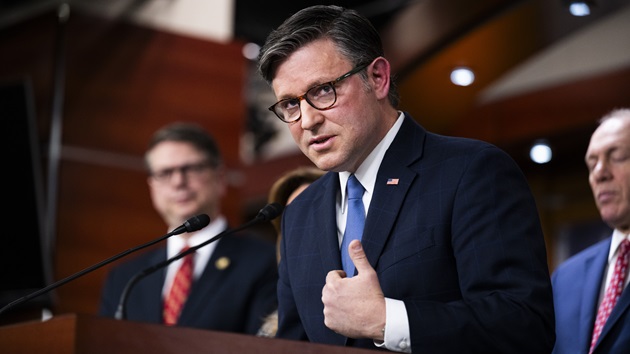
House Speaker Mike Johnson said Tuesday that he does not “see the path” for Trump to seek a third term.

“It’s been a great run, but I think the president knows, and he and I have talked about, the constrictions of the Constitution, as much as so many of the American people lament that,” Johnson said during a news conference on Capitol Hill.

Trump sidestepped questions about Johnson’s comments, instead touting his strong polling numbers.

“I don’t want to even talk about that because, you know, the sad thing is, I have my highest numbers that I’ve ever had,” Trump continued.

Trump has repeatedly raised the prospect of serving a third term, despite being barred from doing so by the Constitution. The 22nd Amendment explicitly states that no person shall be elected president more than twice.

On Monday, Trump said he would “love to do it” when asked about a potential 2028 bid but Johnson, on Tuesday, said he doesn’t see a way forward when it comes to amending the Constitution.

“I don’t see a way to amend the Constitution because it takes about 10 years to do that,” Johnson, a constitutional lawyer, said. “As you all know, to allow all the states to ratify what two-thirds of the House and three-fourths of the states would approve. So I don’t, I don’t see the path for that, but I can tell you that we are not going to take our foot off the gas pedal.”

On Monday, Trump appeared to rule out the prospect of running on the 2028 Republican ticket as vice president.

“Yeah, I’d be allowed to do that,” Trump said. “I guess I think it’s too cute. Yeah, I would rule that out because it’s too cute. I think the people wouldn’t like that. It’s too cute. It’s not — it wouldn’t be right.”

Copyright © 2025, ABC Audio. All rights reserved.

Trump arrives in South Korea for final stop of Asia tour, high-stakes meeting with Xi

Trump arrives in South Korea for final stop of Asia tour, high-stakes meeting with Xi
Andrew Harnik/Getty Images

(NEW YORK) — President Donald Trump arrived in South Korea, the third stop on his Asia tour that will culminate in a high-stakes meeting with Chinese President Xi Jinping on Thursday.

Trump touched down in Busan, South Korea, descending down Air Force One onto a red carpet flanked with Korean soldiers.

Trump greeted H.E. Hyun Cho, the foreign minister of the Republic of Korea, and a 21-gun salute followed. The band played a rendition of YMCA after the gun salute. 

Trump then headed to the coastal city of Gyeongju for remarks at the Asia-Pacific Economic Cooperation (APEC) summit.

There, the president addressed several key aspects of his Asia trip, including his upcoming meeting with Xi. Trump expressed his hope for a “grand deal” between Washington and Beijing.

“I think we’re going to have a deal,” Trump said. “I think it’ll be a good deal for for both. And that’s really a great result.”

An agreement, Trump continued, would be beneficial for the broader region and “better than fighting and going through all sorts of problems, and, you know, no reason for it.”

Trump also lauded bilateral ties between the U.S. and South Korea, praising South Korean President Lee Jae Myung as “a terrific person.”

“The Republic of Korea is a cherished American friend and a close ally, and as we can see in this beautiful city, it’s truly one of the most remarkable nations anywhere on Earth,” Trump said.

Later, at an APEC leaders’ working dinner, Trump said the bilateral meetings were “tremendous” and produced a “pretty much finalized” trade deal with South Korea.

The president used his APEC address to tout his domestic and foreign economic strategies.

Trump said the tax cuts within the Big Beautiful Bill were a “tremendous success” for the return of manufacturing to America, and described himself as a president that “cuts through the red tape and excuses.”

Trump also celebrated Nvidia and TSMC for creating the first Blackwell AI Chip in the U.S. which he says is a chip “10 years advanced.”

The president claimed that his administration had secured upwards of $22 trillion in foreign investments coming into the U.S.

Trump said the figure included some $10 billion in investment by Japanese auto giant Toyota to build new car plants in “six or seven” states.

The president said the U.S. and South Korea would partner on ship building, referring to the Hanwha Group’s acquisition of the Philly Shipyard.

Trump added that his use of tariffs was “strengthening our alliances” and “also bringing peace to the world.”

“The only [deal] I didn’t do is Russia-Ukraine,” the president added. “But that’ll get done too. That’ll get done. I thought that was going to be an easy one because of my relationship with [Russian] President [Vladimir] Putin. He turned out to be a little different. But I think it’ll get done.”

Trump-Xi meeting on the horizon
Trump’s most anticipated meeting on the three-country tour is with China’s Xi on Thursday, with a goal to end a month-long trade war between the world’s two largest economies.

Trump and Xi are set to meet on the sidelines of the Asia-Pacific Economic Cooperation Summit in Busan, South Korea, according to the White House. It will be their first face-to-face meeting since Trump’s return to office.

China’s state-run Xinhua news agency, citing a Chinese Foreign Ministry spokesperson, also reported on Wednesday that the meeting will occur in Busan on Thursday.

Trump expressed optimism on striking a deal with Xi, telling reporters on Air Force One that he thinks there will be a “successful transaction.”

“We’re going to have a great talk. I have a lot of respect for President Xi. I like him a lot. He likes me a lot,” Trump said as he flew to Japan. On Wednesday, the president said he expected the meeting with Xi to last for three or four hours.

Treasury Secretary Scott Bessent, on ABC’s “This Week” on Sunday, said the administration reached a “substantial framework” in tariff negotiations with Chinese counterparts ahead of Thursday.

“The president had given me maximum leverage when he threatened 100% tariffs if the Chinese imposed their rare earth global export controls, so I think we have averted that,” Bessent said, adding that the levies on Chinese goods would be avoided if the deal holds.

Bessent didn’t provide specifics on the framework, but suggested American soybean farmers would be happy. Farmers have been caught in the administration’s global tariff fight, particularly with China importing more soybeans than any other country, but currently buying none from the U.S.

“I believe, when the announcement of the deal with China is made public, that our soybean farmers will feel very good about what’s going on, both for this season and the coming seasons, for several years,” Bessent said.

Will Trump meet with Kim Jong Un?
While in Asia, Trump has faced questions on whether he will try to meet with North Korea’s Kim Jong Un. The two men met three times during Trump’s first term, and Trump was the first sitting U.S. president to step into North Korea.

“I’d love to meet with him if he’d like to meet. I got along great with Kim Jong Un. I liked him. He liked me. If he wants to meet, I’ll be in South Korea,” Trump said on Air Force One.

Trump even said he was open to possibly extending his trip, which is set to wrap on Thursday.

“I think the answer would be yeah. I would do that, sure,” Trump told reporters when asked if he’d stay in Asia longer to make such a meeting happen.

In Japan, Trump and Prime Minister Sanae Takaichi had a photo spray with families of people who “were abducted by North Korea,” according to a White House official. There were about 20 people there, many holding photos of their loved ones taken by North Korea. Trump said he recognized some of the families from his visits during his first term.

Trump was then asked by a reporter whether he plans to discuss the abducted people with the North Korean leader, but Trump said that he has not yet spoken to Kim.

“We’re going to see what’s going on. We have not done anything. We’ve been so busy. We really haven’t, but we’ll be discussing it,” Trump said.

Trump talks trade with Japan’s new prime minister — first woman to serve in role

Trump visited with Japan’s Emperor Naruhito on Monday after landing in Tokyo. On Tuesday, Trump met with Japan’s new Prime Minister Sanae Takaichi.

Takaichi, a conservative, is the country’s first woman to serve as prime minister. Trump congratulated her on her election victory earlier this month, calling it “incredible news” for Japan. Takaichi is a protege of the late Shinzo Abe, with whom Trump developed a close diplomatic relationship during his first term.

Trump and Takaichi talked trade, with Japan’s previous leadership having agreed to a $550 billion investment in the U.S. in exchange for a 15% tariff rate, as well as security.

“Now both Japan and the United States have developed the greatest alliance in the world, and together with you, Japan is ready to contribute towards peace and stability,” Takaichi said during the meeting.

The prime minister noted that Japan will gift the U.S. with 250 cherry blossom trees to Washington, D.C., in honor of America’s 250th anniversary in 2026. White House press secretary Karoline Leavitt told reporters that during their bilateral meeting, Takaichi told the president that she nominated him for the Nobel Peace Prize and presented the papers to him. 

The leaders also held a signing ceremony for an implementation of the trade deal that the nations struck. The agreement they signed “confirmed their strong commitment to implementing this GREAT DEAL,” the agreement read. Later, the White House released a fact-sheet detailing some of the investments.

Trump and Takaichi also signed the framework for an agreement to “support the supply of raw and processed critical minerals and rare earths crucial to the domestic industries of the United States and Japan.” The agreement comes as Trump has been working to shore up rare earths deals with nations after China slapped strict export controls on the key minerals causing trade tensions between the U.S. and China.

At a dinner with business leaders in Tokyo, Trump said Japan is opening its market up more to US goods and discussed some of the joint ventures the U.S. is taking part in with Japan, including shipbuilding, semiconductors and critical minerals.

Copyright © 2025, ABC Audio. All rights reserved.