
Infrastructure vote postponed despite Pelosi’s efforts to push forward: ‘We are not there yet’

Infrastructure vote postponed despite Pelosi’s efforts to push forward: ‘We are not there yet’
f11photo/iStock

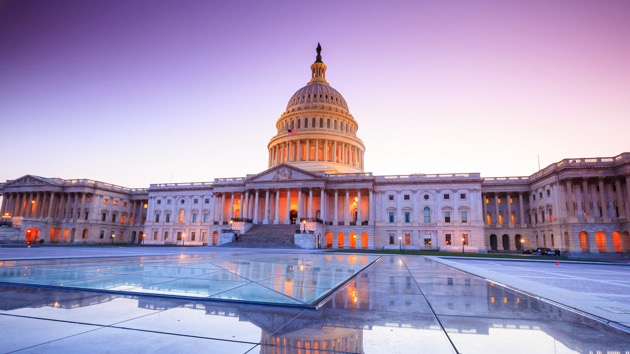
(WASHINGTON) — House Democrats scrapped plans on Thursday to vote on the Senate’s bipartisan infrastructure agreement after leadership and the White House failed to bring progressives and moderates together behind a path forward for President Joe Biden’s broader agenda.

“The President is grateful to Speaker Pelosi and Leader Schumer for their extraordinary leadership, and to Members from across the Democratic Caucus who have worked so hard the past few days to try to reach an agreement on how to proceed on the Infrastructure Bill and the Build Back Better plan,” White House press secretary Jen Psaki said in a statement Thursday night. “A great deal of progress has been made this week, and we are closer to an agreement than ever. But we are not there yet, and so, we will need some additional time to finish the work, starting tomorrow morning first thing.”

“While Democrats do have some differences, we share common goals of creating good union jobs, building a clean energy future, cutting taxes for working families and small businesses, helping to give those families breathing room on basic expenses — and doing it without adding to the deficit, by making those at the top pay their fair share,” Psaki added.

House Speaker Nancy Pelosi, D-Calif., left the Capitol just after midnight, and told Rachel Scott that progressives and moderates are closer to reaching an agreement on the size of their social policy package than it appeared earlier in the week.

“We’re not trillions of dollars apart,” Pelosi said.

Asked about the vote on the Senate-approved infrastructure bill that didn’t take place Thursday, Pelosi said, “There will be a vote today,” in what appeared to be a reference to the legislative calendar.

The decision to delay the vote came after Pelosi insisted Thursday morning that she planned to go ahead with a vote on the bipartisan infrastructure bill — despite progressive Democrats vowing to defeat it.

“We’re on a path to win. I don’t want to even consider any options other than that,” Pelosi told reporters at her weekly news conference. “We go in it to win it.”

Earlier, as she arrived on Capitol Hill, pressed by a reporter that the bill is facing “insurmountable opposition at the moment,” Pelosi responded that it’s “our plan” to bring the bill to vote Thursday, her self-imposed deadline.

“Hour by hour,” she responded. “You’re moment by moment. I’m hour-by-hour.”

“You cannot tire. You cannot concede. This is the fun part,” Pelosi said later at her news conference. “Our best interest is served by passing this bill today.”

Yet her comments suggested the House was in a holding pattern, with no firm decision on whether to hold or cancel the vote.

“We are proceeding in a very positive direction,” Pelosi said brightly, even though the bill has not been scheduled for the House floor and her top lieutenants have said publicly that it lacks the votes to pass.

Meanwhile, the White House wasn’t ruling out Biden heading to Capitol Hill Thursday to make a last-minute push to House Democrats just before the big vote.

While lawmakers were expected to agree separately on a government funding resolution with hours to spare Thursday, the outcome of the House vote on the $1.2 trillion bipartisan infrastructure bill — central to Biden’s agenda — was still in serious doubt.

Pelosi spent the afternoon meeting with various factions of her caucus. Even as progressives left the meeting vowing to withhold support for the infrastructure bill absent progress on Democrats’ larger agenda, two groups of moderates left meetings with Pelosi predicting a vote later Thursday evening.

Progressive Democrats have all but guaranteed that they will defeat the bipartisan bill on the floor — to the embarrassment of Pelosi who vowed to pass the bill this week — absent any breakthroughs on the larger policy spending package. Those breakthroughs seem unlikely as negotiations between the White House and Democratic Sens. Kyrsten Sinema and Joe Manchin, who oppose the package’s $3.5 trillion price tag, have fallen flat.

Roughly half of the nearly 100-member progressive caucus — at least 50 members, urged on by Sen. Bernie Sanders — have vowed to vote no on the bipartisan bill, effectively holding it hostage until a larger infrastructure bill passes via the reconciliation process.

While progressives bashed Manchin and Sinema over their objections to the larger package, Pelosi praised Manchin at her news conference, calling the West Virginia Democrat “a good member of Congress” and said negotiations are focused on “substance” rather than “rhetoric” or “dollars.”

At midday, Manchin told reporters his topline number for the larger bill — that he’s conveyed to Biden — is $1.5 trillion, something bound to harden progressive opposition and put the House vote in even more jeopardy.

Attempting to also sway progressives, Pelosi said Thursday members should “remove all doubt” that there will not be a reconciliation bill following a bipartisan vote on Thursday.

“We will have a reconciliation bill. That is for sure. today the question is about. We are proceeding in a very positive way to bring up the bill, to bring up the “BIF” (the bipartisan infrastructure bill), and to do so in a way that can win. And so far so good for today, it’s going in a positive direction,” she said.

Pelosi, who met with her leadership team ahead of news conference, hinted that getting a larger human infrastructure and climate policy bill is vital to her and her legacy.

“I just told members of my leadership that the reconciliation bill was a culmination of my service in Congress ’cause it was about the children,” she said.

But progressives appear to be holding firm in opposition.

Congressional Progressive Caucus Chair Pramila Jayapal, D-Wash., reiterated on Thursday that progressives are in the “same place” and will not vote to pass the bipartisan infrastructure bill unless there is agreement with the moderate Democratic senators on a larger social spending package.

“We will not be able to vote for the infrastructure bill until the reconciliation bill has passed,” Jayapal told reporters after a meeting with Pelosi.

“It’s not about trusting the speaker, it’s not about trusting the president, it’s really about the vote as an ironclad assurance from the Senate,” she added, referring to Manchin and Sinema.

At her midafternoon White House briefing, press secretary Jen Psaki told reporters, “We’re working towards winning a vote tonight. We have several hours left in the day.”

She added, “We know that compromise is inevitable. We’ve also seen that play out over the last couple of days. And right now, we’re clearly in the thick of it.

Pelosi told ABC News’ George Stephanopoulos on “This Week” that she’s “never bringing a bill to the floor that doesn’t have the votes” — raising questions of whether she’ll stop the vote in the 11th hour.

Asked on Sunday by Stephanopoulos if she was confident that progressive members would vote yes, Pelosi answered, “Well, let me just say we’re going to pass the bill this week.”

Biden stepped out of the White House Wednesday night, rubbing elbows at the congressional game with his former colleagues, appearing to be in good spirits, amid the tense legislative negotiations, while Pelosi appeared to do some last-minute lobbying on her cell phone, in a show of the stakes of the infrastructure bill passing this week — as opposed to later.

The $3.5 trillion bill progressives insist the House passes before or at the same time as the $1.2 trillion package includes significant new investments in health care, child care, higher education, workforce training, and paid family and medical leave which would include 12 weeks paid family and medical leave for most working Americans.

Copyright © 2021, ABC Audio. All rights reserved.

Senate reaches last-minute deal to avert government shutdown

Senate reaches last-minute deal to avert government shutdown
uschools/iStock

(WASHINGTON) — The Senate was set to vote Thursday on a deal party leaders reached late Wednesday to avert a government shutdown that would have affected hundreds of thousands of federal workers and slammed an economy still struggling to recover from the pandemic, all this with just hours left to stave off a crisis.

Under the deal, announced by Senate Majority Leader Chuck Schumer, senators are expected to dispense with a handful of Republican amendments and then approve a temporary funding bill that not only averts a shutdown until Dec. 3, but also disaster aid for states ravaged by extreme weather and money to further assist Afghan refugees.

“The last thing the apparent American people need is for the government to grind to a halt,” Schumer said on the Senate floor Thursday morning.

The stopgap measure does not include any provision to raise the nation’s debt ceiling, though, after Republicans steadfastly rejected any attempt to include it.

Senate Minority Leader Mitch McConnell has continued to insist that his conference will not help raise the borrowing limit — or even expedite Democrats’ ability to do so alone – citing concerns about the majority party’s intention to pass trillions in new spending for social and climate policy. This, despite a debt ceiling increase paying for past, bipartisan debt.

“What Republicans laid out all along was a clean continuing resolution without the poison pill of a debt limit increase,” McConnell said. “That’s exactly what we’ll pass today.”

He said Democrats “accepted reality,” putting forward a “clean” continuing resolution to fund the government, and that “the same thing will need to happen on the debt limit.”

Schumer said Republicans realized a shutdown would be “catastrophic” and “they should realize that a default on the national debt would be even worse.”

He said the GOP have spent the week “solidifying themselves as the party of default.”

Senate Appropriations Committee Chairman Patrick Leahy, D-Vt., noted the irony of Republicans refusing to raise the borrowing limit but then voting to approve billions in new spending.

“If there’s no money in the Treasury to pay for these items — what’s the point?” Leahy asked.

McConnell, for his part, condemned Democrats for not including $1 billion in funding for Israel’s anti-missile Iron Dome system. Democrats in the House balked at funding, and the measure was stripped out in that chamber. But a majority of Democrats in both chambers have said they intend to pass the funding for a key U.S. ally at a later date.

The stopgap funding measure, once passed in the Senate, heads back to the House where it is expected to be swiftly approved. Then it hits President Joe Biden’s desk for his signature, just hours before the government technically runs out of money at the end of the day Thursday.

These things always take much longer than is expected, and with just hours before the midnight deadline, it does remain possible that lawmakers will miss that time limit but not by any great length of time.

Copyright © 2021, ABC Audio. All rights reserved.

Negotiations on Biden’s infrastructure bill intensify at Congressional Baseball Game

Negotiations on Biden’s infrastructure bill intensify at Congressional Baseball Game
(File Photo) – WoodysPhotos/iStock

(WASHINGTON) — Intense phone calls, ice cream and bipartisanship. The Congressional Baseball Game had it all as lawmakers of all stripes came together Wednesday night to enjoy a little of America’s favorite pastime: baseball.

The game came hours before a potential government shutdown and crucial infrastructure bill vote.

Though many lawmakers were at Washington National’s park ready to play ball, business was still booming on the Hill. Senate Majority Leader Chuck Schumer announced senators reached a deal to avert a government shutdown just hours before it would’ve taken effect. But it wasn’t game over for Democrats just yet.

On Thursday, lawmakers are set to vote on President Joe Biden’s widely-touted $1.2 trillion infrastructure bill. The White House has struggled to get moderates like Sens. Kyrsten Sinema, D-Ariz., and Joseph Manchin, D-W.Va., on board as well as other progressives who worry about social spending programs being cut from the bill as a result of those negotiations. If Thursday’s vote fails, it would be a big hit to Biden’s Build Back Better agenda, and it would highlight a lack of party consensus for Democrats ahead of the midterm elections.

So Wednesday’s game had more implications than just the usual bragging rights, and it showed, because big players came out, and not just to cheer on their colleagues.

After the first inning, the game paused. Then, Biden made his way out from behind home plate. At the same time, fans sitting in the Democratic fan section erupted into cheers while Republican fans booed the president and chanted for the game to resume.

Biden sat in the Democrats’ dugout for some time, talking with lawmakers. On multiple occasions, lawmakers handed the president their phones to either take photos with them or jump on calls. More than once he was seen looking intense while leaning on the railing of the dugout and talking on the phone.

But, it wasn’t all work. Biden handed out ice cream bars to both teams, complete with the presidential seal.

House Speaker Pelosi and second gentleman Doug Emhoff didn’t suit up to play, but they were in attendance, cheering on Democrats. Pelosi was also busy multitasking, watching the game while talking to several people on the phone. She spent most of the night busy with negotiations as Democrats go into crunch mode trying to get lawmakers on the same page ahead of Thursday’s infrastructure vote. Her palpable tension came after progressive Democrats on Tuesday warned Pelosi and other party leaders that without a deal on a broader social policy bill, they did not intend to support the bipartisan infrastructure bill.

Earlier in the evening Wednesday, Biden was inducted into the Congressional Baseball Hall of Fame. His granddaughter, Naomi Biden, accepted the award on his behalf, leading many to believe the president was caught up in infrastructure negotiations at the time.

And hopefully those negotiations went better off the field for Democrats than on the field. Republican lawmakers led for most of the night and ended up taking home the trophy, with a score of 13-12.

The Congressional Baseball game has been played since the early 1900s. It’s a chance for members of Congress to put aside their political differences on the Hill and instead take them to the mound. The game supports Washington, D.C., charities and philanthropies, which include The Washington Literacy Center, The Boys and Girls Club and the United States Capitol Police Memorial Fund.

Copyright © 2021, ABC Audio. All rights reserved.

Select committee issues subpoenas to 11 associated with planning of Jan. 6 rally

Select committee issues subpoenas to 11 associated with planning of Jan. 6 rally
Marilyn Nieves/iStock

(WASHINGTON) — The House select committee investigating the Jan. 6 Capitol attack issued 11 subpoenas Wednesday to organizers of the pro-Trump rally outside the White House that turned into a march on the U.S Capitol.

The committee, which recently subpoenaed Trump’s closest aides and advisers for records and depositions by mid-October, is seeking documents and testimony as part of its investigation into the insurrection at the Capitol and Trump’s actions before, during and after the riot, along with Trump’s broader campaign to challenge the election results from inside and outside the federal government.

Trump himself addressed the rally, which was held just south of the White House on the National Mall.

As part of their inquiry, investigators are reviewing ties and communications between Trump White House associates and organizers of the “Stop the Steal” rally, which was planned for the day Congress convened to affirm the election results. Thousands of people traveled to D.C. for the event, with many going on to assault police officers and forcibly enter the U.S. Capitol, temporarily disrupting the electoral count.

Conservative activist Amy Kremer, who founded “Women for America First,” the group that put together the rally supporting Trump on the day of the electoral vote count, was singled out by the panel in their second tranche of subpoenas, along with her daughter, Kylie.

Caroline Wren and Maggie Mulvaney, who were listed on the event permits with the National Park Service, were also subpoenaed, the committee said. Mulvaney is the niece of former Trump chief of staff Mick Mulvaney and worked on Trump’s presidential campaign.

“The Select Committee is investigating the facts, circumstances, and causes of the January 6th attack and issues relating to the peaceful transfer of power, in order to identify and evaluate lessons learned and to recommend to the House and its relevant committees corrective laws, policies, procedures rules, or regulations,” Committee Chairman Bennie Thompson wrote in the letter to each subpoena recipient. “The inquiry includes examination of how various individuals and entities coordinated their activities leading up to the events of January 6, 2021.”

The panel also subpoenaed Hannah Salem, a GOP operative who was listed on the paperwork and previously served as a senior Trump White House press aide.

Katrina Pierson, a former Trump campaign adviser and Tea Party activist who served as a campaign spokesperson in 2016 and spoke at the Jan. 6 rally was also subpoenaed by the committee.

“Americans will stand up for themselves and protect their rights, and they will demand that the politicians that we elect will uphold those rights, or we will go after them,” Pierson said at the rally.

The others subpoenaed were Cynthia Chafian, who submitted the first permit application for the event, and Justin Caporale, Tim Unes, Megan Powers and Lyndon Brentnall, all of whom were listed on permit paperwork.

The committee said Wednesday it had notified the recipients of the subpoenas within the past 24 hours.

Thompson told reporters last week that the committee could also issue subpoenas to former President Trump’s children as part of its investigation. Trump’s two eldest sons, Donald Jr., and Eric, spoke at the rally, as did his daughter-in-law Lara Trump, and Don Jr.’s girlfriend Kimberly Guilfoyle, a former Fox News host and Trump campaign adviser.

Copyright © 2021, ABC Audio. All rights reserved.

If there’s a government shutdown, here’s what you need to know

If there’s a government shutdown, here’s what you need to know
uschools/iStock

(WASHINGTON) — A possible government shutdown is looming as funding runs out at the end of the day Thursday, and Congress has yet to pass a temporary measure to keep the government going.

If one passes both the Senate and House it could be on President Joe Biden’s desk for his signature by Thursday.

But if Congress fails to act, a government shutdown could begin as early as Friday.

If there’s a government shutdown, does everything close?

No, not everything. A full government shutdown would mean federal agencies close their doors or reduce their operations to only what is deemed essential. Programs and agencies that receive mandatory funding or are self-sufficient, such as the U.S. Postal Service, will continue to operate. Only those programs and agencies that are dependent on annual appropriations will be running with empty pockets.

Essential services necessary for public safety such as air traffic control and law enforcement will keep operating — though not necessarily at the same levels.

If essential services continue, why should I care?

During a shutdown, agencies are stripped to the bone, providing only what is necessary to protect life and property or what is required by law. Agency services most directly connected to the public are likely to cease or be severely delayed, seeing “tremendous disruption and uncertainty” as they adjust to reduced staff and operations, according to David Reich of the nonpartisan Center on Budget and Policy Priorities.

National parks and Smithsonian museums will close, and while people will still receive their Social Security payments, benefit verification, processing overpayments and issuing replacement Medicare cards will stop.

There could be delays in air travel with reductions in the Transportation Security Administration’s workforce. If you have any questions about your taxes, there won’t be anyone on the other end of the line at the Internal Revenue Service because it will not be continuing its customer service.

Will the CDC and FDA close – even though we’re in a pandemic?

No, but there might be delays. Among those agencies that typically see a reduction in operations are the Centers for Disease Control and Prevention, the Food and Drug Administration and the National Institutes of Health. While these agencies are integral to coronavirus vaccine distribution and combating the coronavirus, they will be continuing their pandemic-related functions at a much-reduced capacity.

The Department of Health and Human Services, the umbrella agency over the CDC, FDA and NIH, will be furloughing 43% of its employees, according to its shutdown contingency plan. Agencies are responsible for creating their own plans for how they will continue operating if money runs out.

Do we know for sure what services will stop?

Yes, and no. Last week, the White House budget office, the Office of Budget and Management, reminded senior agency officials to review and update their shutdown plans. Some agencies have released their plans outlining what is expected to continue and what will be put on hold.

But according to Maya MacGuineas, the president of the nonpartisan think tank Committee for a Responsible Federal Budget, it’s never clear until a shutdown which services will pass the absolutely necessary test.

“But one thing is for sure, a lot of people will go home and won’t be doing their jobs and that slows down the process of just about everything,” she said.

How many workers will be affected?

There are about 2.1 million civilian federal employees, according to the Congressional Research Service. During a shutdown, federal employees are either sent home or asked to work without pay.

For example, the Department of Defense is planning to reduce its civilian workforce by 55%, and the Environmental Protection Agency will be furloughing 99% of its employees.

For a small fraction of federal employees, their salaries are financed through funding other than appropriations.

Yet for the majority of the federal workforce, the essential employees left staffing agencies would be missing out on their paychecks.

Jacqueline Simon, public policy director of the American Federation of Government Employees, the largest union representing over 700,000 government workers, said that for many federal employees, the lack of a paycheck creates tremendous hardship.

“They have rent to pay. They have mortgages to pay, insurance payments, car payments, child support,” she said. “There is a myth that federal employees are all well paid professionals and that’s just not true.”

About a third of the employees the union represents fall into the category of people who make less than $40,000 a year and may not have the financial cushion to keep working without pay, Simon said.

Federal employees working through the shutdown get back pay, but that will not help them in the interim.

Will a shutdown affect the economy?

A government shutdown does not usually have widespread impacts on the economy unless they drone on for weeks. The 2018-2019 partial shutdown under the Trump administration resulted in economic losses of $1.2 billion each week; it was the longest in the nation’s history, lasting 35 days.

The longer a shutdown lasts, the more areas with high numbers of federal employees could see their local economies begin to suffer because those employees are not getting paid, according to Richard Kogan of the Center on Budget and Policy Priorities.

Government shutdowns create distrust with how the government functions and the uncertainty can impact the economy, MacGuineas said. Compounding the uncertainty is whether Congress is going to pass a raise or suspension to the debt ceiling so the U.S. does not default on its obligations, which is a separate and much more serious issue from the shutdown.

ABC News’ Molly Nagle and Ben Gittleson contributed to this report.

Copyright © 2021, ABC Audio. All rights reserved.

Air Force veteran sentenced to 45 days in jail for joining Jan. 6 riot

Air Force veteran sentenced to 45 days in jail for joining Jan. 6 riot
kuzma/iStock

(WASHINGTON) — An Air Force veteran who pleaded guilty to a misdemeanor for joining the Jan. 6 insurrection at the U.S. Capitol was sentenced Wednesday to 45 days in jail — marking the first misdemeanor plea to lead to jail time for a Jan. 6 rioter who was not held prior to sentencing.

Derek Jancart, who was among members of the pro-Trump mob that entered the Capitol and made it as far as Speaker Nancy Pelosi’s conference room, had pleaded guilty to disorderly conduct. He was not accused of participating in any violence during the riot.

The Justice Department had asked that he be sentenced to four months in jail, more than they have requested for other lower-level misdemeanor defendants. Prosecutors noted Jancart’s former service in the military, saying he “swore an oath to defend the country, and instead participated on an attack against democracy itself.”

Jancart and his attorney countered by asking Judge James Boasberg to instead sentence him to probation.

At Wednesday’s hearing, Jancart apologized to the court for his actions at the Capitol, saying he “didn’t go there to hurt anybody.”

“I did get caught up in the moment … I wish in hindsight I had stayed back,” Jancart told the court.” I love this country and I feel ashamed of my actions.”

The George Washington University Project on Extremism says that 71 of the more than 600 people charged so far in connection with the Capitol attack have claimed to have military experience. Jancart is the first Jan. 6 defendant with military service to be sentenced for joining in the insurrection.

A co-defendant of Jancart’s, Erik Rau, was also sentenced Wednesday to 45 days in jail.

Rau cried as he addressed the court, saying that his involvement in the Jan. 6 attack had taken a toll on his family.

“I am first of all very sorry that you are having to spend your morning having to deal with me,” Rau said. He told the court that “there is no excuse” for his actions during the insurrection.

To date, more than 80 rioters have pleaded guilty to the charges against them, based on a tally by ABC News. Of the seven other defendants sentenced after pleading guilty to misdemeanor offenses, none have been ordered to spend time in jail, with the exception of two sentenced to time served after they received pretrial detention.

In recent hearings, several judges have expressed concern that the Justice Department is not seeking harsh enough punishments for some of those charged in connection with the attack.

Copyright © 2021, ABC Audio. All rights reserved.

New DHS commission will look at best law enforcement practices: Mayorkas

New DHS commission will look at best law enforcement practices: Mayorkas
aijohn784/iStock

(WASHINGTON) — The Department of Homeland Security on Wednesday announced the formation of the Law Enforcement Coordination Council — an effort to “institutionalize best practices in law enforcement,” Secretary Alejandro Mayorkas said in an interview with ABC News.

The LECC, chaired by Mayorkas, is the “first ever” department-wide body that will serve as a governing organization for the department’s agencies like the U.S. Customs and Border Protection, and Immigration and Customs Enforcement, Mayorkas said.

During his previous stint at the department starting in 2009, best practices for law enforcement training and use-of-force policies have been a subject of Mayorkas’ portfolio.

“We are bringing a greater, in my opinion, a greater degree of organization, cohesion to [law enforcement policies],” Mayorkas said. “And the Law Enforcement Coordinating Council is comprised not only of the agencies that perform the law enforcement mission, but also offices within our department that have significant equities oversight offices as well, for example, such as the Office for Civil Rights and Civil Liberties, the office of privacy and the office of the inspector general.”

The commission being announced Wednesday was not influenced by photos of border patrol agents on horseback aggresively pursuing migrants attempting to cross the southern border, Mayorkas said.

“These efforts began well before the incident at issue,” Mayorkas said.

“We have received broader inquires for some time now, with respect to our training, our practices and procedures are policies to include use of force … and as we are communicating in response to those inquiries, we felt it appropriate in the service of transparency, to communicate directly to the public,” he said.

Mayorkas said that he doesn’t have a sense of timing on when the investigation into the border patrol agents on horseback will be complete.

“I know that the investigators understand the need to move both thoroughly and quickly, and they’re conducting the investigation independently,” he said.

Mayorkas explained that the results of the commission and best practices will be integrated into the department’s federal law enforcement training center.

Many state and local law enforcement agencies train at the training center, the Secretary said so, while not directly applying to local departments, he said his hope is they will be able to receive best practices from the department.

Mayorkas also said that the commission will look into various Department of Homeland Security agency policies, to ensure that any law enforcement policy discrepancies between agencies is “intentional” to fit the needs of that agency.

Mayorkas said the department will move with “deliberate speed” in getting these policies up and running and sharing them with the public but did not offer any concrete timeline.

Copyright © 2021, ABC Audio. All rights reserved.

What the debt ceiling is, and why you should care about it

What the debt ceiling is, and why you should care about it
rrodrickbeiler/iStock

(WASHINGTON) — While the concept of the debt ceiling might seem “in the weeds,” it actually poses a very real threat to millions of Americans in a precarious economic period.

If lawmakers on Capitol Hill remain deadlocked on raising the debt ceiling, the government could go into default — essentially, unable to pay bills. That would directly impact the wallets of millions of Americans, including those who invest in the stock market and those who benefit from government programs such as Social Security and Medicaid.

“It would be disastrous for the American economy, for global financial markets, and for millions of families and workers whose financial security would be jeopardized by delayed payments,” Treasury Secretary Janet Yellen warned lawmakers in a hearing Tuesday.

Raising the debt ceiling, she said, is “necessary to avert a catastrophic event for our economy.”

But if you’ve ever wondered what exactly the debt ceiling is, you’re not alone. Here’s what it is and some of the real-world impacts it can have.

What is the debt ceiling?

The debt ceiling is a cap on the amount of money the U.S. government can borrow to pay its debts.

Every year, Congress passes a budget that includes government spending on infrastructure, programs such as Social Security and salaries for federal workers. Congress also taxes people to pay for all that spending. But for years, the government has been spending more than it takes in from taxes and other revenue, increasing the federal deficit.

The government needs to borrow money to continue paying out what Congress has already OK’d. The debt ceiling puts a limit on how much money the U.S. government can borrow to pay its bills.

Why should I care about this?

If the government cannot borrow money to continue paying for programs, there will be real-world effects for millions of Americans.

Here are some of those potential effects, according to Yellen, the White House and the Committee for a Responsible Federal Budget, a nonpartisan organization.

  • 15 million seniors could stop receiving Social Security payments, or see delays.
  • 30 million families could stop receiving President Joe Biden’s expanded Child Tax Credit payments, or see delays.
  • U.S. military servicemembers could stop receiving paychecks.
  • Veterans’ benefits could stop or be delayed.
  • Postal workers and federal employees could stop receiving paychecks.
  • The United States’ credit worthiness could be downgraded, spiking interest rates, which would raise mortgage, car and credit card payments.
  • Doubt in the typically reliable U.S. currency could tank the markets, hurting 401ks and other investments. (The S&P 500 lost 17% in the months surrounding the last debt ceiling standoff.)
  • FEMA funding for hurricane and wildfire victims could stop.
  • Public health funding for pandemic mitigation efforts could be cut off.
  • Child nutrition program and other food assistance could stop.

Moody’s Analytics has estimated that even a long impasse over the debt ceiling could cause the loss of nearly 6 million jobs, increase the unemployment rate to 9% (from 5.2% now) and cause the stock market to lose about a third of its value, wiping out $15 trillion in household wealth.

Would this be worse than a government shutdown?

Yes. This is an even bigger deal than a government shutdown. A government shutdown occurs when Congress does not approve a new spending bill for the next fiscal year, so new payments, such as paychecks, are stopped. In 2019, around 800,000 federal employees were impacted by a government shutdown, and markets dipped.

But the United States has never defaulted on its credit. This would be uncharted territory. The suspension of basically all previously approved government programs, and the ensuing economic shocks, would be unprecedented.

“Many more parties are not paid in a default,” the Committee for a Responsible Federal Budget said. “Without enough money to pay its bills, any of the payments are at risk, including all government spending, mandatory payments, interest on our debt and payments to U.S. bondholders. While a government shutdown would be disruptive, a government default could be disastrous.”

Since the debt ceiling system was instituted in 1917, Congress has never not raised the debt ceiling. Congress has voted 80 times to raise or suspend the debt limit since 1960.

Why are we hitting the debt ceiling?

Technically, we already hit the debt ceiling on Aug. 1. But at that time, the Treasury Department started taking so-called “extraordinary measures” to continue to pay the government’s bills. Basically, there is some accounting and investing sleight of hand going on. But one day, the department will run out of tricks and out of cash. Yellen pegged that date as Oct. 18 in a letter to lawmakers Tuesday.

Right now, the federal debt is at $28.43 trillion, according to the Peter G. Peterson Foundation’s tracker. The current debt ceiling is actually $28.4 trillion — underscoring the pressure Yellen is under to continue paying the bills through “extraordinary measures.”

Does raising the debt ceiling allow the government to spend more?

Nope. Here’s how Yellen put it during a Tuesday hearing on Capitol Hill: “It has nothing to do with future programs of payments, it’s entirely about paying bills that have already been incurred by this Congress, in previous Congresses, and it’s about making good on past commitments — as you said, paying our credit card bill.”

Democrats, who are depending on Republican help to raise the debt ceiling, are frequently reiterating the point that raising the debt ceiling does not authorize new government spending. It only allows the government to borrow money to pay for spending that previous politicians have already OK’d, including former President Donald Trump and then-Senate Majority Leader Mitch McConnell.

But the standoff over the debt ceiling is coming as lawmakers, in an extremely polarized environment, debate passing one of the largest government spending packages in history, Biden’s $3.5 trillion Build Back Better agenda.

The debate about government spending is leading to the politicization of raising the debt ceiling, and the negotiations have become completely intertwined. Republicans insist that if Democrats want to pass such a major spending bill through special budget rules that would require no Republican support, they can raise the debt ceiling on their own, too.

Why do we even have a debt ceiling?

One hundred years ago, Congress used to have to OK every instance of borrowing money — a major inconvenience.

So, in 1917, Congress passed a debt ceiling, which would allow the Treasury Department to borrow money for any approved spending without getting permission from Congress, up to a certain limit. The limit exists to ensure the “power of the purse,” or the ability to determine government spending, stays with the legislative branch, instead of shifting to the Treasury Department.

Copyright © 2021, ABC Audio. All rights reserved.
At critical moment, confidence in Biden’s ability to handle range of issues eroding: POLL

At critical moment, confidence in Biden’s ability to handle range of issues eroding: POLL
Official White House Photo by Adam Schultz

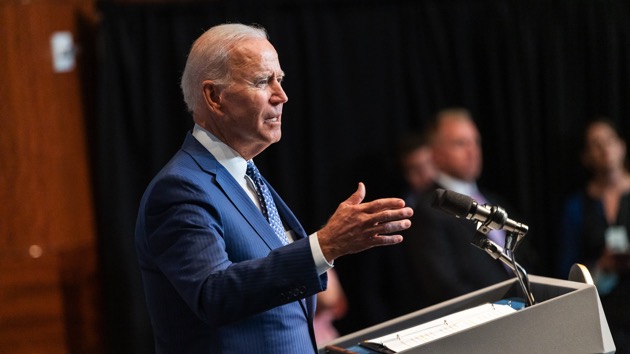
(NEW YORK) — As President Joe Biden faces a critical moment for his agenda, Americans’ confidence in his handling of a range of issues is eroding, a new ABC News/Ipsos poll finds.

Compared to an August ABC News/Ipsos poll, public approval of how Biden is handling key issues — the pandemic, immigration and the situation at the U.S.-Mexico border, gun violence and even rebuilding the nation’s infrastructure, the issue he’s pushing this week — is on the decline. Dissatisfaction among Republicans and independents is fueling the decline, but the president’s ratings are also hampered by more lackluster approval among members of his own party than presidents typically enjoy.

The poll, which was conducted Sept. 24-28 using Ipsos’ KnowledgePanel, comes roughly a month after the most difficult stretch of his presidency thus far — the U.S. troop withdrawal from Afghanistan. Thirteen U.S. service members were killed in a terrorist attack at Kabul’s Hamid Karzai International Airport during that drawdown, and for the first time since taking office, FiveThirtyEight’s tracker averaging presidential approval polls showed more Americans disapproved than approved of the job Biden was doing as president.

His overall approval rating now, measured by FiveThirtyEight’s average at 49% disapprove and 45% approve, has worsened since late August, and that sentiment is reflected in the issue-specific approvals measured in this most recent ABC News/Ipsos poll.

Biden’s performance on the coronavirus remains his strongest issue, with nearly six in 10 (57%) Americans still approving of how he is handling it. Still, compared to the ABC News/Ipsos poll in the field Aug. 27-28, Biden’s approval on this issue is down seven points overall and among independents, and down 14 points among Republicans. It’s also down 15 points from his late March record high on COVID-19 job performance in ABC News/Ipsos polling.

Although some Americans are now eligible for a third shot of the vaccine, following the Centers for Disease Control and Prevention recommendation of boosters for certain populations, vaccinating the unvaccinated remains a central challenge for Biden as his administration works to end the pandemic.

Children under 12 are not currently eligible for vaccines, but that’s likely to change soon. After submitting data on vaccine trials for 5- to 11-year-olds on Tuesday, Pfizer expects to formally request emergency use authorization from the FDA to vaccinate this population.

But this poll, which was weighted to reflect the CDC’s adult vaccination rate, highlights how persuading vaccine-hesitant parents to have their children inoculated will be an additional obstacle for the Biden administration.

A majority (56%) of parents with children under 12 say they are likely to have their child get the coronavirus vaccine when it is available for them. Still, over four in 10 (43%) say they are not likely to.

Even among parents who are vaccinated with at least one shot, approximately two in 10 (21%) say they are not likely to get their child vaccinated when they are eligible. Nearly all (89%) unvaccinated parents say they are not likely to have their child get the coronavirus vaccine when eligible.

About half of parents who have at most a high school degree or who attended some college, 49% and 48% respectively, say they are likely to get their child vaccinated when it’s available to their age group. Among parents with a bachelor’s degree or higher, seven in 10 say they are likely to have their child get the vaccine when possible.

Parents who are Democrats are most likely to be vaccinated with at least one dose themselves (86%) compared to parents who are independents (65%) and parents who are Republicans (55%). For parents who are Democrats and independents, 78% and 61% respectively say they are likely to get their child vaccinated once eligible. However, though a majority of parents who are Republicans are vaccinated, fewer than four in 10 (38%) say they will have their child get the vaccine when it’s available to their age group.

The economic recovery from the pandemic also continues to be a challenge for the president. About equal shares of the public approve and disapprove of his handling of the economic recovery, 51% to 48%. The percentage of Americans disapproving of Biden on the economy increased seven points since late August.

Besides the pandemic, enacting a bill to rebuild the nation’s infrastructure is the most pressing priority for Biden this week, as it will be brought up for a vote on the House floor Thursday. By an 11-point margin, Americans approve of Biden’s handling of this issue, 55% to 44%, but disapproval has increased by nine points since late August. Among Republicans and independents, approval dropped 10 and nine points, respectively.

Black and Hispanic Americans overwhelmingly support the president’s handling of the United States’ infrastructure, with 71% and 70% respectively approving, while a majority of white Americans (54%) disapprove.

In politics today, partisans usually are more unified in their support of or opposition to particular issues or people, but that is not the case for Biden on multiple issues. The vast majority of Democrats back the president on his handling of COVID-19 (91%), rebuilding U.S. infrastructure (87%) and the economic recovery (84%), but support among members of his party drops for his handling of Afghanistan (69%), gun violence (65%) and the immigration situation at the southern border (60%).

Without overwhelming support from his party, Biden’s approval among U.S. adults overall falls below 40% on all three of those issues — 38% on gun violence, 38% on Afghanistan and 33% on immigration and the situation at the border.

The humanitarian crisis at the southern border was thrust into the spotlight over the last two weeks after a surge of migrants, mostly from Haiti, were sheltering under a bridge in Del Rio, Texas, hoping to claim asylum and remain in the United States. That migrant camp was cleared as of Friday, but more than 17,400 remained in the U.S., according to Homeland Security Secretary Alejandro Mayorkas.

While the secretary said Friday that about 12,400 of those migrants will have an opportunity to have their asylum cases heard before an immigration judge and about 5,000 were still being processed, thousands did not have that chance before being flown directly back to Haiti or returning on their own to Mexico. The administration has employed a controversial policy using a public health rationale to immediately expel unauthorized migrants at the border.

Most Americans (58%) believe the United States should allow migrants seeking asylum at the border to stay until their cases are heard while four in 10 believe they should be deported back to their native countries immediately, the ABC News/Ipsos poll found.

By party, a majority of Democrats (83%) and independents (57%) believe migrants seeking asylum should be allowed to remain in the United States while their cases are heard, but about seven in 10 (72%) Republicans believe they should be deported immediately.

Across racial groups, most Americans think these migrants should be allowed to stay until their asylum cases are heard, but white Americans (52%) are less likely to feel this way than Hispanic (66%) and Black (78%) Americans.

METHODOLOGY – This ABC News/Ipsos poll was conducted by Ipsos Public Affairs‘ KnowledgePanel® September 24-28, 2021, in English and Spanish, among a random national sample of 1,101 adults, including an oversample of 537 parents with children under the age of 12. The overall results have a margin of sampling error of 3.7 points, including the design effect. Results among parents have a margin of sampling error of 4.7 points, including the design effect. Partisan divisions are 31-24-36 percent, Democrats-Republicans-independents. See the poll’s topline results and details on the methodology here.

Copyright © 2021, ABC Audio. All rights reserved.

Key takeaways from US military leaders on Afghanistan withdrawal

Key takeaways from US military leaders on Afghanistan withdrawal
Kent Nishimura / Los Angeles Times via Getty Images

(WASHINGTON) — In their first appearance before Congress since the withdrawal of all U.S. forces from Afghanistan, the nation’s top military leaders candidly admitted to lawmakers that they had recommended to President Joe Biden that the U.S. should keep a troop presence there, appearing to contradict his assertions.

The testimony by Gen. Mark Milley, the chairman of the Joint Chiefs of Staff, and Gen. Frank McKenzie, the commander of U.S. Central Command, was at odds with Biden’s comments earlier this year to ABC News’ George Stephanopoulos that his military commanders did not recommend keeping a residual force.

The revelations came during at a six-hour hearing before the Senate Armed Services Committee where Milley also characterized that the U.S. military mission in Afghanistan had been “a strategic failure” and Defense Secretary Lloyd Austin acknowledged that it was time to acknowledged some “uncomfortable truths” about the two decade U.S. military mission in Afghanistan.

Here are some key takeaways:

Military commanders wanted to keep at least 2,500 troops in Afghanistan

While Milley and McKenzie said they would not disclose the content of private conversations with Biden, both generals offered their personal opinions that they said matched their recommendations.

“My assessment was back in the fall of ’20 and remained consistent throughout that we should keep a steady state of 2,500, could bounce up to 3,500,” Milley told Republican Sen. Tom Cotton of Arkansas.

“I recommended that we maintain 2,500 troops in Afghanistan, and I also recommended early in the fall of 2020 that we maintain 4,500 at that time, those were my personal views,” McKenzie said.

The generals’ statements were at odds with what Biden had told ABC’s George Stephanopoulos in an interview on Aug. 18.

“No one told — your military advisers did not tell you, “No, we should just keep 2,500 troops. It’s been a stable situation for the last several years. We can do that. We can continue to do that?,” Stephanopoulos asked Biden.

“No,” said Biden. “No one said that to me, that I can recall.”

Biden also said his military advisers were “split” on the matter.

McKenzie said he had also warned that the withdrawal of U.S. troops “would lead inevitably to the collapse of the Afghan government and the Afghan military.”

“I also had a view that the withdrawal of those forces would lead inevitably to the collapse of the Afghan military forces and eventually the Afghan government,” he said.

‘A strategic failure’

Austin and Milley told senators that the sudden collapse of the Afghan government, as well as the U.S. military’s mission in Afghanistan over the past two decades, should be examined to learn what may have gone wrong.

Milley became the first U.S. military leader to describe the American military mission in Afghanistan as “a strategic failure” that had developed over time.

“Outcomes in a war like this, an outcome that is a strategic failure — the enemy is in charge in Kabul, there’s no way else to describe that — that is a cumulative effect of 20 years,” Milley said.

The general speculated that the U.S. had trained an Afghan Army that “mirrored” the American military without taking into account local and cultural traditions and allowed it to becoe too dependent on American technology.

“We helped build a state, but we could not forge a nation,” said Austin. “The fact that the Afghan army, we and our partners trained, simply melted away – in many cases without firing a shot – took us all by surprise. It would be dishonest to claim otherwise.”

“We need to consider some uncomfortable truths,” he added. “That we did not fully comprehend the depth of corruption and poor leadership in their senior ranks, that we did not grasp the damaging effect of frequent and unexplained rotations by President Ghani of his commanders, that we did not anticipate the snowball effect caused by the deals that Taliban commanders struck with local leaders in the wake of the Doha agreement, that the Doha agreement itself had a demoralizing effect on Afghan soldiers, and that we failed to fully grasp that there was only so much for which – and for whom – many of the Afghan forces would fight. We provided the Afghan military with equipment and aircraft and the skills to use them.”

“Over the years, they often fought bravely,” said Austin. “Tens of thousands of Afghan soldiers and police officers died. But in the end, we couldn’t provide them with the will to win. At least not all of them.”

US intelligence did not predict the Taliban’s swift takeover, the generals said

The three leaders expressed surprise at how Afghan forces had quickly fallen apart leading to a Taliban takeover of the country in 11 days.

“I did not foresee it to be days. I thought it could take months,” said McKenzie, who added that he had anticipated that the Afghan military would be able to hold out against the Taliban until later this year and possibly into early next year.

“We certainly did not plan against a collapse of the government in 11 days,” Austin said.

“There’s no intel assessment that says the government is going to collapse and the military is going to collapse in 11 days that I’m aware of. And I’ve read I think all of them,” said Milley, who later described the failure to predict the scope and scale of the Taliban takeover as “a swing and a miss.”

Revelations in ‘the book’

In his opening statement, Milley explained how his two phone calls to his counterpart in China, first described in the book “Peril” by Washington Post reporters Bob Woodward and Robert Costa, were authorized by then-Defense Secretary Mark Esper. Milley also said that the Trump national security team was fully briefed on the calls that were intended to reassure China that then-President Donald Trump was not planning a military attack.

“I know, I am certain, that President Trump did not intend to attack the Chinese, and it is my directed responsibility and it was my directed responsibility by the secretary, to convey that intent to the Chinese,” Milley said. “My task at that time was to de-escalate my message again was consistent, stay calm, steady and de-escalate. We are not going to attack you.”

He pushed back on another story in the book that, in a phone call with House Speaker Nancy Pelosi after the Jan. 6 Capitol attack, he agreed with her assessment that Trump was “crazy.”

“I’m not qualified to evaluate the mental fitness or the health of a former president, present president or anybody else or anybody in this room,” Milley said. “That’s not my job. That’s not what I do. And that’s not what I did.”

Several Republican senators took Milley to task for giving access to reporters and authors.

“I think what you did with making time to talk to these authors, burnishing your image, kind of building that bluster, but then not putting the focus on Afghanistan and what was happening there,” said Sen. Marsha Blackburn, R-Tenn. “General Milley, this is disappointing to me. I know it’s disappointing to people that have served with you or under you, under your command. It does not serve our nation.”

“You’re doing these interviews and doing them in 2021. Makes me wonder the books, were you a little distracted about what was going on in Afghanistan?” said GOP Sen. Josh Hawley of Missouri who then demanded that Austin and Milley should resign.

Copyright © 2021, ABC Audio. All rights reserved.