

Rep. LaMonica McIver pleads not guilty to charges stemming from ICE detention facility incident

Rep. LaMonica McIver pleads not guilty to charges stemming from ICE detention facility incident
Tom Williams/CQ-Roll Call, Inc via Getty Images

(NEWARK, N.J.) — New Jersey Rep. LaMonica McIver has pleaded not guilty to charges alleging she assaulted law enforcement officers outside of an immigration detention facility, her office said.

McIver appeared in a federal court on Wednesday for her arraignment after a federal grand jury returned a three-count indictment earlier this month charging her with “assaulting, resisting, impeding and interfering” with federal law enforcement officers.

The Democratic congresswoman has alleged the prosecution is politically motivated and her office called the charges “baseless.”

“Rep. McIver has confidently entered her official plea: not guilty. She is crystal clear that she will not back down as leaders across this country are targeted for speaking up,” her spokeswoman, Hanna Rumsey, said in a statement Wednesday. “These charges have always been about politics and Rep. McIver will not be deterred from doing the work the people of New Jersey elected her to do. The Congresswoman will not fold.”

On May 9, McIver and several other members of Congress were at Delaney Hall, a U.S. Immigration and Customs Enforcement detention facility in Newark, to conduct oversight.

Tensions escalated when a federal officer ordered Newark Mayor Ras Baraka to leave a secured area of the facility or face arrest, and pushing and shoving allegedly occurred, according to prosecutors.

“During her continued attempts to thwart the arrest, McIver slammed her forearm into the body of one law enforcement officer and also reached out and tried to restrain that officer by forcibly grabbing him,” the Department of Justice said in a press release following the indictment. “McIver also used each of her forearms to forcibly strike a second officer.”

Following the indictment, McIver said the “facts are on our side.”

“The facts of this case will prove I was simply doing my job and will expose these proceedings for what they are: a brazen attempt at political intimidation,” she said in a statement at the time. “This indictment is no more justified than the original charges, and is an effort by Trump’s administration to dodge accountability for the chaos ICE caused and scare me out of doing the work I was elected to do. But it won’t work — I will not be intimidated.”

Supporters of McIver gathered outside the Newark federal court on Wednesday, with some calling for the closure of Delaney Hall.

If convicted, the maximum penalty for the charges in the indictment ranges from one to eight years, according to interim New Jersey U.S. Attorney Alina Habba.

“As I have stated in the past, it is my Constitutional obligation as the Chief Federal Law Enforcement Officer for New Jersey to ensure that our federal partners are protected when executing their duties,” Habba, President Donald Trump’s former defense attorney, said in a statement following the indictment. “While people are free to express their views for or against particular policies, they must not do so in a manner that endangers law enforcement and the communities those officers serve.”

Baraka was arrested at the facility and charged with trespassing, though Habba later dropped the charge.

Copyright © 2025, ABC Audio. All rights reserved.
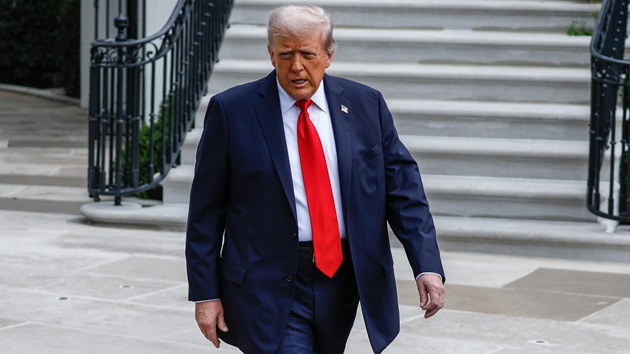
CDC director nominee Susan Monarez grilled on vaccines, public health in confirmation hearing

CDC director nominee Susan Monarez grilled on vaccines, public health in confirmation hearing
Kayla Bartkowski/Getty Images

(WASHINGTON) — At a confirmation hearing Wednesday, President Donald Trump’s pick for the director of Centers for Disease Control and Prevention, Dr. Susan Monarez, faced questions about her stance on vaccines — after Health and Human Services Secretary Robert F. Kennedy, Jr., a vaccine skeptic, has recently made controversial choices around them

Monarez was clear in her support for vaccines.

“I think vaccines save lives. I think that we need to continue to support the promotion of utilization of vaccines,” Monarez said.

Her comments came as she was asked by Independent Sen. Bernie Sanders about a recent decision reported by POLITICO that Kennedy has decided to end U.S. funding for a global vaccine alliance, Gavi.

“I wasn’t involved in that decision making. If I’m confirmed as a CDC director, I will certainly look into it, and I’m happy to follow up with you,” Monarez said.

Kennedy has long held many vaccine-skeptic views, refuted by experts and high-quality studies, long before he joined the administration, but he has insisted he is not “anti-vaccine” and rather “pro-safety.”

Earlier this month, Kennedy removed all 17 sitting members of the CDC’s vaccine advisory committee and replaced them with new members. The move has been controversial, with some experts saying it makes the U.S. “less prepared for infectious disease threats.”

Monarez also stood apart from Kennedy on her views on autism, and whether there is any link between the neurological disorder and childhood vaccinations — which Kennedy has long raised as a potential reason for rising rates of autism diagnoses.

“I have not seen a causal link between vaccines and autism,” Monarez said, asked by Sanders if she agrees with the American Medical Association’s stance “that there is no scientific proven link between vaccines and autism.”

Kennedy, in his own confirmation hearing, refused to acknowledge that there is not a link between vaccines and autism, causing him to nearly lose the key vote of Sen. Bill Cassidy, a Republican and a doctor.

Kennedy has since launched a major effort at NIH to look into the causes of rising autism diagnoses.

The myth that vaccines cause autism was born out of a fraudulent 1998 study, hypothesizing that the measles, mumps, rubella vaccine caused intestinal inflammation, which, in turn, led to the development of autism.

The paper has since been discredited by health experts, retracted from the journal in which it was published, and its primary author, Andrew Wakefield, lost his medical license after an investigation found he had acted “dishonestly and irresponsibly” in conducting his research.

More than a dozen high-quality studies have since found no evidence of a link between childhood vaccines and autism.

Monarez outlined her credentials in her opening statements, touting her experience with health technology and public health. She also laid out her goals as the CDC director, which includes restoring public trust, modernizing public health infrastructure and employing evidence-based rapid decision making.

“These priorities support the president’s and the secretary’s vision of a healthier America. To achieve them, I will lead with integrity, transparency and purpose, and work with Congress to maximize health outcomes and protect the American people,” Monarez said in her opening statement.

Trump tapped Monarez to lead the CDC in March after the administration withdrew Trump’s other pick, Dr. David Weldon, to head the agency citing the fact that he did not have the votes needed to be confirmed.

Monarez, if confirmed, will work with Kennedey to “prioritize Accountability, High Standards, and Disease Prevention to finally address the Chronic Disease Epidemic and, MAKE AMERICA HEALTHY AGAIN!” Trump said in a social media post announcing her nomination.

Monarez has served as the acting CDC director since late January.

She has experience in both the public and private sector — including working in the government under former presidents George W. Bush, Barack Obama, Trump’s first term and Joe Biden. Her work has included strategies to combat antimicrobial resistance, too.

She has also led projects to use artificial intelligence and machine learning to improve health outcomes.

Copyright © 2025, ABC Audio. All rights reserved.

Disgraced former Rep. Anthony Weiner’s political comeback appears to be doomed

Disgraced former Rep. Anthony Weiner’s political comeback appears to be doomed
Spencer Platt/Getty Images

(NEW YORK) — New York City’s municipal races have brought disgraced politicians back into the limelight, as multiple candidates seeking a political comeback raised the question of whether voters will give them a second — or third — chance.

Among the slate is Anthony Weiner, the disgraced former congressman whose downfall came after a slew of sexting scandals that culminated in a 21-month federal prison sentence, who is vying for one of Manhattan’s City Council seats.

But Weiner’s attempt at a third political comeback appears futile.

Though no candidate has reached the 50% threshold, as of the current vote count, needed to be declared the outright winner in Tuesday’s Democratic primary, election results from the New York City Board of Elections (BOE) show Weiner facing a fourth place finish in the five-person race as of Wednesday morning.

Assemblymember Harvey Epstein maintains a steady lead, while nonprofit leader Sarah Batchu and Manhattan Community Board Chair Andrea Gordillo battle for second place. Community advocate Allie Ryan trails behind Weiner.

Because of ranked-choice voting in New York City, more comprehensive results won’t be reported until a week later on July 1, when the NYC BOE runs ranked-choice tabulations. Results are expected to be certified on July 15.

Weiner’s scandalous past comes as New York City’s mayoral race faces its share of controversy as well, with former New York Gov. Andrew Cuomo continuing to deny the sexual harassment allegations that led to his resignation nearly four years ago.

Cuomo, however, conceded Tuesday night in the Democratic primary after Zohran Mamdani held a healthy lead, but his campaign added that he was “looking toward November,” indicating he was not ruling out an independent run.

And though the federal investigation into incumbent Mayor Eric Adams over fraud and bribery was dismissed earlier this year, he continues to take heat as the first sitting mayor to be indicted as he attempts to court voters running as an independent.

Yet Weiner, 60, attempted to differentiate himself from the other candidates with checkered pasts by emphasizing accountability for his wrongdoings.

“All of that happened, and I accept responsibility for it,” he told ABC’s “The View” in May. “You won’t hear me do what some other people in public life have done — Donald Trump or Andrew Cuomo or Eric Adams: ‘I’m a victim, they persecuted me for no reason.’ I was dealing with very serious problems. I was dealing with what I now understand to be addiction.”

“I am saying ‘Yes, I did these things. I got into recovery. I tried to make my life better,'” he said. “And now I can be of service. And I’m a damn good politician.”

In 2011, Weiner resigned from his congressional seat after a sexually explicit photo was posted on his social media page — which he initially said was a hack, but later admitted was his own doing — in addition to revelations of more sexting content with various women online.

He attempted a comeback two years later in an unsuccessful New York City mayoral run. Despite his initial lead, his campaign was plagued by controversy as more sexually explicit messages and images became public, with Weiner operating under the alias “Carlos Danger.”

In 2016, new sexting allegations came to light which prompted his wife Huma Abedin to announce the couple’s split.

In 2017, Weiner was sentenced to 21 months in federal prison after one of his sexting scandals was found to involve a 15-year-old girl. Following his release, he was also designated a Level 1 registered sexual offender, classified as a low-risk to reoffend.

During his appearance on “The View,” Weiner emphasized that he was still in recovery for sex addiction.

He also recognized that he would receive blowback during his campaign, but he did not think his past should hold him back. He cited a need for change among Democratic candidates as his reason for getting back into politics.

“When I woke up in November of ’24 and saw the election results — but more than who won, I looked around New York City and saw how many fewer Democrats even turned out to vote. And I started to say to myself ‘something is seriously wrong here,'” he said. “We’re hardcore anti-Trump territory and Trump did better.”

Weiner presented a more moderate platform than some of his Democratic counterparts. According to his campaign website, some of his goals include increasing police presence, protecting undocumented immigrants but deporting violent criminals, taxing the rich, and eliminating waste.

Copyright © 2025, ABC Audio. All rights reserved.
New York City Democratic mayoral primary: Mamdani declares victory, Cuomo concedes before ranked choice votes are counted

New York City Democratic mayoral primary: Mamdani declares victory, Cuomo concedes before ranked choice votes are counted
Michael M. Santiago/Getty Images

(NEW YORK) — In the closely watched New York City Democratic mayoral primary, no candidate reached the 50% threshold needed to be declared the winner outright. But after a strong showing in the first round, state Assemblyman Zohran Mamdani declared victory over former Gov. Andrew Cuomo, who conceded earlier, in what was shaping up to be a remarkable upset.

The New York City Board of Elections reported as of 10:30 p.m. Tuesday that Mamdani was leading among the candidates voters ranked first on their ballot, with 44% of the vote. Cuomo was second with about 36%. City comptroller Brad Lander followed with about 11%.

The early results amounted to a strong showing for Mamdani, a member of the Democratic Socialists of America, who had gained momentum in polling and fundraising in the closing weeks of the campaign and capitalized on social media virality and enthusiasm among younger voters.

In an impassioned speech to supporters shortly after midnight, Mamdani declared, “Tonight, we made history,” adding, “I will be your Democratic nominee for the mayor of New York City.”

To his cheering supporters, Mamdani said, “We have won because New Yorkers have stood up for a city they can afford, a city where they can do more than just struggle, one where those who toil in the night can enjoy the fruits of their labor in the day.”
Cuomo addressed his supporters earlier Tuesday.

“Tonight was not our night; tonight was Assemblyman Mamdani’s night, and he put together a great campaign and he touched young people and inspired them and moved them and got them to come out and vote,” Cuomo said at an event Tuesday night. He added, “Tonight is his night. He deserved it. He won. We’re going to take a look and make some decisions.”

Shortly after his remarks, in a surprise announcement, Cuomo’s campaign said he was conceding the primary and “looking toward November,” indicating he was not ruling out an independent run.

Earlier this spring, Cuomo’s campaign said he would consider running on a “Fight and Deliver” ballot line in the general election that he says is meant for voters disillusioned with the Democratic Party.

Cuomo’s run for mayor was to mark his political comeback nearly four years after he resigned the governorship after several women accused him of sexual harassment and inappropriate conduct. Cuomo has consistently denied the allegations.

In the mayoral race, Cuomo has campaigned on a message of being the most experienced in the race and being the candidate who has already taken on President Donald Trump during his time as governor. Mamdani has focused on a progressive, economy-focused platform that included a rent freeze for rent-stabilized apartments and eliminating fares for New York City buses.

Mamdani, who would be the city’s first Muslim mayor and its youngest mayor in a century if elected, faced skepticism over the feasibility of some of his proposals and backlash over some of his comments on Israel.

Even with Cuomo’s announcement, the race is set to proceed to a ranked-choice count since no candidate of the 11 on the ballot got more than 50%.

Tuesday’s results do not yet reflect any ranked-choice tabulation. More comprehensive results won’t be reported until July 1, when the board of elections plans to run the ranked-choice tabulations. Under the city’s ranked choice voting system, if no candidate breaks 50%, the candidate with the least amount of votes is eliminated, and the vote tabulation continues in rounds. In the second round, voters whose first-choice candidate got eliminated get their second-choice vote counted. That keeps going until only two candidates remain, and the candidate in the lead at that point wins the primary.

A spokesperson for the city’s board of elections, Vincent Ignizio, told ABC News that the week-long wait for comprehensive results is due, in part, to the time it takes to retrieve voting machine data.

The Board of Elections plans to finish counting votes over the next few weeks and will certify the results on July 15.

Nearly 1 million New Yorkers voted early or on the day of the primary, per the Board.

During the 2021 Democratic mayoral primary, which was the first time New York City used ranked-choice voting, a total of 942,031 votes were cast in the mayoral race, according to data from the New York City Board of Elections.

In heavily Democratic New York, it’s likely the Democratic primary winner in the mayoral race has the advantage in the general election in November.

Potentially complicating matters however, is the fact that incumbent Democratic Mayor Eric Adams is running as an independent in the fall.

ABC News’ Jack Moore contributed to this report.

Copyright © 2025, ABC Audio. All rights reserved.
Schumer angered over postponement of Senate’s Iran-Israel conflict briefing

Schumer angered over postponement of Senate’s Iran-Israel conflict briefing
Joe Raedle/Getty Images

(WASHINGTON) — A frustrated Minority Leader Chuck Schumer called the Trump administration’s postponement of Tuesday’s scheduled classified briefing on the Iran-Israel conflict “outrageous,” “evasive” and “derelict” — and former House Speaker Nancy Pelosi called the postponement of the House’s briefing “a slap in the face to the Congress of the United States.”

“There is a legal obligation for the administration to inform Congress of what is happening. What are they afraid of? Why won’t they engage Congress in the critical details, the result of the recent strike, the scope and trajectory of the conflict, the administration’s long-term strategy to prevent Iran from obtaining nuclear weapons, the potential risks facing American citizens and our service members who we all have an obligation to protect?” Schumer said while addressing reporters Tuesday afternoon.

Schumer said senators deserve transparency.

“This last-minute postponement of our briefing is outrageous, it’s evasive, it’s derelict. They are bobbing and weaving and ducking. Senators deserve full transparency,” he said.

The Senate’s classified briefing, which was set to include briefers from the Department of State as well as Chairman of the Joint Chiefs Dan Caine, CIA Director John Ratcliffe and DNI Tulsi Gabbard, had been postponed to later in the week to allow for other briefers to join.

Schumer suggested, and a GOP leadership aide confirmed, that those other briefers who are expected to join the rescheduled meeting on Thursday are Secretary of State Marco Rubio and Secretary of Defense Pete Hegseth, who are currently at the NATO conference. It’s unclear whether the original slate of briefers will still attend Thursday’s briefing.

“I was given no explanation for this delay,” Schumer told reporters. “They said ‘well Hegseth and Rubio will be here Thursday.’ We are happy to hear them on Thursday in addition to this briefing, which we think will be far more valuable than hearing from Hegseth and Rubio, who are secretaries and top people and are very good at political talking points. We need facts; we need real information.”

Schumer said if Rubio and Hegseth wish to address members he’s happy to hear from them. But he also wants to hear from the original slate of briefers.

“If they want to come up on Thursday in addition — not in replacement of this hearing — that is OK,” Schumer said. “But the obstruction of this administration on a crucial issue like this where American lives and particularly the lives of American service members are at stake, is their obligation and it undermines the very principles of accountability and oversight that safeguard our democracy.”

Schumer said he has still not received a more formal briefing from the administration since he received a brief call informing him of Saturday night’s strike just before it occurred. That call, he said, lacked any specific details.

‘Slap in the face’

The House’s classified briefing set for Tuesday afternoon was postponed as well, which prompted a legislative tantrum on the floor Tuesday afternoon, with lawmakers demanding an explanation.

Democratic Rep. Yvette Clarke, the chair of the Congressional Black Caucus, attempted four times to seek an explanation from the chair as part of a “parliamentary inquiry.”

Clarke’s inquisition was dismissed repeatedly by the presiding chair, Republican Rep. Scott DesJarlais, who informed Clarke that she had not properly stated a parliamentary inquiry.

After some back and forth, Clarke then informed DesJarlais that without an explanation for the postponed briefing, she’d offer a motion to adjourn. That forced the lawmakers to return to the chamber for an unexpected vote to defeat the Democratic motion.

Pelosi criticized the postponement of the briefing.

“We must all exercise our best judgement in how we prevent Iran from having a nuclear weapon and honor our relationship with Israel in the interest of our national security. But the unjustified cancellation of this briefing by the Trump administration is an intolerable insult to their co-equal branch of government and the constitutional requirement that the president comes to Congress before going to war,” the California Democrat said. “The president owes the American people an explanation on why his administration is keeping them and their representatives in the dark.”

It’s not yet clear when the House’s briefing will be rescheduled.

Massie considers pulling War Powers Resolution

When the meetings occur, it’s expected that lawmakers, especially Democrats, will be looking for answers and evidence at the briefings from the administration — specifically why Trump said there was an imminent threat and carried out U.S. strikes on Iran’s nuclear sites over the weekend.

Their meetings come after several lawmakers on Capitol Hill argued the military action was unconstitutional. There are several bipartisan resolutions that could receive a vote in coming days that may put some lawmakers in uncomfortable positions as they consider whether Trump ignored the role of Congress in striking Tehran.

Republican Rep. Thomas Massie and Democratic Rep. Ro Khanna introduced a War Powers Resolution last week to rebuke the president’s decision to launch strikes. As Massie continued to rail against Trump and his role in the conflict, the president lashed out at the Kentucky Republican, saying he was “not MAGA” and threatened to campaign for Massie’s Republican primary opponent in the next election.

Massie has now softened his approach, telling reporters at the Capitol on Monday that he’s now considering pulling the bipartisan War Powers Resolution.

“If the ceasefire holds, and we’re not engaged in hostilities, then it’s a moot point. I wouldn’t need to bring it to the floor,” Massie said.

Massie also added that he is open to patching things up with the president: “I’d like a ceasefire between me and President Trump. If I can get the same deal, after his bunker busters he dropped on me.”

Trump on Monday announced that Israel and Iran had agreed to a ceasefire, after more than a week of fighting following Israel’s strikes — and subsequent U.S. attacks — on Iran’s nuclear program. Hours after the ceasefire took effect, Israel said Iran violated it — which Iran denies.

Trump expressed anger at both Israel and Iran, accusing both of violating the ceasefire agreement shortly after it began.

“I’m not happy with Israel. OK, when I say now you have 12 hours, you don’t go out in the first hour and just drop everything you have on them. So I’m not happy with them. I’m not happy with Iran either,” Trump said to reporters Tuesday morning.

Speaker Mike Johnson said late Monday that he expects the House briefing to have a different “tone” in the light of the ceasefire.

ABC News’ Rachel Scott contributed to this report.

Copyright © 2025, ABC Audio. All rights reserved.
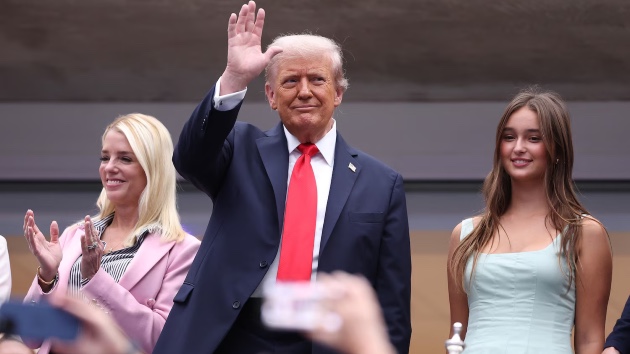
Trump says no vacations until Congress passes his megabill

Trump says no vacations until Congress passes his megabill
Tasos Katopodis/Getty Images

(WASHINGTON) — President Donald Trump on Tuesday told Senate Republicans to lock themselves in a room if necessary to work out their differences and pass the megabill that will fund his second-term agenda.

“To my friends in the Senate, lock yourself in a room if you must, don’t go home, and GET THE DEAL DONE THIS WEEK,” Trump posted on his social media platform while on his way to the NATO summit in the Netherlands. “Work with the House so they can pick it up, and pass it, IMMEDIATELY. NO ONE GOES ON VACATION UNTIL IT’S DONE.”

Both the Senate and House are under pressure to reconcile differences between the House and Senate versions of the bill and get it to Trump’s desk by July 4.

Speaker Mike Johnson warned House Republicans Tuesday that their Independence Day celebrations may be in jeopardy as the House waits for the Senate to complete its changes to the One, Big, Beautiful Bill Act and the speaker sticks to the Fourth of July deadline.

While the House is scheduled to leave town Friday for a week back in their districts, the speaker set off his own fireworks — telling his conference that members will not be dismissed for recess until the House approves the Senate’s changes.

“I said to keep your schedules flexible. July 4 is always a district work period. This is tradition, so everybody can go home and celebrate the Fourth of July with their constituents and their families,” Johnson said. “But this — there’s nothing more important that we should be involved in, or can be involved in than getting one big, beautiful bill to the president’s desk. So if the Senate does its work on the timeline that we expect, we will do our work as well. And I think everybody’s ready for that.”

The bill would make the Trump 2017 tax cuts permanent, allocate additional funding for border security and the Department of Defense, scale back Medicaid and SNAP benefits, limit taxes on tips and overtime, change state and local tax caps, and do far more.

Republicans are attempting to pass the bill using budget reconciliation, a procedure that allows them to sidestep Senate rules that normally require 60 votes to pass legislation and to instead pass the bill with a simple majority.

A KFF poll released Tuesday suggests nearly two-thirds of the public views the One Big Beautiful Bill Act unfavorably, by nearly twice as much who view it favorably, 35% to 64% of those polled.

When those polled learned the impact the bill would have on health care — for example, increasing the number of people without insurance and decreasing funding to hospitals — support fell, even among MAGA supporters.

The poll found 83% of the public, including 74% of Republicans, have a favorable view of Medicaid, and 66% have a favorable view of the Affordable Care Act.

Senate Republicans met behind closed doors Monday night to go over the latest contours of their version of the bill as Senate Parliamentarian Elizabeth MacDonough continued to go through the bill to ensure provisions are within the scope of using reconciliation.

Her rulings have already rankled some Republican plans, and Monday’s meeting appeared to have focused largely on how they intend to retool their provisions for compliance.

A lot remains outstanding, but there’s general optimism in the conference that a floor vote this week is still possible.

The meeting also took into account “considerations as to what the president wants,” according to Sen. Shelley Moore Capito, R-W.Va., who said she still expects the bill to make it to the floor later this week.

Johnson said Tuesday he expects the Senate to vote on Friday or Saturday — after the lower chamber had been expected to conclude its legislative work period — potentially pushing the House’s consideration of the Senate’s changes into next week.

There remains a number of challenges that Republicans must address between now and then. Here’s where things stand on some of the key provisions:

State and local taxes

The House and Senate have been divided on this issue as Senate Republicans have made clear they want to modify language in the House bill that some House moderates could balk at.

Sen. Markwayne Mullin, R-Okla., who has been leading negotiations over SALT said Monday that the Senate has more or less reached a place of “acceptance” on SALT. The proposal, he said, won’t touch the $40,000 cap negotiated in the House, but it will alter the income threshold.

“It’s not going to lose any votes,” Mullin said, speaking for his conference. “But, as I said, it’s not a joyful spot for any of us to be in. I’ll be happy when this is done, and then we can move on.”

But Rep. Nick LaLota, R-N.Y., told reporters Tuesday that the SALT caucus of five House Republicans has banded together to create a bloc that could defeat a vote given Johnson’s slim three-vote majority.

“I hope they recognize the reality that five very salty House Republicans will vote no if they break apart on that deal,” LaLota said.

Supplemental Nutrition Assistance Program

Capito said that provisions on SNAP were the most “upended” by the parliamentarian. Her ruling threatens to lessen the savings to the federal government that Republicans are hoping the bill will achieve.

Some of Monday’s meeting focused on the parliamentarian’s ruling that a provision that would require states to share the cost of the SNAP was out of order.

Sen. John Boozman, R-Ark., chairman of the Senate Agriculture Committee that has jurisdiction over SNAP, said that Republicans are aiming to retool the SNAP provision to make it compliant with Senate rules.

“What we’re trying to do is give the states more time to understand what they’re dealing with so they can respond,” Boozman said.

Rural hospitals

Perhaps the biggest thorn in the Senate’s side right now is an ongoing debate about Medicaid cuts — specifically how alterations of the provider tax rate could hamstring rural hospitals in some states.

Sen. Josh Hawley, R-Mo., said Tuesday that moving the Senate’s version of the bill on provider tax rates back to the House’s framework would “absolutely” solve issues on the provision.

“What needs to happen now is that the leader needs to get with the rural hospitals, and he needs to satisfy their concerns and make sure that they can stay open. I mean, that will solve the problem of the House, too. You got the House out there now saying they can’t pass the Senate version of this bill,” Hawley said.

“This is not a game of chicken. This is real now, it’s like, this is — this is not like some Model UN or student government. Like, this is a real deal. So they need to get with the House. They need to get with the speaker. Make sure that they can pass this bill,” Hawley added.

ABC News’ Lauren Peller contributed to this report.

Copyright © 2025, ABC Audio. All rights reserved.
Trump narrates dizzying 24 hours from Iranian retaliation to fragile ceasefire: Timeline

Trump narrates dizzying 24 hours from Iranian retaliation to fragile ceasefire: Timeline
Erik Marmor/Getty Images

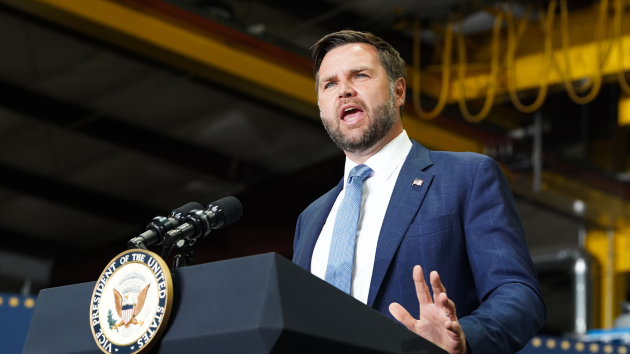
(WASHINGTON) — The past 24 hours in the Israel-Iran war have been been highlighted by President Donald Trump’s whirlwind diplomatic efforts, aimed at being seen as a peacemaker amid the conflict.

The world seesawed between fears of escalation as Iran retaliated against the United States to Trump’s surprise ceasefire announcement to his angry comments about early violations from both countries.

Notably, the president narrated the fast-changing developments in real time on his conservative social media site, showing, in often personal terms, his style of dealmaking diplomacy — and his mounting frustration with both sides.

Here’s how the sometimes dizzying sequence of events unfolded.

Monday afternoon: Iran fires missiles at US military base in Qatar

Alarms were raised when when Tehran, in response to the U.S. strikes against Iran’s nuclear facilities over the weekend, retaliated on Monday by firing missiles at Al Udeid Air Base, the largest U.S. military base in the region.

Reports of the attack came in around 1 p.m. ET on Monday. The U.S. shot down the missiles with assistance from Qatar. No injuries or extensive damage were reported.

Although Trump had threatened a massive response if Iran retaliated, raising fears of escalation, he issued a statement on his social media account about 4 p.m. ET calling the attack “very weak” and said it was “very effectively countered,” not mentioning any military action.

“I am pleased to report that NO Americans were harmed, and hardly any damage was done. Most importantly, they’ve gotten it all out of their ‘system,’ and there will, hopefully, be no further HATE,” the president wrote. “I want to thank Iran for giving us early notice, which made it possible for no lives to be lost, and nobody to be injured.”

“Perhaps Iran can now proceed to Peace and Harmony in the Region, and I will enthusiastically encourage Israel to do the same. Thank you for your attention to this matter!” he wrote.

Monday evening: Trump announces ceasefire

The, at 6:08 p.m. ET, Trump, in a bombshell post, announced a ceasefire agreement he said would end the war within 24 hours.

The agreement described by Trump involved two 12-hour ceasefire periods that would come “when Israel and Iran have wound down and completed their in progress, final missions,” Trump wrote.

Iran would start the ceasefire for the first 12 hours, Trump said, and Israel would then follow with a second 12-hour ceasefire. When that period was over, Trump said, “an Official END to THE 12 DAY WAR will be saluted by the World.”

“It’s a great day for America. It’s a great day for the Middle East. I’m very happy to have been able to get the job done,” Trump told NBC News, taking credit. “I think the ceasefire is unlimited. It’s going to go forever.”

In the immediate aftermath of Trump’s announcement, however, neither Israeli nor Iranian officials publicly commented on the proposal.

At 1:08 a.m. ET, Trump posted: “THE CEASEFIRE IS NOW IN EFFECT. PLEASE DO NOT VIOLATE IT!”

Overnight: Reports Israel and Iran continue to exchange fire

In the final hours before the ceasefire was set to go into effect, Israel and Iran launched a barrage of missiles. Israel said four people were killed and 20 injured as Iranian missiles hit Beersheba. Iran said at least 15 people were killed in strikes around the country.

Then, came reports of exchanged fire in the opening hours of the ceasefire.

Israel said Iran violated the ceasefire agreement by launching missiles between midnight and 3:30 a.m. ET, which Israel said were intercepted or fell in open areas. Iran denied firing the missiles.

Israel then acknowledged its Air Force “destroyed a radar installation near Tehran” in response to the alleged violations.

Tuesday morning: Trump lashes out at Israel and Iran

In some startlingly blunt comments, Trump showed his frustration with both Iran and Israel as he departed the White House around 6:30 a.m. ET to attend a NATO summit in the Netherlands.

“Israel as soon as we made the deal, they came out and dropped a boatload of bombs the likes of which I’ve never seen before,” Trump said. “The biggest load that we’ve seen, I’m not happy with Israel. Ok, when I say now you have 12 hours, you don’t go out in the first hour and just drop everything you have on them. So, I’m not happy with him. I’m not happy with Iran either.”

While he accused both nations of violating the ceasefire, much of his ire was aimed toward Israel, in language rarely heard from a president in public.

“We basically have two countries that have been fighting so long and so hard, that they don’t know what the f— they’re doing. Do you understand that?” a visibly angry Trump told ABC News Senior Political Correspondent Rachel Scott when asked if both nations were committed to peace, before turning away to board his Marine One helicopter.

Soon after, he fired off a warning to Israel on social media — in all capital letters — to stop attacking Iran.

During the morning, Trump spoke with Israeli Prime Minister Benjamin Netanyahu, sources familiar with the call told ABC News. A White House source, in a readout of the call, said Trump was firm and direct with Netanyahu about what was necessary to sustain the ceasefire.

“ISRAEL is not going to attack Iran. All planes will turn around and head home, while doing a friendly ‘Plane Wave’ to Iran. Nobody will be hurt, the Ceasefire is in effect!” Trump wrote.

Once aboard Air Force One, on his way to the Netherlands, he told reporters he wasn’t thinking about consequences for Israel when he warned against retaliation, claiming “they didn’t do anything” because of his post on social media.

The Israeli prime minister’s office said in a statement that Israel has “refrained from additional attacks” on Iran following the conversation between Trump and Netanyahu.

Iran said it won’t violate the ceasefire unless Israel does, according to Iran’s state-run media.

As of Tuesday afternoon, the fragile ceasefire appeared to be holding, 24 hours after Iran retaliated against the U.S.

Copyright © 2025, ABC Audio. All rights reserved.
Disgraced former Rep. Anthony Weiner among scandal-ridden New York City candidates

Disgraced former Rep. Anthony Weiner’s political comeback appears to be doomed
Spencer Platt/Getty Images

(NEW YORK) — New York City’s municipal races are bringing disgraced politicians back into the limelight, with multiple candidates seeking a political comeback and raising the question of whether voters will give them a second — or third — chance.

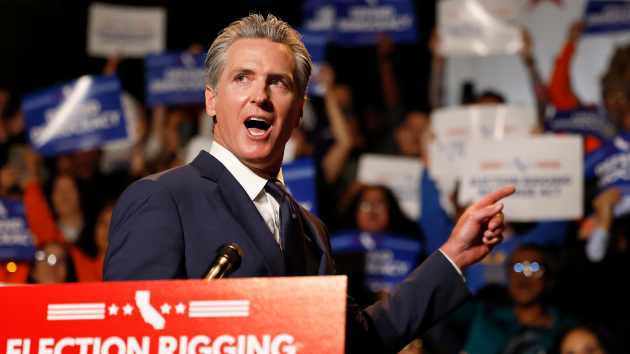
Among the slate is Anthony Weiner, the disgraced former congressman whose downfall came after a slew of sexting scandals that culminated in a 21-month federal prison sentence, who is vying for Manhattan’s City Council seat.

This comes as New York City’s mayoral race faces its share of controversy as well, with former New York Gov. Andrew Cuomo continuing to deny the sexual harassment allegations that led to his resignation nearly four years ago.

And though the federal investigation into incumbent Mayor Eric Adams over fraud and bribery was dismissed earlier this year, he continues to take heat as the first sitting mayor to be indicted as he attempts to court voters running as an independent.

Yet Weiner, 60, is attempting to differentiate himself from the other candidates with checkered pasts by emphasizing accountability for his wrongdoings.

“All of that happened, and I accept responsibility for it,” he told ABC’s “The View” in May. “You won’t hear me do what some other people in public life have done — Donald Trump or Andrew Cuomo or Eric Adams: ‘I’m a victim, they persecuted me for no reason.’ I was dealing with very serious problems. I was dealing with what I now understand to be addiction.”

“I am saying ‘Yes, I did these things. I got into recovery. I tried to make my life better,'” he said. “And now I can be of service. And I’m a damn good politician.”

In 2011, Weiner resigned from his congressional seat after a sexually explicit photo was posted on his social media page — which he initially said was a hack, but later admitted was his own doing — in addition to revelations of more sexting content with various women online.

He attempted a comeback two years later in an unsuccessful New York City mayoral run. Despite his initial lead, his campaign was plagued by controversy as more sexually explicit messages and images became public, with Weiner operating under the alias “Carlos Danger.”

In 2016, new sexting allegations came to light which prompted his wife Huma Abedin to announce the couple’s split.

In 2017, Weiner was sentenced to 21 months in federal prison after one of his sexting scandals was found to involve a 15-year-old girl. Following his release, he was also designated a Level 1 registered sexual offender, classified as a low-risk to reoffend.

During his appearance on “The View,” Weiner emphasized that he was still in recovery for sex addiction.

He also recognized that he would receive blowback during his campaign, but he did not think his past should hold him back. He cited a need for change among Democratic candidates as his reason for getting back into politics.

“When I woke up in November of ’24 and saw the election results — but more than who won, I looked around New York City and saw how many fewer Democrats even turned out to vote. And I started to say to myself ‘something is seriously wrong here,'” he said. “We’re hardcore anti-Trump territory and Trump did better.”

Weiner presents a more moderate platform than some of his Democratic counterparts. According to his campaign website, some of his goals include increasing police presence, protecting undocumented immigrants but deporting violent criminals, taxing the rich, and eliminating waste.

In Tuesday’s Democratic primary, Weiner faces Assembly Member Harvey Epstein, Manhattan Community Board Chair Andrea Gordillo, nonprofit leader Sarah Batchu, and community advocate Allie Ryan. 

Copyright © 2025, ABC Audio. All rights reserved.
Former aide Tanden appears before House committee investigating Biden’s mental acuity

Former aide Tanden appears before House committee investigating Biden’s mental acuity
Jemal Countess/Getty Images for Families Over Billionaires

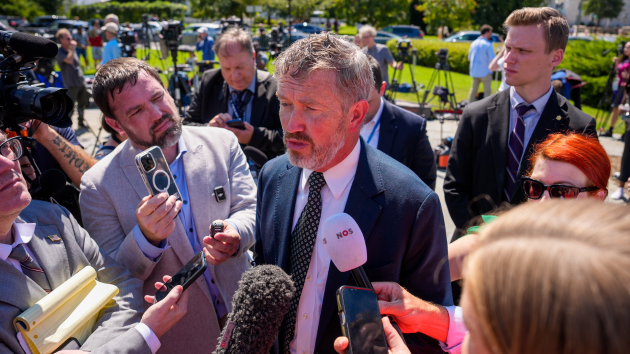
(WASHINGTON) — The House Oversight Committee’s first closed-door transcribed meeting investigating former President Joe Biden’s mental acuity began Tuesday with former White House Domestic Policy Council Director Neera Tanden appearing for questioning on Capitol Hill.

Committee Chairman James Comer is investigating Biden’s health and mental “decline,” as well as the use of an autopen for pardons and other executive actions.

“This is the first of what will be many interviews with people we believe were involved in the autopen scandal in the Biden administration,” Comer told reporters Tuesday morning. “I think the American people want to know, I think there’s a huge level of curiosity in the press corps [with] respect to who was actually calling the shots in the Biden administration.”

Following the introductory portion of the meeting, Comer said Republicans wrapped a “good hour,” while Rep. Wesley Bell, D-Mo., called it an “extraordinary waste of time.”

Tanden was nominated by Biden to be the director of the Office of Management and Budget but ultimately withdrew her nomination after facing a bruising confirmation battle and bipartisan criticism over her past tweets that attacked members of Congress.

In addition to Tanden, additional former Biden senior aides are expected to sit down for interviews in the coming weeks without being subpoenaed, including Anthony Bernal, Ashley Williams and Annie Tomasini.

Dr. Kevin O’Connor, the former White House physician for Biden, will appear under subpoena before the committee for a closed, transcribed interview on July 9, a source familiar with the committee’s plans told ABC News.

ABC News’ Lauren Peller contributed to this report.

Copyright © 2025, ABC Audio. All rights reserved.

New York City mayoral candidates share closing arguments about taking on Trump

New York City mayoral candidates share closing arguments about taking on Trump
Michael M. Santiago/Getty Images

(NEW YORK) — “We are especially mindful that we are in the middle of a war right now,” former Gov. Andrew Cuomo — the front-runner in the New York City Democratic mayoral primary — told a crowd at a Juneteenth lunch event in the Bronx on Thursday.

Some people in the crowd started muttering — the war in the Middle East?

“We’re in the middle of a war — you don’t see it? Day in and day out, when you turn on the TV news and you see a president named Mr. Trump. Have you seen President Trump on TV?”

As some in the crowd booed, Cuomo added, “President Trump has declared war on Democratic states, Democratic cities. He’s declared war on working families, he’s declared war on immigrants, he’s declared war on minorities, and he’s declared war on New York City and New York State.” He later told reporters, “Good news is — we beat [the administration] once before, and we’re going to beat them again.”

In the final days of campaigning for Tuesday’s New York City ranked choice Democratic mayoral primary, which has 11 candidates on the ballot, Cuomo and others fanned out across the city to make their closing arguments, with one shared focus being how they’re framing themselves as the best choice to stand up to the White House.

Curtis Sliwa, who lost to Mayor Eric Adams in 2021, is the only Republican running for mayor.

Voters, meanwhile, told ABC News they’re looking at both national and local issues — particularly affordability — as they decide who to cast votes for.

And scorching high temperatures in New York City could impact turnout on Election Day, as voters brave the heat to trudge to their polling places on Tuesday, with the city’s election board preparing for dehydration, and even potential heat-related power outages.

The New York City Board of Elections said last week in a news release that it is making sure polling sites that don’t have air conditioning will have fans, a “steady supply of water.” The board said it is working with emergency management and utility providers to make sure polling places don’t lose power, too.

A spokesperson for the board told City & State NY that potential heat-induced blackouts might impact vote counting, since then ballots would need to be counted similarly to absentee or affidavit ballots that get scanned later.

New York Gov. Kathy Hochul, meanwhile, signed legislation over the weekend allowing voters to receive refreshments while in line to vote.

In an email sent to supporters on Tuesday to supporters, Cuomo asked voters to “vote as early as you can to avoid the hottest parts of the day.”

For Cuomo, the election could mark his political comeback. His governorship was derailed after several women accused him of sexual harassment and inappropriate conduct. He resigned as governor in 2021 but has consistently denied the allegations. One voter in downtown Manhattan told ABC News that she is voting for Cuomo despite misgivings over the allegations, mentioning that he had issued an apology in 2021.

Carmen S., a medical assistant who lives in the Washington Heights neighborhood of Manhattan, told ABC News in an interview that immigration policy is one of the important issues in the race, becoming emotional speaking about the White House’s immigration policies. She declined to provide her full last name.

“I’m a child of immigrants,” she said. “Not every immigrant is a criminal.”

While she didn’t share who she ranked on her ballot, she praised Cuomo for his record and how he handled his job as governor.

Cuomo’s main opponent in the primary is state assembly member Zohran Mamdani, a Democratic Socialist whose progressive economic plans have galvanized many voters.

Mamdani, in an interview with ABC News on Thursday in Astoria, Queens, just hours after he voted early at a polling site in the Museum of the Moving Image, said his closing argument is that he is the one who can take on the “twin crises” facing the city: “Authoritarianism from the outside and an affordability crisis from the inside.”

“And what we need is a mayor who’s able to stand up to both of those and deliver a city that every New Yorker can afford and that every New Yorker understands that they belong to,” Mamdani told ABC News.

And as to why should people around the country care about this race, he said, “This is a referendum on where our party goes; it is a referendum on whether billionaires and corporations can buy yet another election, or if we opt for a new generation of leadership, one that isn’t funded by Trump donors, one that is actually able to stand up and fight for working class New Yorkers.”

That outlook has impressed some voters. Angela Pham, a 38-year-old content designer who lives in Greenwich Village, told ABC News in an interview after voting early that Mamdani “needs to win.”

“We’re supposed to be the most progressive city in America,” she said. “I feel like he’s the only candidate that makes sense for the things that we need to happen.”

Asked how she felt about Cuomo, Pham said, “He needs to get out of politics and retire to a farm.”

Mamdani has faced some pushback over his criticism of Israel, given New York’s large Jewish population. In response, he has emphasized policies to combat antisemitism and said that he wants to focus on city issues.

Cuomo has criticized Mamdani’s comments about Israel and made combatting antisemitism a key campaign focus. One voter in Greenwich Village told ABC News that concerns about antisemitism were a main driver for his decision to vote for Cuomo.

Fellow candidate New York City comptroller Brad Lander, who has “cross-endorsed” Mamdani, has received less momentum in polling but has gotten heightened attention since he was briefly detained last week by federal agents while escorting a defendant out of immigration court.

Lander, speaking with ABC News on Thursday on the Upper East Side near an early voting site at a school, said that the mayoral election in the city has national implications, because the administration has said it hopes to ““liberate” Democratic cities from their elected officials. That’s [a] code word for a federal government takeover, an erosion of democracy, a denial of due process,” Lander said.

“Democracy is on the line right now,” he added.

Officials from the White House and administration have said their actions towards cities such as Los Angeles are meant to restore order amidst protests and unrest.

Juan Peralta, a 31-year-old from Harlem who works in events, told ABC News that the only two candidates on the ballot he’s excited about are Zohran Mamdani and Brad Lander, pointing to Mamdani’s proposal for free child care.

“Growing up in New York, I did feel like this was a place for families,” Peralta told ABC News. “Now I feel like it’s a place for families of a certain income.”

Copyright © 2025, ABC Audio. All rights reserved.