An F-35C Lightning II, attached to Marine Fighter Attack Squadron 314, launches from the flight deck of Nimitz-class aircraft carrier USS Abraham Lincoln in support of Operation Epic Fury, March 3, 2026. (US Navy)
(WASHINGTON) — The U.S. believes that Russia has been providing Iran the locations of American troops in the Middle East, including aircraft and ships, according to two people familiar with the intelligence.
The alleged assistance, first reported by The Washington Post, is alarming because it would enable the Iranians to target specific locations with ballistic missiles and drones, putting U.S. service members at risk.
When asked about the aid to Iran, an intelligence official confirmed that the U.S. believes Russia is supplying Tehran intelligence, but did not say exactly what type of information was being shared.
White House press secretary Karoline Leavitt did not deny the report on Friday, instead saying it didn’t matter because the U.S. was still winning the war.
“It clearly is not making a difference with respect to the military operations in Iran because we are completely decimating them,” Leavitt told reporters on Friday.
Leavitt added that the U.S. is achieving the military objectives of this operation, including destroying some 30 ships and crippling Iran’s ability to launch ballistic missiles.
“And that is going to continue because the United States military is the best and most, most lethal fighting force in the world,” she said.
Six U.S. service members were killed March 1 during an Iranian drone attack on a base in Kuwait. At least 10 other troops have been severely wounded in operations across the region.
The CIA declined to comment. The Defense Department did not immediately respond to a request for comment.
Russia has not addressed the allegations. But Kremlin spokesperson Dmitry Peskov has said previously that Iran hasn’t asked for help.
“Our consistent position is well known to everyone, and there is no change,” Peskov said at a press briefing.
A U.S. Customs and Border Protection logo is displayed on the side of a patrol boat on September 26, 2025, in San Diego, California. (Photo by Kevin Carter/Getty Images)
(WASHINGTON) — A Customs and Border Protection official on Friday told a federal judge that the agency does not have the technology or manpower to immediately process $166 billion in tariff refunds, arguing the process would distract from its role addressing “imminent threats to national security.”
In a sworn filing, the official said that CBP needs an additional 45 days to create a system to process refunds for the more than 53 million entries related to the unlawful tariffs.
“CBP has never been ordered to, nor has it attempted to, process a volume of refunds anywhere near the volume of total entries and Entry Summary lines on which IEEPA duties have been deposited,” wrote Brandon Lord, the executive director of CBP’s Trade Programs Directorate.
The disclosure comes two days after a judge from the Court of International Trade initially ordered the Trump administration to remove the tariffs from its backlog of import paperwork. Even though the liquidation process — when the agency finalizes a tariff payment after goods enter the country — is largely automated and the Supreme Court overturned the tariffs two weeks ago, Lord said that Customs and Border Protection “is not able to comply” with the court’s order.
“CBP is now facing an unprecedented volume of refunds. Its existing administrative procedures and technology are not well suited to a task of this scale and will require manual work that will prevent personnel from fully carrying out the agency’s trade enforcement mission,” Lord said.
According to Lord, the current system used to process tariffs cannot handle the volume of refund requests, and that doing so manually would take resources away from “responsibilities that serve to mitigate imminent threats to national security and economic security.”
Following a hearing on Friday related to the refund process, which was closed to the public, Judge Richard Eaton of the Court of International Trade suspended his earlier order to immediately begin recalculating tariffs dues.
By lifting his initial order, the judge appears to be making room for the refund process to play out, though the exact timeline of refunds remains unclear.
During previous hearings, the judge had expressed skepticism that the refund process would be a “mess” or that the government lacked the resources to issue refunds.
The Virginia State Capitol in Richmond, Va., Jan. 17, 2026. (Kendall Warner/The Virginian-Pilot/Tribune News Service via Getty Images)
(RICHMOND, Va.) — Early voting begins Friday in an unusual off-cycle election in Virginia that could have major implications for control of the House of Representatives in the 2026 midterm elections.
Voters in Virginia are heading to the polls for a statewide election, set for April 21, on a constitutional amendment that would allow their legislature to redraw the state’s congressional map.
This would let the Democratic-controlled legislature implement a new proposed map that would make four GOP-held congressional districts favor Democrats. Given the razor-thin margins of the House — where Democrats only need to net three seats in November to regain control — even flipping that many seats in Virginia could be decisive for control of the chamber.
It’s a gambit that Democrats both in Virginia and nationally say is necessary after Republican-led redistricting in 2025 gave the GOP nine redrawn seats that now favor Republicans across four states.
Former President Barack Obama, in a video released Thursday to promote a yes vote on the amendment, claimed that Republicans pursued mid-decade redistricting “for a simple reason: to give themselves an unfair advantage in the midterms this fall … This amendment gives you the power to level the playing field in the midterms this fall.”
Republicans have called the plan to redraw seats a political power grab, decrying the move as going against the will of voters in Virginia who previously voted in favor of a redistricting commission.
Rep. Ben Cline, one of the Virginia Republicans whose seat is among those targeted, wrote on X on Wednesday, that “The Democrats’ plan to steal Congressional seats and disenfranchise Virginians is unconstitutional, but we’re going to have to defeat it at the ballot box on April 21.”
Democrats in Virginia’s legislature have already passed their proposed congressional map through the legislature and it has been signed by the governor; it gets implemented if voters approve the amendment. While the map is technically not on the ballot, Democrats have argued that it’s important that voters see the new lines that they are essentially voting on.
Virginia’s Supreme Court ordered twice to let the election proceed in the face of legal challenges to how Democrats passed the amendment through the legislature, although litigation continues to play out.
In this U.S. Navy released handout, Arleigh Burke-class guided-missile destroyer USS Thomas Hudner (DDG 116) fires a Tomahawk land attack missile in support of Operation Epic Fury, on March 1, 2026 at Sea. (Photo by U.S. Navy via Getty Images)
(NEW YORK) — The sinking of an Iranian warship Tuesday by a U.S. submarine thousands of miles from the war zone in international waters raises questions about whether the attack was legal under the rules of war.
Military law experts said the Iranian ship, which was in the Indian Ocean in international waters off Sri Lanka, would have been a lawful target had the U.S. declared war. The fact that it hasn’t done so makes the issue a murky one.
Iranian Foreign Minister Abbas Araghchi called the attack an “atrocity.”
“The U.S. will come to bitterly regret precedent it has set,” he said.
Experts say the incident highlights the reason that a declaration of war by Congress is needed for the growing conflict, which has involved more than 12 countries, as Iran continues launching drones and missiles at countries beyond the Persian Gulf region.
The House of Representatives on Thursday voted against a war powers resolution. Similar legislation failed Wednesday in the Senate. Both votes largely followed party lines.
The submarine strike in international waters “underscores why Congress should have approved this in the first place,” said Retired Lt. Col. Rachel VanLandingham, a former judge advocate general in the U.S. Air Force, “because this is a war [in which they’re] going to go after the Iranian Navy,” even when naval assets are outside the Middle East.
“The Iranian Navy is not small, right? It could be in places like outside of Sri Lanka and international water.”
Under the laws of armed conflict, were the U.S. and Iran in a declared war, the warship would represent a lawful target, former U.S. government lawyers told ABC News.
The issue with the submarine’s attacking the warship in international waters, VanLandingham said, was “political” in nature and not legal.
“When you’re going to have such global implications — that’s one of the reasons the founding fathers said Congress gets to decide wars of choice,” she said.
Brian Finucane, who was attorney-adviser at the State Department from 2011 to 2021, also said the submarine attack would have been lawful if the conflict was authorized.
According to Finucane, the U.S. would have an obligation under the Geneva Conventions to conduct search and rescue operations for survivors of the sinking.
A source familiar with Tuesday’s operation said the submarine took measures to support life-saving efforts before and after the ship sank in line with international law.
The military’s compliance with that international law was called into question when a second strike on an alleged drug boat killed survivors in international waters in the Caribbean Sea in September.
“The fundamental legal problems under both U.S. and international law” of the submarine engagement, Finucane said, “relate to the underlying use of force in this war against Iran.”
Authorization by Congress for the war is required by law because the U.S. offensive against Iran is not a response to an imminent threat, experts said.
President Donald Trump and his administration have said Iran posed such a threat. Secretary Marco Rubio said the threat became more imminent because Israel planned to strike Iran and Iran would retailiate against Israel and the U.S.
While the president has called the conflict a “war,” senior officials in his administration — and top leadership in Congress — have refrained from using the word.
Speaker of the House Mike Johnson said Wednesday the U.S. “is not at war now.”
The Pentagon’s top policy official, asked whether the U.S. was at war with Iran in a congressional hearing Thursday, would not use the term.
“I think we’re in a military action at this point,” said Undersecretary of Defense for Policy Elbridge Colby. “I will leave to Congress and lawyers from the administration, et cetera, to determine.”
Ambiguity about the conflict’s label from across the government comes as Pentagon officials say the conflict will only “accelerate” in intensity — and potentially grow in scope.
The U.S. military mission is in a “throttle-up” posture, said Defense Secretary Pete Hegseth, who would not confine the campaign to a time limit.
“The only limits we have in this is President Trump’s desire to achieve specific effects on behalf of the American people,” Hegseth said.
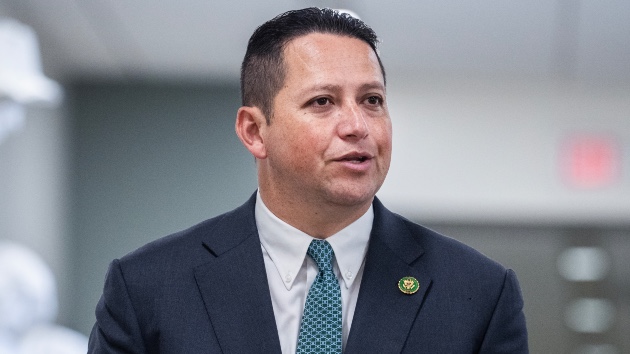
Rep. Tony Gonzales, R-Texas, makes his way to House votes in the U.S. Capitol on Wednesday, June 5, 2024. (Tom Williams/CQ-Roll Call, Inc via Getty Images)
(WASHINGTON) — Embattled Rep. Tony Gonzales announced Thursday evening that he will no longer seek reelection in Texas’ 23rd Congressional District, following calls from House Republican leadership to drop out of the race after the congressman admitted to having a relationship with a staffer.
“After deep reflection and with the support of my loving family, I have decided not to seek re-election while serving out the rest of this Congress with the same commitment I’ve always had to my district,” Gonzales wrote in a statement on X. “Through the rest of my term, I will continue fighting for my constituents, for whom I am eternally grateful.”
Gonzales’ statement touted various accomplishments from his three terms in Congress, with an emphasis on his “absolute dedication” to the U.S.
“My philosophy has never changed: do as much as you can, and always fight for the greater good,” he wrote.
Gonzales’ announcement came the same day House Republican leadership on Thursday asked Gonzales to drop out of the race.
“The Ethics Committee has announced an investigation into Congressman Tony Gonzales’s conduct, and we urge them to act expeditiously,” House Speaker Mike Johnson, Majority Leader Steve Scalise, Republican Whip Tom Emmer and Republican Conference Chairwoman Lisa McClain said in a joint statement.
“Congressman Gonzales has said he will fully cooperate with the investigation. We have encouraged him to address these very serious allegations directly with his constituents and his colleagues. In the meantime, Leadership has asked Congressman Gonzales to withdraw from his race for re-election,” they added.
Johnson told reporters later that the GOP’s call for Gonzales to drop his reelection bid — rather than resign from Congress — amounts to “a death penalty” for Gonzales.
“Leadership put out a statement. It speaks for itself. We’ve encouraged him to drop out of the race for reelection,” Johnson said. “Politically, that’s a death penalty.”
Gonzales on Tuesday night advanced to a runoff primary election on May 26 against conservative activist Brandon Herrera.
The next day, Gonzales spoke with talk show host Joe “Pags” Pagliarulo who asked if he had a relationship with his district director, Regina Santos-Aviles, who later died by suicide.
“Was there a relationship with this young lady, um, who was working in your office?” Pagliarulo asked Gonzales at the outset of the interview on Wednesday.
“I made a mistake, and I had a lapse in judgment, and there was a lack of faith, and I take full responsibility for those actions,” Gonzales answered. “Since then, I’ve reconciled with my wife Angel. I’ve asked God to forgive me, which he has. And my faith is as strong as ever. When you make mistakes like this, you know, it’s never easy. It humbles you.”
Gonzales said he looks forward to the House Ethics Committee’s investigation into the allegations.
The panel said it has established an investigative subcommittee to examine allegations that Gonzales “may have: (1) engaged in sexual misconduct towards an individual employed in his congressional office; and/or (2) discriminated unfairly by dispensing special favors or privileges.”
“I appreciate the opportunity to be able to provide all the facts and all the details that lead to exactly what occurred in the entire situation,” said Gonzales, who has declined to withdraw from his reelection bid.
The congressman had previously denied the relationship with Santos-Aviles.
Despite now admitting his relationship with her, Gonzales distanced himself from her death, claiming that he had not spoken with her since June of 2024, before she ultimately died the following year.
“You know, the facts are, I hadn’t spoken with Ms. Santos since June of 2024. She passed September of 2025. That was over a year ago. So, this is what I think is important as well — is this whole notion that I had anything to do with her death. I had absolutely nothing to do with her tragic passing. And in fact, I was shocked just as much as everyone else,” Gonzales said.
Congressional payroll records show that Santos-Aviles was still employed in Gonzales’ office on the date of her death, Sept. 14, 2025.
Gonzales insisted that Santos-Aviles was treated well in his office and showed no signs of distress leading up to her death, claiming that she was “thriving at work.”
“I’ve always highlighted the great work that she had done for our office and the community,” Gonzales said, before pinning blame on the media coverage of the matter.
ABC News previously obtained explicit text messages from May of 2024 appearing to show Gonzales repeatedly request photos and ask Santos-Aviles about her sexual preferences.
Asked by Pagliarulo about the text messages, Gonzales insisted that there is “a lot more to the story that isn’t out there,” without commenting further on the content of any other communications with Santos-Aviles.
Asked if he understands the issues surrounding a boss having a relationship with his subordinate, Gonzales acknowledged that it’s an “important” and “serious issue that we have to talk about,” before again emphasizing the need for “all the facts.”
ABC News has obtained the Uvalde police report on Santos-Aviles death through a records request, but the report has not been posted publicly.
During Wednesday’s interview, Gonzales brushed off concerns from fellow House Republicans that have called for his resignation, saying, “you’re always going to have political enemies.”
“I don’t speak with those two on a regular basis, that we operate in different … groups, if you will,” Gonzales said, referring to Republican Reps. Nancy Mace and Rep. Anna Paulina Luna, who have voiced concerns over the allegations against him. “But what I will say is you can never let those people slow you down in any form or fashion.”
Gonzales, who maintains President Donald Trump’s endorsement despite the allegations and ethics inquiry, said he has not spoken directly with Trump about the matter.
“I appreciate the president’s support,” Gonzales said.
“I was just actually in Corpus [Christi] when he came down to Texas. That was an incredible event. Everybody was energized,” Gonzales added, referring to the president’s trip last week where Trump gave the congressman a shoutout and congratulated him before the crowd.
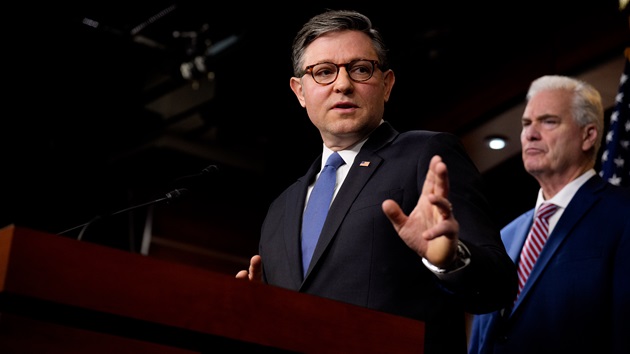
Speaker of the House Mike Johnson (R-LA) speaks to members of the media during a news conference on Capitol Hill on March 4, 2026 in Washington, DC. (Andrew Harnik/Getty Images)
(WASHINGTON) — The House failed to adopt a war powers resolution that attempted to curtail President Donald Trump’s military actions in Iran.
It failed by a vote of 212-219. Republican Reps. Thomas Massie and Warren Davidson bucked GOP leaders by voting in favor; four Democrats voted against the resolution, including Reps. Greg Landsman, Henry Cuellar and Jared Golden.
The resolution, which only expresses the sentiment of Congress, called on the president to terminate the use of U.S. armed forces in hostilities against Iran or any part of the Iranian government or military unless a declaration of war or authorization to use military force is enacted.
The measure was non-binding and not subject to the president’s signature or veto.
Speaker Mike Johnson argued Wednesday that the United States is “not at war” but only engaged in a “defensive operation” in Iran.
“We’re not at war right now,” Johnson told reporters at the Capitol. “We’re in — four days into a very specific, clear mission and operation.”
Later on Wednesday, Trump contradicted Johnson, repeatedly referring to the conflict in Iran as a “war” hours after Johnson said it wasn’t.
Sitting next to Johnson during a roundtable on energy prices, Trump said “we’re doing very well on — on the war front, to put it mildly.”
Johnson had said that the “passage of a war powers resolution right now would be a terrible, dangerous idea.”
“It would empower our enemies. It would kneecap our own forces, and it would take the ability of the U.S. military and the commander in chief away from completing this critical mission to keep everybody safe,” he said Wednesday.
On Wednesday, Senate Democrats failed to meet a 51-vote threshold on an alternate Iran war powers resolution sponsored by Democratic Sen. Tim Kaine and Republican Sen. Rand Paul. The resolution failed behind a 47-53 tally.
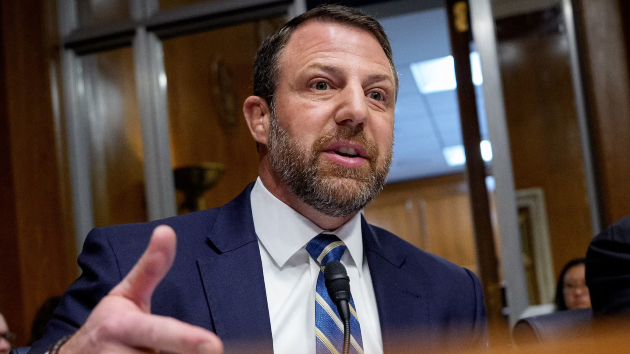
Sen. Markwayne Mullin speaks during a Senate Health, Education, Labor and Pensions Committee hearing on Capitol Hill on February 25, 2026 in Washington. (Andrew Harnik/Getty Images)
(WASHINGTON) — President Donald Trump on Thursday said Republican Sen. Markwayne Mullin will replace Kristi Noem as Department of Homeland Security secretary.
Trump made the announcement on social media Thursday afternoon saying he was “pleased to announce that the Highly Respected United States Senator from the Great State of Oklahoma, Markwayne Mullin, will become the United States Secretary of Homeland Security (DHS), effective March 31, 2026.”
“The current Secretary, Kristi Noem, who has served us well, and has had numerous and spectacular results (especially on the Border!), will be moving to be Special Envoy for The Shield of the Americas, our new Security Initiative in the Western Hemisphere we are announcing on Saturday in Doral, Florida. I thank Kristi for her service at ‘Homeland,'” Trump said in the post.
The news that the Oklahoma senator would take over Noem’s job came after several sources told ABC News that Trump had called Republicans and top allies asking if he should fire her.
The president had privately expressed deep frustration over Noem’s testimony during the Senate Judiciary Committee hearing on Tuesday, those sources with direct knowledge of the conversations said.
The sources said the president was upset with a particular moment during the hearing when Republican Sen. John Kennedy questioned Noem about a taxpayer-funded $220 million ad campaign. Noem repeatedly suggested the president was aware of the campaign and signed off on it.
A senior administration officials tells ABC News that the president did not sign off on a $220 million ad campaign.
“Absolutely not,” the senior administration official said.
Kennedy told reporters Thursday that Trump even called him about it.
“I’m not going to speak for him. You folks know him. You can ask him yourselves, but his, I want to put it this way, his recollection and her recollection are different,” Kennedy said.
Tuesday’s hearing was just the latest in several incidents that have sparked concern among Trump administration officials and some Republicans on Capitol Hill, sources tell ABC News.
Just days ago, Noem and her top adviser Corey Lewandowski made the decision to temporarily suspend TSA Precheck amid the partial government shutdown — which later had to be reversed after the White House stepped in, according to sources.
Noem has faced criticism in recent weeks over her handling of Immigration and Customs Enforcement operations in Minneapolis after the killings of Renee Good and Alex Pretti by federal law enforcement. She was removed from leading operations in the state following the scrutiny, and Border Czar Tom Homan was sent in to take over.
During a Cabinet meeting in January, the president did not call on Noem to speak.
Sam Altman, chief executive officer of OpenAI Inc., at the AI Impact Summit in New Delhi, India, on Thursday, Feb. 19, 2026. (Ruhani Kaur/Bloomberg via Getty Images)
(NEW YORK) — OpenAI CEO Sam Altman told employees at an all-hands meeting that the company doesn’t “get to make operational decisions” about how its artificial intelligence technology is used by the Pentagon, according to a source familiar with the meeting.
“So maybe you think the Iran strike was good and the Venezuela invasion was bad,” Altman said in Tuesday’s meeting, according to the source. “You don’t get to weigh in on that.”
The comments came days after OpenAI announced they had reached an agreement with the Pentagon to deploy their models on their classified network, hours after the deal between Anthropic and the Pentagon fell apart.
OpenAI is best known as the company behind generative AI chatbot ChatGPT, while Anthropic is responsible for the chatbot Claude.
At the center of the fight between Anthropic and the Department of Defense is the question of who gets to control how AI is used by the military: the companies that make the technology or the government that deploys it?
Anthropic was the first AI company to be used on classified networks and its technology is widely considered the most advanced. The talks fell apart over Anthropic’s red lines: they were against their models being used for fully autonomous weapons or mass surveillance of Americans. The Pentagon argued they needed its technology for all lawful use cases.
The department, which was informally renamed as the Department of War via executive order last year, addressed the red lines in a social media post last week.
“The Department of War has no interest in using AI to conduct mass surveillance of Americans (which is illegal) nor do we want to use AI to develop autonomous weapons that operate without human involvement,” spokesperson Sean Parnell wrote. “Here’s what we’re asking: Allow the Pentagon to use Anthropic’s model for all lawful purposes. This is a simple, common-sense request that will prevent Anthropic from jeopardizing critical military operations and potentially putting our warfighters at risk.”
The Pentagon set a deadline of 5 p.m. last Friday for Anthropic to acquiesce to its demands or be essentially blacklisted. With negotiations at an impasse, Trump ordered the government to stop using the company’s products and Defense Secretary Pete Hegseth declared Anthropic would be designated a “supply chain risk”, essentially cutting the American company off from government work.
According to a source, Anthropic still has not received a notification from the government about being designated a supply chain risk, outside of Hegseth’s tweet announcing it.
The breakdown in talks came hours before the U.S. launched strikes in Iran. According to multiple reports, Anthropic’s AI models were used for the U.S. operation in Iran.
Anthropic is not commenting on those reports. In response, a Pentagon spokesperson tells ABC: “The Department declines to comment citing operational security.”
When OpenAI announced its deal with the Pentagon, Altman said it shared the same red lines as Anthropic.
“Two of our most important safety principles are prohibitions on domestic mass surveillance and human responsibility for the use of force, including for autonomous weapon systems,” he said in a statement. “The DoW agrees with these principles, reflects them in law and policy, and we put them into our agreement.”
Days later, amid an onslaught of criticism, Altman said in a post this week that the company “shouldn’t have rushed” its deal with the Pentagon, saying that “it just looked opportunistic and sloppy.”
Altman unveiled an adjusted agreement with the Pentagon that he says provides stronger guarantees that the military won’t use OpenAI’s systems for domestic surveillance.
“We are going to amend our deal to add this language, in addition to everything else: ‘Consistent with applicable laws, including the Fourth Amendment to the United States Constitution, National Security Act of 1947, FISA Act of 1978, the AI system shall not be intentionally used for domestic surveillance of U.S. persons and nationals,'” he wrote in a statement.
“There are many things the technology just isn’t ready for, and many areas we don’t yet understand the tradeoffs required for safety. We will work through these, slowly, with the DoW, with technical safeguards and other methods,” he added.
OpenAI says they believe their contract has even “better guarantees” than what Anthropic had originally signed with the Pentagon.
“This language makes explicit that our tools will not be used to conduct domestic surveillance of U.S. persons, including through the procurement or use of commercially acquired personal or identifiable information,” the company wrote in a statement. “The Department also affirmed that our services will not be used by Department of War intelligence agencies like the NSA. Any services to those agencies would require a new agreement.”
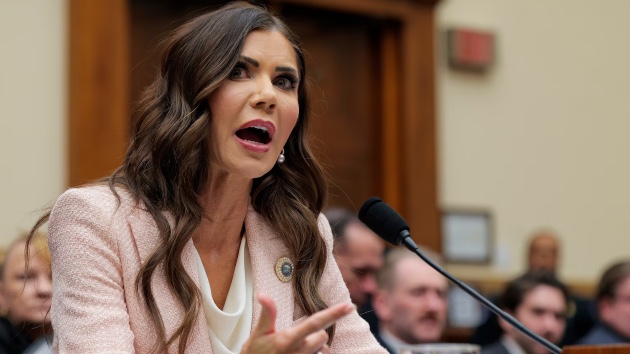
U.S. Secretary of Homeland Security Kristi Noem testifies before the House Judiciary Committee in the Rayburn House Office Building on March 04, 2026 in Washington, DC. (Heather Diehl/Getty Images)
(WASHINGTON) — A Democratic senator says Homeland Security Secretary Kristi Noem provided false testimony to the Senate Judiciary Committee.
In her appearance before the committee on Tuesday, Noem was asked by Sen. Richard Blumenthal, D-Conn., whether her adviser Corey Lewandowski, who is serving as a special government employee, has any role in approving DHS contracts, and she said no.
“Evidence suggests that your testimony was false. Internal DHS records show that Mr. Lewandowski has personally approved contracts at DHS, including, but not limited to, a multimillion-dollar contract,” according to a letter Blumenthal sent to Noem on Wednesday. “And current and former DHS employees have stated that Mr. Lewandowski’s signature is a green light for money to be transmitted to contractors.”
Blumenthal sent the letter on Wednesday night, after Noem’s testimony in front the House Committee.
In a follow-up appearance before a House committee on Wednesday, Rep. Jared Moskowitz asked Noem if she would like to correct her answer from Tuesday.
“What I would say is that he is an adviser to the Department of Homeland Security,” she said.
Sources have told ABC News that Lewandowski is Noem’s de facto chief of staff, despite having a 130-day cap on being able to work at the department, due to his status as a special government employee.
According to multiple sources, Lewandowski and Noem both approve contracts and “nothing” gets to the secretary without Lewandowski’s approval.
“Mr. Lewandowski is a Special Government Employee,” a department spokesperson said in a statement to ABC News. “Mr. Lewandowski’s time is kept by a career DHS employee who submits the paperwork on a bi-weekly basis. He has completed all of the required Office of Government Ethics forms, including full financial disclosure and any investments by his family. Mr. Lewandowski does not receive a salary or any federal government benefits. He volunteers his time to serve the American people. He serves as an advisor. The Secretary, like all previous Secretaries, has various senior advisors.”
Oftentimes, Lewandowski travels with the secretary to her public events, and on multiple occasions ABC News has seen Lewandowski behind the scenes at events where the secretary is speaking.
Asked by two Democratic representatives if the two were romantically linked, Noem did not deny it and instead called the two Democratic members’ line of questioning “garbage.”
Lewandowski and Noem have both previously denied any romantic relationship. Both are married to other people.