
Why the few voters who pick both Republicans and Democrats may swing the midterms

Why the few voters who pick both Republicans and Democrats may swing the midterms
adamkaz/Getty Images

(WASHINGTON) — As Democrats and Republicans wage electoral war for control of Congress and 36 governors’ mansions as well as victory in numerous state and local races, voter ticket-splitting — a trend operatives thought to be nearing its political death or to already be buried — is reemerging in polls as a potential curveball in close races.

In at least 10 states hosting Senate and gubernatorial contests, surveys have for several weeks indicated a sliver of voters bucking the growing trend of party-line ballots. That could prove decisive in narrow elections to determine control in Washington next year and to choose state leaders who’ll shape policy on abortion access, voting rights and more.

Analyses from the Pew Research Center and others had suggested that ticket-splitting, especially in top-ballot races, was on the decline in recent cycles.

“Back in the old days, normally it was 40-40 [percent each] and then the 20% of middle that you’re fighting over. I think that middle area there, where technically you think of ticket-splitters, is substantially less than it used to be. I think it’s probably 92% are pretty predetermined, and then you have probably that 6%, 8%,” said one Ohio GOP strategist.

But amid a confluence of factors, from massive gobs of money thrown into campaigns to fractured party bases to incumbent advantages to candidate quality and more, strategists from both sides of the aisle are forecasting that more voters this cycle than in previous midterms, including in 2018, will choose a Democrat for one race on their ballot and a Republican for another.

“I think that if we are comparing governors’ races to Senate races or to congressional races, you can expect to see a pretty good amount of ticket-splitting,” said Molly Murphy, a Democratic pollster working on several midterm campaigns.

Murphy believes it’s because people want different things out of different offices: “When it comes to … an executive versus a legislator, voters are able to use more varied criteria.”

One study of decades of voting data by the Brookings Institution showed that the correlation is growing stronger between which parties voters choose in congressional races and in presidential contests — meaning voters usually pick the same party. The percent of ticket-splitting, according to this analysis, began to decline into the single digits in 2012.

Yet if the trend returns in November, matching the expectations from swing state polls — a big if, though experts say it’s possible — it would mark a comeback for what had been a somewhat common practice.

​FiveThirtyEight’s polling average shows Josh Shapiro, Pennsylvania’s attorney general and the Democratic gubernatorial nominee, leading Republican Doug Mastriano by nearly 9 points. Meanwhile, Lt. Gov. John Fetterman, the Democratic Senate candidate, is leading GOP rival Mehmet Oz by less than 3 points.

​Georgia features a similar dynamic, where FiveThirty Eight polling averages show GOP Gov. Brian Kemp up over Stacey Abrams by more than 6 points but Democratic Sen. Raphael Warnock leading in his reelection bid by 3 points against Republican hopeful Herschel Walker.

​In Ohio, Republican Gov. Mike DeWine is coasting in his campaign against Nan Whaley, with a nearly 20-point lead in polling averages, while Republican Senate candidate J.D. Vance is only ahead of Democratic Rep. Tim Ryan by under 2 points.

​And in Arizona, GOP firebrand Kari Lake has a slim 1-point edge in the governor’s race against Democratic Secretary of State Katie Hobbs while Sen. Mark Kelly is up by roughly 5 points against the GOP’s Blake Masters.

Ticket-splitting still occurs in modern politics. For instance, Sen. Susan Collins, R-Maine, handily won reelection in 2020 even as Joe Biden romped there. But it is a far cry from the 2000 election cycle, for example, when 10 senators won in states that their parties’ presidential candidates lost.

This year, various themes are at play and none is identical to any other. However, one common thread strategists say is contributing to ticket-splitting is the surge in money being spent on midterm races, leading to heightened awareness of candidates beyond just their party affiliation.

“Voters get to know those candidates and who they are and, therefore, they’re not going to vote party line. They’re gonna vote as to which candidate they prefer,” argues veteran GOP strategist Bob Heckman.

Conversely, however, some Democrats said that in cases of their own ticket-splitting woes — like Whaley lagging Ryan in Ohio — it’s because the entire ticket didn’t fundraise enough to build a profile with voters separate from the party.

“You have Senate races and governors’ races where the Senate race does better than the governor’s race for the Democrats. And what seems to be happening is, overwhelmingly, the governors’ races just don’t raise the same kind of money and they don’t have the same kind of ability to reach voters,” one Democratic strategist said.

“And that disparity means that in Senate races, you can inspire people at the local level all over the country to give $20, $30 to your campaign. But it’s very hard to persuade someone in New York that what happens in the Oregon governor’s race matters to them,” this person added.

The midterms are also taking place as both parties’ bases continue to transform and, especially among Republicans, fracture further.

Democrats’ years-long divide between moderates and progressives has played out for several cycles. Now, GOP politicians in swing states are choosing how to angle their appeals — either to Donald Trump-aligned voters or to more centrist suburbanites who used to make up the GOP’s core and who have been key in some past races.

In several states, Republicans like DeWine, Kemp and Oz, whose brands are somewhat removed from the former president, are outpacing their more populist counterparts. And while some MAGA candidates like Lake are still polling strongly, surveys indicate the need for a broad appeal in a statewide race.

“What you’re looking at as far as tickets-splitters, [they] are probably going to come from the suburbs … those folks that voted Republican but weren’t all that keen on Trump,” one Ohio GOP strategist said. “That’s where you see DeWine with anywhere from a 15-19-point lead right now, and then the race for the U.S. Senate is much smaller.”

“I think there will be a lot more Shapiro-Oz voters than there will be Mastriano-Fetterman voters. And there’s starting to be a little bit more of a separation between Mastriano and Oz. I think they’ll do pretty much the same with Republicans, maybe Mastriano a little bit better than Oz. But then I think among independents and Democrats, you’ll see Oz doing better than Mastriano,” a Pennsylvania Republican strategist added.

Beyond ticket-splitting, the diverging party bases could also lead to what Jarrod Loadholt, a partner in the Ice Miller law firm’s public affairs branch who lives in Georgia, dubbed “ticket sitting.”

“I feel like there are very strong views of Brian Kemp in certain corners of the state, just like I think there are very strong views of Stacey Abrams. There are strong views of Herschel Walker, but I think there are strong views on both sides such that Republicans may skip that race altogether, and they just vote for Brian Kemp,” Loadholt, who supports Warnock and Abrams, told ABC News.

“I do think the combination of ticket-splitters and ‘ticket sitters’ will play a role in the ultimate outcome of this race, absolutely. And yes, there is a Warnock-Kemp voter,” he said.

Election cycle fundamentals are also certainly influencing the potential for ticket-splitting, strategists insist.

Incumbents often have an advantage owing to higher name identification, more well-known records and beefier war chests that make it easier to reach voters — a dynamic that could help explain polling leads for both Kemp and Warnock. And, some of the operatives note, female candidates often get examined under a different set of standards than their male counterparts, which could be hurting Abrams.

And while subjective opinions like on “candidate quality” are often made in the eye of the beholder, such judgements are still set to play a role — however unquantifiable — in November, the race experts said.

“I think ultimately there are gonna be some people who voted for Trump in ’16 and ’20 and they’ll go vote for Warnock because they may like him for X number of reasons around insulin, like he’s made a big deal about [the cost of] insulin at rural hospitals. But they may be Trump people, so they’re not Kemp people,” said Loadholt.

“Voters themselves can be far more candidate-driven and less ‘ideological’ than hardcore observers of politics and hardcore ideological folks,” he said. “There are lots of voters who are ‘feel voters,’ they vote based on what they feel.”

Copyright © 2022, ABC Audio. All rights reserved.

Biden’s student debt relief in legal limbo, but advocates urge people to keep applying

Biden’s student debt relief in legal limbo, but advocates urge people to keep applying
jayk7/Getty Images

(WASHINGTON) — While a federal appeals court decision Friday opened the door to a potential setback for President Joe Biden’s student debt relief program, legal experts and advocates for loan forgiveness tell ABC News they’re not overly concerned, urging people to keep applying.

But borrowers are worried, regardless.

A stay granted by the 8th Circuit Court of Appeals put a temporary pause on discharging loan relief, expected to begin as soon as this week, until judges review a challenge by six GOP-led states to stop the program.

Another ruling, after more detailed hearings, expected later this week, could bring the program to a longer halt and be a big political loss for Biden just before the midterm elections. He’s campaigned on his plan that calls for between $10,000 and $20,000 in debt forgiveness for Americans who make below $125,000 a year, or $250,000 as a married couple.

Remaining optimistic, advocates for student debt relief point to other legal challenges thrown out by the courts — including that a lower court had dismissed this particular lawsuit just before the appeals court issued the temporary stay.

“The most important thing is that people apply for debt relief. Nothing has changed,” Mike Pierce, executive director and co-founder of the Student Borrower Protection Center, told ABC News.

“The fact that the application is open, it is simple, it works, it is easy, and the administration is putting the building blocks in place to be able to press the button and cancel everybody’s debts as soon as they’re able to do so? That was true a week ago. That was true on Friday, and that is true today,” he said.

And while Pierce and others are pushing people to apply because there’s a fast-approaching deadline of Dec. 31 when the current payment pause ends, it’s also a strategy: Advocates hope that the more people who display an interest in the program, the harder it will be for courts to take it away.

“I think it’s very important for people to take all the steps they’re able to because it does show that people are starting to rely on these promises that the president has made to be able to cancel their debts,” Pierce said.

John Brooks, a law professor at Fordham University who focuses on federal fiscal policy, called that more of a political strategy than a legal one, but said it could potentially sway judges.

Brooks predicts the appeals court will focus on whether the GOP-led states have legal standing to claim the harm they allege they’d suffer — and said the Republican argument on that point is weak.

Based on that, he said, he thinks the Friday stay was only a temporary win and downplays the possibility the appeals court will deal the Biden administration a blow.

Put simply, for opponents of the debt relief program, the stay was “the biggest win so far — but it’s still not much of a win,” Brooks said.

The Biden administration, for its part, is pushing full speed ahead. White House press secretary Karine Jean-Pierre wouldn’t entertain the idea that the administration might not be able to deliver on this promise, pushed by ABC News in a press briefing.

“It’s not going to stop our message. We know that there are opponents out there who don’t want us to help middle-class Americans. But it’s not going to stop us,” Jean-Pierre said.

That’s not to say there haven’t already been political implications, though.

The legal back-and-forth has made the process confusing and emotionally draining for hopeful borrowers who want their debt relieved, like Cleopatra Melton, a borrower with roughly $50,000 in student loan debt.

Melton could see 40% of that debt wiped out by the program, which cancels up to $20,000 in additional loan forgiveness for those who are also Pell Grant recipients. (Pell Grants themselves usually do not have to be repaid.)

But the stay imposed by the appeals court has poured cold water on her optimism.

“This was just too good to be true because it never has been done,” she told ABC News.

“As long as that lawsuit was out there, I didn’t want to get too celebratory about it. You know what I mean? So, I’m extremely worried that it’s not going to go through,” she said.

And though the current challenge was brought by Republicans, it still looks like a setback to Melton — who said it has political ramifications for Biden.

Melton said she voted for him in 2020 because of his campaign promise of $10,000 in student loan forgiveness for American borrowers, she said. Now, she sees this as yet another example of people of color — who make up a large percentage of borrowers — being left behind.

“I feel like no one is worthy of my vote. Honestly speaking, everyone makes all these campaign promises to the Black and the brown and I don’t feel like anyone has ever really did anything for me,” Melton said.

“I felt like finally someone’s doing something that will directly affect me and my children with their campaigning, with the laws, with the rules. And now for this to be blocked there’s just — it’s more of the same, to me,” she said.

Others, like Brea Govan, 29, feel more hopeful that the court will throw out the lawsuit, as other courts have done over the last few weeks.

Govan, who qualifies for $10,000 in debt relief, recently applied online so her remaining debt of $9,400 would be wiped completely.

“I wish that they wouldn’t block it,” Govan told ABC News.

“Twenty-two million people have already applied to this and that’s almost half of who needs the support. That says a lot,” she said.

Of course, even if the Biden administration is victorious, the lawsuit could also slow down the debt relief process, since the administration was expected to start doing so this week but has been put on pause.

That’s led advocates to challenge the Biden administration to be open to the idea of extending the moratorium on loan payments once more, past Jan. 1, in order to avoid a messy situation where people need to start making payments on debts again even though their debts should be forgiven.

On Monday, Jean-Pierre wouldn’t say whether that’s on the table, instead arguing that the Biden administration could still stay on schedule despite the current lawsuit.

Copyright © 2022, ABC Audio. All rights reserved.
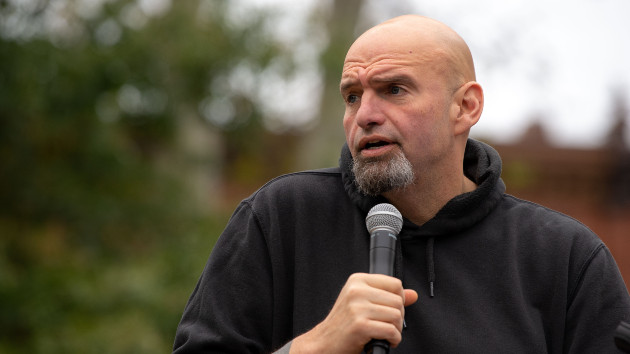
Fetterman and Oz face off in Pennsylvania Senate debate on abortion, inflation, crime, more

Fetterman and Oz face off in Pennsylvania Senate debate on abortion, inflation, crime, more
KRISTON JAE BETHEL/AFP via Getty Images

(HARRISBURG, Pa.) — The highly anticipated Pennsylvania Senate debate on Tuesday night was a fast-paced affair focused on policy questions interspersed with — and sometimes interrupted by — the candidates’ attacks, which have defined a key race for who controls Congress’ evenly split upper chamber.

The faceoff also put Democratic Lt. Gov. John Fetterman’s stroke symptoms back in the spotlight as well as what he said was his resilience and recovery from, as he put it, a notable but not disqualifying challenge.

Many eyes were on Fetterman’s health as he took the stage. He spoke haltingly and sometimes inconsistently throughout the debate, even more so than he has at campaign events since returning to the trail in August, three months after his stroke. At times he seemed to struggle to complete his answers.

Two monitors were hung above the heads of the moderators to transcribe both the questions and Republican Mehmet Oz’s answers in real time as an aid for Fetterman’s auditory processing issues, which outside neurologists have said are no indication of cognitive issues for stroke survivors.

Fetterman has worked with a speech therapist; his doctor said last week he was ready for “full duty” in office, though he has declined to release his medical records.

Several times on Tuesday, but not often, there was a pause before Fetterman answered a question as he read the transcription.

Soon after the debate began, he invoked his stroke and the sometimes-mocking criticism he has faced because of it from his rival’s campaign team.

“Let’s talk about the elephant in the room: I had a stroke. He’s never let me forget that,” Fetterman said in his opening remarks, teeing up a line he would repeat over the course of the hour. “It knocked me down, but I’m going to keep coming back up.”

Oz, a former surgeon and popular TV host who described himself as “a living embodiment of the American dream,” did not mention his opponent’s health on stage.

Both candidates were forced to answer for inconsistent views on policies: For example, each was presented with past comments on fracking that contradicted what they’ve said on the issue on the trail.

“I strongly support fracking,” said Oz when asked about comments he made in 2014 arguing against the industry, which employs thousands of Pennsylvanians but draws scrutiny over its environmental effects.

Fetterman, too, was asked by moderators to square his recent public support for fracking with comments he made in 2018 sharply criticizing it.

“I’ve always supported fracking,” he insisted.

Of the discrepancy, Fetterman said awkwardly: “I do support fracking … I do support fracking.”

He and Oz also tried to take advantage when asked about the issues on which they have hinged their candidacies.

“I want to look into the face of every woman in Pennsylvania,” said Fetterman when the debate shifted to abortion access.

“If you believe that the choice of your reproductive freedom belongs to Dr. Oz, then you have a choice,” Fetterman said, contrasting his views with his opponent, who opposes abortion except in cases of rape, incest or the mother’s health and has said he wants it restricted but not criminalized.

“Roe v. Wade, for me, should be the law,” Fetterman added, referring to the national guarantee to abortion rights that was overturned by the Supreme Court this summer.

Fetterman, however, dodged questions on whether he would support any restrictions on abortion, including in later trimesters.

The moderators continually followed up with Oz on whether he would support South Carolina Sen. Lindsey Graham’s proposal to institute a nationwide ban on abortion, with limited exceptions, after 15 weeks.

Oz, as he has done with reporters, declined to answer yes or no, instead saying he was against federal control of the issue and preferred it be left up to the states — to women, their doctors and local politicians, he said.

“Any bill that violates what I said, which is the federal government interfering with a state rule on abortion, I would vote against,” Oz eventually acknowledged.

On crime, meanwhile — an issue he has leveraged as he has closed his yawning polling gap — Oz touted his endorsements by multiple police unions in the state while Fetterman defended himself against soft-on-crime allegations. He claimed Oz, who said he had a lax record granting parole to convicts, had “no experience” with public safety.

Fetterman said that as a mayor of Braddock, Pennsylvania, he had successfully worked to curb gun violence and had a track record of addressing such problems.

“We should be talking about crime and inflation — the issues that are hurting Pennsylvanians,” said Oz, who at multiple points in the debate touted a plan to “unleash” the state’s energy industry to, as he envisioned, raise wages, bolster businesses and help lower high prices.

Oz cited one example of a woman who could no longer afford her groceries given the rising cost of living — a dismaying problem, he said.

Fetterman, he said, was a “radical” who wouldn’t be budget conscious and would raise taxes. On the other hand, he would promote “balance” in Washington.

“I’m a surgeon, not a politician. We take big problems, we focus on them and we fix them,” Oz said late into the debate. “And we do it by uniting, by coming together — not dividing — and by doing that, we get ahead.”

Fetterman said Oz — whom he frequently tried to paint as a liar — wouldn’t have voted for Democrats’ Inflation Reduction Act in Congress, which allows Medicare to negotiate some prescription drug prices, and he invoked Oz’s wealth and relative lack of roots in Pennsylvania. He repeatedly claimed Oz wanted to cut Social Security and Medicare, which Oz said was a baseless allegation. Oz said one of Fetterman’s ads had been pulled for being “dishonest.”

“He has 10 gigantic mansions,” Fetterman said. “We must push back against corporate greed. We must also make sure that we’re also pushing back against price gouging.”

When asked to explain his plan to attack price-gouging corporations, Fetterman did not answer, speaking more broadly about how “inflation is hurting Americans” and how Oz “has never been able to stand up for working families all across America.”

Elsewhere, Fetterman said he supported a law to raise the state minimum wage to $15 an hour, more than double its current rate. Oz said he wanted the minimum wage even higher than that but driven by market forces, not a law, via his plan for the state’s energy companies.

The two candidates split on the value of federal student loan forgiveness — which Fetterman supports — while Oz argued he had a more defined plan for lowering the price of college including offering online instruction.

The campaigns react post-debate

Tuesday was the only event Fetterman agreed to after Oz’s entreaties and criticism — “this is the only debate I could get you to come to talk to me on,” Oz said on stage — and ahead of it, Fetterman’s campaign attempted to lower expectations for his performance, with two top aides telling reporters in a memo on Monday that debating “isn’t John’s format” and citing Oz’s years on television.

In the minutes right after the faceoff ended Tuesday night, his campaign team mobilized to — in their words — tout how he had performed.

“We are thrilled with John’s performance,” spokesman Joe Calvello told reporters.

The campaign announced late Tuesday that it planned to run an ad targeting Oz for one of his answers on abortion access, in which he said policy should be democratically decided by states but more specifically involve “a woman, a doctor and local political leaders.”

The Oz camp, meanwhile, declared victory.

“We saw tonight a debate that was a complete disaster for John Fetterman,” adviser Barney Keller told reporters. “He wasn’t able to defend any of his radical positions, and it really showed.”

Both candidates will be back on the stump Wednesday, with Election Day in less than two weeks and early voting well underway.

Heading into Tuesday, Polls had narrowed considerably, with FiveThirtyEight’s average now showing Fetterman ahead by less than 3 points, down from nearly 11 points six weeks ago.

Copyright © 2022, ABC Audio. All rights reserved.

Trump’s former chief of staff Mark Meadows fighting subpoena in 2020 election probe

Trump’s former chief of staff Mark Meadows fighting subpoena in 2020 election probe
Creativeye99/Getty Images

(WASHINGTON) — Former Trump chief of staff Mark Meadows is fighting a subpoena from the Fulton County, Georgia, special grand jury investigating efforts to overturn the 2020 election.

Meadows’ lawyer argued in a filing Monday that Meadows cannot be compelled to testify because, although the grand jury is investigating alleged criminal conduct, it does not have the ability to return a criminal indictment and can only make recommendations concerning criminal prosecution.

Meadows was subpoenaed in August to appear for testimony on Sept. 27. Meadows says that the matter is now “moot” given that the deadline has now passed.

The Fulton County DA’s office said in a filing dated Oct. 7 and filed on Monday that Meadows had a “scheduling conflict” that prevented him from appearing for testimony on Sept. 27. The DA’s office has proposed that Meadows appear on either Nov. 9, Nov. 16, Nov. 23 or Nov 30.

Meadows was on the January 2021 phone call that then-President Donald Trump had with Georgia Secretary of State Brad Raffensperger in which Trump asked Raffensperger to “find” him enough votes to win the state.

“So look, all I want to do is this. I just want to find 11,780 votes, which is one more than we have because we won the state,” Trump said on the call.

Trump, who has denounced the Fulton County probe, has repeatedly defended his phone call to Raffensperger, calling it “perfect.”

Meadows is one of several Trump allies that the special grand jury has subpoenaed in recent months.

He was also subpoenaed in September 2021 by the House committee investigating the Jan. 6 attack on the U.S. Capitol. After briefly cooperating and selectively turning over more than 9,000 records and emails related to his activities surrounding the events of Jan. 6, Meadows stopped cooperating with that probe.

In December 2021, the committee voted to hold Meadows in contempt of Congress for not appearing before the panel, and a criminal referral was sent to the Department of Justice. However the DOJ ultimately declined to prosecute Meadows.

Copyright © 2022, ABC Audio. All rights reserved.

After backlash, House progressives retract letter to Biden on Ukraine strategy

After backlash, House progressives retract letter to Biden on Ukraine strategy
Tim Graham/Getty Images

(WASHINGTON) — House progressives on Tuesday retracted a letter they sent Monday to President Joe Biden in which they urged him to directly negotiate with Russia on an end to the war in Ukraine, now in its ninth month.

“The letter was drafted several months ago, but unfortunately was released by staff without vetting,” Progressive Caucus Chair Pramila Jayapal, D-Wash., said in a statement Tuesday. Jayapal said she accepts responsibility for its release.

Minnesota Democrat Ilhan Omar confirmed in a statement to ABC News Tuesday that the 30 progressives wrote the letter over the summer “in response to reports that Ukraine was being pressured by Washington not to negotiate.”

The retraction follows backlash from both Democrats and Republicans, including House Speaker Nancy Pelosi. It also comes less than a day after Jayapal clarified the letter’s meaning after initial criticism from lawmakers.

“Let me be clear: we are united as Democrats in our unequivocal commitment to supporting Ukraine in their fight for their democracy and freedom in the face of the illegal and outrageous Russian invasion, and nothing in the letter advocates for a change in that support,” Jayapal said Monday. “Diplomacy is an important tool that can save lives — but it is just one tool.”

When asked if the White House advised the Progressive Caucus to retract the letter, White House press secretary Karine Jean-Pierre on Tuesday declined to comment on the letter.

“We appreciate the bipartisan effort,” she said about funding for the war effort to date, “and we are going to continue to be in conversations with members of Congress on how to continue to move forward in order to support Ukraine in their efforts.”

Speaking Tuesday, Pelosi vowed that Ukrainian aid would be included in an end-of-year funding bill. While the progressives who penned the letter urged direct talks with Russia, none of them have opposed more aid for Ukraine.

“Congress has secured over $60 billion in security, economic, humanitarian and budget assistance for Ukraine,” she said at an international aid conference summit in Zagreb, Croatia. “And more will be on the way when we pass our omnibus funding bill this fall.”

In her remarks, Pelosi made it clear that the U.S. will continue defending democracy in Ukraine “until victory is won.” Those comments make her the highest-ranking Democrat to seemingly buck the Progressive Caucus’ message, which other Democratic lawmakers have criticized.

Arizona Democrat Rep. Ruben Gallego pushed back on the letter on Twitter, saying, “The way to end a war? Win it quickly. How is it won quickly? By giving Ukraine the weapons to defeat Russia.”

The letter also ruffled feathers among some who signed it.

“I signed this letter on June 30, but a lot has changed since then,” California Democrat Sara Jacobs tweeted. “I wouldn’t sign it today.”

Wisconsin Democrat Mark Pocan also said in a tweet that the letter was written over the summer and held for release until now.

“I have no idea why it went out now. Bad timing,” he said.

Directly engaging with Moscow as the now-retracted letter called for would mark a major shift from Biden’s strategy of providing billions in military and economic aid as talks with Russia have faltered in recent months.

House Republicans plan to put up a fight on passing Ukraine aid. Top House Intelligence Committee Republican Mike Turner of Ohio told reporters Monday that the end-of-year funding is going to be “the wild, wild west of spending” as Democratic lawmakers attach their final wish list of items during the upcoming lame-duck session.

“The problem with Ukrainian funding in the House is not Ukraine,” he said. “It’s all the things that are being attached to it that have nothing to do with Ukraine.”

Turner later signaled that the House GOP, including House Minority Leader Kevin McCarthy, would support providing more weapons to Ukraine.

It all comes weeks before the midterm elections in which Republicans could take over control of the House. Last week, McCarthy told Punchbowl News that a Republican House majority in the next Congress would not support “a free blank check” for Ukraine as Americans face a recession at home.

Asked about the letter during her press briefing Monday, White House press secretary Karine Jean-Pierre said the administration is “very thankful” for the “bipartisan support” for Ukrainian aid it has enjoyed in Congress since earlier this year.

Jean-Pierre said she had not seen the letter but that the White House would “continue to keep those lines of communication open and continue to have conversations with members of Congress.”

Copyright © 2022, ABC Audio. All rights reserved.

Charlie Crist speaks about rival DeSantis, the fight to be Florida’s governor: ‘I’m a uniter’

Charlie Crist speaks about rival DeSantis, the fight to be Florida’s governor: ‘I’m a uniter’
ABC News

(NEW YORK) — Florida Gov. Ron DeSantis and Democratic candidate Charlie Crist faced off on issues including the economy, the state’s abortion ban, and immigration in the first and only gubernatorial debate.

Crist, who spoke with ABC News’ GMA3 about his campaign and how he felt the debate unfolded on Monday night, also attacked DeSantis’ decision to send a plane of migrants to Martha’s Vineyard and speculation about a possible presidential run for DeSantis in 2024.

Crist, who is currently trailing in the polls, discussed his own political history and the issues most important to his campaign with GMA3.

GMA3: Joining us now is the Democratic candidate for governor of Florida, former Florida Governor and Congressman Charlie Crist. Welcome to “GMA3.” So, yes, you had the debate last night. You did have a lot of ground to make up according to the most recent polls. How do you think you did? Did you think you moved any numbers there? Did you sway any voters over to your side?

CRIST: Well, we’ll find out. I felt very good about the debate, though, I can tell you that. Because I wanted to point out the differences between Ron DeSantis and myself and the fact that, you know, I want to protect a woman’s right to choose. He’s already signed a bill that takes that away. It’s a 15-week ban, and it doesn’t even have any exceptions for rape or incest, which I think is just cruel and unconscionable. So, I thought that was important.

I also thought it was important when I asked whether or not if he’s reelected, would he commit to serving a full four-year term? He wouldn’t. He was like a deer in the headlights. Wouldn’t answer the question because he’s rumored, as you’re probably aware, to want to run for president in 2024.

So, he’s asking the people of Florida for their vote for governor and wouldn’t even say or commit that he will serve the full term as their governor. That’s not right. Florida deserves better and it should be more honest, frankly.

GMA3: Well, Mr. Crist, I’ll give you an opportunity there to answer what many would find as hypocrisy. You’re sitting here right now because you left your seat in Congress and didn’t finish your term because you wanted to run for governor. How is that different?

CRIST: I did the same thing DeSantis did. As soon as we both got the nomination for governor from our respective parties, we did that to focus on the governor’s race. So, you know, I don’t apologize for it at all. I did the right thing. I wanted to make sure, because I’m trying to save my state, frankly, from his horrible leadership, to be focused on this campaign and to try to win for my fellow Floridians. They deserve a better governor and a governor who’s got a heart.

GMA3: Governor, to your point there about DeSantis, you said you’re trying to save the state. Do you feel pressure? Are you maybe even getting it behind the scenes from someone– party insiders, other Democrats? But do you feel pressure now it’s on you to stop Governor DeSantis? Because many see him continuing to rise in the ranks, if you will, and the Republican Party. And, yes, rumored to want a 2024 run. Most polls show you behind, sometimes outside of that margin of error. Are you feeling that pressure, even hearing that pressure that it’s on you now?

CRIST: Well, I look, I love Florida. I’m running for governor of Florida because I know that the state deserves better leadership than we have right now. I mean, he wouldn’t evacuate Lee County when Hurricane Ian was coming in until it was too late. We lost over 100 people. You know, he won’t, as I said earlier, respect a woman’s right to choose, which I think is unconscionable.

You know, he tries to meddle in our school board decisions in all 67 counties of our state. He recently removed a sitting state attorney because he said something that wasn’t in the same line of view that Governor DeSantis holds. That’s gross, overpowering and unconstitutional, what he’s doing to my state.

He pits, you know, gay against straight, white against Black, young against old. He’s a divider. I’m a uniter. I want to bring Florida together. He is tearing my state apart. That’s the pressure I feel. I love Florida and I want her to have a better governor. And that’s why I’m running, to give the people a choice in this race.

GMA3: Congressman, at last night’s debate, you called Florida unaffordable for most of our citizens. I’m curious, if you were elected governor again, would you do things differently? Would you lead differently as a Democrat rather than a Republican as you were before?

CRIST: I would lead as Charlie Crist. I’m the same person I’ve always been. And what I did before as governor as it relates to affordability– we had a property insurance crisis when I served. I called a special session. We lowered rates by 10%. He called a special session. They didn’t lower rates for our people at all. Our utility bills are through the roof in the Sunshine State. I fought the utility companies.

He’s bought and owned by the utility companies, just like he is the NRA. He doesn’t fight them. He doesn’t stand up for the people. And if people want something better, they ought to go to CharlieCrist.com and help me win. It’s important for the future of our state and frankly, the future of our country.

GMA3: What is the– what is your polling showing you? We’ve used a couple here– eight points, we’ve seen seven points. But what is it showing you right now about your chances and how much ground you need to make up in here in the closing days?

CRIST: Well, I’ll share a couple with you. About 10 days ago, we saw a poll that had me up by six. About a week ago, one that had me down by one. Listen, this race is always the way Florida is. It’s going to be tight. It’s going to continue to close, frankly. And I think it’s up to the will of the people. An awful lot of people are early voting already in Florida. I’m very glad about that and encouraged.

They’re motivated, particularly women, because the right to choose is on the ballot in Florida. I mean, the next governor, it’s either going to be me or Ron DeSantis and the legislature is going to send that governor a piece of legislation that will be an outright ban to abortion in Florida. I will veto it as the next governor. He will sign it. That’s a difference in this race.

GMA3: Democratic candidate for governor of Florida, Charlie Crist, we appreciate your time today. Thank you so much for being with us.

Copyright © 2022, ABC Audio. All rights reserved.

Trump allies using false election claims, images of war to recruit ex-military as poll workers

Trump allies using false election claims, images of war to recruit ex-military as poll workers
The America Project

(WASHINGTON) — Military planes dropping bombs, battleships at the ready, scores of soldiers marching in the streets — and across the screen flashes the words, “Your country needs you once again.”

“Beat the cheat,” the video urges viewers.

The footage is from a new recruitment video released by The America Project, an organization led by prominent election deniers Patrick Byrne, the former Overstock.com CEO, and retired general Michael Flynn, a former Trump national security adviser, who have joined forces in the final weeks leading up to the midterm elections to recruit ex-military and first responders to staff polling locations around the country.

The operation, fueled by false election claims and using recruitment material featuring images of war, has been dubbed “One Last Mission” by Byrne and Flynn, who emerged as leading figures in the effort to overturn the 2020 election.

“The America Project has spun up the coup de grâce on the enemy,” Byrne said in a separate video announcing the campaign, telling viewers he believes the “bad guys are going to come at us with another rig”– despite there being no evidence that the 2020 election was rigged or stolen.

Poll workers, who set up voting equipment, sign-in and process voters, and report results, are typically apolitical positions for which applicants must affirm that they won’t act for the benefit of any candidate or party.

“AMERICA NEEDS YOU NOW MORE THAN EVER,” read an October post on the group’s Instagram account. “You took an oath to preserve and protect the Constitution. And defending it means ensuring election integrity.”

“This is the most important thing I think going on in America right now,” Byrne said in a recent interview promoting the effort on a conservative internet show. “We’re asking you to save the country again.”

He said in another interview that the recruiting campaign has been “going like gangbusters” after launching in September.

The “One Last Mission” campaign is the latest effort launched by The America Project, which has announced a slate of programs aimed at impacting future elections, many fueled by baseless claims that the 2020 election was stolen.

The group has also conducted poll worker “training” around the county, called “Operation Eagle’s Wings,” which is targeting key battleground states including Arizona, Georgia, Florida, Illinois, Michigan, Pennsylvania, Texas, Virginia, and Wisconsin.

The America Project has so far trained almost 6,000 poll workers in just Pennsylvania alone, according to Flynn’s brother Michael Flynn, who is the group’s president. The training is separate and additional to training from election officials.

“They won’t be able to steal this election the same way they stole 2020!” he tweeted.

The recruitment of poll workers based on unproven claims of voter fraud has raised alarm bells with some election experts.

“Recruiting people based on lies is problematic, and to do that and then to add the militaristic ‘we’re at war’ imagery, I think is inviting people to that process with the wrong perspective,” Sean Morales-Doyle, acting director of voting rights at the nonprofit, nonpartisan Brennan Center for Justice, told ABC News. “Skepticism is one thing, but coming to that job believing that the election was stolen and on the lookout for nonexistent conspiracies and fraud is problematic.”

Morales-Doyle said there is a long history of former servicemen and women serving as poll watchers, and that they often “come to that work precisely because they are people who are committed to public service and making sure the process works.”

“However,” he said, “the methods used by groups like The America Project — conflating images of war with false election fraud claims — can be a troubling combination ahead of Election Day.”

And while Byrne says in some videos that the effort should be peaceful, Morales-Doyle warned that the images being used by the group project a different message.

“The use of militaristic imagery and terminology in order to recruit people to be poll watchers is troubling, in part, because there’s a history of problems with intimidation by poll watchers in this country,” Morales-Doyle said. “There’s specifically a history of efforts to use off-duty law enforcement and poll watchers to accomplish racially discriminatory intimidation, so it gives me concern when you see that kind of recruitment.”

The America Project did not respond to a request for comment from ABC News.

The organization was founded as a 501(c)(4) not-for-profit organization in the wake of the 2020 election, according to documents reviewed by ABC News. Michael Flynn said in an online interview posted last week that Byrne had primarily funded the group by investing “a lot of his own personal treasure.”

According to a filing with North Carolina charity regulators, the group listed its planned budget for 2021 as $50 million. When ABC News asked to see the group’s Form 990, a filing that tax-exempt organizations make to the Internal Revenue Service, a representative for The America Project said they had filed an extension until after the election, in February 2023.

In addition to Byrne and Flynn, The America Project is staffed with several former Trump administration officials, according to documents. Emily Newman, who served as an adviser in the Trump administration, is listed as president of the group’s board of directors, and another former Trump administration official, Tim Meisburger, was recently announced as the group’s “election integrity director.”

Meisburger, who served as deputy assistant administrator at the U.S. Agency for International Development’s Bureau for Development, Democracy and Innovation, left the agency after reportedly making comments that downplayed the attack on the U.S. Capitol shortly after Jan. 6.

Michael Flynn, who served as then-President Donald Trump’s national security adviser until 2017, was initially a prominent face of The America Project and was featured in one of the group’s first videos promoting its formation. Up until a month ago, the retired general was the first one listed in the “About Us” section of the group’s website — but recently his name was removed. The America Project did not respond to questions about Michael Flynn’s ongoing involvement with the group.

“We are crisscrossing the country doing all we can in these remaining days to mobilize believers to have courage and stand up to protect our country from this takeover,” Michael Flynn told Charisma News, a Christian news outlet. “If it is not stopped with an overwhelming turnout and victory in both the House and the Senate, our nation will be forever lost. Now is the time for courage.”

For election experts like Morales-Doyle, groups like The America Project present a dilemma: Is it better to raise alarm bells about their potential threats, or stay quiet so voters aren’t scared off from going to the polls?

“Post Jan. 6, there’s no way that I can tell you that we aren’t at a higher risk of political violence and intimidation and people responding to [those] kinds of calls,” Morales-Doyle said. “It’s the same kind of stuff that prompted people to show up to the Capitol on Jan. 6. I think there’s a real threat and a real concern.”

However, he said. “I just think that whenever we talk about that threat and that concern, it’s important to also keep in mind that most people aren’t going to face that when they go to the polls — and people shouldn’t be scared to go vote.”

Copyright © 2022, ABC Audio. All rights reserved.
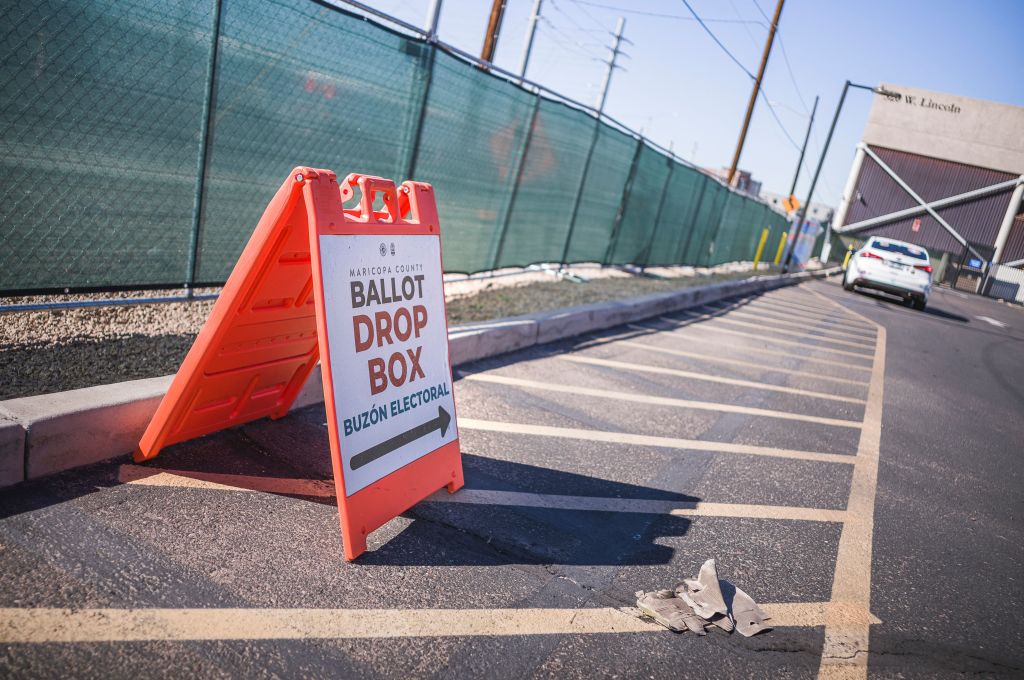
6 cases of alleged Arizona voter intimidation referred to DOJ

6 cases of alleged Arizona voter intimidation referred to DOJ
OLIVIER TOURON/AFP via Getty Images

(WASHINGTON) — Six cases of alleged voter intimidation at drop box locations in Arizona have been referred to the Justice Department in Washington, Secretary of State Katie Hobbs said Monday, as early voting options have been open for nearly two weeks across the state.

“Voter harassment may include gathering around ballot drop boxes questioning voters, brandishing weapons, taking pictures of people voting and following or chasing voters who are attempting to drop off their ballots, and it can all be considered voter intimidation. It is unacceptable,” Hobbs said in a release. “I will continue to forward reports received to law enforcement, and I urge law enforcement to take action to protect voters from ongoing intimidation.”

Attorney General Merrick Garland, asked on Monday about voter intimidation at Arizona ballot drop boxes, said, “The Justice Department has an obligation to guarantee a free and fair vote by everyone whose qualified to vote and will not permit voters to be intimidated.”

Five recorded complaints obtained by ABC News occurred between Oct. 17 and Oct. 22, outside ballot drop boxes at 501 S. 3rd Ave. in Phoenix and at the Mesa Juvenile Court, both in Maricopa County. Most described an instance of groups of individuals loitering near the drop boxes, filming and photographing voters as they returned their ballots and in some cases, taking photographs of the voters’ license plates. One report described individuals dressed in “camo-clad gear” and photos from election officials show at least two armed individuals outside the Mesa drop box Friday.

One incident report, filed on Oct. 20 at 12:30 p.m. at Mesa Juvenile Court detailed how a couple in their 70s, who parked their car in order to individually put their ballots in the drop box, said they were approached by a group of five or six men in the parking lot.

“As we were getting up to our car, two individuals took pictures of our license plate and our car. I got out and asked what they were doing. They claimed they were taking pictures for “election security” and I took pictures of them to report them to the DOJ for voter intimation and harassment. As we were pulling out, they continued to film my wife, myself and our car,” the complaint said.

Early voting in the 2022 midterm elections began Oct. 12 in Arizona, where 402,000 early ballots have been returned so far, according to data compiled by the secretary of state from 15 county recorders. Aside from voters and credentialed government or party officials, individuals must stay at least 75 feet away from secure drop box locations, according to Arizona law.

“There’s a group of people hanging out near the ballot dropbox filming and photographing my wife and I as we approached the dropbox and accusing us of being a mile (mule),” another incident report, filed on Oct. 17 at 6:40 p.m. at Mesa Juvenile Court said. “They took photographs of our license plate and of us and then followed us out the parking lot in one of their cars continuing to film.”

Accusations of being “mules” is in reference to a widely debunked, far-right film, ‘2,000 Mules,’ which falsely alleges that individuals hired by Democrats stuffed numerous drop boxes with potentially fake absentee ballots during the 2020 election.

Hobbs’ office in its release on Monday also referred at least one report of election worker harassment to law enforcement over the weekend after she and two other employees were sent a menacing and vulgar message: “Remember the French Revolution of 1799??….” it said.

Maricopa County Sheriff Paul Penzone told reporters on Monday his office also is working with the DOJ to identify which cases qualify as voter intimidation. Since voting began, he said his team has written two criminal reports and submitted those to the county prosecutor.

“I think it’s undermining who we are as a nation, and I think that it’s self-serving in many ways. And what do I see now as the sheriff of one of the biggest counties in the nation, I see that every day I’m dedicating a considerable amount of resources, just to give people confidence that they can cast a vote safely and that is absurd,” he said.

“The more folks that are creating problems, the more deputies that you’re gonna see on the streets focused on this versus burglaries and crimes against children and robberies and all the stuff we shouldn’t be doing. But we’ll come and we’ll babysit polling sites because people have to misbehave, if that’s what we have to do to protect democracy,” he added.

Last week, some individuals set up camp there and told ABC News affiliate KNXV they were out at a drop box in Mesa to “catch some Vitamin D” and with “Clean Elections USA” — a group that calls individuals to monitor drop box locations.

“We are looking for true Patriots to take a stand and watch the drop boxes. We want to gather video (and live witness evidence) of any ballot tampering that takes place in real time,” their website reads.

Former Trump adviser Steve Bannon hosted a woman named Melody Jennings last week on his podcast, who said she’s the founder of the group. Jennings said they’re going to find “mules” — another reference to the widely debunked “2,000 Mules” film.

Non-profit groups Arizona Alliance for Retired Americans and Voto Latino filed a lawsuit Monday seeking a restraining order against Clean Elections USA and the individuals they said have been gathering at and surveilling drop boxes in Arizona.

Maricopa County Board of Supervisors Chairman Bill Gates and Maricopa County Recorder Stephen Richer, who have faced death threats of their own as election workers, condemned the drop box watchers in a joint statement on Saturday.

“We are deeply concerned about the safety of individuals who are exercising their constitutional right to vote and who are lawfully taking their early ballot to a drop box. Uninformed vigilantes outside Maricopa County’s drop boxes are not increasing election integrity. Instead, they are leading to voter intimidation complaints. Although monitoring and transparency in our elections is critical, voter intimidation is unlawful.”

Kelly Townsend, a Republican and state senator, tweeted Monday, “I should not have to say this but wearing tactical gear while watching a ballot drop box could be considered voter intimidation. Don’t do it.”

ABC News’ Isabella Murray contributed to this report.

Copyright © 2022, ABC Audio. All rights reserved.
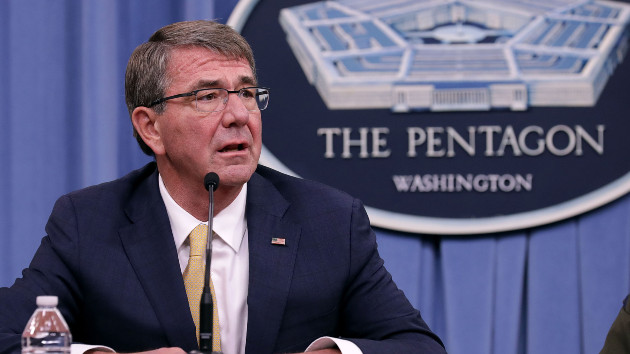
Former Defense Secretary Ashton Carter dies unexpectedly at 68

Former Defense Secretary Ashton Carter dies unexpectedly at 68
Chip Somodevilla/Getty Images

(WASHINGTON) — Former Defense Secretary Ashton Carter has died unexpectedly at the age of 68, according to family.

Carter died of a “sudden cardiac event” on Monday night in Boston.

He served as secretary of defense under former President Barack Obama from February 2015 to January 2017.

Story developing…

Copyright © 2022, ABC Audio. All rights reserved.
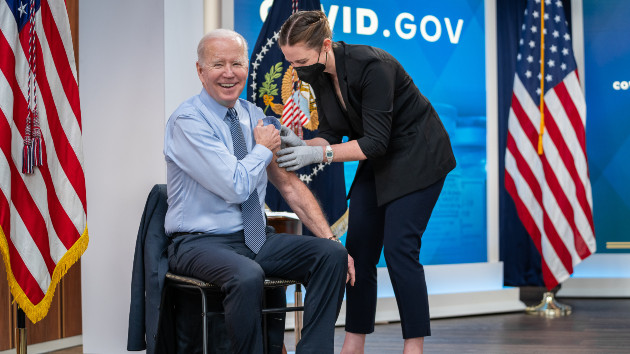
After getting COVID-19 booster, Biden to announce new initiatives alongside pharmacy execs

After getting COVID-19 booster, Biden to announce new initiatives alongside pharmacy execs
Official White House Photo by Katie Ricks

(WASHINGTON) — President Joe Biden will get his updated COVID-19 vaccine on Tuesday while calling on more Americans to do so ahead of the winter and holiday season, according to the White House.

When delivering remarks, Biden will be joined by leaders of major U.S. pharmacy chains Walgreens, CVS, Rite Aid and Albertsons, as well as Health and Human Services Secretary Xavier Becerra, the president’s chief medical adviser Dr. Anthony Fauci, Surgeon General Dr. Vivek Murthy and the White House COVID-19 response coordinator Dr. Ashish Jha “to discuss ongoing efforts to mobilize pharmacies to reach more Americans and encourage them to receive their updated COVID-19 vaccine,” according to a White House official.

“The President will again renew his call for all business, educational, and civic leaders to encourage their communities to receive their updated vaccines and keep their communities safe,” the official said in a statement.

More than 20 million Americans, including nearly one in five seniors, have already gotten their updated COVID-19 vaccine. The latest booster shots target two subvariants of the omicron variant, which are versions of the virus that are currently most dominant in the United States and around the world, according to the White House.

“While COVID-19 is not the disruptive force it was when the President took office, the virus continues to evolve. COVID-19, flu, and other respiratory illnesses spread more quickly in the winter, as people gather indoors,” the White House said in a statement. “As the weather gets colder, Americans must take action to stay protected.”

The Biden administration will also announce several initiatives on Tuesday to encourage Americans to get boosted.

In the coming weeks, Walgreens will team up with DoorDash and Uber “to provide free delivery of prescriptions of Paxlovid, an oral COVID-19 treatment, directly to the doorsteps of Americans living in underserved communities,” the White House said.

The U.S. Department of Health and Human Services will launch the #VaxUpAmerica Family Vaccine Tour, with pop-up COVID-19 vaccination events — including at the 2022 NASCAR Cup Series Championship in Arizona next month — and the distribution of tool kits at day cares, nursing homes, community health centers and other locations. The Biden administration will also encourage schools, businesses and other organizations around the country to host their own vaccination events, according to the White House.

The Centers for Medicare & Medicaid Services (CMS) will target seniors, with its efforts to reach people via email and telephone to provide information about the updated COVID-19 vaccines and how to get them, according to the White House.

The Biden administration will release a “fall playbook for businesses to manage COVID-19,” the White House said.

Biden, himself, “will call on every school district, college, and university in America to host at least one vaccination clinic by Thanksgiving,” according to the White House.

In addition, he will “call on employers to take actions like offering paid-time-off for vaccination, and working with local vaccine providers to host on-site vaccination clinics for employees,” the White House said.

Meanwhile, Albertsons, CVS, Rite Aid, Southeastern Grocers, Walgreens, Walmart and Sam’s Club have their own initiatives to help Americans get vaccinated.

“We have the tools we need to manage this moment,” the White House added. “For most Americans, if they get this updated COVID-19 vaccine, they can go about their lives this fall and winter with the peace of mind that they remain protected against serious illness. And, if they do get sick, there are widely available and easily accessible treatments that reduce the severity of illness, keep people out of the hospital, and save lives.”

Copyright © 2022, ABC Audio. All rights reserved.