
‘Low impulse control’: GOP Sen. Paul confronts Trump’s DHS pick Markwayne Mullin over ‘violence’ at confirmation hearing

‘Low impulse control’: GOP Sen. Paul confronts Trump’s DHS pick Markwayne Mullin over ‘violence’ at confirmation hearing
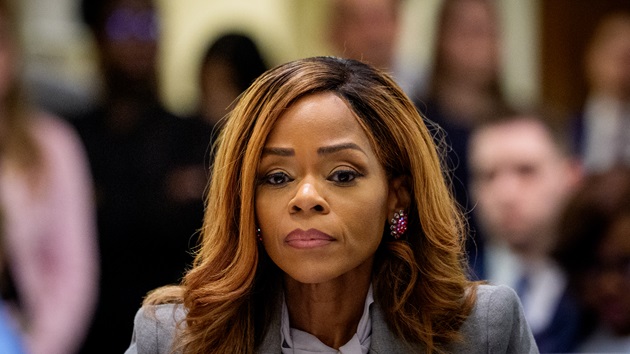
Chairman Sen. Rand Paul (R-KY) delivers an opening statement during a confirmation hearing for U.S. Sen. Markwayne Mullin (R-OK) to be the next Secretary of the Department of Homeland Security in the Dirksen Senate Office Building on March 18, 2026 in Washington, DC. (Chip Somodevilla/Getty Images)

(WASHINGTON) — Republican Sen. Markwayne Mullin’s confirmation hearing began with a personal confrontation between fellow Republican Sen. Rand Paul as Mullin seeks to take over the Department of Homeland Security from its embattled leader, Kristi Noem.

Paul, the Senate Homeland Security Committee chairman, sparred with Mullin over comments the Oklahoma senator reportedly made earlier this year regarding Paul’s voting record and assault by a neighbor in Kentucky in 2017.

“You told the media that I was a ‘freaking snake’ and that you completely understood why I had been assaulted,” Paul said.

Paul also pointed to Mullin’s previous public confrontations and temperament, adding that Mullin had “low impulse control.”

“Tell the world why you believe I deserve to be assaulted from behind, have six ribs broken and a damaged lung. Tell me to my face why you think I deserved it. And while you’re at it, explain to the American public why they should trust a man with anger issues,” Paul said.

“I just wonder if someone who applauds violence against their political opponents is the right person to lead an agency that has struggled to accept limits of the proper use of force,” he continued.

Before making his opening statement, Mullin fired back.

“I said I could understand, because of the behavior, you were having, that I could understand why your neighbor … did what he did,” Mullin said. “As far as my term of ‘snake in the grass,’ sir, I work around this room to try to fix problems. I’ve worked with many people in this room. It seems like you fight Republicans more than you work with us.”

Mullin, who President Donald Trump earlier this month tapped to take over the agency from Noem, asked Paul to let him earn his respect and said he would be secretary for all Americans.

Paul later played the tense moment at a November 2023 Health, Education, Labor and Pensions Committee hearing when Mullin stood up from his seat and appeared to prepare to physically fight Teamsters Union President Sean O’Brien as well as a montage of Mullin’s responses to the incident.

“I get it it’s about character assassination for you,” Mullin said to Paul. “That’s the way this game is played. I understand it. And you are making this about you, which is fine.”

Mullin noted that O’Brien, sitting directly behind him, came to the hearing on Wednesday as a “close friend.”

“As you can notice over my shoulder is my good friend, Sean O’Brien. Both of us have had conversations and shaken hands and agreed we could have done things different,” Mullin said. “Sean has become a close friend. We talk all the time. I have been on his podcast. It is how you handle your differences. Not like this, chairman.”

Paul told ABC News Capitol Hill Correspondent Jay O’Brien on Wednesday that he’s planning to hold a committee vote to advance Mullin’s confirmation out of the committee on Thursday — during which, Paul said he will vote no. That means Mullin still needs at least one Democratic vote to advance — and Democratic Sen. John Fetterman said he’s open to being that vote.

Fetterman previously said he was inclined to support Mullin, and Wednesday’s hearing didn’t change that, he told reporters.

Mullin pressed on Pretti comments

Lawmakers on the Senate Homeland Security Committee grilled Mullin, who has no law enforcement experience, throughout the day as the department he’s seeking to lead remains shut down due to a funding stalemate, with no clear end to that shutdown in sight.

Mullin’s hearing came as parts of DHS — from the Federal Emergency Management Agency to the Transportation Security Administration — are shut down amid a funding fight over Immigration and Customs Enforcement.

Democrats have said they will fund the department only if changes are made to the agency in the wake of the shooting deaths of Renee Good and Alex Pretti by federal law enforcement in Minneapolis earlier this year.

Sen. Gary Peters, the ranking member of the committee, pressed Mullin over his comments following the killing of Pretti, a Minneapolis nurse who was shot by federal agents during a protest in January.

After Pretti’s death, Mullin echoed initial statements from Noem and White House deputy chief Stephen Miller, calling Pretti “a deranged individual that came in to cause max damage.”

Noem later walked back her comments, claiming she did not have all of the facts at the time.

“I think I said this privately when we had a conversation. Those words probably should have been retracted. I shouldn’t have said that,” Mullin said to Peters, adding he was “responding immediately without the facts.”

“That’s my fault. That won’t happen as secretary,” Mullin said.

When Peters asked Mullin if he would apologize to Pretti’s family for his comments, Mullin stressed that the investigation into the shooting was ongoing.

“We’ll let the investigation go through, and if I’m proven wrong, then I will, absolutely,” he said.

Mullin asked about travel after ‘smell’ of war comments

Peters asked Mullin, who is not a veteran, about his comments to Fox News earlier this month where he suggested he knows what war “smells” like. Mullin admitted that he had never been out of the country for anything other than mission work and vacations.

Peters asked about the travel to Georgia and Azerbaijan that was listed in the FBI report on Mullin, but the nominee said those 2021 trips were classified.

“So where did you smell war?” Peters asked.

“Sir, I just said that this was classified,” Mullin responded.

Mullin on elections, FEMA

Democratic Sen. Elissa Slotkin asked Mullin about Trump’s controversial suggestion that Republicans “nationalize” elections and asked Mullin if he supported putting armed agents at polling stations.

“The only reason why my officers would be there, if there was a specific threat for them to be there, not for intimidation,” Mullin said.

Mullin appeared to counter the messaging of his predecessor when it came to Federal Emergency Management Agency and said the agency “needs to be restructured not eliminated.”

After the Senate Homeland Security Committee vote on Thursday, if his nomination is confirmed, it would then head to the Senate floor where he could be confirmed as soon as next week.

It is all but certain that Mullin will be confirmed as DHS secretary on the Senate floor.

ABC News’ Allison Pecorin and Jay O’Brien contributed to this report.

Copyright © 2026, ABC Audio. All rights reserved.
DNI Tulsi Gabbard testifies at threats hearing amid questions about Iran war, counterterrorism official’s resignation

DNI Tulsi Gabbard testifies at threats hearing amid questions about Iran war, counterterrorism official’s resignation
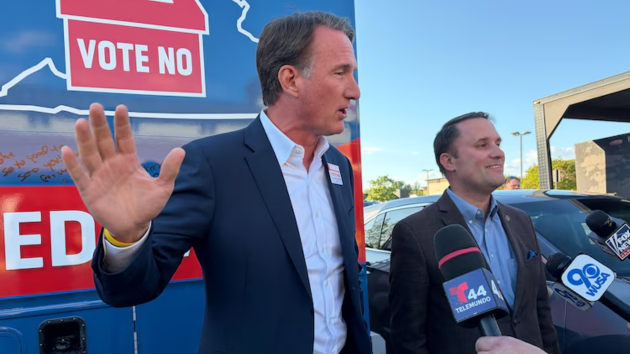
U.S. Director of National Intelligence Tulsi Gabbard attends an event where President Donald Trump delivered an announcement on his Homeland Security Task Force in the State Dinning Room of the White House on October 23, 2025 in Washington, DC. (Photo by Alex Wong/Getty Images)

(WASHINGOTN) — Director of National Intelligence Tulsi Gabbard returns to Capitol Hill this week for an annual set of hearings on worldwide threats — her most significant public appearance in months and her clearest opportunity yet to address the intelligence picture surrounding the war in Iran.

Lawmakers are expected to press Gabbard on the administration’s handling of the Iran conflict, homeland security concerns, election integrity and the broader global threat environment at a moment of rising tension.

The hearings will also offer a rare extended look at an intelligence chief who has spent much of the past year largely out of public view. The Senate Intelligence Committee is scheduled to hear from her on Wednesday, March 18, with the House hearing set for Thursday, March 19.

She heads into the hearings under fresh scrutiny after the resignation of Joe Kent, the administration’s top counterterrorism official, who stepped down Tuesday over his objections to the Iran war — the highest-profile administration official to resign publicly over the conflict.

An ODNI official told ABC News that Gabbard was not asked by the White House to fire Kent, pushing back on a report first aired by Fox News.

Kent’s resignation sharpened questions already hanging over the administration’s case for war — whether Iran posed an imminent threat to the United States.

In his resignation letter, Kent said he could not “in good conscience” support the war and argued that Iran posed “no imminent threat” to the nation, directly undercutting President Donald Trump’s repeated public justification for the conflict.

Trump has previously said Tehran posed an imminent threat and was “very nearly” in a position to strike.

Hours after Kent’s resignation became public, Gabbard moved to publicly back Trump’s authority to make that call.

In a post on X, she said the president, as commander in chief, is responsible for determining “what is and is not an imminent threat” and whether action is necessary to protect U.S. troops, the American people and the country.

She added that ODNI’s role is to coordinate and integrate intelligence, so the president has the best information available to inform his decisions, and said Trump had concluded Iran posed an imminent threat after reviewing the available intelligence.

She did not directly address Kent’s allegations or mention him by name.

The moment is especially striking for Gabbard because few figures in Trump’s orbit spent more time warning about regime change wars, intelligence failures and the cost of Washington interventionism.

As a 2020 Democratic presidential candidate, she was so vocal in her opposition to war with Iran that she sold “No War With Iran” T-shirts.

In an exclusive interview with ABC News last year, she again spoke about diplomacy, military restraint and the human cost of conflict in terms that reflected a worldview she has carried for years.

In that interview, Gabbard said the stress of her first deployment in her mid-20s turned part of her hair white, and that she kept the streak as a reminder of the high human cost of war.

“War must always be the last resort, only after all measures of diplomacy have been completely exhausted,” she told ABC News in the interview.

This week’s hearings will also unfold against the backdrop of Gabbard’s broader and unusually quiet tenure. Before taking office, she was rarely far from public view, frequently appearing on television, podcasts and social media.

As DNI, that version of her has largely faded from public view.

In recent months, she has appeared mostly in glimpses, at major administration moments.

Gabbard, a lieutenant colonel in the Army Reserve and the first person in U.S. history to serve as DNI while in military uniform, appeared in uniform at Dover Air Force Base earlier this month during the dignified transfer of six American soldiers killed in a drone strike in Kuwait in the opening hours of the war with Iran.

She also heads into the hearing with other controversies still hanging over her.

Gabbard has drawn scrutiny for her role in the administration’s election integrity push, including her appearance outside the FBI’s operation in Fulton County, Georgia, in January, where federal agents seized election materials tied to the 2020 election, and her subsequent acknowledgment that she arranged a call between President Donald Trump and the agents involved. She has also faced continuing questions about her investigations into election security in Puerto Rico and Arizona.

ABC News previously reported that Gabbard arranged a call between Trump and FBI agents involved in the seizure of election materials in Fulton County, an unusual move given the sensitivity of the investigation. In Arizona, a senior administration official told ABC News that Gabbard was not on the ground but was still “working across the agency to ensure election integrity.”

The hearing is shaping up as more than a routine annual threat assessment.

It will be the clearest public test yet of how Gabbard explains the role she has carved out inside the Trump administration, and how she reconciles the anti-war politics that helped define her rise with the office she now holds at the center of a war she is being asked to defend.

Copyright © 2026, ABC Audio. All rights reserved.
Chief Justice Roberts: ‘Personally directed hostility is dangerous, and it’s got to stop’

Chief Justice Roberts: ‘Personally directed hostility is dangerous, and it’s got to stop’
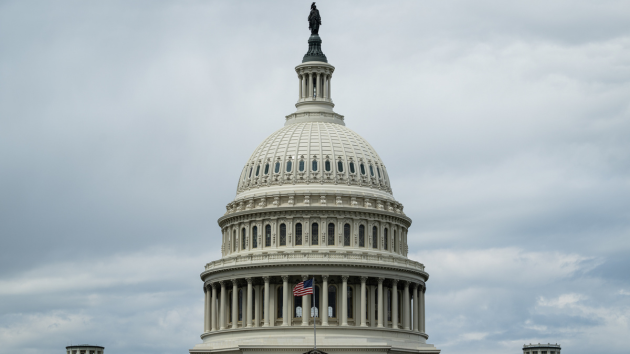
John Roberts, chief justice of the U.S. Supreme Court, during the formal group photograph at the Supreme Court in Washington, D.C., U.S., on Friday, April 23, 2021. Amy Coney Barrett’s confirmation by the Senate last year was a touchstone accomplishment for Donald Trump and congressional Republicans that solidified a 6-3 conservative majority on the court just eight days before the U.S. held its presidential election. (Photographer: Erin Schaff/The New York Times/Bloomberg via Getty Images)

(WASHINGTON) — In a rare public appearance, Chief Justice John Roberts on Tuesday addressed criticism of the Supreme Court, the federal judiciary and individual judges, saying “personally directed hostility is dangerous, and it’s got to stop.”

Roberts spoke generally about attacks on courts and judges, which have surged in recent years, during a conversation with U.S. District Court Judge Lee Rosenthal at the Baker Institute at Rice University.

He did not address any specific criticism or controversy, though the comments come at a time of heightened scrutiny of the court’s recent landmark decisions on presidential power.

“It does come with the territory,” Roberts said of criticism. “It can very much be healthy. We don’t believe that we’re flawless in any way. It is important that — important that our decisions are subjected to scrutiny, and they are. The problem sometimes is that the criticism can move from a focus on legal analysis to personalities.”

Violent threats against individual judges and justices have spiked, according to law enforcement officials. Four years ago, a man was arrested outside the home of Justice Brett Kavanaugh with the intention of assassinating him. He was later convicted and sentenced to eight years in prison.

Roberts was careful to say that no “one political perspective” is responsible for the threats, but that as they become more “personal” they “can be actually quite dangerous.”

“Judges around the country work very hard to get it right,” he said, “and if they don’t, their opinions are subject to criticism. But personally directed hostility is dangerous, and it’s got to stop.”

The remarks came on the heels of a fresh wave of criticism of the Supreme Court from President Donald Trump, who has accused Roberts and several of his peers — some of whom Trump appointed to the court — of being “disloyal” and “unpatriotic” after they ruled against his sweeping global tariffs program. Trump alleged on Monday that the court is a “weaponized and unjust political organization” that is “hurting our country.”

Trump has also singled out U.S. District Judge James Boasberg for intense criticism after Boasberg on Friday blocked the Justice Department’s subpoenas of Fed Chair Jerome Powell as part of a criminal investigation into his handling of a multibillion-dollar renovation of the Federal Reserve Building.

Last year, Trump called for Boasberg’s impeachment after the judge temporarily blocked the administration’s fast-tracked deportations to Venezuela. The comments prompted a rare public response at the time from Roberts, who said in a statement that impeachment was not an appropriate recourse for a losing party in a case.

Overall, Trump has had a favorable track record at the high court during the first year of his second term, winning nearly every emergency request of permission to move forward with controversial policies being litigated in lower courts. He has also benefitted from a 2025 landmark ruling that limited the ability of judges to issue nationwide injunctions and a sweeping 2024 decision granting presidential immunity from criminal prosecution.

“I actually try not to read outside criticism too much,” Roberts told Rosenthal. “And it’s, you know, just because you’re on to something else, and you don’t want to worry too much about — you’ve done your best and that’s all you can do.”

Copyright © 2026, ABC Audio. All rights reserved.
Trump blasts NATO after allies rebuff his call to help reopen Strait of Hormuz

Trump blasts NATO after allies rebuff his call to help reopen Strait of Hormuz
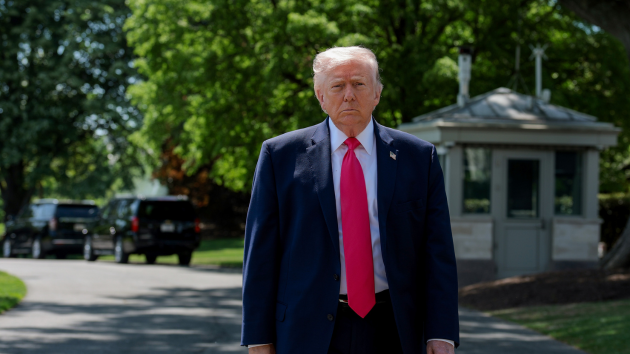
U.S. President Donald Trump speaks to members of the media onboard Air Force One on March 15, 2026 while en route to Joint Base Andrews, Maryland from West Palm Beach Florida. President Trump returned to Washington D.C. on Sunday following a weekend trip to Florida. (Photo by Nathan Howard/Getty Images)

(WASHINGTON) — After NATO allies rebuffed his call to assist the U.S. in securing the critical Strait of Hormuz, President Donald Trump said on Tuesday the U.S. doesn’t need their help after all.

“I think NATO’s making a very foolish mistake,” Trump said, airing out his grievances with the transatlantic alliance during an Oval Office meeting with Ireland’s Taoiseach Micheál Martin.

“This was a great test because we don’t need them, but they should have been there,” the president added.

Trump over the weekend requested U.S. partners in Europe and Asia send warships to help police the strait, where roughly one-fifth of the world’s oil supply is caught in the crosshairs of the U.S. and Israeli war with Iran.

No country has publicly announced plans to send ships or other kinds of assistance to unblock the strait.

“This is not our war; we did not start it,” German Defense Minister Boris Pistorius said on Monday.

“We will not be drawn into the wider war,” British Prime Minister Keir Starmer similarly said.

Despite the cold shoulder from several allies, President Trump on Monday said that “numerous countries” had told him “they’re on the way.” Trump did not identify which countries, and said that Secretary of State Marco Rubio would soon provide a list.

As of Tuesday afternoon, no list had been released.

When asked what countries would join in a coalition to secure the strait, Trump said he’s had “great support from the Middle East” including Qatar, the United Arab Emirates, Saudi Arabia, Bahrain and “of course Israel” — but did not explicitly say what those countries would be doing.

In a social media post on Tuesday, Trump wrote the U.S. military had been “informed by most of our NATO ‘Allies’ that they don’t want to get involved with our Military Operation against the Terrorist Regime of Iran, in the Middle East, this, despite the fact that almost every Country strongly agreed with what we are doing, and that Iran cannot, in any way, shape, or form, be allowed to have a Nuclear Weapon.”

Trump said the U.S. didn’t need the assistance from those countries, or from “Japan, Australia and South Korea.”

“Well, we don’t need too much help, and we don’t need any help, actually,” Trump later said in the Oval Office.

When asked if he would retaliate against NATO countries for not heeding his call or if he was rethinking the alliance, Trump said no.

“I have nothing currently in mind. But I will say that I’m not exactly thrilled,” Trump said.

Trump pointed to the assistance the U.S. provided to help Ukraine fight Russia’s invasion under the Biden administration as he criticized NATO for not stepping in to help with reopening the Strait of Hormuz.

“You would have thought they would have said, ‘We’d love to send a couple of minesweepers,'” Trump said. “It’s not a big deal. It doesn’t cost very much money. But they didn’t do that. So, you know, it’s — I think it’s very unfair to the United States, not to me, but to the United States.”

Meanwhile, the impact of Iran’s stranglehold is being felt abroad and at home. The price of oil has hovered around $100 a barrel this week. In the U.S., the national average for a gallon of gas is $3.79 — up about 88 cents from a month ago.

President Trump had also called on China, which Iran is still allowing to transit the Gulf, to assist in the Strait of Hormuz. The response from China’s foreign ministry was a call for all parties to immediately stop military operations.

President Trump announced Tuesday that his previously planned trip to China is now postponed for five to six weeks. Trump didn’t provide details on why, only that he was “resetting the meeting” originally scheduled for early April.

“I look forward to seeing President Xi. He looks forward to seeing me, I think,” Trump said.

Copyright © 2026, ABC Audio. All rights reserved.
Mississippi River mayors warn AI, fuel costs and drought are straining key waterway

Mississippi River mayors warn AI, fuel costs and drought are straining key waterway
Tugboat pushing a barge upstream on the Mississippi River at West Memphis, Arkansas. (Ron Buskirk/UCG/Universal Images Group via Getty Images)

(WASHINGTON) — Mayors from Minnesota to Louisiana traveled to Washington earlier this month with a bipartisan message that protecting the Mississippi River is not just an environmental issue, it is a matter of national security.

The mayors met with lawmakers and federal officials, including the Environmental Protection Agency and the Department of Homeland Security, as part of their annual Mississippi River Cities & Towns Initiative fly-in, and later spoke with ABC News about growing pressures facing the river corridor.

Stretching more than 2,300 miles through 10 states, the Mississippi River forms the backbone of one of the most important economic corridors in America. According to data shared by the mayors’ coalition, the river system generates nearly $500 billion in annual revenue and directly supports about 1.5 million jobs.

Its waters also carry a massive share of the nation’s agricultural exports, making the river central to U.S. and global food supply chains. According to the National Park Service, the Mississippi River Basin accounts for 92% of America’s agricultural exports, including 78% of the world’s exports of grains and soybeans.

Founded in 2012, the Mississippi River Cities & Towns Initiative (MRCTI) brings together local governments along the river corridor to coordinate priorities including clean water, economic stability, disaster resilience and food security.

However, this year’s trip to Washington came with new urgency.

Several mayors said the rise of artificial intelligence, declining infrastructure, growing demand for water and energy, geopolitical tensions in the Middle East affecting fuel prices and increasingly severe weather events are placing unprecedented pressures on the region.

One concern raised during the discussions was growing interest from water-scarce regions in the western U.S.

“The Colorado River Basin is looking at the Mississippi River Basin to move water into areas of Phoenix, Vegas — the places that are most water insecure on the continent,” Colin Wellenkamp, executive director of MRCTI and a Missouri state representative, told ABC News.

He added they “are looking into the Mississippi River basin for their water supply for the future.”

Coalition co-chair Mayor Melisa Logan of Blytheville, Arkansas, said the river system has become a national security concern as water demands grow.

“This water is absolutely essential for the security of the country, and you move it to another basin irresponsibly, right? That puts the nation at risk,” Logan told ABC News.

Several major U.S. water systems are already governed by interstate compacts, including the Great Lakes Water Compact and the Delaware River Basin Compact. These legally binding agreements, often approved by Congress, help to establish rules for managing and protecting shared water resources.

Supporters of a Mississippi River Compact say a similar framework could help coordinate policy across the 10 states that rely on a basin that supports national and international trade and food supply chains.

“That’s why these mayors are pursuing a Mississippi River Compact to protect the Mississippi,” Wellenkamp said.

He noted that his state passed a law for such an agreement.

“The other nine states aren’t far behind, because this is a real risk in the future,” Wellenkamp added.

Beyond water access, many mayors said the rising cost of disasters has become another urgent concern for communities along the river.

Logan, Blytheville’s mayor, said protecting the river requires key coordination across state lines, as communities along the river often struggle to secure federal funding for projects that cross state boundaries.

“Typically, they do it state by state by state,” Logan said, referring to federal funding programs. “But these impacts are multi-state by watershed.”

According to MRCTI materials, natural disasters along the Mississippi River corridor have caused more than $250 billion in losses since 2005.

Mayor Buz Craft of Vidalia, Louisiana, said local leaders often face delays when seeking federal disaster assistance.

“We need Congress to quit changing the goal post, for example, when we have an issue, whether it’s a tornado or hurricane,” he said.

Changing White House administrations can also put them back to square one, Craft noted.

“Just when you are about to get that funding for that past disaster they say ‘Oh, now you got to go through this,’ start all over and apply to this program, and it’s really a rat race,” he said.

Global instability is also beginning to show up in everyday costs for residents along the river. Several of the mayors said fuel prices along the Mississippi River recently jumped about 20 cents overnight. Those increases can quickly ripple through food prices, the mayors said, because much of the nation’s food supply moves by truck, rail or barge along the Mississippi River system.

Meanwhile, some communities are also preparing for a different kind of pressure, the rapid expansion of artificial intelligence infrastructure. The data centers that power AI systems require massive amounts of electricity and water for cooling, placing new increased demands on local power grids and water systems.

Mayor David Goins of Alton, Illinois, said companies have already begun exploring potential sites in his city.

“I think it’s important to get in front of it and get ahead of it,” he said. “This meeting right here is timely to get the resources that we can, that we can have at our disposal through different companies, organizations, to start preparing ordinances and start getting some type of framework or groundwork, because it’s coming.”

For the mayors gathered in Washington, the message they hoped policymakers would hear was simple: the Mississippi River’s importance stretches far beyond the cities along its banks.

“If you don’t live on the Mississippi River, you don’t necessarily understand the importance of the Mississippi River Basin to our entire continent,” Quincy, Illinois, Mayor Linda Moore said. “One in 12 people in the world is fed by food that flows up and down the Mississippi on a barge or from the river itself.”

For the mayors who traveled to Washington this week, the Mississippi River is more than a waterway — it is an economic lifeline whose currents shape American agriculture, trade and communities across the country.

Mayor Hollies Winston of Brooklyn Park, Minnesota, said the river’s influence reaches far beyond the 10 states it touches, and may stretch long into the future.

“If that water is not protected, we don’t know the impact that that has on the economy 15, 20, 30 years from now,” Winston said.

Copyright © 2026, ABC Audio. All rights reserved.
Senate is expected to take up the SAVE America Act this week. Here’s what to know

Senate is expected to take up the SAVE America Act this week. Here’s what to know
President Donald Trump speaks as Vice President JD Vance listens in the Oval Office of the White House, March 16, 2026, in Washington. (Alex Wong/Getty Images)

(WASHINGTON) — The Senate is expected to take up the SAVE America Act this week after President Donald Trump earlier this month thrust the bill into focus with a threat to withhold his signature on all other legislation until the GOP voting reform bill hits his desk.

Debate on the bill could kick off in the Senate as soon as Tuesday, but on Monday the president seemed doubtful that it would get to his desk.

“I think it’s imperative that it gets done. I’m not sure it is,” Trump said when asked about the bill’s outlook.

“I hope [Senate Majority Leader] John Thune can get it across the line. He’s trying. I mean, he told me this morning. I spoke to him, he’s trying,” Trump said. “I think it’ll be a very, very bad thing for our country if they don’t. We’re just asking for basic things,” Trump said.

Things could get quite heated on the floor, but ultimately the legislation, despite having a passionate base of GOP supporters, will almost certainly fail.

Here’s a look at what to know about this bill as it takes center stage this week:

What is the SAVE America Act?

The SAVE America Act is a Republican-led election reform bill that would require photo ID at polling places and mandate that states obtain proof of citizenship before registering a person to vote in a federal election.

Trump has said that passing the SAVE America Act is a top priority. The president has also tacked additional provisions onto the list of things he would like to see in the law: restricting mail-in ballots, banning transgender women from playing in women’s sports and gender-affirming surgeries for minors.

Will the bill the Senate is considering include Trump’s additional demands?

The Senate is expected to consider amendments to the SAVE America Act aimed at adding Trump’s demands. But those amendments would need 60 votes to pass, and are not expected to get enough support to ultimately be tacked onto the bill.

What do Democrats think of the bill?

Senate Democrats have been clear they intend to oppose this legislation, which they say would make it more difficult for millions of Americans to vote.

During a press call on Sunday, Democratic Leader Chuck Schumer called the bill “one of the most despicable pieces of legislation I’ve come across in the many years I’ve been a legislator.”

Democrats have been quick to underscore that the bill does more than require voters to show ID at the polling place. They say it amounts to an effort to nationalize elections and could lead to many people being turned away at their polling place.

What can be expected on the Senate floor this week?

The Senate is expected to hold a potentially lengthy debate on the floor this week as they consider the bill.

It will be a contentious couple of days during which the floor will be open for nearly unlimited debate on the bill. This debate could stretch into this weekend, but the result is already baked. When lawmakers run out of steam to keep debating, there will be a vote to move forward with the bill that requires 60 votes to advance. Democrats will almost certainly block it, and the bill will fail.

Will the SAVE America Act pass?

It is highly unlikely that the SAVE America Act will pass the Senate.

Though there’s going to be a lot of debate on the bill, the Senate rules that require 60 votes to pass most legislative matters will remain intact. That means that even if every Senate Republican were to cast a vote in favor of this legislation, at least seven Democrats would need to support it for it to pass.

Democrats have vowed to block the bill. Without their support, it will fail.

Could senators change the rules?

Yes, they could. But they won’t.

The Senate filibuster rule requires 60 votes to pass most legislative matters into law. Senators have the ability to change their rules with a simple majority of votes, and they’ve faced considerable pressure from Trump and others to do so.

But Thune has been consistent throughout his time as party leader about the lack of support within the Republican conference to change the Senate’s rules. Thune is a supporter of the Senate filibuster, and he has been clear there are not the votes to change the filibuster rule.

Senators are not expected to make modifications to the threshold of votes necessary to pass this bill. Without those changes, its hard to see how this would pass.

If the Senate fails to pass it, what happens?

Then it’s back to the drawing board.

This week’s actions amount to a good-faith effort by Senate Republicans to demonstrate that they are trying to make good on Trump’s priority. But this is largely a messaging vote unlikely to get the support it needs.

The House could take further action to try to revive the bill. But Democratic opposition in the Senate makes it unlikely that any renewed efforts will see a different outcome.

What’s less clear is whether this will be enough to back Trump off of his threat to withhold his signature on all other bills.

Editor’s note: This story has been updated to reflect the elements of the House-passed bill.

Copyright © 2026, ABC Audio. All rights reserved.
Trump says he’ll have ‘honor’ of taking Cuba as country struggles with energy crisis

Trump says he’ll have ‘honor’ of taking Cuba as country struggles with energy crisis
.S. President Donald Trump speaks during a lunch with the Trump Kennedy Center Board Members in the East Room of the White House on March 16, 2026 in Washington, DC. (Alex Wong/Getty Images)

(WASHINGTON) — President Donald Trump said on Monday during a signing event in the Oval Office that he thinks he’ll have the “honor” of taking Cuba.

“It’s a failed nation,” Trump said. “They have no money, they have no oil, they have no nothing. They have nice land. They have nice landscape. You know, it’s a beautiful island.”

“All my life I’ve been hearing about the United States and Cuba,” Trump continued. “You know, when will the United States do it? I do believe I’ll [have the] honor of taking Cuba. That’d be good. That’s a big honor.”

The president’s comments came as Cuba was struggling with an energy crisis and a near-total blackout, according to local officials. The Cuban Ministry of Energy and Mines said Monday there was a “total disconnection” of the National Electroenergetic System, which is known as SEN. Cubans are facing limited water supplies, a loss of basic services in hospitals as well as access to medicine, sanitation and food, according to reports.

The United States this year put in place a blockade, cutting off Havana’s access to foreign oil shipments, including those from Venezuela.

The Cuban ministry said on Tuesday that it was working to restore the system after earlier saying the “causes are being investigated and protocols for restoration are beginning to be activated.” 

When pressed during the Oval Office event about what “taking” the country could mean, Trump responded: “I think I can do anything I want with it.”

Trump announced additional tariffs in January on countries that provide oil to Cuba. He acknowledged while speaking to Politico that the United States’ intervention in Venezuela has contributed to Cuba’s struggle. 

“Well, it’s because of my intervention, intervention that is happening,” Trump told Politico. “Obviously, otherwise they wouldn’t have this problem. We cut off all oil, all money … everything coming in from Venezuela, which was the sole source.” 

Trump told reporters on Air Force One on Sunday that he believes Cuba will soon “make a deal” with the U.S. 

“I am holding Cuba — Cuba is a failed nation — Cuba also wants to make a deal, and I think we will pretty soon either make a deal or do whatever we have to do,” Trump said on Sunday. “The president added that he thinks “something will happen with Cuba pretty quickly,” but that “we’re going to do Iran before Cuba.”

Trump has previously floated a “friendly takeover” of Cuba but hasn’t yet provided any specifics on what a possible “takeover” could look like.

In a rare move on Friday, Cuba’s president publicly acknowledged that his government was holding secretive talks with the U.S. as Trump intensifies his pressure campaign against the regime. 

“Cuban officials have recently held talks with representatives of the United States government,” President Miquel Díaz-Canel said during a televised address on Friday. 

“We want to avoid manipulation and speculation,” Díaz-Canel later added, explaining that the talks were still “in their first phase” and that negotiators from both countries were working “to establish an agenda.”

“As the president stated, we are talking to Cuba, whose leaders should make a deal, which he believes ‘would be very easily made,'” a Trump administration official told ABC News when asked about the Cuban leader’s statements. 

“Cuba is a failing nation whose rulers have had a major setback with the loss of support from Venezuela and with Mexico ceasing to send them oil,” the official continued. 

Little is known about the contours of any potential deal, but both the president and seasoned diplomats who have worked closely with Cuba for years have signaled they expect to see the regime collapse.

Copyright © 2026, ABC Audio. All rights reserved.
Top Trump counterterror adviser resigns over Iran war: ‘No imminent threat’

Top Trump counterterror adviser resigns over Iran war: ‘No imminent threat’
Joe Kent, director of the National Counterterrorism Center, testifies during the House Homeland Security Committee hearing titled “Worldwide Threats to the Homeland,” in Cannon building on Wednesday, December 11, 2025. (Tom Williams/CQ-Roll Call, Inc via Getty Images)

(WASHINGTON) — The Trump administration’s top counterterrorism official Joe Kent announced his resignation Tuesday over opposition to the Iran war, becoming the highest-profile administration official to step down publicly over the conflict.

In a resignation letter posted publicly on social media, Kent said he could not “in good conscience” support the war, which is now in its third week.

“Iran posed no imminent threat to our nation, and it is clear that we started this war due to pressure from Israel and its powerful American lobby,” Kent, who served as the director of the National Counterterrorism Center, wrote in his resignation letter.

The National Counterterrorism Center is housed within the Office of the Director of National Intelligence. ABC News has reached out to ODNI for comment.

ODNI says Kent oversaw the U.S. counterterrorism and counternarcotics enterprise and, according to his biography, he served as the principal counterterrorism adviser to the president.

ABC News has reached out to the White House for comment.

Kent is a combat veteran who served more than 20 years in the U.S. Army and completed 11 combat deployments in the Middle East.

Kent also invoked a deeply personal loss in explaining his decision to step down: he is a Gold Star husband whose late wife, Navy Senior Chief Petty Officer Shannon Kent, was killed in action during a suicide bombing while serving in Syria in 2019.

In his resignation letter, Kent wrote, “As a veteran who deployed to combat 11 times and as a Gold Star husband who lost my beloved wife Shannon in a war manufactured by Israel, I cannot support sending the next generation off to fight and die in a war that serves no benefit to the American people nor justifies the cost of American lives.”

Copyright © 2026, ABC Audio. All rights reserved.
Top Democrats refer Noem to DOJ for alleged perjury

Top Democrats refer Noem to DOJ for alleged perjury
U.S. Secretary of Homeland Security Kristi Noem testifies before the House Judiciary Committee on March 04, 2026 in Washington, DC. (Photo by Heather Diehl/Getty Images)

(WASHINGTON) — The two top Democrats on the House and Senate Judiciary committees are referring outgoing Department of Homeland Security (DHS) Secretary Kristi Noem to the Department of Justice for perjury due to her testimony to congressional committees earlier this month, according to a letter sent to Attorney General Pam Bondi.

Sen. Dick Durbin of Illinois and Rep. Jamie Raskin of Maryland allege that Noem’s statements on a variety of topics including DHS following judges’ orders and a controversial multimillion-dollar ad campaign “appear to violate criminal statutes prohibiting perjury and knowingly making false statements to Congress.”

In response to the letter, a DHS spokesperson said “Any claim that Secretary Noem committed perjury is categorically FALSE.”

A Justice Department spokesperson said, “The DOJ has received the latest political stunt from the Democrats who should instead vote to reopen the Department of Homeland Security.”

President Donald Trump fired Noem the day after her testimony concluded and announced that he was appointing her to a new role as special envoy to the Shield of the Americas, a coalition of Latin American countries the White House says is committed to cooperating with the U.S. in taking on drug cartels and securing the U.S. border. He said he had nominated Oklahoma Republican Sen. Markwayne Mullin to head DHS when Noem’s tenure ended on March 31.

The Democrats allege that Noem misled Congress when she said that DHS had followed court orders while federal judges have ruled a number of times that it had not.

They also cited her testimony over contracts for a $220 million DHS ad campaign and her assertion that Trump had signed off on it. A day later, Trump told Reuters, “I never knew anything about it.”

“New public reporting, however, indicates that those statements may have been false. It has been reported that not only did the Secretary “handpick” four companies for the ad campaign, but procurement records show the “ad work was awarded using ‘other than full and open competition,'” and the four companies were politically connected to Noem and her allies,” according to the letter. 

Durbin and Raskin also allege Noem misled Congress when she testified that top adviser Corey Lewandowski had “no authority” to make decisions for the department.

“Secretary Noem’s denial of Corey Lewandowski’s role in DHS contract approval may also have been false. It has been widely reported that Mr. Lewandowski asserts approval authority over contracts and grants that exceed $100,000.27 A similar approval process reportedly exists for policy decisions, and as a recently published document shows, Mr. Lewandowski’s signature is visible above Secretary Noem’s on a February 2025 document reversing temporary protected status for Haitians.”

Lewandowski is reportedly leaving his position as a special government employee. He did not respond to ABC News’ request for comment on his future at DHS.

The Democrats also allege Noem made false statements about conditions in ICE detention centers adhering to federal detention standards while ICE internal audits documented “significant failures to meet medical care standards.”

And they say her assertion that ICE did not detain U.S. citizens is false and cited 170 cases of citizens being detained in some cases for days without an opportunity to prove their citizenship.

“Making false statements to Congress, and making false statements under oath, are federal crimes,” the letter says. “While we have low expectations that you will pursue this matter given your partisan weaponization of the Department of Justice, we note that the statute of limitations for perjury and for knowingly and willfully making false statements to Congress is five years.”

Copyright © 2026, ABC Audio. All rights reserved.

DHS providing furloughed FEMA staff with unemployment resources amid shutdown

DHS providing furloughed FEMA staff with unemployment resources amid shutdown
The U.S. Homeland Security Federal Emergency Management Agency (FEMA) sign at Federal Center Plaza in Washington, D.C., Feb. 15, 2026. (Ken Cedeno/Reuters, FILE)

(WASHINGTON) — The Department of Homeland Security (DHS) is encouraging Federal Emergency Management Agency (FEMA) employees who are furloughed due to the partial government shutdown to apply for unemployment, according to internal documents reviewed by ABC News.

The shutdown directly affects the Transportation Security Agency (TSA) and FEMA, which are not funded until Congress can resolve its differences over funding the agency.

The information went to FEMA employees who are furloughed and now asked to file with unemployment departments in the state in which they are based.

DHS is asking creditors for “flexibility” for its employees “who are experiencing challenges with making timely payments, including consideration of waiving any late fees associated with delayed or incomplete mortgage or rent payments until the situation is resolved.”

“Because DHS employees will not receive pay during the lapse in appropriations, many are experiencing difficulty in meeting their financial obligations, including rent and mortgage payments,” a letter dated March 15 to creditors from DHS says. “This challenge is compounded by the fact that many employees are still affected by the previous 43-day lapse in appropriations. This lapse is expected to be temporary and is entirely beyond our employees’ control.”

Funding for DHS lapsed in mid-February when Democrats refused to vote for it, demanding that reforms be made to Immigrations and Customs Enforcement (ICE) in the wake of its immigration enforcement operations, in particular in Minnesota, where Renee Good and Alex Pretti were fatally shot during encounters with federal agents in January. The Trump administration accuses congressional Democrats of playing politics at the expense of the American people.

“Democrats have cut off resources and funding for FEMA, the U.S. Coast Guard, and thousands of federal law enforcement officers — jeopardizing America’s border security, maritime safety, and ability to respond to emergencies,” the White House said in a statement last week.

Americans’ safety and security are on the line each day the Democrat Shutdown continues.”

On Monday, House Minority Leader Hakeem Jeffries called on Democrats to join forces behind a discharge petition that would fund all DHS agencies except for ICE. A vote on similar legislation failed earlier in the Senate but Jeffries aims to put House Republicans on the record as well, though he would need at least four Republicans to vote with Democrats.

The government was shut down for 43 days in October and November over Democrats’ push to extend Affordable Care Act subsidies, which were cut in President Donald Trump’s tax and spending bill.

ABC News’ John Parkinson and Lauren Peller contributed to this report.

Copyright © 2026, ABC Audio. All rights reserved.