
Biden visits Florida to meet with first responders, families impacted in Surfside collapse

Yuri Gripas/Abaca/Bloomberg via Getty Images

(SURFSIDE, Fla.) — Biden and first lady to meet with families of Surfside condo collapse victims
The death toll has risen to 18 after the bodies of two children were found on Wednesda…

President Joe Biden is on the ground in Surfside, Florida, Thursday following the devastating partial collapse of a beachside condominium building last week that has killed at least 18 people.

The president departed the White House early Thursday morning and was planning to spend nearly eight hours on the ground in Florida. He’s already met with local officials and thanked first responders engaged in the ongoing search efforts ahead of consoling families affected by the disaster and delivering remarks at 3:50 p.m. ET. First lady Jill Biden is accompanying him for the visit.

At an earlier command briefing with local officials, seated next to Florida’s Republican Gov. Ron DeSantis, Biden immediately made a big offer to cover the cost of the response effort.

“I think there’s more we can do, including, I think we have the power, and I’ll know shortly, to be able to pick up 100% of the cost to the county and the state,” Biden said, eliciting a surprised reaction from Miami-Dade mayor Daniella Levine Cava, who put her hand on Biden’s arm.

“I think the governor will you tell you, anything he asked for, he got,” Biden said, ahead of DeSantis nodding in agreement.

Biden took a moment to turn to politics, noting the bipartisan display of cooperation

“We’re letting the nation know we can cooperate when it’s really important,” Biden said.

Meeting later with a group of first responders, Biden was effusive with praise.

“I just want you to know that we understand,” he told the responder. “What you’re doing now, is just hard as hell. Even psychologically. And I just wanted to say thank you. Thank you, thank you, thank you, thank you.”

He also invoked three personal stories to demonstrate the importance of first responders in his own life, referring to his experience having an aneurysm, describing his two sons being pulled out of the car crash that killed his first wife and daughter with the jaws of life and explaining that his home burned down after being struck by lightning.

“You saved my life. Literally, my fire department saved my life,” he said.

Search and rescue efforts were paused Thursday morning due to concerns about the stability of the remaining structure and the potential danger it poses to the crews. Structural engineers are on-site monitoring the situation as officials evaluate possible options and determine the next steps, according to Miami-Dade County Mayor Daniella Levine Cava.

“We’re doing everything that we can to ensure that the safety of our first responders is paramount and to continue our search and rescue operations as soon as it is safe to do so,” she said at an earlier press conference.

Officials were unable to provide a timeline for when the urgent operation will resume.

Separately, White House press secretary Jen Psaki said the visit has been closely coordinated with officials on the ground to ensure that it does not divert any resources away from search and rescue operations.

“They want to thank the heroic first responders, search and rescue teams, and everyone who has been working tirelessly around the clock, and meet with the families who have been forced to endure this terrible tragedy waiting in anguish and heartbreak for word of their loved ones, to offer them comfort as search and rescue efforts continue. And they want to make sure that state and local officials have the resources and support they need under the emergency declaration,” Psaki said earlier this week.

En route to Florida, principal deputy press secretary Karine Jean-Pierre told reporters that local leaders urged the Bidens to visit Thursday, saying the time was right despite ongoing search and rescue efforts.

“The message that we’ve been given is very clear from the mayor’s office, from the governor’s office, from local officials, which is, they wanted us to come today, think now is the time to come, to offer up, offer up comfort and show unity from not just from him, but the country. And so this is why he and the first lady decided to come today, and he thought this was the right time to do it,” Jean-Pierre said.

Copyright © 2021, ABC Audio. All rights reserved.

Supreme Court upholds Arizona restrictions in major voting rights, racial discrimination case

GBlakeley/iStock

(WASHINGTON) — A divided US Supreme Court on Thursday upheld two Republican-backed Arizona voting restrictions, rejecting claims that they discriminate against minority voters and imposing new limits on the landmark Voting Rights Act.

The 6-to-3 decision, breaking along ideological lines, overturned a lower court ruling to uphold Arizona’s policy of invalidating ballots cast in the wrong precinct and a law criminalizing the collection of mail ballots by third-party community groups or campaigns.

Democrats had argued that data show both restrictions disproportionately hurt Latino and Native American voters in violation of Section 2 of the Voting Rights Act, which prohibits any policy that “results in the denial or abridgment of the right to vote of any citizen on account of race or color.”

Justice Samuel Alito, writing for the court’s six conservatives, said Section 2 requires equal openness to voting, not equal outcomes.

“It appears that the core of [Section 2] is the requirement that voting be ‘equally open.’ The statute’s reference to equal ‘opportunity’ may stretch that concept to some degree to include consideration of a person’s ability to use the means that are equally open. But equal openness remains the touchstone,” Alito wrote.

“Mere inconvenience cannot be enough to demonstrate a violation of [Section 2],” he added.

Civil rights advocates, Democrats and the court’s three liberal justices warned that the decision’s more stringent approach to racial disparity in voting will weaken the protections intended by Congress.

“This Court has no right to remake Section 2. Maybe some think that vote suppression is a relic of history — and so the need for a potent Section 2 has come and gone. But Congress gets to make that call,” Justice Elena Kagan wrote in dissent. “Because it has not done so, this Court’s duty is to apply the law as it is written.”

“The law that confronted one of this country’s most enduring wrongs; pledged to give every American, of every race, an equal chance to participate in our democracy; and now stands as the crucial tool to achieve that goal. That law, of all laws, deserves the sweep and power Congress gave it. That law, of all laws, should not be diminished by this Court,” she wrote.

The decision is the court’s most significant on voting rights in nearly a decade since the justices in 2013 effectively gutted Section 5 of the 1965 Voting Rights Act, which had required states with a history of discrimination to “pre-clear” any new voting rules with the Justice Department.

The ruling could have a sweeping impact on the fate of state election laws as dozens of GOP-led states push for voting restrictions in the wake of former President Donald Trump’s claims of 2020 election fraud. Republicans in 48 states are pushing more than 389 restrictive bills that would make it more difficult to cast a ballot, according to the liberal Brennan Center for Justice.

While the Court’s conservative majority declined to lay out a sweeping new test for when state voting rules discriminate on race, it did make clear they will cast a skeptical eye on future challenges to similar measures.

Justice Alito offered a series of “guideposts” for judges to consider: the size of a voting rule’s burden; the degree to which it departs from past practice; the size of racial disparities; and the overall level of opportunity afforded voters within a state’s entire system for casting a ballot.

“No one suggests that discrimination in voting has been extirpated or that the threat has been eliminated,” Alito wrote, “but Section 2 does not deprive the states of their authority to establish non-discriminatory voting rules.”

Justice Kagan called Alito’s list of guidelines “a list of mostly made-up factors at odds with Section 2 itself.”

The law, she says, is written with a focus squarely on the effects of a voting restriction. “It asks not about why state officials enacted a rule, but about whether that rule results in racial discrimination. The discrimination that is of concern is inequality in voting opportunity.”

Alito fired back, calling Kagan’s interpretation “radical.”

Democrats and civil rights advocates say the guidelines laid out by Alito will make it more difficult to win legal challenges against restrictions like tighter rules for absentee ballots, reductions of drop boxes, stricter ID requirements, bans on ballot collection, purges of voter rolls, and even criminalizing of water distribution to people in long voting lines.

“This is a ruling that definitely will make it easier for states to impose restrictions, harder for plaintiffs and voting rights groups to challenge these kinds of restrictions, and could really impact the outcome in close elections going forward,” said Kate Shaw, Cardozo law professor and ABC News legal analyst.

President Biden said in a statement that he was “deeply disappointed” in the Supreme Court’s decision and that it inflicts “severe damage” to the Voting Rights Act. “After all we have been through to deliver the promise of this Nation to all Americans, we should be fully enforcing voting rights laws, not weakening them,” Biden wrote.

Republican National Committee chairwoman Ronna McDaniel called it a “resounding victory for election integrity.”

“Democrats were attempting to make Arizona ballots less secure for political gain, and the Court saw right through their partisan lies,” she said in a statement.

A new ABC News/Washington Post poll finds that Americans by a 2-1 margin call it more important to make it easier to vote lawfully than to make it harder to vote fraudulently.

Sixty-two percent in the national survey, completed Wednesday night, say it’s more important to pass new laws making it easier for people to vote lawfully; 30% instead say it’s more important to pass new laws making it harder to vote fraudulently.

There are sharp partisan and ideological differences. Eighty-nine percent of Democrats prioritize making it easier to vote lawfully, as do 62% of independents, dropping to 32% of Republicans. Still, that means a third of Republicans hold this view, which is at odds with the national party’s focus on the issue.

Earlier this month, Congress failed to advance a sweeping overhaul of federal election laws backed by Democrats and the White House that would have established new baseline standards for mail-in voting, early voting, ID requirements and voter registration. Republicans were staunchly opposed.

“The Court’s decision, harmful as it is, does not limit Congress’ ability to repair the damage done today: it puts the burden back on Congress to restore the Voting Rights Act to its intended strength,” President Biden said.

Copyright © 2021, ABC Audio. All rights reserved.
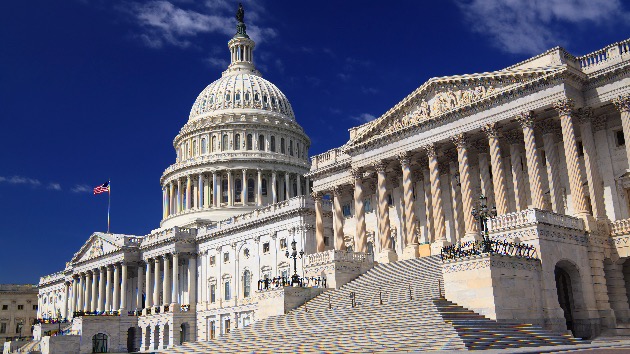
Pelosi taps GOP Rep. Liz Cheney for House select committee to investigate Jan. 6

Vladone/iStock

(WASHINGTON) — House Speaker Nancy Pelosi has announced Republican Rep. Liz Cheney will serve on the House select committee to investigate the Jan. 6 attack on the Capitol.

“We are very honored and proud she has agreed to serve on the committee,” Pelosi said Thursday.

At her press conference on Capitol Hill, Pelosi also announced House Homeland Security Chairman Rep. Bennie Thompson, D-Miss., will serve as the chair of the committee, which was widely expected.

The other Democrats tapped by Pelosi to serve on the committee are Reps. Zoe Lofgren, Adam Schiff, Pete Aguilar, Stephanie Murphy, Jamie Raskin and Elaine Luria.

House Minority Leader Kevin McCarthy, in a press conference following Pelosi, downplayed reports that he’s threatened GOP members with taking away committee assignments if they were to accept a select committee position and questioned Cheney’s place in the Republican Party when given the chance.

“I was shocked that she would accept something from Speaker Pelosi. It would seem to me, since I didn’t hear from her, maybe she’s closer to her than us,” McCarthy said.

Cheney, who has been an outspoken critic of former President Donald Trump in the wake of the attack and stripped of her No. 3 GOP leadership role earlier this year, said in a statement she was “honored” to be named though she did not appear with Democrats on Thursday.

“Those who are responsible for the attack need to be held accountable and this select committee will fulfill that responsibility in a professional, expeditious, and non-partisan manner,” she said. “Our oath to the Constitution, our commitment to the rule of law, and the preservation of the peaceful transfer of power must always be above partisan politics.”

Later, appearing informally with the other members chosen by Pelosi, Cheney was asked if she would lose her committee assignments. She said she has not been told that at this time.

“We have an obligation to have a sober investigation of what happened leading up to the attack on the Capitol on that day,” she said.

The House approved a resolution Wednesday to green-light the creation of a select committee after a vote for a bipartisan, independent commission — similar to one formed after the Sept. 11 attacks — failed to pass the Senate earlier the month.

The resolution required a majority vote in the House for the committee to be formed and it passed mostly along party lines — other than Cheney and Rep. Adam Kinzinger, R-Ill., breaking from Republicans.

Pelosi introduced the measure earlier in the week, which states the committee will include 13 members. Eight of those members will be selected by Pelosi, while the five others will be selected by House Minority Leader Kevin McCarthy, in consultation with Pelosi.

“As we enter the Fourth of July weekend to observe the birth of our nation, we do so with increased responsibility to honor the vision of our Founders and to defend our American Democracy,” Pelosi said in a statement announcing her committee choices.

As for whether McCarthy will cooperate and to which members he would select to the committee, he told reporters Thursday, “When I have news on that, I’ll give it to you.”

Copyright © 2021, ABC Audio. All rights reserved.