
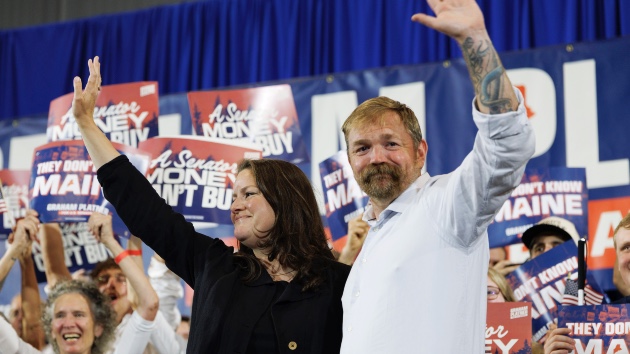
Sen. Mitch McConnell hospitalized after experiencing ‘flu-like symptoms’

Sen. Mitch McConnell hospitalized after experiencing ‘flu-like symptoms’
Sen. Mitch McConnell (R-KY) speaks during a Senate Appropriations Subcommittee hearing on “The Abduction of Ukrainian Children by the Russian Federation” on Capitol Hill on December 3, 2025 in Washington, DC. (Andrew Harnik/Getty Images))

(WASHINGTON) — Sen. Mitch McConnell has been hospitalized for evaluation after experiencing flu-like symptoms, his spokesperson said.

“In an abundance of caution, after experiencing flu-like symptoms over the weekend, Senator McConnell checked himself into a local hospital for evaluation last night,” McConnell spokesman David Popp said in a statement. “His prognosis is positive and he is grateful for the excellent care he is receiving. He is in regular contact with his staff and looks forward to returning to Senate business.”

McConnell, 84, who announced last February he would end his long tenure in the Senate at the end of the current term, was hospitalized in March 2023 for five days after suffering a concussion and a broken rib after a fall at a Washington, D.C., hotel. 

He suffered a “minor cut” to the face and a “sprained wrist” after another fall during a Senate Republican lunch in December 2024.

McConnell served as the Senate Republican leader for a record-shattering 18 years — the longest- serving party leader of either party. He stepped down from the role in 2024 and was succeeded in by current Majority Leader John Thune.

Copyright © 2026, ABC Audio. All rights reserved.

Texas Senate primary candidate Talarico responds to allegations he called fellow Dem ‘mediocre Black man’

Texas Senate primary candidate Talarico responds to allegations he called fellow Dem ‘mediocre Black man’
Democratic Texas State Rep. James Talarico speaks during a campaign launch rally, September 9, 2025 in Round Rock, Texas. (Brandon Bell/Getty Images)

(WASHINGTON) — With just one month until the high-stakes primary election in the Texas U.S. Senate race, Democrats are butting heads, with Democratic State Rep. James Talarico pushing back on allegations that he made controversial remarks about the race of his former opponent.

Talarico on Monday responded to a video from former Rep. Colin Allred, who is running for Texas’ 33rd Congressional District, that Talarico made comments critical of Allred on the basis of race.

On Sunday, a TikTok creator alleged that Talarico, in a private conversation, said that Allred was a “mediocre Black man” and that he would would rather run against Allred than Rep. Jasmine Crockett, whom he allegedly called a “formidable and intelligent Black woman.” The TikTok creator, who had previously supported Talarico, posted that the conversation happened after a town hall in Plano, Texas, in January.

Talarico’s campaign told ABC News that the individual was never a member of the campaign team. Talarico has not denied the conversation took place, but has said it was taken out of context.

Talarico, who is white, is running against Crockett in the Democratic primary for U.S. Senate. Allred had previously announced a Senate bid, but dropped out of the race to run for the House again, saying Crockett’s entering of the race contributed to his decision.

In a video posted on X Monday afternoon, Allred endorsed Crockett and criticized Talarico for his alleged comments.

Allred claimed that Talarico “had the temerity and the audacity to say to a Black woman that he had signed up to run against a ‘mediocre Black man,’ meaning me, and not a ‘formidable, intelligent Black woman,’ meaning Jasmine Crockett.”

Talarico pushed back on the claims, arguing that the allegations are “a mischaracterization of a private conversation.”

“In my praise of Congresswoman Crockett, I described Congressman Allred’s method of campaigning as mediocre — but his life and service are not. I would never attack him on the basis of race,” Talarico said in a statement posted to X by his spokesperson.

Talarico added that he “understand[s]” how his criticism could be perceived incorrectly “given this country’s painful legacy of racism,” but emphasized his deep “respect” for Allred.

Crockett reacted to the news, thanking Allred for his endorsement and praising him for being “an even-tempered and measured person who doesn’t engage in pettiness” — though she notably did not criticize her opponent or mention him by name.

“It’s unfortunate that at the start of Black History Month, this is what we’re facing. In former Congressman Colin Allred’s video, he drew a line in the sand. He made it clear that he did not take allegations of an attack on him as simply another day in the neighborhood,” Crockett’s spokesperson said in a statement to ABC News.

Earlier Monday, Talarico appeared on ABC’s “The View” and emphasized his “deep love and respect” for Crockett, saying that he will “1,000 percent” support and assist her if she were to become the Democratic nominee over him.  The Democratic nominee would face off in November with incumbent Republican John Cornyn or one of his primary challengers, including Texas Attorney General Ken Paxton and Rep. Wesley Hunt.

While the allegations against Talarico were not discussed during his appearance on “The View,” he elaborated on his Senate campaign, calling for the overhaul of Immigration and Customs Enforcement and celebrating recent Democratic wins in Texas.

Reacting to the news of Liam Ramos, the 5-year-old asylum seeker who was released from a Texas detention center on Sunday, Talarico slammed the current tactics being deployed by ICE before demanding an overhaul and reorganization of the agency.

“It’s time to tear down this secret police force and replace it with an agency that is actually going to focus on public safety,” he said on “The View.”

Though Talarico has stopped short of explicitly calling for the abolition of ICE, he has repeatedly expressed a desire to reallocate funding while also maintaining border security.

Over the weekend, Democrats delivered an upset victory in the Texas Senate District 9, where Democrat Taylor Rehmet defeated President Donald Trump-endorsed GOP candidate, Leigh Wambsganss, and flipped the reliably red seat.

When asked about what he would do to win over the voters that Rehmet had flipped, Talarico emphasized that he is “not writing off any voter” or “any community.”

“I’m extending an open hand instead of a closed fist, and in my experience, if you extend that open hand, you’ll be surprised by who takes it,” Talarico said. 

Copyright © 2026, ABC Audio. All rights reserved.
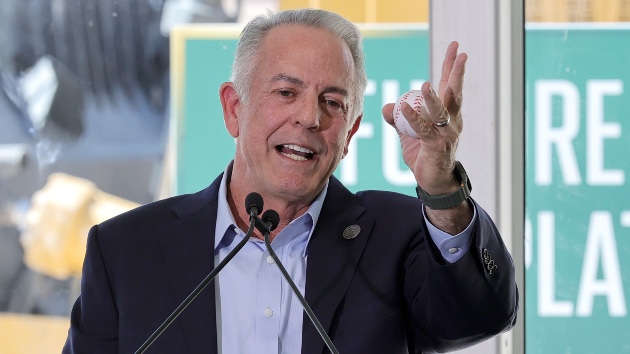
House passes funding package to end partial government shutdown

House passes funding package to end partial government shutdown
U.S. Capitol Building (Photo by Mike Kline (notkalvin)/Getty Images)

(WASHINGTON) — The Republican-led House on Tuesday voted to pass the government funding package to end the partial shutdown.

The measure, which received some bipartisan support, passed with a vote 217-214. It now heads to President Donald Trump’s desk for signature.

The measure provides funding for the Pentagon, Education, Treasury, Labor and State departments through the end of the fiscal year. The bill also includes a two-week short-term measure to keep Department of Homeland Security funded through the end of next week.

Earlier — after some drama and delay — the House passed a key procedural hurdle that set up the later vote, with Republican Rep. Thomas Massie of Kentucky as the only no vote along with all Democrats. The vote was held open for about 45 minutes as several Republicans held out on casting their votes.

Republican leaders ultimately worked the holdouts to secure enough votes to advance the package.  

House Speaker Mike Johnson, who faces an incredibly tight margin, could only afford to lose one Republican vote with all members present and voting.

Johnson earlier Tuesday told reporters that he was confident the package, passed in the Senate after an 11th-hour deal between Senate Democrats and the White House, will pass.

“This may be hard for some of y’all to believe, but I never doubted this,” Johnson said at his weekly news conference Tuesday morning.

The agreement separated a Department of Homeland Security funding bill from five others funding other agencies for the rest of the fiscal year, and grants two weeks of extended DHS funding to negotiate Democratic demands for restrictions on Immigration and Customs Enforcement amid its immigration enforcement operation, including requiring agents to wear body cameras turned on and to not wear masks.

The funding fight over DHS erupted in the aftermath of the death of Alex Pretti, an ICU nurse, who was killed in a shooting involving federal law enforcement in Minneapolis on Jan. 24.

House Minority Leader Hakeem Jeffries told Johnson over the weekend that Democrats would not help Republicans expedite the funding package.

Meanwhile, hard-line Republicans also threatened to hold the package up in hopes of attaching an unrelated bill that would require a proof of citizenship in federal elections known as the SAVE Act. Though some hard-liners, including Reps. Anna Paulina Luna and Tim Burchett, had backed down on their demands.

Trump said Monday that he has spoken to congressional leaders on both sides of the aisle and expressed confidence in a resolution coming soon.

Copyright © 2026, ABC Audio. All rights reserved.

US fighter jet shoots down Iranian drone approaching US aircraft carrier

US fighter jet shoots down Iranian drone approaching US aircraft carrier
Sailors and marines man the rail as the U.S. Navy Nimitz-class aircraft carrier USS Abraham Lincoln (CVN 72) is guided by tugboats in San Diego Bay as it returns to its homeport of Naval Air Station North Island after a 5-month deployment to the Middle East on December 20, 2024 in San Diego, California. (Kevin Carter/Getty Images)

(WASHINGTON) — A U.S. fighter jet shot down an Iranian drone as it approached the aircraft carrier USS Abraham Lincoln in the North Arabian Sea on Tuesday, according to a statement from U.S. Central Command. Earlier in the day, a Navy destroyer came to the assistance of a U.S.-flagged tanker that was harassed by multiple Iranian small boats as it transited the Strait of Hormuz.

This is a developing story. Please check back for updates.

Copyright © 2026, ABC Audio. All rights reserved.

House votes to advance funding package to end partial government shutdown amid clash over ICE restrictions

House passes funding package to end partial government shutdown
U.S. Capitol Building (Photo by Mike Kline (notkalvin)/Getty Images)

(WASHINGTON) — After drama and delay, the Republican-led House advanced a government funding package to end the partial shutdown, setting up debate ahead of a final vote on passage.

The tally on the procedural vote was 217-215. Republican Rep. Thomas Massie of Kentucky was the only no vote along with all Democrats. The vote was held open for about 45 minutes.

House Speaker Mike Johnson, who faces an incredibly tight margin, could only afford to lose one Republican vote with all members present and voting.

Initially, several Republicans held out on casting their votes, including Reps. Byron Donalds, Troy Nehls, Andy Ogles and Victoria Spartz. Republican leaders ultimately worked the holdouts to secure enough votes to advance the package.   

Republican Rep. John Rose of Tennessee first voted against the rule but then flipped his vote. 

Lawmakers are now moving to floor debate on the funding package. A final passage vote to end the partial shutdown is scheduled for later Tuesday afternoon.

Johnson earlier Tuesday told reporters that he was confident the package, passed in the Senate after an 11th-hour deal between Senate Democrats and the White House, will pass.

“This may be hard for some of y’all to believe, but I never doubted this,” Johnson said at his weekly news conference Tuesday morning.

The agreement separates a Department of Homeland Security funding bill from five others funding other agencies for the rest of the fiscal year, and grants two weeks of extended DHS funding to negotiate Democratic demands for restrictions on Immigration and Customs Enforcement amid its immigration enforcement operation, including requiring agents to wear body cameras turned on and to not wear masks.

The funding fight over DHS erupted in the aftermath of the death of Alex Pretti, an ICU nurse, who was killed in a shooting involving federal law enforcement in Minneapolis on Jan. 24.

House Minority Leader Hakeem Jeffries told Johnson over the weekend that Democrats would not help Republicans expedite the funding package.

Meanwhile, hard-line Republicans also threatened to hold the package up in hopes of attaching an unrelated bill that would require a proof of citizenship in federal elections known as the SAVE Act. Though some hard-liners, including Reps. Anna Paulina Luna and Tim Burchett, had backed down on their demands.

President Donald Trump said Monday that he has spoken to congressional leaders on both sides of the aisle and expressed confidence in a resolution coming soon.

Copyright © 2026, ABC Audio. All rights reserved.

Military stands down troops ordered to prep to deploy to Minneapolis

Military stands down troops ordered to prep to deploy to Minneapolis
The Minnesota National Guard sits at the Whipple Federal Building in Minneapolis, United States, on January 26, 2025. (Arthur Maiorella/Anadolu via Getty Images)

(WASHINGTON) — The Pentagon’s Northern Command over the weekend stood down more than 1,500 federal troops placed on alert for potential deployment to Minneapolis, according to two U.S. officials with direct knowledge of the situation. 

ABC News first reported that roughly 1,500 active duty soldiers from the 11th Airborne Division at Joint Base Elmendorf-Richardson in Alaska had been ordered to prepare for a possible mission to the Twin Cities in Minnesota.

Additional units across the country, including some 200 Texas National Guard troops, also had been directed to make preparations.

No specific mission was ever outlined, and placing units on alert is a relatively routine step when commanders anticipate a potential presidential order, according to officials familiar with the planning. The New York Times was the first to report that units were being taken off high alert.

The prepare-to-deploy orders came as President Donald Trump, threatened to use the Insurrection Act of 1807, a rarely used statute that grants a president authority to deploy federal troops for domestic law enforcement missions under limited circumstances.

The law has been invoked most frequently during the Civil Rights era, particularly to enforce court-ordered desegregation and quell large-scale unrest.

The order to stand down comes as the Trump administration has signaled a potential de-escalation in Minneapolis following the fatal shootings of two people involving federal officers.

On Monday, Department of Homeland Security Secretary Kristi Noem said that every officer in Minneapolis will start to wear body cameras. 

“As funding is available, the body camera program will be expanded nationwide,” Noem said in a statement. “We will rapidly acquire and deploy body cameras to DHS law enforcement across the country.”

The 11th Airborne Division is the Pentagon’s primary ground combat force tailored for warfare in extreme cold, a niche capability the Army views as increasingly central to modern conflict.

The unit is not built with civilian law enforcement in mind, and such a deployment would’ve likely been seen as a major escalation of the federal government’s role in the Minneapolis protests.

The 11th Airborne Division plays a significant role in the U.S. military’s posture in the Pacific, regularly training alongside allied forces as part of efforts to deter China. Built for speed and flexibility, the division focuses on airborne operations that enable units to parachute into contested terrain, giving commanders an early foothold in a conflict.

Meanwhile, Minnesota Democratic Gov. Tim Walz has ordered the state’s National Guard into Minneapolis to secure the Whipple Federal Building, a massive federal complex that houses a courtroom, a detention center, and offices for multiple agencies, including Homeland Security.

Guard troops have been outfitted in bright reflective vests to distinguish them from federal agents who often dress similar to the military.

Copyright © 2026, ABC Audio. All rights reserved.

Judge blocks administration from ending TPS protections for more than 350,000 Haitian immigrants

Judge blocks administration from ending TPS protections for more than 350,000 Haitian immigrants
On Thursday, Jan. 29, 2026, in front of the Orange County Courthouse, advocates and former elected officials asked President Trump to create a pathway to permanent residency for Haitians who face deportations as their temporary protected status expires on Feb. 3. (Natalia Jaramillo/Orlando Sentinel/Tribune News Service via Getty Images)

(WASHINGTON) — A federal judge on Monday blocked the Trump administration from ending Temporary Protected Status for more than 350,000 Haitian immigrants.

In an 83-page opinion, U.S. District Judge Ana Reyes granted a stay maintaining the legal status of Haitian nationals “pending judicial review.” In her ruling, she accused Department of Homeland Security Secretary Kristi Noem of “preordaining” her termination decision, saying she “did so because of hostility to nonwhite immigrants.”

“There is an old adage among lawyers,” Judge Reyes wrote. “If you have the facts on your side, pound the facts. If you have the law on your side, pound the law. If you have neither, pound the table.”

“Secretary Noem, the record to-date shows, does not have the facts on her side — or at least has ignored them,” Reyes continued. “Does not have the law on her side — or at least has ignored it. Having neither and bringing the adage into the 21st century, she pounds X (f/k/a Twitter).”

Judge Reyes wrote that while Noem has a First Amendment right “to call immigrants killers, leeches, [and] entitlement junkies,” she is constrained by the Constitution and federal law to “apply faithfully the facts to the law in implementing the TPS program.”

“The Government does not cite any reason termination must occur post haste,” Reyes wrote. “Secretary Noem complains of strains unlawful immigrants place on our immigration-enforcement system. Her answer? Turn 352,959 lawful immigrants into unlawful immigrants overnight.”

The federal judge noted that Noem “has terminated every TPS country designation to have reached her desk — twelve countries up, twelve countries down.”

“The statutory design is straightforward: TPS exists because threats to life exist; when the threat persists, so should TPS protection, unless the Secretary articulates a well-reasoned and well-supported national interest to the contrary,” she wrote. 

The D.C. federal judge listed the five plaintiffs by name, saying, “They are not, it emerges, ‘killers, leeches, or entitlement junkies.'”

“They are instead: Fritz Emmanuel Lesly Miot, a neuroscientist researching Alzheimer’s disease; Rudolph Civil, a software engineer at a national bank; Marlene Gail Noble, a laboratory assistant in a toxicology department; Marica Merline Laguerre, a college economics major; and Vilbrun Dorsainvil, a full-time registered nurse,” Judge Reyes wrote.

DHS Assistant Secretary Tricia McLaughlin released a statement to ABC News on Monday night, saying, “Supreme Court, here we come.”

“This is lawless activism that we will be vindicated on. Haiti’s TPS was granted following an earthquake that took place over 15 years ago, it was never intended to be a de facto amnesty program, yet that’s how previous administrations have used it for decades. Temporary means temporary and the final word will not be from an activist judge legislating from the bench,” McLaughlin said.

Copyright © 2026, ABC Audio. All rights reserved.

Comer continues contempt threat after Clintons agree to depositions on Epstein

Comer continues contempt threat after Clintons agree to depositions on Epstein
 Chairman of the House Committee on Oversight and Accountability Rep. James Comer (R-KY) speaks to reporters as he arrives for a House Republican Conference meeting at the U.S. Capitol on February 03, 2026 in Washington, DC. Photo by Kevin Dietsch/Getty Images)

(WASHINGTON) — House Oversight Chairman James Comer has set a noon deadline Tuesday for Bill and Hillary Clinton to agree to the GOP’s specific terms for depositions that the Clintons signaled Monday night they generally would comply with, warning that if they do not then Republicans will reconvene to move contempt resolutions toward a full House vote.

“The Oversight Committee is seeking clarification the Clintons accepted the standard deposition terms that they were subpoenaed for: transcribed, filmed depositions in February with no time limit pursuant to the committee’s investigation. The depositions are pursuant to the Committee’s investigative purpose as laid out across its letters and contempt reports,” a person familiar with the matter told ABC News.

House Majority Leader Steve Scalise, in a news conference Tuesday alongside House GOP leadership, said Comer was “in the middle of a negotiation with the Clintons.”

“They have until noon today to fully comply, otherwise we will move contempt tomorrow against the Clintons,” Scalise reiterated.

Former President Bill Clinton and former Secretary of State Hillary Clinton agreed on Monday evening to sit for closed-door depositions in the committee’s Jeffrey Epstein investigation.

“They negotiated in good faith. You did not,” Clinton spokesperson Angel Ureña posted on X. “They told you under oath what they know, but you don’t care. But the former President and former Secretary of State will be there. They look forward to setting a precedent that applies to everyone.”

Last month, the House Oversight Committee voted to advance two bipartisan resolutions holding the Clintons in contempt of Congress for failing to comply with its subpoenas relating to convicted sex offender Epstein.

For months, the Clintons had insisted that the subpoenas were without legal merit. Comer, a Republican, has pushed back, saying the Clintons are not above the law and must comply with a subpoena.

Besides defying the subpoenas to testify before the House committee, neither Bill Clinton nor Hillary Clinton has been accused of wrongdoing and both deny having any knowledge of Epstein’s crimes. No Epstein survivor or associate has ever made a public allegation of wrongdoing or inappropriate behavior by the former president or his wife in connection with his prior relationship with Epstein. 

In a letter dated Jan. 31, the Clintons’ legal teams wrote the committee to lay out the parameters of a prospective interview — alongside a request for the committee to withdraw its subpoena and contempt resolution — proposing a four-hour transcribed interview in lieu of a deposition conducted under oath.

The letter states the interview should occur in New York City — open to all committee members — while the scope of questions would be “confined to matters related to the investigations and prosecutions of Jeffrey Epstein.” The president also asked to designate his own transcriber, alongside a court reporter employed by the House.

“This framework is consistent with your priorities as communicated by Committee staff and as identified during the business meeting on January 21st,” the letter, signed by Clinton attorneys Katherine Turner and Ashley Callen, stated. “Pursuant to your request for this comprehensive written proposal, we ask that you respond in kind should there remain any specific area of disagreement to continue this good-faith effort to avoid legal proceedings that will prevent our clients from providing testimony in addition to the sworn statements they already submitted.”

Comer wrote back Monday, citing “serious concerns with the offer,” beginning with the proposed scope restriction — predicting President Clinton “would refuse to answer questions” related to his personal relationship with Jeffrey Epstein and Ghislaine Maxwell.

Comer also balked at the proposed four-hour time limit for the interview, and the president’s bid to break blocks of questioning into 30-minute periods — rather than 60-minute periods — that alternate between Republicans and Democrats.

“A hard time-limit provides a witness with the incentive to attempt to run out the clock by giving unnecessarily long answers and meandering off-topic. This is a particular concern where a witness, such as President Clinton, has an established record of being a loquacious individual,” Comer said.

“Limiting President Clinton’s testimony to four hours is insufficient time for the Committee to gain a full understanding of President Clinton’s personal relationship with them, his knowledge of their sex-trafficking ring, and his experience with their efforts to curry favor and exercise influence to protect themselves,” he added of President Clinton’s relationship with Epstein and Maxwell.

Finally, Comer took umbrage with the proposition for a transcribed interview, not a sworn deposition.

“A transcribed interview is voluntary, meaning that the subject may refuse to answer questions absent any assertion of privilege or constitutional right,” Comer noted. “The conditions requested thus would enable President Clinton to refuse to answer whatever questions he wanted for whatever reasons he wanted and leave as the Committee’s only recourse to again subpoena President Clinton’s testimony, effectively restarting this entire process from the beginning.”

As for Hillary Clinton, the lawyers’ letter echoes her sworn declaration, stating she “never held an office with responsibility for, or involvement with, DOJ’s handling of these investigations or prosecutions,” adding “the same is true as a private citizen after leaving office in 2013.”

The lawyers also requested that Comer withdraw the subpoena and resolution of contempt “so that we may continue to work in good faith toward an agreement that meets the Committee’s needs while accounting for the limited information Secretary Clinton can provide.”

In response, Comer emphasized “the necessity” of Hillary Clinton’s in-person testimony juxtaposed against the “unacceptability of simple sworn declarations.”

Comer concluded that the Clintons’ “desire for special treatment is both frustrating and an affront to the American people’s desire for transparency.”

Copyright © 2026, ABC Audio. All rights reserved.

House to hold votes on funding to end partial government shutdown amid clash over ICE restrictions

House passes funding package to end partial government shutdown
U.S. Capitol Building (Photo by Mike Kline (notkalvin)/Getty Images)

(WASHINGTON) — The House will hold votes on Tuesday to try to reopen the government after it partially shut down over the weekend.

House Speaker Mike Johnson faces an incredibly tight margin as he can only afford to lose one Republican vote if all members are present and voting on the funding package.

First, Johnson has to clear a procedural vote before debate can begin on the floor and a vote on final passage can be held.

Johnson told reporters on Tuesday that he is confident the package, passed in the Senate after an 11th-hour deal between Senate Democrats and the White House, will pass.

“This may be hard for some of y’all to believe, but I never doubted this,” Johnson said at his weekly news conference Tuesday morning.

The agreement separates a Department of Homeland Security funding bill from five others funding other agencies for the rest of the fiscal year, and grants two weeks of extended DHS funding to negotiate Democratic demands for restrictions on Immigration and Customs Enforcement amid its immigration enforcement operation, including requiring agents to wear body cameras turned on and to not wear masks.

The funding fight over DHS erupted in the aftermath of the death of Alex Pretti, an ICU nurse, who was killed in a shooting involving federal law enforcement in Minneapolis on Jan. 24.

House Minority Leader Hakeem Jeffries told Johnson over the weekend that Democrats would not help Republicans expedite the funding package.

Meanwhile, hard-line Republicans also threatened to hold the package up in hopes of attaching an unrelated bill that would require a proof of citizenship in federal elections known as the SAVE Act. Though some hard-liners, including Reps. Anna Paulina Luna and Tim Burchett, appear to be backing down on their demands.

President Donald Trump said Monday that he has spoken to congressional leaders on both sides of the aisle and expressed confidence in a resolution coming soon.

Copyright © 2026, ABC Audio. All rights reserved.
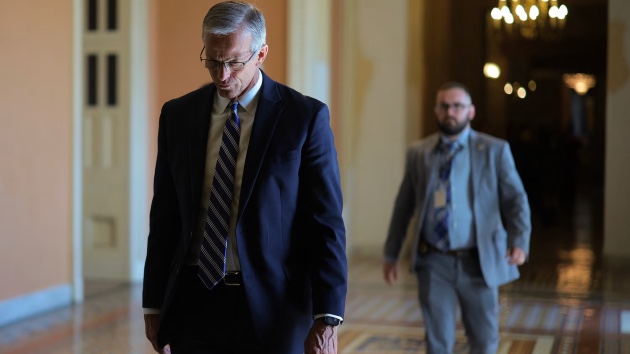
DOJ raises ‘national security’ concerns in legal fight over Trump ballroom

DOJ raises ‘national security’ concerns in legal fight over Trump ballroom
The construction for the ballroom on the White House’s East Wing as seen from the top of the Washington Monument, Nov. 17, 2025. (ABC News)

(WASHINGTON) — Even before a federal judge has decided whether he’ll halt construction of the White House ballroom, the Trump administration has preemptively asked the judge to stay any injunction he might issue, warning that the project is “imperative for reasons of national security.”

The government’s overnight filing, entered just before the end of the day Monday, also says halting the construction would “leave an unsightly excavation site in President’s Park indefinitely.”

The administration’s stay motion comes a week-and-a-half after Judge Richard Leon publicly aired his deep skepticism of the government’s arguments that the president has the power to build a ballroom with private donations and without express authorization from Congress, comparing the plan to a “Rube Goldberg contraption.” Leon also said he expected the losing side of the case to appeal. 

The Justice Department’s filing restates many of the arguments its lawyer made before Leon last month, including the administration’s view that it would be “unworkable” to allow security-related portions of the project to continue while work on the ballroom has been stopped.

“[A]s the Secret Service attested, halting construction would imperil the President and others who live and work in the White House,” the administration argues, citing a senior agency official who said in court papers last month that the current open construction site is, “in and of itself, a hazard and complicates Secret Service operations.”

The government now says it will submit a second classified declaration from the Secret Service that further explains why halting construction “will endanger national security and therefore impair the public interest.”

It’s widely believed the plan is to replace the bunker FDR had built underneath the East Wing — destroyed in the demolition.

The filing also casts the National Trust for Historic Preservation’s challenge to the project as one that presents questions judges have never grappled with before, including whether a 1912 statute prohibiting the construction of federal buildings absent congressional authorization applies to the president.

Acknowledging Leon’s own expectation of an appeal by the losing side, the Justice Department is preemptively asking him to press pause on a potential ruling against the government.

“The D.C. Circuit should have the opportunity to weigh in on these significant and novel issues of first impression before the President is ordered to stop work in the middle of a high-priority construction project that implicates national security,” the filing concludes.

Copyright © 2026, ABC Audio. All rights reserved.