
Trump administration faces criticism for prioritizing white South African refugees

Trump administration faces criticism for prioritizing white South African refugees
Chip Somodevilla/Getty Images

(WASHINGTON) — The Trump administration’s move to prioritize the resettlement of white South African refugees in the United States even as it has turned away refugees from countries including Afghanistan and Haiti has sparked allegations of hypocrisy and a double standard, as well as questions about who is footing the bill for the new arrivals.

On Monday, the State Department said it had welcomed 59 Afrikaners whose applications to come to the U.S. were fast-tracked under President Donald Trump’s executive order issued in February titled, “Addressing Egregious Actions of the Republic of South Africa.” The order called on the administration to “prioritize humanitarian relief, including admission and resettlement” for Afrikaners, a South African minority group descended primarily from Dutch settlers, “who are victims of unjust racial discrimination.”

State Department Deputy Secretary of State Christopher Landau, the second-highest-ranking U.S. diplomat, was on hand to greet the new arrivals’ charter flight, and department spokeswoman Tammy Bruce signaled in a statement that additional Afrikaners will soon follow in their footsteps.

“In the coming months, we will continue to welcome more Afrikaner refugees and help them rebuild their lives in our great country,” she said.

However, the State Department has dodged questions about how that travel is being funded.

Typically, when a refugee who is resettled in the U.S. cannot afford the cost of travel, the State Department provides the refugee with an interest-free, repayable loan to fund the travel, which is administered through the International Organization for Migration, a United Nations agency. Refugees also sign a promissory note guaranteeing they will repay the loan before they depart their country of origin.

But the International Organization for Migration told ABC News it was not involved in administering loans for any of the 59 people who arrived at Washington Dulles International Airport this week, and the Trump administration has repeatedly declined to say whether they paid their own way.

“State Department’s Migration and Refugee Assistance account funds a variety of programs and activities aimed at providing humanitarian assistance to refugees, displaced persons and other vulnerable populations,” a State Department official told ABC News when pressed about the costs.

“This includes activities related to resettling refugees in the United States, such as processing and their initial placement,” the official added.

For decades, the State Department has defended its longstanding policy of making refugees fund their own way to the U.S., arguing it ensures each person assumes responsibility for his or her own success in a new country and that it helps establish credit history.

Critics of the Trump administration’s policy say it is not the only way white South African refugees have received preferential treatment.

On the same day the 59 Afrikaners landed in the Washington, D.C., area, the Department of Homeland Security announced it would terminate temporary protected status, or TPS, for Afghans already in the U.S. — revoking deportation protections issued by the Biden administration in 2021 after the Taliban takeover in Afghanistan.

“We’ve reviewed the conditions in Afghanistan with our interagency partners, and they do not meet the requirements for a TPS designation,” Homeland Security Secretary Kristi Noem said. “Afghanistan has had an improved security situation, and its stabilizing economy no longer prevent them from returning to their home country.”

The Trump administration has also moved to rescind TPS designations for Haiti, Venezuela and Cameroon. Additionally, refugee admissions from other countries have dropped drastically, and financial support for resettlement agencies has also undergone drastic cuts.

Meanwhile, there are doubts about the severity of the security situation that prompted the president to expedite the resettlement of Afrikaners.

Trump’s executive order directly mentioned a controversial South African land seizure law enacted in early 2025 that allowed the country’s government to take land without offering the owners compensation where it is “just and equitable and in the public interest” to do so.

But so far, the South African government has said no land has been seized under the law.

On Monday, Trump also spoke of violent attacks against Afrikaners.

“It’s a genocide that’s taking place,” the president said. “Farmers are being killed. They happen to be white. But whether they are white or Black makes no difference to me. But white farmers are being brutally killed, and their land is being confiscated in South Africa.”

Following South Africa’s apartheid era, white and Black landowners have been the target of violent farm attacks. The South African government said the primary motive for the attacks is robbery, but white nationalist groups and others have claimed they are racially motivated.

Trump has been a critic of the South African government’s handling of the situation for years, and in 2018, he posted that he asked that then-Secretary of State Mike Pompeo “closely study the South Africa land and farm seizures and expropriations and the large scale killing of farmers.”

Elon Musk, a South African native and a top adviser to the president during his second term, has also been vocal about the plight of South African landowners, amplifying claims of “white genocide.”

South African President Cyril Ramaphosa has denied any persecution.

“A refugee is someone who has to leave their country out of fear of political persecution, religious persecution or economic persecution,” Ramaphosa said on Monday. “They don’t fit that bill.”

Some groups in the U.S. that frequently work with the government to resettle refugees have also pushed back on the Trump administration’s prioritization of Afrikaners, with at least one, the Episcopal Migration Ministries, saying it won’t play a part in resettling them.

“In light of our church’s steadfast commitment to racial justice and reconciliation and our historic ties with the Anglican Church of Southern Africa, we are not able to take this step,” Presiding Bishop Sean Rowe said in a statement.

ABC’s Armando Torres-García, Luke Barr and Ely Brown contributed to this report.

Copyright © 2025, ABC Audio. All rights reserved.
Buttigieg to headline Iowa town hall amid 2028 speculation

Buttigieg to headline Iowa town hall amid 2028 speculation
Win McNamee/Getty Images, FILE

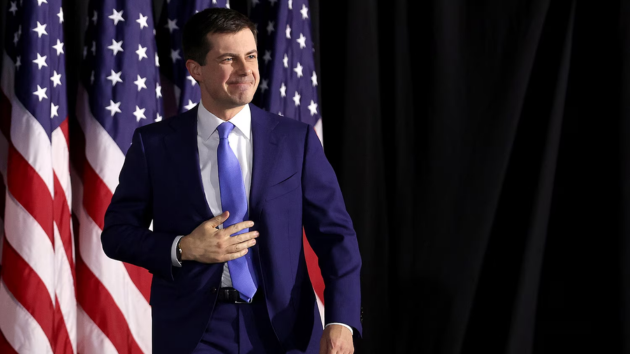
(WASHINGTON) — Former Transportation Secretary Pete Buttigieg is heading to Iowa Tuesday, fueling speculation that he is mounting a bid for the White House in 2028.

On Tuesday evening, Buttigieg — who served in President Joe Biden’s Cabinet as secretary of the Department of Transportation — will make his in-person, public post-administration debut by headlining a town hall with progressive veterans’ group VoteVets Action Fund in Cedar Rapids.

His visit comes after he didn’t rule out a presidential bid during an interview on Tuesday.

In a Substack Live interview with independent journalist Anand Giridharadas on Tuesday, Buttigieg discussed his thought process regarding running for office broadly, and the potential of running for president in 2028 more specifically.

Before making such a decision Buttigieg says he has to “assess the office and what it calls for” as well as “assess what I bring to the table.” He said he’s employed that process to decide to run for other positions.

“… There are times I follow that process and decided to run. And there are times I followed that process and decided not to run. And the process can lead you to surprising places,” he said.

Still, he said he is a “long way off” from a decision.

Buttigieg, the former mayor of South Bend, Indiana, first rose to national prominence when he ran in the 2020 Democratic presidential primary. During Biden’s 2024 presidential campaign — and later, Vice President Kamala Harris’ own campaign after Biden left the race — Buttigieg served as a key campaign surrogate and was floated as a potential running mate for Harris, who ultimately chose Minnesota Gov. Tim Walz.

Now Buttigieg is set to speak in Iowa — a state where its caucus often serves as the earliest indication of how America’s voters will choose their primary candidates.

Major General Paul Eaton, chairman of VoteVets Action Fund, is expected to introduce Buttigieg as “a fellow veteran and someone who understands what is at stake for all Americans,” according to remarks first shared with ABC News.

Eaton is expected to say that the reason the group has chosen to hold its town hall in Iowa is to reach those “on the ground, in the heartland, in a so-called red state, talking not just about what has happened but what we can do in response and how we can continue to put pressure on Trump but also the members of Congress who refuse to do their jobs.”

In March, Buttigieg ruled out running for a Senate seat or governor in Michigan, and a source familiar with his thinking told ABC News at the time that Buttigieg was strongly positioned to launch another White House bid.

And in the first 100 days or so of President Donald Trump’s administration, Buttigieg has taken his message far and wide. He has launched his own Substack, appeared on numerous podcasts and been a regular voice on cable news.

“Pete has always had a ‘go everywhere and talk to everyone’ mindset. This is an opportunity to hear from the men and women who served our country about challenges they’re facing in the chaos of the current administration and what’s needed for a more secure future, outside of the Washington media bubble and podcast studios,” a Buttigieg spokesperson said in a statement to ABC News.

But now Buttigieg is taking his vision out on the open road. And according to a spokesperson, isn’t stopping with Iowa.

“You can expect to see him continuing this conversation with Americans across the country,” the spokesperson said.

And he subtly hinted at this expanded tour during the conclusion of his appearance on Sirius XM’s Smartless podcast, hosted by actors Jason Bateman, Sean Hayes and Will Arnett, remarking: “I’ll be around. I’ll be out there.”

This trip comes as other Democrats whose names have circulated as potential presidential material are making public appearances in important voting states. Both Maryland Gov. Wes Moore and Walz will be featured guests at the South Carolina’s Democratic Party’s statewide conference at the end of the month. Walz will also appear at the California Democrats’ convention that same weekend.

Moore and Walz have publicly denied plans for a 2028 presidential run.

ABC New’s Justin Gomez contributed to this report.


Copyright © 2025, ABC Audio. All rights reserved.
Do-over move for DNC vice-chair elections could put 2 officials — including reformer David Hogg — in jeopardy

Do-over move for DNC vice-chair elections could put 2 officials — including reformer David Hogg — in jeopardy
Eugene Gologursky/Getty Images

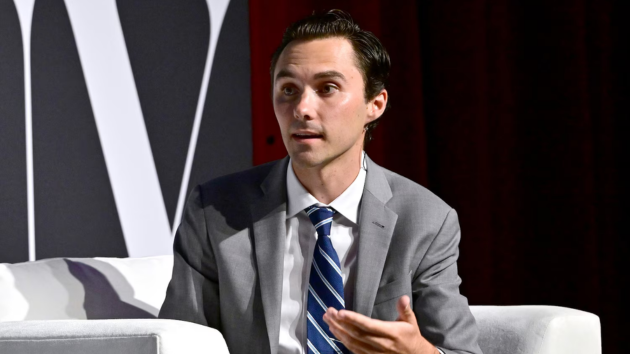
(WASHINGTON) — The Democratic National Committee’s Credentials subcommittee has recommended that the party should once again hold vice-chair elections over complaints that there were issues with how the balloting was conducted — a move that places its vice chairs David Hogg and Malcolm Kenyatta in jeopardy of losing their positions.

The recommendation, made after the committee’s vote on Monday, comes after the party-wide officer races in February. The subcommittee’s deliberations were based on a challenge filed by vice chair candidate Kalyn Free on how the election was conducted.

Free’s counsel argued that the way some of the voting was conducted allowed Hogg and Kenyatta to unfairly receive more votes than Free, who also sought a vice-chair role.

The resolution is not the final decision and neither Kenyatta nor Hogg are stripped of their titles in the meantime; it will have to be adopted or rejected by the entire DNC body in an electronic or in-person vote. The timing of this wider vote is unclear, but party officials said in statements after the vote that they want to act quickly.

The vote was based on a challenge Free filed in late February, before the eruption of a dispute between Hogg, whose separate organization Leaders We Deserve is supporting primary challengers to Democratic incumbents, and others in the party who believe the DNC needs to remain neutral.

But Hogg, a Marjory Stoneman Douglas High School shooting survivor who aims to reform the Democratic Party, claimed Monday that the committee vote can’t be disentangled from his dispute with the party.

“While this vote was based on how the DNC conducted its officers’ elections, which I had nothing to do with, it is also impossible to ignore the broader context of my work to reform the party which loomed large over this vote,” Hogg said in a statement after Monday’s vote.

Hogg argued that because of his announcement that his organization would support primary challengers, the DNC has “made it clear they were going to remove me… I ran to be DNC Vice Chair to help make the Democratic Party better, not to defend an indefensible status quo that has caused voters in almost every demographic group to move away from us. The DNC has pledged to remove me, and this vote has provided an avenue to fast-track that effort.”

Kenyatta, in a thread posted on X late Monday night, said he respects the vote, but is frustrated by it. He criticized the focus on Hogg, emphasizing his own work as a vice chair.

“I disagree with the ruling, but ultimately the committee voted and I respect their votes — even when I really disagree. Second, the press has been breathless in covering the main character they’ve chosen — David Hogg. They are rushing to do it again. I call BS,” Kenyatta, a Pennsylvania state representative, wrote.

Kenyatta called the committee’s move a “slap in the face.” He added that he has done the work to keep the vice chair job and is “frustrated” Hogg wants to make it all about him.

In a statement to ABC News early Tuesday morning, Free, the DNC member and vice chair candidate who initially challenged the results, applauded the credentials committee for “righting this wrong.”

Free wrote, “I have always known that the Democratic Party is the party of free and fair elections. Today, the credentials committee of the DNC confirmed that correcting mistakes in process, and protecting democracy is more important than saving face. This was never about Malcolm Kenyatta or David Hogg. For me, this was about ensuring that the Democratic Party lives up to our ideals as the only political party to believe in and stand up for a free and fair democracy.”

In response to the decision, DNC Chair Ken Martin said he was “disappointed to learn that before I became Chair, there was a procedural error in the February Vice Chair elections.”

He added: “I thank all of our officers for their service, including Vice Chairs Kenyatta and Hogg, and look forward to continuing to work with them in their officer posts as this matter is resolved.”

Copyright © 2025, ABC Audio. All rights reserved.
Trump heaps praise on Saudi crown prince as he touts economic development

Trump heaps praise on Saudi crown prince as he touts economic development
Jean Catuffe/Getty Images

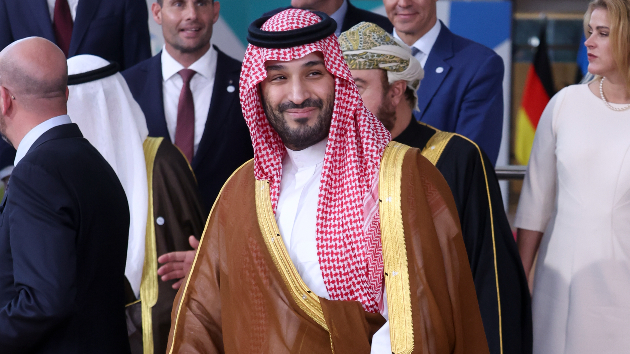
(WASHINGTON) — President Donald Trump spent the bulk of what was billed as a “major foreign policy address” to outline his vision for the Middle East instead touting his domestic policies and heaping praise on Saudi Crown Prince Mohammed bin Salman while speaking at the U.S.-Saudi Investment Forum on Tuesday.

Four years after the U.S. intelligence community report was released that concluded that the crown prince approved the assassination of Washington Post journalist Jamal Khashoggi, Trump lauded the crown prince for his leadership and friendship.

“He’s your greatest representative, greatest representative. And if I didn’t like him, I’d get out of here so fast. You know that, don’t you? He knows me well. I do — I like him a lot. I like him too much. That’s why we give so much, you know? Too much. I like you too much,” Trump said while speaking in Saudi Arabia.

The speech marks a remarkable turn from the United States, especially considering the international condemnation then-President Joe Biden received when he visited Saudi Arabia in 2022 and famously fist-bumped the crown prince. While Biden once labeled Saudi Arabia a “pariah,” Trump celebrated the kingdom, its leader and its potential.

“For the people of this room, the days of economic misery under the last administration are rapidly giving way to the greatest economy in the history of the world,” Trump said.

Speaking to members of the royal family and some of the most powerful business leaders in the world, Trump credited the crown prince for Saudi Arabia’s recent economic development.

“Riyadh is becoming not just a seat of government but a major business, cultural and high-tech capital of the entire world,” Trump said.

“Mohammed, do you sleep at night? How do you sleep?” Trump said as the crowd applauded. “Critics doubted that it was possible, what you’ve done, but over the past eight years, Saudi Arabia has proved the critics totally wrong.”

Throughout his remarks, the crown prince smiled on, applauding and laughing at Trump’s jokes, with billionaire Elon Musk seated prominently over his shoulder.

The president also announced he will be ordering the end of sanctions against Syria and suggested he did so at Saudi Arabia’s request, as well as Turkey’s.

“Oh, what I do for the crown prince,” Trump quipped. “The sanctions were brutal and crippling and served as an important, really an important function, nevertheless, at the time. But now it’s their time to shine.”

Trump then touted his immigration policies, his win in November and his own economic agenda.

“The United States is the hottest country, with the exception of your country,” he told Prince Mohammed. “I have to say right, I won’t. I’m not going to take that on. No, Mohammed, I’m not going to take that on. Wouldn’t that be a terrible thing if I made that full statement? But I will get to it. You’re hotter, at least as long as I’m up here. You’re hotter.”

Copyright © 2025, ABC Audio. All rights reserved.
House Republicans plow ahead on hundreds of billions in Medicaid cuts despite infighting

House Republicans plow ahead on hundreds of billions in Medicaid cuts despite infighting
Tom Williams/CQ-Roll Call, Inc via Getty Images

(WASHINGTON) — House Republicans are plowing ahead Tuesday to advance key components of their bill to fund President Donald Trump’s agenda — including taxes and Medicaid cuts — even as they remain at odds over several critical issues.

Sources tell ABC News that dueling, dramatic hearings are expected to drag deep into the night and into Wednesday as Democrats try to challenge Republicans’ efforts to write those sections of Trump’s “big, beautiful bill.”

Democratic members of the House Energy and Commerce Committee, which has jurisdiction over energy and health care programs, plan to offer several doomed amendments and might try an unusual move of calling impromptu witnesses to testify about how Medicaid impacts their life. Republicans are likely to block both efforts.

Dozens of people in wheelchairs chanting “No cuts to Medicaid!” tried to block the doors of the Energy and Commerce markup before it began and were blocked by Capitol Police. Several were arrested.

The markup in the House Ways and Means Committee, which has jurisdiction over taxes, is also expected to slide into the night amid an internal GOP battle over caps to the State and Local Tax deduction. Democrats are expected to trash the bill as a massive break for the wealthiest taxpayers.

While the GOP plan proposes massive cuts to Medicaid, it does not include some of the most drastic cuts that Republican hardliners were pushing for, putting its passage in flux amid a conservative revolt.

Texas Republican Rep. Chip Roy said Monday he’s opposed to the proposals and needs “significant” changes to support the final package.

“I remain open-minded because progress has been made based on our forceful efforts to force change. But we cannot continue down the path we’ve been going down – and we will need SIGNIFICANT additional changes to garner my support,” he said in a post on X.

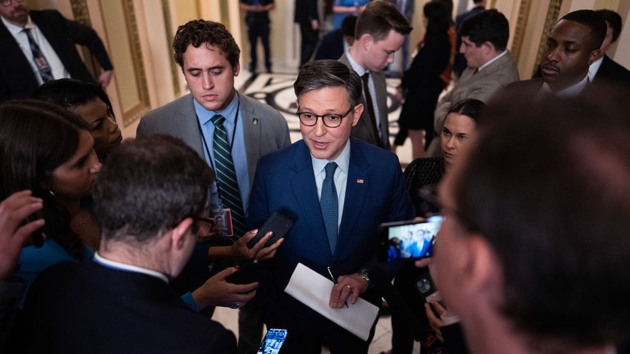
Asked on Tuesday if he was worried about members like Roy getting behind the bill,” House Speaker Mike Johnson responded, “No one is going to get 100 percent of what we want. Chip is one of my best friends. We communicated within the last hour, and we’ll talk again today. I think we get everybody to yes.”

Trump has repeatedly promised to not cut Medicaid and he and Republicans said they’ll come up with savings by cutting waste and fraud in the program.

Before heading off on a four-day trip to the Middle East on Monday, he urged Republicans to “UNIFY” around the bill and said the executive order he signed Monday that would “slash the cost of prescription drugs” and the “hundreds of billions of tariff money coming in” should be factored into the bill’s scoring.

With Republicans in control of both chambers of Congress, they are using a process called reconciliation that only requires a simple majority for passage to fast-track their legislation.

Republicans unveiled legislative text over the weekend that outlined their plans to slash Medicaid spending by imposing work requirements for recipients, make more frequent eligibility checks, and penalize states like New York and California that offer Medicaid to illegal immigrants.

The Congressional Budget Office wrote in a letter to Energy and Commerce Chairman Brett Guthrie that the proposal met its lofty target for $880 billion of savings over the next decade.

The Energy and Commerce committee resisted pressure from hardliners like Roy who demanded GOP leaders propose lowering the percentage the federal government pays to states’ Medicaid programs or include per-capita caps on federal Medicaid payments to states.

The health portions would save about $715 billion, according to CBO. However, at least 8.6 million more Americans will go uninsured.

Some culture war issues were addressed in the bill, including a provision to strip Medicaid funding from organizations that offer abortion services such as Planned Parenthood.

The legislation has already received pushback from Republicans in the Senate who will have to go along with it, including Missouri Sen. Josh Hawley, who wrote an opinion piece in the New York Times Monday warning against moves to cut Medicaid.

“This wing of the party wants Republicans to build our big, beautiful bill around slashing health insurance for the working poor. But that argument is both morally wrong and politically suicidal,” Sen. Hawley wrote.

Meanwhile, the Ways and Means Committee, which is marking up the tax portion of the bill, outlined a permanent extension of Trump’s 2017 Tax Cuts and Job Act, as well as making good on his campaign promises like no tax on tips and no tax on overtime.

The plan would temporarily increase the child tax credit, create a MAGA savings account for children and temporarily increase the standard tax deduction. It also calls for a $4 trillion increase to the debt ceiling, which Congress must address by mid-July to avoid default.

Some moderate Republicans have been adamant about not cutting into Medicaid, a benefit many of their constituents rely on.

The legislation also includes one of the most controversial components — a tax proposal that would hike the cap on state and local tax deductions (SALT) from $10,000 to $30,000 for those earning less than $400,000, which some moderate Republicans from states with higher taxes say is not enough.

New York Rep. Nick LaLota said he is “still a hell no” in a post on X.

Rep. Mike Lawler of New York told Bloomberg TV the proposal was “woefully inadequate,” adding that he will vote against the bill if it comes to the floor.

“We will continue to work in good faith with leadership, with the administration to get this done, but we need to have an honest and serious discussion about the issue,” he added.

Here’s what’s in the bill:

Medicaid cuts

Medicaid work requirements: The bill would impose work requirements on able-bodied Medicaid recipients — at least 80 hours per month — or require enrolling in an educational program for at least 80 hours or some combination per month.

More frequent eligibility checks: The legislation would require states to conduct more frequent eligibility determinations — from every 12 months to every six months.

Prohibits Medicaid funds for gender transition for minors: The measure would ban federal Medicaid funds from going to gender-affirming care for transgender minors.

Blocks Medicaid funding for non-citizens: Federal funding would be blocked from going to states that provide health care coverage under Medicare for migrants in the country without authorization.

Targets Medicaid funding for organizations that provide abortions: The measure includes language that would essentially prohibit health care providers who offer abortion services from receiving Medicaid funds.

Drug pricing: The bill makes a change to the Inflation Reduction Act and allows drugs to be exempt from Medicare’s drug price negotiation if they are approved to treat multiple diseases.

Cuts energy programs in Inflation Reduction Act: The proposal would cut Inflation Reduction Act programs like spending on electric vehicles, claw back climate-related federal funding and phase out clean energy credits.

Tax provisions

No tax on tips: A huge tax break for the service industry and a provision that was also trumpeted by Kamala Harris as the Democratic nominee for president, though she tied the tax break to an increase for the federal minimum wage. This is temporary and would expire at the end of 2028.

No tax on overtime: Would relieve millions of Americans who work overtime. This is temporary and would also expire at the end of 2028.

Extension of 2017 Tax Cuts and Job Act: Makes tax from the 2017 Tax Cuts and Jobs Act permanent; does not include a tax increase on the wealthiest earners. Trump posted last week that the proposal shouldn’t raise taxes on high-earners, “but I’m OK if they do!!!”

Creation of MAGA savings account for children: The contribution limit for any taxable year is $5,000. It includes a pilot program to start the accounts with $1,000.

SALT: Lifts state and local tax deduction cap to $30,000 with an income phase-down above $400,000. Married couples filing taxes separately are subject to a $15,000 cap and phase-down above $200,000 income.

Debt limit increase: The measure calls for increasing the debt limit by $4 trillion. Treasury Secretary Scott Bessent said last week lawmakers must address the debt limit by mid-July to avoid a default.

Enhanced tax deduction for seniors: Seniors would get a $4,000 higher standard tax deduction subject to income limits. This is temporary and would also expire at the end of 2028.

Hikes excise tax on colleges: Those with endowments over $2 million per student would increase from 1.4% to 21%, targeting Ivy League schools. Religious schools would be exempt.

Child tax credit: A temporary increase from $1,000 to $2,500 through 2028 and to $2,000 after that. Recipients will be required to have a Social Security number.

Deduction for qualified business: The bill would increase the deduction for qualified business income from 20% to 22%.

Extends increased estate and gift tax exemption: Would increase the estate and gift tax exemption to $15 million.

Elevates standard tax deduction: The measure includes some new tax cuts like temporarily elevating the standard deduction by $2,000 to $32,000 for 2025 for joint filers and by $1,000 to $16,000 through 2028.

Copyright © 2025, ABC Audio. All rights reserved.
Republicans dodge, laugh off questions about Trump’s gift plane from Qatar

Republicans dodge, laugh off questions about Trump’s gift plane from Qatar
Win McNamee/Getty Images

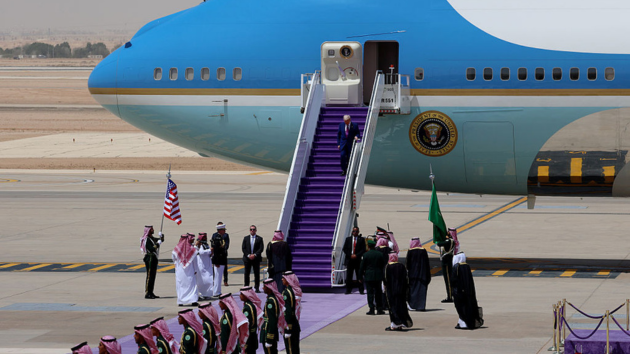
(WASHINGTON) — Republicans were on Capitol Hill Monday night as they dodged or laughed off ABC News’ exclusive reporting that President Donald Trump was considering accepting a luxury jet as a gift from the Qatari government to potentially use as Air Force One.

While several senators avoided questions or made jokes, few were willing to give a full-throated defense of the proposed gift.

Like most Republicans, Sen. Cynthia Lummis, R-Wyo., initially said she didn’t know enough about the story to comment but called it “an interesting one.”

When ABC News told her that Trump intended to use the gifted plane as Air Force One, she broke into laughter. “It might make me consider the appropriateness of that? Yes,” she said.

Asked if she had security concerns about its use as Air Force One, she broke out laughing and said, “Well, they better sweep that plane from front to back.”

Sen. Josh Hawley, R-Mo., made a tongue-in-cheek comment of his own when asked about security concerns.

“Well, I think it’d be better if it were a big, beautiful jet made in the United States of America,” he said.

Majority Leader John Thune said he needed more information on the reports before he could make an appropriate assessment. “I don’t know enough about it yet and I don’t know that it’s — I don’t know if there’s — any offer. I’m sure if and when we have more information, we’ll sort it out,” Thune said.

House Speaker Mike Johnson refused to comment, saying he didn’t have enough information. “I’m not going to comment on it,” Johnson said, adding, “I haven’t seen all the details about it.”

When asked about the price tag of the potential gift — an estimated $400 million – Sen. John Kennedy, R-La., sidestepped the issue.

“I think we ought to follow the law, whatever that is,” he said. “Well, France gave us the Statue of Liberty,” Kennedy told reporters.

Copyright © 2025, ABC Audio. All rights reserved.
House GOP plows ahead with efforts to cut $880 billion despite internal differences

House Republicans plow ahead on hundreds of billions in Medicaid cuts despite infighting
Tom Williams/CQ-Roll Call, Inc via Getty Images

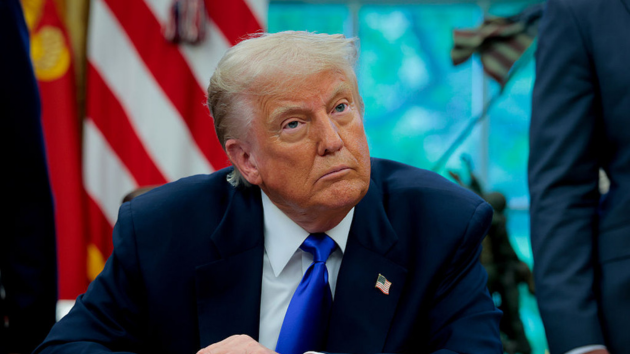
(WASHINGTON) — House Republicans will plow ahead Tuesday to advance key components of their bill to fund President Donald Trump’s agenda — including taxes and Medicaid cuts — even as they remain at odds over several critical issues.

The House Energy and Commerce Committee, which has jurisdiction over energy and health care programs, and the House Ways and Means Committee, which has jurisdiction over taxes, will both hold marathon markups in hopes of moving the legislation to the floor.

The movement on the critical pieces of the “big, beautiful bill” comes as Speaker Mike Johnson faces resistance from different wings of his caucus with only three votes to spare in his razor thin majority.

Texas Republican Rep. Chip Roy said Monday he’s opposed to the proposals and needs “significant” changes to support the final package.

“I remain open-minded because progress has been made based on our forceful efforts to force change. But we cannot continue down the path we’ve been going down – and we will need SIGNIFICANT additional changes to garner my support,” he said in a post on X.

Trump repeatedly promised on the campaign trail and in the White House to not cut Medicaid and he and Republicans said they’ll come up with savings by cutting waste and fraud in the program.

Before heading off on a four-day trip to the Middle East on Monday, he urged Republicans to “UNIFY” around the bill and said the executive order he signed Monday that would “slash the cost of prescription drugs” and the “hundreds of billions of tariff money coming in” should be factored into the bill’s scoring.

With Republicans in control of both chambers of Congress, they are using a process called reconciliation that only requires a simple majority for passage to fast-track their legislation.

Republicans unveiled legislative text over the weekend that outlined their plans to slash Medicaid spending by imposing work requirements for recipients, make more frequent eligibility checks, and penalize states like New York and California that offer Medicaid to illegal immigrants.

The Congressional Budget Office wrote in a letter to Energy and Commerce Chairman Brett Guthrie that the proposal met its lofty target for $880 billion of savings over the next decade.

The Energy and Commerce committee resisted pressure from hardliners like Roy who demanded GOP leaders propose lowering the percentage the federal government pays to states’ Medicaid programs or include per-capita caps on federal Medicaid payments to states.

The health portions would save about $715 billion, according to CBO. However, at least 8.6 million more Americans will go uninsured.

Some culture war issues were addressed in the bill, including a provision to strip Medicaid funding from organizations that offer abortion services such as Planned Parenthood.

The legislation has already received pushback from Republicans in the Senate who will have to go along with it, including Missouri Sen. Josh Hawley, who wrote an opinion piece in the New York Times Monday warning against moves to cut Medicaid.

“This wing of the party wants Republicans to build our big, beautiful bill around slashing health insurance for the working poor. But that argument is both morally wrong and politically suicidal,” Sen. Hawley wrote.

Meanwhile, the Ways and Means Committee, which is marking up the tax portion of the bill, outlined a permanent extension of Trump’s 2017 Tax Cuts and Job Act, as well as making good on his campaign promises like no tax on tips and no tax on overtime.

The plan would temporarily increase the child tax credit, create a MAGA savings account for children and temporarily increase the standard tax deduction. It also calls for a $4 trillion increase to the debt ceiling, which Congress must address by mid-July to avoid default.

The legislation also includes one of the most controversial components — a tax proposal that would hike the cap on state and local tax deductions (SALT) from $10,000 to $30,000 for those earning less than $400,000, which some moderate Republicans from states with higher taxes say is not enough.

New York Rep. Nick LaLota said he is “still a hell no” in a post on X.

Rep. Mike Lawler of New York told Bloomberg TV the proposal was “woefully inadequate,” adding that he will vote against the bill if it comes to the floor.

“We will continue to work in good faith with leadership, with the administration to get this done, but we need to have an honest and serious discussion about the issue,” he added.

Here’s what’s in the bill:

Medicaid cuts

Medicaid work requirements: The bill would impose work requirements on able-bodied Medicaid recipients — at least 80 hours per month — or require enrolling in an educational program for at least 80 hours or some combination per month.

More frequent eligibility checks: The legislation would require states to conduct more frequent eligibility determinations — from every 12 months to every six months.

Prohibits Medicaid funds for gender transition for minors: The measure would ban federal Medicaid funds from going to gender-affirming care for transgender minors.

Blocks Medicaid funding for non-citizens: Federal funding would be blocked from going to states that provide health care coverage under Medicare for migrants in the country without authorization.

Targets Medicaid funding for organizations that provide abortions: The measure includes language that would essentially prohibit health care providers who offer abortion services from receiving Medicaid funds.

Drug pricing: The bill makes a change to the Inflation Reduction Act and allows drugs to be exempt from Medicare’s drug price negotiation if they are approved to treat multiple diseases.

Cuts energy programs in Inflation Reduction Act: The proposal would cut Inflation Reduction Act programs like spending on electric vehicles, claw back climate-related federal funding and phase out clean energy credits.

Tax provisions

No tax on tips: A huge tax break for the service industry and a provision that was also trumpeted by Kamala Harris as the Democratic nominee for president, though she tied the tax break to an increase for the federal minimum wage. This is temporary and would expire at the end of 2028.

No tax on overtime: Would relieve millions of Americans who work overtime. This is temporary and would also expire at the end of 2028.

Extension of 2017 Tax Cuts and Job Act: Makes tax from the 2017 Tax Cuts and Jobs Act permanent; does not include a tax increase on the wealthiest earners. Trump posted last week that the proposal shouldn’t raise taxes on high-earners, “but I’m OK if they do!!!”

Creation of MAGA savings account for children: The contribution limit for any taxable year is $5,000. It includes a pilot program to start the accounts with $1,000.

SALT: Lifts state and local tax deduction cap to $30,000 with an income phase-down above $400,000. Married couples filing taxes separately are subject to a $15,000 cap and phase-down above $200,000 income.

Debt limit increase: The measure calls for increasing the debt limit by $4 trillion. Treasury Secretary Scott Bessent said last week lawmakers must address the debt limit by mid-July to avoid a default.

Enhanced tax deduction for seniors: Seniors would get a $4,000 higher standard tax deduction subject to income limits. This is temporary and would also expire at the end of 2028.

Hikes excise tax on colleges: Those with endowments over $2 million per student would increase from 1.4% to 21%, targeting Ivy League schools. Religious schools would be exempt.

Child tax credit: A temporary increase from $1,000 to $2,500 through 2028 and to $2,000 after that. Recipients will be required to have a Social Security number.

Deduction for qualified business: The bill would increase the deduction for qualified business income from 20% to 22%.

Extends increased estate and gift tax exemption: Would increase the estate and gift tax exemption to $15 million.

Elevates standard tax deduction: The measure includes some new tax cuts like temporarily elevating the standard deduction by $2,000 to $32,000 for 2025 for joint filers and by $1,000 to $16,000 through 2028.

Copyright © 2025, ABC Audio. All rights reserved.

To fill ambassador ranks, Trump taps more friends, supporters than any recent president: Experts

To fill ambassador ranks, Trump taps more friends, supporters than any recent president: Experts
Anna Moneymaker/Getty Images

(WASHINGTON) — As the Trump administration pushes its “America First” agenda, cutting foreign aid agencies and challenging longtime allies, President Donald Trump has tapped a roster of ambassadors with more personal and financial ties than any recent president, former diplomats and foreign policy experts told ABC News.

Trump has, in just over 100 days in office, selected family members, wealthy members of his clubs, and high-profile media backers to carry out his “America First” mission at key outposts across the globe. Nearly all have lengthy records of publicly and vocally supporting the president, while only a handful have diplomatic backgrounds or experience in foreign services.

Trump’s diplomatic nominees have also collectively poured tens of millions of dollars into his political operations, with the so-called “donor to ambassadorship pipeline” — where major political fundraisers secure plush ambassadorial appointments — becoming more pronounced under the second Trump presidency.

“It’s the sale of diplomatic posts in return for campaign money, and both sides have been playing that,” said Anthony Gardner, a former ambassador to the European Union under the Biden administration. “Indeed, it’s been happening across the aisle for a long time, for decades even, and it’s gotten much more pronounced in this term, the second Trump term, than ever before.”

At least 38 of the 50 individuals announced or confirmed to diplomatic positions so far have either donated to or helped fundraise for Trump-connected political entities, directing at least $46 million to his presidential campaigns, various pro-Trump super PACs, or to Trump’s record-breaking second inaugural committee, disclosure records show. Those figures do not account for additional contributions bundled by those individuals.

By comparison, according to government ethics advocacy group Campaign Legal Center’s analysis from 2023, former President Joe Biden’s ambassador appointees together gave a total of $22 million to various Democratic candidates and groups, including to the Biden campaign, in the ten years prior to their nomination.

Trump has also tapped several members of his extended family for diplomatic roles, nominating Charles Kushner, his eldest daughter’s father-in-law, as ambassador to France, and Kimberly Guilfoyle, his eldest son’s ex-fiancée, as ambassador to Greece.

ABC News has reached out to the White House for comment.

Ed McMullen, a prolific Republican bundler and Trump’s former ambassador to Switzerland, says that a close personal relationship with the president can be a key strength as an ambassador, noting Guilfoyle as an example.

“Since the founding fathers, Thomas Jefferson and Benjamin Franklin serving as our first ambassadors were close to the president,” McMullen said. “There are supporters, they’re donors, they’re hard-working advocates, they’re friends. This is the case with every ambassador.”

“When you’re in Europe or anywhere in the world, and you’re an ambassador representing the president of the United States and you can pick up the phone and call him and have a one-on-one relationship with the president, the president and the government of the country you’re hosted in will be extremely appreciative of that timely efficacy that occurs from that,” McMullen said, recounting his experience as an ambassador under the first Trump presidency.

“That’s the whole purpose of having political appointees and not career people in critical countries with allies and friends,” he said.

But Campaign Legal Center’s Senior of Direct of Ethics Kedric Payne told ABC News that if nominees have no prior diplomatic experience beyond their personal relationship with the president, it can leave the impression that “qualifications don’t matter as much as who you know.”

“When you have something as critical as foreign policy based on who you know, it does diminish trust in government that these decisions are not based on the greater public interest,” Payne said.

Trump’s diplomatic nominees, like his cabinet picks, also include a high number of high-worth individuals. For the G7 alliance of the U.S., Canada, France, Germany, Italy, Japan, and the U.K., Trump has assembled one of the wealthiest group of ambassadors to hold those spots, with three billionaires out of the five nominees that have been named so far.

The three billionaires — Kushner, GOP megadonor and financier Warren Stephens, and Houston Rockets owner Tilman Fertitta — together disclosed assets that could be worth a combined value of more than $8 billion. Kushner — who disclosed the extent of his private wealth for the first time — reported owning assets potentially worth more than $3.6 billion, boasting a vast real estate portfolio across the United States, and reporting earnings as high as half a billion dollars in income last year.

The two other G7 ambassadors — George Glass and Pete Hoekstra — are returning diplomats from Trump’s first term.

Others who Trump has tapped as ambassadors this time around include Herschel Walker, the former NFL star who unsuccessfully ran for Georgia Senate in 2022; Bill White, Trump’s longtime friend and Palm Beach neighbor who rallied conservative LGBTQ votes in support of Trump during the last presidential election; and Leandro Rizzuto, a Conair heir who was picked as an ambassador during Trump’s first term but failed to get confirmed by the Senate.

Among the campaign surrogates and allies who have received ambassadorships are Mayor Amer Ghalib of Hamtramck, Michigan, who helped bring together Muslim voters in Michigan for Trump; CatholicVote.org co-founder Brian Burch, a vocal critic of late Pope Francis; and ex-border patrol union leader Bradon Judd, who often spoke about immigration and border security at Trump rallies.

Several of those nominees have already faced a tough confirmation process as critics have questioned their qualifications.

Last week, Kushner, who pleaded guilty to 18 charges related to illegal campaign contributions and tax evasion in 2004 and was pardoned by Trump a month before he left the White House in his first term, was pressed by Senate Democrats about his past legal woes during his confirmation hearing.

During the hearing, Kushner acknowledged that his past run-in with the law was “a very, very, very serious mistake” but maintained his experience has helped him make better judgments and has made him “more qualified” for the ambassador role.

Other ambassador nominees who have faced legal troubles include White, the ambassador nominee to Belgium and former head of New York’s Intrepid Sea, Air & Space Museum, who paid a $1 million settlement for his alleged role in an alleged illegal pay-to-play state pension fund scheme in New York, for which he denied wrongdoing.

Trump’s former inaugural committee chair Tom Barrack, who was charged for alleged illegal foreign lobbying on behalf of the United Arab Emirates in 2021, was acquitted when a jury found him not guilty on all his charges. Barrack has been nominated to serve as Trump’s ambassador to Turkey, a key diplomatic position that until recently was held mostly by career diplomats, and he touted his experience dealing with “business, governmental, legal and cultural issues in Europe, the Middle East and Asia” in his Certificate of Competency submitted through the State Department.

Walker, who lost his Senate race to incumbent Democratic Sen. Raphael Warnock in the runoff election, faced allegations of violent behavior and forcing multiple women to have abortions — allegations he denied.

For Rizzuto, his nomination to become the ambassador to the Organization of American States is the second time he’s vying for an ambassadorship, after facing bipartisan opposition during Trump’s first term for his ambassador nomination to Barbados, largely due to his now-deleted social media posts about Trump’s political rivals during the 2016 election in which he called Mitt Romney a “Dumb A–” and Hillary Clinton a “terrorist with amnesia,” while accusing Sen. Ted Cruz’s wife Heidi of being a leader in the North American Union movement, “whose goal is to destroy the sovereignty of the United States.”

Trump, during his first term, eventually appointed Rizzuto to head the U.S. consulate in Bermuda, which does not require Senate confirmation.

Amid diplomatic challenges that include the conflict in the Middle East and high stakes tariff negotiations, only a handful of ambassadors have been confirmed and sworn in so far — including former Arkansas Gov. Mike Huckabee as the ambassador to Israel, former Georgia Sen. Davie Perdue as the ambassador to China, and Trump’s campaign surrogate and former acting Attorney General Matt Whitaker as ambassador to NATO.

Huckabee, who is the father of Trump’s former press secretary and now Arkansas Gov. Sarah Huckabee Sanders, has had a lucrative year in 2024, earning more than $6 million from his various private ventures, including millions from his television and radio host work and nearly half a million each from Substack subscriptions and dozens of speaking engagements, according to financial disclosures.

Numerous other ambassador nominees, including Walker and Guilfoyle, have yet to publicly release their financial disclosures through the Office of Government Ethics, nor have they released their Certificates of Competency through the State Department — both of which must be filed before Senate confirmation.

Payne, of the Campaign Legal Center, said that without those disclosures, it’s difficult to know a nominee’s financial interests and qualifications.

“It is not a problem that a person simply contributes to the president and becomes an ambassador,” Payne told ABC News. “The problem is when that person is not qualified for the position.”

Payne stressed that it’s too early to make overarching observations about the qualifications of Trump’s ambassador picks — but he said that, no matter who the president is, diplomats must be qualified for their role.

“What’s happening in the Trump administration now, where foreign policy is so critical and so delicate based on issues that are happening with tariffs and other administrative policies, it’s the worst time to have unqualified representatives of United States in these countries,” Payne said.

Copyright © 2025, ABC Audio. All rights reserved.
Trump administration defends white South African refugee program amid group’s US arrival

Trump administration defends white South African refugee program amid group’s US arrival
Saul Loeb/AFP via Getty Images

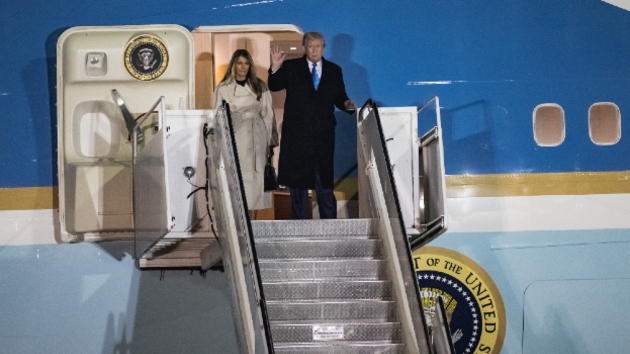
(WASHINGTON) — A flight carrying 59 refugees from South Africa landed in the United States on Monday afternoon — as the Trump administration insists that the expedited process for white South Africans to seek refuge in the United States has nothing to do with race.

The South African refugees’ arrival also comes amid the administration’s efforts to halt refugee programs from other countries.

Hours before the flight arrived at Dulles International Airport, President Donald Trump defended his administration’s decision to offer refugee status to the Afrikaners — a white minority group in South Africa. The president said that the asylum program is because there is a race-based genocide in the country.

“They happen to be white, but whether they’re white or black makes no difference to me, but white farmers are being brutally killed and their land is being confiscated in South Africa, and the newspapers and the media, television media doesn’t even talk about it,” Trump said during remarks at the White House.

Last week, White House press secretary Karoline Leavitt said this group of South Africans “has faced racial persecution.” She also went on to claim their farmland is being taken away. However, a law passed by South Africa earlier this year does not allow land to be expropriated without an agreement with the owner.

South Africa’s government has pushed back, saying the “allegations of discrimination are unfounded.”

“The South Africa Police Services statistics on farm related crimes do not support allegations of violent crime targeted at farmers generally or any particular race,” the South African government said in a statement last week. “There are sufficient structures available within South Africa to address concerns of discrimination. Moreover, even if there are allegations of discrimination, it is our view that these do not meet the threshold of persecution required under domestic and international refugee law.

Trump adviser Elon Musk has repeatedly talked about South Africa, his country of birth, on his social media account saying that the country is anti-white.

Deputy Secretary of State Christopher Landau greeted a group of about three dozen South Africans, many waving American flags, after they got off the plane at the airport in Northern Virginia.

Asked about the administration’s apparent prioritization of white South African refugees over others who are persecuted in their countries of origin, Landau harkened back to the pause on refugee admissions that Trump implemented when he retook the White House.

“That pause, of course, was subject, from the very beginning to exceptions where it was determined that this would be in the interest of the United States. Some of the criteria are making sure that refugees did not pose any challenge to our national security and that they can be assimilated easily into our country,” Landau said. “All of these folks who have just come in today have been carefully vetted pursuant to our refugee standards, and whether or not the broader refugee programs for other people around the world will be lifted is still an ongoing consideration.”

In March, Trump said that he would give some South African farmers and their families a pathway to citizenship. In the same month, the Trump administration kicked out the South African ambassador to the U.S.

In February, Trump signed an executive order that froze all aid to South Africa.

The South African government said in a statement that the order “lacks factual accuracy and fails to recognise South Africa’s profound and painful history of colonialism and apartheid.”

“It is ironic that the executive order makes provision for refugee status in the U.S. for a group in South Africa that remains amongst the most economically privileged, while vulnerable people in the U.S. from other parts of the world are being deported and denied asylum despite real hardship,” the South African government said in the statement.

The Trump administration quickly gave Afrikaners’ applications the green light – while it has paused refugee programs from other countries, including Afghanistan.

Copyright © 2025, ABC Audio. All rights reserved.

Trump defends Qatar jumbo jet offer, says it would be ‘stupid’ to turn away free plane

Trump defends Qatar jumbo jet offer, says it would be ‘stupid’ to turn away free plane
Marco Mantovani/Getty Images

(WASHINGTON) — President Donald Trump on Monday defended the administration’s plans to receive a luxury jumbo jet donated by the Qatari government, saying it would be “stupid” not to accept a free plane.

During remarks at the White House on Monday, before embarking on a four-day trip to the Middle East, Trump called the donation a “very nice gesture” when pressed by reporters if Qatar had asked for anything in exchange.

“I think it’s a great gesture from Qatar. Appreciate it very much,” Trump said. “I would never be one to turn down that kind of an offer. I mean, I could be a stupid person and say, ‘No, we don’t want a free, very expensive airplane.’ But it was, I thought it was a great gesture.”

“I think it was a gesture because of the fact that we help, have helped, and continue to, we will continue to all of those countries, Saudi Arabia, the UAE, Qatar and others,” he continued.

Trump said he doesn’t plan to use the plane after he leaves office.

Further pressed by ABC News Senior Political Correspondent Rachel Scott on what he would say to people who view the luxury plane as a personal gift to him, Trump said it was not a gift to him but “a gift to the Department of Defense.”

Sources familiar with the proposed arrangement told ABC News that the plane would be a gift that is to be available for use by Trump as the new Air Force One until shortly before he leaves office, at which time ownership of the plane will be transferred to the Trump presidential library foundation.

Such an arrangement is sure to raise questions about whether it is legal for the Trump administration, and ultimately, the Trump presidential library foundation, to accept such a valuable gift from a foreign power.

On Monday, Trump referenced an anecdote involving the professional golfer Sam Snead to explain his acceptance of the plane.

“He had a motto, when they give you a putt, you say, ‘Thank you very much.’ You pick up your ball and you walk to the next hole,” he said. “A lot of people are stupid. They say, ‘No, no, I insist on putting it.’ And then they putt it, they miss it, and their partner gets angry at them. You know what? Remember that Sam Snead: when they give you a putt, you pick it up and you walk to the next hole and you say, ‘Thank you very much.'”

The White House is working on the “legal details” of the donation, press secretary Karoline Leavitt said on Monday.

“The Qatari government has graciously offered to donate a plane to the Department of Defense, the legal details of that are still being worked out,” Leavitt said in an appearance on Fox News.

“But, of course, any donation to this government is always done in full compliance with the law. And we commit ourselves to the utmost transparency and we will continue to do that,” Leavitt added.

A senior White House official said the plane will not be presented or gifted while the president is in Qatar this week on a tour of the Middle East, marking the first official foreign trip of Trump’s second term.

In a social media post Sunday night, Trump confirmed his administration was preparing to accept the aircraft, calling it a “very public and transparent transaction” with the Defense Department.

Trump had previously toured the plane, which is so opulently configured it is known as “a flying palace,” while it was parked at the West Palm Beach International Airport in February.

House Speaker Mike Johnson said he would not comment on Trump preparing to receive the jet from Qatar because he hasn’t seen the “details.”

Copyright © 2025, ABC Audio. All rights reserved.