
Raja Krishnamoorthi launches bid for open Illinois Senate seat

Raja Krishnamoorthi launches bid for open Illinois Senate seat
Bill Clark/CQ-Roll Call, Inc via Getty Images

(WASHINGTON) — Rep. Raja Krishnamoorthi of Illinois has announced his bid to run for Senate in 2026, confirming speculations that he would join the quickly expanding field of primary competitors looking to win the safe Democratic seat left open by Sen. Dick Durbin, D-Ill., who is retiring at the end of his term.

In an interview with ABC News, the five-term congressman said he’s running on a record of confronting “bullies” like Donald Trump and is keenly focused on opposing agencies such as the Department of Government Efficiency, led by Elon Musk.

“I have a track record of standing up to Donald Trump in Congress. I voted for impeaching him twice, but I also … played a big role in the first impeachment hearings on Capitol Hill,” said Krishnamoorthi, who entered the House in 2016, now serves as the top Democrat on the House’s China select committee on the Chinese Communist Party and is a senior member of the Intelligence and Oversight committees.

“But I have a track record of standing up to lots of bullies, whether it’s the e-cigarette companies that prey on our youth and try to hook them on vapes or it’s Purdue pharmaceuticals that try to hook a generation to Oxycontin. I’ve gone after all of them. They put a target on my back, but I got results, and now we need results with Donald Trump, Elon Musk and DOGE,” he added.

Krishnamoorthi added that he is running to fight for the economic prosperity of Illinoisans who are “suffering under the economic chaos unleashed by Donald Trump, Elon Musk and DOGE.”

“We need to focus like a laser on their economic problems right now, even at the same time that we’re standing up to Donald Trump,” he told ABC News.

Krishnamoorthi’s bid will kick off with three campaign stops on Friday as he “vows to ‘stand up and fight back’ against Trump’s agenda. The congressman, who represents much of Chicago’s northwestern suburbs, will make stops in his hometown of Peoria, Illinois, and in Schaumburg, Illinois, where he currently lives.

“My roots are in Peoria. I represent the suburbs. I’ve worked in the city for many years. So I want to try to trace that journey that I’ve had in Illinois but also speak to as many people as possible across Illinois,” he told ABC News.

In an announcement video released on Wednesday, Krishnamoorthi called the actions occurring within the White House “insanity” and suggested that he is a Democrat who can “fight back” against the Trump administration. The Democratic Party is grappling with questions over its political direction following the startling loss of all three branches of government during the 2024 elections.

“People want to know, at this moment, in this time, where is the power to fight back? What does it look like?” Krishnamoorthi said in the video. “Well, I’ll tell you: It looks like you and you and you, all of us ready to stand up and fight back. I spent my life standing up to bullies, fighting for everyday people. So I’ll never be quiet while billionaires like Elon Musk and a convicted felon deny the dreams of the next generation for their own egos and personal profit. That’s why I’m running for the United States Senate.”

The Harvard University-educated lawyer who received his undergraduate degree in mechanical engineering from Princeton University was born in central Illinois to Indian immigrants.

Ahead of his election to Congress, Krishnamoorthi served in a number of state roles and as a policy director in the Obama administration. In his announcement video released on Wednesday, the congressman referred to himself as “Raja” and referenced the fact that former President Barack Obama, too, had an ethnically ambiguous sounding name, saying, “I worked on a friend’s campaign who showed that Illinois will give you a shot even if you have a funny name. And inspired by Barack’s example, I was elected to Congress.”

“Yes, I know the name is long, so like always, just call me Raja,” he concluded the video.

Krishnamoorthi, one of the front-runners in the already hotly contested race, has amassed over a $19 million war chest ahead of his launch, with a stunning $3 million raised in just the first three months of 2025.

His bid comes after Durbin announced in April that he would not seek a sixth term. Illinois Lt. Gov. Juliana Stratton jumped in the race less than 48 hours after Durbin’s announcement and quickly earned the endorsements of billionaire Gov. J.B. Pritzker and Illinois’ other senator, Tammy Duckworth.

“At the end of the day, the most important thing is I get the endorsement from the people of Illinois,” Krishnamoorthi told ABC News when asked about his posture among the already crowded primary field.

“They need to have their say. … We need to make sure that the process plays out, unfolds, that they are able to kick the tires and assess who they want to hire to represent them in the U.S. Senate, and I’m going to do everything in my power to earn their support,” he added.

Krishnamoorthi’s announcement also comes just a day after his colleague, Rep. Robin Kelly, D-Ill., declared her own bid for the seat. In an announcement video posted on Tuesday, Kelly brought up how in Congress, she does not stand up during moments of silence to mark mass shootings because, she said, “moments of silence in Congress just aren’t going to cut it anymore.”

Kelly is also the former Illinois Democratic Party chairwoman and a member of House Minority Leader Hakeem Jeffries’ leadership team. It’s reported that Rep. Lauren Underwood, who is also a member of Jeffries’ leadership circle, is still exploring a run for the seat.

Krishnamoorthi told ABC News that his record, paired with his ability to “stand up” to Trump distinctly, makes him uniquely positioned for the role.

“I think that your track record matters. I think that the diversity of your experiences, plus … where you come from, I think that matters,” he said. “I think that most of all, who is going to be the most effective at standing up to Donald Trump but also delivering for constituents?”

Durbin said he doesn’t plan on endorsing any particular candidate but is not ruling out the possibility in an “extreme case.”

“I hope I do not have to,” Durbin said.

Still, Krishnamoorthi linked himself to Durbin as he launched his bid for Senate on Wednesday, lauding him as a “titan” who was a “fellow son of downstate.”

“Senator Dick Durbin is a titan who will go down as one of the most effective and dedicated public servants in Illinois history. I am deeply humbled by the encouragement I have received from friends, family members, and community leaders encouraging me, a fellow son of downstate, to run for the U.S. Senate,” Krishnamoorthi said in a statement announcing his candidacy.


Copyright © 2025, ABC Audio. All rights reserved.
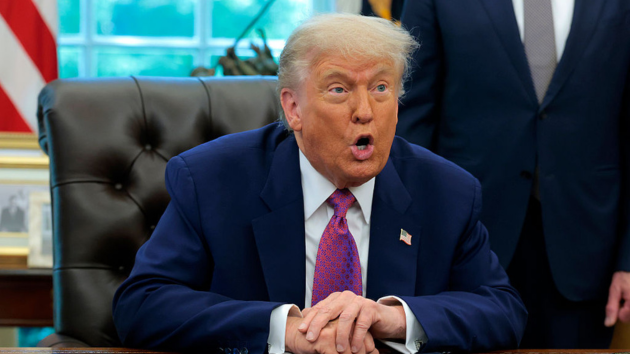
Trump announces US to stop bombing Yemen, says Houthis won’t attack more American ships

Trump announces US to stop bombing Yemen, says Houthis won’t attack more American ships
Jim Watson/AFP via Getty Images

(WASHINGTON) — President Donald Trump made a surprise announcement on Tuesday that the United States would stop bombing the Houthis in Yemen, insisting that the rebel group had agreed to stop attacking U.S. ships in the Red Sea.

“They’ve announced to us at least that they don’t want to fight anymore,” Trump said during an Oval Office photo-op with Canadian Prime Minister Mark Carney. “They just don’t want to fight, and we will honor that.”

“And, they have capitulated,” he added. “But more importantly, they — we will take their word. They say they will not be blowing up ships anymore.”

The move caps off weeks of costly attacks and threats delivered by the Trump administration, which led to a major shakeup of the president’s national security team.

A spokesman for the Foreign Ministry of Oman confirmed the announcement in an X post on Tuesday.

“Following recent discussions and contacts conducted by the Sultanate of Oman with the United States and the relevant authorities in Sana’a, in the Republic of Yemen, with the aim of de-escalation, efforts have resulted in a ceasefire agreement between the two sides,” the Foreign Ministry of Oman said in the statement.

“In the future, neither side will target the other, including American vessels, in the Red Sea and Bab al-Mandab Strait, ensuring freedom of navigation and the smooth flow of international commercial shipping,” it added.

However, Mohammed Ali al Houthi, a member of the Houthi Supreme Political Council, said the Houthis are not immediately agreeing to the U.S.-proposed ceasefire.

The Houthis will “evaluate” the U.S. ceasefire proposal “on the ground first,” he posted on X Tuesday afternoon.

When asked by ABC News for more details on the announcement, U.S. Central Command deferred to the White House.

Trump was pressed by reporters for more details about how the deal with the Houthis came together, but he quickly said the announcement isn’t a deal.

“They’ve said, ‘Please don’t bomb us anymore, and we’re not going to attack your ships,'” he said.

When asked who told the U.S. that the Houthi attacks on U.S. ships would stop, Trump demurred, saying it “doesn’t matter” and then adding that it was from a “very, very good source.”

Secretary of State Marco Rubio and Vice President J.D. Vance laughed and said they agreed with him.

“They don’t want to be bombed anymore,” Trump repeated.

Rubio added that “this was always a freedom of navigation mission.”

“These guys, these are, you know, a band of individuals with advanced weaponry that were threatening global shipping,” he said. “And the job was to get that to stop.”

The U.S. began airstrikes in Yemen against Houthi targets starting March 15 and has conducted over 800 strikes, according to the U.S. military.

On April 18, an American strike on the Ras Isa fuel port killed at least 74 people and wounded 171 others in the deadliest known attack of the American campaign.

However, the U.S. military has taken some hits as well.

The U.S. military has lost seven Reaper drones since March 15, each drone costing $30 million, and an F/A-18E fighter jet rolled off the side of the USS Harry S. Truman aircraft carrier and sank to the bottom of the Red Sea two weeks ago. No one was killed in that incident.

The USS Harry S. Truman possibly made a sudden movement due to Houthi fire, ultimately causing the fighter jet to roll off it, according to a U.S. official, who cited initial field reports. The incident is still under investigation, but the aircraft carrier has previously been targeted by the Houthis.

Israeli forces have also conducted strikes on Yemen for the past two days, striking its main port on the Red Sea, two cement factories and the Sanaa airport.

The Israeli government said these strikes were in response to Houthi strikes on Israel on Sunday, and the Israel Defense Forces said it targeted Houthi infrastructure in Yemen in the strikes.

While Trump claimed the U.S. mission against the Houthis has been a “freedom of navigation” mission from the beginning, the conflict in the Red Sea between the Houthis and U.S.- and British-flagged vessels has been occurring since Oct. 8, 2023.

The Houthis said they would attack vessels connected to Israel’s allies in support of the Palestinian people in Gaza after Israel launched a military operation against Gaza following the Hamas terrorist attack on Oct. 7, 2023.

Since then, the Houthis have been targeting vessels they say are connected to Israel’s allies in the Red Sea to various degrees of severity over the past 19 months. The U.S. ratcheted up the conflict three days before Israel ended the temporary ceasefire with Hamas, resuming military operations in Gaza on March 18. The U.S. launched its first strike against the Houthis on March 5.

The Trump administration has spent weeks trying to save face over its own planning of attacks in Yemen after it was revealed that top national security members, including then-national security adviser Mike Waltz and Defense Secretary Pete Hegseth, communicated plans about the impending attacks on Signal.

The Atlantic Editor-in-Chief Jeffrey Goldberg was accidentally invited to one of the Signal group chats and saw details about the planning.

Last week, Trump announced Waltz would be leaving his Cabinet position and would be nominated as the U.S. ambassador to the United Nations.

ABC News’ Ahmed Baider contributed to this report.

Copyright © 2025, ABC Audio. All rights reserved.
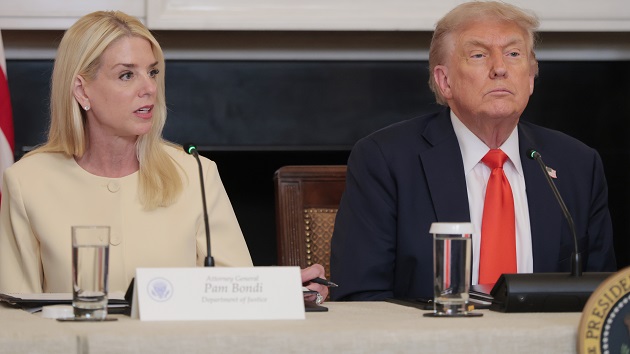
Supreme Court allows Trump to implement transgender military service ban for now

Supreme Court allows Trump to implement transgender military service ban for now
Anna Moneymaker/Getty Images

(WASHINGTON) — The U.S. Supreme Court ruled Tuesday that the Trump administration can move forward with a ban on transgender military service members for now, lifting a lower court injunction against the policy after a judge ruled it was an “unsupported, dramatic and facially unfair exclusionary policy.”

The court did not explain its decision other than to say the order would expire if the justices ultimately take up the case on the merits and issue a ruling striking it down.

Litigation continues in the U.S. Court of Appeals for the Ninth Circuit.

Justices Sonia Sotomayor, Elena Kagan and Ketanji Brown Jackson indicated they would have denied Trump’s request for a stay.

During Trump’s first term, the high court took a similar course, lifting an injunction against a ban on transgender service members after it was challenged. President Joe Biden ended the policy and thousands of transgender members of the military have provided active service over the past four years.

The Pentagon has estimated more than 4,200 active service members have a diagnosis of gender dysphoria which is the military’s metric for tracking the number of transgender troops. Advocacy groups have put the actual number of trans service members much higher, around 15,000.

The Supreme Court’s decision means the military can begin discharging service members who are transgender and cease enlistment of transgender people.

The Trump administration argued that the president is owed broad deference in running the military and shaping the force, framing its policy as a “medical” exclusion. Solicitor General John Sauer claimed that gender dysphoria presented problems for unit cohesion and lethality; two federal judges found little evidence to support those claims.

At the end of April, the Trump administration made a new emergency request seeking an immediate stay of a nationwide injunction blocking the ban on openly transgender military service members.

Circuit Court Judge Benjamin Settle, a George W. Bush nominee, when issuing the preliminary injunction in the case on March 27, had written the Trump administration’s policy on transgender soldiers would be a “de facto blanket prohibition” that seeks “to eradicate transgender service.”

The case was filed by a group of seven transgender service members and one transgender person who wishes to enlist in the United States Marine Corps.

In a statement, advocates for the seven active-duty service members who brought the lawsuit called the ruling a “devastating blow.”

“By allowing this discriminatory ban to take effect while our challenge continues, the Court has temporarily sanctioned a policy that has nothing to do with military readiness and everything to do with prejudice,” said Lambda Legal and the Human Rights Campaign Foundation which are providing legal representation for the transgender troops.

“Transgender individuals meet the same standards and demonstrate the same values as all who serve. We remain steadfast in our belief that this ban violates constitutional guarantees of equal protection and will ultimately be struck down,” the foundation said.

During a trip to Stuttgart, Germany, in February, Defense Secretary Pete Hegseth was asked by a service member at U.S. Africa Command why “four exceptional transgender soldiers” he’d served alongside over severn years needed to be removed.

Hegseth responded: “It’s an ongoing review, with our foot forward on readiness and deployability, readiness and deployability, which is what we have looked at. And there are any number of scientific ways that you can explain that letter as to why there are complications with trans soldiers in that with readiness and deployability.”

Copyright © 2025, ABC Audio. All rights reserved.
Carney says Canada ‘not for sale’ after Trump pushes 51st state in Oval Office meeting

Carney says Canada ‘not for sale’ after Trump pushes 51st state in Oval Office meeting
Canada’s Prime Minister Mark Carney/ Artur Widak/NurPhoto via Getty Images

(WASHINGTON) — Canadian Prime Minister Mark Carney on Tuesday bluntly told President Donald Trump in the Oval Office that Canada is “not for sale” after Trump repeated his assertion it should become the 51st state.

“As you know from real estate, there are some places that are not for sale. And Canada is not for sale, it will never be for sale,” Carney told Trump. “But the opportunity is in the partnership and what we can build together. And we have done that in the past.”

Trump still didn’t let go of the idea as he later mused, “Never say never.”

“Time will tell. It’s only time. But I say never say never,” Trump said. “I’ve had many, many things that were not doable, and they ended up being doable and only doable in a very friendly way.”

Trump and Carney’s high-stakes talks on Tuesday come as the historically friendly relationship between the U.S. and Canada has become strained due to Trump’s tariffs and takeover threat.

Minutes ahead of their meeting, Trump lashed out at Canada on his conservative social media platform, writing the U.S. didn’t need “anything” the country has to offer in terms of trade and goods.

“We don’t need their Cars, we don’t need their Energy, we don’t need their Lumber, we don’t need ANYTHING they have, other than their friendship, which hopefully we will always maintain. They, on the other hand, need EVERYTHING from us! The Prime Minister will be arriving shortly and that will be, most likely, my only question of consequence,” Trump wrote.

Carney’s visit comes off the heels of his election win to replace Justin Trudeau that was fueled, in part, by his anti-Trump platform.

After his victory, Carney warned Canadians: “Trump is trying to break us so that America can own us. That will never, that will never ever happen.”

Trump on Monday had said he was “not sure” what the prime minister wanted to discuss but added that Canada “wants to make a deal,” while Carney said on Friday that they will focus on “trade pressures and the broader future economic and security relationship.”

“I’m not pretending these discussions will be easy — they won’t proceed in a straight line,” Carney said last week. “There will be ups and downs, zigzags along the way. But as I said in my remarks, I will fight for the best possible deal for Canada. I will only accept what’s in the best interest of Canadians, and I will take as much time as necessary to achieve that.”

One advantage for Carney compared to his predecessor going into this meeting is his lack of history with Trump. Trudeau left his post with a bruised relationship with the president, who Trump repeatedly trolled as “governor” rather than prime minister. The two leaders were unable to work out a tariff deal.

A 25% tariff imposed by Trump remains in place for Canadian goods that are not compliant with the United States-Mexico-Canada Agreement (or USMCA) as well as a 10% tariff on Canadian oil imports and 25% tariff on all cars, auto parts, steel and aluminum.

Canada’s retaliatory action includes a 25% tariff on vehicles imported from the U.S. that are not compliant with USMCA. In March, Canada imposed $21 billion worth of retaliatory tariffs were applied on items like American orange juice, whiskey, peanut butter, coffee, appliances, footwear, cosmetics, motorcycles and certain pulp and paper products.

Canada also has a lot to lose if Trump follows through with threat to impose 100% tariffs on films produced outside the U.S.

Copyright © 2025, ABC Audio. All rights reserved.
Key Republican says he opposes Trump’s controversial pick for top prosecutor in DC

Key Republican says he opposes Trump’s controversial pick for top prosecutor in DC
Tasos Katopodis/Getty Images

(WASHINGTON) — President Donald Trump’s plan to promote acting U.S. Attorney for the District of Columbia Ed Martin, who has repeatedly defended Jan. 6 rioters, to the permanent position appears to face an uphill battle after a key Senate Republican said Tuesday he would not support the nomination.

Sen. Thom Tillis of North Carolina told ABC News that he will not support Trump’s nominee to become the next U.S. attorney for Washington, D.C., a message he says has been relayed to the White House.

“At this point, I have indicated to the White House I wouldn’t support his nomination,” Tillis told ABC News.

Tillis met with Martin Monday evening after he publicly expressed reluctance about Martin’s nomination due to concerns about his work representing Jan. 6 defendants and past inflammatory comments about the riot.

Martin, Tillis said, did a “good job of explaining how there were people that probably got caught up in it,” but that it wasn’t enough to satisfy his concerns.

“I think anybody who breached the perimeter should have been in prison for some period of time,” Tillis said. “Whether it’s 30 days or three years is debatable, but I have no tolerance for anybody who entered the building on January the sixth, and that’s probably where most of the friction was,” Tillis said.

Tillis is a key Republican vote on the Senate Judiciary Committee that will be responsible for determining whether to advance Martin’s nomination to a final vote on the Senate floor.

Martin has served as the interim U.S. attorney since the start of the administration but his term expires on May 20, meaning he would need to be confirmed by then to continue leading the office.

One path forward is for the chief judge of the D.C. District Court, Judge Jeb Boasberg, to pick the next nominee.

That is extremely unlikely given Trump’s apparent disdain for Boasberg who has overseen a number of Trump’s related cases.

Boasberg recently found probable cause that the Trump administration acted in contempt of court when officials in March ignored his order to turn around two planes carrying alleged Venezuelan gang members to El Salvador.

If Tillis votes with all Democrats to oppose the nomination and no other Republicans flip, the committee will tie, and Martin’s nomination won’t be sent to the floor for a final vote.

But there’s still a few ways to get around this. Tillis could choose to vote to advance without recommendation, allowing the nomination to go to the floor of the Senate even without Tillis’ support.

Losing any more Republicans on the panel could prove insurmountable.

The timing of a Judiciary Committee vote is also in flux at the moment, as a source close to the confirmation process confirms that Judiciary Chairman Chuck Grassley has not listed a committee vote for Martin on the committee’s agenda this week amid growing concerns about his floundering support.

This delay could make it close to impossible for the Senate to take a final vote on Martin before May 20.

Martin, who has been vying to become the top prosecutor in one of the nation’s most important U.S. attorney’s offices, was a promoter of Donald Trump’s “Stop the Steal” campaign and was himself seen on the Capitol grounds during the attack on the U.S. Capitol.

His tenure leading the office has been fraught with controversy.

Martin has moved to fire or demote dozens of top career attorneys who investigated the Capitol attack, he has sent threatening letters to top Democrats and other political opponents of President Trump suggesting he would target them with criminal investigations.

He recently had to apologize for his past praise of a Jan. 6 rioter who had a lengthy history of antisemitic statements and who infamously posted photos of himself dressed as Adolf Hitler.

Martin has also had to provide multiple supplemental letters to the committee in recent weeks after failing to disclose numerous media appearances on far-right outlets like InfoWars and Russian-propaganda networks Sputnik and RT.

Trump urged Republicans to vote for Martin, saying on his social media platform Monday evening that “if approved, HE WILL NOT LET YOU DOWN.”

Copyright © 2025, ABC Audio. All rights reserved.

Trump and Canada’s Carney to hold high-stakes meeting amid tariff war, takeover threat

Carney says Canada ‘not for sale’ after Trump pushes 51st state in Oval Office meeting
Canada’s Prime Minister Mark Carney/ Artur Widak/NurPhoto via Getty Images

(WASHINGTON) — President Donald Trump and Canada’s Prime Minister Mark Carney meet on Tuesday at the White House for a high-stakes, and possibly tense, meeting amid a tariff trade war between the two neighbors and allies.

The two leaders will greet each other at 11:30 a.m. ET and then hold a bilateral meeting in the Oval Office.

Carney’s visit comes off the heels of his election win to replace Justin Trudeau that was fueled, in part, by his anti-Trump platform.

After his victory, Carney warned Canadians: “Trump is trying to break us so that America can own us. That will never, that will never ever happen.”

Trump, meanwhile, has taken relentless aim at Canada since returning to office in January. He’s threatened to make Canada the 51st state and slapped steep tariffs on the nation, which is one of the United States’ biggest trading partners.

Trump has said he’s “not sure” what the prime minister wants to discuss but added that Canada “wants to make a deal,” while Carney said on Friday that they will focus on “trade pressures and the broader future economic and security relationship.”

“I’m not pretending these discussions will be easy — they won’t proceed in a straight line,” Carney said last week. “There will be ups and downs, zigzags along the way. But as I said in my remarks, I will fight for the best possible deal for Canada. I will only accept what’s in the best interest of Canadians, and I will take as much time as necessary to achieve that.”

The historically friendly relationship between the U.S. and Canada is now on edge. Trump and Carney’s face-to-face meeting in the Oval Office could yield progress on easing tariffs or strain the relationship even further.

One advantage for Carney compared to his predecessor going into this meeting is his lack of history with Trump. Trudeau left his post with a bruised relationship with the president, who Trump repeatedly trolled as “governor” rather than prime minister. The two leaders were unable to work out a tariff deal.

A 25% tariff imposed by Trump remains in place for Canadian goods that are not compliant with the United States-Mexico-Canada Agreement (or USMCA) as well as a 10% tariff on Canadian oil imports and 25% tariff on all cars, auto parts, steel and aluminum.

Canada’s retaliatory action includes a 25% tariff on vehicles imported from the U.S. that are not compliant with USMCA. In March, Canada imposed $21 billion worth of retaliatory tariffs were applied on items like American orange juice, whiskey, peanut butter, coffee, appliances, footwear, cosmetics, motorcycles and certain pulp and paper products.

Canada also has a lot to lose if Trump follows through with threat to impose 100% tariffs on films produced outside the U.S.

Copyright © 2025, ABC Audio. All rights reserved.
‘Shocking’: Experts question Trump claiming ‘I don’t know’ about upholding Constitution

‘Shocking’: Experts question Trump claiming ‘I don’t know’ about upholding Constitution
Andrew Harnik/Getty Images

(WASHINGTON) — President Donald Trump, a little more than 100 days after taking the oath of office, questioned whether he had a duty to uphold the Constitution and the Fifth Amendment right to due process as he expressed frustration on judicial pushback to his mass deportation effort.

During a wide-ranging interview with NBC News “Meet the Press” moderator Kristen Welker, Trump was asked if he agreed with Secretary of State Marco Rubio that citizens and noncitizens alike are entitled to due process.

“I don’t know,” Trump responded. “I’m not a lawyer. I don’t know.”

Welker noted that the Fifth Amendment, which states in part that “no person” shall be “deprived of life, liberty, or property, without due process of law,” says as much.

“I don’t know,” Trump repeated. “It seems it might say that, but if you’re talking about that, then we’d have to have a million or 2 million or 3 million trials. We have thousands of people that are some murders and some drug dealers and some of the worst people on earth, some of the worst most dangerous people on earth, and I was elected to get them the hell out of here and the courts are holding me from doing it.”

Asked a final time if, as president, he needed to uphold the Constitution, Trump again deflected.

“I don’t know. I have to respond by saying, again, I have brilliant lawyers that work for me, and they are obviously going to follow what the Supreme Court said,” in what’s become a new standard answer in interviews when confronted with similar questions about what the law requires him to do.

Legal experts told ABC News that the Fifth Amendment does not make any distinction between citizens and noncitizens. The Supreme Court has held that illegal immigrants are afforded due process rights under the Fifth and Fourteenth Amendments.

“Even Justice Scalia, for whom President Trump has expressed great admiration, acknowledged that the plain language of the Fifth Amendment clearly provides every ‘person,’ not just American citizens, are entitled to the protections of due process,” Michael Gerhardt, a constitutional law expert at the University of North Carolina, told ABC News.

Scalia’s 1993 ruling in which he wrote it was well established that the Fifth Amendment entitles aliens to due process of law in deportation proceedings” was referenced in a recent Supreme Court order mandating detained migrants be given “reasonable time” to challenge their removal.

“President Trump’s failure to acknowledge that he swore an oath to support and defend the Constitution is unprecedented in American history,” Gerhardt said. “Most presidents have not been lawyers, but every president, other than Trump, has acknowledged that every federal official, including the president, has the duty to uphold the Constitution.”

Trump, with his right hand raised, took the oath of office on Jan. 20 as prescribed by Article II, Section 1 of the Constitution.

“I Donald John Trump do solemnly swear that I will faithfully execute the Office of President of the United States, and will to the best of my ability, preserve, protect and defend the Constitution of the United States,” Trump said during his inauguration.

In another escalation of his standoff with the courts, Trump later on Sunday told reporters that he would seek to appoint judges who won’t challenge his deportation plan.

“I mean, we need judges that are not going to be demanding trials for every single illegal immigrant,” Trump said while taking questions on Air Force One. “We have millions of people that have come in here illegally, and we can’t have a trial for every single person. That would be millions of trials.”

Immigration matters are routinely dealt with in a limited hearing or other court proceedings before an immigration judge, not a full-blown trial as Trump suggests, experts say. Those administrative judges are employees of the Department of Justice.

“It’s a minimal due process hearing, but it does provide due process,” said David Leopold, an attorney and former president of the American Immigration Lawyers Association.

Trump’s comments on Sunday were quickly criticized by Democrats and other critics, who pointed to it as what they said was another example of Trump’s disregard for constitutional boundaries.

“This is as un-American as it gets,” Senate Democratic Leader Chuck Schumer wrote on X.

Republican Sen. Rand Paul also pushed back that “following the Constitution is not a suggestion.”

“It is a guiding force for all of us who work on behalf of the American people. Do you agree?” Paul wrote on X.

“It is shocking that a sitting president would treat the Constitution as if it’s an inconvenience,” said Leopold.

“We can’t just assume that the government is judge, jury and executioner,” said Leopold. “That’s not what this country was founded on. That’s what an authoritarian country is. We are not an authoritarian country. We are a constitutional republic.”

Copyright © 2025, ABC Audio. All rights reserved.
On Teacher Appreciation Day, Trump cuts affecting profession in a ‘huge way’

On Teacher Appreciation Day, Trump cuts affecting profession in a ‘huge way’
Chip Somodevilla/Getty Images

(WASHINGTON) — The Trump administration has made dozens of cuts that some teachers say could impact their profession in a “huge way,” according to educators in terminated programs who spoke with ABC News.

Before Teacher Appreciation Day, which is celebrated on Tuesday as part of Teacher Appreciation Week, the administration has slashed professional development initiatives, preparation programs, and other federally funded education projects that the administration has deemed as divisive and run afoul of its priorities.

Cuts are affecting the experiences that ’empower teachers’
Melissa Collins, who was Tennessee’s Teacher of the Year in 2023, said professional learning grants through the National Endowment for the Humanities (NEH) made her a better teacher. Collins told ABC News the opportunity to attend programs at museums or colleges allowed her to enhance her skills. At the Japanese American National Museum (JANM) last summer, Collins participated in the Landmarks of American History and Culture workshop entitled “Little Tokyo: How History Shapes a Community Across Generations.”

“I have received the best professional learning experience that I could ever receive that is going to impact my classroom and so many others,” Collins said in a video by JANM.

However — like many federal education awards — the NEH grant was terminated by the Department of Government Efficiency (DOGE) and the programming is no longer offered due to the administration’s “shifting priorities,” according to a termination notice reviewed by ABC News.

“As teachers, we strive to improve for our students, but currently, budget cuts are affecting the experiences that empower teachers to serve their schools and communities effectively,” Collins wrote in a statement to ABC.

Former teacher Dani Pierce was educator liaison at the department of education before losing her job this spring under the agency’s reduction in force efforts as Trump hopes to abolish the department completely. Pierce stressed the work teachers do in the classroom each day is “immeasurable” and often goes unseen. But during Teacher Appreciation Week this year many in the education community, including Pierce, grapple with the prospect of a shuttered department.

“It pains me deeply not to be at the Department right now, leading our teacher appreciation efforts or ensuring teachers have a voice in the policies that affect your schools and students,” Pierce wrote in an open letter to the teachers of America.

“I may be RIFed from my role as your liaison to the Department, but I will never stop working to ensure your voices are heard and your contributions receive the recognition and support they deserve,” Pierce added.

Teachers across the country tell ABC News they continue to face major hurdles in the classroom — including staffing shortages, the pinch of low pay and addressing students’ mental health — many of which stem from closures during the COVID-19 pandemic.

DEI initiatives “inconsistent” with fairness and excellence in education

On the other hand, the next generation of teachers are also affected by the administration’s cuts.

One of Trump’s top pledges is to root out diversity, equity and inclusion programs and any practices that discriminate on the basis of race. Some of the most recent actions taken by the education department include cutting grants that contribute directly to educator diversity.

The agency terminated the CREATE project, formerly at Georgia State University, because the program conflicted with the department’s policy of prioritizing merit, fairness and excellence in education, according to a termination letter obtained by ABC News.

The federal funding was deemed “inconsistent” with the department’s objectives because the program promoted DEI initiatives or unlawful discrimination practices. But former employees said the organization contributed hundreds of millions of dollars toward promoting novice teachers. They told ABC News the teacher residency program helped place the majority of its student teachers into underserved schools in the Atlanta Public School system and called the administration’s termination notice “dismissive.”

“It was very disrespectful to the work that we have put our blood, sweat and tears into — ensuring that this community that we are serving in has quality educators,” an educator said.

Copyright © 2025, ABC Audio. All rights reserved.
Trump touts ‘very strong’ Alcatraz as Bureau of Prisons assessing reopening prison

Trump touts ‘very strong’ Alcatraz as Bureau of Prisons assessing reopening prison
Tayfun Coskun/Anadolu Agency via Getty Images

(WASHINGTON) — The new director of the federal Bureau of Prisons said the agency will “vigorously” pursue “all avenues to support and implement” the president’s agenda after President Donald Trump said he was wanted to reopen Alcatraz as a “substantially enlarged and rebuilt” prison.

Over the weekend, Trump posted on Truth Social that he was directing the Bureau of Prisons, along with the Department of Justice, FBI and DHS to reopen the facility.

“The Bureau of Prisons (BOP) will vigorously pursue all avenues to support and implement the President’s agenda,” said BOP Director William K. Marshall III, who was sworn in last month. “I have ordered an immediate assessment to determine our needs and the next steps. USP Alcatraz has a rich history. We look forward to restoring this powerful symbol of law, order, and justice. We will be actively working with our law enforcement and other federal partners to reinstate this very important mission.

“Just an idea I had,” Trump told reporters Sunday night when asked what prompted his proposal. “And I guess because so many of these radicalized judges, they want to have trials for every single, think of it, every single person that’s in our country illegally, they came in illegally. That would mean millions of trials, and it’s just so ridiculous what’s happening.”

Alcatraz, which sits in the middle of San Francisco Bay, has not been an operational prison since 1963, according to the National Park Service, which has maintained it as part of the Golden Gate National Recreation Area since 1972. More than 1 million people visit the island each year, according to the BOP.

The facility, which was built as a fort to protect San Francisco Bay then converted to an Army prison before holding federal inmates, has housed notorious prisoners such as mobster Al Capone. Known as “The Rock,” the prison held on average 260 to 275 people, according to the Bureau of Prisons, and many inmates considered the living conditions at the prison to be better than most at the time, the agency says.

It was estimated that it would take $3 million to $5 million for restoration and maintenance work to keep the prison open in addition to daily operating costs, which were far higher than other federal prisons. Alcatraz’s daily per capita cost in 1959 was $10.10 compared to $3.00 for the federal prison in Atlanta.

A recent inspector general report estimated that the Bureau of Prisons facilities across the country needed $2 billion worth of repairs. The BOP has had to close facilities because of the dire conditions inside some prisons.

Elizabeth Neumann, a former DHS deputy chief of staff, told ABC News Live that the BOP “already has some pretty significant problems with its existing prisons.”

“They’ve closed a number in recent years just because they can’t maintain them. So to try to also turn around something that hasn’t been operational for 60 years, and make it habitable for people to be imprisoned would be a lot of money,” she said.

And it’s not just the cost of getting the facility ready to house inmates, she said.

“San Francisco is a very high cost of living area. Federal employees get paid more if they work in those high cost areas. So it’s not really a cost effective solution,” Neumann said. “If you’re looking to build producer capacity, you would it’s more effective to just build something new in a part of the country where the cost of living is lower.”

Neumann said she wasn’t surprised by Trump’s suggestion. She said during his first administration, she was often tasked with researching some of his proposals.

“He has a lot of ideas. People will go off and study them, then they’ll come back with the facts and, and usually it gets dropped at that stage,” she said.

House Speaker Emerita Nancy Pelosi, who represents the area in Congress, shot down Trump’s proposal.

“Alcatraz closed as a federal penitentiary more than sixty years ago. It is now a very popular national park and major tourist attraction. The President’s proposal is not a serious one,” she posted on X.

Copyright © 2025, ABC Audio. All rights reserved.

Bureau of Prisons assessing Trump’s directive to reopen Alcatraz

Trump touts ‘very strong’ Alcatraz as Bureau of Prisons assessing reopening prison
Tayfun Coskun/Anadolu Agency via Getty Images

(WASHINGTON) — The new director of the federal Bureau of Prisons said the agency will “vigorously” pursue “all avenues to support and implement” the president’s agenda after President Donald Trump said he was wanted to reopen Alcatraz as a “substantially enlarged and rebuilt” prison.

Over the weekend, Trump posted on Truth Social that he was directing the Bureau of Prisons, along with the Department of Justice, FBI and DHS to reopen the facility.

“The Bureau of Prisons (BOP) will vigorously pursue all avenues to support and implement the President’s agenda,” said BOP Director William K. Marshall III, who was sworn in last month. “I have ordered an immediate assessment to determine our needs and the next steps. USP Alcatraz has a rich history. We look forward to restoring this powerful symbol of law, order, and justice. We will be actively working with our law enforcement and other federal partners to reinstate this very important mission.

Alcatraz, which sits in the middle of San Francisco Bay, has not been an operational prison since 1963, according to the National Park Service, which has maintained it as part of the Golden Gate National Recreation Area since 1972. More than 1 million people visit the island each year, according to the BOP.

The facility, which was built as a fort to protect San Francisco Bay then converted to an Army prison before holding federal inmates, has housed notorious prisoners such as mobster Al Capone. Known as “The Rock,” the prison held on average 260 to 275 people, according to the Bureau of Prisons, and many inmates considered the living conditions at the prison to be better than most at the time, the agency says.

It was estimated that it would take $3 million to $5 million for restoration and maintenance work to keep the prison open in addition to daily operating costs, which were far higher than other federal prisons. Alcatraz’s daily per capita cost in 1959 was $10.10 compared to $3.00 for the federal prison in Atlanta.

A recent inspector general report estimated that the Bureau of Prisons facilities across the country needed $2 billion worth of repairs. The BOP has had to close facilities because of the dire conditions inside some prisons.

Elizabeth Neumann, a former DHS deputy chief of staff, told ABC News Live that the BOP “already has some pretty significant problems with its existing prisons.”

“They’ve closed a number in recent years just because they can’t maintain them. So to try to also turn around something that hasn’t been operational for 60 years, and make it habitable for people to be imprisoned would be a lot of money,” she said.

And it’s not just the cost of getting the facility ready to house inmates, she said.

“San Francisco is a very high cost of living area. Federal employees get paid more if they work in those high cost areas. So it’s not really a cost effective solution,” Neumann said. “If you’re looking to build producer capacity, you would it’s more effective to just build something new in a part of the country where the cost of living is lower.”

Neumann said she wasn’t surprised by Trump’s suggestion. She said during her time at Homeland Security, she was often tasked with researching some of his proposals.

“He has a lot of ideas. People will go off and study them, then they’ll come back with the facts and, and usually it gets dropped at that stage,” she said.

House Speaker Emerita Nancy Pelosi, who represents the area in Congress, shot down Trump’s proposal.

“Alcatraz closed as a federal penitentiary more than sixty years ago. It is now a very popular national park and major tourist attraction. The President’s proposal is not a serious one,” she posted on X.

Copyright © 2025, ABC Audio. All rights reserved.