Spencer and Monique Tepe are seen in this undated photo. (Courtesy Rob Misleh)
(COLUMBUS, Ohio) — The Columbus, Ohio, police chief is speaking out for the first time since the mysterious murders of dentist Spencer Tepe and his wife, Monique Tepe.
The couple was found shot to death in their home on Dec. 30, Columbus police said. Their two young children were found safe inside.
Authorities said they believe the couple was killed between 2 a.m. and 5 a.m. on their home’s second floor.
Earlier this week, police released video of a person of interest. Police said the video showed an individual walking in an alley near the victims’ house during that 2 a.m. to 5 a.m. timeframe.
A motive hasn’t been identified, the chief said.
“I know it’s frustrating for people, I know they want answers,” Bryant said. “As soon as we’re able to provide more information, we will absolutely be coming back to talk about that. … But right now it’s premature for us to be able to say what the motive is, or, we don’t have a suspect identified at this point.”
She added, “We want to bring some justice to the family.”
The Tepes’ brother-in-law, Rob Misleh, said they spent Christmas together days before the murders.
“We did Christmas night together, and then the following day we just did a, kind of, post-Christmas lounging and watching movies and had dinner. And the next morning they left,” he told ABC News’ “Good Morning America.” “How would I ever know that would be the last time I would’ve hung out with Spence like that?”
“We were totally blindsided by what happened,” he said.
The Tepes’ family and friends will come together on Sunday for a celebration of life service.
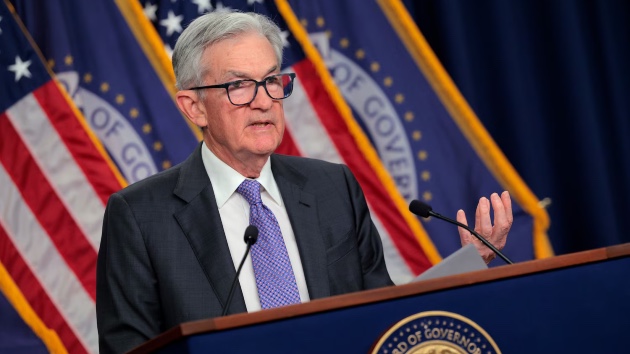
Federal Reserve Chair Jerome Powell speaks during a press conference following the Federal Open Markets Committee meeting at the Federal Reserve on December 10, 2025 in Washington, DC. (Chip Somodevilla/Getty Images)
(WASHINGTON) — Hiring ticked down in December, defying the Federal Reserve’s effort to boost hiring with a recent series of interest rate cuts, a jobs report on Friday showed. The reading fell short of economists’ expectations.
The U.S. added 50,000 jobs in December, which marked a slight drop from 64,000 jobs added in the previous month.
The unemployment rate dropped to 4.4% in December from 4.6% in November, the Bureau of Labor Statistics (BLS) said. Unemployment remains low by historical standards but had ticked up from previous lows.
As in previous months, the healthcare sector accounted for the lion’s share of hiring in December, adding 21,000 jobs, according to the BLS. The food service and social assistance industries also contributed to the hiring figure.
In all, the economy added an average of 49,000 jobs each month in 2025, registering a significant slowdown from 168,000 jobs added per month in 2024, the BLS said.
The fresh data comes two weeks after a blockbuster report on economic growth appeared to rebuke worries about the wider economy prompted by the hiring cooldown.
The U.S. economy grew at a robust annualized rate of 4.3% in the third quarter in the government’s initial estimate, marking an acceleration from 3.8% growth recorded in the previous quarter, the U.S. Commerce Department said in December.
A boost in consumer spending helped propel the economic surge, the department added, suggesting that many consumers continued to open their wallets even as their attitudes worsened.
Meanwhile, inflation dropped in November, the most recent month for which data is available. The cooldown ended a monthslong acceleration of price increases and offered some relief for households strained by cost hikes.
Inflation remains well below a 2022 peak but stands nearly a percentage point above the Fed’s target of 2%.
The onset of elevated inflation alongside sluggish hiring has put the Fed in a difficult position.
The central bank must balance a dual mandate to keep inflation under control and maximize employment. To address pressure on both of its goals, the Fed primarily holds a single tool: interest rates.
Starting in September, the Fed cut interest rates at three consecutive meetings, opting to address the flagging labor market. The benchmark rate stands at a level between 3.5% and 3.75%.
That figure marks a significant drop from a recent peak attained in 2023, but borrowing costs remain well above a 0% rate established at the outset of the COVID-19 pandemic.
Futures markets expect two quarter-point interest rate cuts this year, forecasting the first in April and a second in the fall, according to CME FedWatch Tool, a measure of market sentiment.
After the Fed’s most recent rate cut in December, Fed Chair Jerome Powell suggested the central bank may be cautious about further rate reductions.
“We’re well positioned to wait and see how the economy evolves,” Powell said.
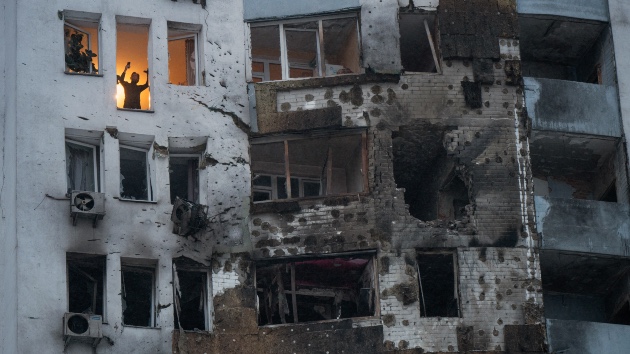
A multi-storey apartment block in the Darnytskyi district is damaged by a Russian drone strike during a massive overnight attack on the capital, in Kyiv, Ukraine, on January 9, 2026. (Photo by Danylo Antoniuk/Ukrinform/NurPhoto via Getty Images)NO USE RUSSIA. NO USE BELARUS. (Photo by Ukrinform/NurPhoto via Getty Images)
(KYIV, Ukraine) — Russia attacked Ukraine overnight with a massive barrage of 242 drones and 36 missiles, including one that was nuclear-capable, the Ukrainian Air Force said Friday morning.
The missile types used in the attack, which began Thursday night, included 22 cruise, 13 ballistic and one medium-range ballistic, according to the country’s air force.
Ukraine’s air defense system destroyed or suppressed 226 drones, 10 cruise missiles and 8 ballistic missiles. However, strikes from 18 missiles and 16 drones were recorded at 19 locations across the country, the air force said.
The capital, Kyiv, was among the hardest-hit areas, where 40 facilities were damaged, including 20 residential buildings, officials said. At least four people were killed and 25 others were injured there, according to the State Emergency Service of Ukraine, which said rescues were ongoing. The wider Kyiv region as well as the regions of Lviv, Kirovohrad and Cherkasy were also targeted.
The Russian Ministry of Defense confirmed that the Oreshnik intermediate-range ground missile system was used in the “massive strike” on Ukraine’s “critical facilities” overnight.
The Oreshnik, used only for the second time by Russia, is capable of flying at hypersonic speeds and delivering multiple warheads.
The ministry said this was in response to an alleged Ukrainian drone attack on Russian President Vladimir Putin’s state residence in the Novgorod region of northwestern Russia last month, which Ukraine has denied.
Ukrainian Foreign Minister Andrii Sybiha said Russia used the intermediate-range ballistic missile (IRBM) on the Lviv region in western Ukraine.
“Such a strike close to EU and NATO border is a grave threat to the security on the European continent and a test for the transatlantic community. We demand strong responses to Russia’s reckless actions,” Sybiha wrote in a post on X “We are informing the United States, European partners, and all countries and international organizations about the details of this dangerous strike through diplomatic channels.”
Sybiha called it “absurd” that Moscow justified the strike as a response to “the fake ‘Putin residence attack’ that never happened.”
“Another proof that Moscow does not need any real reasons for its terror and war,” he added. “Putin uses an IRBM near EU and NATO border in response to his own hallucinations — this is truly a global threat. And it demands global responses.”
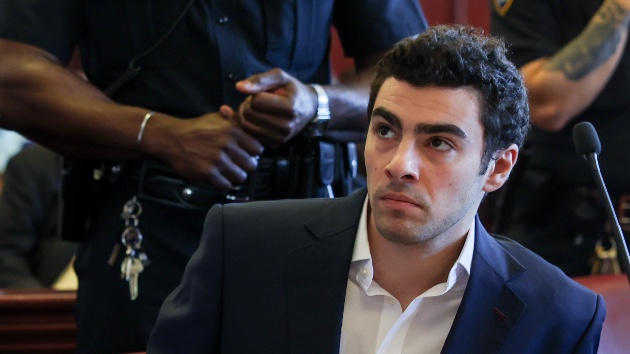
Luigi Mangione attends a suppression of evidence hearing in the killing of UnitedHealthcare CEO Brian Thompson in Manhattan Criminal Court on December 18, 2025 in New York City. (Photo by Shannon Stapleton-Pool/Getty Images)
(NEW YORK) — Luigi Mangione returns on Friday to Manhattan federal court, where prosecutors have said they would seek the death penalty if he’s convicted of stalking and killing UnitedHealthcare chief executive Brian Thompson on a New York City sidewalk in 2024.
The appearance follows a three-week hearing in state court during which Mangione tried to convince the judge to exclude some of the critical evidence police said they found in his backpack, including writings and the alleged murder weapon.
Prosecutors said in a letter Thursday no such hearing is necessary in the federal case.
“The Government searched the contents of the defendant’s notebook pursuant to a judicially authorized search warrant that expressly covered, among other things, handwritten materials, including notebook entries, contained within the defendant’s backpack,” prosecutor Sean Buckley wrote.
“To the extent that the defendant now seeks to challenge the validity of the Government’s warrant — an argument the defendant similarly did not make in either his moving or reply papers — that argument would also fail on the merits because the warrant, which disclosed the initial search of the defendant’s backpack by the Altoona Police Department, was supported by ample probable cause,” wrote Buckley.
Earlier this week, prosecutors disputed a defense claim that Mangione should not face the death penalty because of a purported conflict of interest by Attorney General Pam Bondi.
The defense said Bondi is continuing to benefit from a 401k established while she worked at the lobbying firm Ballard Partners, which represents UnitedHealthcare.
Prosecutors said Ballard has made no contributions to her retirement plan since her Senate confirmation as attorney general, and argued that she stands to gain nothing from a “capital outcome” in the Mangione case.
“There is simply no factual basis for the assertion that outside corporate interests influenced the Attorney General’s charging decision in any fashion. The defendant’s insinuations otherwise rest on an inaccurate financial narrative,” Buckley wrote.
Mangione, who has pleaded not guilty to federal charges, is also trying to fight the possibility of the death penalty by challenging one of the aggravating factors that makes him eligible.
Paresh Patel, an expert on the federal stalking statute who Mangione has added to his legal team, is expected to argue that stalking is not a crime of violence and, therefore, an improper predicate to making the case death penalty eligible.
Prosecutors say the defense is wrong.
“Volitional conduct by the defendant that simultaneously places the victim in reasonable fear of death or bodily injury and that proximately causes the victim’s death necessarily involves the ‘use, attempted use, or threatened use of physical force against the person or property of another,’ thereby making the offenses charged in Counts Three and Four crimes of violence,” Buckley argued.
(PORTLAND, Ore.) — Two people were injured in a shooting involving a federal agent in Portland, Oregon, on Thursday, according to authorities.
The incident came a short time after an ICE officer allegedly shot and killed a woman in her car in Minneapolis, Minnesota, sparking outrage and backlash against the presence of federal agents there. Similarly, the mayor of Portland called for immigration enforcement operations to halt while the investigation is ongoing.
In both cases, federal officials said the motorists tried to ram agents, who fired defensive shots.
The Department of Homeland Security said the shooting in Portland occurred while Border Patrol agents were conducting a “targeted” stop on a vehicle carrying two people allegedly affiliated with the Tren de Aragua gang. The passenger was the target, DHS said.
The agents on the stop were part of a Customs and Border Protection operation dubbed “Operation Oregon,” according to multiple law enforcement sources.
“When agents identified themselves to the vehicle occupants, the driver weaponized his vehicle and attempted to run over the law enforcement agents,” DHS said in a statement.
The driver, who was not the target of the operation, was stopped driving a red Toyota, before they attempted to flee. The agent, as DHS said in their statement, feared for their safety and fired at the vehicle.
Sources stressed the information and investigation are in its preliminary stages and the information could change.
The two that were shot, were treated at a hospital for their injuries and their conditions are unknown, according to law enforcement sources. Both are believed to be connected to the Tren de Aragua gang, according to DHS.
During the press conference, Portland Police Chief Bob Day said local officials “do not know the facts of this case,” but an investigation is ongoing.
Asked whether the passenger is linked to a previous shooting, the police chief said, “I can’t comment on whether or not that’s the case. We don’t know who these individuals are.”
Portland Mayor Keith Wilson told reporters, “We know what the federal government says happened here. There was a time when we could take them at their word. That time is long past.”
“We are calling on ICE to halt all operations in Portland until a full and independent investigation can take place,” he said. “Our community deserves answers.”
Later Thursday evening, Oregon Attorney General Dan Rayfield said he was opening an investigation into the shooting.
In a social media post, Rayfield said the Oregon Department of Justice investigation will examine whether any federal officers acted outside the scope of their lawful authority during the encounter. The post said the investigation would include witness interviews and video evidence.
The shooting incident occurred around 2:18 p.m. local time on Thursday, officials said. Portland police officers responding to a call for help found a man and woman with “apparent gunshot wounds,” according to the police department.
“Officers confirmed that federal agents had been involved in a shooting,” the Portland Police Department said in an earlier statement, adding, “Portland Police were not involved in the incident.”
The shooting occurred some 3 miles away from where the victims were found, on the 10200 block of Southeast Main Street near Adventist Health, a medical office, according to Portland police. The victims then drove themselves to an apartment complex in the area of Northeast 146th Avenue and East Burnside Street, where the man who had been shot called for help, according to police.
The FBI was seen in video responding to the scene of the shooting. Portland police are assisting, a department spokesperson said.
Police Chief Day urged calm amid “heightened emotion” following a deadly ICE officer-involved shooting in Minneapolis on Wednesday.
“We are still in the early stages of this incident,” Day said in a statement. “We understand the heightened emotion and tension many are feeling in the wake of the shooting in Minneapolis, but I am asking the community to remain calm as we work to learn more.”
During the press conference, Oregon Gov. Tina Kotek called for transparency from the federal government in the investigation.
“The priority right now is a full, completed investigation, not more detentions. My message to the federal government is this: We demand transparency. We demand your cooperation with Portland Police and the Multnomah County DA, because we need to investigate this incident efficiently and effectively so we can rebuild trust with our nation’s government,” Kotek said.
Earlier, Mayor Wilson called the incident “deeply troubling” while also calling on residents to “show up with calm and purpose during this difficult time.”
“Portland does not respond to violence with violence,” he said in a statement. “We respond with clarity, unity, and a commitment to justice. We must stand together to protect Portland.”
Early Friday, Portland police confirmed that at least six people were arrested during protests as crowds gathered outside an ICE facility.
“At about 9 p.m., officers requested that people move to the sidewalk, as traffic remained open in the area. An officer in the PPB Sound Truck, a loudspeaker-equipped police vehicle, broadcast that request repeatedly to the group,” the Portland Police bureau said in their statement. “PPB moved in and made targeted arrests resulting in five custodies,” while another arrest was made later on.
Multnomah County District Attorney Nathan Vasquez told reporters at the scene of the shooting that he is “very concerned.”
“We are here from this attorney’s office to monitor, to assist and to make sure that there’s a thorough and complete investigation, that evidence is fully preserved, and that we’re certainly hoping that we can get all of the facts about what transpired,” he said.
This is a developing story. Please check back for updates.
Demolition of the East Wing of the White House, during construction on the new ballroom extension of the White House in Washington, DC, US, on Tuesday, Dec. 9, 2025. (Aaron Schwartz/Bloomberg via Getty Images)
(WASHINGTON) — The White House on Thursday presented the latest plans for the East Wing renovation project, the construction of a 90,000-square-foot ballroom, in a public meeting of the National Capital Planning Commission.
The project’s architect, Shalom Baranes, said during the meeting that the White House is considering adding a one-story addition to the West Wing to restore “symmetry” to the complex after the East Wing ballroom project is complete.
His comments came after announcing a two-story colonnade would connect the East Room in the White House to the new ballroom.
“The White House is therefore considering the idea of a modest one-story addition to the West Wing colonnade, which would serve to restore a sense of symmetry around the original central pavilion.”
Baranes also clarified details about the expansion project, telling commissioners the East Wing expansion would include a second floor, and that the new ballroom would have roughly 40-foot ceilings, be roughly 22,000 square feet of the nearly 90,000 square foot project, and be able to accommodate up to 1,000 seated guests.
Phil Mendelson, the Washington City Council Chairman and member of the planning commission, said he felt the East Wing design could appear to be “overwhelming” the existing White House structure.
Baranes said the 45,000 square foot project would “exactly” match the height of the White House when completed.
President Donald Trump has repeatedly increased the size and cost of the ballroom project. Last month, he said it would cost $400 million, after an initial estimate of $200 million. The White House has said the project will be funded by private donations.
Answering questions from commissioners, Baranes said the potential project would add a story to the West Wing colonnade, and not the West Wing building proper.
He also offered no timetable for the potential addition and did not present any new renderings or drawings.
Josh Fisher, a White House official who also supplemented the presentation, said the Trump administration is also considering changes to Lafayette Park and the visitor screening areas on the White House complex in the future.
Will Scharf, a senior White House official who sits on the Capital Planning Commission, noted that Trump is hosted at Windsor Castle when he visits the United Kingdom, but when the King of England visits the White House, he may be hosted in a “tent” on the White House lawn.
“That, to me, is not a good look for the United States,” he said.
James Blair, another Trump appointee on the commission, said the current White House can’t “accommodate” efforts for the president to “break bread” with groups of lawmakers.
Other commissioners affiliated with the city expressed some reservations about the scale of the project and the fact that demolition started before the plan was presented.
The White House announced the ballroom construction project in late July, and demolition began suddenly on the East Wing in late October, when workers were spotted tearing down the wing of the White House that contained the first lady’s offices.
Scharf pointed out that demolition began at the Smithsonian Air and Space Museum before the renovation plan was presented to local bodies.
In December, the National Trust for Historic Preservation filed a lawsuit to stop the East Wing construction project by claiming the administration had circumvented the required review process for federal projects.
In a hearing in that case, the administration told a federal judge it would submit plans for the project to the relevant federal oversight bodies.
The judge said he would hold a follow-up hearing on the White House’s process in January and declined to stop construction at the time.
Days later, the administration submitted formal applications and plans for the renovation project to the NCPC and the Commission of Fine Arts, a White House official confirmed to ABC News at the time.
In its filing in the case brought by the historic preservation group, the Justice Department argued that without a permanent ballroom, the White House can no longer meet the needs of the president as he fulfills his constitutional duty to “receive Ambassadors and other public Ministers.”
“It is entirely fitting, then, that the presidential residence and workplace be equipped for that purpose. Given modern needs, the White House is not,” the Justice Department argued.
Even as it determined in late August that the White House ballroom would have “no significant impact” on the surrounding grounds, the National Park Service did highlight some of the adverse effects of the project, presaging concerns that have since been echoed by preservationists, architects and designers.
“The new building’s larger footprint and height will dominate the eastern portion of the site, creating a visual imbalance with the more modestly scaled West Wing and Executive Mansion,” the NPS report noted. “Adding a second story to the East Colonnade will further modify the setting, contrasting with the single-story design of the West Colonnade and changing the traditional spatial organization and sightlines of the grounds.”
Such changes, the report indicated, “will adversely alter the design, setting, and feeling of the White House and grounds over the long-term,” while the destruction of the East Wing would result in “the permanent loss of a component that has been integral to White House operations since 1942.”
Still, the “environmental assessment” — prepared by the deputy director of the park service and signed by its comptroller — concluded that the benefits of a new ballroom for state functions would outweigh the adverse effects “by reducing reliance on temporary event infrastructure, minimizing wear on the grounds, and improving functionality for large gatherings.”
The White House announced the ballroom construction project in late July, and demolition began suddenly on the East Wing in late October, when workers were spotted tearing down the wing of the White House that contained the first lady’s offices.
Trump has repeatedly increased the size and cost of the construction 90,000 square foot ballroom project. Last month, he said it would cost $400 million, after an initial estimate of $200 million. The White House has said the project will be funded by private donations.
The president has also moved to fill both advisory boards supervising the ballroom project with his own aides and appointees.
He also spent some of his vacation working on the project: Last Friday in Florida, he visited Arc Stone & Tile, an Italian stone importer, and spent roughly an hour at the showroom before purchasing onyx and marble for the ballroom.
The White House expects to make its final presentations to the Commission of Fine Arts in February, and to the National Capitol Planning Commission in March, and will submit its final plan for the project by the end of January, a White House official told ABC News.
(WASHINGTON) — The House on Thursday failed to override two of President Donald Trump’s vetoes of GOP-backed bills that passed unanimously in the House and Senate, falling short of the necessary two-thirds majority on either vote.
This is a developing story. Please check back for updates.
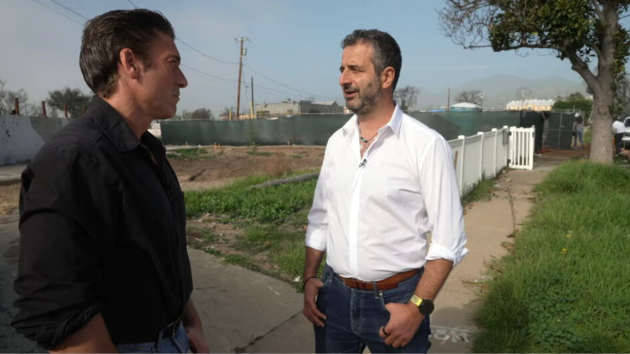
World News Tonight anchor David Muir speaks with Alessandro Vigilante who lost his Pacific Palisades home in the 2025 wildfires. ABC News
(CALIFORNIA) — A year ago, the deadly wildfires in Southern California left behind a trail of destruction and forced desperate families to flee for their lives.
Charred vehicles filled the streets in Los Angeles’ Pacific Palisades neighborhood, where the flames reduced houses to ash-covered shells.
The embers are gone and the dust has settled a year later, but most of those houses are still vacant lots and families remain stuck in limbo.
“World News Tonight” anchor David Muir returned to the neighborhood to mark the anniversary of the disaster and reunited with some of the residents he met in January 2025. Many said they are still struggling to pick up the pieces and some are making the tough decision to leave their the neighborhood they once called home.
Nearly 24,000 acres burned in the Palisades fire alone, with nearly 7,000 structures — most of them homes — going up in smoke. The blaze erupted on Jan. 7, 2025, along with the Eaton fire that destroyed more than 9,000 buildings. Together, the fires claimed the lives of at least 31 people.
A year ago in Pacific Palisades, Alessandro Vigilante raced to his two boys’ school to pick them and flee the fires, while his wife stayed behind to grab their most important documents before their house burned down.
Hours later, Muir met the father of two as he returned to see what was left of his home for the first time. Vigilante and his family lost everything, but were thankful to still have each other.
“We’ll figure out the rest,” he told Muir last year.
Today, the site of Vigilante’s home is an empty grass-covered lot surrounded by a white picket fence — the only thing that remains of his old home. Speaking with Muir again, he said getting insurance money was not an easy process.
“Literally, we had the last check, like, two weeks ago,” he told Muir, nearly a year after the fires.
Pointing to the lot, Vigilante reflected on that process.
“You don’t expect to have to discuss anything. It’s a total loss,” he said. “Basically looking at every single detail that they can think of from the handles that you had on the doors to the type of countertops. And again, that was mind-blowing, because I’m like, well, when we signed the policy, that’s the moment you should have decided whether my house was worth that much or not. Now it’s too late.”
Vigilante decided to sell the lot rather than rebuild, he noted, even though he said the land is now half the value it was when he moved in four years before.
“It’s OK. It was a chapter of our life,” he said, with a sigh.
Down the street from Vigilante, Liz Jones showed Muir the empty lot where she now plans to rebuild her family’s home from the ground up.
Last year, she saw the charred remains of her daughter’s car in one of Muir’s reports. That’s when she knew her home was gone.
“Is that when reality set in?” Muir asked her last year.
“One hundred percent,” Jones said.
Jones said she and her husband were determined to rebuild, and they are among the lucky few who were able to get some insurance money. Jones continued to carry her pride for the community around her neck, with a necklace that spelled out “Palisades.”
Preston and Kelsey Hayes had just broken ground on their new home when Muir met them at the site.
A year ago, the couple, who have two children, donned protective gear and masks to survey the damage and wondered if they would ever come back.
“Were you concerned at all about the soil and what might be contaminated from the fires?” Muir asked the couple at the construction site.
“Yeah for sure,” Preston Hayes said.
“And you felt reassured by the tests?” Muir asked.
“Yes,” Kelsey Hayes said.
As they looked out across their neighborhood a year after the fires, they knew that their neighbors would not all be as fortunate.
“We want the community to be the same. I don’t think it will be, unfortunately,” Preston Hayes said.
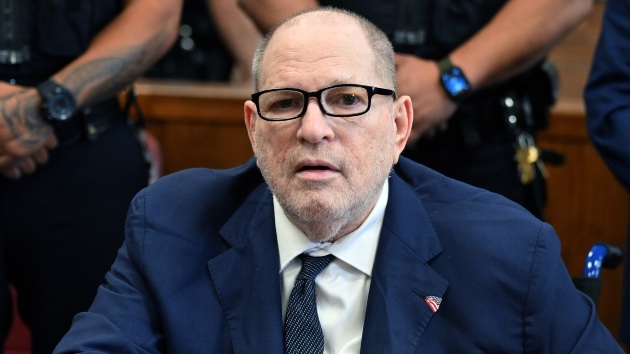
Former film producer Harvey Weinstein appears in Manhattan Criminal Court on August 13, 2025 in New York City. (Photo by Pool/Getty Images)
(NEW YORK) — A judge in New York has set a tentative date of March 3 for Harvey Weinstein’s re-trial on a charge of raping Jessica Mann.
A defense lawyer said Thursday that Weinstein would consider pleading guilty to the charge — third-degree rape — however, Weinstein made a statement in court insisting that he has never attacked anyone.
If Weinstein ultimately stands trial again, it would be the third time he goes on trial in Manhattan. His initial conviction was overturned on appeal. His second trial ended in a conviction on the Mimi Haley count, an acquittal on the Kaja Sokola count and a mistrial on the Mann count.
Earlier on Thursday, Judge Curtis Faber rejected Weinstein’s bid for a new trial in Haley’s case, ruling juror complaints about decorum in the deliberation room were adequately addressed.
The defense had argued two jurors subsequently claimed they were pressured to convict, but Farber said Thursday, “The Court’s response to the jurors’ complaints appropriately balanced the competing interests of investigating the allegations while avoiding any unnecessary taint of the deliberating jury.”
Weinstein, 73, remains in custody at Rikers Island in New York City after nearly six years of confinement. A representative for the disgraced Hollywood producer said he is “medically fragile and in legal limbo.”
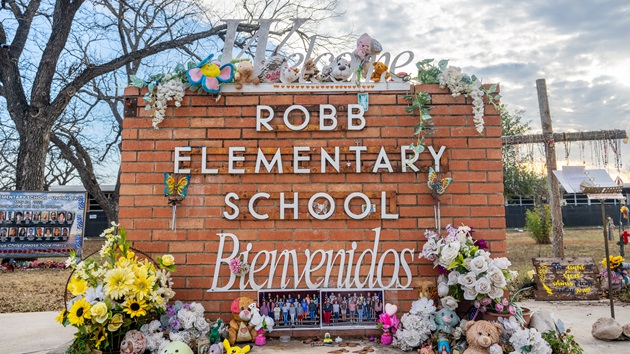
A memorial dedicated to the 19 children and two adults murdered on May 24,2022 during a mass shooting at Robb Elementary School is seen on January 05, 2026 in Uvalde, Texas. Brandon Bell/Getty Images
(CORPUS CHRISTI, Texas) — Editor’s note: Some of the testimony described below may be distressing to some readers.
Robb Elementary School’s former afterschool coordinator, Emilia “Amy” Marin-Franco, held back tears and visibly shook in her seat when she testified on Thursday in the trial of former Uvalde, Texas, school police officer Adrian Gonzales.
Gonzales, who was one of nearly 400 law enforcement officers to respond to the Robb Elementary School mass shooting, is charged with child endangerment for allegedly ignoring his training during the botched police response. Nineteen students and two teachers were killed, and investigations have faulted the police response and suggested that a 77-minute delay in police mounting a counterassault could have contributed to the carnage.
Gonzales has pleaded not guilty and his legal team says he did all he could to help students.
Marin testified that on May 24, 2022, she saw a man crash his truck near the school. She was one of the first people to call 911 — first to report the crash, and then realized he was armed and heading to the school.
Jurors heard her 911 call, in which Marin simultaneously tried to get police to respond while encouraging students to hide.
“There is a guy with a gun. … Oh my god. I think he came on campus now,” she told a dispatcher, while telling students, “Come on guys, hurry.”
In deeply emotional testimony, she told the jury, “I kept asking the operator, ‘Where are the cops? Where are the cops?’ And I tell her, ‘There are kids running everywhere.'”
Marin told jurors that she feared for her and her students’ lives as she sheltered in a classroom and heard countless gunshots.
“They were like, nonstop,” she said. “I thought, ‘He’s going to kill me, he’s going to kill me, he’s going to kill me. I’m going to die, I’m going to die.'”
She testified that she tried to come up with a plan to disarm the shooter if he were to find her.
“I’m looking at the floor and I’m thinking, ‘I’ll tackle him from his ankles and knock him down with my shoulder. Get up on the counter, when he comes in, jump on his back, poke his eyes out, take his gun away from him,'” she said.
A prosecutor tried to ask Marin to describe what that moment was like.
“The feeling of that type of fear is something that only someone can understand who’s been through a mass shooting,” she said. “You won’t understand if you haven’t experienced it and I don’t wish it on anybody.”
“Is it an ugly feeling?” the prosecutor asked.
“It haunts me to this day,” she said.
In the immediate aftermath of the shooting, Marin was falsely accused of leaving a door open that allowed the shooter to enter. She testified about removing a rock that was briefly used to prop the door open. During a brief cross-examination, defense attorneys used the testimony to highlight how Robb Elementary had issues with doors remaining unlocked.
Earlier on Thursday, Judge Sid Harle sided with defense lawyers and instructed jurors to completely disregard the testimony of former teacher Stephanie Hale, who was a key prosecution witness.
Hale returned to the stand for an hour Thursday morning in an effort to salvage her testimony, but defense lawyers ultimately argued that allowing her testimony to stand would endanger Gonzales’ right to a fair trial.
“There’s no doubt that this was crucial to the [defense] strategy,” Harle said. “I don’t think I have any choice, having denied the mistrial — other than to craft a remedy that will protect the due process rights and hopefully avoid any appellate review that would result in this case being reversed — so I am reluctantly going to instruct the jury to disregard her testimony in its entirety.”
Before instructing the jury, the judge personally thanked Hale for her testimony and emphasized that she was not at fault.
“I want to emphasize that you did absolutely nothing wrong. It’s not on you,” the judge said. “I want to tell you, just from personal experience, memories of traumatic events change.”
When Hale was on the stand Thursday, defense attorney Jason Goss attempted to point out that her original account — provided to state investigators four days after the 2022 shooting — differed from what she told the jury on Tuesday.
Hale testified that she saw the shooter near the south side of Robb Elementary and saw him firing toward her and her students. Defense lawyers alleged she never gave that information to state investigators.
“Seeing a shooter, and being shot at, are important details, you would agree with that?” Goss said.
“It depends on who you are,” she responded. “I don’t know. I guess possibly.”
Goss pointed out inconsistencies in her description of events over the last three years, such as how she learned about the shooter and his location.
“I’m not very good with directions,” Hale remarked about the location of the shooter.
During re-direct examination, Hale clarified that she told the grand jury about seeing clouds of dust near the playground, which suggested to her that she and her students were being shot at. She acknowledged, however, that she did not initially see the shooter with her own eyes.
Hale told defense lawyers that it was “kind of implied” that she saw the shooter based on her comments about seeing the dust clouds.