

Social media influencer allegedly plotted to kill former Why Don’t We singer Jack Avery in custody dispute: Prosecutors

Social media influencer allegedly plotted to kill former Why Don’t We singer Jack Avery in custody dispute: Prosecutors
In this Dec. 3, 2019, file photo, Jack Avery of Why Don’t We performs onstage during 106.1 KISS FM’s Jingle Ball 2019 at Dickies Arena in Dallas, Texas. (Cooper Neill/Getty Images for iHeartMedia, FILE)

(LOS ANGELES) — A social media influencer is accused of plotting to kill a pop singer in an alleged murder-for-hire conspiracy that prosecutors say stemmed from a “bitter custody dispute” over their daughter.

The influencer, 24-year-old Gabriela Gonzalez, allegedly conspired with her father and then-boyfriend to hire a hitman to kill Jack Avery, the father of her 7-year-old daughter, several years ago, prosecutors in Los Angeles County said in a press release this week.

Avery, 26, is a former member of the boy band Why Don’t We, the Los Angeles County District Attorney’s Office confirmed in a press release.

Sometime between 2020 and 2021, Gabriela Gonzalez allegedly sought the help of her boyfriend at the time, 26-year-old Kai Cordrey, to hire someone on the dark web to kill Avery, prosecutors said.

She allegedly repeatedly told one witness that she wanted Avery dead and discussed hiring a hitman and that the “intended killing was discussed as occurring in Los Angeles and being made to look like a car accident,” the warrant for her father’s arrest stated.

Her father, 59-year-old Francisco Gonzalez, was “deeply involved in the custody conflict” and was the alleged source of the funds for the murder-for-hire plot, according to his arrest warrant.

Francisco Gonzalez allegedly sent Cordrey $10,000 back in April 2021 “as front money to use in locating, hiring and paying someone to kill Avery,” the Los Angeles County District Attorney’s Office said in a press release on Tuesday.

Two months later, Francisco Gonzalez allegedly sent Cordrey another $4,000 “after the alleged hit man asked for the additional funds,” the office said.

“Several days later, Cordrey allegedly requested that Avery be killed within a couple of days,” prosecutors said.

Cordrey spoke to an undercover law enforcement officer posing as a hitman about the alleged murder-for-hire plot in September 2021, during which he allegedly said Avery was the target and “discussed payment and proof of death,” prosecutors said.

“In a subsequent conversation, Cordrey allegedly told the purported hitman that Gabriela Gonzalez wanted the murder to happen and Francisco Gonzalez could pay for the expense,” prosecutors said.

Gabriela Gonzalez, her father and Cordrey have been charged with one count each of attempted murder, conspiracy to commit murder and solicitation of murder.

Gabriela Gonzalez was arrested on Monday and is being held on no bail, online jail records show. She was set to be arraigned on Thursday. Attorney information was not immediately available.

Her father was arrested in Florida and is awaiting extradition to Los Angeles County. Court records show he is being represented by a public defender. ABC News has reached out to the public defender’s office for comment.

It is unclear if Cordrey is in custody at this time.

If convicted as charged, all three face 25 years to life in state prison.

Los Angeles County District Attorney Nathan Hochman said the FBI began the “lengthy investigation” before the case was turned over to his office.

“This is a case where the defendants are accused of going to great lengths to find someone to commit murder,” Hochman said in a statement. “Most fathers raise their children to respect the law, but here we have a dad who allegedly helped his daughter and her boyfriend break the law in the most sinister way imaginable.”

Gabrielle Gonzalez has nearly 1 million followers between her Instagram and TikTok accounts.

Her father has a law practice in Seminole County. His firm had no comment on his charges.

Avery spoke out about the case on Thursday, saying in a post on Instagram that his “focus is on being the best father I can be.”

“I’m thankful to have sole custody of my daughter, Lavender, who is safe, healthy, and deeply loved,” he said. “I look forward to continuing to build a peaceful and stable life for her.”

Avery expressed his “sincere gratitude” to his family, friends, law enforcement, and the Los Angeles County District Attorney’s Office “for their support throughout this process.”

In an interview on “The Zach Sang Show” last year, Avery said two FBI agents showed up at his residence and that “someone hired someone to kill me.” He did not publicly identify any suspects.

He said he was “traumatized.”

“I stayed in my house for like a month straight. I didn’t leave,” Avery said during the interview. “I was so scared. I was looking out my window every night.”

Copyright © 2026, ABC Audio. All rights reserved.
Father charged with manslaughter after 1-year-old found dead in vehicle, strapped in car seat: Authorities

Father charged with manslaughter after 1-year-old found dead in vehicle, strapped in car seat: Authorities
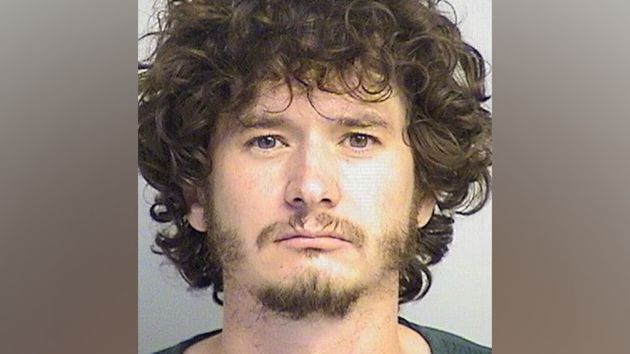
Logan Keith Chewning is seen in a booking photo. (Tuscaloosa County Sheriff’s Office)

(BROOKWOOD, Ala.) — An Alabama man has been charged with manslaughter after his 1-year-old child was found dead in a vehicle, still strapped into a car seat, after the father had allegedly been drinking throughout the day while the infant was in his sole care, authorities said.

Multiple agencies responded to a home in Brookwood, in Tuscaloosa County, Wednesday evening after the child’s family reported that the infant was found dead in the vehicle, authorities said.

“Initial investigation shows that the child was in the vehicle for an extended [amount] of time,” Tuscaloosa County Sheriff’s Office Violent Crimes Unit Capt. Jack Kennedy said in a statement, noting that the temperatures that afternoon were in the mid-90s.  

The child, whose name was not released, had been in the “sole care of its father all day,” Kennedy said.

The father, identified by the sheriff’s office as 30-year-old Logan Keith Chewning, allegedly admitted to drinking at different points throughout the day and leaving the residence at one point to buy more alcohol, authorities said.

“The father reported that he believed that the child had been sleeping in its crib but must have been left behind in the vehicle,” Kennedy said.

Chewning was charged with manslaughter following consultation with the Tuscaloosa County District Attorney’s Office, the sheriff’s office said.

He is being held in jail, with a bond to be set by a judge at a later date. It is unclear if he has an attorney at this time.

The child’s exact cause of death will be determined by the medical examiner, authorities said.

Copyright © 2026, ABC Audio. All rights reserved.
Supreme Court narrowly spares ‘intellectually disabled’ murderer from execution

Supreme Court narrowly spares ‘intellectually disabled’ murderer from execution
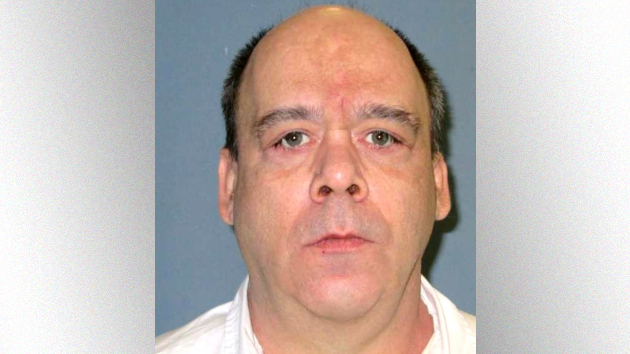
Joseph Clifton Smith is shown in this booking photo released by the Alabama Department of Corrections. (Alabama Department of Corrections)

(WASHINGTON) — In a rare move on Thursday, the Supreme Court spared the life of an “intellectually disabled” death row inmate, dismissing an appeal by Alabama officials who claimed the man’s multiple IQ scores show he is competent and eligible for execution.

The justices were narrowly divided, 5-4, in allowing a lower court ruling to stand that determined death for Joseph Clifton Smith, a convicted first-degree murderer, would violate the Eighth Amendment prohibition of “cruel and unusual” punishment.

The high court did not formally explain its decision.

More than 20 years ago, the high court outlawed the execution of intellectually disabled people convicted of capital crimes.

The heart of the Smith case involved a dispute over who qualifies as intellectually disabled and how to analyze conflicting intelligence quotient – also known as IQ – test scores in making the determination.

The decision on Thursday left that question unanswered.

“The court is not equipped in this case to provide any meaningful guidance on how courts should assess multiple IQ scores,” wrote Justice Sonia Sotomayor in a concurring opinion joined by Justice Ketanji Brown Jackson.

While state officials had asked the court to set out a clear standard, Sotomayor suggested a case-by-case approach, considering legal precedent and “the views of medical experts,” should continue.

“If a conflict among the states or lower courts emerges and a case properly presents the issue, it may be appropriate for this court to weigh in with more specific guidance,” she wrote. “The court rightly decides it is inappropriate to do so in this case.”

Justices Clarence Thomas, Samuel Alito, Neil Gorsuch and Chief Justice John Roberts dissented.

“The court shies away from its obligation to provide workable rules for capital cases,” Justice Alito wrote in a dissent joined by Thomas, Gorsuch and Roberts. “In doing so, the court disserves its own death-penalty jurisprudence, states’ criminal justice systems, lower courts, and victims of horrific murders.”

Justice Thomas wrote separately to call for a reinstatement of the death penalty for intellectually disabled people.

Smith, who will now spend life behind bars, confessed to a 1997 murder during a robbery, but challenged his death sentence on ground he has had “substantially subaverage intellectual functioning” since a young age.

He has taken five separate IQ tests over nearly 40 years, scoring 75 in 1979, 74 in 1982, 72 in 1998, 78 in 2014, and 74 in 2017.

People below 70 are generally considered to have an intellectual disability, but major American medical groups urge a holistic assessment that also looks at social and practical skills.

The groups note that standardized test scores alone should not be conclusive. Smith’s score of 72, for example, could be 69 when factoring the 3-point margin of error.

Smith, who alleges he suffered physical and verbal abuse as a child, consistently functioned at two grade-levels below his placement in school, according to court documents. Smith’s school classified him as “Educable Mentally Retarded” in 7th grade before he eventually dropped out.

Two lower federal courts ruled that a holistic analysis of Smith’s IQ scores and other evidence, including his behavioral history and school records, proved he is intellectually disabled.

“Joseph Smith is not intellectually disabled, and the Eighth Amendment does not override the death sentence he earned for murdering Durk Van Dam,” Alabama argued in its brief to the court. “Whether and how to weigh multiple IQ scores is left to state discretion.”

The state argued intellectual disability can only be proven by an IQ score of 70 or less by a preponderance of the evidence.

By one estimate, as many as 20% of the 2,100 people on death row in the U.S. may have some degree of intellectual disability, according to the Death Penalty Information Center.

Copyright © 2026, ABC Audio. All rights reserved.

ICE agent charged with assault will surrender to Minnesota authorities, attorney says

ICE agent charged with assault will surrender to Minnesota authorities, attorney says
An ICE patch and badge are seen on a Department of Homeland Security agent. (Jim Watson – Pool/Getty Images)

(MINNEAPOLIS) — Gregory Morgan Jr., the Immigration and Customs Enforcement (ICE) agent charged by Minnesota prosecutors with two counts of assault with a dangerous weapon for allegedly brandishing a firearm at a motorist, will turn himself in to authorities Thursday, his attorney told ABC News. 

The Hennepin County Attorney’s Office announced the charges in April, claiming in the complaint that Morgan was ending his shift on February 5 and was driving back to the Whipple Federal Building when a motorist allegedly cut him off as Morgan was trying to pass. Morgan then produced a firearm and pointed it at the motorists, the complaint said.

Morgan’s attorney, Ryan Pacyga, said in part that the complaint contains “inaccurate and incomplete information” and that Morgan did not initiate the encounter.

The Department of Homeland Security did not immediately respond to an ABC News request for comment, nor did they respond to a similar request when the charges against Morgan were announced.

Morgan, of Temple Hills, Maryland, is charged with two counts of assault with a dangerous weapon related to the encounter, Hennepin County Attorney Mary Moriarity announced in a news conference on April 16.

Moriarity said at the time that Morgan was driving “illegally” on the shoulder, “appearing to bypass shoulder traffic.”

The complainant told police that they did not know the person driving the other car was an ICE agent until investigators told them, according to the prosecutor’s complaint.

“There were no markings on Defendant’s vehicle that would identify it as law enforcement and the vehicle was not displaying or using lights or sirens,” according to the complaint. “Defendant continued to travel on the shoulder but rather than continue to drive past the victims, he pulled alongside their vehicle, rolled down his window, and pointed a black handgun directly at Victim 1 and Victim 2.”

“Victim 1 had a clear view of Defendant’s appearance, saw that Defendant was wearing a black t-shirt, saw that the gun was pointed directly at their heads, saw that the gun was a Glock or Sig Sauer handgun with what appeared to be a red-dot sight, and noted that Defendant 2 yelled something indiscernible,” according to the complaint. 

The alleged victims then called police to report what had happened, according to the complaint. Investigators interviewed Morgan, his supervisor and his partner a day later.

“[Morgan] stated that Victim 1 swerved over in front of him and cut him off. Defendant claimed that he feared for his safety and the safety of others so, in response, he pulled alongside Victim 1’s vehicle, rolled down his window, drew his firearm, and yelled ‘Police Stop,'” the complaint said.

“[Morgan] stated he was trying to get Victim 1 to ‘back up.’ Defendant acknowledged that his firearm was a Glock 19 with a laser light, which Defendant had holstered on his right hip at the time of the interview. Defendant stated that after he pulled the gun on Victim 1 and Victim 2 he got in front of their vehicle and drove to the Whipple Building,” the complaint further said.

Investigators also said they received cellphone footage from the complainant and reviewed traffic camera footage from the road on which they were traveling. 

“The allegations against Gregory Morgan arise from a brief, frightening, and highly stressful roadway encounter that happened in a matter of seconds during congested rush-hour traffic. An encounter that Mr. Morgan did not initiate. It came on the heels of many days of fear that both citizens as well as law enforcement were experiencing during operations in our Twin Cities metro area,” Pacyga said in a statement to ABC News Thursday.

The statement further said that the incident “did not arise from any planned criminal conduct. It developed suddenly during an alarming traffic interaction, initiated by the other driver.”

“Law enforcement had been enduring threats to their safety by some members of the community, in neighborhoods and on the roads. This situation presented a perceived danger and Mr. Morgan reacted in real time. These are precisely the kinds of situations where perspective, perception, stress, and split-second decision-making matter,” Pacyga’s statement said.

The incident occurred during a contentious period in Minneapolis when the city was the focal point of an immigration enforcement surge and after the killings of Alex Pretti and Renee Good by federal law enforcement. During that time questions arose about whether ICE agents could be prosecuted by state or local authorities.

ABC News’ Jack Date and Luke Barr contributed to this story.

Copyright © 2026, ABC Audio. All rights reserved.

ICE agent charged with assault will surrender to Minnesota authorities, attorney says

ICE agent charged with assault will surrender to Minnesota authorities, attorney says
An ICE patch and badge are seen on a Department of Homeland Security agent. (Jim Watson – Pool/Getty Images)

(MINNEAPOLIS) — Gregory Morgan Jr., the Immigration and Customs Enforcement (ICE) agent charged by Minnesota prosecutors with two counts of assault with a dangerous weapon for allegedly brandishing a firearm at a motorist, will turn himself in to authorities Thursday, his attorney told ABC News. 

The Hennepin County Attorney’s Office announced the charges in April, claiming in the complaint that Morgan was ending his shift on February 5 and was driving back to the Whipple Federal Building when a motorist allegedly cut him off as Morgan was trying to pass. Morgan then produced a firearm and pointed it at the motorists, the complaint said.

Morgan’s attorney, Ryan Pacyga, said in part that the complaint contains “inaccurate and incomplete information” and that Morgan did not initiate the encounter.

The Department of Homeland Security did not immediately respond to an ABC News request for comment, nor did they respond to a similar request when the charges against Morgan were announced.

Morgan, of Temple Hills, Maryland, is charged with two counts of assault with a dangerous weapon related to the encounter, Hennepin County Attorney Mary Moriarity announced in a news conference on April 16.

Moriarity said at the time that Morgan was driving “illegally” on the shoulder, “appearing to bypass shoulder traffic.”

The complainant told police that they did not know the person driving the other car was an ICE agent until investigators told them, according to the prosecutor’s complaint.

“There were no markings on Defendant’s vehicle that would identify it as law enforcement and the vehicle was not displaying or using lights or sirens,” according to the complaint. “Defendant continued to travel on the shoulder but rather than continue to drive past the victims, he pulled alongside their vehicle, rolled down his window, and pointed a black handgun directly at Victim 1 and Victim 2.”

“Victim 1 had a clear view of Defendant’s appearance, saw that Defendant was wearing a black t-shirt, saw that the gun was pointed directly at their heads, saw that the gun was a Glock or Sig Sauer handgun with what appeared to be a red-dot sight, and noted that Defendant 2 yelled something indiscernible,” according to the complaint. 

The alleged victims then called police to report what had happened, according to the complaint. Investigators interviewed Morgan, his supervisor and his partner a day later.

“[Morgan] stated that Victim 1 swerved over in front of him and cut him off. Defendant claimed that he feared for his safety and the safety of others so, in response, he pulled alongside Victim 1’s vehicle, rolled down his window, drew his firearm, and yelled ‘Police Stop,'” the complaint said.

“[Morgan] stated he was trying to get Victim 1 to ‘back up.’ Defendant acknowledged that his firearm was a Glock 19 with a laser light, which Defendant had holstered on his right hip at the time of the interview. Defendant stated that after he pulled the gun on Victim 1 and Victim 2 he got in front of their vehicle and drove to the Whipple Building,” the complaint further said.

Investigators also said they received cellphone footage from the complainant and reviewed traffic camera footage from the road on which they were traveling. 

“The allegations against Gregory Morgan arise from a brief, frightening, and highly stressful roadway encounter that happened in a matter of seconds during congested rush-hour traffic. An encounter that Mr. Morgan did not initiate. It came on the heels of many days of fear that both citizens as well as law enforcement were experiencing during operations in our Twin Cities metro area,” Pacyga said in a statement to ABC News Thursday.

The statement further said that the incident “did not arise from any planned criminal conduct. It developed suddenly during an alarming traffic interaction, initiated by the other driver.”

“Law enforcement had been enduring threats to their safety by some members of the community, in neighborhoods and on the roads. This situation presented a perceived danger and Mr. Morgan reacted in real time. These are precisely the kinds of situations where perspective, perception, stress, and split-second decision-making matter,” Pacyga’s statement said.

The incident occurred during a contentious period in Minneapolis when the city was the focal point of an immigration enforcement surge and after the killings of Alex Pretti and Renee Good by federal law enforcement. During that time questions arose about whether ICE agents could be prosecuted by state or local authorities.

ABC News’ Jack Date and Luke Barr contributed to this story.

Copyright © 2026, ABC Audio. All rights reserved.

Republicans eyeing restrictions on Trump’s ‘Anti-Weaponization Fund,’ tossing $1B for ballroom: Sources

Republicans eyeing restrictions on Trump’s ‘Anti-Weaponization Fund,’ tossing B for ballroom: Sources
Republicans eyeing restrictions on Trump’s ‘Anti-Weaponization Fund,’ tossing $1B for ballroom: Sources
U.S. President Donald Trump delivers remarks at a ‘Rose Garden Club’ dinner for National Police Week in the Rose Garden at the White House on May 11, 2026 in Washington, DC. (Kevin Dietsch/Getty Images)

(WASHINGTON) — Senate Republicans are poised to block funding for two of President Donald Trump’s controversial spending wishes: $1 billion for the East Wing expansion and nearly $1.8 billion for an “Anti-Weaponization Fund,” two people familiar with the matter confirmed to ABC News.

Republicans are racing to put that package onto the Senate floor for votes as soon as Thursday evening, with hopes of sending it over to the House ahead of the Memorial Day recess and Trump’s June 1 deadline.

Republicans are looking at ways to use the bill to impose guardrails on Trump’s “anti-weaponization” fund — which would be used to compensate allies who say they have suffered injustices at the hand of the Biden administration and has sparked a wave of criticism, the sources said.

On Wednesday afternoon, some Republicans told reporters that the $1 billion for White House security — including funding for the ballroom — would likely be removed from the bill because there was a lack of GOP support.

Because the text of the new bill hasn’t been made public, it’s not yet clear exactly what restrictions Republicans may try to impose on the “Anti-Weaponization Fund,” the core of the settlement between the Department of Justice and President Trump to resolve his $10 billion lawsuit against the IRS.

The taxpayer-funded pool of money will be administered by a five-person commission appointed by the acting attorney general with little oversight aside from the president, who could remove members. 

Republicans could try to embed guardrails for the fund in the actual bill, or they could instead try to offer an amendment addressing the fund once the bill is on the Senate floor.

However, if Republicans don’t do something, it is widely expected that Democrats will certainly try to.

Senate Republicans are aiming to muscle the $70 billion immigration enforcement package through using a budget tool called reconciliation, which will allow them to pass the bill with a simple majority of votes in the Senate instead of the usual 60 votes that it takes to approve most legislative matters.

But before the bill can pass, there will be a voting marathon known as a vote-a-rama, during which lawmakers are able to offer unlimited amendments to the bill.

Democrats are powerless to block this package from passing if Republicans stick together, but Democrats could put forward a number of amendments that force Republicans to take politically tricky votes.

If Republicans do not come up with a clear way to address the “anti-weaponization” fund in their underlying bill or in an amendment that is popular with Republicans who oppose the fund, Democratic-led amendments that look to restrict the fund could very well get the necessary GOP support to pass on the Senate floor.

Some Senate Republicans who Trump has publicly scorned in recent weeks have become the fund’s most outspoken critics, including Sen. Bill Cassidy, who lost his primary race in Louisiana after Trump endorsed his opponent.

Cassidy spoke out on Wednesday night, bashing the fund.

“People are concerned about paying their mortgage or rent, affording groceries and paying for gas, not about putting together a $1.8 billion fund for the President and his allies to pay whomever they wish with no legal precedent or accountability. This is adding to our national debt. If there needs to be a settlement, the administration should bring it to Congress to decide,” Cassidy wrote in a post on X.

Regardless of what Republicans do, Democrats are expected to use the vote-a-rama to force a number of votes that they hope will pin down Republicans on the fund.

Democratic Sen. Richard Blumenthal told ABC News on Wednesday that he intends to force votes on amendments to “stop this illegal abhorrent slush fund” during the vote-a-rama.

With enough GOP support, Democrats could have a real chance of putting restraints on — or even eliminating — this fund as part of the massive package. Depending on how Democrats craft their amendments surrounding the IRS fund, it could take as few as four Republican supporters to pass some of them.

What happened to the ballroom funding?

The $1 billion that was intended for White House security, including the security aspects of Trump’s ballroom, is being scrapped by Republicans, according to some GOP lawmakers. The Republican lawmakers are saying there isn’t enough support in their conference to move forward with the funding.

The Senate’s rule keeper said over the weekend that $1 billion could not be included in the bill under the Senate rules. Even though some Republicans initially said they’d redraft the measure, a number of GOP senators came out forcefully against the $1 billion allocation and threatened to tank the entire bill if it was not removed.

Democrats were expected to call up a number of amendment votes to try to strip the ballroom funding out of the bill. Those amendments only would have needed the support of four Republicans and likely would have passed.

What will the moderates and those scorned by Trump do?

Most, if not all Republican senators, are generally supportive of the immigration enforcement provisions in the package. It is likely that the final bill will ultimately pass.

But this vote-a-rama, which is an exercise that typically requires party discipline, comes at a time when Trump has been increasingly attacking incumbent members of the Senate Republican conference and potentially splintering the conference’s voting bloc.

Trump’s attacks could embolden some of those Republicans to break ranks on crucial amendment votes, and there are enough Republicans in this camp that certain Democratic amendments have the ability to pass if GOP leadership doesn’t do enough to satisfy its own members’ concerns.

Copyright © 2026, ABC Audio. All rights reserved.

Police investigating intruder reported at Harvard, MIT dorms

Police investigating intruder reported at Harvard, MIT dorms
Dunster House on the Harvard University campus in Cambridge, Massachusetts, US, on Thursday, May 29, 2025. (Mel Musto/Bloomberg via Getty Images)

(CAMBRIDGE, Mass.) — Police at Harvard University and the Massachusetts Institute of Technology are investigating reports of a man who entered campus buildings without authorization on Tuesday. In one case, a student at Harvard reported being assaulted, according to police records. 

Harvard police responded to a report of an assault and battery at around 5:30 p.m. on Tuesday to find Cambridge Police at Lowell House, the residence hall where the incident occurred, according to Harvard police records. 

The victim told police a suspect entered the building by following another individual without authorization, according to Harvard police records. 

“As the victim was entering their residence, the suspect approached from behind, covered the victim’s mouth, and attempted to force them into the room,” according to a Harvard police log. 

The suspect fled the building after several nearby individuals saw the altercation, the victim told police. 

Officers searched the area but were unable to locate the suspect. 

MIT Police issued a similar campus warning, describing a similar incident at an MIT residence hall. 

A suspect followed another individual into the building at around 5:45 p.m. and followed the individual to the fifth floor before fleeing the area, according to an MIT police log.

MIT police did not find the suspect, according to the police log.

Surveillance footage showed the man leaving the building at about 6 p.m., according to MIT police. 

The MIT alert said the individual “matched the description of a person who was the subject of a Harvard University Police Department alert earlier this evening,” according to WCVB. 

Both universities urged students and staff to report any suspicious activity. 

MIT police described the suspect as a 5-foot-9-inch white man with a thin build. He was wearing a white T-shirt and dark-colored shorts, according to WCVB.

Harvard police said the incident is being “actively investigated” in a statement Thursday.

Copyright © 2026, ABC Audio. All rights reserved.

Police investigating intruder reported at Harvard, MIT dorms

Police investigating intruder reported at Harvard, MIT dorms
Dunster House on the Harvard University campus in Cambridge, Massachusetts, US, on Thursday, May 29, 2025. (Mel Musto/Bloomberg via Getty Images)

(CAMBRIDGE, Mass.) — Police at Harvard University and the Massachusetts Institute of Technology are investigating reports of a man who entered campus buildings without authorization on Tuesday. In one case, a student at Harvard reported being assaulted, according to police records. 

Harvard police responded to a report of an assault and battery at around 5:30 p.m. on Tuesday to find Cambridge Police at Lowell House, the residence hall where the incident occurred, according to Harvard police records. 

The victim told police a suspect entered the building by following another individual without authorization, according to Harvard police records. 

“As the victim was entering their residence, the suspect approached from behind, covered the victim’s mouth, and attempted to force them into the room,” according to a Harvard police log. 

The suspect fled the building after several nearby individuals saw the altercation, the victim told police. 

Officers searched the area but were unable to locate the suspect. 

MIT Police issued a similar campus warning, describing a similar incident at an MIT residence hall. 

A suspect followed another individual into the building at around 5:45 p.m. and followed the individual to the fifth floor before fleeing the area, according to an MIT police log.

MIT police did not find the suspect, according to the police log.

Surveillance footage showed the man leaving the building at about 6 p.m., according to MIT police. 

The MIT alert said the individual “matched the description of a person who was the subject of a Harvard University Police Department alert earlier this evening,” according to WCVB. 

Both universities urged students and staff to report any suspicious activity. 

MIT police described the suspect as a 5-foot-9-inch white man with a thin build. He was wearing a white T-shirt and dark-colored shorts, according to WCVB.

Harvard police said the incident is being “actively investigated” in a statement Thursday.

Copyright © 2026, ABC Audio. All rights reserved.

‘Extremely heart-sinking’: Texas Panhandle wildfire destroys more than 50 homes

‘Extremely heart-sinking’: Texas Panhandle wildfire destroys more than 50 homes
Embers swirl as the wind-driven Bain fire burns up to the exterior fences at the Western Riverside Animal Shelter, May 19, 2026, in Jurupa Valley, Calif. (Gina Ferazzi/Los Angeles Times via Getty Images)

(NEW YORK) — A wind-whipped wildfire in the Texas Panhandle, one of multiple major blazes to hit the region this month, has destroyed more than 50 homes, authorities said.

The Stinky Fire, burning in Potter County, just north of Amarillo, is among multiple wildfires ravaging the West, including five major blazes that have also destroyed homes in Southern California.

During a news conference on Wednesday afternoon, Max Dunlap, director of the Amarillo Area Office of Emergency Management, said that at least 52 homes have been destroyed by the fire and another 25 were damaged.

The Stinky Fire ignited in a landfill on Sunday, and wind gusts over 30 mph rapidly spread flames past containment lines and into populated neighborhoods, officials said.

“It is extremely heart-sinking … this damage. But there were numerous that were saved,” said Dunlap, crediting the quick work of the local firefighters battling the blaze.

There were no reports of deaths or injuries.

As of Wednesday afternoon, the fire had burned 2,335 acres and was 85% contained, according to the Texas A&M Forest Service.

The cause of the fire remains under investigation.

The blaze is among five major wildfires that have hit the Texas panhandle since May 14. The largest fire was the Hunggate Fire in Randall County that burned 34,124 acres and destroyed several homes before it was fully contained on Tuesday night, officials said.

The other wildfires in the area have also been 100% contained, officials said.

As Texas firefighters continued to battle the Stinky Fire, firefighters in Southern California were also fighting a series of wildfires.

Fueled by gusting winds and warm temperatures, multiple large wildfires continued to menace Southern California, prompting thousands of residents to evacuate, authorities said.

As of Thursday morning, the five largest wildfires had burned nearly 22,000 acres from Santa Barbara County to the U.S.-Mexico border, according to the California Department of Forestry and Fire Protection (Cal Fire).

The Sandy Fire

The most evacuations were being prompted by the Sandy Fire, which ignited on Monday in the foothills above Semi Valley. At one point on Tuesday evening, more than 43,700 people were under mandatory evacuation orders or evacuation warnings, according to the Ventura County Fire Department.

The wildfire had grown to 2,115 acres by Thursday morning and was 30% contained, according to Cal Fire.

Firefighters quickly attacked the blaze from the ground and the air as flames raced downhill in the direction of populated neighborhoods, officials said. As of Wednesday morning, only one structure had been destroyed by the fire, but many evacuation orders remained in place, according to officials.

The cause of the fire remains under investigation.

The Bain Fire

In Southern California’s Riverside County, the Bain Fire was threatening homes in the Santa Ana River bottom in Jurupa Valley, according to Cal Fire.

The Bain Fire was reported around 12:20 p.m. local time on Tuesday and, driven by gusting wind, rapidly spread in the direction of homes, prompting evacuations, Cal Fire said.

Overnight, the Bain Fire grew to 1,456 acres and was 39% contained, Cal Fire said in an update on Thursday morning.

While no structures were reported lost, Los Angeles ABC station KABC reported that three people suffered smoke inhalation and a fourth was taken to a hospital with traumatic injuries.

The Verona Fire

As firefighters were responding to the Bain Fire, another wildfire ignited nearby in Riverside County, prompting more evacuation orders and warnings, according to Cal Fire.

The Verona Fire in the unincorporated communities of Green Acres and Homeland had grown to 600 acres as of Thursday morning and was 38% contained, Cal Fire reported.

Residents in the area told KABC that three to four homes had been destroyed by the blaze.

Cal Fire posted a video on social media on Wednesday of a towering “smokenado,” or a smoke tornado, that formed as firefighters battled the Verona Fire.

The Santa Rosa Island Fire

The largest fire burning in Southern California is the Santa Rosa Island Fire in the Channel Islands off the coast of Santa Barbara County.

While the fire remains under investigation, the U.S. Coast Guard said it was likely ignited by emergency flares fired by a 67-year-old shipwrecked mariner on the island.

The Coast Guard posted a photo on social media showing the stranded sailor standing near a patch of blackened brush in which he had scratched “SOS” in the dirt.

The wildfire at last word was 44% contained after growing to nearly 17,554 acres, according to Cal Fire.

The Tusil Fire

The Tusil Fire, burning in San Diego County, had spread to over 800 acres and had also forced evacuations on the Campo Reservation, according to Cal Fire.

The wildfire, which started on Tuesday, was 73% contained on Thursday.

“Fire activity moderated overnight, allowing firefighters to strengthen containment lines and continue making progress toward full containment,” Cal Fire said in an update on Wednesday.

At least one structure was damaged by the fire, which also shut down the Interstate 8 freeway in both directions in the fire zone on Wednesday, according to Cal Fire. The California Highway Patrol said on Wednesday morning that one lane in each direction of the freeway had been reopened.

One structure was damaged by the fire and some evacuation orders remain in effect, according to Cal Fire.

ABC News’ Amanda Morris, Jenna Harrison and Vanessa Navarete contributed to this report.

Copyright © 2026, ABC Audio. All rights reserved.

‘Extremely heart-sinking’: Texas Panhandle wildfire destroys more than 50 homes

‘Extremely heart-sinking’: Texas Panhandle wildfire destroys more than 50 homes
Embers swirl as the wind-driven Bain fire burns up to the exterior fences at the Western Riverside Animal Shelter, May 19, 2026, in Jurupa Valley, Calif. (Gina Ferazzi/Los Angeles Times via Getty Images)

(NEW YORK) — A wind-whipped wildfire in the Texas Panhandle, one of multiple major blazes to hit the region this month, has destroyed more than 50 homes, authorities said.

The Stinky Fire, burning in Potter County, just north of Amarillo, is among multiple wildfires ravaging the West, including five major blazes that have also destroyed homes in Southern California.

During a news conference on Wednesday afternoon, Max Dunlap, director of the Amarillo Area Office of Emergency Management, said that at least 52 homes have been destroyed by the fire and another 25 were damaged.

The Stinky Fire ignited in a landfill on Sunday, and wind gusts over 30 mph rapidly spread flames past containment lines and into populated neighborhoods, officials said.

“It is extremely heart-sinking … this damage. But there were numerous that were saved,” said Dunlap, crediting the quick work of the local firefighters battling the blaze.

There were no reports of deaths or injuries.

As of Wednesday afternoon, the fire had burned 2,335 acres and was 85% contained, according to the Texas A&M Forest Service.

The cause of the fire remains under investigation.

The blaze is among five major wildfires that have hit the Texas panhandle since May 14. The largest fire was the Hunggate Fire in Randall County that burned 34,124 acres and destroyed several homes before it was fully contained on Tuesday night, officials said.

The other wildfires in the area have also been 100% contained, officials said.

As Texas firefighters continued to battle the Stinky Fire, firefighters in Southern California were also fighting a series of wildfires.

Fueled by gusting winds and warm temperatures, multiple large wildfires continued to menace Southern California, prompting thousands of residents to evacuate, authorities said.

As of Thursday morning, the five largest wildfires had burned nearly 22,000 acres from Santa Barbara County to the U.S.-Mexico border, according to the California Department of Forestry and Fire Protection (Cal Fire).

The Sandy Fire

The most evacuations were being prompted by the Sandy Fire, which ignited on Monday in the foothills above Semi Valley. At one point on Tuesday evening, more than 43,700 people were under mandatory evacuation orders or evacuation warnings, according to the Ventura County Fire Department.

The wildfire had grown to 2,115 acres by Thursday morning and was 30% contained, according to Cal Fire.

Firefighters quickly attacked the blaze from the ground and the air as flames raced downhill in the direction of populated neighborhoods, officials said. As of Wednesday morning, only one structure had been destroyed by the fire, but many evacuation orders remained in place, according to officials.

The cause of the fire remains under investigation.

The Bain Fire

In Southern California’s Riverside County, the Bain Fire was threatening homes in the Santa Ana River bottom in Jurupa Valley, according to Cal Fire.

The Bain Fire was reported around 12:20 p.m. local time on Tuesday and, driven by gusting wind, rapidly spread in the direction of homes, prompting evacuations, Cal Fire said.

Overnight, the Bain Fire grew to 1,456 acres and was 39% contained, Cal Fire said in an update on Thursday morning.

While no structures were reported lost, Los Angeles ABC station KABC reported that three people suffered smoke inhalation and a fourth was taken to a hospital with traumatic injuries.

The Verona Fire

As firefighters were responding to the Bain Fire, another wildfire ignited nearby in Riverside County, prompting more evacuation orders and warnings, according to Cal Fire.

The Verona Fire in the unincorporated communities of Green Acres and Homeland had grown to 600 acres as of Thursday morning and was 38% contained, Cal Fire reported.

Residents in the area told KABC that three to four homes had been destroyed by the blaze.

Cal Fire posted a video on social media on Wednesday of a towering “smokenado,” or a smoke tornado, that formed as firefighters battled the Verona Fire.

The Santa Rosa Island Fire

The largest fire burning in Southern California is the Santa Rosa Island Fire in the Channel Islands off the coast of Santa Barbara County.

While the fire remains under investigation, the U.S. Coast Guard said it was likely ignited by emergency flares fired by a 67-year-old shipwrecked mariner on the island.

The Coast Guard posted a photo on social media showing the stranded sailor standing near a patch of blackened brush in which he had scratched “SOS” in the dirt.

The wildfire at last word was 44% contained after growing to nearly 17,554 acres, according to Cal Fire.

The Tusil Fire

The Tusil Fire, burning in San Diego County, had spread to over 800 acres and had also forced evacuations on the Campo Reservation, according to Cal Fire.

The wildfire, which started on Tuesday, was 73% contained on Thursday.

“Fire activity moderated overnight, allowing firefighters to strengthen containment lines and continue making progress toward full containment,” Cal Fire said in an update on Wednesday.

At least one structure was damaged by the fire, which also shut down the Interstate 8 freeway in both directions in the fire zone on Wednesday, according to Cal Fire. The California Highway Patrol said on Wednesday morning that one lane in each direction of the freeway had been reopened.

One structure was damaged by the fire and some evacuation orders remain in effect, according to Cal Fire.

ABC News’ Amanda Morris, Jenna Harrison and Vanessa Navarete contributed to this report.

Copyright © 2026, ABC Audio. All rights reserved.