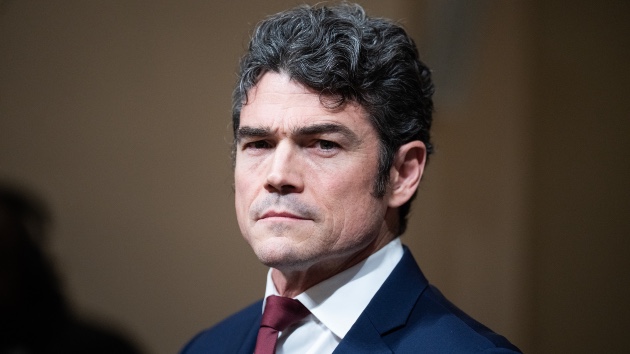
Joe Kent, director of the National Counterterrorism Center, testifies during the House Homeland Security Committee hearing titled “Worldwide Threats to the Homeland,” in Cannon building on Wednesday, December 11, 2025. (Tom Williams/CQ-Roll Call, Inc via Getty Images)
(WASHINGTON) — The Trump administration’s top counterterrorism official Joe Kent announced his resignation Tuesday over opposition to the Iran war, becoming the highest-profile administration official to step down publicly over the conflict.
In a resignation letter posted publicly on social media, Kent said he could not “in good conscience” support the war, which is now in its third week.
“Iran posed no imminent threat to our nation, and it is clear that we started this war due to pressure from Israel and its powerful American lobby,” Kent, who served as the director of the National Counterterrorism Center, wrote in his resignation letter.
The National Counterterrorism Center is housed within the Office of the Director of National Intelligence. ABC News has reached out to ODNI for comment.
ODNI says Kent oversaw the U.S. counterterrorism and counternarcotics enterprise and, according to his biography, he served as the principal counterterrorism adviser to the president.
ABC News has reached out to the White House for comment.
Kent is a combat veteran who served more than 20 years in the U.S. Army and completed 11 combat deployments in the Middle East.
Kent also invoked a deeply personal loss in explaining his decision to step down: he is a Gold Star husband whose late wife, Navy Senior Chief Petty Officer Shannon Kent, was killed in action during a suicide bombing while serving in Syria in 2019.
In his resignation letter, Kent wrote, “As a veteran who deployed to combat 11 times and as a Gold Star husband who lost my beloved wife Shannon in a war manufactured by Israel, I cannot support sending the next generation off to fight and die in a war that serves no benefit to the American people nor justifies the cost of American lives.”
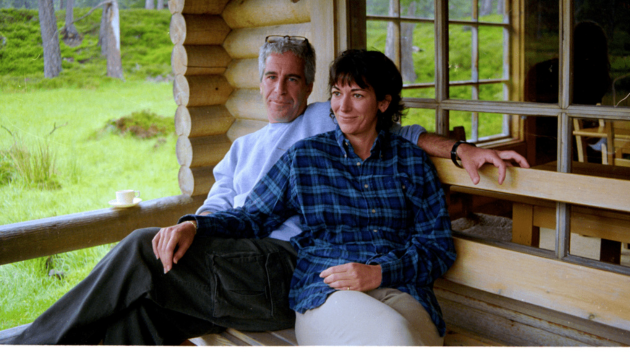
Epstein and Maxwell in one of the images released by the US Department of State . (Photo by The US Justice Department / Handout/Anadolu via Getty Images)
(NEW YORK) — Bank of America has reached a proposed, non-binding settlement in a lawsuit that alleged the bank helped facilitate Jeffrey Epstein’s trafficking operation, according to court records.
The proposed class-action complaint, filed in October 2025, alleged that Bank of America “knowingly provided the financial support and the veneer of institutional legitimacy” to Epstein and ignored suspicious transactions by the late disgraced financier.
A notice on the case’s docket said that lawyers for the bank and the victims “reached a settlement in principle.” The terms of the settlement were not immediately disclosed and would need to be approved by a federal judge. U.S. District Judge Jed Rakoff had previously scheduled the case to go to trial on May 11.
A court hearing to consider the settlement proposal is scheduled for April 2 in federal court in New York, according to the docket.
Bank of America declined to comment on the proposed settlement to ABC News. An attorney for the victims called the proposed settlement “one more step on the road to much-deserved justice.”
“The women entrapped and abused by Jeffrey Epstein and Ghislaine Maxwell started a monumental reckoning with their brave voices and fearlessness. The road to justice for these women has been long and trying,” attorney Sigrid McCawley said in a statement.
Though the terms of the settlement are unknown, a proposed resolution of the case would likely scuttle an upcoming deposition of Apollo Global Management co-founder Leon Black, who was scheduled to sit for questioning on March 26. Black resigned from his role at Apollo in 2021 after an inquiry into his relationship with Epstein, which found that Black paid Epstein $158 million for tax and estate planning advice.
In a statement from January, Black’s attorney said that his client “had no awareness of Epstein’s criminal activities” and that there is “absolutely no truth to any of the allegations against Mr. Black.”
The lawsuit against Bank of America alleged that those payments from Black and other transactions by Epstein should have raised concern by the bank, which “failed to alert law enforcement as to Epstein’s crimes before it was far too late.”
“Epstein committed these crimes by means of not only his own extraordinary wealth and power, but through access to funding and financial support from both individuals and institutions, including Bank of America. Egregiously, Bank of America had a plethora of information regarding Epstein’s sex trafficking operation but chose profit over protecting the victims,” the lawsuit alleged.
Bank of America had unsuccessfully attempted to persuade the court to dismiss the case by arguing that the suit was “based on nothing more than allegations that it provided routine services to customers who at the time had no known connection to Epstein’s sex trafficking.”
“Bank of America opposes trafficking in all its forms. But this suit attempts to radically expand liability for banks, holding them liable for providing ordinary banking services to individuals one or more steps removed from a trafficker,” a November 2025 filing from the bank’s lawyers said.
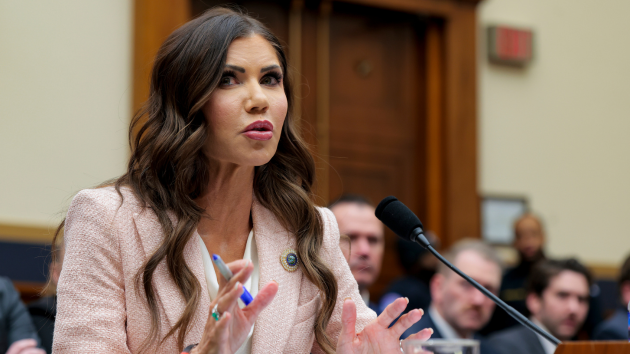
U.S. Secretary of Homeland Security Kristi Noem testifies before the House Judiciary Committee on March 04, 2026 in Washington, DC. (Photo by Heather Diehl/Getty Images)
(WASHINGTON) — The two top Democrats on the House and Senate Judiciary committees are referring outgoing Department of Homeland Security (DHS) Secretary Kristi Noem to the Department of Justice for perjury due to her testimony to congressional committees earlier this month, according to a letter sent to Attorney General Pam Bondi.
Sen. Dick Durbin of Illinois and Rep. Jamie Raskin of Maryland allege that Noem’s statements on a variety of topics including DHS following judges’ orders and a controversial multimillion-dollar ad campaign “appear to violate criminal statutes prohibiting perjury and knowingly making false statements to Congress.”
In response to the letter, a DHS spokesperson said “Any claim that Secretary Noem committed perjury is categorically FALSE.”
A Justice Department spokesperson said, “The DOJ has received the latest political stunt from the Democrats who should instead vote to reopen the Department of Homeland Security.”
President Donald Trump fired Noem the day after her testimony concluded and announced that he was appointing her to a new role as special envoy to the Shield of the Americas, a coalition of Latin American countries the White House says is committed to cooperating with the U.S. in taking on drug cartels and securing the U.S. border. He said he had nominated Oklahoma Republican Sen. Markwayne Mullin to head DHS when Noem’s tenure ended on March 31.
The Democrats allege that Noem misled Congress when she said that DHS had followed court orders while federal judges have ruled a number of times that it had not.
They also cited her testimony over contracts for a $220 million DHS ad campaign and her assertion that Trump had signed off on it. A day later, Trump told Reuters, “I never knew anything about it.”
“New public reporting, however, indicates that those statements may have been false. It has been reported that not only did the Secretary “handpick” four companies for the ad campaign, but procurement records show the “ad work was awarded using ‘other than full and open competition,'” and the four companies were politically connected to Noem and her allies,” according to the letter.
Durbin and Raskin also allege Noem misled Congress when she testified that top adviser Corey Lewandowski had “no authority” to make decisions for the department.
“Secretary Noem’s denial of Corey Lewandowski’s role in DHS contract approval may also have been false. It has been widely reported that Mr. Lewandowski asserts approval authority over contracts and grants that exceed $100,000.27 A similar approval process reportedly exists for policy decisions, and as a recently published document shows, Mr. Lewandowski’s signature is visible above Secretary Noem’s on a February 2025 document reversing temporary protected status for Haitians.”
Lewandowski is reportedly leaving his position as a special government employee. He did not respond to ABC News’ request for comment on his future at DHS.
The Democrats also allege Noem made false statements about conditions in ICE detention centers adhering to federal detention standards while ICE internal audits documented “significant failures to meet medical care standards.”
And they say her assertion that ICE did not detain U.S. citizens is false and cited 170 cases of citizens being detained in some cases for days without an opportunity to prove their citizenship.
“Making false statements to Congress, and making false statements under oath, are federal crimes,” the letter says. “While we have low expectations that you will pursue this matter given your partisan weaponization of the Department of Justice, we note that the statute of limitations for perjury and for knowingly and willfully making false statements to Congress is five years.”
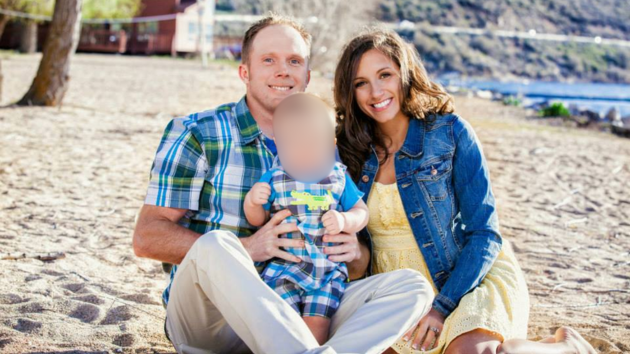
Photo of Richins Family posted on Eric’s Facebook account. (Eric Richins/Facebook)
(NEW YORK) — Kouri Richins, a Utah woman accused of fatally poisoning her husband with fentanyl, who self-published a children’s book on grieving following his death, has been found guilty of murder following a weekslong trial.
The Summit County jury began deliberating late Monday afternoon before reaching a verdict after about three hours. She was found guilty on all five counts, including aggravated murder and attempted aggravated murder.
Kouri Richins looked down and remained still while the judge read out each guilty verdict. Her sentencing has been scheduled for May 13.
During closing arguments earlier Monday, prosecutors alleged that the mom of three was obsessed with appearing “privileged, affluent and successful” and killed her husband to help pay the debts of her floundering home flipping business and to get a “fresh start.”
The defense, meanwhile, said the case was “sloppy” and “driven by bias” and argued that the state failed to prove the allegations beyond a reasonable doubt.
Kouri Richins, 35, was charged with aggravated murder in connection with the 2022 death of her husband, Eric Richins, following a lengthy investigation. Prosecutors allege she spiked his drink with a lethal dose of fentanyl that she purchased illicitly after asking two people for the “Michael Jackson drug.”
“Kouri Richins was a suburban mother, real estate agent. She does not know a lot about the illicit street drug world, but she knows Michael Jackson died from taking drugs,” prosecutor Brad Bloodworth said during closing arguments on Monday. “She doesn’t know how to order a street drug, but she knows she wants the Michael Jackson stuff. She knows she wants it because it is lethal. It is fatal. It kills. And she wanted lethal, fatal death.”
Her charges also include attempted aggravated murder, with prosecutors alleging she gave her husband a sandwich laced with fentanyl on Valentine’s Day two weeks before his death in an initial, failed attempt to kill him.
Kouri Richins was also accused of committing insurance fraud by taking out a $100,000 insurance policy on his life with his forged signature and then submitting a claim following his alleged murder.
She pleaded not guilty and has maintained her innocence.
Her husband, 39-year-old Eric Richins, was found dead in bed on March 4, 2022. An autopsy determined that he died from fentanyl intoxication, and the level of fentanyl in his blood was approximately five times the lethal dosage, according to the charging document. The medical examiner determined the fentanyl was “illicit fentanyl,” not medical grade, according to the charging document.
Prosecutors allege that Kouri Richins purchased illicit fentanyl pills shortly before the Valentine’s Day incident and again before his death, at which point she allegedly asked for stronger drugs.
‘Downward financial death spiral’: Prosecutor During his closing argument, Bloodworth said Kouri Richins was in “financial desperation” due to her realty company’s debts and needed a significant influx of cash immediately. He alleged she believed she would have financially benefited from her husband’s death — without realizing that his assets were in a trust for their children.
Bloodworth said October 2021 was the “beginning of the downward financial death spiral” of Kouri Richins’ realty business, and that she had a growing debt picture nearing $8 million.
He alleged Kouri Richins intended to cause her husband’s death as early as December 2021, when she was booked a vacation with her boyfriend for April 2022.
“Kouri Richins did not book that trip thinking Eric Richins would be alive in April, she booked it knowing he would not,” Bloodworth said.
Bloodworth referred to evidence that he alleged showed she intended to cause her husband’s death. A witness testified during the trial that in December 2021 Kouri Richins said to her that “in many ways it would be better” if Eric Richins “were dead.” In February 19, 2022, days after the alleged attempted murder attempt, prosecutors said Kouri Richins texted her boyfriend, “If he could just go away and you could just be here! Life would be so perfect!!”
Bloodworth said Kouri Richins tried to cover up her alleged role in her husband’s death, starting with the 911 call.
“Listen to how she tells the 911 dispatcher where she was when Eric died. She is distancing herself,” Bloodworth said before the call was played again for jurors. “Rather than, ‘He’s not breathing. He has no pulse. I have to figure out what to do. I need help,’ she’s saying, ‘Hey, look, I was not there. I was in my son’s room.’ That’s her alibi. She’s distancing herself from the time and the place that she murdered Eric.”
Bloodworth also said the call shows that the 911 operator asked Kouri Richins to perform CPR on her husband for 6 minutes before she purportedly did. “She is not immediately trying to revive him,” he said.
Bloodworth said Kouri Richins deleted her texts and phone logs with multiple people, including her former housecleaner, Carmen Lauber, who testified about obtaining illicit drugs at Kouri Richins’ request in the weeks prior to Eric Richins’ death. He argued that Kouri Richins was worried about being investigated and her deleted messages in the wake of her husband’s death, as evidenced by searches on her phone such as, “can cops force you to do a lie detector test” and “can deleted text messages be retrieved from an iPhone.”
When the toxicology report showed that Eric Richins died from a fentanyl overdose, Bloodworth argued that Kouri Richins then needed to “explain” the presence of the drug — and that she allegedly planned to do so by claiming she got them for her husband at his request.
Bloodworth argued that Eric Richins did not die of an accidental overdose, citing testimony from his friends and family who said he did not use illicit drugs. He also argued that he did not die by suicide and had “every reason to live” — foremost being his three young sons.
“The evidence proves that Kouri Richins murdered, attempted to murder Eric Richins and that she committed two counts of insurance fraud and forgery,” he said. “The evidence does not support any other explanation.”
Defense argues case had ‘confirmation bias’ Defense attorney Wendy Lewis argued during her closing that the case was impacted by confirmation bias from the start.
“Instead of looking at the evidence to determine what happened, the state has, they determined what happened, and then they found the evidence to support it,” Lewis said.
Lewis argued that there was “no evidence” that there was fentanyl in Eric Richins’ drink the night he died and that investigators failed to look into his recent trip to Mexico, which the defense had insinuated could have been the source of the fentanyl, or to test an old prescription bottle that was on his nightstand.
Lewis raised questions about the testimony of Lauber, who testified pursuant to several grants of immunity.
“Carmen Lauber was not able to tell you that she bought fentanyl. She agreed on the stand that it was the detectives that first put the word fentanyl in her mouth, in her head. She was told by detectives in this case that she bought fentanyl. ‘Eric died of fentanyl. You bought drugs. You bought fentanyl,'” Lewis said. “She took that story and she ran with it because she had everything to lose.”
On the affair, Lewis said Kouri Richins broke things off with her boyfriend and they never went on the trip. On the phone searches, Lewis argued that Kouri Richins was worried because she was innocent.
“Of course she’s worried. An innocent person would be worried. Anyone would be worried if they just found out that they are a suspect in a homicide investigation,” Lewis said. “She would have been scared to death.”
Lewis touched on Kouri Richin’s money troubles, acknowledging that the house flipping business was “struggling,” but argued that Eric Richins was “worth so much more to Kouri alive.”
She claimed that Kouri Richins was being judged for how she grieved.
“They want you to look at a woman in the worst moment of her life and to judge her grief,” Lewis said. “There is no wrong way to grieve.”
Lewis told the jury that if they believe Kouri Richins “accidentally obtained fentanyl,” and that Eric Richins then took those pills voluntarily and died, she argued that it is “not aggravated murder” and that they “must find Kouri Richins not guilty.”
On the alleged insurance scheme, Lewis argued that the state has not proven beyond a reasonable doubt that there was any fraud or forgery.
“The state has not proven their case,” Lewis said. “They don’t have the evidence that Kouri Richins killed her husband, so instead, they have tried to show you as much evidence as they possibly can to convince you she’s the sort of person who would.”
Prior to delivering its closing argument, the defense submitted a motion for mistrial, alleging that the state’s closing was full of “wild speculation,” dehumanized Kouri Richins and inappropriately commented on her demeanor. The motion was denied.
In his rebuttal, Bloodworth acknowledged that much of the evidence in the case is circumstantial.
“People do not video themselves poisoning their spouse,” he said. “But circumstantial evidence is just as good as direct evidence.”
Bloodworth argued that there was “plenty of proof to convict” Kouri Richins based on Lauber’s corroborated testimony. He also argued that much of the defense’s argument is based around trying to explain a letter found in Kouri Richins’ jail cell that prosecutors said appears to outline testimony for her brother instructing him to say that her husband got fentanyl from Mexico.
“All the evidence in this case proves that Kouri Richins murdered her husband, the father of her three children, Eric Richins,” he said. “There is no other rational explanation.”
“And despite all the evidence, Kouri Richins doubles down and blames Eric,” he continued.
Kouri Richins did not testify during the three-week trial and the defense called no witnesses.
During his testimony, the lead detective in the case said that Kouri Richins paid a ghostwriter for her children’s book.
A month prior to her arrest in May 2023, the mom of three young sons appeared on a “Good Things Utah” segment on Salt Lake City ABC affiliate KTVX to promote the book. In the segment, Kouri Richins said her husband of nine years died “unexpectedly” and that his death “completely took us all by shock.
Retired U.S. Air Force Maj. Gen. William N. McCasland (U.S. Air Force)
(ALBUQUERQUE, N.M.) — The search is intensifying for a missing retired Air Force general weeks after he mysteriously disappeared in Albuquerque, New Mexico.
Retired Maj. Gen. William N. “Neil” McCasland, 68, was last seen at his Albuquerque home on Feb. 27, according to the Bernalillo County Sheriff’s Office.
At 10 a.m. that day, a repairman was at McCasland’s home and interacted with him, Bernalillo County Sheriff John Allen said at a news conference on Monday. At 11:10 a.m., McCasland’s wife left the house for a medical appointment, and when she returned home at 12:04 p.m., he wasn’t there, the sheriff said. She reported him missing at 3:07 p.m., the sheriff said.
McCasland “did state that he was experiencing a mental fog” and was looking into it, Allen said.
“That was his statement about what he was experiencing, that was cited as reasons for stepping down from some groups that he was working with,” Lt. Kyle Woods added.
“There’s no indication … that Mr. McCasland was disoriented, confused,” Woods continued. “Arguably, he would still be the most intelligent person in the room.”
There have been no confirmed videos or sightings showing McCasland’s direction of travel, Allen said.
His phone was left behind at the house, which is out of the norm, authorities said.
Everyone in the area has been interviewed, Woods said, adding, “we have absolutely nothing that would suggest anything nefarious has occurred.”
Hundreds of homes in the area were canvassed as authorities looked for surveillance footage, the sheriff said, and drones, helicopters and canines have been used in the search.
A gray U.S. Air Force sweatshirt was found about 1.25 miles east of McCasland’s house, but family and friends have not confirmed that the sweatshirt is associated with McCasland, Allen said. No blood was detected in the initial processing, the sheriff added.
McCasland held a number of “space research, acquisition and operations roles within the Air Force and the National Reconnaissance Office” while enlisted, according to the Air Force. The roles included director-level positions at the Pentagon, as well as commanding the Phillips Research Site of Air Force Research Laboratory at Kirtland Air Force Base in New Mexico, and the Air Force Research Laboratory at Wright-Patterson Air Force Base in Ohio, according to the Air Force.
Still unaccounted for is McCasland’s wallet, a .38 caliber revolver and leather holster, and a red backpack, the sheriff said.
The sheriff asked residents to check their surveillance videos, with the priority focused on Feb. 27 between 9 a.m. and 2 p.m.
Tips can be submitted at 505-468-7070, the sheriff said.
(MASSACHUSETTS) — A Massachusetts judge ruled on Monday in favor of medical organizations in their litigation against Health and Human Services Secretary Robert F. Kennedy Jr. over his changes to federal vaccine policy.
The judge temporarily blocked changes to the childhood vaccine schedule that were made at the beginning of this year, in which Kennedy reduced the number of recommended shots from 17 to 11.
The judge also suspended the appointments of the 13 members of the Centers for Disease Control and Prevention’s vaccine advisory committee, who were all appointed unilaterally by Kennedy after he fired all the preceding members.
This is a developing story. Please check back for updates.
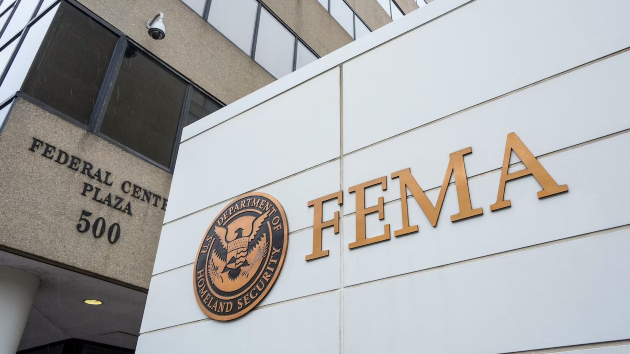
The U.S. Homeland Security Federal Emergency Management Agency (FEMA) sign at Federal Center Plaza in Washington, D.C., Feb. 15, 2026. (Ken Cedeno/Reuters, FILE)
(WASHINGTON) — The Department of Homeland Security (DHS) is encouraging Federal Emergency Management Agency (FEMA) employees who are furloughed due to the partial government shutdown to apply for unemployment, according to internal documents reviewed by ABC News.
The shutdown directly affects the Transportation Security Agency (TSA) and FEMA, which are not funded until Congress can resolve its differences over funding the agency.
The information went to FEMA employees who are furloughed and now asked to file with unemployment departments in the state in which they are based.
DHS is asking creditors for “flexibility” for its employees “who are experiencing challenges with making timely payments, including consideration of waiving any late fees associated with delayed or incomplete mortgage or rent payments until the situation is resolved.”
“Because DHS employees will not receive pay during the lapse in appropriations, many are experiencing difficulty in meeting their financial obligations, including rent and mortgage payments,” a letter dated March 15 to creditors from DHS says. “This challenge is compounded by the fact that many employees are still affected by the previous 43-day lapse in appropriations. This lapse is expected to be temporary and is entirely beyond our employees’ control.”
Funding for DHS lapsed in mid-February when Democrats refused to vote for it, demanding that reforms be made to Immigrations and Customs Enforcement (ICE) in the wake of its immigration enforcement operations, in particular in Minnesota, where Renee Good and Alex Pretti were fatally shot during encounters with federal agents in January. The Trump administration accuses congressional Democrats of playing politics at the expense of the American people.
“Democrats have cut off resources and funding for FEMA, the U.S. Coast Guard, and thousands of federal law enforcement officers — jeopardizing America’s border security, maritime safety, and ability to respond to emergencies,” the White House said in a statement last week.
Americans’ safety and security are on the line each day the Democrat Shutdown continues.”
On Monday, House Minority Leader Hakeem Jeffries called on Democrats to join forces behind a discharge petition that would fund all DHS agencies except for ICE. A vote on similar legislation failed earlier in the Senate but Jeffries aims to put House Republicans on the record as well, though he would need at least four Republicans to vote with Democrats.
The government was shut down for 43 days in October and November over Democrats’ push to extend Affordable Care Act subsidies, which were cut in President Donald Trump’s tax and spending bill.
ABC News’ John Parkinson and Lauren Peller contributed to this report.
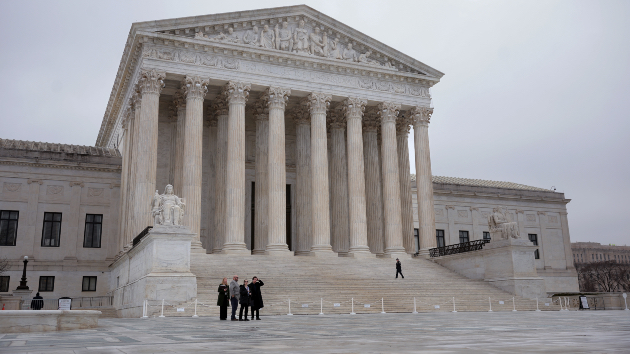
he U.S. Supreme Court is seen on March 04, 2026 in Washington, DC. (Kevin Dietsch/Getty Images)
(WASHINGTON) — President Donald Trump attacked the U.S. court system in two posts on social media over the weekend, including disparaging a Supreme Court ruling over his use of the International Emergency Economic Powers Act to implement tariffs.
He also took aim at a ruling by a U.S. District Judge James Boasberg on Friday that blocked the Justice Department’s subpoenas as part of their criminal investigation into Fed Chair Jerome Powell.
“The decision that mattered most to me was TARIFFS! The Court knew where I stood,” Trump said on Sunday night.
The Supreme Court last month delivered a major blow to Trump by invalidating most of his global tariffs, a cornerstone of his economic policy in his second term. In a 6-3 decision, written by Chief Justice John Roberts, the court concluded that IEEPA did not give Trump the power to unilaterally impose tariffs because the Constitution gives Congress the sole authority to raise revenue from Americans.
Trump on Sunday night derided the high court’s decision, claiming that the “Democrats on the Court always ‘stick together,’ no matter how strong a case is put before them.”
Trump also took a dig at Justices Neil Gorsuch and Amy Coney Barrett, both of whom the president appointed during his first term to the nation’s highest court, accusing them of going “out of their way, with bad and wrongful rulings and intentions, to prove how ‘honest,’ ‘independent,’ and ‘legitimate’ they are.”
Notwithstanding the criticism, Gorsuch and Barrett have been reliable conservative votes on the court, consistently voting in favor of positions backed by the Trump administration. Last year, Barrett authored the landmark 6-3 decision restricting the ability of lower court judges from issuing nationwide injunctions against Trump policies.
Trump claimed the court’s decision on tariffs meant the U.S. “was unnecessarily RANSACKED” and called the court “a weaponized and unjust Political Organization.”
“They are hurting our Country, and will continue to do so. All I can do, as President, is call them out for their bad behavior! This statement about the United States Supreme Court will cause me nothing but problems in the future, but I feel it is my obligation to speak the TRUTH,” Trump wrote, seemingly acknowledging the potential backlash he might receive over his attacks.
Trump on the day after that ruling said he would raise those tariffs to 15%. Twenty-four states are suing the Trump administration over those duties, saying they’re illegal because the president does not have the power to impose them.
Tariffs aside, the court’s conservative majority ruled overwhelmingly in Trump’s favor during this first year of his second term, approving nearly all of the administration’s unprecedented number of emergency applications seeking a green light for government layoffs, federal funding freezes, expedited removal of immigrants, and expulsion of transgender military service members.
In 2024, the court extended sweeping immunity to Trump in the face of criminal prosecution, which Trump called a “big win for our Constitution and democracy” at the time.
In a second social media post, Trump claimed that the U.S. court system had singled him out and treated him and other Republicans in a politicized manner.
“The Courts treat Republicans, and me, so unfairly, always seeming to protect those who should not be protected,” Trump said. “They are highly politicized. Cases don’t matter, the Judge does!”
He then blasted the Friday ruling by Boasberg, a top federal judge in Washington, that blocked the Justice Department from subpoenaing the Federal Reserve’s Board of Governors after determining the government “produced essentially zero evidence” to support a criminal investigation of Powell, the Fed chair.
“How is this absolutely terrible Federal Reserve Chairman, Jerome ‘Too Late’ Powell, not even allowed to be investigated for the horrible job he does?” Trump wrote.
Powell in January had rebuked the investigation, describing it in a video message as a politically motivated effort to influence the Fed’s interest rate policy.
The president on Sunday also attacked Boasberg, who authored the ruling.
“I strongly criticized Jerome ‘Too Late’ for his horrible performance throughout his tenure, which is either gross incompetence, total dishonesty, or both, and, in return for this well justified criticism, get viciously and wrongfully blamed by, as usual, a Wacky, Nasty, Crooked, and totally Out of Control Judge, named James Boasberg, a man who suffers from the highest level of Trump Derangement Syndrome (TDS), and has been ‘after’ my people, and me, for years,” Trump wrote.
“In case after case, Boasberg has displayed open, flagrant, and extreme partisan bias and contempt against Republicans and the Trump Administration,” Trump added later in the post.
The president then called for Boasberg to be removed from cases related to Trump and his administration, claiming “he is exactly what Judges should not be!”
Acting U.S. Attorney Jeanine Pirro said on Friday that Boasberg was an “activist” judge, adding that the Justice Department planned to appeal the ruling.
Following a previous round of Trump attacks on Boasberg last year, Roberts issued a rare public statement defending the judge and judiciary.
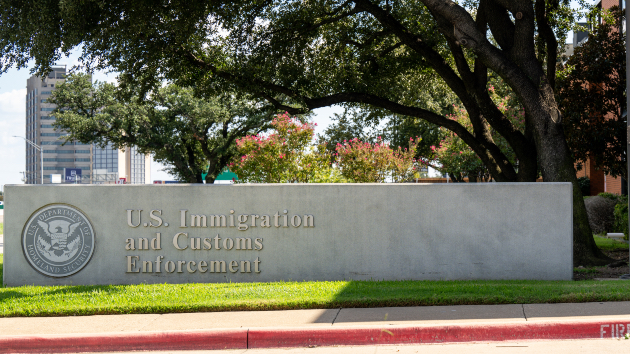
The entrance to a U.S. Immigration and Customs detention facility in Dallas, Texas (Brandon Bell/Getty Images)
(DALLAS) — An Afghan immigrant who died after being in immigration custody for one day worked alongside U.S. forces during the war in Afghanistan, according to an immigrant advocacy group.
Mohommad Nazeer Paktyawal, 41, died last week at an Immigration and Customs Enforcement field office in Dallas, Texas. He is the 43rd person to die in ICE custody during the second Trump administration, according to lawmakers.
According to ICE, 36 detainees have died in ICE custody since Jan. 23, 2025. By federal law, ICE makes public all reports regarding detainee deaths while in custody within 90 days, according to the agency.
“For many years, Nazeer worked alongside American forces during the war in Afghanistan,” the group AfghanEvac said in a statement on behalf of Paktyawal’s family. “It was dangerous work, but he believed in helping bring stability to his country and protecting the people around him. After Afghanistan fell, the United States helped evacuate our family in 2021, and we came here hoping for safety and a better life.”
An ICE statement Sunday said that Paktyawal died Saturday morning at Parkland Hospital in Dallas, Texas, following his arrest the day before. It described Paktyawal as “a criminal illegal alien from Afghanistan” who had “a known criminal history,” including an arrest for alleged SNAP fraud and another for alleged theft, both last year.
The ICE statement did not address whether Paktyawal had assisted U.S. troops in Afghanistan, as AfghanEvac claimed.
AghanEvac said in their statement that Paktayawal had an open asylum application and did not have any criminal convictions. ABC News has so far been unable to independently confirm claims about Paktayawal’s alleged criminal record.
The Department of Homeland Security on Monday confirmed that Paktayawal entered the U.S. in 2021 but said that his parole expired in August 2025. The agency did not address questions about an active asylum application.
“In the late evening of March 13, ICE contacted Emergency Medical Services when Paktiawal [sic] began complaining of shortness of breath and chest pains while in an ICE Dallas Field Office processing hold room,” the ICE statement said. “He was immediately transported to Parkland Hospital and received breathing treatment. The ER doctor recommended that he remain in the hospital for observation.”
“Early March 14, Paktiawal was eating breakfast when medical staff noted that his tongue had become swollen, prompting a medical response. After multiple lifesaving efforts were attempted, he was declared deceased at 9:10 a.m.,” according to the ICE statement.
Paktyawal “did not report any prior medical history” at the time of his arrest, the ICE statement said.
In a statement to ABC News on Monday, DHS Deputy Assistant Secretary Lauren Bis said Paktyawal’s tongue was swollen and said that he “received an epinephrine drip.”
“Later that day, medical staff began cardiopulmonary resuscitation,” Bis further said. “At approximately 9:10 a.m. CDT, a physician at Parkland Hospital pronounced Paktyawal deceased after multiple resuscitative efforts, including mechanical device and medical professional interventions.”
“No one in ICE custody is denied access to proper medical care,” Bis added. “It is a longstanding practice to provide comprehensive medical care from the moment an alien enters ICE custody.”
AfghanEvac stated that Paktyawal was preparing to drive his children to school when he was detained March 13.
“His children watched as he was surrounded and taken away,” the group said. “We still cannot understand how this happened. He was only 41 years old and was a strong and healthy man.”
Paktyawal served as an Afghan special forces soldier beginning in 2005 and worked alongside U.S. Army Special Forces for more than a decade, according to AfghanEvac, and was evacuated by the U.S. on Aug. 30, 2021, and resettled in Texas through Catholic Charities. Paktyawal had completed his asylum interview and held a work authorization and a valid Social Security number, AfghanEvac said.
The group said Paktyawal contacted his family members shortly after being detained on March 13 and said that he was not feeling well. He was admitted to a local hospital in Dallas that night and the family was informed on March 14 that Paktyawal had died.
“Mr. Paktyawal’s asylum case remained pending with U.S. Citizenship and Immigration Services at the time of his detention,” AghanEvac said in a statement.
“While ICE’s statement focuses on past allegations, the circumstances surrounding Mr. Paktyawal’s detention and death remain unclear,” the group added. “According to information currently available, those arrests did not result in criminal charges nor had Mr. Paktyawal been convicted of any crimes.”