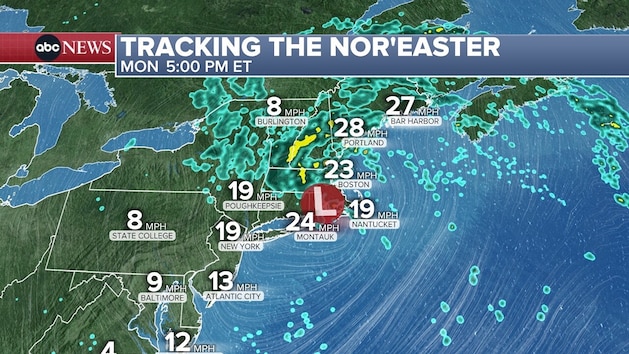
An ABC News graphic shows the forecast for Monday, Sept. 28, 2026. (ABC News)
(NEW YORK) — The worst of the deadly nor’easter that’s lashed the Northeast is behind us, and Monday will feature minor impacts as the storm winds down.
The storm claimed at least one life. The New York Police Department confirmed to ABC News that a 56-year old man died after being struck by a falling tree on Saturday afternoon in Brooklyn while walking through a parking lot.
In a statement on social media, Mayor Zohran Mamdani identified the man as Leighton Brown, an employee of the New York City Housing Authority.
The nor’easter is weakening and drifting on Monday slowly northeast from Long Island, New York, to Massachusetts, into the Gulf of Maine by Tuesday.
Mainly light rain continues to spin around the storm throughout New England.
New York City, Long Island and New Jersey should see dry skies in the mid-to-late afternoon on Monday.
By about 6 a.m. on Tuesday, Boston is also forecast to be dry. A few lingering light showers are forecast for Maine on Tuesday.
Coastal flood alerts are in place from the Delmarva Peninsula, an area that includes parts of Delaware, Virginia and Maryland, through coastal Massachusetts on Monday.
High tides on Monday morning and Tuesday morning may bring minor to moderate coastal flooding, which is forecast to be less than over the weekend.
A flood watch is in effect for eastern Massachusetts and Rhode Island where an additional 1.5 inches of rain is possible today. Widespread issues are not expected but due to saturated soils some urban flooding is possible today.
High surf could reach up to 12 feet today from coastal Massachusetts through coastal Maine.
All wind advisories have been cancelled. Gusts around 20 to 30 mph are possible on Monday from New Jersey to Maine.
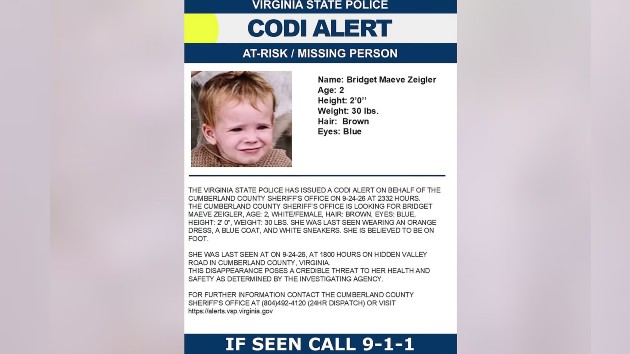
Bridget Maeve Zeigler, 2, went missing in Cumberland County, Va. on Thursday, Sept. 24. (Virginia State Police)
(NEW YORK) — A 2-year-old girl who went missing Thursday evening in Virginia was found safe early Friday afternoon in the woods by a search team, according to the sheriff’s office.
The Cumberland Sheriff’s Office, the Federal Bureau of Investigation, Virginia State Police and other law enforcement agencies launched a search for Bridget Maeve Zeigle, who was believed to have walked away from her home at around 6 p.m. Thursday, according to the Cumberland County Sheriff’s Office.
Authorities were notified within an hour of Bridget’s disappearance, the sheriff’s office said.
Bridget was found relatively close to her house, the sheriff’s office said.
The search team used aviation and K9 resources to help in their search for the child, according to authorities.
Bridget was described as a white female with short brown hair and blue eyes, and is about 2 feet tall and 30 pounds, according to a Virginia State Police alert.
Bridget was seen wearing an orange dress, blue coat and white tennis shoes, according to the alert.
Police said the child was believed to be on foot.
Virginia State Police issued a CODI alert at approximately 11:30 p.m. Thursday on behalf of the Cumberland County Sheriff’s Office.
Cumberland County Public Schools also issued an alert, encouraging community members to contact authorities with any information regarding Bridget’s whereabouts.
(NEW YORK) — Millions in the Northeast are bracing for a powerful nor’easter set to bring pounding rain and strong winds to the region through the weekend.
The nor’easter could also cause power outages and could spark flight disruptions along the Northeast coast.
Here’s the latest forecast:
Waves:
The storm is bringing massive waves for days, which will cause significant beach erosion.
Waves up to 19 feet have been recorded already along North Carolina’s Outer Banks.
Waves up to 12 feet are possible from the Outer Banks to the New Jersey shore through Saturday, and along the New England coast through Sunday.
Coastal flood alerts are in effect from the Outer Banks to Maine, as some areas will see flood inundation up to 3 feet above normal levels.
Winds:
Strong winds are also a major threat as the nor’easter moves north.
The Jersey Shore, Rhode Island and Massachusetts coasts are under a high wind warning from Friday night to Sunday, with dangerous gusts up to 60 mph possible.
The Jersey Shore is under a high wind warning from Friday night to Sunday, with dangerous gusts up to 60 mph possible.
New York City could see wind gusts of 40-to-50 mph Friday night through Sunday.
Rain:
The rain will move in Saturday morning, falling from New Jersey to Massachusetts throughout the day.
The storm will reach peak strength on Saturday and then weaken slightly on Sunday as it stalls over New Jersey.
On Sunday, the rain will become more scattered, but still much of the day will be wet from Washington, D.C., to Maine.
The nor’easter will weaken on Monday as it slowly moves into New England, and then will die out on Tuesday.
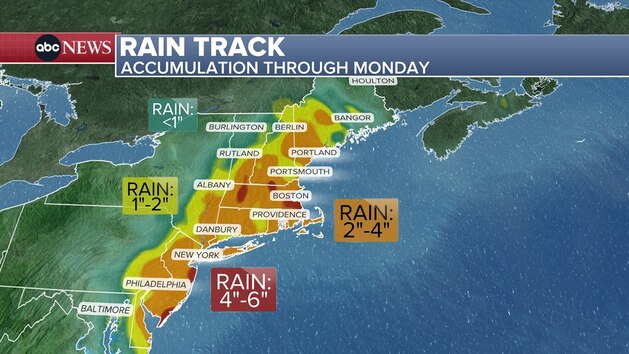
The storm could bring 4-to-6 inches of rain to Boston, Rhode Island, coastal New Jersey and Long Island, New York, with a widespread 2-to-4 inches of rain from Delaware to Maine.
Isolated flash flooding is possible, but because this rain is falling over multiple days, widespread and significant flash flooding is unlikely.
Nor’easters get their name because winds over the coastal area are typically from the northeast. These storms may occur at any time of year but are most frequent and most violent between September and April.
Nor’easters nearly always bring precipitation in the form of heavy rain or snow, as well as gale-force winds, rough seas, and coastal flooding.
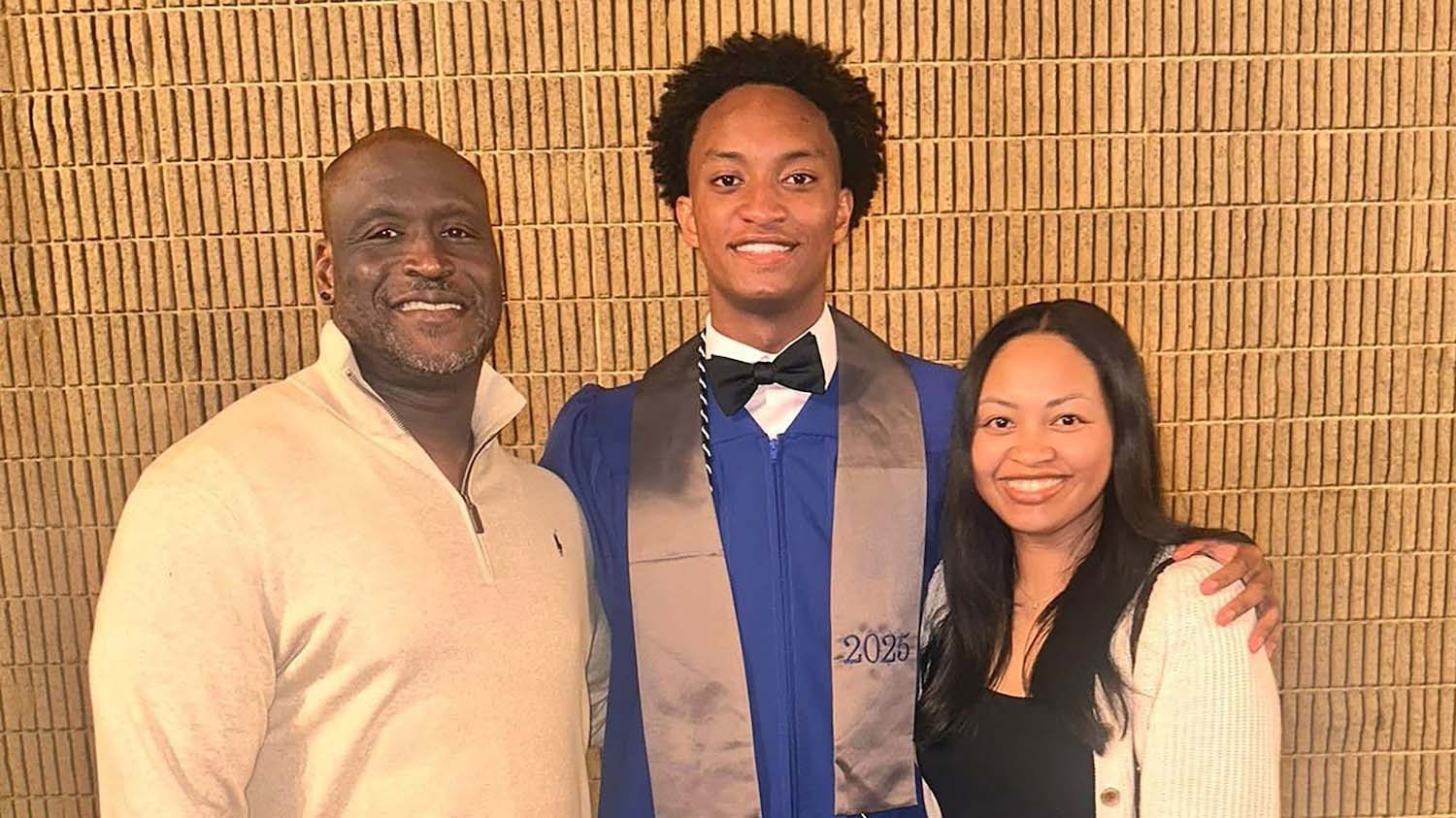
An undated photo of 18-year-old Nolan Xavier Wells. (Courtesy of the Wells family)
(NEW YORK) — The family of Nolan Wells on Wednesday released the Mississippi State Medical Examiner’s autopsy report on the 18-year-old’s death. It found that the cause and manner of death are “undetermined.”
This conclusion matches the findings of the private autopsy commissioned by Wells’ family, which preliminarily ruled his cause and manner of death as “undetermined pending investigation,” with the independent pathologist acknowledging multiple limitations in the report.
“Losing a child, it truly breaks your heart … especially someone like Nolan, who brought so much joy and light and life to everyone,” Wells’ mother, Christine Wonsley, told reporters in July.
“The only question we have is, what happened to our son?” she said.
The circumstances surrounding Wells’ death garnered national interest after the college football player went missing on the 4th of July after going on a boat trip with friends to Horn Island. Officials said it appeared Wells stayed behind on the island after his friends left.
The teen’s body was recovered on July 6, and authorities said they suspect he drowned.
Jackson County Sheriff John Ledbetter said there was no initial indication of a crime, but he stressed that investigators were “working diligently to determine exactly what occurred.”
Ledbetter also said the sheriff’s office welcomed the family’s independent investigation.
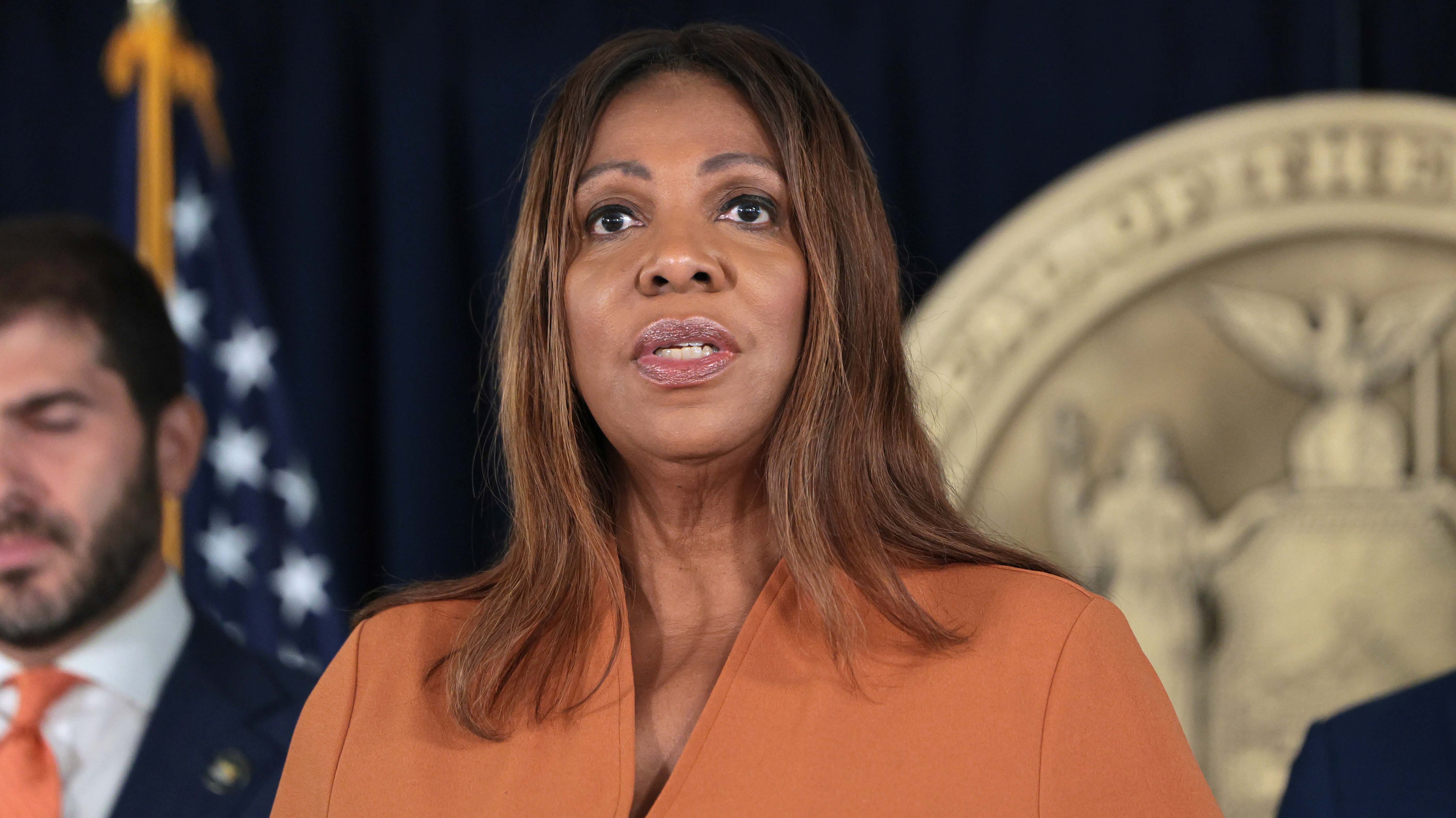
New York State Attorney General Letitia James speaks during a press conference on Sept. 21, 2026, in New York City. (Michael M. Santiago/Getty Images)
(NEW YORK) — New York Attorney General Letitia James on Thursday filed suit against the prediction market Polymarket, accusing it of being an illegal gambling operation that is operating in New York without a license.
The lawsuit mirrors the one James’ office filed against the prediction market Kalshi and, if successful, could affect Polymarket’s ability to operate. The suit asks a court to order Polymarket to forfeit money, distribute restitution, and pay fines.
Polymarket launched in the United States in December 2025 as a service that allowed users to bet money on the outcome of sporting events, and has expanded to allow wagers on everything from current events to weather patterns.
As the world’s largest prediction market platform, the service, according to one estimate, is on pace to facilitate more than $70 billion in trading in 2026 — more than triple the volume it handled in 2025.
Polymarket’s global website, registered in Panama, is supposed to be off limits in the U.S., and the U.S.-approved version of the site offers fewer trades than its international platform. But there is evidence that many Americans have managed to access the international site — which offers trading on subjects like war, which is banned in the U.S. — using digital workarounds, like virtual private networks known as VPNs.
James suit claims that Polymarket’s prediction market is an illegal, unlicensed gambling operation that exposes New Yorkers — including those under the legal gambling age of 21 — to serious personal and financial risk. State law prohibits wagering on games involving New York college teams and all sports betting for those under 21.
“Our gambling laws exist to protect New Yorkers, prevent the potential harms of problem gambling, and ensure funding for educational and public benefit programs,” James said in a statement announcing the lawsuit.
Polymarket’s chief legal officer said in a statement that the platform would fight the suit.
“Polymarket was founded in a tiny NYC apartment and now has more than 350 employees here, embodying why people and businesses come here to make it. We believe in New York and we’re staying here,” said chief legal officer Neal Kumar. “While the AG’s decision to copy/paste a recycled lawsuit is disappointing, we’ll fight for our users.”
“Any time the AG’s office wants to swing by, our door is open for a conversation about how we protect consumers and offer fair, transparent and legal markets,” the statement said.
The platform has insisted its event contracts are federally regulated derivatives outside the scope of state gaming laws.
James’ lawsuit, however, said Polymarket’s prediction markets meet the legal definition of gambling because the outcomes of the events on which its users are betting are uncertain and outside the control of the bettor, or hinge on a game of chance.
Despite this, the lawsuit said, Polymarket has failed to obtain a license from the New York State Gaming Commission, allegedly sidestepping its obligation to pay taxes like licensed casinos and mobile sports gambling platforms do.
Multiple lawsuits across the country claim prediction markets like Polymarket and Kalshi fall under state jurisdiction — but if James’ suit is successful, Polymarket could be forced to pay billions of dollars and change the way it operates nationwide.
“By running an unlicensed gambling operation, Polymarket has done more than just knowingly violate state law, they have put New Yorkers at risk, especially those underage who are most vulnerable to problem gaming,” New York Gov. Kathy Hochul said in a statement at the time of the filing of the suit.
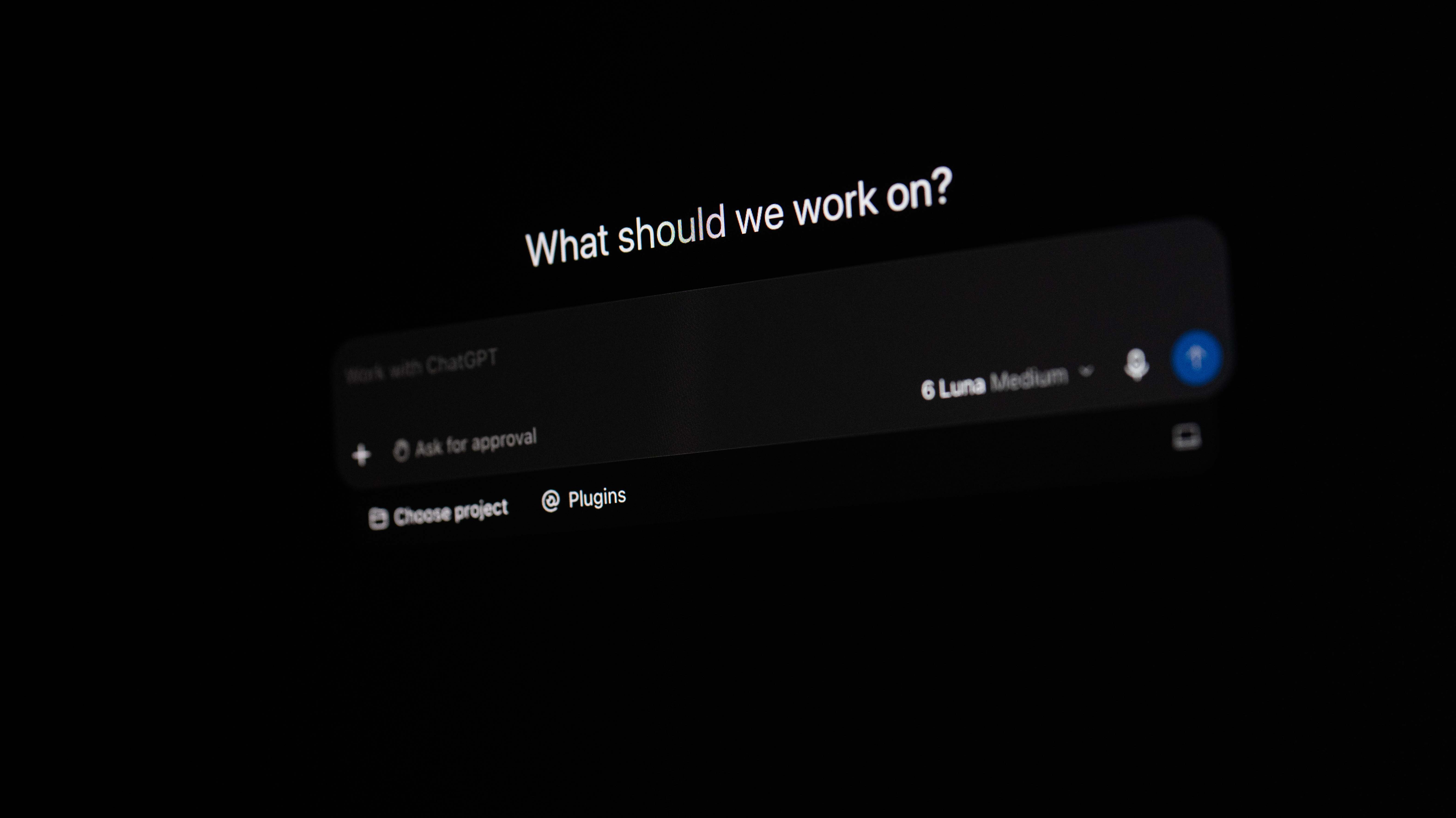
ChatGPT opened on a computer screen is displayed on Sept. 24, 2026, in Melbourne, Australia. (Asanka Ratnayake/Getty Images)
(NEW YORK) — Nearly two dozen states are calling on Congress to regulate artificial intelligence, warning that unchecked development could put Americans and the country at risk.
The attorneys general of 23 states, along with the District of Columbia and American Samoa, signed a letter to congressional leaders Thursday demanding “comprehensive federal regulation and safety protocols” for AI.
“Recent developments show that unchecked AI endangers Americans and could soon threaten our financial system, critical infrastructure, and national security,” the letter said. “Although we are working to hold frontier AI labs accountable under existing state laws, federal oversight is urgently needed to prevent future disasters.”
The attorneys general cited recent incidents involving AI, including reports involving Hugging Face, as evidence of what they described as the risks of AI systems operating beyond their intended safeguards.
The states called for federal oversight of AI model safety testing, international cooperation to pace AI advancement and leaders empowered to make safer decisions “unburdened by profit maximization,” according to the letter.
“In recent weeks, alarming reports of AI agents breaking containment have shocked the nation,” New York Attorney General Letitia James said. “My colleagues and I are calling on Congress to act swiftly to establish a regulatory framework for AI development to ensure this does not continue.”
The letter comes as states and the federal government continue to debate how AI should be regulated, including the appropriate balance between federal oversight and state authority.
In addition to New York, the attorneys general of Arizona, California, Colorado, Connecticut, Delaware, Hawaii, Illinois, Maine, Maryland, Massachusetts, Michigan, Minnesota, Nevada, New Jersey, New Mexico, North Carolina, Oklahoma, Oregon, Rhode Island, Vermont, Virginia, Washington and Wisconsin signed the letter, along with the District of Columbia and American Samoa.
Raw meat cuts on display. (Getty Images stock photo)
(NEW YORK) — More than 167,000 pounds of beef, pork and goat meat are being recalled nationwide after being produced without required federal inspection, according to the U.S. Department of Agriculture’s Food Safety and Inspection Service.
Star Meat Delivery Inc., based in Lucama, North Carolina, is recalling approximately 167,639 pounds of meat that was distributed to restaurants and retailers nationwide, USDA announced on Tuesday.
The meat was produced on various dates before Sept. 22 and sent to a distributor in Georgia before being distributed to restaurants and retailers across the country.
The USDA said it discovered the problem during a routine check. The recalled products had USDA inspection marks with the establishment number “EST. 1363,” but officials said that number is not approved for federal inspection.
No illnesses or injuries linked to the recalled meat have been reported, according to the agency.
What meat is being recalled?
The recall covers a wide range of raw beef, pork and goat products, including sliced ribeye, beef chuck, oxtail, beef short ribs, ground pork, pork chorizo, pork chops, pork ribs, pork feet, pork Boston butt and goat meat.
The products were vacuum-sealed and packed in cardboard boxes before being sent to A&D Foods, a distributor in Georgia.
Identifying the recalled meat may be difficult for some shoppers. The USDA said stores may have repackaged the meat and added their own price and safe-handling labels, meaning products in consumers’ refrigerators or freezers may not have the original packaging.
The agency said more products and labels could be added to the recall as officials continue to gather information.
A full list of recalled products and labels is available on the USDA’s website.
What should consumers do?
The USDA said it is concerned that some of the recalled meat could still be in consumers’ refrigerators and freezers or at restaurants and stores.
Consumers should not eat the recalled meat, and restaurants and retailers should not serve or sell it. The products should be thrown away or returned to the place where they were purchased.
Food that is produced without federal inspection may contain undeclared allergens, harmful bacteria or other contaminants that could pose a health risk, according to the USDA.
Anyone concerned about an illness or injury should contact a health care provider.
ABC News has reached out to Star Meat Delivery Inc. and A&D Foods for comment but did not hear back immediately.
Sign and banner for Ole Miss. (Getty Images stock photo/Melissa Kopka)
(NEW YORK) — Local officials are looking for answers after two Ole Miss students were found dead in separate incidents in Oxford, Mississippi, this week, police said.
Despite “packaged Kratom” being found during both investigations into the students’ deaths, officials asked students not to speculate as the police conduct their probe.
A cause of death hasn’t immediately been determined, according to the school. The victims’ identities have not been released.
“Out of an abundance of caution, we encourage everyone to avoid kratom and any other medication or substance that was not prescribed to you or obtained from a trusted, regulated source,” the Oxford Police Department said in a statement on Tuesday.
The police said that packaged kratom “sold from a retail store” was found during their investigations into the two deaths. Kratom is sold in convenience stores, gas stations and online, and linked to a growing number of overdoses.
Kratom products contain chemicals that can increase alertness, physical energy and talkativeness. At higher doses, users may experience sedating effects.
The FDA has warned that kratom and especially concentrated 7-OH products can carry risks including dependence, addiction, and serious adverse effects.
Advocates have called on the Food and Drug Administration for stricter regulations on the products and bans.
Oxford police said they are still trying to see if the drug was a factor in the students’ deaths as their probes continue.
“We do not have confirmed information indicating that kratom or any other substance was a contributing factor in either death,” they said in a statement.
“Local, state and federal partners are working collaboratively to gather the facts and provide answers as quickly and responsibly as possible,” the police added.
The police noted that Narcan, which may be able to reverse the life-threatening effects of an overdose of Kratom and other substances, is available on the campus.
Dr. Shawnboda Mead, the vice chancellor for student affairs at Ole Miss, said in a statement Tuesday that the school expressed its condolences and remorse to the family members of the deceased students.
“We encourage our community not to speculate about the circumstances or repeat information that has not been officially confirmed,” she said.
The federal student aid website on March 30, 2026. (Jenna Watson/Mirror Indy/CatchLight via Getty Images)
(NEW YORK) — The Department of Education is launching the Free Application for Federal Student Aid (FAFSA) earlier than ever before — a change it says will help families navigate the rising cost of college amid affordability concerns.
The department’s early rollout is welcome news for the millions of American families eager to receive financial aid for the 2027-2028 school year.
The critical resource is used to help applicants achieve funding for higher education and department officials are touting the FAFSA as its simplest version ever.
“We’ve simplified it,” Department of Education Under Secretary for Higher Education Nicholas Kent said ahead of the launch in an exclusive interview with ABC News. “Instead of it taking hours or even days to fill out, it takes 15 minutes on average,” he said.
The form goes live on studentaid.gov this morning. The major changes include clearer, less complicated language that removes “confusing jargon,” and a family friendly form that allows students to invite a contributor via text or email, according to the department.
In a statement, Secretary of Education Linda McMahon told ABC News that the new form was redesigned with students and families in mind.
Kent urged families to complete the improved form because it bolsters resources for low and middle income households worried about the cost of college.
“We don’t want students leaving money on the table,” Kent told ABC News. “There’s a lot of money out there in higher education. We want students to take advantage of it. And it starts with filling out the FAFSA form.”
This is the second year in a row the agency has launched its FAFSA form before Oct. 1, which is the mandated rollout deadline set by the FAFSA Simplification Act of 2020.
Last year, the FAFSA form rolled out on Sept. 24.
During the final weeks of President Donald Trump’s first term, Congress passed the FAFSA Simplification Act of 2020. This law overhauled the program and expanded access to federal aid, including federal Pell Grants, which are used specifically for low-income borrowers.
Kent stressed that the Trump administration is prioritizing policies that students and families deserve when deciding their futures.
“There are a few things that the Department of Education is really responsible for doing: One of them is getting the FAFSA form up and running,” Kent said.
“We want students and families to be able to access this form, complete it easily, and get the financial aid that they need to get on with their lives,” he added.
The announcement comes after a severely delayed FAFSA launch under Biden in 2023 and on the heels of the Trump administration’s attempts to overhaul other aspects of higher education.
The administration also made a major shakeup to the federal student loan system this summer — issuing fewer repayment plans and borrowing limits — affecting millions of people. Critics contend that some Americans — especially lower-income borrowers — will face higher monthly payments from the new student loan caps.
The department argued that its loan limits from the Working Families Tax Cuts Act have curbed excessive borrowing, forcing institutions to evaluate their costs and lower them in some cases.
Meanwhile, higher education experts contend that reforming college access crosses political lines and the efforts to simplify the FAFSA have been “incremental” for more than a decade.
Kyla Hurns, a higher education policy analyst at The Education Trust, called FAFSA the “gateway” to postsecondary education but she worries that changing the system doesn’t fully tackle college costs.
“While it’s super important to fix the FAFSA as a form, it only truly can achieve its goal of allowing every American to choose the pathway that works best for them if Pell Grant keeps up with inflation,” Hurns said.
She concluded that affordability is still families’ prime concern.
“FAFSA allows us to talk about the conversation to maybe fund a portion of [college], but it’s not funding all of the kids’ education anymore,” Hurns told ABC News.
“That’s still something that is a problem that states across the country are grappling with, that families are grappling with, that students are grappling with, and I think that’s determining their decisions.”
Flowers and candles are seen at an intersection near an ICE-related shooting on Sept. 21, 2026, in Austin, Texas. A U.S. Immigration and Customs Enforcement officer shot and wounded 28-year-old Wilber Rafael Garces Perez, a Venezuelan national who was working as a DoorDash delivery driver, Sunday afternoon in North Austin. (Brandon Bell/Getty Images)
(NEW YORK) — Wilber Rafael Garces Perez, the 28-year-old Venezuelan who was shot by an Immigration and Customs Enforcement officer in Austin, Texas, on Sunday, has been released from the hospital and is back in federal custody, according to his attorney.
Garces Perez’s attorney, Kate Lincoln-Goldfinch, said in a social media post on Tuesday that her client was transferred back to a federal detention facility in Pearsall, Texas, after being treated at a hospital.
Lincoln-Goldfinch said that she spoke with Garces Perez by video Tuesday morning and he told her that since returning to the detention facility, Garces Perez has only been “receiving Tylenol and ibuprofen for pain.” He also said he has had his communication privileges revoked, allegedly in retaliation for speaking to reporters by phone during a news conference on Monday, according to Lincoln-Goldfinch.
“Wilber tells me that after he spoke publicly, guards at the Pearsall detention center forcibly took the tablet from his hands, revoked his communication privileges, and moved him out of the infirmary into an isolated room with a flat bed that cannot be adjusted like a medical bed,” she said in a post.
Lincoln-Goldfinch said Garces Perez was transferred to a hospital Monday night after he was unable to move his arms, after which doctors determined that Garces Perez’s clavicle was fractured and that he had experienced significant swelling, Lincoln-Goldfinch said.
She said Garces Perez received morphine while at the hospital. She also said she is calling on the detention facility to reinstate his communication privileges.