(MINNEAPOLIS) — A 26-year-old man was shot multiple times while attending a prayer service in Minnesota, and the suspects are at large, authorities said.
The shooting unfolded just before 10 a.m. Wednesday at the Canterbury Park Expo Center in Shakopee, about 25 miles outside of Minneapolis, the Shakopee Police Department said.
The victim was taken to the Hennepin County Medical Center in unknown condition.
“We are actively working to identify the involved individuals,” police said in a statement. “Anyone with information should contact Shakopee Police Department at 952-445-1411.”
This is a developing story. Please check back for updates.
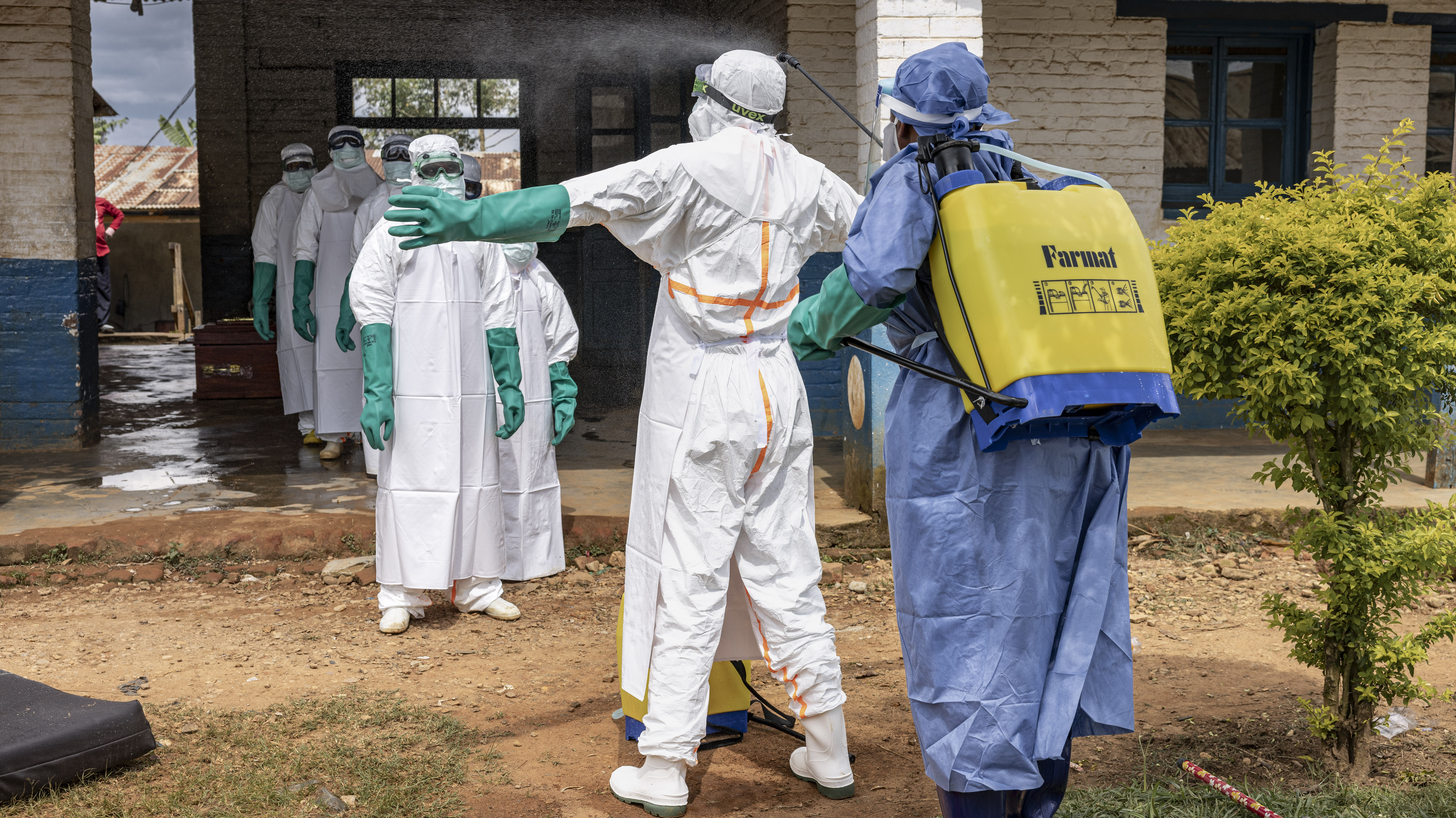
Health workers wearing protective equipment are disinfected after leaving the isolation area at the General Referral Hospital during the Ebola outbreak response on May 21, 2026, in Mongbwalu, Democratic Republic of Congo. The World Health Organization has declared the Ebola outbreak in the Democratic Republic of Congo and Uganda a “public health emergency of international concern,” as the death toll and number of confirmed cases continue to rise. (Photo by Michel Lunanga/Getty Images)
(WASHINGTON) — The White House confirmed Wednesday that the U.S. is setting up a health facility in Kenya to receive Americans who are exposed to the Ebola virus while in regions affected by the ongoing outbreak.
According to an administration official, the U.S. will establish what they called a “state-of-the-art facility” in Kenya “through a coordinated effort with the Departments of State, Health and Human Services, and War.”
The news was first reported by The New York Times.
The official said that the purpose and design of the facility would be to “provide access to high-quality care for Americans who would need to quickly get out” of the Democratic Republic of Congo (DRC) to quarantine, and argued that it would cut down on the “risks of a lengthy transport back to the U.S.”
“Time is of the essence for Ebola patients, and this facility will enable Americans in the region who contract Ebola to receive lifesaving care as quickly as possible without 12-plus hours of medevac flight time,” the official said.
The official added that the treatment capabilities at the Kenya facility are “expected to be able to care for the full-spectrum of Ebola Virus Disease, including critical care needs,” but added that patients would be evaluated on a case-by-case basis for possible “forward transport” for more advanced care as needed.
The White House did not immediately respond to an ABC News request for additional specifics regarding patients who would be quarantined and treated at the facility.
The president previously invoked his authority under Title 42, barring travel to the U.S. for non-citizens, with specific exceptions, who have visited the DRC, Uganda, or South Sudan within the last 21 days. The order was expanded last week to include U.S. green card holders.
American citizens who have visited those countries are being directed to specific U.S. airports for additional health screening, including Dulles International Airport, John F. Kennedy International Airport in New York, Hartsfield-Jackson Atlanta International Airport, and George Bush Intercontinental Airport in Houston.
The news comes as New York-based International Rescue Committee (IRC) aid organization warned on Tuesday that the ongoing Ebola outbreak in the DRC and neighboring Uganda is now spreading faster than responders can contain it and risks becoming “the deadliest on record” without urgent international action.
“The outbreak is spreading faster than the response, with over 900 suspected cases and at least 223 deaths already reported across DRC and Uganda, including in major transport hubs like Goma and Kampala,” the IRC wrote.
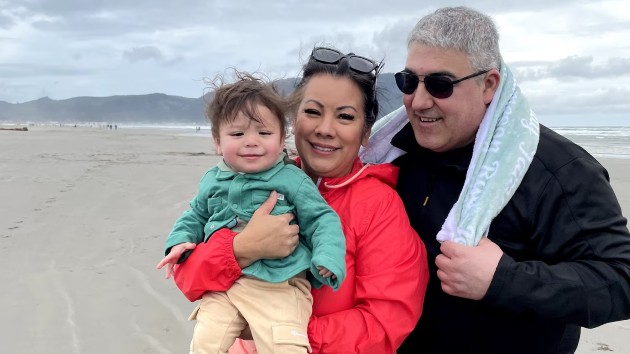
An undated photo of Gilbert Bernal with his wife Maria and grandson Jameson provided by his daughter Geovana who said he died in the chemical tank rupture in Washington state on May 26, 2026. (Courtesy of Geovana Bernal)
Geovana Bernal told ABC News that her father, Gilbert Bernal, died in Tuesday morning’s incident at his workplace, Nippon Dynawave Packaging in Longview, Washington.
At least one person was killed, multiple people suffered critical injuries and nine employees remain missing, officials said. The ongoing recovery efforts are “extremely complex” due to the unstable tank, which contains white liquor, a chemical mixture used in the paper-making process, according to authorities.
Geovana Bernal said in a statement, “There are not enough words to express on how devastated we are right now.”
“My father was the most selfless man I knew. He worked hard to provide for his family and he loved us so much,” she said. “He was going to celebrate his 32nd wedding anniversary with mom in just a couple weeks and he loved my son, his first grandson, so much.”
She said Gilbert Bernal often helped out at his church, “volunteering his time to help repairs or help anyone in need.”
“He was a great man, husband, father, grandfather, son, brother and friend,” Geovana Bernal said. “We are so heartbroken.”
The coroner’s office has not released the identity of the confirmed fatality, but Geovana Bernal said her brother viewed images of her father and confirmed his death after speaking with the coroner’s office.
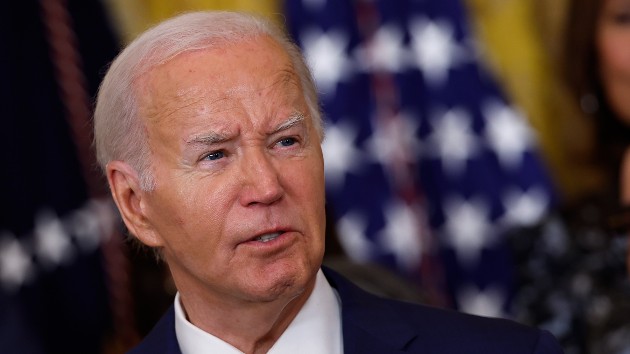
Former president Joe Biden speaks at an event marking the 12th anniversary of the Deferred Action for Childhood Arrivals (DACA) program in the East Room at the White House on June 18, 2024 in Washington, DC. (Photo by Kevin Dietsch/Getty Images)
(WASHINGTON, D.C.) — Former President Joe Biden filed suit against the Justice Department on Tuesday in an effort to block the release of recordings and transcripts from interviews he gave for his memoir that were central to a special counsel probe regarding his handling of classified materials after his time as vice president.
The lawsuit follows an intervention by Biden in a separate lawsuit brought by the conservative Heritage Foundation over a FOIA request that sought records from the investigation by former special counsel Robert Hur.
The audio recordings and transcripts stem from interviews Biden did with ghostwriter Mark Zwonitzer for his 2017 memoir “Promise Me, Dad: A Year of Hope, Hardship, and Purpose.”
The materials were obtained by the DOJ as part of the special counsel’s probe, which ended in February 2024, finding that Biden “willfully retained and disclosed” classified materials but recommending no criminal charges.
Biden’s lawsuit seeks to further bolster his demands that the materials not be shared with the conservative think tank or congressional Republicans, citing his right to privacy as well as allegations against DOJ that it is acting unlawfully in seeking an avenue to release the records.
“President Biden—like every American—has a right to privacy in personal conversations he had within his own home,” the lawsuit said. “That is particularly true here, where the Department obtained this information through a criminal investigation.”
Biden’s lawsuit, filed in U.S. District Court in Washington, D.C., said the DOJ has indicated it will release the audio recordings and transcripts to both the Heritage Foundation and the House Judiciary Committee on June 15 unless a court order blocks the release.
The lawsuit details a frenzied effort and communications between Biden’s counsel and DOJ in recent weeks to walk through potential redactions and other issues surrounding release of the audio and transcripts.
While the DOJ and career attorneys during the Biden administration had taken the position that release of the materials was a clear departure from department norms, Biden’s attorneys said the current DOJ reversed its position without any formal explanation beginning in February.
(NEW YORK) — New guidelines from the American Cancer Society are expanding colon cancer screening options beyond colonoscopies and established stool-based tests.
The recommendations still call for colorectal cancer screening in people at average risk starting at age 45 and continuing through age 75 for those with a life expectancy of 10 more years.
And colonoscopy is still considered the gold standard test.
But for the first time, the updated guidelines now include a blood-based screening test done in a doctor’s office. They also add new stool sample kits and a recently FDA-approved at-home test that looks for blood and different molecular markers in stool samples.
Experts note that offering more choices is critical to address gaps in screening for this highly preventable disease, which is most treatable when caught early.
“Individuals who decline or do not complete [testing] are probably a greater number than are actually appreciated,” Dr. William Dahut, chief scientific officer for the American Cancer Society, told ABC News. “And I think a lot of our data on colorectal screening probably overstates the number of people actually up to date on their screening guidelines.”
As the new guidelines point out, the most effective colorectal cancer screening test is the one people are willing to get. More than 20 million eligible Americans remain unscreened, according to the ACS.
While stool-based tests are reasonable options for most people, the new guidelines stress that the blood tests should be considered a last resort for people unable or unwilling to get any other form of testing because they are less likely to catch issues compared to other types of screening.
People who choose colonoscopy should be tested every 10 years. Other screening tests should be done every one, three, or five years, depending on the specific method selected.
These new guidelines come as colon cancer rates rise in younger adults across the US. ASC statistics show that 1 in 5 new colorectal cancer cases now occur in people younger than 55, up from about 1 in 10 in the mid-1990s.
“This is a disease that historically, we saw in older individuals, so people 50 and over or maybe even 60 and over. And now we are starting to see an inching up of incidents in people who are less than age 50,” Dr. Fola May, associate professor of medicine at the David Geffen School of Medicine at UCLA, told ABC News.
She said she hoped that having a range of choices would push more people to get tested.
The ACS likely wants to “make sure that patients understand that these tests can be done at home. So you don’t need to take a day off of work. You don’t need an escort, you don’t need to have an invasive procedure,” May said.
The ACS advised people to work with a trusted healthcare provider to decide which test is best for them.
Dahut stressed that the recommendations apply only to people of average risk without symptoms and with no family or personal history of colorectal cancer. Consumers should check with their insurance provider to see which options their plan covers.
It’s important to be aware of the symptoms and take them seriously, he added.
“So if one has symptoms, blood in their stool, symptoms of obstruction, abdominal pain that’s persistent or change in stool patterns, then they need to have a workup for those symptoms and not have a blood-based test like this or a stool-based test,” he said.
Ari Goldstein, MD, MPH, is a board-certified family physician and preventive medicine resident at Johns Hopkins Bloomberg School of Public Health
(LONGVIEW, Wash.) — A chemical tank ruptured at a facility in Washington state, resulting in multiple critical injuries and an unknown number of fatalities, authorities said.
The “hazardous materials incident” was reported Tuesday morning at the Nippon Dynawave Packaging, a pulp and paper mill in Longview, fire authorities said.
A tank containing white liquor ruptured at approximately 7:15 a.m., according to a joint statement from local authorities and Nippon Dynawave Packaging.
Authorities initially referred to the incident as a chemical explosion and then an implosion, before referring to it as a rupture.
“The incident is stable, but is in the recovery phase,” Longview Fire Battalion Chief Mike Gorsuch said during a press briefing Tuesday, calling it “tragic.”
“Recovery efforts remain underway at the facility,” he said.
The number of fatalities is undetermined at this time, Cowlitz 2 Fire & Rescue Chief Scott Goldstein said during the press briefing.
A number of personnel are missing, Goldstein said, declining to confirm how many.
Nine people at the facility suffered injuries, including chemical burns, and were transported by ambulance to area hospitals, authorities said. The injuries ranged from critical to minor, according to Goldstein.
One firefighter was also injured in the incident and has since been treated and released from a nearby hospital, according to Gorsuch.
Patients with traumatic injuries are being treated at nearby medical facilities, while patients experiencing burns and exposure are being sent to other hospitals around the area, including in Portland, which are considered burn centers, Rick Graves, the spokesperson for Portland Fire and Rescue in Oregon, told ABC News.
PeaceHealth St. John Medical Center in Longview told ABC News it received nine patients from the incident — including one deceased. Six are in fair condition, and two other patients have been transferred, it said.
Legacy Health confirmed to ABC News it is treating patients in the incident, including at the Legacy Oregon Burn Center in Portland, though did not go into further detail.
Information on those killed and injured in the incident is being held pending next-of-kin notifications, authorities said.
The 80,000-gallon tank was about 60% full at the time of the rupture, according to Goldstein. White liquor is a chemical mixture of sodium hydroxide, sodium sulfide and disodium carbonate used in the paper-making process, he said.
The cause of the rupture is unknown at this time, Goldstein said.
“We’re dealing with life safety concerns and incident stabilization at this point,” he said. “That will come in the hours and days to come.”
There is no immediate threat to the public, authorities said.
“The scene remains in the recovery phase as emergency responders continue operations,” the joint statement said. “Responding agencies continue coordinating closely with facility personnel and partner agencies as the investigation and recovery efforts continue.”
Residents were urged to avoid the area amid the active emergency response.
The Nippon facility is located on the Washington-Oregon border near the Columbia River. The kraft pulp and paper mill and liquid packaging plant employs nearly 1,000 people, according to the Washington Department of Ecology.
ABC News’ Trevor Ault and Alyssa Pone contributed to this report.
This is a developing story. Please check back for updates.
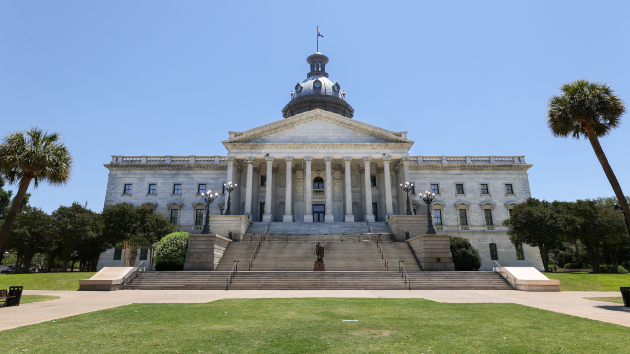
The South Carolina State Capitol during a special session in Columbia, South Carolina, US, on Tuesday, May 19. (Sam Wolfe/Bloomberg via Getty Images)
(COLUMBIA, S.C.) — The South Carolina Senate on Tuesday effectively killed a proposed congressional map that could have allowed Republicans to flip the seat held by Democratic Rep. Jim Clyburn, a major rebuff to a mid-decade redistricting effort promoted by President Donald Trump.
This is a developing story. Please check back for updates.
Author James Comey, former FBI Director, speaks at the Barnes & Noble Upper West Side on May 19, 2025 in New York City. (Michael M. Santiago/Getty Images)
(NEW YORK) — A federal judge on Tuesday granted former FBI Director James Comey’s request to delay his criminal trial for allegedly threatening to kill President Donald Trump by posting a photo of seashells.
U.S. District Judge Louise Wood Flanagan scheduled the trial to begin on Oct. 21.
The former FBI director’s arraignment is scheduled for Sept. 30.
Prosecutors did not object to the request to delay the proceedings.
Comey was charged with threatening to kill Trump by posting a photo on Instagram of seashells on a beach arranged in the numbers “86 47.” Citing the slang meaning of “86” as to “nix” or “get rid” of something, allies of the president allege that the post was a veiled threat against Trump, who is the 47th president.
Following backlash over the post, Comey removed the photo from Instagram and said he was unaware that the post could be associated with violence.
Critics of Trump say the indictment is another effort by the administration to punish the president’s perceived enemies after a judge last year threw out an indictment against Comey on unrelated charges.
“Well, they’re back. This time about a picture of seashells on a North Carolina Beach a year ago,” Comey said in a video posted online after the seashell indictment was unsealed. “And this won’t be the end of it, but nothing has changed with me. I’m still innocent, I’m still not afraid, and I still believe in the independent federal judiciary, so let’s go.”
At a press conference announcing the charges last month, acting Attorney General Todd Blanche argued that Comey’s post crossed the line between First Amendment-protected speech and speech that warrants prosecution.
“It’s not a very difficult line to look at, and it’s not, in my mind, a difficult line for one to cross over, one way or the other,” Blanche said. “We cannot, you are not allowed to threaten the President of the United States of America. That’s not my decision. That’s Congress’s decision, and a statute that they passed that we charge multiple times a year.”
U.S. President Donald Trump returns to the White House following a visit to Walter Reed National Military Medical Center on October 10, 2025 in Washington, DC. (Anna Rose Layden/Getty Images)
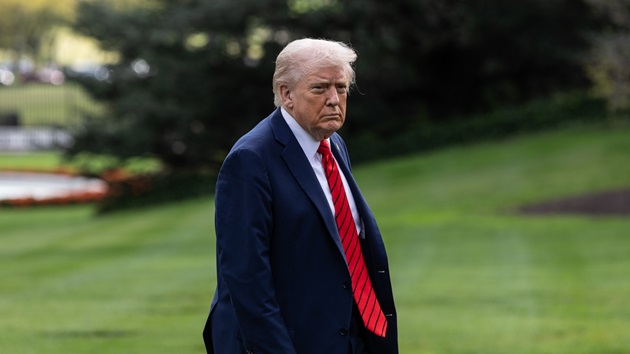
(WASHINGTON) — President Donald Trump is expected to visit Walter Reed National Military Medical Center on Tuesday for his “annual dental and medical evaluations,” as announced by the White House earlier this month. A White House official confirmed Tuesday’s visit to ABC News.
The White House said the appointment will consist of “routine annual dental and medical assessments.” The visit will be Trump’s third scheduled medical appointment at Walter Reed in 13 months.
Trump will soon celebrate his 80th birthday.
The president underwent a physical examination at Walter Reed in April 2025. In a memo detailing the findings of the physical, Trump’s physician – U.S. Navy Capt. Sean Barbabella – concluded that Trump was in “excellent health” and “fully fit” to serve as president.
The president also visited the dentist in Florida in January and in May.
Trump has frequently been photographed with bruises on his hand, which he attributed to frequent aspirin intake during an interview with The Wall Street Journal published in January. In December 2025, White House press secretary Karoline Leavitt said the bruising on Trump’s hand was caused by frequent handshakes.
A rash also appeared on the right side of Trump’s neck earlier this year, which the White House said was due to a “preventative skin cream treatment” that he was using for “one week,” causing redness that was “expected to last for a few weeks.”
Trump told the WSJ that he received a CT scan last October, though he initially referred to the test seemingly incorrectly as as an MRI exam. Barbabella said the CT scan was done “to definitively rule out any cardiovascular issues” and showed no abnormalities.
Last summer, Trump was diagnosed with a chronic venous insufficiency after appearing with swollen ankles and legs. This is a “benign and common condition, particularly in individuals over the age of 70,” Leavitt said at the time.
Over the past year, Trump appears to have fallen asleep during events, though he has denied experiencing any difficulty staying awake. During a Cabinet meeting in January, Trump said the press simply caught him “in a blink” and that he closed his eyes because the event was boring.
Trump has made a point to repeatedly proclaim “perfect” health and mental sharpness. On Friday, Trump again said he took multiple cognitive tests that he “aced.” The president has also frequently demanded that his opponents take cognitive tests.
Earlier this month, Trump said he feels the same as he did 50 years ago, though he noted that “someday, there’ll be a day when that won’t happen.”
ABC News’ Meg Mistry, Karen Travers and Mariam Khan contributed to this report.
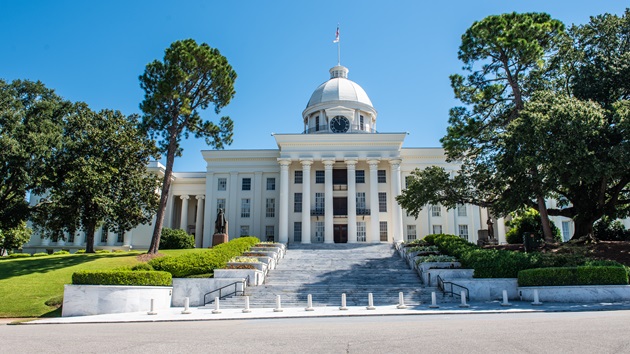
The Alabama Capital Building in Montgomery, Alabama, U.S., on Saturday, Sept. 24, 2022. (Andi Rice/Bloomberg via Getty Images)
(WASHINGTON) — A three-judge panel in a federal court in Alabama ruled unanimously on Tuesday that state Republicans are still blocked from using their 2023 congressional map, which would have potentially helped Republicans in November.
This is a developing story. Please check back for updates.