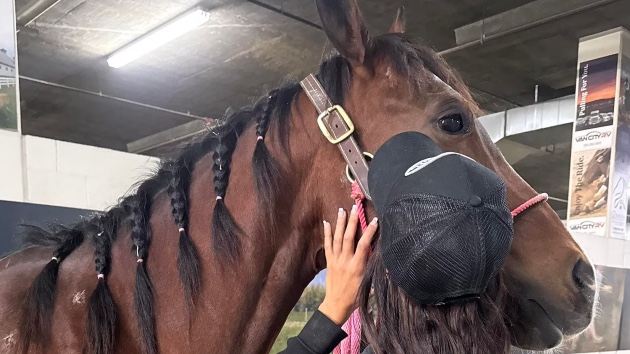
A horse, named Detail, who was unable to compete due to a stabbing injury. (Obtained by ABC News)
(LAS VEGAS) — The teenage girl accused of stabbing three horses made her first appearance in juvenile court in Nevada on Thursday as prosecutors hope to move her case to adult court.
The judge said he believed the teen was a public safety risk and ordered her to remain in custody with no bail, ABC Las Vegas affiliate KTNV reported. She’s due to return to court on July 8 when attorneys will discuss the possibility of moving her case to adult court, according to the Clark County District Attorney’s office.
The girl — who was in Las Vegas for the National Barrel Horse Association’s Professional’s Choice Vegas Super Show — is accused of attacking three horses in a barn early Saturday, according to Las Vegas police and the NBHA.
She allegedly had access to the barn and authorities believe she may have used a knife to wound the horses, authorities said.
The horses’ injuries were non-life-threatening but the wounds did keep the animals from competing in the event, which took place over the weekend, according to police.The teenager was arrested for 12 counts of willful/malicious kill/maim/torture animal — horse and three counts of felony malicious destruction of private property over $5,000, authorities said.
The Clark County District Attorney’s office said Tuesday that it wants the teen charged in adult court.
“These allegations involve deliberate acts of extreme cruelty against defenseless animals and have had a significant impact on the victims, the owners, and the broader equestrian community,” DA Steve Wolfson said in a statement.
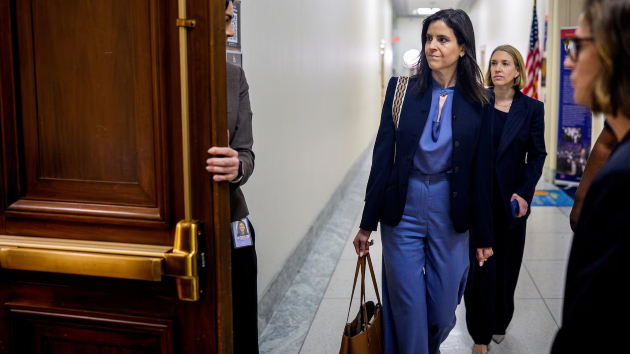
Jeffrey Epstein’s former assistant Sarah Kellen arrives to testify at a closed-door interview with the House Oversight Committee on Capitol Hill, May 21, 2026 in Washington. (Andrew Harnik/Getty Images)
(WASHINGTON) — House Oversight Committee Chairman James Comer (R-Ky.) on Thursday asked the Justice Department to investigate allegations of sexual abuse raised by a former assistant to Jeffrey Epstein during her interview with the committee last month, according to a letter from Comer and three other Republican lawmakers.
Sarah Kellen, a longtime personal assistant to Epstein, told the Oversight Committee that she was sexually abused by Epstein for over a decade, and disclosed for the first time allegations that she was also abused by Ghislaine Maxwell, Epstein’s convicted accomplice, and by two other men in his orbit, according to a transcript of Kellen’s interview made public Thursday.
Kellen alleged that celebrity hairstylist Frédéric Fekkai and Phillip Levine, a wealthy businessman who was later elected mayor of Miami Beach, were the other men who had also abused her.
Comer’s letter asks the DOJ to “use all available tools, including immunity for certain witnesses, to investigate the allegations against, and any other criminal conduct committed by, Phillip Levine and Frédéric Fekkai.” The committee also asked the DOJ for an explanation as to why Kellen was never interviewed by law enforcement until Epstein’s arrest in July of 2019.
Both men, through their representatives, denied the allegations in statements to ABC News.
Kellen’s closed-door appearance before the Oversight Committee, which took place May 21, was part of the panel’s ongoing inquiry into the federal government’s handling of investigations into Epstein and his alleged co-conspirators.
One of four women named as potential co-conspirators in Epstein’s controversial 2007 non-prosecution agreement, Kellen was previously a subject of criminal investigations in Florida and New York. She has never been charged — due, in part, to her own allegations of persistent sexual abuse at the hands of the disgraced financier, according to court documents and records released earlier this year by the Justice Department.
“I was there only to serve and to submit. Only after Jeffrey confirmed that I would submit to his sexual abuse did he begin paying me,” Kellen told the committee in her opening remarks.
Kellen said she did not know her name was included in Epstein’s non-prosecution agreement until the document was made public a few years later. The deal allowed Epstein to avoid federal charges for alleged sexual crimes involving dozens of underage girls.
“The Federal Government of the United States branded me a criminal in a secret deal with my own abuser, without ever once speaking to me,” Kellen said. “I have spent every year since trying to live underneath that piece of paper.”
‘A terrible scenario’
Kellen appeared before the committee voluntarily, accompanied by two attorneys. The scope of her appearance was limited — by advance agreement with the committee — and focused primarily on her own alleged victimization. On advice of her counsel, she largely declined to answer questions about other alleged victims and about Epstein’s scheme to recruit underage girls for massages — the core activity that led to Epstein’s criminal charges.
“She’s not going to answer questions about other victims and questions specific to massages in Palm Beach [that] could implicate other victims,” said attorney Kimberly Hamm, citing privacy concerns and Kellen’s constitutional rights.
Kellen told the lawmakers she would be “a hundred percent” willing to answer more questions if given immunity by Congress or the Justice Department.
In advance of Kellen’s appearance, Comer told reporters that committee members were split on their perceptions of her, given the allegations that Kellen was involved in scheduling some of Epstein’s massages.
“There are some that believe she was 100% a victim or survivor, and then there are some that think she was a victim and victimizer. So, it’s just a terrible scenario,” he said.
After the interview Comer said he believed Kellen “was a victim” and called her appearance “the most substantive, productive interview that we’ve had.”
Rep. Robert Garcia of California, the committee’s top Democrat, used his time to query Kellen about her knowledge of Epstein’s previous relationship with President Donald Trump, who had a friendship with Epstein until they had a falling out around 2004 and has repeatedly denied any knowledge of Epstein’s crimes.
Kellen said she recalled Epstein “using the gym a lot” at Trump’s Mar-a-Lago estate during the early years of her employment, and assumed Epstein and Trump were friends based on photographs Epstein displayed in his homes. She said she met Trump just once, during a brief encounter at Mar-a-Lago in 2001 or 2002.
“Jeffrey introduced me to him,” she said. “That was my only encounter with him during my employment.”
‘He took advantage of me’
One of the committee’s central interests was whether Kellen had directly witnessed any inappropriate sexual activity by prominent individuals linked to Epstein — and in each case, Kellen said no.
But when asked if anyone associated with Epstein had abused her, Kellen named Maxwell, Fekkai and Levine.
Kellen alleged that Fekkai, now 68, abused her before she began working for Epstein. She told the panel that in the early 2000s, when she was trying to get modeling opportunities, Fekkai invited her to a fashion show in Hawaii. When she arrived, there was no show.
“I didn’t have any money to get my own hotel room or fly back, and he took advantage of me that night,” she said, according to the interview transcript. Kellen said was in her early 20s at the time. She said that Fekkai later introduced her to Epstein, who he described as a model scout for Victoria’s Secret.
A representative for Fekkai denied Kellen’s allegations in a statement to ABC News.
“Mr. Fekkai was astonished to read of Ms. Kellen’s testimony. Mr. Fekkai never abused anyone. He never participated in any illegal behavior, He knew nothing about Epstein’s repugnant depravity or trafficking. He did nothing wrong,” the spokesperson, Mark Herr, said in the statement.
The incident involving Levine, Kellen said, allegedly occurred during a summer trip to France around 2003, when Levine was a houseguest at a property Epstein and Maxwell had rented in Saint-Tropez. After Epstein and Maxwell had gone to sleep, Kellen claimed Levine “basically forced himself” on her.
“He came up to me, and he was like, ‘You know, must be so lonely for you, working with them, because you’re with them all the time, and you can’t have your own life, so you must be really lonely,’ and he basically forced himself on me,” she said.
She claimed it happened again during a walk on the beach when Levine “grabbed my hand and pulled me” into a wooden shack.
A spokesperson for Levine, 64, denied Kellen’s allegations in a statement to ABC News.
“Nearly a quarter century ago, our client had a brief intimate encounter with another consenting adult,” the statement said. “Any allegation suggesting otherwise is not true.”
Levine has previously said that he “never had a friendship or business relationship” with Epstein, according to a report in the Miami Herald.
Kellen told the committee she did not know what, if anything, Epstein and Maxwell knew about either alleged incident. She did not report them at the time, and said she had not considered pursuing legal action against Levine.
‘Cold sheets’
Kellen, 47, said she began working for Epstein and Maxwell around 2001, after being approached about the job by a co-worker at a hotel in Hawaii. She said she had no idea it was Epstein until she arrived at his private island.
Kellen described Epstein to lawmakers as controlling every dimension of her life — dictating her clothing, her haircut, her hair color, and where she lived. She said he had a code phrase, “cold sheets,” that meant she was to come to his residence and sleep with him. He referred to her, she said, as his “human hot water bottle.”
“I was being paid, in part, to be raped,” she told the committee.
The assaults, she said, occurred on average once a week. Even during his Florida jail sentence, she said, Epstein made a video call to her from inside the Palm Beach County Stockade and ordered her to undress on camera.
Maxwell, Kellen said, was present and participated in her abuse on one occasion on the island. “And I just remember her touching me and showing me how to touch Jeffrey and what he liked,” Kellen said. Maxwell was also, she said, a pervasive psychological force — repeatedly reinforcing Epstein’s power, allegedly calling Kellen her “slave” and “minion.”
“She just fed him and catered to every whim that he wanted,” Kellen said of Maxwell, adding: “I always felt like she turned him into the monster that he became.”
Maxwell — who is serving a 20 year sentence at a federal prison camp in Texas — could not be reached for comment. She has maintained her innocence and has argued that the government prosecuted her as a substitute for Epstein, following his death in custody in 2019.
Kellen described two incidents suggesting possible efforts by Epstein to obstruct the first investigation into his conduct during the mid-2000s. While on Epstein’s private island in 2005, she said she overheard Epstein on the phone instructing another assistant to go to the Palm Beach house and remove computers.
The following February, she said, Epstein summoned her to his New York townhouse and directed her to collect all of his printed contact directories and certain framed photographs and bring them to his lawyers. She said she did not know what happened to the items afterward or why she was asked to gather them.
Kellen also said that in 2007 — as she and another woman were leaving Epstein’s private island — an airport employee informed them that FBI agents wanted to speak with them. Epstein told them to wait, walked over to the agents himself, and returned ten minutes later. “OK, let’s go,” he said, according to Kellen.
Kellen also told the committee that she had received gifts from Epstein through the years, including jewelry, luggage and clothing, as well as a New York City apartment to stay in. She said Epstein gave her money to help pay for her wedding in 2013, and $250,000 in late 2018, after the Miami Herald had published in-depth reports on Epstein.
After Epstein’s arrest in July 2019, federal prosecutors cited the $250,000 payment to Kellen to suggest that Epstein was attempting to buy her silence.
Kellen claimed to the committee that the money was to assist her and her then-husband after he had health issues, and was not connected to the Herald articles, which she said Epstein dismissed as “old news.. She acknowledged that Epstein told her not to tell anyone about the payment, but didn’t say why.
“I had no idea. I didn’t know if he maybe didn’t want to make other people jealous or something,” she said.
‘A very vulnerable victim’
Kellen’s appearance on Capitol Hill came as the committee ramps up for a busy stretch of its investigation, officially launched in February of last year. Other notable witnesses scheduled in the coming weeks include another longtime Epstein assistant Lesley Groff, former Goldman Sachs chief counsel Kathryn Ruemmler, Epstein’s former personal banker Jes Staley, and billionaires Bill Gates and Leon Black.
Comer has indicated that a report on the committee’s findings will be produced before the end of the year.
Following Epstein’s death in custody in July 2019, federal prosecutors in New York investigating possible collaborators engaged in discussions with Kellen and her attorneys that spanned more than a year. Documents released by the DOJ earlier this year included prosecutors’ internal assessments of a potential case against Kellen and emails from her attorneys arguing against charges.
“We feel that given [Kellen’s] abuse, and given the fact that we see her basically as a cog in Epstein’s wheel, acting entirely at his direction and doing what she did at a time that she herself was a very vulnerable victim, a [non-prosecution] would be the appropriate disposition,” an attorney for Kellen wrote in the spring of 2020.
According to DOJ records, the government did not dispute that Kellen “was herself a victim of abuse by Epstein.” Prosecutors detailed in a proposed “statement of facts” sent to Kellen’s attorneys in late 2020 that several “minor victims reported to federal agents that Epstein paid them for sexualized massages … including during massages that [Kellen] scheduled.”
Kellen claimed to prosecutors that she was provided a directory of names and instructed by Epstein on who to call, and denied having knowledge that some who came to the house were underage.
She told prosecutors she viewed the “masseuses as her peers — i.e. young adults … and it never [crossed] her mind that any of them were minors,” government lawyers wrote in a December 2019 memo summarizing their investigation.
Kellen said she “only learned that Epstein was sexually abusing minors when news articles started coming out about it” in the mid-2000s, and recalled being “shocked, angry, and disappointed,” the records said.
Federal prosecutors ultimately decided against charging Kellen, though the internal deliberations that led to that outcome remain redacted in the publicly available versions of the DOJ records.
Maxwell, Epstein’s former girlfriend and associate, remains the only other person charged in connection with Epstein’s crimes. She is presently seeking to have her conviction vacated or her sentence reduced.
When Maxwell was sentenced in 2021, U.S. District Judge Alison Nathan said the evidence showed that Maxwell supervised Kellen, who Nathan described as a “criminally responsible participant” in Epstein’s scheme. Kellen was not called as a witness by the government or by Maxwell.
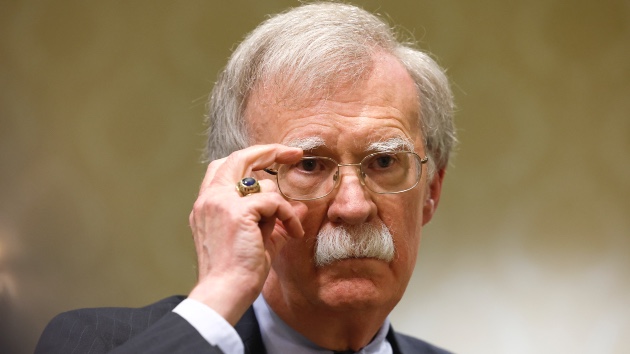
Former National Security Adviser John Bolton speaks to reporters after speaking in a panel hosted by the National Council of Resistance of Iran – U.S. Representative Office (NCRI-US) at the Willard InterContinental Hotel on August 17, 2022 in Washington, DC. (Photo by Anna Moneymaker/Getty Images)
(WASHINGTON) — President Donald Trump’s former national security adviser John Bolton is expected to plead guilty over mishandling classified documents, sources familiar with the matter told ABC News Thursday.
Bolton could not immediately be reached for comment. The Department of Justice is declining to comment.
This is a developing story. Please check back for updates.
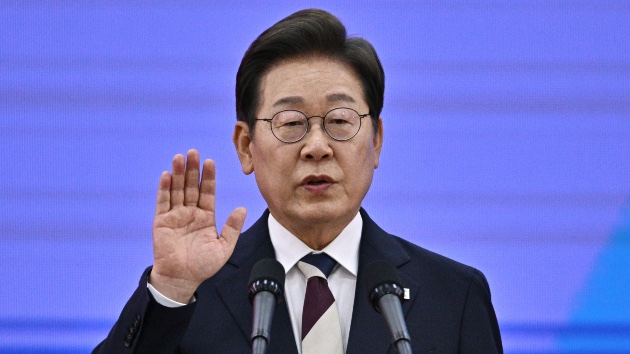
South Korean President Lee Jae-myung takes an oath during his inauguration at the National Assembly on June 04, 2025 in Seoul, South Korea. (Photo by Anthony Wallace – Pool/Getty Images)
(SEOUL, South Korea) — South Korea’s ruling Democratic Party swept nationwide local elections Wednesday, tightening President Lee Jae Myung’s grip on power one year into his term, though the conservative opposition captured Seoul’s mayor’s office.
The vote drew 61% turnout, the highest for a local election in three decades.
Lee enters his second year Thursday with approval ratings around 60%, according to South Korea’s major pollsters. That is the second-highest at the one-year mark since 1987, behind only former President Moon Jae-in.
When South Koreans elected Lee a year ago, they did so in the wreckage of a constitutional crisis after then-President Yoon Suk Yeol declared martial law on Dec. 3, 2024, vowing to “eradicate the anti-state forces.”
He sent troops toward the National Assembly to stop lawmakers from voting it down. The attempt failed within hours, and Yoon was impeached and removed by the Constitutional Court four months later, triggering the snap election that made Lee president.
Governing out loud
Lee has made the presidency unusually public. He live-streams weekly cabinet meetings, a first in Korean history, and his office briefs on camera far more than its predecessor.
Lee also uses social media to announce policy, rebut coverage he disputes, take questions and air his opinions — often without the vetting a formal statement would get. Aides call it a deliberate effort to reach citizens directly rather than through the traditional layers of staff that usually filter a president.
“Unlike politicians before him, he’s citizen-friendly — clearly distinct,” said Park Myoung-ho, a political science professor at Dongguk University.
His style has drawn criticism, however. In May, Lee used social media to attack Starbucks Korea over a promotion that critics linked to a 1980 massacre of pro-democracy protesters, branding the company “low-grade profiteers” guilty of “gutter-level behavior.”
“Given how much power a president holds, it’s too direct and too unfiltered,” said Lee Hyun-woo, who teaches political process at Sogang University and warned that the president’s posts are often misread because Koreans are used to presidents speaking in measured, formal language.
A record-breaking market
The benchmark KOSPI, which bottomed out near 2,300 in April 2025 after President Donald Trump’s tariffs, has surged to a record high above 8,700, blowing past Lee’s campaign pledge to reach 5,000. The rally has been catalyzed by a global boom in semiconductors and AI infrastructure that has lifted companies like Samsung Electronics and SK Hynix.
But rising share prices have not reached many ordinary households across the country and home prices around Seoul are starting to climbing again and is testing one of Lee’s central promises.
Walking the line between Washington and Beijing
Lee’s central foreign-policy bet has been that South Korea no longer has to choose between its U.S. alliance and its largest trading partner, China — an approach his government calls “national-interest-centered pragmatism” — and within seven months of taking office, he had held summits with the leaders of the United States, China and Japan.
“On foreign policy, he’s done better than expected,” said Shin Yul, a political science and diplomacy professor at Myongji University.
But the results have been mixed. Lee repaired ties with Japan, but his January state visit to Beijing largely fell flat.
His pragmatism faced a major test in February when the war between Iran and a U.S.-Israeli coalition threatened the Strait of Hormuz, the route for much of South Korea’s oil imports.
Lee’s government leaned on national reserves, increased purchases of U.S. crude and secured replacement supplies from outside the region. A senior presidential official said the effort, together with the market’s resilience, helped keep Lee’s approval ratings steady through the spring.
Two presidents, two reckonings
In February, a Seoul court sentenced former President Yoon to life in prison for the martial-law attempt; his former defense minister got 30 years. To Lee’s supporters it was accountability for an assault on democracy. To Yoon’s base, it felt like political revenge.
But Lee carries his own legal shadow. He took office facing five criminal trials, including corruption, subornation of perjury and illegal fund transfers to North Korea, which were all frozen once he became president.
His Democratic Party then went further by pushing a special counsel that could cancel the charges against him outright — a move Lee declined to endorse or oppose publicly.
To Shin, the silence was strategic. Lee’s side, he said, “will try to get the charges dropped,” likely using the special counsel “to pursue cancellation of the cases against him.”
The push drew public backlash and many analysts read the local-election result as a warning from voters wary of a governing party clearing its own leader.
“This may be President Lee’s Achilles’ heel,” said Park. “I suspect he himself feels a real burden over it.”
For Lee Hyun-woo, the principle is simple: “Serving well and being remembered as a great president, and paying for crimes committed in the past, are entirely separate matters.”
ABC News’ Hakyung Kate Lee contributed to this report.
(FAIRFIELD, Calif.) — A teenager was killed and three people were wounded, including an 11-year-old, when gunfire erupted outside a high school graduation ceremony in Northern California, according to police.
The shooting took place at about 7:15 p.m. local time Wednesday in the parking lot of Fairfield High School after a ceremony ended there for Sem Yeto High School graduates, the Fairfield Police Department said.
Four victims were shot, police said. An 18-year-old died while an 11-year-old, a 20-year-old and a 25-year-old were injured, police said.
It’s not clear if the 18-year-old was a graduating student.
There is no ongoing threat to the community, police said.
Authorities did not immediately comment on the suspect or suspects involved.
The Fairfield-Suisun Unified School District said in a statement, “Our thoughts are with the individuals affected and as soon as we have more details we will share that.”
ABC News’ Bennett Garcia contributed to this report.
Fuel prices are displayed at a gas station in Brooklyn on June 01, 2026, in New York City. (Spencer Platt/Getty Images)
(NEW YORKI) –Drivers stung by high gas prices have enjoyed some welcome relief over the last couple of weeks, even as the impact of the Iran war continues to choke off oil supply.
The national average price of a gallon of gas stood at $4.26 on Wednesday, marking a decline of 30 cents, or 6.5%, since a recent peak on May 21.
Still, prices remain well above where they clocked in before a historic oil shock set off by the war. In late February, the average gallon of gas ran less than $3.
The dropoff in gas prices owes to a decline in oil costs over the latter part of last month, which coincided with a slump in demand following Memorial Day weekend, some analysts said.
Still, they cautioned, gas prices may rise again as oil prices jump and the war shows little sign of an imminent resolution. If the war continues, some analysts said, gas price could top $5 a gallon by next month.
“It’s so volatile,” Patrick Penfield, a professor of supply chain practice at Syracuse University, told ABC News. “If the war ended, prices would likely go down. But if it continues, you’ll see prices go up.”
In Georgia, the state with the lowest average gas prices, a gallon costs about $3.79, AAA data shows. In all, the AAA data says six states currently sell gas at or below an average price of $4 per gallon.
By contrast, the cost of a gallon of gas in California stands at $5.99, making it the state with the highest prices, AAA data shows. Even in California, however, the average price has fallen about 10 cents over the past week.
At the outset of the war, gasoline prices surged in response to Iran’s effective closure of the Strait of Hormuz, a maritime trading route that facilitates the transport of about one-fifth of global crude supply.
Oil prices began to fall in mid-May, however, as Iran and the U.S. appeared willing to strike an agreement that would reopen the strait. Crude oil is the main ingredient in auto fuel, accounting for more than half of the price paid at the pump, according to the federal U.S. Energy Information Administration.
On Friday, U.S. oil prices fell as low as about $86 a barrel, marking a drop of about 20% over a 10-day stretch.
“Gas prices have seen a big push because crude prices have dropped. Crude prices have dropped largely because the president has been indicating that we’re close to an agreement with Iran,” Ramanan Krishnamoorti, a professor of petroleum engineering at the University of Houston, told ABC News.
The U.S. is a net exporter of petroleum, meaning the country produces more oil than it consumes. But since oil prices are set on a global market, U.S. prices move in response to swings in worldwide supply and demand.
Oil prices have ticked up in recent days, but they remain below $100 a barrel. As long as oil prices remain under that benchmark, gas prices may continue to hold steady or even decline, Denton Cinquegrana, chief oil analyst at Dow Jones Energy, told ABC News.
A near-term drop in gas prices appears possible because gas sellers are holding onto unusually large profit margins, meaning they could reduce retail prices even if their input costs maintain current levels, Cinquegrana said. Over the past two years, the average margin for sellers came in at about 34 cents per gallon, he added, but it currently stands at 50 cents per gallon.
“There’s still some room for gas prices to move down,” Cinquegrana said.
Looking weeks or months into the future, however, analysts cautioned about a rise in oil and gasoline prices unless normal tariff resumes in the Strait of Hormuz.
“It’s still possible later this summer, even ahead of July 4, we could see the national average pass $5 a gallon,” Patrick De Haan, a petroleum analyst at GasBuddy, told ABC News Live on Monday.
“We could be seeing much higher gas prices in very short order if the strait doesn’t reopen,” he added.
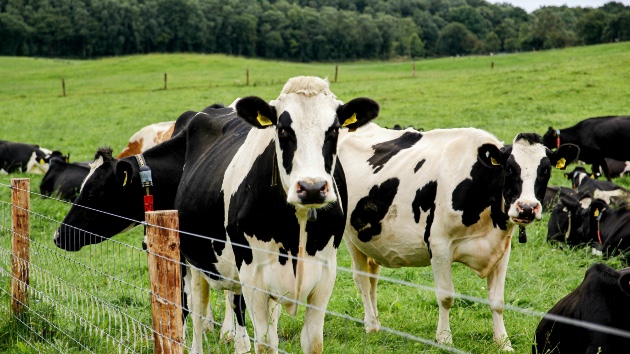
Herd of cows on the field (Kinga Krzeminska/Getty Images)
(WASHINGTON) — Secretary of Agriculture Brooke Rollins confirmed the detection of New World screwworm in a cow in Texas after the U.S. Department of Agriculture warned Wednesday that the parasitic fly may have arrived in the mainland U.S after moving north from countries in Central America and Mexico, which have been dealing with an outbreak in livestock since at least 2022.
Rollins said that the screwworm was detected in a three-week-old bovine in Zavala County, Texas. According to the Department of Agriculture, the larvae were identified in the animal’s umbilical area, and said that, so far, “there have been no further detections” of the screwworm in the U.S.
“USDA and Texas Animal Health officials are taking immediate action to contain and eradicate NWS from the area,” Rollins added. The Department of Agriculture confirmed that they formed a unified Incident Command Team with the Texas Animal Health Commission and is deploying personnel to the area.
New World screwworm (NWS) is a species of parasitic flies that feed on live tissue — typically livestock. Human infections are quite rare and U.S. health officials have previously noted the risk to public health is very low but spread to livestock could decimate the cattle industry.
The name refers to the way in which maggots screw themselves into the tissue of animals with their sharp mouth hooks, causing extensive damage and often leading to death.
In August 2025, the U.S. reported the first human case of NWS in the country in an international traveler. The individual recovered and there was no evidence of further spread.
Screwworm was largely eradicated in livestock for decades in the U.S. through a technique in which male screwworm flies are sterilized and then released into the environment to mate with females until the population dies out. The U.S. officials are currently releasing 100 million sterile flies a week in the U.S. and Mexico.
Since eradication in 1966, the flies have been spotted domestically in isolated outbreaks through the American southwest in the 1970s and the Florida Keys in 2016.
People who travel to outbreak areas, spend time among livestock animals, sleep outdoors and have an open wound are at greater risk of becoming infested with screwworm, the Centers for Disease Control and Prevention notes.
According to a press release from the Department of Agriculture, actions will include a 12.5-mile “infested zone” around the detection area, along with quarantines, movement controls and additional surveillance.
The department also said it would expedite the targeted release of sterile New World screwworm files from the ground, a tactic that was used successfully to stop the 2016 outbreak in the Florida Keys. The department said this would be in addition to the 4 million sterile flies per week currently being released by air in the area.
Earlier on Wednesday, Rollins assured Americans that the “food supply is 100% safe” amid potential disruptions to the U.S. cattle supply due to NWS.
A horse, named Detail, who was unable to compete due to a stabbing injury. (Obtained by ABC News)
(LAS VEGAS) — The teenage girl accused of stabbing three horses is due in court for a hearing on Thursday as prosecutors hope to move her case to adult court.
The girl — who was in Las Vegas for the National Barrel Horse Association’s Professional’s Choice Vegas Super Show — is accused of attacking three horses in a barn early Saturday, according to Las Vegas police and the NBHA.
She allegedly had access to the barn and authorities believe she may have used a knife to wound the horses, authorities said.
The horses’ injuries were non-life-threatening but the wounds did keep the animals from competing in the event, which took place over the weekend, according to police.
The teenager was arrested for 12 counts of willful/malicious kill/maim/torture animal — horse and three counts of felony malicious destruction of private property over $5,000, authorities said.
The Clark County District Attorney’s office said Tuesday that it wants the teen charged in adult court.
“These allegations involve deliberate acts of extreme cruelty against defenseless animals and have had a significant impact on the victims, the owners, and the broader equestrian community,” DA Steve Wolfson said in a statement.
A separate hearing will be scheduled for a judge to determine if the case should be moved to adult court, the DA’s office said.
(WASHINGTON) — President Donald Trump, during a dinner Wednesday evening, announced his intent to nominate acting Attorney General Todd Blanche to the post permanently.
In a video shared on social media by White House Deputy Chief of Staff Dan Scavino, Trump is seen in the Rose Garden saying that he will instruct his team to start the process to formally nominate Blanche to the post on Thursday.
Earlier, Trump’s announcement was confirmed to ABC News by two sources at the dinner.
Blanche, who was once Trump’s personal attorney, served as the Department of Justice’s deputy attorney general until the president tapped him to serve as acting attorney general following Pam Bondi’s ouster.
Trump hinted at the move in a pre-taped interview with the program “Pod Force One” on Wednesday, saying that he thinks Blanche will be nominated to the attorney general position.
“I wanted to see how he’s received, you know, we put him as acting, and he’s done a very good job, but I’ve known him a long time,” Trump said.
In recent weeks, Blanche has been at the center of the controversy over the Justice Department’s so-called $1.8 billion “Anti-Weaponization Fund,” ostensibly established to benefit the president’s allies.
On Tuesday, Blanche told Congress that the department was “not moving forward with the fund.”
The move came after heavy pressure from Republican congressional leadership and marked a significant defeat for Blanche, who had spent the past two weeks seeking to defend the $1.776 billion fund while refusing to rule out the prospect that settlements could be paid out to defendants who joined in the Jan. 6 attack on the U.S. Capitol — including those who had been convicted for assaulting law enforcement.
But on Wednesday, the president himself admitted he did not know what the fund’s future would be after a federal judge temporarily blocked it.
“I’d have to ask the lawyers. I don’t know,” Trump said when pressed on whether the plan was truly dead.
“The weaponization fund, as far as I’m concerned, was a beautiful thing,” he added.
Before Blanche told lawmakers the administration was nixing the fund, several Senate Republicans had balked at the plan, telling him they would not be able to pass Trump’s legislative agenda until the issue was resolved and even raised concerns about losing in the upcoming, high-stakes midterm elections as a result of the controversial settlement fund.
As acting attorney general, Blanche also secured the indictment of former FBI Director James Comey over his post of seashells that the Justice Department claims amounted to a threat against the president.
Blanche has shrugged off the suggestion that he would use the Justice Department to more aggressively target perceived foes of the president.
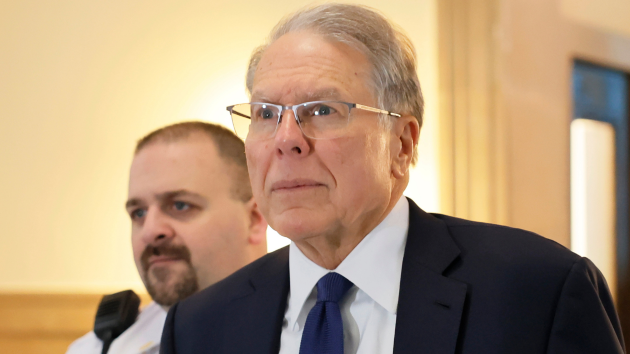
Former NRA Leader Wayne LaPierre arrives for his civil trial at New York State Supreme Court on January 08, 2024 in New York City. (Photo by Michael M. Santiago/Getty Images)
(NEW YORK) — An appellate court in New York has upheld a $4.3 million judgment imposed on former National Rifle Association CEO Wayne LaPierre after he was found liable of misappropriating money.
The Appellate Division’s First Department also upheld the prohibition on LaPierre from holding a position as an officer or director of the NRA for 10 years.
“The 10-year ban does not burden LaPierre’s rights to freedom of speech and association, as he remains a member of the NRA and is not precluded from making any public statements or involving himself in fundraising or other outreach,” the opinion said. “Neither does the monetary restitution amount constitute a fine. Instead, it serves the remedial purpose of reimbursing the NRA for the losses LaPierre caused, making it compensatory in nature.”
The decision is a victory for New York Attorney General Letitia James, who sued the NRA, LaPierre and other current and former officers for self-dealing, alleging they violated New York charities laws by mismanaging the NRA’s funds.
The lawsuit was filed in 2020, claiming they misappropriated millions of dollars to fund personal benefits — including private jets, family vacations and luxury goods. The accusations came at the end of a three-year investigation into the NRA, which is registered in New York as a nonprofit charitable corporation.
“Wayne LaPierre and other senior NRA leaders broke the law by funneling millions of dollars in lavish perks to themselves and their families,” James said in a statement celebrating the appeals court decision.
“This decision upholds the jury’s verdict and is another victory in our efforts to ensure that LaPierre is held accountable for his illegal self-dealing,” James said.
LaPierre argued James brought the case against him in retaliation for his speech advocating for gun rights, but the court rejected that, writing the “Attorney General ‘showed as a matter of law that it had probable cause to investigate and sue,’ since ‘public reports of malfeasance at the NRA predated the investigation’ and the investigation uncovered ample evidence of malfeasance.”
LaPierre announced his resignation from the organization in January 2024, days before the start of the trial, citing health reasons, according to the NRA.
After five days of deliberations, a jury in New York in February 2024 held the NRA liable for financial mismanagement and found that LaPierre corruptly ran the nation’s most prominent gun rights group.