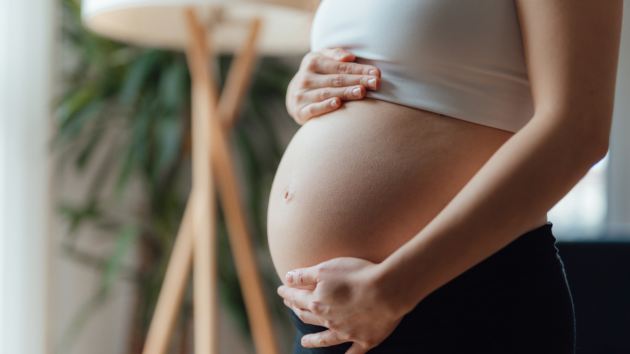
(WEST PALM BEACH, FL) — As human-induced climate change continues warming the planet, pregnancy risks are increasing, according to a new analysis by Climate Central.
Climate Central, a nonprofit science and communications organization, analyzed daily temperature data from 2020 to 2024 in 940 cities across 247 counties and territories. Researchers looked for “extreme heat days,” which are defined by temperatures that go beyond what’s normal in the area 95% of the time.
The high temperatures are associated with an increased risk of preterm birth and threats to maternal health; therefore, Climate Central has coined the phrase “pregnancy heat-risk days.”
Over the last four years, nearly one-third of the countries that Climate Central surveyed experienced at least one additional month of pregnancy heat-risk days on average, according to the new report.
For most of those countries, the pregnancy heat-risk days doubled — a pattern that can be linked to climate change, researchers showed.
“Even a single day of extreme heat can raise the risk of serious pregnancy complications,” said Climate Central’s vice president of science, Kristina Dahl, in a statement. “Climate change is increasing extreme heat and stacking the odds against healthy pregnancies worldwide, especially in places where care is already hard to access.”
Extreme heat can increase the risks of pregnancy complications and is linked to high blood pressure, diabetes, hospitalizations, premature births or even death, according to major health organizations such as the World Health Organization and the Centers for Disease Control and Prevention.
The United States has experienced an increase of 12 pregnancy heat-risk days each year on average.
The analysis found that West Palm Beach, Florida, experienced the most significant increase in pregnancy heat-risk days in the U.S. — jumping 48% between 2020 and 2024. Going by state, Utah saw the biggest increase, with 23 additional days, a 72% increase since 2020.
The analysis also found that all of Hawaii’s pregnancy heat-risk days can be attributed to climate change. In other words, pregnant people living in Hawaii would never have been subjected to the risk of extreme heat if not for the changing climate.
“Extreme heat is now one of the most pressing threats to pregnant people worldwide, pushing more pregnancies into high-risk territory, especially in places already struggling with limited healthcare access,” said Dr. Bruce Bekkar, a women’s health physician and expert on how climate change impacts human health.
“Cutting fossil fuel emissions isn’t just good for the planet — it’s a crucial step toward protecting pregnant people and newborns around the world,” Bekkar said.
After West Palm Beach, the cities rounding out the five hardest-hit in nation’s states and territories are: Miami, Florida; San Juan, Puerto Rico; Odessa, Texas; and Salt Lake City, Utah.
After Utah, the hardest-hit states are: Colorado, New Mexico, Arizona and Hawaii.
The analysis by Climate Central has not been peer-reviewed, and it does not differentiate between different types of pregnancy complications.
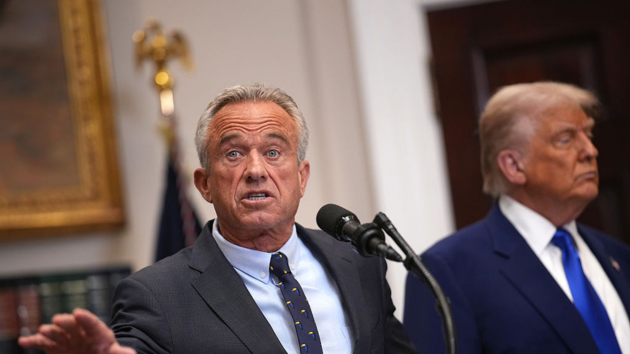
(WASHINGTON) — Health and Human Services Secretary Robert F. Kennedy Jr. is set to testify before two congressional committees on Wednesday to discuss, among many topics, the Trump administration’s proposed budget and its impact on HHS.
Kennedy will appear before the House Appropriations Committee Wednesday morning and the Senate Health, Education, Labor, and Pensions (HELP) Committee in the afternoon.
Last month, the HELP Committee called Kennedy to testify on the restructuring of the department.
In April, HHS began laying off about 10,000 workers and consolidating 28 institutes and centers into 15 new divisions.
Including the roughly 10,000 people who have left over the last few months through early retirement or deferred resignation programs, the overall staff at HHS is expected to fall from 82,000 to around 62,000 — or about a quarter of its workforce.
In a video statement posted on X prior to the layoffs, Kennedy said that he plans to bring to the agency a “clear sense of mission to radically improve the health of Americans and to improve agency morale.”
Kennedy has defended the cuts as necessary to weed out wasteful spending at one of America’s largest departments, but he has drawn criticism for laying off people who are responsible for regulating tobacco usage, monitoring lead exposure in children and diagnosing black lung disease in miners.
The secretary himself has appeared not to know about some of the cuts, telling CBS News last month he was “not familiar” with several cuts cited by the outlet.
Wednesday will mark the first time Kennedy has testified before Congress since his confirmation hearings in late January, and he may be forced to confront statements he made that critics say are evidence of promises broken.
Kennedy said several times during his hearing in January that he supports vaccines, although he refused to unequivocally say that vaccines don’t cause autism, despite numerous existing studies already showing there is no link.
“I support the measles vaccine. I support the polio vaccine. I will do nothing as HHS secretary that makes it difficult or discourages people from taking either of those vaccines,” Kennedy said.
However, in March, the HHS confirmed that the Centers for Disease Control and Prevention will study whether vaccines cause autism.
Additionally, in the wake of several ongoing measles outbreaks across the U.S. and over 1,000 cases so far this year, Kennedy has shared contradicting views about vaccines.
In a post on X on April 6, Kennedy said that the “most effective way to prevent the spread of measles” is to receive the measles, mumps, rubella (MMR) vaccine. However, in a post later that evening, he said more than 300 children have been treated with an antibiotic and a steroid, neither of which are recognized treatments or cures for measles.
Kennedy’s embrace of anti-vaccine ideas nearly put his confirmation in jeopardy, as he faced resistance from Louisiana Republican Sen. Bill Cassidy, a physician who heads the HELP committee. Cassidy expressed concerns about Kennedy’s views on vaccines before ultimately voting to move him through the confirmation process in February.
Cassidy said, at the time, that Kennedy assured him he would not alter vaccine policy without “ironclad” scientific evidence. The senator added that Kennedy and Trump officials promised him an “unprecedentedly close collaborate working relationship” with the secretary.
Currently, Cassidy does not believe Kennedy has violated the commitments he made to him, a person familiar with the senator’s thinking told ABC News.
The men speak multiple times per week and have maintained a productive relationship, three people with knowledge of their dynamic said.
An HHS spokesperson said Kennedy “maintains a professional and respectful relationship with Senator Cassidy, grounded in a shared commitment to public health and evidence-based policymaking.”
Cassidy plans to tell Kennedy on Wednesday that the secretary can “set the record straight” about how HHS will “maintain its critical duties and implement change important to Americans’ health,” according to an excerpt of Cassidy’s remarks, which were obtained by ABC News.
ABC News’ Cheyenne Haslett and Anne Flaherty contributed to this report.
(WASHINGTON) — A federal judge in Pennsylvania ruled Tuesday that President Donald Trump’s invocation of the Alien Enemies Act to deport alleged migrant gang members is lawful, but determined that the administration has provided insufficient notice before deporting migrants under the proclamation.
U.S. District Court Judge Stephanie Haines’ ruling stands in contrast to two other federal judges who have ruled that Trump’s use of the AEA for deportations is unlawful.
The Trump administration has invoked the Alien Enemies Act — an 18th century wartime authority used to remove noncitizens with little-to-no due process — to carry out deportations by proclaiming that migrant gang members constitute a “hybrid criminal state” that is invading the United States.
Haines, a Trump appointee, said she found that the proclamation “complies with AEA,” but said that the Trump administration “must provide greater notice to those subject to removal under the AEA than they are currently providing.”
In her ruling, Judge Haines said that the declarations submitted by the Trump administration to the court “indicate that there is factual basis for President Trump’s conclusions in the Proclamation” and pointed to the designation made by Secretary of State Marco Rubio of the Venezuelan criminal gang Tren de Aragua as a foreign terrorist organization.
As a result, Judge Haines said she found that the proclamation meets the definition of a “predatory incursion” under the AEA.
Haines also said she will afford “substantial deference to the conclusion” by Trump that TdA is “acting at the direction, clandestine or otherwise, of the Maduro regime in Venezuela.”
“It would be intolerable that courts, without the relevant information, should review and perhaps nullify actions of the Executive taken on information properly held in secret,” Judge Haines said.
However, the judge ruled that the Trump administration cannot remove the petitioner, a Venezuelan man in Immigration and Customs Enforcement custody identified as A.S.R., unless he is given 21 days notice and “an opportunity to be heard.” Haines added the notice to A.S.R. needs to be in English and Spanish and must clearly “articulate the fact that he is subject to removal” under the AEA.
A.S.R., according to the government, was moved to a detention center in Texas last month.
Lee Gelernt, an attorney for the American Civil Liberties Union, said in a statement to ABC News that the ACLU disagrees with the judge’s ruling on the use of the AEA.
“The court properly rejected the government’s argument that they can remove people with only 12 hours’ notice,” said Gelernt. “But we disagree with the court’s ruling that the Alien Enemies Act can be used during peacetime.”
In her ruling, Judge Haines said the case “implicates significant issues.”
“In resolving those issues, this Court’s unflagging obligation is to apply the law as written,” Haines wrote in her conclusion. “The court now leaves it to the Political Branches of the government, and ultimately to the people who elect those individuals to decide whether the laws and those executive them continue to reflect their will.”
Earlier this month, a Trump-appointed federal judge blocked the Trump administration from deporting migrants under the AEA in Southern District of Texas, ruling that its invocation of the AEA “exceeds the scope” of the law.
A week later, a federal judge in New York ruled that the AEA was “not validly invoked” by the Trump administration when it sought to deport two alleged Tren de Aragua members from that state.
(WASHINGTON) — Ed Martin, the outgoing Washington, D.C., U.S. attorney who will soon start his role as DOJ’s pardon attorney and chief of the so-called “Weaponization Working Group,” said he plans to review and scrutinize the last-minute pardons issued by former President Joe Biden.
Martin’s appointment to several powerful positions at the Justice Department — following his rejected confirmation by the U.S. Senate — appears to have emboldened him to more aggressively pursue political targets of President Donald Trump, according to a series of recent interviews with right-wing media outlets and his Tuesday press conference.
“I do think that the Biden pardons need some scrutiny. And they need scrutiny because we want pardons to matter and to be accepted and to be something that’s used correctly. So I do think we’re going to take a hard look at how they went and what they did,” Martin told ABC News during the press conference.
“If they’re null and void, I’m not sure how that operates, but I can tell you we’ve had already, I’ve had in my current position, or my position as US Attorney, we had been taking a look at some of the conduct surrounding the pardons and the Biden White House,” he said.
Martin, however, did say that he doesn’t think Biden’s use of “auto-pen” is necessarily a problem, even though Trump suggested that’s what he believes makes them invalid.
Martin also suggested that officials whom he’s unable to charge should be publicly shamed, despite DOJ policy that clearly states that prosecutors should avoid any public comments about uncharged people.
“There are some really bad actors, some people that did some really bad things to the American people. And if they can be charged, we’ll charge them. But if they can’t be charged, we will name them, and we will name them. And in a culture that respects shame, they should be people that are shamed. And that’s a fact. That’s the way things work, and so that’s how I believe the job operates,” Martin said.
On his final day in office, Biden issued several last-minute pardons to family members, including his brother, James Biden and his wife, Sara, his sister, Valerie, and her husband, John Owens, his brother, Francis. The former president had also pardoned his son, Hunter, for tax and gun crimes a month prior.
Biden pardoned Dr. Anthony Fauci, who worked under the Biden administration to coordinate the nation’s COVID-19 response and faced public scrutiny from President Donald Trump.
The former president also pardoned retired Gen. Mark Milley, a former chairman of the Joint Chiefs of Staff, who scrutinized Trump’s role in the deadly Jan. 6 insurrection.
Similarly, Biden pardoned Jan. 6 Committee members who investigated Trump over the insurrection.
(WASHINGTON) — The Trump administration’s move to prioritize the resettlement of white South African refugees in the United States even as it has turned away refugees from countries including Afghanistan and Haiti has sparked allegations of hypocrisy and a double standard, as well as questions about who is footing the bill for the new arrivals.
On Monday, the State Department said it had welcomed 59 Afrikaners whose applications to come to the U.S. were fast-tracked under President Donald Trump’s executive order issued in February titled, “Addressing Egregious Actions of the Republic of South Africa.” The order called on the administration to “prioritize humanitarian relief, including admission and resettlement” for Afrikaners, a South African minority group descended primarily from Dutch settlers, “who are victims of unjust racial discrimination.”
State Department Deputy Secretary of State Christopher Landau, the second-highest-ranking U.S. diplomat, was on hand to greet the new arrivals’ charter flight, and department spokeswoman Tammy Bruce signaled in a statement that additional Afrikaners will soon follow in their footsteps.
“In the coming months, we will continue to welcome more Afrikaner refugees and help them rebuild their lives in our great country,” she said.
However, the State Department has dodged questions about how that travel is being funded.
Typically, when a refugee who is resettled in the U.S. cannot afford the cost of travel, the State Department provides the refugee with an interest-free, repayable loan to fund the travel, which is administered through the International Organization for Migration, a United Nations agency. Refugees also sign a promissory note guaranteeing they will repay the loan before they depart their country of origin.
But the International Organization for Migration told ABC News it was not involved in administering loans for any of the 59 people who arrived at Washington Dulles International Airport this week, and the Trump administration has repeatedly declined to say whether they paid their own way.
“State Department’s Migration and Refugee Assistance account funds a variety of programs and activities aimed at providing humanitarian assistance to refugees, displaced persons and other vulnerable populations,” a State Department official told ABC News when pressed about the costs.
“This includes activities related to resettling refugees in the United States, such as processing and their initial placement,” the official added.
For decades, the State Department has defended its longstanding policy of making refugees fund their own way to the U.S., arguing it ensures each person assumes responsibility for his or her own success in a new country and that it helps establish credit history.
Critics of the Trump administration’s policy say it is not the only way white South African refugees have received preferential treatment.
On the same day the 59 Afrikaners landed in the Washington, D.C., area, the Department of Homeland Security announced it would terminate temporary protected status, or TPS, for Afghans already in the U.S. — revoking deportation protections issued by the Biden administration in 2021 after the Taliban takeover in Afghanistan.
“We’ve reviewed the conditions in Afghanistan with our interagency partners, and they do not meet the requirements for a TPS designation,” Homeland Security Secretary Kristi Noem said. “Afghanistan has had an improved security situation, and its stabilizing economy no longer prevent them from returning to their home country.”
The Trump administration has also moved to rescind TPS designations for Haiti, Venezuela and Cameroon. Additionally, refugee admissions from other countries have dropped drastically, and financial support for resettlement agencies has also undergone drastic cuts.
Meanwhile, there are doubts about the severity of the security situation that prompted the president to expedite the resettlement of Afrikaners.
Trump’s executive order directly mentioned a controversial South African land seizure law enacted in early 2025 that allowed the country’s government to take land without offering the owners compensation where it is “just and equitable and in the public interest” to do so.
But so far, the South African government has said no land has been seized under the law.
On Monday, Trump also spoke of violent attacks against Afrikaners.
“It’s a genocide that’s taking place,” the president said. “Farmers are being killed. They happen to be white. But whether they are white or Black makes no difference to me. But white farmers are being brutally killed, and their land is being confiscated in South Africa.”
Following South Africa’s apartheid era, white and Black landowners have been the target of violent farm attacks. The South African government said the primary motive for the attacks is robbery, but white nationalist groups and others have claimed they are racially motivated.
Trump has been a critic of the South African government’s handling of the situation for years, and in 2018, he posted that he asked that then-Secretary of State Mike Pompeo “closely study the South Africa land and farm seizures and expropriations and the large scale killing of farmers.”
Elon Musk, a South African native and a top adviser to the president during his second term, has also been vocal about the plight of South African landowners, amplifying claims of “white genocide.”
South African President Cyril Ramaphosa has denied any persecution.
“A refugee is someone who has to leave their country out of fear of political persecution, religious persecution or economic persecution,” Ramaphosa said on Monday. “They don’t fit that bill.”
Some groups in the U.S. that frequently work with the government to resettle refugees have also pushed back on the Trump administration’s prioritization of Afrikaners, with at least one, the Episcopal Migration Ministries, saying it won’t play a part in resettling them.
“In light of our church’s steadfast commitment to racial justice and reconciliation and our historic ties with the Anglican Church of Southern Africa, we are not able to take this step,” Presiding Bishop Sean Rowe said in a statement.
ABC’s Armando Torres-García, Luke Barr and Ely Brown contributed to this report.
(CAIRO) — Egypt’s Ministry of Tourism and Antiquities announced this week it had successfully recovered a rare trove of smuggled artifacts from the United States, concluding a three-year diplomatic effort between the countries.
Gilded coffin lids from the Pharaonic era, gold funerary masks and what’s believed to be fragments of Queen Hatshepsut’s ancient temple were among the 25 items accepted in Cairo on Monday.
The items spanned centuries and included a range of styles from different eras of ancient Egyptian civilization, the ministry said.
A portrait of a mummy from Faiyum, Egypt, a gold coin from the reign of Ptolemy I — a Greek general and successor of Alexander the Great — and jewelry pieces that date back 2,400 years were also among the items returned, according to the ministry.
The pieces were recovered in New York City in coordination between Egypt’s consulate, the New York District Attorney’s Office and American security agencies, the Egyptian antiquities ministry said in a press release.
Officials did not specify how the artifacts were smuggled from Egypt or how they surfaced in America, but said the recovery was part of a continued effort to “combat illegal trade in cultural properties.”
Similarly, in 2016 the U.S. returned a collection of stolen artifacts to Egypt, including an ancient wooden sarcophagus, a mummy shroud and mummified hand.
“While we recognize that cultural property, art, and antiquities are assigned a dollar value in the marketplace, the cultural and symbolic worth of these Egyptian treasures far surpasses any monetary value to the people of Egypt,” U.S. Immigration and Customs Enforcement Director Sarah R. Saldaña in a statement at the time.
That same year, Immigration and Customs Enforcement had returned more than 200 artifacts to India, as well as a stolen copy of Christopher Columbus’ 1493 letter describing his discoveries in the Americas to Italy.
(AUSTIN, TEXAS) — Two juveniles were arrested and charged with capital murder after allegedly shooting a man and striking him with a vehicle during a carjacking, according to the Austin Police Department.
The suspects, a 12-year-old male and a 13-year-old male, were arrested and charged with capital murder by terroristic threat, after allegedly killing 20-year-old Anthony Salas earlier this month, police confirmed to ABC News.
At approximately 2:58 a.m. on May 3, the Travis County Sheriff’s Office received a 911 call from a family “reporting their vehicle had been stolen from their driveway” in Del Valle, Texas, police said in a press release.
Then at approximately 3:21 a.m. the same morning, the Austin Police Department received a call that reported a “person was hit by a vehicle” near the Del Valle Elementary School, police said.
Officials responded to multiple scenes and interviewed multiple witnesses, determining that the victim, Salas, was “shot, hit with a vehicle and killed as he attempted to recover his family’s stolen vehicle near the intersection,” police said.
The juvenile suspects appeared to “burglarize multiple vehicles throughout south and east Austin” late on May 2 into the morning of May 3, police said.
Previously, police issued a reward of up to $1,000 for any information that led to an arrest of the individuals.
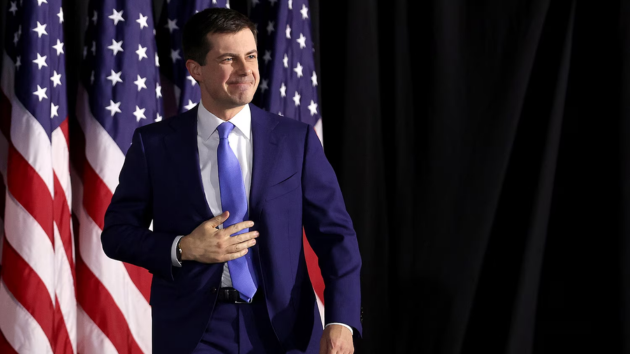
(WASHINGTON) — Former Transportation Secretary Pete Buttigieg is heading to Iowa Tuesday, fueling speculation that he is mounting a bid for the White House in 2028.
On Tuesday evening, Buttigieg — who served in President Joe Biden’s Cabinet as secretary of the Department of Transportation — will make his in-person, public post-administration debut by headlining a town hall with progressive veterans’ group VoteVets Action Fund in Cedar Rapids.
His visit comes after he didn’t rule out a presidential bid during an interview on Tuesday.
In a Substack Live interview with independent journalist Anand Giridharadas on Tuesday, Buttigieg discussed his thought process regarding running for office broadly, and the potential of running for president in 2028 more specifically.
Before making such a decision Buttigieg says he has to “assess the office and what it calls for” as well as “assess what I bring to the table.” He said he’s employed that process to decide to run for other positions.
“… There are times I follow that process and decided to run. And there are times I followed that process and decided not to run. And the process can lead you to surprising places,” he said.
Still, he said he is a “long way off” from a decision.
Buttigieg, the former mayor of South Bend, Indiana, first rose to national prominence when he ran in the 2020 Democratic presidential primary. During Biden’s 2024 presidential campaign — and later, Vice President Kamala Harris’ own campaign after Biden left the race — Buttigieg served as a key campaign surrogate and was floated as a potential running mate for Harris, who ultimately chose Minnesota Gov. Tim Walz.
Now Buttigieg is set to speak in Iowa — a state where its caucus often serves as the earliest indication of how America’s voters will choose their primary candidates.
Major General Paul Eaton, chairman of VoteVets Action Fund, is expected to introduce Buttigieg as “a fellow veteran and someone who understands what is at stake for all Americans,” according to remarks first shared with ABC News.
Eaton is expected to say that the reason the group has chosen to hold its town hall in Iowa is to reach those “on the ground, in the heartland, in a so-called red state, talking not just about what has happened but what we can do in response and how we can continue to put pressure on Trump but also the members of Congress who refuse to do their jobs.”
And in the first 100 days or so of President Donald Trump’s administration, Buttigieg has taken his message far and wide. He has launched his own Substack, appeared on numerous podcasts and been a regular voice on cable news.
“Pete has always had a ‘go everywhere and talk to everyone’ mindset. This is an opportunity to hear from the men and women who served our country about challenges they’re facing in the chaos of the current administration and what’s needed for a more secure future, outside of the Washington media bubble and podcast studios,” a Buttigieg spokesperson said in a statement to ABC News.
But now Buttigieg is taking his vision out on the open road. And according to a spokesperson, isn’t stopping with Iowa.
“You can expect to see him continuing this conversation with Americans across the country,” the spokesperson said.
And he subtly hinted at this expanded tour during the conclusion of his appearance on Sirius XM’s Smartless podcast, hosted by actors Jason Bateman, Sean Hayes and Will Arnett, remarking: “I’ll be around. I’ll be out there.”
This trip comes as other Democrats whose names have circulated as potential presidential material are making public appearances in important voting states. Both Maryland Gov. Wes Moore and Walz will be featured guests at the South Carolina’s Democratic Party’s statewide conference at the end of the month. Walz will also appear at the California Democrats’ convention that same weekend.
Moore and Walz have publicly denied plans for a 2028 presidential run.
ABC New’s Justin Gomez contributed to this report.
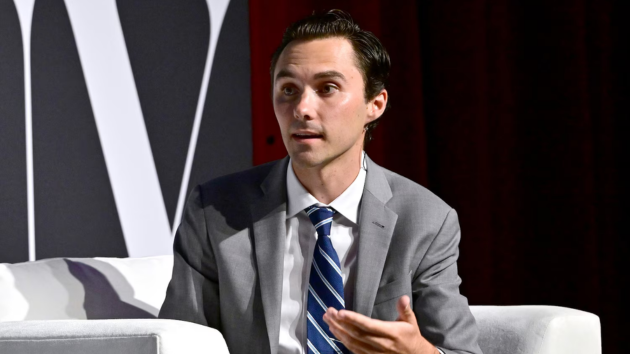
(WASHINGTON) — The Democratic National Committee’s Credentials subcommittee has recommended that the party should once again hold vice-chair elections over complaints that there were issues with how the balloting was conducted — a move that places its vice chairs David Hogg and Malcolm Kenyatta in jeopardy of losing their positions.
The recommendation, made after the committee’s vote on Monday, comes after the party-wide officer races in February. The subcommittee’s deliberations were based on a challenge filed by vice chair candidate Kalyn Free on how the election was conducted.
Free’s counsel argued that the way some of the voting was conducted allowed Hogg and Kenyatta to unfairly receive more votes than Free, who also sought a vice-chair role.
The resolution is not the final decision and neither Kenyatta nor Hogg are stripped of their titles in the meantime; it will have to be adopted or rejected by the entire DNC body in an electronic or in-person vote. The timing of this wider vote is unclear, but party officials said in statements after the vote that they want to act quickly.
The vote was based on a challenge Free filed in late February, before the eruption of a dispute between Hogg, whose separate organization Leaders We Deserve is supporting primary challengers to Democratic incumbents, and others in the party who believe the DNC needs to remain neutral.
But Hogg, a Marjory Stoneman Douglas High School shooting survivor who aims to reform the Democratic Party, claimed Monday that the committee vote can’t be disentangled from his dispute with the party.
“While this vote was based on how the DNC conducted its officers’ elections, which I had nothing to do with, it is also impossible to ignore the broader context of my work to reform the party which loomed large over this vote,” Hogg said in a statement after Monday’s vote.
Hogg argued that because of his announcement that his organization would support primary challengers, the DNC has “made it clear they were going to remove me… I ran to be DNC Vice Chair to help make the Democratic Party better, not to defend an indefensible status quo that has caused voters in almost every demographic group to move away from us. The DNC has pledged to remove me, and this vote has provided an avenue to fast-track that effort.”
Kenyatta, in a thread posted on X late Monday night, said he respects the vote, but is frustrated by it. He criticized the focus on Hogg, emphasizing his own work as a vice chair.
“I disagree with the ruling, but ultimately the committee voted and I respect their votes — even when I really disagree. Second, the press has been breathless in covering the main character they’ve chosen — David Hogg. They are rushing to do it again. I call BS,” Kenyatta, a Pennsylvania state representative, wrote.
Kenyatta called the committee’s move a “slap in the face.” He added that he has done the work to keep the vice chair job and is “frustrated” Hogg wants to make it all about him.
In a statement to ABC News early Tuesday morning, Free, the DNC member and vice chair candidate who initially challenged the results, applauded the credentials committee for “righting this wrong.”
Free wrote, “I have always known that the Democratic Party is the party of free and fair elections. Today, the credentials committee of the DNC confirmed that correcting mistakes in process, and protecting democracy is more important than saving face. This was never about Malcolm Kenyatta or David Hogg. For me, this was about ensuring that the Democratic Party lives up to our ideals as the only political party to believe in and stand up for a free and fair democracy.”
In response to the decision, DNC Chair Ken Martin said he was “disappointed to learn that before I became Chair, there was a procedural error in the February Vice Chair elections.”
He added: “I thank all of our officers for their service, including Vice Chairs Kenyatta and Hogg, and look forward to continuing to work with them in their officer posts as this matter is resolved.”
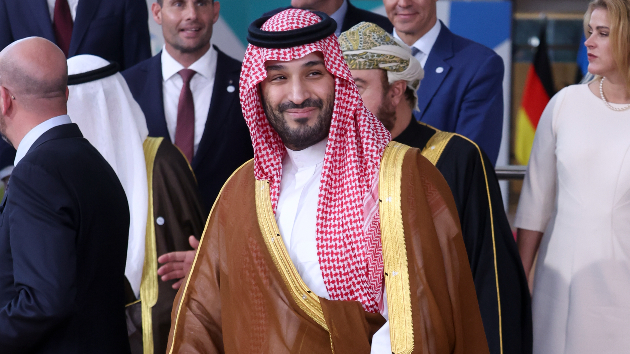
(WASHINGTON) — President Donald Trump spent the bulk of what was billed as a “major foreign policy address” to outline his vision for the Middle East instead touting his domestic policies and heaping praise on Saudi Crown Prince Mohammed bin Salman while speaking at the U.S.-Saudi Investment Forum on Tuesday.
Four years after the U.S. intelligence community report was released that concluded that the crown prince approved the assassination of Washington Post journalist Jamal Khashoggi, Trump lauded the crown prince for his leadership and friendship.
“He’s your greatest representative, greatest representative. And if I didn’t like him, I’d get out of here so fast. You know that, don’t you? He knows me well. I do — I like him a lot. I like him too much. That’s why we give so much, you know? Too much. I like you too much,” Trump said while speaking in Saudi Arabia.
The speech marks a remarkable turn from the United States, especially considering the international condemnation then-President Joe Biden received when he visited Saudi Arabia in 2022 and famously fist-bumped the crown prince. While Biden once labeled Saudi Arabia a “pariah,” Trump celebrated the kingdom, its leader and its potential.
“For the people of this room, the days of economic misery under the last administration are rapidly giving way to the greatest economy in the history of the world,” Trump said.
Speaking to members of the royal family and some of the most powerful business leaders in the world, Trump credited the crown prince for Saudi Arabia’s recent economic development.
“Riyadh is becoming not just a seat of government but a major business, cultural and high-tech capital of the entire world,” Trump said.
“Mohammed, do you sleep at night? How do you sleep?” Trump said as the crowd applauded. “Critics doubted that it was possible, what you’ve done, but over the past eight years, Saudi Arabia has proved the critics totally wrong.”
Throughout his remarks, the crown prince smiled on, applauding and laughing at Trump’s jokes, with billionaire Elon Musk seated prominently over his shoulder.
The president also announced he will be ordering the end of sanctions against Syria and suggested he did so at Saudi Arabia’s request, as well as Turkey’s.
“Oh, what I do for the crown prince,” Trump quipped. “The sanctions were brutal and crippling and served as an important, really an important function, nevertheless, at the time. But now it’s their time to shine.”
Trump then touted his immigration policies, his win in November and his own economic agenda.
“The United States is the hottest country, with the exception of your country,” he told Prince Mohammed. “I have to say right, I won’t. I’m not going to take that on. No, Mohammed, I’m not going to take that on. Wouldn’t that be a terrible thing if I made that full statement? But I will get to it. You’re hotter, at least as long as I’m up here. You’re hotter.”