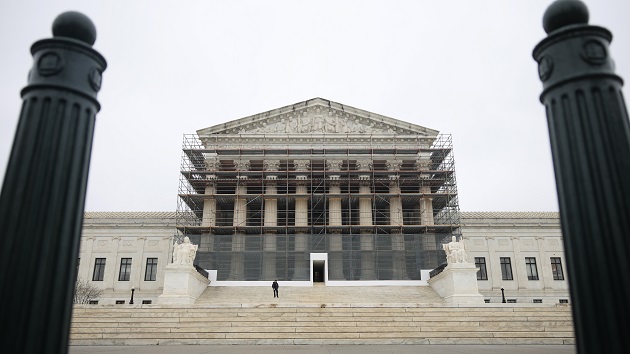
(WASHINGTON) — The Trump administration has asked the U.S. Supreme Court for an emergency injunction to block proceedings in a case involving a Freedom of Information request seeking information from the Department of Government Efficiency.
The government watchdog group Citizens for Responsibility and Ethics in Washington sued the budget-slashing agency earlier this year for public access to its records and its plans for overhauling the government.
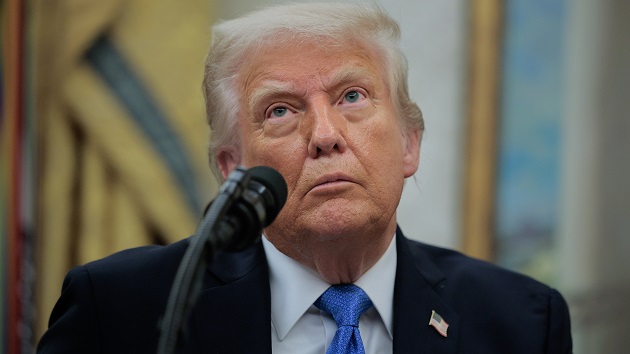
The administration has claimed executive privilege, insisting that DOGE — as a presidential advisory board — is not subject to FOIA.
A federal court hearing the case is scheduled to proceed with depositions and document production as part of a hearing to determine whether FOIA applies.
Solicitor General John Sauer told the court that such an effort defeats the purpose of the litigation and effectively would expose private executive branch information.
A representative of CREW, responding to the administration’s request for an injunction, said in a statement, “While DOGE continues to attempt to fight transparency at every level of justice, we look forward to making our case that the Supreme Court should join the District Court and Court of Appeals in allowing discovery to go forward.”
A federal judge in March determined that DOGE likely should be subject to the Freedom of Information Act.
U.S. District Judge Chris Cooper ruled that President Donald Trump’s executive orders, his public statements about DOGE, and the agency’s “substantial authority over vast swathes of the federal government” were enough to determine that DOGE likely should be subject to FOIA, which gives media organizations and the public the right to access records from the federal government.
ABC News’ Peter Charalambous contributed to this report.
(NEW ORLEANS) — Embattled Orleans Parish Sheriff Susan Hutson announced on Wednesday that she is suspending her reelection campaign a day after she accepted blame for the escape of 10 inmates from the New Orleans jail she oversees.
Facing mounting pressure over the mass jailbreak that allegedly involved member of her staff, Hutson said she is suspending her campaign to focus her attention on “security, accountability and public safety.”
Five of the 10 inmates who escaped the jail early Friday remained on the run on Wednesday, including one who is a convicted killer and two who have been charged with second-degree murder.
Hutson’s announcement came as she is faces growing calls from state representatives, crime victims and others to resign.
In a statement Tuesday afternoon, Hutson accepted blame for the breakout after a maintenance worker at the Orleans Justice Center, where the breakout occurred, was arrested on charges alleging he helped facilitate the escape. Hutson also announced that four other jail staff have been suspended and are under investigation for possible involvement in the jailbreak.
“I take full responsibility for what happened. This breach happened under my leadership, and it is my responsibility to ensure it is addressed with urgency and transparency,” Hutson said in her statement on Tuesday.
“To date, we have suspended staff, made an arrest, and launched comprehensive internal and external investigations,” she added. “We are also fully cooperating with the independent investigation led by the Louisiana Attorney General, and we have provided full access to all records, surveillance footage, and facility documentation.”
The 10 inmates exited the jail through a wall behind a toilet at 1:01 a.m. on Friday, Hutson said at an earlier news conference. They then made their way off the property through a loading dock door and scaled the perimeter wall using blankets to protect themselves from the barbed wire, according to the sheriff’s office. From there, officials said they had a clear path to the railroad tracks and then the interstate.
The inmates weren’t discovered missing until 8:30 a.m. Friday, when jail officials conducted a routine headcount, sheriff’s officials said.
The U.S. Marshals, Louisiana State Police and Probation and Parole were not notified of the escape until 9:30 a.m. on Friday, the sheriff’s office said. New Orleans police officials said they were notified at 10:30 a.m.
Orleans Parish District Attorney Jason Williams said he didn’t find out until a member of the news media called to ask him to confirm the breakout at about 10 a.m. on Friday. He said the Orleans Parish Sheriff’s Office, which oversees the jail, failed to notify local police and the public immediately.
“The public is the sixth man on the team in a jailbreak. You want to let the public know immediately when something like this happens,” Williams said. “The public was denied the opportunity to participate in this manhunt for eight hours. Law enforcement was denied the opportunity to start looking.”
(WASHINGTON) — House Republican leaders — including Speaker Mike Johnson — are expected to head to the White House Wednesday afternoon along with members of the House Freedom Caucus to meet with President Donald Trump to discuss the megabill that advances the president’s legislative agenda, according to multiple sources familiar with the plans.
The critical meeting comes as GOP leaders are scrambling to get the bill back on track after negotiations went south with hard-liners overnight.
The GOP is far from unified around the bill with several sticking points among Republican hard-liners primarily regarding Medicaid work requirements and a cap on state and local tax deductions. Trump spoke to Republicans on Capitol Hill Tuesday in an effort to persuade them to back his signature bill — at one point threatening to primary those who vote against it.
Freedom Caucus Chairman Andy Harris, one of the holdouts, said there is “no way” the “One Big Beautiful Bill Act” passes in the House Wednesday — despite Johnson’s goal of putting the bill on the floor as early as Wednesday after it clears the Rules Committee. Johnson is still working to secure the votes of the more than a dozen Republicans who are seeking additional changes to the legislation. Without changes, there is enough opposition to defeat it as Johnson can only afford to lose three votes.
“We’re further away from a deal,” Harris said on Newsmax Wednesday morning. “This bill actually got worse overnight. There is no way it passes today.”
Key components of the legislation are set to come up in the Rules Committee Wednesday morning, which will focus on tax provisions, overhaul of SNAP and Medicaid cuts. However, GOP leaders have still not released expected changes — negotiated by hard-liners and moderates — to the tax and budget bill.
Rules Committee Chair Rep. Virginia Foxx emphasized that Republicans need to move forward on their bill to “ensure our economic survival.” She added that Republican changes to the package will be unveiled at some point during the hearing.
Rep. Jim McGovern, the top Democrat on the Rules Committee, lambasted Republicans’ reconciliation bill.
“I’ve got a simple question. What the hell are Republicans so afraid of? What the hell are you so scared of that you guys are holding this hearing at 1 o’clock in the morning. It’s a simple question that speaks to the heart of what’s going on here, and one that I’m going to keep on asking, if Republicans are so proud of what is in this bill, then why are you trying to ram it through in the dead of night?” McGovern said.
On Wednesday morning, House Democratic leaders led by Minority Leader Hakeem Jeffries pushed back on the bill by introducing an amendment — one of the more than 500 amendments submitted by both Democrats and Republicans to the reconciliation package — to strike all provisions that they say would “cause millions of Americans to lose healthcare and food assistance.”
“Unfortunately, we are here today discussing a bill that would make that American dream harder to reach for millions by increasing costs for families, hardworking American families, and gutting the things that they need to survive and thrive,” Jeffries said, adding that the bill, if enacted, would force nearly 14 million people off health insurance.
Jeffries said that if the bill passes, “hospitals will close, nursing homes will shut down, and people will die in all of your districts.” He also attacked the potential overhaul to the federal food assistance program — SNAP.
Jeffries called the megabill “one, big ugly bill” that will “hurt the American people.”
Minority Whip Katherine Clark focused on the impacts the GOP’s bill will have on health care for women like access to fertility treatments and screenings.
“I hope this amendment gives you all pause when the women in this country deserve health care, and I hope you will think about the moms struggling to get by and stay healthy for the sake of their children and their families. It is not too late to do right by them,” she said.
Overnight, several Republican members left as Democrats burned the midnight oil — introducing various amendments to the package.
Ranking Member Bennie Thompson of Homeland Security expressed frustration with the process overnight.
“I described Homeland Security portion of this bill as putting lipstick on a pig. I come from an agricultural district as well as a part of the country. So let me use another farming analogy to wrap up: We may be here in the dead of night, but you do not need the light of day to smell manure. The American people are not going to be fooled by any middle-of-the-night, manure-slinging here,” the Mississippi Democrat said, adding that it “stinks to high heaven.”
Overnight, several committee chairs and ranking members testified before the powerful panel including Armed Services, Budget, Oversight, Natural Resources, Financial Services, Judiciary, Homeland Security, Transportation, Ways and Means, Energy and Commerce, Agriculture and Education.
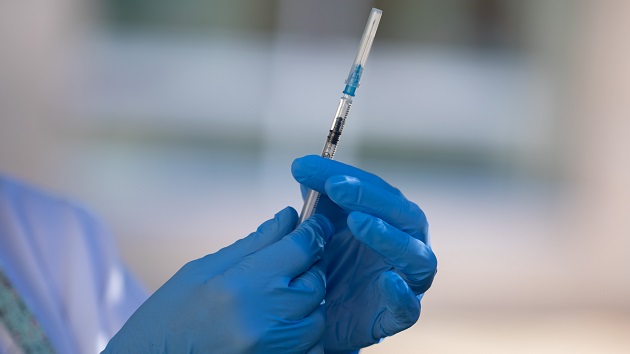
(WASHINGTON) — In a major policy change, the Food and Drug Administration has announced a plan to limit access to future COVID-19 shots only to people over 65 years old or those with an underlying health condition.
This change would apply to any future updated versions of the vaccine, a spokesperson at the department of Health and Human Services told ABC News. For the past several years, COVID shots have been updated ahead of the winter respiratory virus season to better match the evolving virus.
But FDA Commissioner Dr. Martin Makary and FDA vaccine head Dr. Vinay Prasad argued this week that annual booster shots are not worth the risk for otherwise healthy people.
The FDA plans to impose these restrictions on future shots for younger, healthy people, unless vaccine makers are willing to pay for newer and and lengthy placebo-controlled trials.
“We are evaluating the details shared today and discussions with the FDA are ongoing,” Pfizer told ABC News in a statement.
“We appreciate the FDA’s clear guidance and remain committed to working with the Agency to provide the data they need to ensure access for Americans,” Moderna told ABC News.
Since the COVID-19 virus can mutate quickly, a lengthy clinical trial may result in a vaccine that no longer protects against currently circulating variants, experts cautioned.
“By the time you finish the trial, the strain that’s out there in the community is probably long gone. So, they’re basically saying, unless you’re in those higher-risk groups, you can forget about getting the COVID vaccine,” former acting CDC director Richard Besser, now president and CEO of the Robert Wood Johnson Foundation, told ABC News.
A spokesperson for HHS, which oversees FDA, told ABC News, “The COVID-19 public health emergency has officially ended, and we are entering a new phase in our response to the virus. A rubber-stamping approach to approving COVID boosters in perpetuity without updated clinical trial data under the Biden administration is now over.”
Last month, more than 300 people died each week from COVID, according to the latest CDC data. Death rates were even higher earlier this year as the virus was spreading, with nearly 1,000 Americans dying weekly in January.
The new policy comes as the FDA’s vaccine committee of independent advisers are set to meet on Thursday to discuss the latest data on vaccine safety and efficacy, including COVID shots. Typically, FDA leadership waits until after hearing the advice of its advisers before implementing a new approval or policy change.
Previously, updated COVID vaccines had been recommended annually by the CDC for everyone over the age of 6 months. The CDC has historically set vaccine recommendations, while the FDA determines which vaccines to authorize or approve after being deemed safe and effective.
“The FDA has kind of usurped the CDC’s recommending capacity. Usually, the FDA is a regulatory body. They say the vaccine can be sold, and the CDC says, ‘Jere’s the groups who should get it,’” Dr. Paul Offit, a vaccine expert at Children’s Hospital of Philadelphia, told ABC News.
Added Besser: “It’s also not something the FDA would normally do. It’s something CDC would do. And so that’s a really important issue here.”
The new COVID vaccine framework would allow an estimated 33% of the U.S. population to be eligible for the shots, or at least 100 million people, FDA officials noted. It matches recommendations from other countries such as the U.K., Canada and Australia.
Experts say there is a real scientific debate about whether annual boosters are necessary for otherwise young and healthy children and younger adults, especially now that most Americans now have some immunity gained from past vaccination and infections.
In mid-April, the CDC’s vaccine committee of independent advisers had discussed whether to keep the recommendation that everyone over 6 months receive an annual COVID vaccine.
Some experts have argued an FDA restriction could create insurmountable barriers for those who no longer qualify but want to get vaccinated anyway to protect vulnerable family members. Officials at the FDA have called for more evidence on whether vaccines prevent transmission before providing that option.
“To date, there is no high-quality evidence that you getting a booster protects your grandma, beyond your grandma getting the booster herself,” Prasad said at an FDA press conference Tuesday. “Does it lead to less transmission? Does it lead to fewer instances of severe disease? Again, we are interested in evidence to inform this claim.”
Insurance coverage of future COVID vaccines will likely be determined based on recommendations from the CDC and the agency’s independent panel of advisers later this summer. A final recommendation on who should be eligible for updated shots will likely come from the CDC director later this year.
Insurance companies will “continue to monitor the forthcoming recommendations and guidance from ACIP and CDC. As of today, there is no change in how plans cover the existing vaccines for the previously recommended populations,” according to AHIP, a national organization representing insurance companies.
“The ultimate goal of the vaccine is to keep people out of the hospital. But people could reasonably say, moderate infections aren’t fun either, so I’m going to choose and get this vaccine,” Offit noted. “I think that’s fine. I think it’s a reasonable choice. I just hope that we’re not restrictive.”
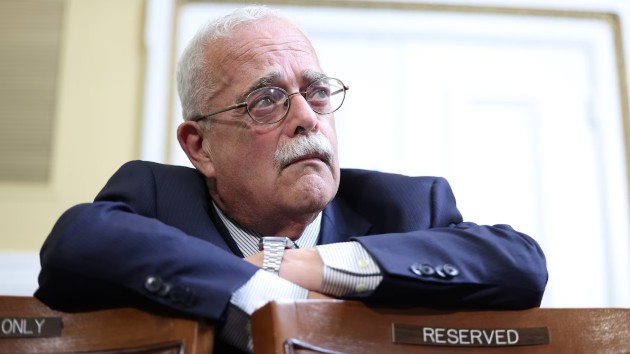
(WASHINGTON) — Democratic Rep. Gerry Connolly of Virginia has died, his office announced Wednesday morning. He was 75 years old.
“It is with immense sadness that we share that our devoted and loving father, husband, brother, friend and public servant, Congressman Gerald E. Connolly, passed away peacefully at his home this morning surrounded by family,” a statement from his family read.
Connolly had served in Congress since 2009. He was a champion for federal workers, pushing back in recent months against the Trump administration and Elon Musk’s overhaul of the government.
“We were fortunate to share Gerry with Northern Virginia for nearly 40 years because that was his joy, his purpose, and his passion. His absence will leave a hole in our hearts, but we are proud that his life’s work will endure for future generations,” his family said.
Just last month, Connolly said he was stepping down from the top Democratic position on the influential House Oversight Committee because his cancer had returned. Connolly had defeated New York Rep. Alexandria Ocasio-Cortez for the committee chair in December.
He had been diagnosed with cancer of the esophagus in November.
“When I announced my diagnosis six months ago, I promised transparency,” he said in his statement last month. “After grueling treatments, we’ve learned that the cancer, while initially beaten back, has now returned. I’ll do everything possible to continue to represent you and thank you for your grace.”
Tributes to Connolly poured in from his congressional colleagues.
House Democratic Leader Hakeem Jeffries commended Connolly’s work on the House Oversight Committee and on federal tech legislation.
“In addition to his legislative wisdom, Gerry always brought his signature mirth and wit to the House, making even something like proxy voting a point of levity during an otherwise challenging time in our nation,” Jeffries wrote. “My prayers, and those of the entire House Democratic Caucus, are with Congressman Connolly’s loved ones and the devoted staff who he considered to be his family.”
“We are saddened to learn of the passing of Congressman Gerry Connolly. For decades, he dedicated his life to serving the people of Virginia. Our prayers are with his family, friends, and the people of Virginia’s 11th district during this difficult time,” House Speaker Mike Johnson, a Louisiana Republican, said in a statement.
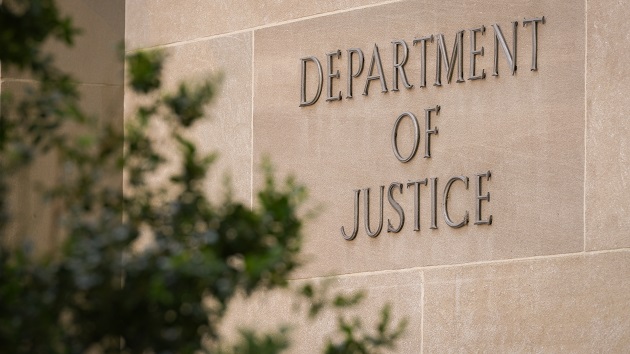
(WASHINGTON) — The U.S. Department of Justice said on Wednesday that it is moving to drop police reform agreements, known as consent decrees, that the Biden-era department reached with the cities of Louisville, Kentucky, and Minneapolis. The court-enforceable agreements were born out of probes launched after the 2020 police killings of Breonna Taylor and George Floyd.
The agreements with Minneapolis and Louisville, which were intended to address allegations of systemic unconstitutional policing and civil rights violations, were both held up in federal court and have faced several delays, with the DOJ requesting various extensions to file documents requested by the federal judges in each case.
Amid the delays, Minneapolis Police Chief Brian O’Hara told ABC News in a February interview that while the Trump administration could intervene in the process, since the agreements have already been filed in federal court, whether they are ultimately approved is not up to the White House, but “ultimately in the federal judge’s hands.”
Officials in Minneapolis and Louisville told ABC News in February that the cities are still committed to the reforms outlined in the agreements and plan to implement changes with or without the support of the Trump administration.
The consent decrees each lay out a roadmap for police reform to rectify civil rights violations that the DOJ uncovered and, if approved by a federal judge, the court will appoint an independent monitor to oversee the implementation of the reforms and actions outlined in the agreement.
Kevin Trager, a spokesman for Louisville Mayor Craig Greenberg, told ABC News in February that the city and police are committed to the reforms agreed upon in the consent decree, “regardless of what happens in federal court.”
“Louisville Metro Government and LMPD will move forward and honor our commitment to meaningful improvements and reforms,” Trager said.
Minneapolis Mayor Jacob Frey told ABC News in Febaruary that the city had “not heard directly” from the Trump administration regarding the consent decree, but the city plans to move forward with the terms of the agreement “with or without support from the White House.”
“It’s unfortunate the Trump administration may not be interested in cooperating with us to improve policing and support our community, but make no mistake: we have the tools, the resolve, and the community’s backing to fulfill our promise to the people of Minneapolis. Our work will not be stopped,” Frey said.
Following the new announcement from the DOJ on Wednesday, ABC News reached out to officials in Minneapolis and Louisville for additional comment.
The DOJ’s Civil Rights Division is also planning to close its investigations into police departments in Phoenix; Trenton, New Jersey; Memphis, Tennessee; Mount Vernon, New York; Oklahoma City; and the Louisiana State Police, according to the announcement.
Additionally, the department said it will be “retracting” findings released during the Biden administration against departments alleged to have engaged in widespread misconduct against citizens.
“Overboard police consent decrees divest local control of policing from communities where it belongs, turning that power over to unelected and unaccountable bureaucrats, often with an anti-police agenda,” Assistant Attorney General Harmeet Dhillon said in a statement announcing the moves. “Today, we are ending the Biden Civil Rights Division’s failed experiment of handcuffing local leaders and police departments with factually unjustified consent decrees.”
This is a developing story. Please come back for updates.
(WASHINGTON) — House Republicans have worked through the night to move a megabill advancing President Donald Trump’s legislative agenda through a key committee — aiming to overcome division in the conference and advance the package to a House floor vote as soon as Wednesday.
The House Rules Committee hearing is going strong Wednesday morning after it started at 1 a.m. ET Wednesday with committee chairs and ranking members debating the details of the more than 1,000 page “One Big Beautiful Bill Act.”
The GOP is far from unified around the bill with several sticking points among Republican hard-liners primarily regarding Medicaid work requirements and a cap on state and local tax deductions. Trump spoke to Republicans on Capitol Hill Tuesday in an effort to persuade them to back his signature bill — at one point threatening to primary those who vote against it.
Freedom Caucus Chairman Andy Harris, one of the holdouts, said there is “no way” the “One Big Beautiful Bill Act” passes in the House Wednesday — despite Speaker Mike Johnson’s goal of putting the bill on the floor as early as Wednesday after it clears the Rules Committee. Johnson is still working to secure holdouts’ votes, and still appears to lack the votes to pass the legislation on the House floor.
“We’re further away from a deal,” Harris said on Newsmax Wednesday morning. “This bill actually got worse overnight. There is no way it passes today.”
Key components of the legislation are set to come up in the Rules Committee Wednesday morning, which will focus on tax provisions, overhaul of SNAP and Medicaid cuts. However, GOP leaders have still not released expected changes — negotiated by hard-liners and moderates — to the tax and budget bill.
Rules Committee Chair Rep. Virginia Foxx emphasized that Republicans need to move forward on their bill to “ensure our economic survival.” She added that Republican changes to the package will be unveiled at some point during the hearing.
Meanwhile, Rep. Jim McGovern, the top Democrat on the Rules Committee, lambasted Republicans’ reconciliation bill.
“I’ve got a simple question. What the hell are Republicans so afraid of? What the hell are you so scared of that you guys are holding this hearing at 1 o’clock in the morning. It’s a simple question that speaks to the heart of what’s going on here, and one that I’m going to keep on asking, if Republicans are so proud of what is in this bill, then why are you trying to ram it through in the dead of night?” McGovern said.
Overnight, several Republican members left as Democrats burned the midnight oil — introducing various amendments to the package.
Ranking Member Bennie Thompson of Homeland Security expressed frustration with the process overnight.
“I described Homeland Security portion of this bill as putting lipstick on a pig. I come from an agricultural district as well as a part of the country. So let me use another farming analogy to wrap up: We may be here in the dead of night, but you do not need the light of day to smell manure. The American people are not going to be fooled by any middle-of-the-night, manure-slinging here,” the Mississippi Democrat said, adding that it “stinks to high heaven.”
There have been 537 amendments submitted from both Democrats and Republicans to the reconciliation package.
Overnight, several committee chairs and ranking members testified before the powerful panel including Armed Services, Budget, Oversight, Natural Resources, Financial Services, Judiciary, Homeland Security, Transportation, Ways and Means, Energy and Commerce, Agriculture and Education.
(LONDON) — The Chinese Foreign Ministry accused President Donald Trump of undermining “global strategic balance and stability” by pushing ahead on his “Golden Dome” missile defense shield program — and urged the U.S. to abandon the project.
Trump and Defense Secretary Pete Hegseth announced the project at an Oval Office briefing on Tuesday, confirming reports that the administration was seeking to establish a missile defense umbrella the president said would be capable of “intercepting missiles even if they are launched from other sides of the world and even if they are launched from space.”
The project will cost around $175 billion and be operational in three years, Trump said.
Chinese Foreign Ministry spokesperson Mao Ning told reporters at a Wednesday briefing that the proposed shield will “heighten the risk of turning the space into a war zone and creating a space arms race and shake the international security and arms control system,” according to a readout posted to the ministry’s website.
“It plans to expand the U.S. arsenal of means for combat operations in outer space, including R&D and deployment of orbital interception systems,” Mao said.
“That gives the project a strong offensive nature and violates the principle of peaceful use in the Outer Space Treaty,” she added, referring to the 1967 agreement which — among other things — prohibited the use of nuclear weapons in space and limited any usage of all “celestial bodies” for peaceful purposes.
“This is yet another ‘America First’ initiative that puts the U.S.’ absolute security above all else,” Mao continued. “It violates the principle of ‘undiminished security for all’ and will hurt global strategic balance and stability,” she said. “China is gravely concerned.”
“We urge the U.S. to give up developing and deploying global anti-missile system, and take concrete actions to enhance strategic trust between major countries and uphold global strategic stability,” Mao said.
Trump began calling for a U.S. missile defense shield inspired by Israel’s Iron Dome — which is used to intercept short-range projectiles — a year ago on the campaign trail after watching Israel and its Western allies defeat some 300 missiles and drones fired during an attack by Iran. The attack was thwarted by a range of anti-missile systems and military aircraft.
Military officials said at the time that they hadn’t expressed a need for such a comprehensive shield to defend the U.S. Critics of Trump’s plan noted the U.S. wasn’t under threat from its neighbors, Canada and Mexico, and is buffered by two oceans.
The “Golden Dome” project has echoes of the failed Cold War-era “Star Wars” program, which likewise sought to introduce a defense umbrella against nuclear-capable ballistic missiles. At the time, critics — including leaders in the Soviet Union — said such a project was both unworkable and could spark a new arms race.
ABC News’ Anne Flaherty, Luis Martinez and Nathan Luna contributed to this report.
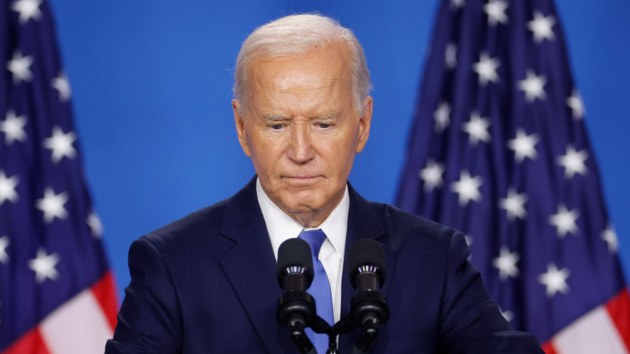
(WASHINGTON) — A representative for former President Joe Biden said he last took a prostate-specific antigen blood test, commonly used to screen for prostate cancer, in 2014.
Although the exact date of the test wasn’t disclosed, Biden was around 72 years old at the time, which falls in line with current medical guidance and recommendations on who should take a test.
Current screening recommendations suggest men age 55 to 69 should discuss the benefits and harms of a PSA test with their doctor and make an individual decision when or if they need it. Men 70 and older should not receive PSA-based screening because of the risk of false positives, according to the United States Preventive Services Task Force.
“Prior to Friday, President Biden had never been diagnosed with prostate cancer,” the spokesperson said in a statement.
Biden announced Sunday that he had an aggressive form of prostate cancer that had spread to his bones.
The older a person is, the more the risk of false positives and unnecessary biopsies increases. Conversely, some people with cancer might have good PSA scores. PSA screening is highly debated among doctors in terms of when it’s appropriate to use.
Biden’s representatives said the former president had a routine physical last week and doctors discovered a small nodule in his prostate.
Since his diagnosis was revealed two days ago, President Donald Trump questioned the timing of the announcement and claimed that “somebody is not telling the facts.”
“I’m surprised that it wasn’t, you know — the public wasn’t notified a long time ago because to get to stage nine — that’s a long time,” Trump said Monday.
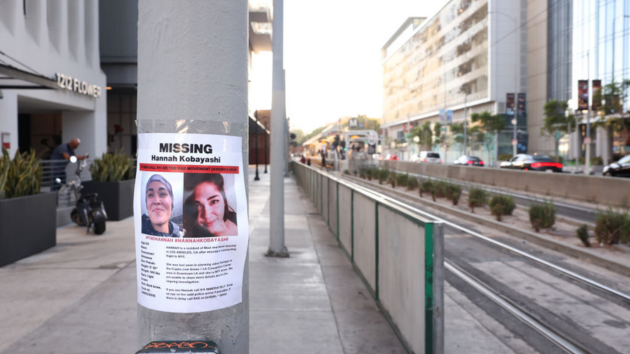
(LOS ANGELES) — Hannah Kobayashi, who made national headlines when she disappeared in 2024, is speaking publicly after months of silence. In a recent Instagram story, the Hawaii woman thanked those who searched for her and addressed the controversy surrounding her disappearance.
“In my statement, I expressed my deepest gratitude for everyone who supported me with love and compassion,” Kobayashi wrote. “Anything I say would be scrutinized and picked apart, so I chose to keep it simple, truthful, and from my heart.”
In November 2024, Kobayashi disappeared after flying from Maui to Los Angeles International Airport (LAX). She was scheduled to continue to New York, but never boarded her connecting flight. Police later said they believed she missed the flight intentionally. Weeks later, the LAPD said she was safe in Mexico and her family said she returned safely to the U.S. in December.
The disappearance took a tragic turn when Ryan Kobayashi — Hannah’s father — was discovered dead in a parking lot near LAX after traveling to Los Angeles to help find his daughter. The medical examiner determined that he had died by suicide.
The case sparked intense public debate, with some people questioning Kobayashi’s actions. One Instagram user, Jina_eastmeetswest, commented under Kobayashi’s recent post.
“Seek help,” they said. “Your selfish and immature behavior cost your dad’s life, put your family through immense suffering, and cost public resources. Not once did you take any sort of accountability.”
She did not reply to this comment.
Another user asked Kobayashi why she didn’t attend her father’s funeral.
“We feel like we were fighting for nothing,” they wrote.
Kobayashi expressed gratitude in her response, but didn’t address their question.
“Fighting for something you believe in is never for nothing,” Kobayashi said on Instagram. “Thank you for everything, truly and sincerely.
Kobayashi also told the San Francisco Gate that she plans to share more details about her disappearance soon, saying she wants to address the criticism she’s received.
Kobayashi didn’t respond to ABC News’ request for comment. As of Tuesday, Kobayashi has not answered questions about her father’s death publicly.
If you are struggling with thoughts of suicide or worried about a friend or loved one, call the National Suicide Prevention Lifeline at 1-800-273-8255 [TALK] for free, confidential emotional support 24 hours a day, seven days a week.