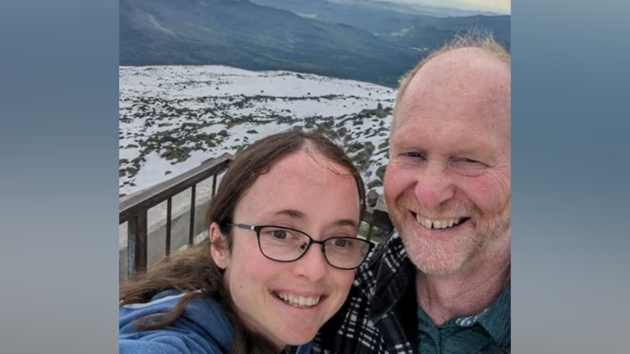
(MOUNT KATAHDIN, MAINE) — A man has been found dead and his daughter remains missing while attempting to hike to the summit of Mount Katahdin in Maine, officials said Tuesday.
Tim Keiderling and Esther Keiderling, both of Ulster Park, New York, set out to hike the summit on Sunday, according to the Maine Department of Inland Fisheries & Wildlife.
They were last seen Sunday morning on the Katahdin Tablelands heading toward the summit, which is the northern terminus of the Appalachian Trail and located in Baxter State Park.
Baxter State Park rangers began searching for them Monday morning after their vehicle was still found parked at the trailhead in the day-use parking lot, park officials said.
The search on Katahdin expanded Tuesday to include the help of more than 30 Maine game wardens, including the Maine Warden Service Search and Rescue team, and the Maine Warden Service K9 team. The Maine Forest Service and the Maine Army National Guard also responded as part of an aerial search.
The body of Tim Keiderling, 58, was found Tuesday afternoon, officials said. A Maine Warden Service K9 search team located him at approximately 2:24 p.m. on the Tablelands near the summit of Katahdin, the Maine Department of Inland Fisheries & Wildlife said.
The search for his 28-year-old daughter is ongoing.
“We know that many of our social media followers share in our deep sadness for the family and friends of Tim Keiderling, and appreciate your support,” as the search for his daughter continues, Baxter State Park said in a statement on Facebook.
Baxter State Park notes on its website that hiking Katahdin “is a very strenuous climb, no matter which trailhead you choose.” The average round-trip time for a Katahdin hike is eight to 12 hours, it said.
All Katahdin trailhead trails are currently closed until further notice, the park said.
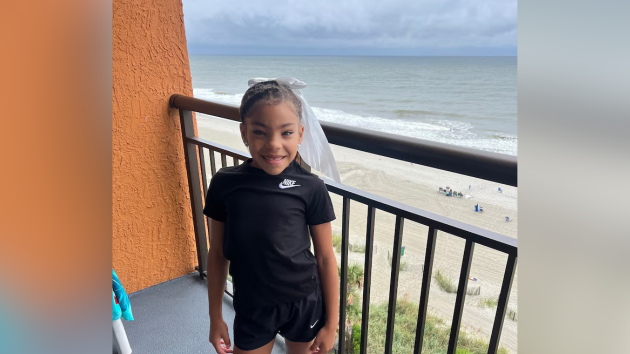
(PAGELAND, SC) — A 7-year-old South Carolina girl remains in critical condition after she was shot while sleeping in her own home over the weekend, according to the Pageland Police Department.
At approximately 1:17 a.m. on Sunday, police responded to shots being fired into the Pageland home, hitting the girl — identified as Skylar Baker — in the head, officials said.
Skylar received first aid at the scene and was flown to an area hospital with “life-threatening injuries,” according to police.
Police said the incident, which they described as a “careless act of violence,” appears to have been a drive-by shooting and the suspect remains at large. The bullet went through the house and struck Skylar in the right side of her brain, her mother, Essence Chambers, told ABC News.
As of Tuesday, Skylar remains in critical condition and is on a ventilator, according to Chambers.
Skylar, described by her mother as a “ball of energy” and “happy child,” now has a plate inside her head and will soon undergo a craniotomy, Chambers said.
“Before all of this, she was completely healthy,” Chambers said. “I want everybody to keep praying for her.”
In a press release, local police expressed their hope that “someone will come forward with answers as to who was involved in this case.”
“We are heartbroken that this little girl is suffering due to the actions of someone who had no regard for the life of others. Our thoughts and prayers continue to go out to the family,” they said in Monday’s release.
Speaking at a press conference on Monday, Pageland Police Department Chief Dean Short called the shooting a “terrible thing, especially in a small community.”
“What matters is we come together, support one another and take a stand against this type of violence,” Short said.
Melissa Massey, a neighbor of Skylar, told ABC Charlotte affiliate WSOC that drive-by shootings in Pageland are “unheard of.”
Officials said anyone with any information on the incident or the suspect to contact police at 843-672-6437.
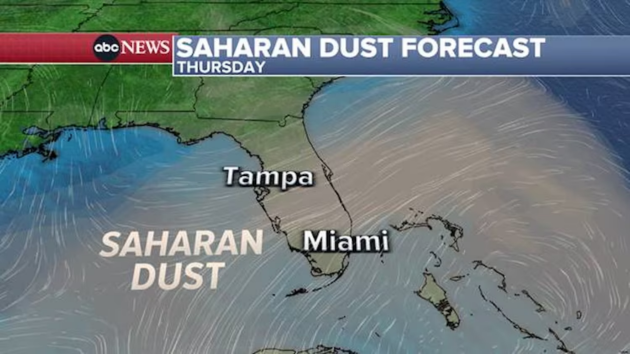
(MIAMI) — Flash flooding in south Florida is expected to give way to brilliant sunsets later this week as Saharan dust is forecast to arrive in the state after being blown across the Atlantic.
The dust, which travels in the upper-level winds from the Sahara Desert in North Africa, is expected to arrive in Florida by the end of this week, and will work to cool temperatures slightly and create a light haze in the sky. While not uncommon for Florida this time of the year, the dust usually results in picturesque sunsets.
South Florida was enduring another day of heavy rain on Tuesday after flooding occurred in Miami and Tampa Bay on Monday. Additional flooding is possible for Miami on Tuesday, as a storm could dump up to 5 inches of rain in some locations.
A flood watch was in effect for South Florida on Tuesday.
Flooding is also a concern Tuesday in other parts of the country.
More than 16 million people from central Texas to western Illinois are in the storm zone and damaging wind and large hail within thunderstorms was expected Tuesday afternoon and into the evening — along with a flash flood threat and the potential for tornadoes.
Cities under the threat of flooding on Tuesday include Dallas, Kansas City, Oklahoma City, Tulsa, Wichita, and Springfield, Missouri.
A tornado watch is in effect through Tuesday evening for portions of northern and Central Missouri. A severe thunderstorm watch is in effect for most of Oklahoma, including Oklahoma City, NWS said.
On Monday, parts of western Kansas had storms creating wind gusts nearing 80 mph.
Rain also brought flooding to New Mexico on Sunday and Monday.
In Albuquerque, New Mexico, flash flooding may have led to the death of one person on Sunday. The Albuquerque Fire Rescue Department confirmed that it pulled a body from a diversion channel on Sunday after responding to reports of people being swept away by fast moving flood waters.
The fire department said an investigation was underway to determine if the death was weather related.
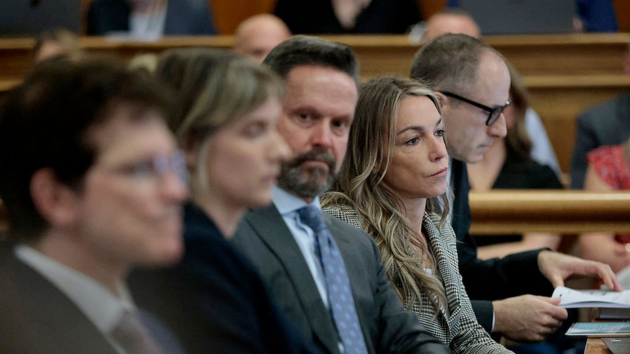
(BOSTON) — Judge Beverly Cannone denied Karen Read a mistrial in her second murder trial in the killing of her cop boyfriend John O’Keefe on Tuesday.
Attorneys for Karen Read asked the judge to declare a mistrial with prejudice in her second murder trial after prosecutors questioned a defense witness over whether she was aware no dog DNA was found on O’Keefe’s sweater from the night of the murder, in an attempt to discredit the defense’s theory.
Dog bite expert and forensic pathologist Dr. Marie Russell testified that markings on O’Keefe’s arm were caused by dog bites and scratches, supporting the defense’s claim that O’Keefe was attacked by a dog and beaten by other parties before being thrown out into the snow the night of the murder.
Prosecutors — for the first time in this trial — admitted O’Keefe’s sweater into evidence and cited a forensics report that said there was no evidence of dog DNA.
Prosecutors have alleged Read hit O’Keefe with her car outside the home of fellow police officer Brian Albert — causing the marks on his arm — then left him there to die during a major blizzard.
Read is accused of killing O’Keefe in 2022. Read is charged with second degree murder, manslaughter while operating a motor vehicle under the influence and leaving a scene of personal injury and death.
She has denied the allegations and maintained her innocence.
Read’s first murder trial ended in a mistrial after the jury was unable to reach a verdict. At least four jurors who served on her first trial last year confirmed she was found not guilty of murder and leaving the scene.
The prosecution rested last week and the defense began presenting its case.
On Tuesday, prosecutors introduced evidence — O’Keefe’s sweatshirt from the night of the murder — to the defense’s expert witness, asking her if she was aware that holes in the arm of the sweatshirt had been swabbed for traces of dog DNA. The evidence had not been previously presented to this jury.
Before she could answer, the defense objected. After a short sidebar between attorneys and the judge, the jury was removed from the courtroom.
After the jury and the witness on the stand — Russell — left the courtroom, Read’s defense team requested the judge declare a mistrial with prejudice.
“Attorney Brennan — just with regard to Dr. Russell — in open court, in front of the jury, used the concept of DNA in this case. He has introduced it and brought it in for the very first time in front of the jury. He has done so intentionally,” defense Attorney Robert Alessi said Tuesday.
“Based upon that intentional mention, the defense moves strongly, vigorously for a mistrial with prejudice,” Alessi said.
Lawyers for Read argued that during this trial, prosecutors did not call a witness who, in her first trial, testified about the testing of DNA evidence.
“For whatever reason, the prosecution has chosen not to bring that witness in who would testify, perhaps to DNA. As a result of that strategic decision that the prosecution made, there’s been no mention,” Alessi said.
The defense said that it has purposefully not mentioned DNA in the trial so far and it is not permissible for prosecutors to present it now.
“The prosecution has put in the jury’s mind that topic. That is irremediable. That cannot be reversed,” Alessi said.
“The prosecution has to suffer the consequences of its own intentional actions of bringing up that topic,” Alessi said. “The only remedy is a mistrial with prejudice.”
Prosecutors claimed they had always planned on bringing an expert to discuss DNA on rebuttal and argued that asking the defense’s witness about the presence of dog DNA is permissible and essential.
“The defense is on notice that there is no dog DNA in the sweater of John O’Keefe,” prosecutor Hank Brennan said in court Tuesday.
Alessi argued that there was no swabbing of the wounds in O’Keefe’s right arm for DNA. He also argued that there is a series of concerns about the chain of custody of O’Keefe’s sweater.
O’Keefe’s sweater was “left on the floor of the ambulance, left on the floor of the hospital, carried around by Mr. Proctor for weeks maybe even months, not submitted for testing for months,” Alessi said.
“There are huge issues that prevent a fair determination about whether there was even proper determination of whether there was DNA or not,” Alessi said.
Prosecutors argued that the defense had brought up DNA evidence in previous hearings in the case, making it permissible for them to ask a witness about DNA.
After a short recess, the judge allowed prosecutors to continue questioning the witness about the presence of DNA evidence in the sweater.
Russell testified that there are many reasons why there was no evidence of dog DNA in testing, but said the report stating there is no evidence of dog DNA does not change her determination that a dog caused the marks on O’Keefe’s arm.
Russell also pointed to the delay in the testing of the sweater and concerns mentioned about the chain of custody of the sweater.
(WASHINGTON) — President Donald Trump’s nominee to oversee the U.S. Forest Service has a history of clashing with the very agency that he soon could be leading.
On Tuesday afternoon, the Senate Committee on Agriculture, Nutrition, and Forestry began the confirmation hearing for Michael Boren, an investment consultant, Idaho ranch owner and founder of a billion-dollar tech company. A bipartisan committee will assess Boren’s qualifications and vote on his nomination.
Boren, 62, has had disagreements with the U.S. Forest Service in recent years. One recent conflict involves building a cabin and clearing land within the Sawtooth National Forest near Stanley, Idaho, E&E News reported, citing agency correspondence and individuals familiar with the situation.
He co-founded Boise-based tech company Clearwater Analytics and owns a 480-acre ranch, some of it within the Sawtooth National Recreation Area, according to the Idaho Mountain Express. The work on the property began before Boren was nominated, but the matter has not yet been resolved, according to the publication.
The dispute over the cabin is with Galena Mines, an LLC associated with Boren. He was a listed as manager until February of this year, before he was removed.
Other disputes include diverting a stream, disputes over how Boren manages land within and around the national forest and disagreements about the precise locations of mining claims made by Boren’s corporation, according to E&E News.
A small airstrip on Boren’s ranch also stirred uproar among neighbors who claim he was using it to land small planes before he was granted a conditional-use permit from the Forest Service, according to the report.
Attorney Thomas Balducci, who represented Boren for the 2023 lawsuit regarding the airstrip, declined to provide a comment to ABC News.
Boren’s brother, David Boren, has also clashed with the Forest Service over a trail the agency built near his ranch.
If confirmed as the undersecretary of Natural Resources and Environment, Boren would be responsible for day-to-day operations at the U.S. Forest Service, which manages more than 200 million acres of public land. Boren would report to U.S. Secretary of Agriculture Brooke Rollins.
The Senate Agriculture Committee reviews presidential appointments to the Department of Agriculture’s cabinet positions. After Tuesday’s hearing, a full Senate confirmation will be required to complete Boren’s appointment.
Current members of the committee include John Boozman (R-AR), Mitch McConnell (R-KY) and Amy Klobuchar (D-MN).
Boren was a donor to Trump’s 2024 presidential campaign.
On Jan. 16, Trump announced Boren’s nomination on his social media platform Truth Social, describing him as “a successful businessman, who has founded six companies.”
“Michael will work to reinvigorate Forest Management at a time when it is desperately needed,” Trump wrote.
The nomination comes at a time of turmoil within the agency. On April 3, Rollins issued an ordered to remove environmental protections from about 112 million acres of national forests, and thousands of Forest Service employees have been fired in recent months.
The Forest Service did not immediately respond to ABC News’ request for comment. In a statement to the New York Times, the Forest Service wrote that Boren would “implement President Trump’s America First agenda and ensure our forest system is properly managed, productive, and resilient. We look forward to his swift confirmation by the Senate.”
ABC News could not immediately reach a representative for Boren for comment.
(CANTANIA, ITALY) — A routine port stop turned chaotic for thousands of passengers aboard Norwegian Cruise Line’s Norwegian Epic last Friday when severe winds caused the ship to break free from its moorings in Catania, on the Italian island of Sicily.
The incident began around 1 p.m. local time when powerful 60-mph wind gusts struck the vessel’s port side. Witnesses reported hearing loud cracking sounds as the mooring lines began snapping one by one, causing the ship’s stern to drift away from the dock.
“We heard a very loud boom, and then there was another loud noise and screams,” passenger Brian Koning, who was returning to the ship with his wife at the time, said in a Facebook post. “All those large orange diameter ropes started snapping about every 15 seconds.”
During the incident, a female passenger fell from the gangway. Koning said the woman hit her head on something before landing in the water, prompting her husband to leap in to save her. Norwegian Cruise Line noted that the crew rushed to help the pair.
“On-duty crew members were able to immediately assist the guest from the water and see that they were evaluated by the medical team,” a company spokesperson told ABC News in a statement. “It was determined that they sustained minor injuries and were transported to a local hospital for further examination and treatment.”
The incident left more than 3,600 passengers stranded ashore for over seven hours, according to Koning. Port authorities closed the checkpoint as the ship was forced to move out to sea until conditions improved.
“The disembarkation and embarkation process was paused until weather conditions improved and the ship was able to safely dock again,” Norwegian Cruise Line told ABC News.
Passengers were frustrated with how the company handled of the situation, according to Koning.
“There was no communication from anyone from Norwegian Cruise Line,” Koning said. “People started getting irritated. They took the water away, there was no drinks, no food, and only one bathroom with a couple of toilets.”
The ship eventually returned to port after replacing the broken mooring lines, allowing passengers to reboard that evening.
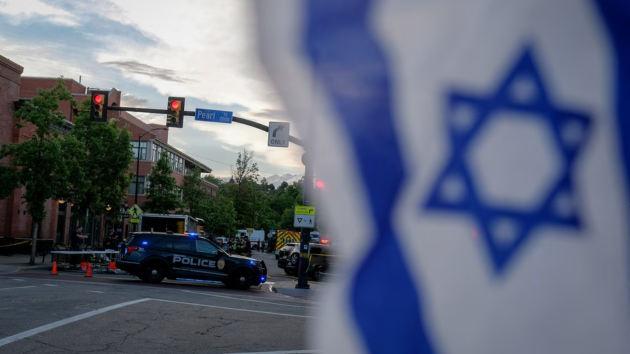
(BOULDER, Co) — As law enforcement agents investigate Sunday’s fiery attack on a group of pro-Israel demonstrators in Boulder, Colorado, crime data shows the rampage came amid a dramatic increase in antisemitic and Islamophobic hate crimes across the nation, suggesting further that the war between Israel and Hamas terrorists continues to spill into the U.S.
The suspect in the Boulder attack, 45-year-old Mohamed Soliman, allegedly yelled “Free Palestine” while targeting the pro-Israel demonstrators with a “flamethrower” fashioned from a commercial backpack weed sprayer and Molotov cocktails at a pedestrian mall, authorities said.
Soliman entered the United States in August 2022 on a B2 tourist visa, which expired in February 2023, according to Tricia McLaughlin, the assistant secretary for public affairs at the Department of Homeland Security. He filed for asylum in September 2022, McLaughlin said.
Court documents made public in the case allege Soliman, who was born in Egypt and lived in Kuwait for 17 years before moving to Colorado Springs, Colorado, three years ago, “wanted to kill all Zionist people and wish they were all dead.”
While some politicians and pro-Israel activists have used antisemitism as a catchall word for an alleged motive in the attack, the suspect told investigators, “This had nothing to do with the Jewish community and was specific in the Zionist group supporting the killings of people on his land (Palestine),” according to state court documents.
But Ted Deutch, chief executive officer of the American Jewish Committee, noted that the attack came less than two weeks after a gunman shouting “Free Palestine” killed two Israeli embassy staff members outside the Capital Jewish Museum in Washington, D.C.
“These are not isolated incidents,” Deutch told ABC News. “This is a war against people who support Israel, it’s a war against the Jewish people and nobody should tolerate it.”
Deutch added, “We have to acknowledge that the incitement that we’ve seen from the language that’s being used, the lies about genocide, the calls for globalizing the Intifada, resistance by any means necessary, all of this language contributes to an environment in which violence will, and now twice in two weeks, has taken place.”
Amy Spitalnick, CEO of the Jewish Council for Public Affairs, told ABC News that while there has been a spike in attacks on the American Jewish community since the Oct. 7, 2023, surprise assault on Israel by Hamas terrorists, antisemitic attacks in the United States have been steadily climbing for the last decade.
“The last few months have put a fine point on the fact that there are those who are using the guise of protesting Israel to target and violently attack Jews,” Spitalnick said.
Spitalnick said the term Zionism is “woefully misunderstood” by the general public.
“What Zionism means to me is generally the belief that Jews should have a homeland somewhere in this part of world where we have deep historical connections. And it actually goes hand-in-hand with the belief in Palestinian self-determination and dignity for me and many others,” she said.
“When the term is used in this pejorative as we have seen it particularly over the last few years, but long before that as well, it effectively says that 80% to 90% of Jews should be discriminated against, or cast out of spaces, or in extreme cases violently targeted as we saw this weekend. That is antisemitism when you’re saying the majority of American Jews are fair game,” Spitalnick added.
She said the majority of American Jews have a relationship with Israel.
“That doesn’t mean that we agree with its government,” Spitalnick said. “In fact, many of us, and many Israelis, don’t agree with the government and don’t necessarily support what’s happening in Gaza right now.”
National alarm sounded before attack
According to an audit issued in April by the Anti-Defamation League, antisemitic incidents, including assaults and vandalism, has jumped 344% over the past five years and increased 893% over the past 10 years.
“For the first time in the history of the Audit, a majority (58%) of all incidents contained elements related to Israel or Zionism,” according to the ADL.
Since the Oct. 7, 2023, surprise attack on Israel by Hamas terrorists, more than 10,000 antisemitic incidents have been reported in the United States alone, according to the ADL.
In addition to the Washington, D.C., and Boulder attacks, a 38-year-old man was arrested in April and charged with firebombing the Pennsylvania governor’s residence in Harrisburg, while Gov. Josh Shapiro, who is Jewish, and his family were asleep inside, officials said. According to a search warrant affidavit, the suspect allegedly targeted Shapiro “based upon perceived injustices to the people of Palestine.”
Islamophobic attack have also been on the rise, according to a report issued in March by the Council on American-Islamic Relations (CAIR), the nation’s largest Muslim civil rights and advocacy organization. CAIR reported that it received more than 8,650 complaints in 2024, the highest number the group has ever gotten.
Among the high-profile anti-Muslim incidents reported over the last two years was the fatal Oct. 14, 2023, stabbing of 6-year-old Palestinian American boy, Wadea Al-Fayoume, by his Illinois landlord, 73-year-old Joseph Czuba, who prosecutors said killed the child and attacked his mother in response to the Israel-Hamas war. Czuba was convicted of murder and hate crime charges in February and was sentenced in May to 53 years in prison.
On Nov. 25, 2023, three college students of Palestinian descent were shot, including one who was paralyzed, in Burlington, Vermont, when they were allegedly targeted by 48-year-old Jason J. Eaton, a former Boy Scout leader, as the students, who were visiting the city during the Thanksgiving holiday, were walking in his neighborhood speaking a mix of Arabic and English, authorities said. Two of the students were wearing keffiyehs, traditional Palestinian scarves. Eaton has pleaded not guilty to three counts of attempted murder and is awaiting a trial.
While there were widespread calls for a hate crime charge against Eaton, prosecutors said they did not have enough evidence to support such a charge.
Following the deadly May 21 Washington, D.C., rampage, the Department of Homeland Security issued a bulletin warning law enforcement that “violent extremist messaging continues to highlight major sporting and cultural events and venues as potential targets.”
“The May attack that killed two Israeli Embassy staff members at an event in Washington, D.C., underscores how the Israel-Hamas conflict continue to inspire violence and could spur radicalization or mobilization to violence against targets perceived as supporting Israel,” according to the DHS, adding that some online users were sharing the suspect’s alleged writings and “praising the shooter and generally calling for more violence.”
The increase in antisemitic and Islamophobic attacks have come against the backdrop of the Trump administration’s crackdown on illegal immigration. The administration has also threatened to withhold federal funding to universities, including Harvard and Columbia, for not doing enough to tackle antisemitism on campuses. The administration has attempted to deport or revoke visas of foreign students who have engaged in pro-Palestinian protests and activism on college campuses.
In April, five Democratic Senators, including Senate Minority Leader Chuck Schumer, sent a letter to Trump accusing his administration of weaponizing antisemitism.
“We are extremely troubled and disturbed by your broad and extra-legal attacks against universities and higher education institutions as well as members of their communities, which seem to go far beyond combatting antisemitism, using what is a real crisis as a pretext to attack people and institutions who do not agree with you,” the Democratic senators wrote, urging Trump to “reverse course immediately.”
‘An act of terrorism’
Within hours of the Boulder attack on Sunday, FBI Director Kash Patel was quick to say the case is being investigated as “an act of terrorism.”
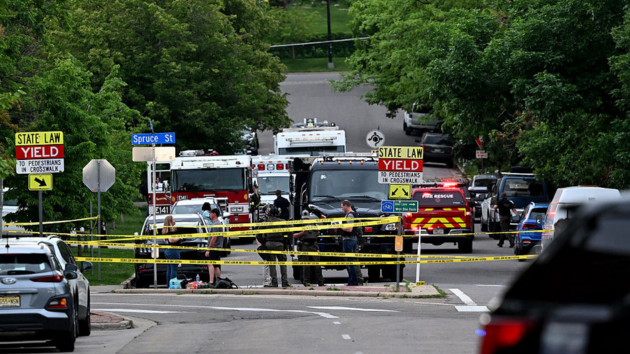
Twelve people, including members of the group Run for Their Lives, an organization that regularly holds demonstrations in Boulder to bring attention to the Israeli hostages still being held in Gaza, were injured in the attack, which unfolded around 1:26 p.m. local time at Boulder’s outdoor Pearl Street Mall, directly across the street from the Boulder County Courthouse, authorities said.
Video taken of the incident showed a shirtless Soliman allegedly holding his makeshift weapons prior to the attack. Soliman was immediately taken into custody without incident. Soliman, who is being held on $10 million bond, made his first court appearance on Monday afternoon. He did not enter a plea to the charges.
Unlike previous high-profile hate-crime investigations, the Boulder attack was immediately described as an act of terrorism, signaling a change in the approach federal investigators have taken in such incidents under the new Trump administration.
“Back when I was in [the FBI], so before 2016, everything was terrorism until it wasn’t terrorism. We still were working off the 9/11 response,” said retired FBI special agent Rich Frankel, an ABC News contributor. “And after that, it appeared that they started calling it hate crime.”
Frankel said the FBI’s decision to immediately refer to the Boulder incident as an act of terrorism is apparently because it allows investigators to use additional laws and investigative techniques, including the Foreign Intelligence Surveillance Act (FISA), which establishes the legal framework for the gathering of intelligence, electronic surveillance and physical searches. He said it also enables prosecutors to file additional enhanced charges.
“If you think there might be an international angle naming a group or a country, it is terrorism and that gives you a whole host of different laws that you can use and also investigative techniques because now you’re under the FISA system, you’re under the secret system. Instead of getting search warrants, you can get a FISA,” Frankel said. “The new administration might want that more than a hate crime.”
President Donald Trump has also used the word terrorism to describe the Boulder case, saying in a post Monday on his Truth Social platform that the suspect “came through Biden’s ridiculous Open Border Policy, which has hurt our Country so badly.”
“He must go out under ‘TRUMP’ POLICY,” Trump added. “Acts of Terrorism will be prosecuted to the fullest extent of the law. This is yet another example of why we must keep our Borders SECURE, and deport illegal, Anti-American Radicals from our Homeland.”
Helen H. Richardson/MediaNews Group/The Denver Post via Getty Images
(BOULDER, CO) — The wife and children of Boulder, Colorado, terrorism suspect Mohamed Soliman are in the custody of U.S. Immigration and Customs Enforcement and the family is being processed for expedited removal, according to the Department of Homeland Security.
“We are investigating to what extent his family knew about this heinous attack, if they had knowledge of it, or if they provided support to it,” Secretary of Homeland Security Kristi Noem said Tuesday. “I am continuing to pray for the victims of this attack and their families. Justice will be served.”
Soliman — who was arrested after allegedly throwing Molotov cocktails in an “act of terrorism” during a pro-Israel demonstration on Sunday — has been in the U.S. on an expired tourist visa, officials said
The father of five was granted a work permit, but that had also expired in March.
Soliman was born in Egypt and lived in Kuwait for 17 years before moving to Colorado Springs three years ago, court documents said.
Secretary of State Marco Rubio wrote on social media on Monday, “In light of yesterday’s horrific attack, all terrorists, their family members, and terrorist sympathizers here on a visa should know that under the Trump Administration we will find you, revoke your visa, and deport you.”
Soliman allegedly said he had been planning Sunday’s attack for one year but waited until his daughter graduated from high school last Thursday to carry it out, state and federal documents said.
Omer Shachar, a co-leader of Run for Their Lives in Boulder, told ABC News he was standing in front of the group outside the Boulder courthouse Sunday afternoon when a man threw a Molotov cocktail under their legs.
Shachar felt “panic right away” as his friends caught fire in front of his eyes.
“They’re literally on fire,” he said. “I don’t know if I can express it enough — literally on fire and trying to pull my friend out of the fire.”
“Once someone could help her, I was reaching out to the [attacker] and try, I don’t know what I thought, but maybe to tackle him … but we saw that he’s approaching to a container full of bottles and realized that it’s not a good idea, so we stepped back,” Shachar said. “We’re trying to keep people away as much as possible, although some of them couldn’t walk. One of them was on the ground where the fire is.”
Shachar said passersby stepped in with water bottles to try to help put out the blaze.
Twelve people were injured, officials said. Two victims remain in the hospital.
Authorities are reviewing a newly released video showing the chaos and panic in the attack’s aftermath.
Soliman, who allegedly disguised himself as a gardener during the attack, told police “he wanted to kill all Zionist people and wished they were all dead,” court documents said. “SOLIMAN stated he would do it (conduct an attack) again.”
He “said this had nothing to do with the Jewish community and was specific in the Zionist group supporting the killings of people on his land (Palestine),” documents said.
Shachar said Run for Their Lives holds a peaceful walk every Sunday to raise awareness about the hostages who remain held in Gaza by Hamas since Oct. 7, 2023.
Participants include those who are “Jewish and non-Jewish, right and left, Israelis and non-Israelis, Americans and non-Americans,” he said. “And people are coming for the same cause — to bring those hostages back home.”
Shachar said he hopes the group can return to their walks soon.
“At the moment, Run for the Lives, the international group, asked to stop walking until we understand better safety arrangements and security arrangements,” he said. “However, personally, I will say that as long as we can do it, and as long that we’re working with the police and we can do it, I will walk until the last hostage is back home.”
Soliman had taken a concealed carry class to learn how to fire a gun, but “had to use Molotov cocktails [for the attack] after he was denied the purchase of a gun due to him not being a legal citizen,” state court documents said.
Sixteen unused Molotov cocktails were within “arm’s reach” of the suspect when he was arrested, FBI Denver Special Agent in Charge Mark Michalek said on Monday.
The unlit Molotov cocktails were “comprised of glass wine carafe bottles or Ball jars containing clear liquid and red rags hanging out of the bottles,” court documents said. Police also found a “backpack weed sprayer, potentially containing a flammable substance. The clear liquid in the glass bottles and weed sprayer were determined to be 87 octane gasoline, which was determined to contain xylene.”
Soliman has been charged with a federal hate crime and state charges including 16 counts of attempted first-degree murder, according to court documents. He appeared in court virtually on Monday. He has yet to enter a plea.
Terry Schmitt/San Francisco Chronicle via Getty Images
(WASHINGTON) — Defense Secretary Pete Hegseth has ordered the Navy to strike the name of gay rights activist Harvey Milk from one of its ships, orchestrating the change as Pride month celebrations take place.
A defense official said the timing of the decision was intentional.
The order was first reported by Military.com and confirmed by ABC News.
The USNS Harvey Milk is one of several ships named after prominent civil rights leaders and activists. A new name has not been announced.
Milk was one of the first openly gay men elected to public office in the United States after winning a seat on the San Francisco Board of Supervisors in 1977. He was assassinated a year later.
Before his death, Milk was credited with encouraging his friend and artist Gilbert Baker, a U.S. Army veteran to create the Pride flag. Milk was played by Sean Penn in the 2008 biographical film “Milk.”
Hegseth and Navy Secretary John Phelan did not immediately respond to requests for comment from ABC News.
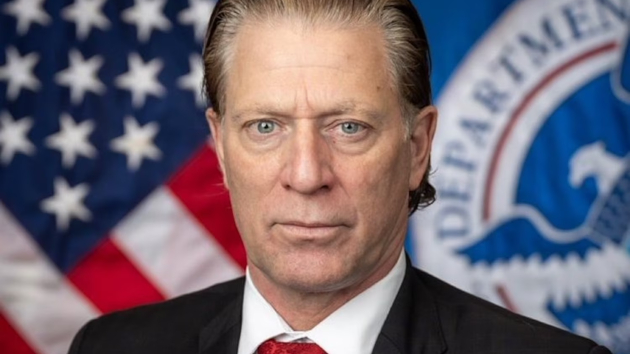
(WASHINGTON) — Acting Federal Emergency Management Agency Director David Richardson told staff in an all-hands meeting that he was unaware hurricane season had started, according to sources familiar with the meeting.
Hurricane season started on Sunday, June 1, and goes through Nov. 30. It is unclear if Richardson, who has led the agency since mid-May, was joking in the Monday meeting, but a Department of Homeland Security spokesperson argued he was.
When asked by reporters Tuesday during a White House press briefing whether President Donald Trump is “still comfortable” with Richardson following his remarks, press secretary Karoline Leavitt dismissed concerns and said FEMA is taking hurricane season “seriously, contrary to some of the reporting we have seen based on jokes that were made and leaks from meetings.”
Reuters first reported on Richardson’s comments.
Richardson’s comments follow an internal review indicating FEMA is “not ready” for the 2025 hurricane season in mid-May.
The DHS spokesperson denied FEMA is unprepared, saying, “Despite meanspirited attempts to falsely frame a joke as policy, there is no uncertainty about what FEMA will be doing this Hurricane Season.”
“FEMA is laser-focused on disaster response and protecting the American people,” the spokesperson added.
Senate Minority Leader Chuck Schumer, D-N.Y., slammed Richardson, posting on X that he is “unaware of why he hasn’t been fired yet.”
“Trump’s FEMA chief is incompetent,” Sen. Ed Markey, D-Mass., added. “People will die.”
The meeting was held Monday morning after Richardson had said he would update staff on a plan to tackle hurricane season.
“It’s not a secret that under Secretary Noem and acting Administrator Richardson, FEMA is shifting from bloated, D.C.-centric dead weight to a lean, deployable disaster force that empowers state actors to provide relief for their citizens,” the spokesperson added. “The old processes are being replaced because they failed Americans in real emergencies for decades.”
However, sources in the meeting said Richardson is sticking with the original plan, made during the Biden administration, in order to avoid getting in the way of FEMA’s Review Council, which was established by President Donald Trump and Homeland Security Secretary Kristi Noem.
Dan Stoneking, a former FEMA official and owner of Stoneking Strategic Communications, argued this reveals that the Trump administration believes its best chance at success this hurricane season is relying on the last administration’s plan, rather than its own.
Still, Stoneking said the original plan was created with more funding and before thousands of employees departed FEMA since the Trump administration took over, which he said would “clearly necessitate changes in planning in order to be successful.”
“This is not laser-focused. This is not empowering,” he said. “It is nothing more than a preamble to a less efficient federal response that this administration has caused but will still erroneously and egregiously blame on their predecessors.”
“You can fool all the people some of the time and some of the people all of the time, but you cannot fool all the people all of the time,” he added.
Leavitt denied that the United States is ill-prepared to handle disasters, saying, “The president will deeply and thoughtfully consider any requests for federal aid that come to his desk.”