(NEW YORK) — The Justice Department and attorneys for President Donald Trump on Friday asked a federal appeals court in New York to delay oral arguments scheduled for next week in Trump’s appeal of his $83 million defamation case.
Trump is appealing a 2024 verdict ordering him to pay former magazine columnist E. Jean Carroll $83 million for defaming her in 2019 when he denied her accusation that he sexually assaulted her in the dressing room of a Bergdorf Goodman department store in the mid-1990s. Trump has denied all allegations.
On Wednesday, a three-judge panel of the 2nd U.S. Circuit Court of Appeals rejected Trump’s attempt to have the government substitute for him as a party in the case — and his attorneys now argue that they should be allowed to appeal before oral arguments take place on June 24.
“The United States and President Trump are entitled to immediate review of the panel’s erroneous Westfall Act decision by this Court en banc and, if necessary, by the Supreme Court,” a joint filing from Trump and the Justice Department said Friday.
DOJ lawyers say that since some of Trump’s alleged conduct in the case fell within the scope of his role as president, the Justice Department should be able to defend him in court.
“The Attorney General certified that President Trump was acting within the scope of his federal office or employment at the time of his 2017 statements, made from the White House, out of which Plaintiff-Appellee’s claims arose. As a result, the United States should have been substituted as a defendant in place of President Trump,” they argued in Friday’s filing.
The 2nd Circuit last week upheld a separate, $5 million damage award to Carroll that Trump must pay.
(HAWAII) — Hawaii’s Kilauea volcano is erupting again in spectacular fashion, sending lava shooting 1,000 feet into the sky, according to the United States Geological Survey.
On Friday morning, “Episode 26” of the ongoing eruption at Halemaʻumaʻu — the pit crater within Kīlauea Caldera at the summit of the volcano — spewed lava fountains that reached massive heights, according to the USGS’sHawaiian Volcano Observatory.
Episode 26 was preceded by small, sporadic spattering and lava overflows, according to the USGS.
Kilauea, one of the most active volcanoes in the world and located on the Big Island, has been especially active in the last several months, erupting dozens of times since December.
In May, Kilauea also spewed leva more than 1,000 feet. On June 11, eruptions at Kilauea measured at more than 330 feet, according to the USGS.
The current eruption began at 1:40 a.m. local time, with lava fountains and flows erupting from the north vent, according to the USGS.
The eruption is flowing into a remote area of Hawaii Volcanoes National Park. Flows have been confined to the Halemaʻumaʻu crater and the southwest side of Kaluapele, Kīlauea’s summit caldera.
The USGS issued a volcano watch – known as a code orange – which means that an eruption is either likely or occurring but with no, or minor, ash.
Volcanic gas emissions and tephra — fragments of rock, minerals and glass — from the lava fountain may be distributed south of the caldera, due to the winds blowing from the north, the USGS said.
Other hazards include Pele’s hair — strands of volcanic glass often produced by lava fountaining activity — crater wall instability ground cracking and rockfalls.
Kīlauea’scaldera rim surroundingHalemaʻumaʻucrater has been closed to the public since 2007 due to such hazards.
Vance, a Marine veteran, will tour a multi-agency Federal Joint Operations Center as well as a Federal Mobile Command Center. He will also meet with leadership and Marines before giving remarks, according to his office.
His visit comes as protests and law enforcement clash in Los Angeles over Immigration and Customs Enforcement’s raids and deportations — a key part of President Donald Trump’s agenda.
Another conflict in the city stems from Trump’s decision to deploy thousands of National Guardsmen and hundreds of Marines to LA against Democratic Gov. Gavin Newsom’s wishes.
A federal appeals court ruled on Thursday that Trump can keep the National Guard in Los Angeles for now — allowing the president to continue to use the military to quell protests against his deportation plans. Trump called the decision a “BIG WIN” in a social media post.
Earlier this month, Vance attacked the protests and used the events unfolding in LA to push for passage of the megabill that would advance Trump’s legislative agenda.
“Insurrectionists carrying foreign flags are attacking immigration enforcement officers, while one half of America’s political leadership has decided that border enforcement is evil,” Vance wrote in an X post. “Time to pass President Trump’s beautiful bill and further secure the border.”
Many Democrats have spoken out against the Trump administration’s immigration practices. Last week, California Sen. Alex Padilla, a Democrat, was forcibly removed from a Homeland Security Secretary Kristi Noem’s news conference on the topic after he said he was trying to ask a question.
(NEW YORK) — A group of cybercriminals hacked into data systems at insurance company Aflac, possibly gaining access to sensitive information such as Social Security numbers and health reports, the company said on Friday.
Aflac, which boasts millions of customers, “identified suspicious activity” and “stopped the intrusion within hours,” the company said.
The company attributed the attack to a “sophisticated cybercrime group” but did not identify the organization.
The cyberattack marks the latest in a string of data breaches targeting insurance companies, including attacks earlier this month against Philadelphia Insurance Companies and Erie Insurance.
“This attack, like many insurance companies are currently experiencing, was caused by a sophisticated cybercrime group. This was part of a cybercrime campaign against the insurance industry,” Aflac said in a statement. The company has opened an investigation into the cyberattack, saying initial findings indicate the cybercriminals deployed “social engineering tactics” or measures that rely on manipulation to gain network access.
Information tied to customers’ insurance claims and personal data may also have been breached in the cyberattack, Aflac said.
“We regret that this incident occurred,” Aflac said. “We will be working to keep our stakeholders informed as we learn more and continue investigating the incident.”
Aflac generated nearly $19 billion in revenue last year, which marked a 1.2% increase over the previous year, according to an earnings release.
(NEW YORK) — A dangerous heat wave is moving in, with more than 100 million people from the Midwest to the Northeast on alert for life-threatening temperatures.
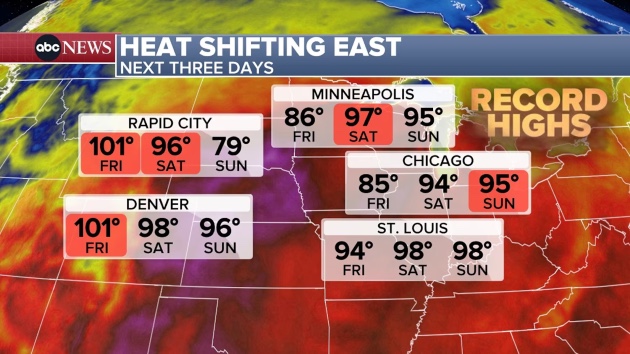
The widespread heat alerts are first impacting Midwest states including Minnesota, Wisconsin, Nebraska and South Dakota. The heat index — what the temperature feels like with humidity — could reach 110 degrees on Friday and Saturday.
Central U.S. cities like Denver and Minneapolis could shatter heat records this weekend. In the Chicago area, the heat index could hit 105 degrees from Saturday to Monday.
The South will also be feeling the heat. The heat index is forecast to hit 104 degrees in Nashville, Tennessee, and Louisville, Kentucky, on Sunday and Tuesday.
The dangerous and record-shattering heat will shift east by the end of the weekend and the start of next week. Daily record highs are possible from Detroit to Raleigh, North Carolina, to Boston on Monday and Tuesday.
In New York City, the heat index is expected to skyrocket to 103 degrees, 107 degrees and 105 degrees from Sunday to Tuesday. In Washington, D.C, the heat index is forecast to jump to 103 degrees, 107 degrees and 108 degrees.
Boston could feel like 102 degrees on Tuesday.
Heat indices up to 107 are also possible in cities including Detroit, Cleveland, Ohio, Pittsburgh and Philadelphia from Sunday to Wednesday.
Doctors recommend taking excessive heat warnings seriously. Over 700 people die from heat-related illnesses every year, according to the Centers for Disease Control and Prevention, and extreme heat is considered the deadliest weather-related hazard in the U.S., according to the Fifth National Climate Assessment.
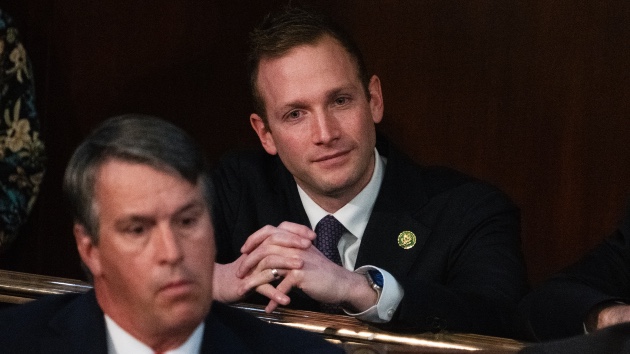
(ROCKY RIVER, Ohio) — Republican Congressman Max Miller says that he was run off the road by a man waving a Palestinian flag in Ohio — an incident that comes amid a heightened environment of political violence.
“The deranged hatred in this country has gotten out of control,” Miller said on social media Thursday. “Today I was run off the road in Rocky River, and the life of me and my family was threatened by a person who proceeded to show a Palestinian flag before taking off. I have filed a police report with Capitol Police and the local police department. We know who this person is and he will face justice.”
“As a Marine, a proud Jewish American and a staunch defender of Israel, I will not hide in the face of this blatant anti-Semitic violence,” Miller continued.
This incident comes amid a disturbing increase in political violence nationwide and in the immediate aftermath of Minnesota State Representative Melissa Hortman and her husband being fatally shot in their home. State Sen. John Hoffman remain in critical condition after he was shot nine times along with his wife Yvette, who was shot eight times. She has since been released from the hospital and is recovering at home.
“As a Marine, a proud Jewish American and a staunch defender of Israel, I will not hide in the face of this blatant anti-Semitic violence,” Miller continued.
This incident comes amid a disturbing increase in political violence nationwide and in the immediate aftermath of Minnesota State Representative Melissa Hortman and her husband being fatally shot in their home. State Sen. John Hoffman remain in critical condition after he was shot nine times along with his wife Yvette, who was shot eight times. She has since been released from the hospital and is recovering at home.
The suspect was apprehended and charged after police investigated “suspicious activity” in Mayor Paul Young’s neighborhood, the Memphis Police Department said Wednesday.
The suspect — 25-year-old Trenton Abston — has been charged with attempted kidnapping, stalking and aggravated criminal trespass, police said. He is detained at the Shelby County Sheriff’s Office jail and is scheduled to appear in court on Friday, online jail records show. It is unclear if he has an attorney at this time.
“Let’s make something abundantly clear to anyone who needs to see this, which, apparently, is a lot of people,” Miller said in his social media post. “If you have an issue with a legislator, your city councilman, your mayor, anyone like that. The appropriate thing to do is to reach out to them for a phone call to set up a meeting at one of our district offices. What is not okay is to assault anyone, whether you are a member of Congress or anybody else within our district when you are driving to work.”
(ORMOND BEACH, Fla.) — Police in Florida have arrested a father who they say is responsible for the death of his 18-month-old son after he left him “helpless in a hot truck” for more than three hours while he got a haircut and went drinking at a local bar, police say.
The Volusia Sheriff’s Office along with the Ormond Beach Police Department arrested 33-year-old Scott Allen Gardner on Thursday and charged him with aggravated manslaughter of a child and child neglect causing great bodily harm, according to a statement from the Volusia Sheriff’s Office.
“Gardner is responsible for the death of his 18-month-old son Sebastian, who was left helpless in a hot truck for more than 3 hours on the afternoon of Friday, June 6, while Gardner got a haircut and then went drinking inside Hanky Panky’s Lounge,” authorities said.
Additionally, Gardner gave multiple false accounts of what occurred that day when he was being investigated by police, officials said.
“It was estimated by medical personnel that Sebastian’s body temperature reached 111 degrees during this tragedy,” police said. “The same OBPD officer who tried to revive Sebastian placed Gardner in handcuffs today as he was taken into custody at his mother’s home in Ormond Beach.”
Officials said they will provide more details of the investigation on Friday and that their investigation is currently ongoing.
(PEORIA, Ariz) — A mother in Arizona has been sentenced to 10 years in prison after driving her pickup truck through “a park full of kids” and running over a 12-year-old girl, officials said.
Maricopa County Attorney Rachel Mitchell announced earlier this week that 31-year-old Brandie Gotch was handed the 10 year sentence which stemmed from an incident that took place in February 2024 when her children “were fighting with each other at Westgreen Park in Peoria,” according to a statement from the Maricopa County Attorney’s Office, and that “other kids at the park were egging them on and recording the altercation.”
“As this was happening, Gotch arrived at the park to pick up her kids. While walking them back to her truck, a boy on the playground called her a name,” officials said. Gotch went over to him and started pulling him by his hair. A second boy called her a name, and she chased him around the park with a stick. Gotch then got into her truck with her kids. The second boy stood behind the truck, dancing and mocking her. He eventually moved away to stand by his sister.”
It is then that authorities say Gotch backed out of the parking space and revved her engine before driving directly at the boy and his sister.
“He was able to jump out of the way, but his sister’s leg was run over,” officials said. “Gotch kept driving through the park where more than a dozen other children were at the time, including some who had to run to get out of the truck’s path.”
Gotch immediately drove away from the park but was arrested at home a short time later, officials said. “This could have been a much more tragic situation; thankfully the worst injury in this was a sprained ankle and some bad scrapes and bruises,” said Maricopa County Attorney Rachel Mitchell. “Even when angry or frustrated, it’s up to adults to act like adults. It is never okay to take to take our rage out on a kid.”
Gotch pleaded guilty to three counts of aggravated assault — a class two dangerous felony — will now serve 10 years in prison, according to the Maricopa County Sheriff’s Office.
Maksim Konstantinov/SOPA Images/LightRocket via Getty Images
(LONDON) — Russia announced on Thursday that it is returning to Ukraine five children who have been separated from their families by the war.
Maria Lvova-Belova, the Kremlin’s commissioner of children’s rights, told reporters that the Ukrainian children will be reunited with their families in Ukraine by the end of this month.
The children were on a list of 339 children that Ukrainian officials gave their Russian counterparts during the last round of peace talks earlier this month in Istanbul, Turkey — negotiations that failed to bring the three-year war to an end.
In response to a question from the Russian news agency Interfax, Lvova-Belova, speaking to reporters on the sidelines of the St. Petersburg International Economic Forum, said the delay in sending the Ukrainian children back to their county was “due to their studies.”
“They are finishing the school year and after that they will return to their relatives in Ukraine,” she said.
Lvova-Belova did not mention status of the other children on Ukraine’s list.
According to Lvova-Belova, Russia is preparing its own list of Russian children believed to be in Ukraine. She said it will be handed over to Ukrainian officials whenever the next round of negotiations is scheduled.
“We also have children in Ukraine who require reunification with Russian families,” Lvova-Belova said. “At the moment, we have eight children on the list who are in EU countries. They were evacuated there from Ukraine, and their parents are in Russia. And from Ukraine, we have about 10 people, with whom we are also currently negotiating their return.”
Ukrainian officials have alleged that many of the country’s children have been abducted and taken to Russia since the war began in February 2022, when Russian troops invaded Ukraine.
In 2023, the International Criminal Court issued warrants for the arrest of Russian President Vladimir Putin on war crimes charges related to the abduction of Ukrainian children.
The Kremlin, however, has denied the allegations, saying the children were taken out of war zones for their own protection.
ABC News’ Anna Sergeeva contributed to this report.
(NEW YORK) — Warming waters are causing the colors of the ocean to change — a trend that could impact humans if it were to continue, according to new research.
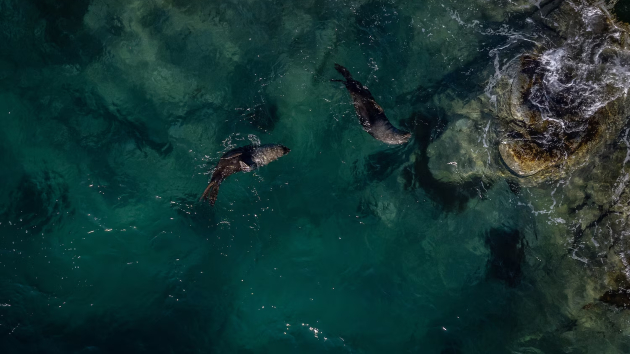
Satellite data shows that ocean waters are getting greener at the poles and bluer toward the equator, according to a paper published Thursday in the journal Science.
The change in hue is being caused by shifting concentrations of a green pigment called chlorophyll, which is produced by phytoplankton, Haipeng Zhao, a postdoctoral researcher and lead author of the paper, told ABC News.
Phytoplankton are photosynthetic marine organisms. As algae, phytoplankton has photosynthetic pigments, which absorb green light and cause the waters around it to appear primarily green, Susan Lozier, dean of the College of Sciences at the Georgia Institute of Technology and co-author of the paper, told ABC News. Where phytoplankton are absent, the water appears blue.
The researchers analyzed satellite data on the open ocean collected from 2003 to 2022 by a NASA instrument that combs through the planet every two days to measure light wavelength, according to the paper.
The presence of chlorophyll in open ocean is a proxy for concentrations of phytoplankton biomass. The colors indicate how chlorophyll concentration is changing at specific latitudes, in which the subtropics are generally losing chlorophyll, and the polar regions — the high-latitude regions — are greening, the researchers said.
Green areas became greener, especially in the northern hemisphere, and blue regions “got even bluer,” according to a press release by Duke University.
“We borrowed concepts from economics called the Lorenz curve and the Gini index, which together show how wealth is distributed in a society,” said Nicolas Cassar, the Lee Hill Snowdon Bass chair at Duke University’s Nicholas School of the Environment, in a statement. “So, we thought, let’s apply these to see whether the proportion of the ocean that holds the most chlorophyll has changed over time.”
The researchers examined how the patterns they observed were affected by variables like sea surface temperature, wind speed, light availability and mixed layer depth.
Warming seas correlated with changes in chlorophyll concentration, they found. The other variables did not show any significant associations to chlorophyll concentration.
However, the findings cannot be solely attributed to climate change, the authors said.
The study period was too short to rule out the influence of recurring climate phenomena, Lozier said.
“We haven’t been able to observe the ocean for decades and decades, just because the satellite technology is pretty new,” Lozier said.
After focusing his Ph.D. on regional studies in high-latitude oceans, Zhao said he was inspired to dive deeper to see whether oceans were transforming in color throughout the rest of the world.
“The ocean has been warming, so there’s a big question then about, what are the biological consequences of the ocean warming?” Lozier said.
Several studies since the 1990s have documented enhanced greening on land, attributed to average leaf color increasing due to rising temperatures and other factors, according to the researchers. However, documenting such changes in the ocean has proven to be more difficult.
The satellite images provide data on the chlorophyll production at the surface, but the picture is still incomplete, the researchers said.
If the trend continues, marine food webs could be impacted, the researchers said. Since phytoplankton are at the base of the food chain, it can be used to determine the presence of fish, too, Lozier said.
A persistent decline in phytoplankton near the equator could cause a redistribution of the location of fisheries, the authors said. This could be especially impactful in low to middle-income nations, such as the Pacific Islands, that rely on commercial fishing for food and economic development, the authors said.