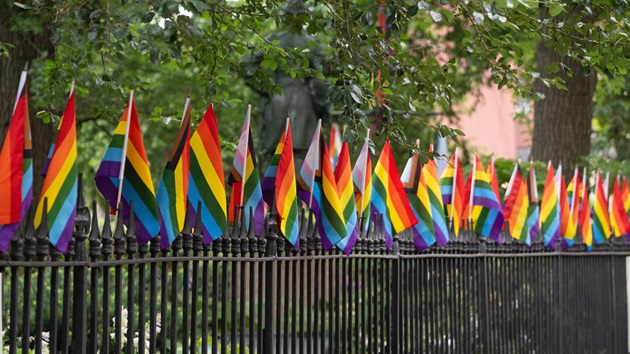
Pride flags are seen outside Stonewall National Monument Visitor Center during the 2024 NYC Pride March on June 30, 2024 in New York City. (Noam Galai/Getty Images)
The group gathered at the Stonewall National Monument on Thursday morning and called on the NPS, which is overseen by the U.S. Department of the Interior, to restore the flag. It became the first rainbow flag to fly on federally-funded land after it was permanently installed by NPS in 2021, during the Biden administration.
The group gathered at the Stonewall National Monument, a federal site honoring the LGBTQ movement, on Thursday morning and called on the NPS to restore the flag. It became the first rainbow flag to fly on federally-funded land after it was permanently installed by NPS in 2021, during the Biden administration.
NPS is overseen by the U.S. Department of the Interior.
“We sent a letter to the National Park Service to demand the return of the flag. Now, if you think about it, the fact that we even need to be here today is outrageous,” New York City Council Speaker Julie Menin said on Thursday morning amid changes of “return the flag!”
“It’s unconscionable. It’s unacceptable. This is an effort by the Trump administration to erase the LGBTQ community, and we will not stand for it,” she added.
The Trump administration didn’t immediately respond to ABC News’ request for comment.
Manhattan Borough President Brd Hoylman-Sigal, who reflected on the significance of the pride flag in a Tuesday interview on ABC News Live Prime, vowed on Thursday morning that the flag will be re-raised on the grounds of the Stonewall Monument that afternoon.
“We speak united in that Donald Trump and his minions in Washington cannot and will not erase us. Am I right about that?” Hoylman-Sigal said. “So today, so today, at 4 p.m. we will be gathering again here, and I hope many of you will join us, and we will re-raise our pride flag in the memory of those whose shoulders we stand on, who fought for LGBTQ equality and who point the direction forward for generations of queer Americans.”
Asked about the plan to re-raise the flag, NPS did not respond to requests for comment.
The NPS communications office confirmed the removal of the rainbow flag in a statement to ABC News on Tuesday morning. It said that, under federal guidance, “only the U.S. flag and other congressionally or departmentally authorized flags are flown on NPS-managed flagpoles, with limited exceptions.”
“Any changes to flag displays are made to ensure consistency with that guidance. Stonewall National Monument continues to preserve and interpret the site’s historic significance through exhibits and programs,” the statement continued.
The removal of the flag comes after President Donald Trump directed Interior Sec. Doug Burgum in a March 2025 executive order to remove “divisive” and “anti-American” content from museums and national parks. Asked if the removal of the pride flag was in response to Trump’s order, NPS did not comment.
New York State Sen. Erik Bottcher said during the press conference on Thursday morning that NPS installed an American flag in place of the Stonewall pride flag.
“What they’re trying to do is set us up to take down the American flag and pit the rainbow flag against the American flag,” Bottcher said. “We’re not going to do that because the rainbow flag is completely compatible with the American flag, because our movement, the LGBTQ rights movement, is an American civil rights movement.”
Stonewall National Monument was designated a national monument by President Barack Obama in June 2016, becoming the first federal monument dedicated to LGBTQ+ rights.
It is located near the Stonewall Inn, a historic gay bar in the neighborhood that was a safe haven for many in the LGBTQ+ community in the 1960s. The bar was violently raided by the NYPD in 1969, leading to riots that became known as the Stonewall Uprising, which is credited with kickstarting the modern LGBTQ+ movement. The NYPD publicly apologized for the raid in 2019.
“The flag is more than a piece of cloth. It’s a symbol of how diverse we are, the colors stand for joy and harmony,” New York Assemblyman Tony Simone said on Thursday morning. “They want to erase us. We’re not going anywhere. We will grow in numbers. Get off your couches. We need to rise up in this nation … this is our America too.”
Signage at the Environmental Protection Agency (EPA) headquarters in Washington, DC, US, on Tuesday, Feb. 10, 2026. Stefani Reynolds/Bloomberg via Getty Images
(WASHINGTON) — The Environmental Protection Agency is walking back a landmark environmental decision to regulate greenhouse gas emissions and fight climate change.
For more than 16 years, the EPA’s endangerment finding served as the scientific and legal foundation for federal regulations on carbon dioxide and five other heat-trapping greenhouse gases. The 2009 decision found that certain greenhouse gases endanger public health and welfare. The regulations that resulted cover everything from vehicle tailpipe emissions to the release of greenhouse gases from power plants and other significant emission sources.
President Donald Trump, joined by EPA Administrator Lee Zeldin, is expected to announce the decision on Thursday.
In a statement to ABC News, the EPA said it’s “actively working to deliver a historic action for the American people. Sixteen years ago, the Obama Administration made one of the most damaging decisions in modern history – the 2009 Endangerment Finding. In the intervening years, hardworking families and small businesses have paid the price as a result.”
Some climate scientists and policy experts say the agency’s decision to repeal the finding, even just for cars and trucks, could significantly affect U.S. efforts to address human-amplified climate change. The EPA calculates that the transportation sector is the largest contributor of direct greenhouse gas emissions in the country, with cars and trucks accounting for more 75% of those emissions.
“This is taking away the principal federal authority to regulate greenhouse gases. All of the federal regulations under the Clean Air Act to regulate greenhouse gases depend on the endangerment finding. If it’s wiped out, none of those regulations exist,” said Michael Gerrard, a professor at Columbia Law School and the faculty director of the Sabin Center for Climate Change Law.
Gerrard said the immediate impact of the EPA’s decision will be somewhat muted by the fact that the Trump administration has already revoked most regulations on greenhouse gas emissions.These include greenhouse gas emission limits on passenger vehicles, emission controls on fossil fuel-powered power plants, and controls on methane leakage from oil and gas wells.
“But this action attempts to be the nail in the coffin of all those regulations, at least for the balance of the Trump administration,” Gerrard added.
Saying the decision “amounts to the largest act of deregulation in the history of the United States,” the Trump administration estimates the move will save Americans $1.3 trillion, primarily by reducing the cost of cars and trucks. The EPA said consumers will save more than $2,400 on the purchase of a new vehicle.
But Lou Leonard, dean of Clark University’s School of Climate, Environment, and Society, says the repeal could also result in companies facing more financial and legal challenges.
“It’s going to expose, particularly businesses that are very fossil fuel intensive, to legal claims that they might not have otherwise been exposed to,” said Leonard.
“When the EPA vacates the space legally and says we’re not going to regulate, we’re out of this game, then that not only creates room for other state and local governments to do their regulation, but it also creates room for legal claims against companies for not acting on climate, because they can’t say, well, we’re just following the regulations that the federal government has created,” he added.
“The EPA’s 2009 endangerment finding triggered a trillion-dollar regulatory cascade that Congress never authorized,” the conservative nonprofit Pacific Legal Foundation said in a statement to ABC News. “What began as authority to address regional smog and acid rain has been stretched to vehicle emissions, power plants, oil and gas operations, and federal lands – reshaping America’s entire energy economy and ability to harness natural resources through administrative fiat.”
The EPA’s expected repeal of the 2009 finding “restores the principle that decisions of this magnitude require clear congressional authorization, not bureaucratic improvisation,” the statement continued.
A widely anticipated decision
The announcement from the administration was widely anticipated; the Trump administration has made the endangerment finding’s review a priority since the first day of Trump’s second term.
On Jan. 20, 2025, Trump signed an executive order titled “Unleashing American Energy” that required the head of the EPA to work with other agencies to “submit joint recommendations to the Director of OMB on the legality and continuing applicability of the Administrator’s findings” regarding the endangerment finding. The order gave them 30 days to respond.
Then, in March, the EPA announced more than two dozen policy recommendations aimed at rolling back environmental protections and eliminating a series of climate change regulations, including plans to “formally reconsider the endangerment finding.”
In a statement at the time, EPA Administrator Lee Zeldin wrote, “The Trump Administration will not sacrifice national prosperity, energy security, and the freedom of our people for an agenda that throttles our industries, our mobility, and our consumer choice while benefiting adversaries overseas. We will follow the science, the law, and common sense wherever it leads, and we will do so while advancing our commitment towards helping to deliver cleaner, healthier, and safer air, land, and water.”
As part of the March announcement, the agency released a fact sheet about the endangerment finding, describing it as “the first step in the Obama-Biden Administration’s (and later the Biden-Harris Administration’s) overreaching climate agenda” and stating that it has cost the country trillions of dollars.
The EPA announced its proposal to rescind the endangerment finding in late July 2025, citing recent Supreme Court decisions that limited the regulatory power of executive agencies and arguing that the Obama administration misinterpreted Congress’s intent when it passed the Clean Air Act.
The Supreme Court case that led to the endangerment finding
The endangerment finding stems from the 2007 Supreme Court decision Massachusetts v. EPA, which held that the EPA could regulate greenhouse gases from motor vehicles under the 1970 Clean Air Act because those gases are air pollutants.
That ruling became the legal foundation for many of the federal government’s greenhouse gas emissions regulations for vehicles, fossil-fuel power plants, and other sources of pollution responsible for climate change.
Writing for the court at the time, Justice John Paul Stevens said, “If EPA makes a finding of endangerment, the Clean Air Act requires the agency to regulate emissions of the deleterious pollutant from new motor vehicles.”
“Under the clear terms of the Clean Air Act, EPA can avoid taking further action only if it determines that greenhouse gases do not contribute to climate change or if it provides some reasonable explanation as to why it cannot or will not exercise its discretion to determine whether they do,” Stevens added.
In 2009, the head of the EPA made a landmark environmental decision. Lisa P. Jackson, appointed by President Barack Obama to lead the agency, determined that the current and projected concentrations of six greenhouse gases, including carbon dioxide, “endanger both the public health and the public welfare of current and future generations.” Her decision, based on a nearly 200-page EPA analysis of the science, more than 380,000 public comments and two public hearings, became what is now known as the “endangerment finding.”
Critics of decision say the underlying science is even stronger today
Critics of the administration’s plan to rescind the finding argue that the science linking greenhouse gas emissions to climate change is even stronger today than when the endangerment finding was established in 2009. They argue that the repeal lacks both a scientific basis and a legal foundation and will exacerbate the harmful impacts of climate change. Some are already promising to fight the decision in court.
“The Trump administration justifies this assault on science and our health by falsely claiming that U.S. climate-heating pollution doesn’t matter and that it lacks the authority to cut it. That’s a lie, and any 6-year-old knows it’s wrong to lie,” said Dan Becker, director of the Center for Biological Diversity’s Safe Climate Transport Campaign, in a statement to ABC News.
“The United States is the second-largest carbon polluter in the world after China, and the largest historical emitter of greenhouse gases. The U.S. emitted 11% of the world’s greenhouse gases in 2021, and during Trump’s first term his administration admitted that emissions in excess of 3% were ‘significant,’” he added.
“EPA’s own settled science shows that managing greenhouse gases is fundamental to protecting Americans. Rolling back these safeguards is a dangerous breach of responsibility to protect people, the environment, and our economy, benefitting polluters at the expense of all people,” said World Resources Institute (WRI) U.S. Director David Widawsky in a statement.
Overwhelming scientific evidence
In the more than 16 years since the EPA issued its 2009 endangerment finding, the science on how greenhouse gases impact human health has become more robust.
In response to the EPA’s request for public input, the National Academies of Sciences, Engineering, and Medicine conducted a comprehensive independent assessment of the science behind the endangerment finding to help inform the agency’s final decision. They released their report in September, concluding the EPA’s 2009 determination was accurate and is now supported by stronger scientific evidence, with many uncertainties that existed at the time now resolved.
“[T]he evidence for current and future harm to human health and welfare created by human-caused greenhouse gases is beyond scientific dispute,” the report stated.
The National Academies of Sciences, Engineering, and Medicine are private, nonprofit institutions that provide independent, objective analysis and advice to the nation on such issues. They operate under an 1863 congressional charter to the National Academy of Sciences, signed by President Abraham Lincoln.
Similarly, the United Nations concluded that “health and the climate are inextricably linked, and today the health of billions is endangered by the climate crisis.” The U.N. cited severe weather events, toxic air pollution, an increased risk of infectious disease outbreaks, and extreme heat as evidence that human-amplified climate change poses a significant danger to people.
In 2021, 200 leading medical journals issued a joint editorial stating that “the science is unequivocal: a global increase of 1.5° C above the pre-industrial average and the continued loss of biodiversity risk catastrophic harm to health that will be impossible to reverse.”
And in 2023, the Fifth National Climate Assessment, a report that the federal government describes as providing “authoritative scientific information about climate change risks, impacts, and responses in the U.S.,” found that “climate changes are making it harder to maintain safe homes and healthy families; reliable public services; a sustainable economy; thriving ecosystems, cultures, and traditions; and strong communities.”
“This is another setback in the fight against climate change. We’re already seeing climate change having very negative impacts. It worsens flooding, heat waves, wildfires and other impacts. We’ve seen catastrophes already in the United States for all of these. We will see more,” Gerrard said.
What happens next?
A coalition of state attorneys general, including those from California, New York, Connecticut, and Massachusetts, along with environmental groups such as the Natural Resources Defense Council, has indicated they will challenge the EPA’s decision. They argue the action is unlawful because it ignores the agency’s obligations under the Clean Air Act to regulate pollutants that endanger public health and welfare.
“This action is unlawful, ignores basic science, and denies reality. We know greenhouse gases cause climate change and endanger our communities and our health – and we will not stop fighting to protect the American people from pollution,” said California Governor Gavin Newsom and Wisconsin Governor Tony Evers, who are also the co-chairs of the U.S. Climate Alliance.
While the courts could overturn the repeal, Gerrard said they could also rule that the EPA needs congressional authorization for significant regulatory actions.
“If the Supreme Court says that, that would tie the hands of another president in reinstating the endangerment finding and in using the Clean Air Act to regulate greenhouse gases. It would not block another president from rejoining the Paris Agreement or doing lots of other things to fight climate change, but it would greatly hurt their ability to use the Clean Air Act,” said Gerrard.
Previous lawsuits challenged the endangerment finding itself, but the courts have consistently rejected those efforts. In 2012, the D.C. Circuit Court of Appeals upheld the endangerment finding after fossil fuel industry groups challenged the EPA’s use of scientific assessments. The court ruled that the EPA’s findings were supported by substantial evidence and that the agency had considered the scientific evidence in “a rational manner.” The following year, the Supreme Court declined to hear petitions specifically contesting the finding.
Leonard warns that it will be a “long road” to learn out how the decision plays out.
“There’s a lot of uncertainty, and we’re gonna have even more starting tomorrow or the next day, and that’s not good. It’s not good for the public health of Americans, it’s not good for the welfare of our communities, and it’s not good for the business climate and the economy in America,” said Leonard.
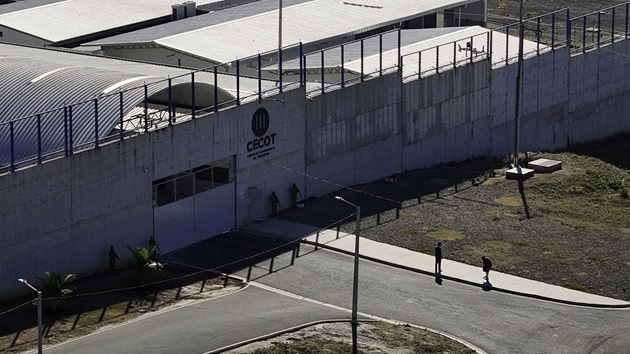
In an aerial view Salvadorian armed forces stand guard outside CECOT (Counter Terrorism Confinement Center) where thousands of accused gang members are imprisoned on December 15, 2025 in Tecoluca, El Salvador. John Moore/Getty Images
(WASHINGTON) — U.S. District Judge James Boasberg has ordered the Trump administration to facilitate the return of the Venezuelan migrants who were were deported to El Salvador’s CECOT prison last year in violation of a court order.
Boasberg on Thursday criticized the administration’s refusal to offer remedies for the deportees for what he called “flagrant” due-process violations.
“Our starting point is the Court’s prior finding that the deportees were denied due process,” Boasberg wrote. “Against this backdrop, and mindful of the flagrancy of the Government’s violations of the deportees’ due-process rights that landed Plaintiffs in this situation, the Court refuses to let them languish in the solution-less mire Defendants propose.”
The judge’s order requires the government to provide “boarding letters” and cover the financial cost of air travel for the Venezuelans currently in third countries who “so desire” to return to the U.S.
This is a developing story. Please check back for updates.
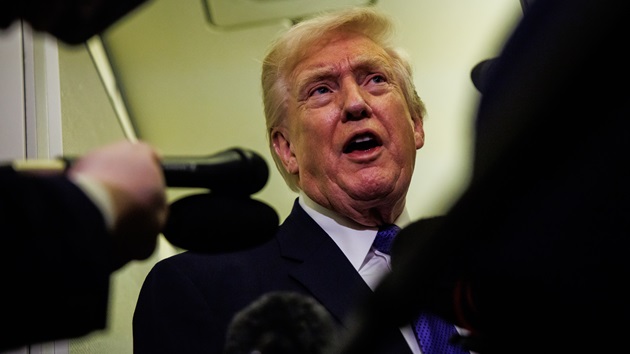
U.S. President Donald Trump gaggles with reporters while aboard Air Force One on February 6, 2026 en route to Palm Beach, Florida. Samuel Corum/Getty Images
(NEW YORK) — The fight over the Trump administration’s appointment of U.S. attorneys has taken another turn with the Justice Department’s firing of a newly appointed U.S. attorney in Northern New York.
After the DOJ’s appointment of acting U.S. Attorney John Sarcone III ran out, a court on Wednesday appointed Donald Kinsella to lead the U.S. attorney’s office in that district, according to a notice from the court.
But just hours after Kinsella’s appointment, Deputy Attorney General Todd Blanche fired him.
The ongoing battle centers on who has the right to select the prosecutors who lead the nation’s U.S. attorneys offices, with the Justice Department appointing a series of acting attorneys general despite laws that don’t allow those positions to be filled by consecutive interim nominees without either Senate confirmation or appointment by the federal judiciary.
“Judges don’t pick U.S. Attorneys. @POTUS does. See Article II of our Constitution. You are fired, Donald Kinsella,” Blanche tweeted Wednesday, hours after Kinsella’s appointment by the court.
The head of the White House Presidential Personnel Office, Dan Scavino, tweeted that Kinsella should “check your email.”
Last fall a court found that Lindsey Halligan, a former White House aide who was appointed by President Donald Trump as interim U.S. attorney for the Eastern District of Virginia, had been unlawfully appointed because the law doesn’t allow the position to be filled by two interim nominees in a row, in violation of the U.S. Constitution’s Appointments Clause.
After a federal judge threw out the indictments Halligan obtained against former FBI Director James Comey and New York Attorney General Letitia James, Attorney General Pam Bondi filed an appeal this week arguing that she has the authority to address U.S. attorney vacancies.
Trump’s former personal attorney, Alina Habba, was disqualified in December from serving as interim U.S. attorney in New Jersey after the Trump administration sought to extend her appointment, and courts in Nevada and California have made similar rulings involving the appointments of acting U.S. attorneys in those districts.
The Arleigh Burke-class guided missile destroyer USS Truxtun departs Naval Station Norfolk, Feb. 3, 2026. (Petty Officer 2nd Class Derek Co/US Navy)
(NEW YORK) — A rare collision at sea between two U.S. Navy ships occurred in the Caribbean on Wednesday, leaving two personnel with minor injuries, according to U.S. Southern Command.
“Yesterday afternoon, the Arleigh Burke-class guided missile destroyer USS Truxtun (DDG103) and the Supply-class fast combat support ship USNS Supply (T-AOE-6) collided during a replenishment-at-sea,” Col. Emmanuel Ortiz, a U.S. Southern Command spokesman, said in a statement.
He added that “two personnel reported minor injuries and are in stable condition.”
“Both ships have reported sailing safely. The incident is currently under investigation,” Ortiz said.
It is unclear if the two injured were aboard the destroyer, the supply ship or both ships.
During a replenishment at sea, two ships sail side-by-side at a close distance and supplies are transferred to the receiving ships via a cable fired from one ship to the other.
The Wall Street Journal was first to report that a collision had occurred between the two ships.
Collisions at sea are very rare for U.S. Navy ships with the most recent one before Wednesday’s incident taking place on Feb. 12, 2025, in the Mediterranean Sea when the aircraft carrier USS Harry S. Truman collided with a merchant ship off of Port Said, Egypt. The collision caused enough damage to the carrier that it had to make a port of call to receive repairs.
While no injuries occurred in that collision, a subsequent Navy investigation determined that a slight adjustment in the course of either ship could have led to a mass-casualty event.
A damage assessment for the Wednesday collision is being made that will help determine whether the ships will proceed with their deployments or will return to port, according to a U.S. official.
The Truxtun had just left its homeport of Norfolk, Virginia, on Feb. 6 to begin its deployment to the Caribbean as part of the large U.S. Naval presence built up over the last couple of months and that has remained in place following the seizure of Venezuelan President Nicolas Maduro.
There are currently 11 U.S. Navy ships operating in the Caribbean including the aircraft carrier USS Gerald R. Ford.
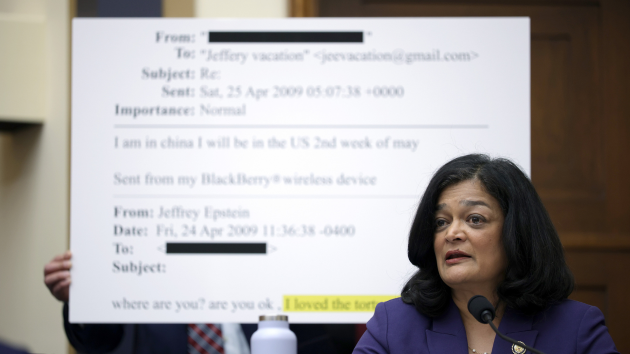
U.S. Rep. Pramila Jayapal (D-WA) questions U.S. Attorney General Pam Bondi before the House Judiciary Committee in the Rayburn House Office Building on February 11, 2026 in Washington, DC. Bondi is expected to face questions on her department’s handling of the files related to the convicted sex offender Jeffrey Epstein, President Trump’s investigations into political foes and the handing of the two fatal ICE shootings of U.S. citizens. (Alex Wong/Getty Images)
(WASHINGTON) — House Democratic Rep. Pramila Jayapal accused Attorney General Pam Bondi of “spying” on her search history when the congresswoman visited the Department of Justice earlier this week to view unredacted Jeffrey Epstein files.
“It is totally inappropriate and against the separations of powers for the DOJ to surveil us as we search the Epstein files,” Jayapal said in a post on X. “Bondi showed up today with a burn book that held a printed search history of exactly what emails I searched. That is outrageous and I intend to pursue this and stop this spying on members.”
Photos from a House Judiciary Committee hearing at which Bondi appeared on Wednesday show printouts she referenced were titled: “Jayapal Pramila Search History.”
A diagram on the page shows several documents from the DOJ’s Epstein files that Jayapal searched. File numbers and brief descriptions of the contents are shown, according to photos taken of Bondi’s document.
Rep. Jamie Raskin, the ranking Democrat on the committee, said in a statement that he plans to ask the DOJ’s inspector general to launch an inquiry into whether the DOJ monitored lawmakers’ search history while reviewing the Epstein files.
“It is an outrage that DOJ is tracking Members’ investigative steps undertaken to ensure that DOJ is complying with the Epstein File Transparency Act and using this information for the Attorney General’s embarrassing polemical purposes. DOJ must immediately cease tracking any Members’ searches,” Raskin said.
At the outset of Wednesday’s hearing, Raskin used his opening statement to condemn Bondi’s use of a so-called “burn book” to prepare attacks against Democratic members.
“We saw your performance in the Senate and we are not going to accept that,” Raskin warned. “This isn’t a game. In the Senate you brought something with you called a burn book, a binder of smears to attack members personally for doing the people’s work of oversight. Please, set the burn book aside and answer questions.”
Those comments came as Raskin opened Wednesday’s combative hearing, where Bondi sparred with lawmakers, traded insults with them and at times refused to answer their questions.
The Department of Justice did not immediately respond to ABC’s request for comment.
Since Monday, lawmakers have been allowed to visit the DOJ to view unredacted Epstein files — which has prompted fierce backlash from lawmakers critical of redactions that were maintained by the Department in defiance of the Epstein Transparency Act, which only allowed redactions to protect victims and their personally identifiable data and information.
Another lawmaker who visited the secure facility at the Department of Justice to view the unredacted documents, Republican Rep. Nancy Mace, of South Carolina, said she believed the department was tracking her as she conducted her review on Wednesday.
“Yes. I will confirm. DOJ is tracking the Epstein documents Members of Congress search for, open, and review,” Mace posted on X. “I was able to navigate the system today and I won’t disclose how or the nature of how; but confirmed the DOJ is TAGGING ALL DOCUMENTS Members of Congress search, open and review. Based on how I confirmed this, there are timestamps associated with this tracking.”
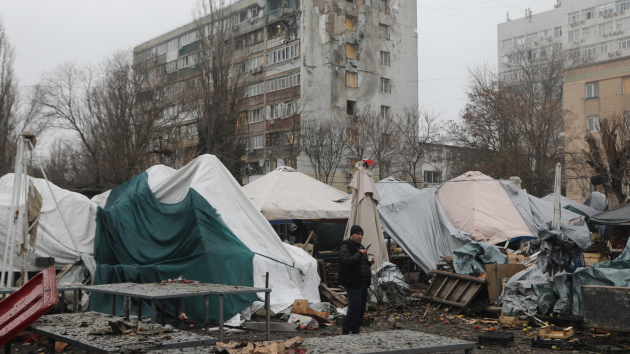
A view of the destruction in the area following Russia’s drone attack in the city of Odessa, Ukraine on February 12, 2026. (Artur Shvits/Anadolu via Getty Images)
(LONDON) — Ukrainian President Volodymyr Zelenskyy said on Wednesday that Russia is yet to respond to a U.S.-backed energy truce, as the two combatants continue to exchange long-range drone and missile strikes amid American-led peace talks.
Recent trilateral U.S.-Ukraine-Russia talks in the United Arab Emirates were described by all sides as constructive, though appear to have failed to find a breakthrough on several contentious points or secure a new truce covering critical energy infrastructure.
After the most recent round of talks last week, Zelenskyy said that U.S. officials proposed a temporary pause in attacks on energy targets, which would have mirrored the brief pause on such attacks that occurred at the end of January.
Zelenskyy said on Thursday that Kyiv is yet to receive a response from Moscow on the purported offer. “On the contrary, we’ve received a response in the form of drone and missile attacks. This suggests that they are not yet ready for the energy ceasefire proposed in Abu Dhabi by the American side,” he said.
Ukraine’s air force said Russia launched 25 missiles and 219 drones into the country overnight, of which 16 missiles and 197 drones were shot down or suppressed.
The impacts of nine missiles and 19 drones were reported across 13 locations, the air force said. “The main targets are Kyiv, Kharkiv, Dnipro and Odesa,” the air force wrote on Telegram.
Four people, including two children, were also injured in strikes on the central city of Dnipro, Ukraine’s Interior Ministry said. An earlier strike on the Synelnykove city just outside of Dnipro killed four people and injured three others, the regional administration said in posts to Telegram.
The Interior Ministry said that at least 13 people were injured in a series of drone strikes in the city of Barvinkove in the northeastern Kharkiv region.
The regional military administration in Odesa said one person was also injured there by Russian strikes.
The Interior Ministry reported damage to several areas of the capital. At least two people were injured by the attacks on Kyiv, according to the head of the city’s military administration, Tymur Tkachenko.
Kyiv Mayor Vitali Klitschko said that almost 2,600 residential buildings were left without heating due to “damage to critical infrastructure targeted by the enemy.”
In total, approximately more than 1 million people without heating in the Ukrainian capital, according to Klitschko and Deputy Prime Minister Oleksiy Kuleba.
DTEK — Ukraine’s top private energy firm — reported major damage to its energy infrastructure in Odesa, plus an attack on a thermal power plant.
Ukrenergo, the state energy transmission operator, reported power outages in Kyiv, Odesa and Dnipropetrovsk.
Ukrainian Foreign Minister Andrii Sybiha described the attacks as “Russian terror” in a post to X. “Each such strike is a blow to peace efforts aimed at ending the war. Russia must be forced to take diplomacy seriously and deescalate,” he said.
Zelenskyy said in a post to Telegram, “There needs to be more protection against these attacks.”
“The most effective defense against Russian ballistic missiles is the ‘Patriot’ system, and the supply of missiles for these systems is needed every day,” he added, referring to the U.S.-made surface-to-air missile platform.
“Everything currently available in the air defense program should arrive faster,” he said.
Ukraine continued its own drone strike campaign overnight. The Russian Defense Ministry said its forces shot down 106 Ukrainian drones overnight into Thursday morning.
Belgorod Gov. Vyacheslav Gladkov reported that two people were killed in drone attacks. At least 15 other people were injured across the region by Ukrainian attacks, the governor said. Gladkov also said Ukrainian forces fired several missiles into the region.
Local officials in the Volgograd, Tambov and Voronezh reported damage to industrial sites and falling drone debris in or close to residential areas.
Russia’s federal air transport agency, Rosaviatsiya, reported temporary flight restrictions for airports in Kaluga, Volgograd, Saratov, Yaroslavl, Kotlas, Ukhta, Perm and Kirov.
Ukraine’s General Staff said in a statement posted to social media that among the targets of the strikes were the main arsenal of Russia’s missile and artillery forces in the Volgograd region. “This arsenal is one of the largest ammunition storage sites of the Russian army,” the General Staff said.
The ongoing peace talks have seen no easing of long-range strikes by either side, as the fourth anniversary of Moscow’s February 2022 full-scale invasion approaches.
As yet, no next round of talks have been scheduled. Zelenskyy said the U.S. had proposed a new trilateral meeting to be held in Miami, but that, “So far, as I understand it, Russia is hesitating.”
“We are ready. It doesn’t matter to us whether the meeting will be in Miami or Abu Dhabi. The main thing is that there should be a result,” the Ukrainian president said.
Kremlin spokesperson Dmitry Peskov told journalists on Thursday that Moscow had “a certain understanding” regarding the next round of talks. “We expect the next round to take place soon. We’ll also give you directions on the location,” he added, as quoted by the state-run Tass news agency.
Russian Foreign Ministry officials have this week been critical of the ongoing peace push.
Foreign Minister Sergey Lavrov this week suggested that the U.S. side had drifted from the understandings reached between Moscow and Washington at the August meeting between Presidents Donald Trump and Vladimir Putin in Alaska.
Lavrov also said Trump’s administration had failed to roll back former President Joe Biden-era sanctions against Moscow.
Lavrov and Foreign Ministry spokesperson Maria Zakharova framed the lack of progress as the fault of Kyiv and its European backers.
“At the current stage, it is the European Union that is preventing the Kyiv regime from making any compromises in exchange for promises to provide everything necessary to continue military operations,” Zakharova said in a briefing on Thursday, as quoted by Tass.
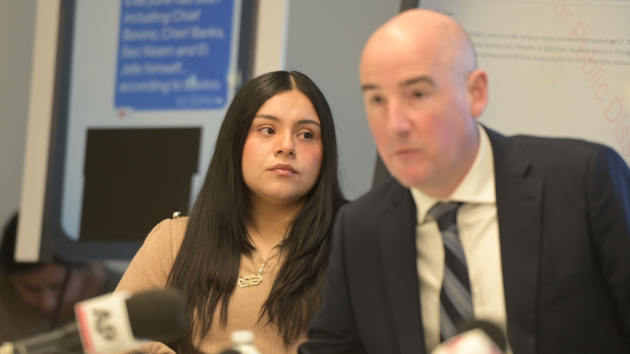
Marimar Martinez, a Chicago teacher’s assistant who survived being shot five times by a U.S. Border Patrol agent in October 2025, attends a press conference with her lawyers at the law offices of Cheronis & Parente LLC and Gallagher & Kosner Law LLC on February 11, 2026, in Chicago, Illinois, United States. (Jacek Boczarski/Anadolu via Getty Images)
(CHICAGO) — Last October, the Department of Homeland Security claimed that federal agents in Chicago were “forced to deploy their weapons and fire defensive shots at an armed US citizen” after their SUV was “rammed by vehicles and boxed in by 10 cars.”
But analysis of recently released body-camera footage of the shooting of Marimar Martinez and videos verified by nearby businesses and bystanders suggests that those claims were exaggerated — and that federal agents, knowing their actions were being recorded, appeared to coordinate with one another to explain their conduct that day.
Body camera footage and other evidence was released Tuesday after a federal judge last week granted a motion to permit the public release of the materials in the case.
The video shows that in the minute before the shooting, agents were being followed by two, not 10 vehicles. Agents stated they were “boxed in,” but at no time was their vehicle blocked from the front.
At no point in footage from an agent’s body-worn camera or from multiple surveillance cameras is a driver seen ramming the agents’ vehicle; instead, the video shows an agent appearing to steer toward the vehicle driven by Martinez, crashing into her, and then rapidly firing toward her.
Martinez, a U.S. citizen and teacher’s assistant, was shot five times during the incident. She’s now planning to sue DHS and the agent for allegedly making false claims about her following the shooting and labeling her a domestic terrorist.
While prosecutors originally alleged that Martinez “aggressively and erratically” pursued officers that day, a judge dismissed the criminal case against her with prejudice after a reversal by the Department of Justice, which sought to dismiss the case.
A U.S. Customs and Border Protection spokesperson said in a statement that the officer who shot Martinez was placed on administrative leave following the incident. The statement did not indicate the length of the administrative leave or when it began.
“CBP is committed to the highest standards of conduct, transparency, and accountability. All significant use-of-force incidents are thoroughly investigated, reviewed, and presented to the National Use of Force Review Board (NUFRB), an independent body comprised of senior CBP officials and representatives from DHS and DOJ, including the DOJ Civil Rights Division,” the statement said.
Below is a timeline of the incident based on the body camera footage and bystander video leading up to and after the shooting.
The lead-up 10:27:02 a.m.
Three federal agents are riding in an SUV in the first moments of video from an agent’s body-worn camera. Later, the video will reveal an Uber placard on the front of their SUV. One agent is seen speaking into the voice chat app on a nearby phone.
At the time, the Trump administration had surged federal resources for immigration enforcement in Chicago as part of “Operation Midway Blitz.”
According to a court filing, the agents were part of a protective detail assisting a nearby operation in Oaklawn. An FBI agent originally attested that the officers were being followed by multiple civilian vehicles.
10:28:17 a.m.
The agent’s body camera begins recording audio.
“Camera’s on,” the agent says.
The agent readies an assault rifle. With his finger on the trigger, one of the agents can be heard saying what sounds like either “do something, b—-,” or “hit something, b—-.”
10:28:35 a.m.
Another agent is seen pointing his handgun toward the right of the SUV.
A nearby driver repeatedly honks their horn, prompting one of the officers to remark, “Honk all you want.”
The agents’ vehicle is captured on a security camera on Kedzie Avenue. The SUV is flanked by Martinez, in a gray Nissan Rogue, to the agents’ left.
To their right is a GMC SUV, adorned with a Mexican flag on its hood, driven by Anthony Ruiz. Ahead of them are two cars: a sedan and a red pickup truck.
10:28:47 a.m.
Seconds later, the agent with the active body-worn camera says, “Alright, it’s time to get aggressive, get the f—- out. Because they’re trying to box us in.”
“If she hits us, it’s … ,” another agent can be heard saying.
10:28:57 a.m.
Charles Exum, the driver, appears to be the agent who says, “We’re going to make contact, we’re boxed in … we have got to get [inaudible] out of here. “
“We are boxed in,” the agent with the active body-worn camera repeats.
10:28:58 a.m.
The three vehicles briefly enter the frame of a security camera looking over a gas station parking lot.
Martinez, in the Nissan Rogue, is parallel with the agents to their left. Ruiz is behind them and to their right.
The pickup truck and the sedan, previously observed ahead of the agents’ vehicle, are also observed traveling several car lengths ahead of the agents.
10:29:01 a.m.
Exum appears to turn the car’s wheel to the left. A loud crash is heard, and the agents visibly react.
By this time, the two cars ahead of the agents have driven into the path of another security camera. The cars do not stop and drive out of view.
The shooting 10:29:04 a.m.
The agents’ vehicle comes to a stop. Their vehicle and Ruiz’s are seen stopped at the rightmost edge of the gas station security footage. The view of Martinez’s vehicle is blocked, and we do not see the agents’ vehicle make contact with hers.
Exum is seen holding a handgun in his right hand.
10:29:06 a.m.
“Out of the car,” the driver says, as he exits the car with his handgun drawn.
“Be advised, we’ve been struck, we’ve been struck,” the agent with the body-worn camera says.
A second later, five gunshots can be heard in rapid succession.
The agents’ SUV enters the field of view of another security camera. A drawing of the scene — made by one of the agents during their interview with the FBI, according to Martinez’s lawyers — indicated three vehicles were ahead of the agents’ SUV, but the footage shows that at the moment of the shooting, the agents’ vehicle has an unobstructed path forward.
10:29:09 a.m.
Martinez’s vehicle enters the frame of the security camera. She drives north, away from the scene.
10:29:11 a.m.
The agent with the body-worn camera points his rifle toward Ruiz’s vehicle, as it reverses and crashes into a parked car before turning to the left to drive away. Ruiz is later arrested at a gas station a half block away.
“Don’t you f—— move,” the officer says.
10:29:18 a.m.
As the agent turns around, his body camera shows that the SUV is not being blocked in front of it.
The aftermath 10:32:49 a.m.
Exum’s body-worn camera turns on about three minutes after firing his weapon.
10:39:19 a.m.
Exum tells a responding officer that he fired “five to seven shots” at Martinez.
“I don’t know if I hit her or not,” he says. “I [was] angled at the driver, I got five to seven rounds off at her.”
“It was a woman shooting?” the officer asked.
“No, I was shooting,” Exum said.
10:39:38 a.m.
Exum tells a responding officer that he “did the shooting” after Martinez hit his SUV.
“She already hit my vehicle, we got out to defend, she came forward, and that’s when I opened up on her,” he said. “We did not get shot at; we did the shooting.”
10:45:04 a.m.
As more officers arrive at the scene, Exum and the other agents begin to recount the incident and to ask whether his camera was on.
“We were getting out to defend because they already tried to box us in,” he said. “She was moving forward into me.”
“Camera on or no?” an officer said.
“No, I didn’t have it because we were [inaudible],” he said.
“That’s good, as long as you can justify it, bro,” the officer responds.
10:48:14 a.m.
As Exum prepares to light a cigarette, another officer acknowledges that their conversation is being recorded and advises him to “keep everything out.”
“So she hit you guys … You got boxed in?” an officer asked.
“We [were] getting boxed in, and I had to push left. She came in, she pulled over, stopped. I got out so we could defend,” Exum said.
“Hey, hey, just real quick though, since we’re recording, keep it [inaudible],” another officer says. “Keep everything out, you’re good man.”
10:50:30 a.m.
Another officer tells Exum to “keep [his] mouth shut” about the incident.
“Just so you know, you don’t give statements to anybody,” the officer says. “Absolutely no statements at all … You keep your mouth shut.”
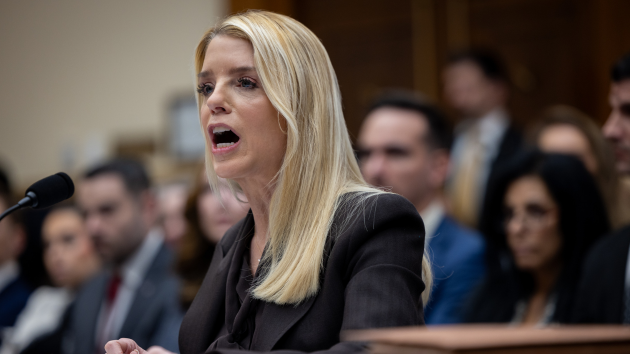
Attorney General Pam Bondi testifies before the House Committee on the Judiciary during an oversight hearing, at the Rayburn House Office Building in Washington, DC on February 11, 2026. (Nathan Posner/Anadolu via Getty Images)
(WASHINGTON) — Attorney General Pam Bondi told members of Congress on Tuesday that Ghislaine Maxwell “will hopefully die in prison,” after she was pressed on the allegations that Jeffrey Epstein’s co-conspirator was getting special treatment from the administration, including a controversial transfer to a minimum security prison.
Maxwell, who is 64, has been incarcerated since her arrest in July 2020 and would be in her mid-to-late 70s when her sentence ends.
Bondi, who clashed with Democratic members of the House Judiciary Committee when asked questions related to the Epstein investigation, however, said she could not say who ordered Maxwell’s transfer to a lower security prison and tried to change the subject.
Rep. Deborah Ross, D-N.C., brought up the transfer during the heated hearing and sought out answers, specifically who signed off on the move.
Maxwell was moved from FCI Tallahassee in Florida, a “low security” prison for men and women, to FPC Bryan in Texas, a “minimum security” camp just for women, two weeks after she had a private meeting with Deputy Attorney General Todd Blanche.
Trump has been asked about possibly pardoning Maxwell, but the president has said no one had approached him, though he reiterated his power to grant one.
Blanche, Trump’s former personal attorney, has not responded to letters from Democrats in Congress seeking more details about the move.
“She should not be in that prison,” Ross said. “She needs to be moved back to a maximum security prison as soon as possible.”
The congresswoman noted that Maxwell, who is challenging her 2021 conviction and 20-year sentence for child sex trafficking and other offenses, told another congressional committee she won’t cooperate unless she gets clemency from the president.
Ross asked Bondi if Blanche or one of her other subordinates approved the transfer, but the attorney general didn’t directly answer.
“I learned after the fact,” Bondi said of the transfer. “That is a question for the Bureau of Prisons. I was not involved at that at all,” she added.
Bondi then scolded Ross and changed the subject, bringing up a September homicide of a woman in Charlotte, North Carolina, in the congresswoman’s home state.
“You know instead of talking about Ghislaine Maxwell, who will hopefully die in prison, hopefully will die in prison, you should be talking about Iryna Zarutska,” she said.
Ross asked again if the president should pardon or commute Maxwell’s sentence.
“Should she be released from prison, yes or no? You said she should die in prison, so I’m hoping the answer is no,” the congresswoman said.
“I already answered the question,” Bondi responded, before scolding Ross again for not discussing Zarutska’s murder.
Bondi delivered several angry retorts at the members of the committee over the Epstein investigation.
Early on in the hearing, she did not look at Epstein survivors and their families when they were introduced by committee ranking member Jamie Raskin and Democratic Rep. Pramila Jayapal.
Survivors were seen shaking their heads several times during the hearing as Bondi attacked the congress members.
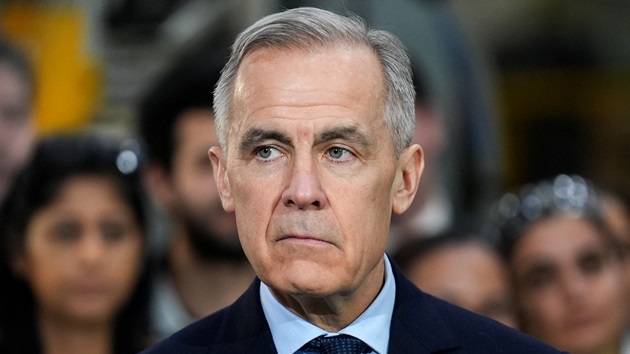
Canadian Prime Minister Mark Carney speaks during a press conference in Vaughan, Ontario, Canada on February 5, 2026. Mert Alper Dervis/Anadolu via Getty Images
(LONDON) — A total of eight people were killed — most of them at a school — and more than two dozen were wounded, after a shooter opened fire on Tuesday in a small community in Canada’s British Columbia. Officials had earlier said nine people were killed before revising the death toll.
The suspected shooter — identified as 18-year-old Jesse Van Rootselaar — is dead from what is believed to be a self-inflicted injury, according to the Royal Canadian Mounted Police.
The suspect did not currently have any firearms registered to her, but police have a history of visiting her home, according to the RCMP.
Van Rootselaar was not currently registered or attending the school where the shooting took place. Among the dead are members of the suspect’s family and students between the ages of 13 and 17, according to the RCMP.
Van Rootselaar was assigned male at birth but publicly identified as a female, according to the RCMP.
Canadian Prime Minister Mark Carney announced seven days of mourning after the deadly shooting. A visibly emotional Carney called it “a very difficult day for the nation.”
“This morning, parents, grandparents, sisters, brothers in Tumbler Ridge will wake up without someone they love. The nation mourns with you. Canada stands by you,” Carney told reporters on Wednesday in Ottawa.
“We thank the first responders, the teachers, the staff, the residents, for everything that they’ve done in this terrible situation. I, on the advice of the Clerk of the Privy Council and Heritage Canada, I’ve asked that the flags of the Peace Tower here and across all government buildings be flown at half-mast for the next seven days,” he said.
The gunfire was reported at Tumbler Ridge Secondary School at about 1:20 p.m., the RCMP said.
Officers responding to the scene found six people dead inside the school, and another person died while being taken to the hospital, police said.
Two other victims were airlifted to the hospital with serious or life-threatening injuries. About 25 others were being assessed for injuries that were not believed to be life-threatening, authorities said.
As part of the investigation, police identified what they called a “secondary location believed to be connected to the incident” where two other victims were found dead inside a residence, police said.
“Officers are conducting further searches of additional homes and properties to determine whether anyone else may be injured or otherwise linked to today’s events,” the RCMP said in the statement.
In a statement, Canadian Prime Minister Mark Carney said he was “devastated” by the shooting.
“I join Canadians in grieving with those whose lives have been changed irreversibly today, and in gratitude for the courage and selflessness of the first responders who risked their lives to protect their fellow citizens, Carney said in the statement.
Tumbler Ridge is a small community of about 2,400 people located in the Northern Rockies in northeastern British Columbia.