
What to know about SCOTUS hearing on Trump’s bid to end birthright citizenship

What to know about SCOTUS hearing on Trump’s bid to end birthright citizenship
U.S. Supreme Court building on March 31, 2026 in Washington, DC. (Roberto Schmidt/Getty Images)

(WASHINGTON) — For more than a century, an American birth certificate has been a key to unlocking the benefits of American citizenship.

Most parents of newborns on U.S. soil have simply needed proof of birth from a hospital to apply for social security numbers, passports and early life benefits for their children. Into adulthood, the birth certificate has been universally recognized as proof of citizenship for voter registration, employment, home loans and military service.

A landmark case before the Supreme Court on Wednesday will determine whether that longstanding cultural norm and legal precedent will continue, or whether sweeping bureaucratic changes that could impact millions will soon take effect.

President Donald Trump is asking the justices to uphold his Day 1 executive order eliminating birthright citizenship under a novel interpretation of the 14th Amendment and requiring parents to prove their own legal status before citizenship is granted to their children.

All lower courts that have considered the case struck the order down.

The amendment, which was ratified in 1868, says all “persons born or naturalized in the U.S. and subject to the jurisdiction thereof” are citizens. Congress later codified the same language in federal citizenship law in 1940.

“Look at the dates of this long ago legislation – THE EXACT END OF THE CIVIL WAR!” Trump posted on social media Monday. “It is about the BABIES OF SLAVES!”

Trump argues children born to parents who are not American citizens or legal permanent residents were never considered “subject to the jurisdiction” of the U.S. because they still owe political “allegiance” to a foreign nation.

Courts and the government, however, have repeatedly interpreted the 14th Amendment to unambiguously confer citizenship on all children born on U.S. soil, including to babies of unauthorized noncitizens and temporary residents, such as international students, foreign nationals who are in the U.S. on tourist visas and seasonal workers.

“The [14th] Amendment, in clear words and in manifest intent, includes the children born, within the territory of the United States, of all other persons, of whatever race or color, domiciled within the United States,” wrote Justice Horace Gray in an 1898 Supreme Court opinion addressing the status of children born to noncitizens.

Immigrant advocates and civil liberties groups insist Trump’s order is blatantly unconstitutional — contrary to the plain text of the Constitution and history of the citizenship clause — and would unleash “chaos” nationwide.

“The impacts on this country would be catastrophic,” said ACLU attorney Cody Wofsy, who is leading the case against the order.

“Most directly, the children who would be stripped of their citizenship would be … subject to arrest, detention and deportation from the only country they’ve ever known,” Wofsy said.

An estimated 255,000 children born every year on U.S. soil to noncitizen parents could lose legal status under Trump’s order, according to the Migration Policy Institute. Some may have difficulty establishing citizenship in any country, effectively being born as “stateless.”

“Babies [born to parents] from countries like Nepal, Afghanistan, Bhutan, where there is not a clear pathway to citizenship in their home countries,” said Anisa Rahm, legal director of the South Asian American Justice Collaborative. “So therefore, where do they belong?”

While the administration insists the order will only apply to children born after it takes effect, legal scholars have warned that a ruling striking down birthright citizenship could have retroactive consequences.

“The citizenship of other Americans could be called into question,” said Winnie Kao, an attorney with the Asian Law Caucus, one of the groups that brought a class-action suit against the administration over the order.

“Vast swaths of U.S. law would need to be reexamined because they are premised on birthright citizenship,” added Kao. “It will also be a total administrative and bureaucratic nightmare for everyone — even for parents who are U.S. citizens.”

An ABC News review of Trump administration plans for implementing a new citizenship policy across federal agencies suggests a more involved and potentially complicated process for new parents than currently exists, if the executive order takes effect.

The Social Security Administration says birth certificates would no longer be sufficient documentation to obtain a new Social Security Number for a newborn.

“SSA will require evidence that such a person’s mother and/or father is a U.S. citizen or in an eligible immigration status at the time of the person’s birth,” the agency wrote in a July 2025 guidance memo.

Parents would first need to submit their own citizenship documentation by mail, phone or online, the agency said. Alternatively, parents could provide a “self-attestation” of citizenship subject to “state and federal penalties for perjury,” according to the memo.

The State Department says it would adopt similar verification measures for passport applicants.

For children born to lawful but temporary immigrants — who would no longer be eligible for citizenship — the U.S. Citizenship and Immigration Services says parents would need to register to obtain the same temporary legal status for their kids.

Federally funded benefits for children, like nutrition assistance and health care services, provided by the Department of Health and Human Services would also require extensive documentation by all parents to prove their children were citizens at birth, the agency said in a memo.

During oral arguments last year in a predecessor case involving Trump’s birthright citizenship order, Justice Brett Kavanaugh — often a key vote in hotly contested cases — voiced concern about whether the government would be able to carry out citizenship checks for parents of the more than 3.6 million babies born in the U.S. each year.

“Federal officials will have to figure that out essentially,” U.S. Solicitor General John Sauer told the justice under questioning.

“How?” Kavanaugh responded skeptically.

“So, you can imagine a number of ways –” Sauer began.

“Such as?” Kavanaugh quipped. “For all the newborns? Is that how it’s going to work?”

Sauer replied at the time that the administration did not have all the details worked out because courts had blocked the executive order in full.

Polls show the nation is sharply divided over the issue of American citizenship for newborn children of unauthorized immigrants. Half of adults — 50% — say they should receive U.S. citizenship; 49% say they should not, according to an April 2025 Pew Research Center survey.

Copyright © 2026, ABC Audio. All rights reserved.
Luigi Mangione returning to court to try to delay federal trial

Luigi Mangione returning to court to try to delay federal trial
Luigi Mangione appears for a suppression of evidence hearing in the killing of UnitedHealthcare CEO Brian Thompson in Manhattan Criminal Court on December 16, 2025 in New York City. (Photo by Seth Wenig-Pool/Getty Images)

(NEW YORK) — Luigi Mangione is returning to federal court in Manhattan, where his attorneys will try to convince the judge to postpone his federal trial until next year.

On Wednesday, the defense will ask U.S. District Judge Margaret Garnett to delay Mangione’s September 2026 trial until January 2027 so defense attorneys can ask the judge overseeing the state prosecution, Gregory Carro, to move the state trial from June 2026 to September 2026.

“As a result of these competing schedules, Mr. Mangione is now in the position of needing to prepare for two complicated and serious trials at the same time,” defense attorney Karen Friedman Agnifilo said in a letter ahead of Wednesday’s hearing.

“Because Justice Carro scheduled the state trial for June 8, 2026, Mr. Mangione is now in the impossible position of having to review 800 jury questionnaires during the week of June 29, 2026, while on trial for second-degree murder in state court,” she said. “As a practical matter, this would not be possible.”

The defense also argued the effectiveness of Mangione’s defense would be diminished without the rescheduling.

“Though fierce advocates for their clients, defense counsel cannot be in two places at once,” Friedman Agnifilo said.

“Realistically, defense counsel cannot be defending Mr. Mangione in state court on second-degree murder charges that carry a maximum sentence of twenty-five years to life while, at the same time, also reviewing 800 questionnaires for a federal case that carries a maximum life sentence. Moreover, counsel will not be able to adequately prepare for the federal trial because they will be on trial in state court.”

Mangione pleaded not guilty to state and federal charges after he was arrested for allegedly gunning down UnitedHealthcare CEO Brian Thompson in Midtown Manhattan in December 2024.

Federal prosecutors are opposed to delaying the trial.

“The concerns identified by the defense can be fully addressed through targeted modifications to the questionnaire process, rather than a wholesale continuance of the trial date in this case,” prosecutor Sean Buckley wrote.

Mangione, 27, faces the possibility of life in prison if he’s convicted in either case. Garnett previously threw out the federal charges that carry the possibility of the death penalty and Carro previously tossed out an enhancement to the state murder charges that said Mangione’s alleged conduct amounted to terrorism. 

Copyright © 2026, ABC Audio. All rights reserved.

White House signals it seeks a diplomatic solution in Iran: Experts

White House signals it seeks a diplomatic solution in Iran: Experts
Marco Rubio, US secretary of state, during a cabinet meeting at the White House in Washington, DC, US, on Thursday, March 26, 2026. (Photographer: Will Oliver/EPA/Bloomberg via Getty Images)

(WASHINGTON) — Top Trump administration officials have touted diplomatic efforts to end the war in Iran as the president signals it could end without pursuing the challenging military operation of opening the Strait of Hormuz with naval escorts.

In an interview with “Good Morning America” host George Stephanopoulos on Monday, Secretary of State Marco Rubio did not cite the reopening of the strait, the vital chokepoint of which 20% of the world’s oil flows through, which has been largely closed to shipping traffic, as a U.S. objective. President Donald Trump in the early days of the war said the U.S. Navy would take measures to ensure ships could sail there.

Rubio listed the “destruction” of Iran’s air force, navy, missile-launch capacity and military industry as the four objectives of what he termed a U.S. “operation.”

“All of this so that they can never hide behind it to acquire a nuclear weapon,” Rubio said. “That was our objective from the beginning; that remains our objective now.”

Secretary of Defense Pete Hegseth on Tuesday also omitted freedom of movement in the Strait of Hormuz as one of the Pentagon’s priorities, instead calling on other nations with energy interests there to be involved in reopening it.

The president shifted responsibility over the strait — whose access has been largely blocked by Iran as a response to the U.S. and Israel attacks on the country — to those allies and partners.

“They can police it themselves,” Trump told ABC’s Jonathan Karl on Tuesday. “Why should I do it for them?”

The apparent recalibration — just days after Trump threatened intensified military action if Iran did not move to open the strait — signals the US could be plotting an exit in which it declares it’s accomplished the outlined military objectives without seeking to repair the war’s most devastating economic consequence, a former senior U.S. diplomat said.

“I think Rubio may have signaled one option the president has,” said the former diplomat who engaged in negotiations with Iran. “It’s not a very good one, but … of the bad and worse options, it’s probably the better bad option.”

The former U.S. official said a hasty exit from the conflict without addressing two of its thorniest issues — the Strait of Hormuz and Iran’s nuclear stockpile — suggests there is a diplomatic deal to be achieved that would end the fighting.

“I think Rubio, at least, sounds like he just wants to bring this [conflict] to closure along the parameters that he outlined, and then hope that world pressure opens the Strait of Hormuz,” the former official said.

Objectives articulated by the administration earlier in the conflict — like regime change and denuclearization — would remain unmet by such a deal, the former diplomat said.

Tehran’s diplomatic view
Whether or not the U.S. is pursuing a diplomatic exit, it will be complicated for a battered Iran to deal with a country that initiated a war with it a month ago, analysts of Tehran’s government told ABC News.

Iran may be open to diplomacy, the analysts said, but it would seek durable assurances that it will not be attacked by the U.S. — or Israel — in the future.

Iranian Foreign Minister Abbas Araghchi said Tuesday that his country was not negotiating with the U.S. but that messages were being passed.

Pakistan, who along with Turkey and Egypt has positioned itself as an intermediary between the U.S. and Iran, have been delivering those messages between the warring nations, establishing an important “venue” for talks, said Syed Mohammad Ali, a lecturer at Johns Hopkins University and analyst of Pakistani politics.

“I think the most important thing here is to have created a channel of mediation,” Ali said. “And in conflict situations that is of vital importance.”

Ali, who is familiar with the early negotiations, said early diplomatic exchanges have been “maximalist” as the two sides remain far apart.

He cautioned that Pakistan, which has offered to host direct talks, would by itself “not be in a position to really help hammer this out … they can continue playing this role, but the terms are going to be set elsewhere.”

The introduction of China to diplomatic discussions, he said, could bring the kind of “big power pressure” and “strategic leverage” that the US and Iran, whose economies are intertwined with Beijing’s, might respond to.

The Chinese and Pakistani governments released a five-point plan, which called for an immediate ceasefire and “normal passage” through the Strait of Hormuz, after a meeting of their foreign ministers in Beijing on Tuesday. Trump is set to visit China in May.

Esfandyar Batmanghelidj, an expert on Iranian politics and economics and an adjunct professor at Johns Hopkins, said any durable diplomatic breakthrough would likely follow a set of “high-level principles” that enables a ceasefire.

Leaders of the Iranian regime won’t readily come to the negotiating table, Batmanghelidj said, unless the conflict is perceived as a “stalemate” with the U.S. and talks are not framed as capitulation to Trump. Hardliners in Tehran, including leadership of the Iranian Revolutionary Guard Corps which would be allergic to negotiating with Washington, are still believed to wield considerable influence.

But “the elements” for a deal “are there,” Batmanghelidj said.

“Ultimately, this war has gone well enough for the Iranians that they can also point to a victory, but it has also been painful enough that even those that are very hardline in the Iranian system will understand that they don’t want to run a country that has been turned into some sort of basket case.”

Copyright © 2026, ABC Audio. All rights reserved.
Supreme Court hears Trump bid to end birthright citizenship

What to know about SCOTUS hearing on Trump’s bid to end birthright citizenship
U.S. Supreme Court building on March 31, 2026 in Washington, DC. (Roberto Schmidt/Getty Images)

(WASHINGTON) — For more than a century, an American birth certificate has been a key to unlocking the benefits of American citizenship.

Most parents of newborns on U.S. soil have simply needed proof of birth from a hospital to apply for social security numbers, passports and early life benefits for their children. Into adulthood, the birth certificate has been universally recognized as proof of citizenship for voter registration, employment, home loans and military service.

A landmark case before the Supreme Court on Wednesday will determine whether that longstanding cultural norm and legal precedent will continue, or whether sweeping bureaucratic changes that could impact millions will soon take effect.

President Donald Trump is asking the justices to uphold his Day 1 executive order eliminating birthright citizenship under a novel interpretation of the 14th Amendment and requiring parents to prove their own legal status before citizenship is granted to their children.

All lower courts that have considered the case struck the order down.

The amendment, which was ratified in 1868, says all “persons born or naturalized in the U.S. and subject to the jurisdiction thereof” are citizens. Congress later codified the same language in federal citizenship law in 1940.

“Look at the dates of this long ago legislation – THE EXACT END OF THE CIVIL WAR!” Trump posted on social media Monday. “It is about the BABIES OF SLAVES!”

Trump argues children born to parents who are not American citizens or legal permanent residents were never considered “subject to the jurisdiction” of the U.S. because they still owe political “allegiance” to a foreign nation.

Courts and the government, however, have repeatedly interpreted the 14th Amendment to unambiguously confer citizenship on all children born on U.S. soil, including to babies of unauthorized noncitizens and temporary residents, such as international students, foreign nationals who are in the U.S. on tourist visas and seasonal workers.

“The [14th] Amendment, in clear words and in manifest intent, includes the children born, within the territory of the United States, of all other persons, of whatever race or color, domiciled within the United States,” wrote Justice Horace Gray in an 1898 Supreme Court opinion addressing the status of children born to noncitizens.

Immigrant advocates and civil liberties groups insist Trump’s order is blatantly unconstitutional — contrary to the plain text of the Constitution and history of the citizenship clause — and would unleash “chaos” nationwide.

“The impacts on this country would be catastrophic,” said ACLU attorney Cody Wofsy, who is leading the case against the order.

“Most directly, the children who would be stripped of their citizenship would be … subject to arrest, detention and deportation from the only country they’ve ever known,” Wofsy said.

An estimated 255,000 children born every year on U.S. soil to noncitizen parents could lose legal status under Trump’s order, according to the Migration Policy Institute. Some may have difficulty establishing citizenship in any country, effectively being born as “stateless.”

“Babies [born to parents] from countries like Nepal, Afghanistan, Bhutan, where there is not a clear pathway to citizenship in their home countries,” said Anisa Rahm, legal director of the South Asian American Justice Collaborative. “So therefore, where do they belong?”

While the administration insists the order will only apply to children born after it takes effect, legal scholars have warned that a ruling striking down birthright citizenship could have retroactive consequences.

“The citizenship of other Americans could be called into question,” said Winnie Kao, an attorney with the Asian Law Caucus, one of the groups that brought a class-action suit against the administration over the order.

“Vast swaths of U.S. law would need to be reexamined because they are premised on birthright citizenship,” added Kao. “It will also be a total administrative and bureaucratic nightmare for everyone — even for parents who are U.S. citizens.”

An ABC News review of Trump administration plans for implementing a new citizenship policy across federal agencies suggests a more involved and potentially complicated process for new parents than currently exists, if the executive order takes effect.

The Social Security Administration says birth certificates would no longer be sufficient documentation to obtain a new Social Security Number for a newborn.

“SSA will require evidence that such a person’s mother and/or father is a U.S. citizen or in an eligible immigration status at the time of the person’s birth,” the agency wrote in a July 2025 guidance memo.

Parents would first need to submit their own citizenship documentation by mail, phone or online, the agency said. Alternatively, parents could provide a “self-attestation” of citizenship subject to “state and federal penalties for perjury,” according to the memo.

The State Department says it would adopt similar verification measures for passport applicants.

For children born to lawful but temporary immigrants — who would no longer be eligible for citizenship — the U.S. Citizenship and Immigration Services says parents would need to register to obtain the same temporary legal status for their kids.

Federally funded benefits for children, like nutrition assistance and health care services, provided by the Department of Health and Human Services would also require extensive documentation by all parents to prove their children were citizens at birth, the agency said in a memo.

During oral arguments last year in a predecessor case involving Trump’s birthright citizenship order, Justice Brett Kavanaugh — often a key vote in hotly contested cases — voiced concern about whether the government would be able to carry out citizenship checks for parents of the more than 3.6 million babies born in the U.S. each year.

“Federal officials will have to figure that out essentially,” U.S. Solicitor General John Sauer told the justice under questioning.

“How?” Kavanaugh responded skeptically.

“So, you can imagine a number of ways –” Sauer began.

“Such as?” Kavanaugh quipped. “For all the newborns? Is that how it’s going to work?”

Sauer replied at the time that the administration did not have all the details worked out because courts had blocked the executive order in full.

Polls show the nation is sharply divided over the issue of American citizenship for newborn children of unauthorized immigrants. Half of adults — 50% — say they should receive U.S. citizenship; 49% say they should not, according to an April 2025 Pew Research Center survey.

Copyright © 2026, ABC Audio. All rights reserved.
Trump touts Iran talks with hardline leader Mohammad Ghalibaf, but says ‘we know where he lives’

Trump touts Iran talks with hardline leader Mohammad Ghalibaf, but says ‘we know where he lives’
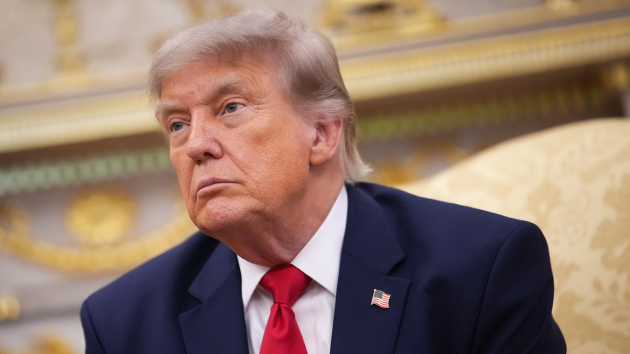
U.S. President Donald Trump speaks to the media after departing Air Force One at Miami International Airport on March 27, 2026, in Miami, Florida. President Trump is traveling to speak at a summit in Miami Beach and then onto Palm Beach for the weekend. (Photo by Nathan Howard/Getty Images)

(WASHINGTON) — In a wide-ranging telephone conversation with ABC News, President Donald Trump on Tuesday claimed “we have complete regime change now” in Iran and said his administration is carrying out negotiations now with Iranian leaders who are “more moderate” and “much more reasonable.”

While the administration has been relatively silent on the people involved on the Iranian side of the negotiations, Trump said his administration is speaking to the country’s Parliament Speaker Mohammad Bagher Ghalibaf.

Ghalibaf has been taunting the president on social media, but Trump said the new leadership is better than what Iran had before.

“Now we have a different group of people, and they are in control, but they’re much more moderate and, I think, much more reasonable,” he said.

Ghalibaf is known as a hardliner closely tied to the Iranian Islamic Revolutionary Guard Corps.

On Sunday, he posted a statement on X chiding Trump over his messaging during the conflict, insinuating that the president was trying to manipulate the market.

“Heads-up: Pre-market so-called ‘news’ or ‘Truth’ is often just a setup for profit-taking. Basically, it’s a reverse indicator,” he said. “Do the opposite: If they pump it, short it. If they dump it, go long. See something tomorrow? You know the drill.”

Trump brushed off Ghalibaf’s comments.

“I think if you notice, he’s toned it down a lot. He’s much better,” he said.

Trump, however, also offered what appeared to be a threat pointed directly at Ghalibaf.

“We know where he lives. Let’s put it that way,” he said.

Trump suggested that the soaring stock market before the war made it “a good time to do it.”

“The oil prices are going to go down. The stock market is going to go up. We had 50,000 [Dow Jones Industrial average] and we had 7,000 on the S&P. And I said, well, ‘I guess this is a good time to do it.'”

The Dow Jones Industrial Average has dropped by over 3,000 points and the S&P has dropped by nearly 500 points since the war began.

Global oil prices hovered around $117 a barrel on Tuesday, which amounted to a more than 50% price leap from pre-war levels.

Trump said that he’s negotiating on seizing Iran’s oil but didn’t provide further details.

The president was also coy about any military planning for Cuba, which he has also threatened over the last couple of weeks.

“I assume, in an orderly fashion, you’ve got to kind of finish up whatever you do in Iran first,” he said.

Copyright © 2026, ABC Audio. All rights reserved.
New Hampshire governor and her security detail help after fiery crash at toll plaza: Police

New Hampshire governor and her security detail help after fiery crash at toll plaza: Police
A burning car is seen following a crash at the Bedford Toll Plaza in Bedford, New Hampshire, March 31, 2026. (New Hampshire State Police)

(NEW HAMPSHIRE) — New Hampshire Gov. Kelly Ayotte and her security detail were among those who assisted in a fiery crash at a New Hampshire toll plaza on Tuesday — with a state trooper on her detail and two other bystanders helping pull the driver from the burning vehicle, according to state police.

The “dangerous” collision occurred at the Bedford Toll Plaza on the Everett Turnpike shortly before noon, according to New Hampshire State Police Director Col. Mark Hall.

The vehicle, a 2026 Lucid electric vehicle, “immediately became engulfed in flames,” Hall said during a press briefing on Tuesday.

The governor and her security detail came upon the accident just after the vehicle crashed into the toll plaza, Hall said. A New Hampshire state trooper assigned to her detail and two other bystanders helped pull the male driver — the lone occupant — out of the burning vehicle through the window, according to Hall.

Hall said he is not identifying the trooper due to the nature of the assignment.

“It is a veteran trooper, and certainly their actions were heroic in what they did — without hesitation, put themselves in danger to render aid to somebody that clearly was in need of it,” Hall said.

The governor and other witnesses also provided assistance at the scene, according to Hall.

“The governor did get out of the vehicle and tried to assist in any way that she could,” Hall said, adding he believed she tried to get a fire extinguisher from a vehicle to help put the fire out.

The driver was transported to an area hospital with serious but non-life-threatening injuries, police said.

Photos released by police showed the burning vehicle and firefighters at the scene.

The northbound lanes of the turnpike remain closed in the wake of the crash, and the New Hampshire Department of Transportation is assessing the damage to the toll plaza from the collision and fire, Hall said.

The crash remains under investigation.

ABC News has reached out to the governor’s office for comment and did not immediately receive a response.

Copyright © 2026, ABC Audio. All rights reserved.
Federal judge orders halt to White House ballroom construction

Federal judge orders halt to White House ballroom construction

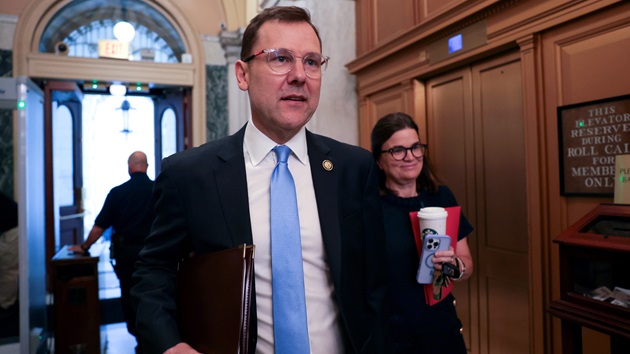
(WASHINGTON) — A federal judge in Washington on Tuesday issued a preliminary injunction blocking further construction of the White House ballroom.

Judge Richard Leon wrote that President Donald Trump can’t build the ballroom without authorization from Congress, and that “no statute comes close to giving the President the authority he claims to have.”

This is a developing story. Please check back for updates.


Copyright © 2026, ABC Audio. All rights reserved.
On reopening the Strait of Hormuz, Trump tries to shift responsibility away from US

On reopening the Strait of Hormuz, Trump tries to shift responsibility away from US
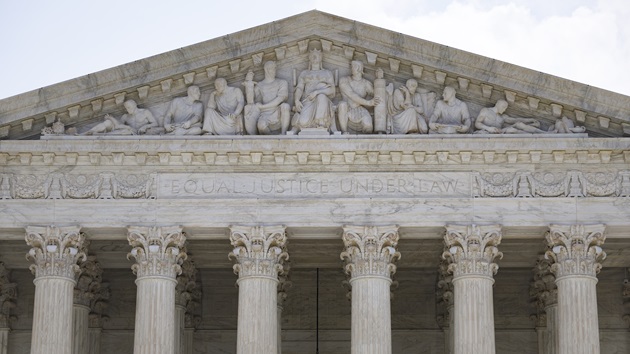
White House Press Secretary Karoline Leavitt speaks during a news briefing at the James S. Brady Press Briefing Room of the White House, March 30, 2026, in Washington. Alex Wong/Getty Images

(WASHINGTON) — As oil and gas prices soar amid Iran’s stranglehold on the Strait of Hormuz, President Donald Trump and his top officials now appear to be suggesting it’s not the U.S.’s problem to solve.

Trump on Tuesday again lashed out at allies for not getting involved in the conflict, and told them: “Go get your own oil!”

“All of those countries that can’t get jet fuel because of the Strait of Hormuz, like the United Kingdom, which refused to get involved in the decapitation of Iran, I have a suggestion for you: Number 1, buy from the U.S., we have plenty, and Number 2, build up some delayed courage, go to the Strait, and just TAKE IT,” the president wrote in a post on his social media platform.

“You’ll have to start learning how to fight for yourself, the U.S.A. won’t be there to help you anymore, just like you weren’t there for us,” Trump added.

Trump reiterated that sentiment in a phone call with ABC News Chief Washington Correspondent Jonathan Karl later Tuesday.

“I’m going to let the countries that want to buy oil, they can — they can police it themselves. Why should I do it for them? They weren’t there for me,” Trump told ABC’s Karl of the Strait of Hormuz.

The statements appear to be a far cry from Trump’s threat to Iran from just days ago. On March 21, he wrote on social media that if Iran didn’t “FULLY OPEN” the strait in 48 hours, the U.S. would hit the country’s power plants. That deadline was extended twice after Trump said that negotiations were ongoing.

Defense Secretary Pete Hegseth on Tuesday echoed Trump in calling on countries around the world to “be prepared to step up.”

“It’s not just the United States Navy. Last time I checked, there was supposed to be a big, bad Royal Navy that could be prepared to do things like that as well,” Hegseth said, referring to the United Kingdom’s naval forces.

“President Trump’s been willing to do the heavy lifting on behalf of the free world to address this threat of Iran,” Hegseth said. “It’s not just our problem set going forward, even though we have done the lion’s share of preparation to ensure that that strait will be open, which is an outcome the president has been very clear on.”

Prior to the war, more than 100 ships were passing through the Strait of Hormuz each day, according to data from U.N. Trade and Development. Now, just a handful of ships are estimated to be passing through on a daily basis amid Tehran’s chokehold.

The result has been a record monthly spike in oil and gas prices. In the U.S., the average cost of a gallon of gas topped $4 on Tuesday for the first time since August 2022.

Yet, Trump administration officials have notably declined to list reopening the strait as a key objective of Operation Epic Fury.

“The objectives of Operation Epic Fury are as follows: destroying the Iranian navy; destroying their ballistic missiles; dismantling their defense industrial infrastructure that produces those weapons that have long threatened the United States and our allies; and then, of course, preventing Iran from obtaining a nuclear weapon,” White House press secretary Karoline Leavitt said during Monday’s press briefing.

Leavitt was pressed by a reporter whether Trump can declare victory over Iran if passage through the strait remains as hampered as it is now.

“The full reopening of the strait is something the administration is working towards, but the core objectives of the operation have been clearly defined for the American people by the commander in chief,” Leavitt replied.

Trump has said he long predicted Iran would use the strait as a weapon, and that he knew oil prices would go up if the U.S. attacked Iran. He has faced criticism for not vocalizing a clear strategy for reopening the waterway, where roughly one-fifth of the world’s oil supply is caught in the crosshairs of the conflict.

Trump earlier this month issued a public request to U.S partners in Europe and Asia to help the U.S. secure the strait. Those countries largely rebuffed his call to send warships and other kinds of assistance. Some made clear this is not their war, while others have said they would get involved in the strait — but only once hostilities end.

The cold shoulder prompted Trump to change his tune and declare, “We don’t need any help, actually.”

Trump then ramped up threats to attack Tehran’s power and desalination plants if Iran doesn’t reopen the strait.

“If for any reason a deal is not shortly reached, which it probably will be, and if the Hormuz Strait is not immediately ‘Open for Business,’ we will conclude our lovely ‘stay’ in Iran by blowing up and completely obliterating all of their Electric Generating Plants, Oil Wells and Kharg Island (and possibly all desalinization plants!),” Trump posted Monday.

Trump has paused attacks on Iran until April 6 citing ongoing negotiations with new Iranian leadership, though Tehran has publicly denied any direct talks and has pushed back on a 15-point peace plan presented by the U.S. through intermediaries.

Amid his renewed call on Tuesday for other nations to step up, Trump told CBS News he is not “yet” pulling U.S. assets from the Strait of Hormuz, but “at some point I will.”

Later, in an interview with the New York Post, Trump said he believed the strait would “automatically open” when the U.S. exits the conflict.

“I don’t think about it, to be honest,” Trump told the New York Post. “My sole function was to make sure that they don’t have a nuclear weapon. They’re not going to have a nuclear weapon. When we leave, the strait will automatically open.”

ABC News’ Emily Chang contributed to this report.

Copyright © 2026, ABC Audio. All rights reserved.

Dow soars over 950 points after Trump suggests US may end Iran war without reopening Strait of Hormuz

Dow soars over 950 points after Trump suggests US may end Iran war without reopening Strait of Hormuz
U.S. President Donald Trump speaks with members of the media onboard Air Force One on March 29, 2026. (Nathan Howard/Getty Images)

(NEW YORK) — The Dow Jones Industrial Average soared more than 950 points on Tuesday after President Donald Trump appeared to suggest the U.S. may end the Iran war without reopening the Strait of Hormuz.

In a post on social media, Trump indicated that the task of reopening the strait may fall to other countries, urging them to “go to the Strait, and just TAKE IT.”

The Dow jumped 970 points, or 2.1%, by early afternoon, while the S&P 500 climbed 2.4%. The tech-heavy Nasdaq increased 3.4%.

Since the U.S.-Israeli war with Iran began on Feb. 28, Trump has voiced mixed messages about the expected duration of the war. On several occasions, markets have climbed after traders interpreted comments from Trump as a potential off-ramp from the Middle East conflict.

The war prompted Iranian closure of the strait, a maritime trading route that facilitates the transport of about one-fifth of the global oil supply. A potential U.S. exit from the war without ensuring that the strait is open could leave uncertain the path to a resumption of normal tanker traffic and a resulting remedy for the current global oil shortage.

Global oil prices surged more than 5% on Tuesday, exceeding $118 a barrel, just shy of its highest price since 2022.

Gas prices in the United States topped $4 per gallon on average Tuesday, underscoring the link between rising oil prices and strained consumers.

This is a developing story. Please check back for updates.

Copyright © 2026, ABC Audio. All rights reserved.

DOJ told judge emails suggested Maxwell was arranging young women to have sex with Prince Andrew

DOJ told judge emails suggested Maxwell was arranging young women to have sex with Prince Andrew
Ghislaine Maxwell attends VIP Evening of Conversation for Women’s Brain Health Initiative on October 18, 2016 in New York City. (Jimi Celeste/Patrick McMullan via Getty Images)

(WASHINGTON) — As federal investigators built a case against Jeffrey Epstein’s co-conspirator Ghislaine Maxwell, they discovered emails they believed suggested that she was arranging young women to have sex with then Prince Andrew, according to a new review of documents released earlier this year by the Department of Justice.

A search warrant application signed just days before Maxwell’s 2020 arrest identified at least three instances when Andrew Mountbatten-Windsor and Maxwell appeared to discuss arrangements for young women, including ahead of his official state visit to Peru in 2002.

“As for girls well I leave that entirely to you,” said an email believed to have been sent by Mountbatten-Windsor to Maxwell in Feb. 2002, signed “Masses of love A”

In another email identified by the FBI, Mountbatten-Windsor asked Maxwell about helping him find “some new inappropriate friends,” according to the search warrant affidavit.

“I am up here at Balmoral Summer Camp for the Royal Family,” Mountbatten-Windsor wrote in August 2001. “Have you found me some new inappropriate friends?”

Months later ahead of his official visit to Peru, Maxwell shared with Mountbatten-Windsor an email in which she asked an acquaintance in Peru to help find him people who are “intelligent pretty fun” and can be “to be friendly and discreet.”

“Some sight seeing some 2 legged sight seeing (read intelligent pretty fun and from good families) and he will be very happy. I know I can rely on you to show him a wonderful time and that you will only introduce him to friends that you can trust and rely on to be friendly and discreet and fun,” Maxwell wrote in March 2002.

“Got it I will ring him today if I can. Love you A,” an email associated with Mountbatten-Windsor responded.

According to a search application released earlier this year by the Department of Justice, the FBI believed those emails showed Andrew and Maxwell “discussing her attempts to arrange for young females to engage in sex acts” with him. The messages were cited as part of an application to get a judge’s permission to search dozens of electronic devices seized from Epstein’s residences.

Neither the palace nor a representative for the former Prince Andrew responded to a request for comment from ABC News.

Mountbatten-Windsor has long denied any wrongdoing, and Maxwell — who was convicted on sex trafficking charges in 2021 — was never charged with arranging women for Mountbatten-Windsor. As part of that prosecution, investigators unsuccessfully sought to interview Mountbatten-Windsor in 2020.

“To date, Prince Andrew has provided zero cooperation,” former U.S. Attorney Geoffrey Berman said in January 2020.

The disclosure of the new documents come as police in the United Kingdom are renewing their scrutiny of Mountbatten-Windsor. In an interview with ABC News earlier this month, Metropolitan Police Commissioner Sir Mark Rowley said his office was seeking unredacted materials related to Epstein from the Department of Justice.

“There’s a whole range of suggested sexual allegations and those are being assessed at the moment to see whether any of them do actually merit a criminal investigation,” Rowley said.

ABC News’ Zoe Magee contributed to this report.

Copyright © 2026, ABC Audio. All rights reserved.