(JONES, OK) — A farmer in Oklahoma has been killed by two water buffaloes after becoming trapped inside their enclosure, police said.
The incident occurred on Friday evening in Jones, Oklahoma, at approximately 8:35 p.m. when officers from the Jones Police Department and the Jones Fire Department responded to an emergency call regarding an individual who had been attacked by two water buffalo at a farm located at 7501 North Henney Road, officials said.
“Upon arrival, first responders were initially unable to reach the victim due to the aggressive behavior of the animals,” said the Jones Police Department in a statement on social media released on Monday. “One water buffalo was immediately dispatched to allow safe access to the scene.”
But when responders gained entry to the enclosure, they discovered that the victim, named as Bradley McMichael, had sustained “multiple deep lacerations that proved to be fatal,” officials said.
“While investigators were processing the scene, a second water buffalo became increasing agitated and posed a threat to emergency personnel,” police said. “For the safety of those on site, the second animal was also dispatched. Evidence gathered at the scene confirmed that the water buffaloes were responsible for Mr. McMichael’s fatal injuries.”
Police discovered during the investigation that McMichael had purchased the two water buffaloes just the day before at a livestock auction and that it is believed he became trapped inside their enclosure while tending to the animal, according to the Jones Police Department.
The office of the chief medical examiner subsequently took custody of McMichael and transported him to their facility for further examination.
(SPOTSWOOD, NJ) — At least seven geese are dead after a car struck the flock while they were trying to cross a street in New Jersey, police said.
The Spotswood Police Department in New Jersey is currently investigating an incident that took place on Monday evening at approximately 6:45 p.m. that involved a car striking a flock of geese trying to cross Devoe Avenue and then leaving the scene prior to authorities arriving, according to a statement from the Spotswood Police Department.
“At this time, it is unclear whether the collision was accidental or intentional,” police said. “The department is reviewing available surveillance footage from both nearby businesses and residences. We are requesting assistance from any witnesses who may have observed the incident.”
Geese are protected under the Migratory Bird Treaty Act and any intentional harm caused to the animals could constitute a violation of both state and federal law, authorities said.
“We take all incidents involving wildlife seriously, especially those that may involve intentional harm to the animals,” said Captain Edward Schapley from the Spotswood Police Department. “We ask anyone with information to please come forward and assist us in our ongoing investigation.”
Anyone who witnessed the incident or has relevant video footage is urged to contact the Spotswood Police Department.
The investigation is currently ongoing and no further information is available at this time.
(WASHINGTON) — In a crippling setback for the Trump administration, House Republicans failed to advance a key procedural vote on a package of legislation including three crypto measures — a top priority for President Donald Trump.
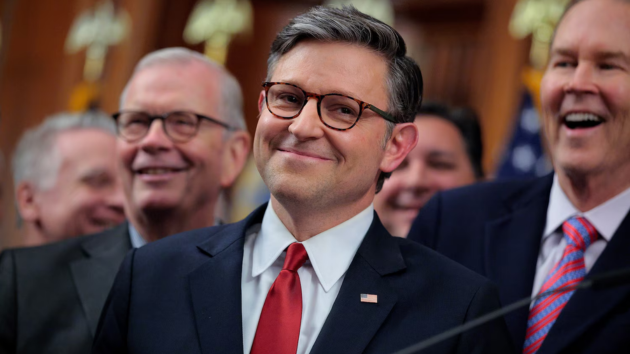
A dozen House Republicans bucked Trump and Speaker Mike Johnson to prevent the legislation from advancing on the floor — joining the entire Democratic caucus — and, at least temporarily, freezing activity in the House. The final tally was 196-223.
Johnson said that while he anticipated that there may be enough opposition to defeat the effort, he felt that it was “important” to try to advance the bills. Republicans have a narrow majority in the House — with 220 Republicans compared to 212 Democrats.
Johnson said that he will attempt to work with Republican holdouts to answer questions — though no more votes are planned in the House on Tuesday.
The speaker explained that conservatives who voted against the rule want the crypto bills — CLARITY, GENIUS and Anti CBDC Surveillance Act — combined into one big package, rather than take separate standalone votes on each measure.
“This is the legislative process. We have some members who really, really want to emphasize the House’s product,” Johnson said. “They want to, want to push that and merge them together. We’re trying to work with the White House and with our Senate partners on this. I think everybody is insistent that we’re going to do all three, but some of these guys insist that it needs to be all in one package.”
The intraparty rebellion comes after Trump strongly urged Republicans to vote in favor of advancing the crypto bills.
“The GENIUS Act is going to put our Great Nation lightyears ahead of China, Europe, and all others, who are trying endlessly to catch up, but they just can’t do it,” Trump posted on Truth Social Tuesday. “Digital Assets are the FUTURE, and we are leading by a lot! Get the first Vote done this afternoon (ALL REPUBLICANS SHOULD VOTE YES!).”
The no votes came from Reps. Andy Biggs, Tim Burchett, Michael Cloud, Andrew Clyde, Eli Crane, Marjorie Taylor Greene, Andy Harris, Anna Paulina Luna, Scott Perry, Chip Roy, Keith Self and Victoria Spartz. Majority Leader Steve Scalise also changed his vote to “no” to preserve the capability to call the measure back up for another attempted vote.
Luna, a Florida Republican, told ABC News that she is “pro-crypto,” but voted against the procedural vote because she continues to have concerns about creating a “backdoor” to a Central Bank Digital Currency — a worry echoed by Greene.
“I just voted NO on the Rule for the GENIUS Act because it does not include a ban on Central Bank Digital Currency and because Speaker Johnson did not allow us to submit amendments to the GENIUS Act,” Greene, R-Ga., posted on X. “Americans do not want a government-controlled Central Bank Digital Currency. Republicans have a duty to ban CBDC. President Trump included a ban on CBDC in his January 23rd executive order and Congress must also include the ban on CBDC in the GENIUS Act.”
The vote came during what the White House is calling “Crypto Week” and marks a rare instance when House Republicans have defied Trump’s direction.
(DADE COUNTY, Ga.) — A Georgia sheriff’s deputy has been fired after a police dog died in their hot car, according to the Dade County Sheriff’s Office.
In a statement shared on Tuesday, officials in Trenton said they “tragically lost our newest member of our K-9 team,” a bloodhound named Georgia.
The deputy responsible for Georgia allegedly left her alone in a patrol car on Sunday, with the heat index rising to around 100 to 102 degrees Fahrenheit, officials said.
While the deputy was inside the sheriff’s office, the car’s air conditioning compressor malfunctioned and the heat alarm in the vehicle “was not functioning,” officials said.
“Those two factors, coupled with K-9 Georgia being left unattended for what we considered to be an unacceptable amount of time, contributed to her passing,” officials said.
The sheriff’s office said the deputy who left Georgia alone in the sweltering car is “no longer an employee of Dade County Sheriff’s Office.”
Moving forward, officials said any K-9 vehicle will be taken out of service “if ANY of the essential K-9 equipment isn’t in 100% working order” and that police dogs will “not be left in vehicles for extended periods of time during the summer.”
The incident will be handed over to the Dade County District Attorney’s Office, who will determine if the deputy should face charges, the sheriff’s office said.
Officials said their “hearts are aching at the loss” of Georgia — who was donated to the sheriff’s department by a local family.
“She was an amazing bloodhound who was sweet, goofy and had all the potential to be the ‘best of the best.’ She will be deeply missed by everyone at our office, and by anyone who had the pleasure to meet her,” the sheriff’s office said.
It remains unclear how long Georgia was left alone in the car.
This is 4 million more children than the 2024 target set by the WHO and 1.4 million more children than in 2019, which is the baseline year for measuring progress.
About 25% of the world’s infants live in 26 countries that are affected by conflict, fragility or humanitarian crises, but they make up half of all unvaccinated children, according to the global health agency.
Children are unvaccinated or under-vaccinated for many reasons including lack of access, disrupted supply, conflict and instability, or misinformation about vaccines.
“Stalling of vaccine coverage, even the smallest drops in immunization coverage as measured at the country level, can have devastating consequences,” Dr. Kate O’Brien, director of the WHO’s Department of Immunization, Vaccines and Biologicals, said during a press briefing on Monday. “It opens the door to deadly disease outbreaks and puts even more pressure on health systems that are already stretched. Immunization Agenda 2030 targets are in reach to protect more children [with] life-saving vaccines.”
Immunization Agenda 2030 is in reference to a series of goals put forth by the World Health Assembly to address challenges in improving access.
However, there were some bright spots in the report. In 2024, 89% of infants globally, equivalent to about 115 million, received at least one dose of the diphtheria, tetanus and pertussis (DTP)-containing vaccine, and 85%, roughly 109 million, completed all three doses.
By comparison, in 2023, about 171,000 more children received at least one vaccine and one million more children received the three doses.
Protection against measles also improved, with 84% of children receiving the first dose and 76% receiving the second dose. While these are slight increases from the previous year, it means 30 million children are unprotected, especially as the world faces an increasing number of outbreaks.
“The good news is that we have managed to reach more children with life-saving vaccines. But millions of children remain without protection against preventable diseases, and that should worry us all,” Catherine Russell, executive director of UNICEF, said in a statement.
“We must act now with determination to overcome barriers like shrinking health budgets, fragile health systems along with misinformation and access constraints because of conflicts. No child should die from a disease we know how to prevent,” Russell said.
The release of the data came just a few weeks after Health and Human Secretary Robert F. Kennedy Jr. said the U.S. was pulling its funding from GAVI, an international organization that works to improve access to vaccines, claiming the organization “ignored the science.”
Kennedy claimed in a video posted online that the U.S. had provided $8 billion in funding to GAVI since 2001.
Public health officials called on governments around the world to help fill the gaps in funding, although the U.S. withholding funds was not explicitly stated.
“It is really, really important that maintaining these coverage trends, which are quite easily fragile unless efforts are sustained,” Dr. Ephrem Lemango, associate director for health and global chief of immunization at UNICEF, said during Monday’s press briefing.
“It is important that we maintain our commitment to immunization, and we’re calling on governments and partners and communities to do all that is necessary to maintain immunization coverage, including closing the funding gaps, serving communities in conflict and fragile settings, and addressing misinformation,” Lemango said.
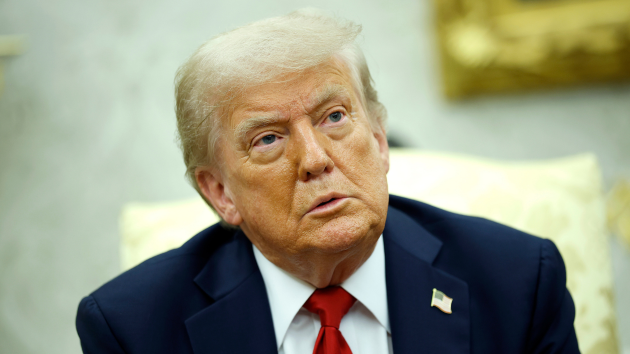
(WASHINGTON) — President Donald Trump on Tuesday said Attorney General Pam Bondi should release “whatever she thinks is credible” on Jeffrey Epstein as he faces pressure from his MAGA supporters.
Trump, speaking to reporters as he left the White House, said he received a “very quick briefing” on the Justice Department and FBI review of the Epstein files. The briefing took place before the release of the DOJ and FBI memo last week.
The review found no evidence the deceased financier kept a “client list” of associates and no further charges are expected. The department also released hours of footage as part of its review, which officials say further confirmed Epstein died by suicide while in custody in his jail cell in Manhattan in 2019.
ABC News’ Katherine Faulders asked the president what Bondi told him about the review, “specifically, did she tell you at all that your name appeared in the files?”
“No, no, she’s — she’s given us just a very quick briefing,” Trump responded before making baseless claims the files were created by some of his political foes.
“And in terms of the credibility of the different things that they’ve seen, and I would say that, you know, these files were made up by Comey, they were made up by Obama, they were made up by the Biden — and you know, we and we went through years of that with the Russia, Russia, Russia hoax, with all of the different things that we had to go through,” Trump said.
“We’ve gone through years of it, but she’s handled it very well, and it’s going to be up to her,” Trump said of Bondi. “Whatever she thinks is credible, she should release.”
Bondi, when asked about Trump’s comments to ABC News, said she hadn’t yet seen the president’s comments but added that the DOJ and FBI memo “speaks for itself.”
Trump is facing outrage among his MAGA base over the administration’s handling of the Epstein files. It’s also led to some infighting within his administration, as Deputy FBI Director Dan Bongino had a fiery confrontation with Bondi over the matter, ABC News reported.
Amid calls for her resignation, Bondi said defiantly on Tuesday: “I’m going to be here for as long as the president wants me here, and I believe he’s made that crystal clear.”
When asked about the rift between her and Bongino, Bondi said she wouldn’t discuss personnel matters.
“I was with [FBI] Director [Kash] Patel all morning and we are committed to keeping America safe, making America safe, working with our incredible partners at DEA, FBI, ATF, U.S. Marshals to do everything we can to make America safe and that’s what we’re focused on,” she said at an event at the Drug Enforcement Administration.
Trump sought to quiet the revolt over the weekend by posting a lengthy defense of Bondi and urging his administration to focus on other priorities.
But the comments continued to pour in, including warnings from some of Trump’s top defenders that the issue is not going away and could have consequences in next year’s midterm elections.
Lara Trump, the president’s daughter-in-law and a Fox News host, told MAGA influencer Benny Johnson on Monday that she believed there did need to be “more transparency” regarding the administration’s handling of the Epstein case.
Trump was asked on Tuesday what he thought about her remarks.
“The attorney general’s handled that very well. She’s really done a very good job,” Trump said. “And I think that when you look at it, you’ll understand that. I would like to see that also. But I think the attorney general, the credibility is very important. And, you want credible evidence or something like that. And I think the attorney general has handled it very well.”
Meanwhile, on Capitol Hill, some Republican lawmakers expressed interest in Epstein’s convicted associate, Ghislaine Maxwell, testifying before Congress.
Sen. Josh Hawley, a Missouri Republican, said he believed everything on Epstein should be out in the open.
“I think all this stuff ought to be public,” Hawley said. “I mean, I think all of the all the documents, should all be public. I think we’d all ought to be out in the open. I’m a big fan of declassifying — I think this isn’t technically classified. It’s just, you know, close hold for prosecution, but I think we ought to put it all out there.”
Though Rep. Jim Jordan, the chairman of the House Judiciary Committee, told ABC News he had “total confidence in President Trump and his team” regarding the Epstein matter.
ABC News’ Luke Barr, Lauren Peller and Isabella Murray contributed to this report.
(NEW YORK) — The extreme rainfall that occurred in the Northeast on Monday will likely occur more often in the future as a result of climate change, research shows.
The Northeast has experienced the largest regional increase of extreme precipitation in the U.S., with a 60% increase in recent decades, according to the U.S. government’s Fifth National Climate Assessment, a summary of the latest climate science research findings by 14 different federal agencies, published in November 2023.
Extreme precipitation events are very rare, defined as the top 1% of daily precipitation events.
While it’s problematic to attribute any specific weather event solely to climate change, global warming is amplifying naturally occurring events, like the torrent of rain that fell on the Northeast on Monday evening, making them more intense.
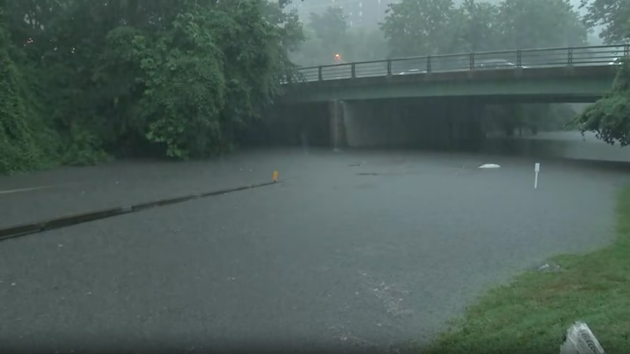
New York City’s Central Park preliminarily recorded its second-highest hourly rainfall total since 1943, measuring 2.07 inches of precipitation in one hour at around 7 p.m. on Monday, according to the National Weather Service (NWS). The amount of rain that fell in one hour represents a 1-in-20-year flood for Central Park, meaning there is a 5% chance it could happen in any given year.
The record for most precipitation in one hour in Central Park was set on Sept. 1, 2021, when the remnants from Hurricane Ida caused 3.15 inches of rain to fall, flooding basement apartments in the city and killing 13 people.
The deluge of water caused subway lines to flood, with water even rushing from platforms and into train cars. In at least one instance, the city sewer overflowed into the subway system, according to the city’s Metropolitan Transportation Authority.
Between one and five inches of water fell in neighboring northern and central New Jersey, with the highest totals measured in the regions around Plainfield, New Jersey and White Plains, New York – about five inches, according to the NWS. Metro-North and New Jersey Transit commuter train lines experienced service disruptions due to downed trees and flooding, and numerous roadways in the region were closed due to floodwaters. Two people were killed when their car was swept into the overflowing Cedar Brook river in Plainfield, officials said.
According to climate scientists, human-amplified climate change is causing extreme rainfall events to become more frequent and more intense. More intense extreme rainfall events also increase the frequency and scale of flash flooding as the influx of water is more than existing infrastructure was built to handle, according to the Fifth National Climate Assessment.
Additionally, human-amplified climate change has contributed to increases in the frequency and intensity of the heaviest precipitation events across nearly 70% of the U.S., the Fifth National Climate Assessment found.
ABC News’ Climate and Weather Unit contributed to this report.
(LOS ANGELES, Calif.) — Two people have been found shot to death in a Los Angeles home during a welfare check, police said.
Police found the victims while responding to the home in Encino on Monday afternoon, according to the Los Angeles Police Department. They both had gunshot wounds to the head, police said.
The victims were found in different rooms inside the home, law enforcement sources told ABC News.
A broken sliding glass door could be seen at the house.
No arrests have been made, police said. The Los Angeles Police Department is investigating the shooting as a double homicide.
Detectives have been scouring the neighborhood for video since the bodies were found, sources said.
Next of kin is being notified and the names of the victims have not yet been released.
This is a developing story. Please check back for updates.
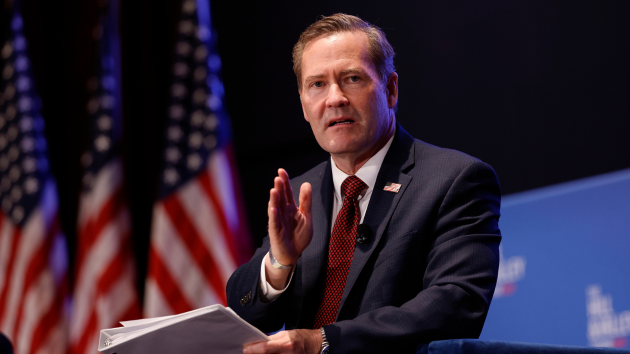
(WASHINGTON) — Mike Waltz, former national security adviser who left his position in May in the wake of the Signal chat controversy in March, faced questions Tuesday from Democratic senators over the episode in his confirmation hearing for his nomination as United Nations ambassador.
Waltz insisted, as White House officials have since the incident, that no classified information was shared in a group chat that he inadvertently invited a journalist to that discussed details of a strike against Houthi rebels in Yemen. And he suggested the use of Signal was not only appropriate — but actually prudent, given the guidance he was following.
“That engagement was driven by and recommended by the Cyber Security Infrastructure Security Agency, by the Biden administration … the use of signal is not only as an encrypted app. It’s not only authorized. It was recommended in Biden’s, the Biden era, CISA guidance,” he told Sen. Chris Coons, D-Del.
“We followed the recommendation — almost the demand to use end-to-end encryption — but there was no classified information shared,” he told Coons.
Coons said he “was hoping to hear from you that you had some sense of regret over sharing what was very sensitive, timely information about a military strike on a commercially available app that’s not, as we both know, the appropriate way to share such critical information.”
“Senator, I think where we have a fundamental disagreement is there was no classified information on that, on that chat,” Waltz replied.
But Sen. Tim Kaine,D-Va., pointed out that investigations at the Pentagon by the Inspector General and the Air Force have not reached a conclusion on the question — although Kaine didn’t suggest Waltz himself shared classified information.
“I shouldn’t and can’t comment on ongoing investigations” at the Pentagon, Waltz said.
“The fact of the matter is,” Kaine said, “there are two investigations going on at the Pentagon precisely to determine in an objective and independent way whether classified information was shared, [or] at a minimum … attack plans with sensitive military information that shouldn’t have been shared.
Sen. Mike Lee, a Republican from Utah, introduced Waltz before the Senate Foreign Relations Committee and touted his experience.
“He is a seasoned policy mind, a skilled negotiator with a track record of diligently pursuing American interests unapologetically and with the appropriate amount of caution and attention to detail that those things deserve,” Lee said.
Florida Republican Sen. Rick Scott said Waltz would “exceed expectations” in the role at the United Nations.
Sen. Jeanne Shaheen of New Hampshire, the ranking Democrat on the committee, focused her opening remarks on criticism of the Trump administration’s cuts to the U.S. diplomatic budget.
“President Trump has said that the U.N. must return to its core mission of peace and security, but the administration is also proposing to slash U.S. contributions to the U.N. and eliminate the entire U.N. peacekeeping budget, increasing the likelihood that American soldiers will be sent into combat zones, and making China the largest U.N. peacekeeping and financial contributor,” Shaheen said, noting that at the same time, China was ramping up its investments in the U.N.
“Mr. Waltz, I urge you to take this threat seriously,” she added.
Waltz came under intense scrutiny in March for inadvertently inviting The Atlantic Editor-in-Chief Jeffrey Goldberg to a Signal chat with Secretary of Defense Pete Hegseth, Vice President JD Vance and other top national security officials discussing details of the strike on the Houthis.
President Donald Trump nominated Waltz to the U.N. post at the same time he announced Secretary of State Marco Rubio would take over the national security adviser on an interim basis.
Sen. Jacky Rosen, D-Nev., pressed Waltz on remaining on the White House payroll despite no longer serving as national security adviser.
“Can you confirm for us whether you have been receiving a salary from the White House since being let go from the NSA?” Rosen asked.
“Thank you, Senator. I was not fired. The president never said that, nor did the vice president. I was kept on as an adviser, transitioning a number of important — a number of important activities, and now hope to be confirmed,” Waltz responded, calling reports of his dismissal “fake news.”
“You know, fake news can’t be the answer to everything,” Rosen retorted.
Before taking the role as national security adviser, Waltz served three terms in Congress representing Florida’s 6th Congressional District and sat on the Intelligence, Armed Services and Foreign Affairs committees. He was the first Green Beret to be elected to Congress.
During the presidential campaign, he was a key Trump surrogate on defense and foreign policy.
Before running for elected office, Waltz served in various national security policy roles in the George W. Bush administration in the Pentagon and White House. He retired as a colonel after serving 27 years in the Army and the National Guard.
-ABC News’ Katherine Faulders, Will Steakin, Mary Bruce, Hannah Demissie and Michelle Stoddart contributed to this report.
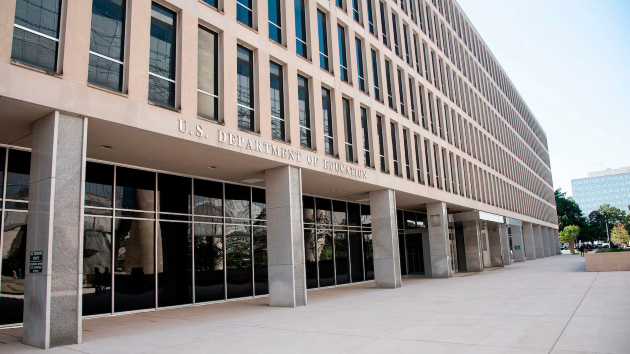
(WASHINGTON) — While the U.S. Department of Education cannot be dissolved completely under the law, the Supreme Court’s decision on Monday to lift an injunction against the Trump administration’s efforts to gut the agency took the first step in that direction — a move that could ripple to students around the country.
The Supreme Court’s decision, for now, allows the Trump administration to fire hundreds of employees who had been on paid administrative leave for months to officially be let go. The layoffs are supposed to take effect in August, according to internal Education Department emails obtained by ABC News, right as many of the nation’s schools return for a new school year.
The ruling allows the massive reduction in force to deliver on President Donald Trump’s mission to reduce fraud, waste, abuse and spending within the federal government — and return education power and decisions back to the states.
But what does this mean for America’s students?
Former Department of Education employees and education advocates told ABC News that they worry this ruling could harm the most vulnerable children in the country.
“This isn’t just about jobs,” former teacher and Department of Education liaison Dani Pierce told ABC News in a statement, adding “it’s about abandoning the people and programs that protect students’ rights, support educators and ensure equity in schools across the country.”
The Education Department, the smallest cabinet-level agency, was put in place to safeguard disadvantaged students, aiding them with financial support and civil protections, advocates say. By reducing the size and scope of the agency — now leaving it with about half of its staff — experts and advocates tell ABC News that disadvantaged students are at risk.
“The U.S. Supreme Court have dealt a devastating blow to this nation’s promise of public education for all children,” Skye Perryman, president and CEO of left-leaning Democracy Forward — a public education advocacy nonprofit — said in a statement to ABC News. “We will aggressively pursue every legal option as this case proceeds to ensure that all children in this country have access to the public education they deserve.”
The department’s main responsibilities of administering the $1.6 trillion federal student loan portfolio and assisting low-income and disabled youth will likely be impacted the most, Education Department sources tell ABC News.
Rachel Gittleman, a management and program analyst formerly of the Education Department’s Ombudsman Office, told ABC News that her position was a backstop for the Federal Student Aid (FSA) office. After Monday’s ruling, Gittleman warned student loan borrowers may not receive the same support.
“I think it makes repayment of student loans even harder than it already was,” she said. “It makes these systems, the federal student loan system, which is already a largely dysfunctional and broken system to begin with — I think it makes those harms even greater.”
However, Secretary of Education Linda McMahon said the department will help employees impacted by the cuts find new jobs and rehome different statutory functions of the agency, including student loans to treasury and funding for students with disabilities to the Department of Health and Human Services. McMahon has also said that no statutory funding the agency administers will be cut.
The Supreme Court’s decision was welcome news to many in the education community.
Tiffany Justice, chair of the Parental Rights Initiative at The Heritage Foundation, has been a leading voice in the conservative movement to bolster the Trump administration’s argument.
Justice called the ruling “fantastic news” that is putting parents back into the driver’s seat of education decisions.
“Can’t wait for @EDSecMcMahon to be able to unleash the full power of reform on the bloated, inefficient, bureaucracy at @usedgov,” Justice said in a post on X on Monday.
Neal McCluskey, an education analyst at libertarian think tank Cato Institute, is also a staunch supporter of abolishing the agency. He took a victory lap on Monday.
“There is nothing unconstitutional about the executive branch trying to execute the law with fewer people,” McCluskey wrote in a statement to ABC News. “The administration should certainly work to eliminate the unconstitutional, wasteful Department of Education, but if it had wanted to do that unilaterally, it would have fired everyone.”
Meanwhile, conservative education leaders such as Wyoming State Superintendent of Public Instruction Megan Degenfelder have long said that the federal government should not have a role in education.
She told ABC News that underserved student services can be transferred to other departments and stressed that in Wyoming their priorities “are the same as President Trump’s priorities.”
“I do not see a place for the U.S. Department of Education to exist now,” Degenfelder said in an interview with ABC News.
“Our founding fathers designed our country, our government, in a way that states would have the ultimate authority when it comes to education.”