(BOOM, BELGIUM) — A massive fire severely damaged the main stage at Belgium’s Tomorrowland, one of the world’s largest electronic dance music festivals, just days before its scheduled opening.
The blaze erupted Wednesday at the festival grounds in Boom, Belgium, where thick plumes of black smoke could be seen rising into the air. Video footage shared on social media showed large flames engulfing the main stage, along with what sounded like fireworks going off.
The cause of the fire remains unknown. No injuries were reported in the incident, according to festival organizers.
“Due to a serious incident and fire, our beloved Mainstage has been severely damaged,” Tomorrowland officials announced on Instagram. They added that the festival’s campsite, DreamVille, will still open as planned on Thursday, July 17.
The festival, which attracts tens of thousands of music fans annually, is scheduled to run from Friday, July 18, through Sunday, July 20. Headline performers include top DJs David Guetta, Charlotte De Witte and Martin Garrix.
Festival organizers say they are “focused on finding solutions for the festival weekend” and will provide more updates soon. All pre-festival activities in Brussels and Antwerp will proceed as planned.
(WASHINGTON) — President Donald Trump continues to face backlash from his MAGA supporters over his administration’s handling of the Jeffrey Epstein files.
The Justice Department and FBI said in a brief memo that a review found no Epstein “client list” and confirmed the disgraced financier died by suicide in prison while awaiting trial on sex-trafficking charges.
The president has tried to shift focus away from the case, urging Attorney General Pam Bondi to release “whatever she thinks is credible” before going on to claim without evidence the entire thing was what he calls a “Democratic hoax.”
Some Republicans have fueled the Epstein intrigue and conspiracies surrounding the case for years, with Trump himself weighing in several times.
Here’s what Trump has said about Epstein during his first term, on the campaign trail and now as pressure builds on him to release the Epstein files.
2019: Trump distances himself from Epstein: ‘Not a fan’
After Epstein was arrested and charged with sex trafficking of minors in July 2019, Trump was asked about his 2002 comments in which he called Epstein “terrific” in a New York Magazine story.
In response, Trump repeatedly said he wasn’t a “fan” of Epstein.
“Well, I knew him like everybody in Palm Beach knew him,” Trump told reporters in the Oval Office. “I mean, people in Palm Beach knew him. He was a fixture in Palm Beach. I had a falling out with him a long time ago. I don’t think I’ve spoken to him for 15 years. I wasn’t a fan. I was not, yeah, a long time ago, I’d say maybe 15 years. I was not a fan of his, that I can tell you. I was not a fan of his.”
In August 2019, after Epstein’s death, Trump retweeted a post that alleged Bill Clinton was connected to Epstein’s death.
When asked about his retweet in an interview, Trump said “what we’re saying is we want an investigation. I want a full investigation, and that’s what I absolutely am demanding. That’s what our attorney general — our great attorney general — is doing.” The attorney general at the time was Bill Barr.
Pressed further on if he really believed the Clintons were involved, Trump didn’t shut it down.
“I have no idea,” he said, but encouraged further questions. “So you have to ask: Did Bill Clinton go to the island? That’s the question. If you find that out, you’re going to know a lot,” Trump said at the time.
Clinton has denied any knowledge of Epstein’s crimes and has denied ever visiting Epstein’s private island.
2020: Trump suggested Epstein may have been killed
In August 2020, during the thick of his reelection campaign, Trump suggested Epstein may have been killed while in federal custody.
The comments went against the findings of then-Attorney General Barr and the New York City medical examiner who ruled the death a suicide.
During an interview with Axios reporter Jonathan Swan, Trump was asked about Ghislaine Maxwell, an associate of Epstein who at the time of the interview had just been arrested. She is currently serving a 20-year sentence for conspiring with and aiding Epstein in his sexual abuse of underage girls.
“Her boyfriend died in jail. And people are still trying to figure out how did it happen,” Trump said. “Was it suicide? Was he killed? And I do wish her well. I’m not looking for anything bad for her.”
In August 2023, in an interview with Tucker Carlson, Trump was pressed further on if he believed Epstein committed suicide or not.
“Do you think it’s possible that Epstein was killed?” Carlson asked.
“Oh, sure, it’s possible. I mean, I don’t really believe — I think he probably committed suicide,” Trump said.
2024: Trump asked about Epstein on the campaign trail
In June 2024, Trump was asked if he would release various files — including the John F. Kennedy and Martin Luther King Jr. assassination files and the Epstein files — during an interview with Fox News.
“Would you declassify the Epstein files?” Fox News’ Rachel Campos-Duffy asked. Trump responded, “Yeah, yeah, I would.”
That clip was circulated widely online, including by the Trump War Room — the social media account of Trump’s campaign operation. The account posted it to X with the caption: “President Trump says he will DECLASSIFY the 9/11 Files, JFK Files, and Epstein Files.”
But Trump’s full answer to the question wasn’t shown until it played on Will Cain’s radio show.
Trump went on to say in the exchange with Campos-Duffy: “I don’t know about Epstein so much as I do the others. Certainly about the way he died. It’d be interesting to find out what happened there, because that was a weird situation and the cameras didn’t happen to be working, etc., etc. But yeah, I’d go a long way toward that one.”
In September 2024, Trump made a more firm pledge to release Epstein files during a podcast with Lex Fridman.
Fridman, in conversation with Trump, said “it’s just very strange for a lot of people that the list of clients that went to the island has not been made public.”
“It’s very interesting, isn’t it? It probably will be, by the way, probably,” Trump said.
“If you’re able to, you’ll be –” Fridman started before Trump jumped in.
“Yeah, I’d certainly take a look at it. Now, Kennedy’s interesting because it’s so many years ago,” Trump said. “They do that for danger too, because it endangers certain people, et cetera, et cetera, so Kennedy is very different from the Epstein thing but I’d be inclined to do the Epstein. I’d have no problem with it.”
2025: Trump tries to dismiss Epstein files after DOJ, FBI memo prompts GOP backlash
For the first several months of his administration, talk of the Epstein files was mostly left to Trump officials, including Bondi, FBI Director Kash Patel and FBI Deputy Director Dan Bongino. In April, Trump said he was unaware of when the files would be released.
Then, after the DOJ and FBI released their memo on July 7, Trump reacted to outrage from his MAGA base.
Trump tried to shut down a question about Epstein during a Cabinet meeting the next day, July 8, right after the deadly flash flooding of the Guadalupe River.
“Are you still talking about Jeffrey Epstein?” Trump shot back to a reporter. “This guy’s been talked about for years. You’re asking. We have Texas, we have this. We have all of the things. And are people still talking about this guy, this creep? That is unbelievable.”
Trump then turned to defend Bondi in a lengthy social media post on July 12, in which he said his administration and his supporters should prioritize their focus elsewhere.
“We have a PERFECT Administration, THE TALK OF THE WORLD, and ‘selfish people’ are trying to hurt it, all over a guy who never dies, Jeffrey Epstein,” Trump wrote in the post.
The story, though, didn’t die down and Trump only appeared to grow more angered by the pushback from his supporters.
On July 15, Trump appeared to put the onus on Bondi for what comes next, saying she should release “whatever she thinks is credible” on Epstein. Later that day, Trump said he didn’t understand the interest in Epstein.
“It’s pretty boring stuff. It’s sordid, but it’s boring, and I don’t understand why it keeps going,” Trump said. He added, “I think really only pretty bad people, including fake news, want to keep something like that going.”
The next day, on July 16, Trump took to social media baselessly blaming Democrats for the files and those who he called “past supporters” of his for the fixation on Epstein.
“Their new SCAM is what we will forever call the Jeffrey Epstein Hoax, and my PAST supporters have bought into this “b——,” hook, line, and sinker,” Trump wrote on his own conservative social media platform.
“Let these weaklings continue forward and do the Democrats work, don’t even think about talking of our incredible and unprecedented success, because I don’t want their support anymore!” Trump added.
Trump doubled down on that claim in the Oval Office, calling it a Democratic “hoax.” When asked by ABC News Chief White House Correspondent Mary Bruce if the attorney general told him it was a hoax or what evidence he’d seen of that, Trump replied:
“The attorney general, no. I know it’s a hoax. It’s started by Democrats,” Trump insisted. He added “some stupid” and “foolish” Republicans had fallen for it.
ABC News’ Will Steakin contributed to this report.
(LONDON) — Russia’s Defense Ministry said its forces shot down at least 126 Ukrainian drones overnight into Thursday morning, with at least three craft intercepted over the capital Moscow region.
The attack was Ukraine’s largest drone barrage into Russia since it launched 167 craft into the country on July 11, according to data published by Russia’s Defense Ministry and analyzed by ABC News.
The latest attack saw drones downed over 11 Russian regions plus annexed Crimea, the ministry said on Thursday.
Temporary flight restrictions were introduced at Moscow’s Vnukovo Airport, Kaluga Grabtsevo Airport to the southwest of the capital and Pulkovo Airport in St. Petersburg, according to Telegram posts by Artem Korenyako, a spokesperson for Russia’s federal aviation agency Rosaviatsiya.
Moscow Mayor Sergei Sobyanin said on Telegram that at least three drones were shot down on approach to the city. “Emergency services specialists are working at the site of the wreckage,” he wrote.
In the southwestern Voronezh region, a drone crashed into a residential building and injured three people, according to a statement published by local Gov. Alexander Gusev on Telegram.
In the western Belgorod region, Gov. Vyacheslav Gladkov said three people were killed and 17 injured by drone attacks from Wednesday afternoon through into Thursday morning.
Another person was injured by a drone in the Smolensk region, which sits to the west of Moscow and borders Belarus, Gov. Vasily Anokhin said.
In the Kaluga region to Moscow’s southwest, a drone hit a two-story house and a 14-year-old girl was injured by glass fragments, local Gov. Vladislav Shapsha said on Telegram.
Ukraine’s air force, meanwhile, said Russia launched 64 drones into the country overnight, of which 41 were shot down or neutralized in flight. The air force said 23 drones impacted in five locations.
As of Thursday, the death toll from a Russian airstrike on the Donetsk city of Dobropillia rose to four, according to local Gov. Vadym Filashkin. Another 27 people were injured in the strike, Filashkin said, which targeted a shopping center in the eastern city.
July has marked an uptick in drone attacks launched by both Russia and Ukraine amid stalled U.S.-led efforts to secure a ceasefire deal to end Russia’s 3-year-old full-scale invasion of its neighbor. On Monday, President Donald Trump set Moscow a 50-day ultimatum to agree to a ceasefire, threatening sanctions if it failed to do so.
In June, Russia’s Defense Ministry reported downing a total of 2,368 Ukrainian drones, with an average of almost 79 drones per day across the month.
Thus far in July, the Defense Ministry said it has downed 1,516 Ukrainian drones, with a daily average of 89 drones.
The scale of Russian drone and missile strikes on Ukraine have been increasing since May, according to figures published by the Ukrainian air force and analyzed by ABC News.
In May, Russia launched a total of 3,835 drones and 117 missiles, for an average of around 124 drones and nearly four missiles each day.
June saw 5,438 drones and 239 missiles fired into Ukraine, with a daily average of 181 drones and nearly eight missiles.
Already in the first half of July, Ukraine has reported facing 4,067 drones and 89 missiles, for a daily average of 239 drones and more than five missiles.
(LONDON) — The Holy Family Church, a Catholic church in Gaza, was damaged on Thursday and its priest was injured along with several others, the parish said.
“Currently there are no fatalities confirmed,” the parish said in a press release. “The church sustained damage.”
Father Gabriel Romanelli was injured, said the church, which is the only Catholic parish in Gaza.
“The IDF is aware of reports regarding damage caused to the Holy Family Church in Gaza City and casualties at the scene,” the Israel Defense Forces said in a statement. “The circumstances of the incident are under review.”
The IDF statement added, “The IDF makes every feasible effort to mitigate harm to civilians and civilian structures, including religious sites, and regrets any damage caused to them.”
This is a developing story. Please check back for updates.
ABC News’ Joe Simonetti and Helena Skinner contributed to this report.
(WASHINGTON) — A total of 10 Republican senators are urging the Trump administration to reverse its decision to withhold more than $6 billion in federal funds for education programs already appropriated by Congress.
“The decision to withhold this funding is contrary to President Trump’s goal of returning K-12 education to the states,” the GOP senators wrote in a letter to Office of Management and Budget Director Russ Vought obtained by ABC News.
“This funding goes directly to states and local school districts, where local leaders decide how this funding is spent, because as we know, local communities know how to best serve students and families,” the letter stated.
Federal aid for schools is typically allocated each year on July 1, but aid was paused on June 30 in an ongoing review of education funding, according to an Education Department memo sent to Congress obtained by ABC News.
Sen. Shelley Moore Capito, R-W. Va., led the group of senators signing onto the letter — a rare rebuke by Republicans of the president’s education policies.
Capito, who chairs the Senate Appropriations subcommittee on Labor, Health and Human Services, Education, and Related Agencies (Labor-HHS), is a staunch supporter of Education Secretary Linda McMahon and her mission to overhaul the Education Department.
The letter encourages Vought to release the funding to states, noting it was already approved by Congress in a short-term spending bill this past spring.
The funding that has been paused includes grants for after-school care, student support, English language and adult education, among other programs.
The senators’ letter comes just days after about two dozen state attorneys general and Democratic governors sued the Trump administration over the funding review that’s left many education leaders scrambling as the school year approaches.
“We want to see students in our states and across the country thrive, whether they are adult learners, students who speak English as a second language, or students who need after-school care so that their parents can work. We believe you share the same goal,” the senators’ letter stated.
In Alabama, where Trump won overwhelmingly in 2024, Superintendent of Education Eric Mackey told ABC News that he’s frustrated the administration decided to halt congressionally appropriated funding in the middle of the summer.
“We’re talking about transparency and consistency and making good on a promise,” Mackey told ABC News. “We’re talking about programs that Congress has already authorized and just three weeks before school starts, you just find that the check is not coming.”
The Education Department referred questions about the funding pause to OMB, which told ABC News many of the programs “grossly misused” government funds to promote a “radical leftwing agenda.”
The Impoundment Control Act — a law that states Congress must consider and review executive branch withholdings of budget authorities – requires OMB to specify the duration of proposed partial-year deferrals.
In a statement to ABC News, an OMB spokesman said no decisions have yet been made.
“We share your concern about taxpayer money going to fund radical left-wing programs,” the senators wrote in the letter. “However, we do not believe that is happening with these funds.”
Meanwhile, the Supreme Court’s decision on Monday to lift an injunction blocking the administration’s efforts to gut the Education Department allowed the administration to take a step toward fulfilling Trump‘s goal of dismantling the agency completely.
Such a move would require congressional approval.
South Dakota Sen. Mike Rounds, one of the senators who signed the letter, introduced legislation, called “Returning Education to Our States,” that would block grant funds to states and redistribute statutory functions of the department to other agencies.
The proposed legislation hasn’t been taken up in the Senate this year and would likely fail without 60 Senate ‘yes’ votes.
The other Republican senators who signed the letter were: Susan Collins, of Maine; John Boozman, of Arkansas; Katie Britt, of Alabama; Deb Fischer, of Nebraska; John Hoeven, of North Dakota; Jim Justice, of West Virginia; Mitch McConnell, of Kentucky; and Lisa Murkowski, of Alaska.
(QUINAULT, WA) — At least one person is dead and two others have been injured in a small plane crash in a remote area of Olympic National Park in Washington, authorities said.
The incident occurred on Tuesday evening at approximately 6:50 p.m. when park rangers were notified of a crash in the Quinault area of Olympic National Park on a steep slope north of the Irely Lake Trailhead, according to a statement from the National Park Service.
“Rangers immediately coordinated a response with Naval Air Station Whidbey Island Search and Rescue,” officials said. “The three occupants of the plane — a Murphy SR3500 Moose — were transported to a Level 1 Trauma Center.”
Authorities said that two occupants were being treated for their injuries and that one person died due to the crash.
Officials have not yet publicly identified the people involved in the incident and have given no details about what might have caused it in the first place.
The cause of the accident is unknown and is currently under investigation by the National Transportation Safety Board.
(LONDON) — Law enforcement officials in Europe said they had coordinated the dismantling of an international pro-Russian cybercrime network, arresting two members, issuing warrants for others in Russia and disrupting the group’s main infrastructure.
The network, known as NoName057(16), was alleged to have targeted Ukraine and countries that supported Kyiv in its fight against the Russian invasion, Europol said in a statement Wednesday. The group was alleged to have recruited volunteers via “pro-Russian channels, forums, and even niche chat groups on social media and messaging apps.”
“Individuals acting for NoName057(16) are mainly Russian-speaking sympathisers who use automated tools to carry out distributed denial-of-service (DDoS) attacks,” Europol said in a statement.
Two people were arrested, one in France and one in Spain, officials said of the 3-day operation. Seven other arrest warrants were issued, including six by Germany for alleged hackers living in Russia, Europol said.
“The group, which professed support for the Russian Federation since the start of the war of aggression against Ukraine, executed multiple DDoS attacks during high-level political events in Europe,” the European Union Agency for Criminal Justice Cooperation, or Eurojust, said in a statement posted to social media.
The FBI in the United States was among the law enforcement agencies who took action against the group, Europol said. Europol and Eurojust, the European Union’s top law-enforcement agencies, coordinated the operation, which they called “Eastwood.” They were joined by authorities from Czechia, France, Finland, Germany, Italy, Lithuania, Poland, Spain, Sweden, Switzerland and the Netherlands.
The hacking group was estimated to have mobilized some 4,000 users to support their operations, Eurojust said. Europol and other law enforcement agencies sent some 1,000 alleged supporters messages notifying them of “their legal liability,” Europol said.
Investigators said they disrupted more than 100 servers used by the group, along with a “major part” of the group’s main infrastructure. Law enforcement officers searched two dozen houses throughout Europe and questioned people in Germany, France, Italy, Poland and Spain, according to Europol.
The pro-Russian group was accused of a series of hacks, including attacking banks and government offices in Sweden, along with perpetrating waves of cyber attacks in Germany and elsewhere. The attacks in Germany targeted some 230 organizations and businesses, including “arms factories, power suppliers and government organizations,” according to Eurojust.
“In Switzerland, multiple attacks were also carried out in June 2023, during a Ukrainian video-message addressed to the Joint Parliament, and in June 2024, during the Peace Summit for Ukraine at Bürgenstock,” Europol said.
The group was most recently alleged in June to have attacked the NATO summit in the Netherlands.
(WASHINGTON) — President Trump asked a group of Republican lawmakers how they felt about him firing Federal Reserve Chair Jerome Powell and told them he would “likely” fire Powell “soon,” according to two White House officials and sources familiar with the Tuesday evening meeting.
The Republican lawmakers expressed their approval of Trump’s intention to fire him, according to the White House officials and sources on Wednesday.
According to one lawmaker in the room, President Trump made it clear he wanted Powell gone and signaled he could move in that direction, but the president was also responding to the reception from other Republicans who were on board with the idea.
Trump mentioned this meeting in the Oval Office on Wednesday, saying he discussed the “concept of firing him.”
“I said, what do you think? Almost every one of them said I should, but I’m more conservative than they are,” Trump told reporters.
This development follows Trump’s ongoing pressure campaign to get Powell to lower interest rates. Powell has said the Fed would have cut rates by now if it weren’t for inflation concerns as the result of President Trump’s tariff policy.
While a decision on Powell could come at any time or not come at all, sources caution that a decision is not final until President Trump makes an announcement publicly.
Trump on Wednesday dismissed reports that he drafted a letter to fire Powell.
“Are you completely ruling out the idea of firing Jerome Powell?” a reporter asked Trump in the Oval Office.
“I don’t rule out anything, but I think it’s highly unlikely unless he has to leave for fraud,” Trump said.
Trump allies and top White House officials have been raising questions about the $2.5 billion dollar renovation of two historic Fed buildings on the National Mall, with some suggesting it could be weaponized against Powell to remove him from his role.
“We’re very concerned. He’s doing a little renovation for 2.5 billion of the Fed building — building a — a renovation, and they have a close to $900 million cost overrun. And it’s a shame, but the biggest cost overrun is the cost overrun for interest rates,” Trump said.
ABC News White House Correspondent Karen Travers asked Trump if he’s calling for an investigation into Powell.
Powell has requested a review of the Federal Reserve’s renovation project by the agency’s inspector general.
While many legal scholars argue that Trump does not have the authority to fire Powell, the Director of the National Economic Council Kevin Hassett told Jon Karl on “This Week” on Sunday that he believes Trump can fire Powell if “there’s cause.”
On Capitol Hill, Sen. Thom Tillis, a North Carolina Republican, took to the Senate floor Wednesday afternoon to issue a stark warning against removing Powell.
“The consequence of firing a Fed chair just because political people don’t agree with that economic decision will be to undermine the credibility of the United States government going forward,” Tillis said. “And I would argue, if it happens, you’re going to see a pretty immediate response. We’ve got to avoid that.”
ABC News’ Allison Pecorin contributed to this report.
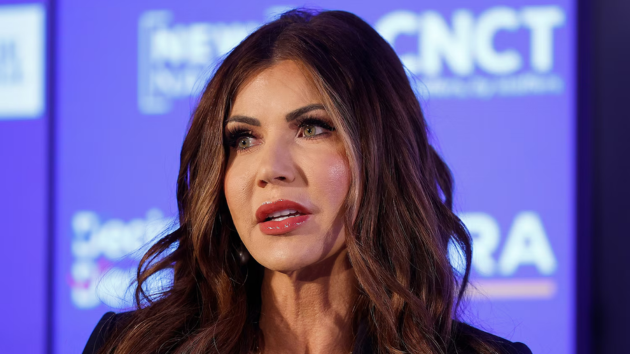
(WASHINGTON) — One week after announcing an end to the requirement that passengers remove their shoes when undergoing airport security screening, the Department of Homeland Security could also alter another post-9/11 mainstay of air travel – the amount of liquid ounces that people can take with them onboard commercial planes.
“The liquids I’m questioning, so that may be the next big announcement is what size your liquids need to be,” DHS Secretary Kristi Noem said at an event in Washington, D.C., on Wednesday. “We’re looking at our scanners, what we have put in place in TSA, multi-layered screening process that allows us to change some of how we do security and screening so it still is safe.”
Noem didn’t indicate when the updated policy announcement might be made.
The Transportation Security Administration (TSA) in 2006 implemented a policy limiting liquids, gels and aerosols in passenger carry-on luggage to 3.4-ounce containers or smaller, to lessen the chances of liquid explosives being brought onboard commercial aircraft.
Noem announced on July 8 that DHS was ending the nearly 20-year requirement that passengers remove their shoes for inspection before boarding commercial aircraft. The policy was implemented in 2006 after the so-called “shoe bomber,” Richard Reid, unsuccessfully attempted to detonate plastic explosives concealed in his shoes onboard a flight from Paris, France to Miami, Fla. On Dec. 22, 2001.
Noem said during last week’s announcement that DHS was able to terminate the shoe removal policy due to the “layered security” by the TSA now place. These layers include additional officers at security checkpoints, new scanners and technology and the recently enforced REAL ID requirement, Noem said.
Secretary Noem was also asked about the current threat environment in the United States.
“We have the threat from terrorists that are in our country today that we need to remove,” she said. “We also have the crimes that are happening on our streets by those individuals that are murderers and rapists that affect families immediately.”
Noem said the U.S. critical infrastructure is also vulnerable to attack and pointed to various cyber incidents that have occurred in the past year.