
Trump says Boulder attack ‘will not be tolerated’

Trump says Boulder attack ‘will not be tolerated’
Chet Strange/Getty Images

(BOULDER, Colo.) — President Donald Trump on Monday responded for the first time to the attack against a crowd of pro-Israel demonstrators in Boulder, Colorado.

“Yesterday’s horrific attack in Boulder, Colorado, WILL NOT BE TOLERATED in the United States of America,” Trump wrote on his conservative social media platform.

“Acts of Terrorism will be prosecuted to the fullest extent of the Law. This is yet another example of why we must keep our Borders SECURE, and deport Illegal, Anti-American Radicals from our Homeland. My heart goes out to the victims of this terrible tragedy, and the Great People of Boulder, Colorado!” the president added.

Eight people were injured on Sunday in what the FBI is calling an “act of terror.”

The suspect, Mohamed Sabry Soliman, was allegedly heard yelling “Free Palestine” while throwing a “makeshift flamethrower” at a demonstration to raise awareness about the remaining hostages in Gaza, according to authorities.

Boulder police said the motive for the attack still has not been established.

The Department of Homeland Security on Monday said Soliman is in the U.S. illegally as his B2 visa — which is typically a tourism visa — expired in February 2023. Soliman had also applied for asylum in 2022.

Soliman was granted a work permit after his B2 visa expired, a senior official told ABC News. That work permit expired on March 28, so he has been in the country illegally since then, the official said.

While Trump seized on the fact that the alleged attacker was in the country illegally, the president did not mention antisemitism in his statement.

While the administration said Trump was briefed on Sunday, his first public comments came nearly 24 hours after the attack.

This is a developing story. Please check back for updates.

Copyright © 2025, ABC Audio. All rights reserved.
Trump’s hike of steel and aluminum tariffs could raise these prices

Trump’s hike of steel and aluminum tariffs could raise these prices
Kevin Dietsch/Getty Images

(WASHINGTON) — Price increases could hit canned soup, dishwashers, cars and an array of other products as a result of President Donald Trump’s planned hike of steel and aluminum tariffs, experts told ABC News.

The tariff escalation, set to take effect on Wednesday, ratchets up a tax on all foreign steel and aluminum from 25% to 50%. The move comes alongside a host of other levies, though it arrives days after a pair of federal court rulings cast doubt over the staying power of a large swathe of tariffs.

Trade experts told ABC News the fresh tariffs will likely raise prices for some goods made out of the two metals, since importers of the raw material typically pass along a share of the higher cost to consumers.

“Twenty-five percent tariffs were already high,” Kyle Handley, a professor of economics at the University of California, San Diego, told ABC News. “Fifty percent is incredibly high.”

In a social media post on Sunday, Trump touted the policy as a means of protecting domestic steel producers and safeguarding supply of key materials.

“We’re going to produce our own metal, unleash our own energy, secure our own future, build our Country, control our destiny and we are once again going to put Pennsylvania steel into the backbone of America like never before!” Trump said.

Here are the prices that may increase as a result of the tariff escalation for steel and aluminum:

Cars and trucks

Steel is the top material by weight in a car, accounting for about 60% of its weight, according to the American Iron and Steel Institute.

Once steel imports face stiff taxes, experts forecast the price of steel paid by U.S. manufacturers will rise, meaning higher input costs for automakers. Those companies, they added, are likely to hike prices for consumers as a means of offsetting some of those costs.

William Hauk, a professor of economics at the University of South Carolina who studies international trade, said the new tariff level could raise the price of a car by $2,000 to $4,000.

Trump previously imposed a 25% tariff on cars and car parts, but in April the president said the auto tariffs would not stack on top of steel and aluminum tariffs, meaning levies related to the two metals will count toward tariffs on a given vehicle only once.

Soup, soda and beer

Elevated aluminum tariffs risk higher prices for foods and beverages packaged in aluminum cans, such as beer and soft drinks, some experts said.

Fifty-percent tariffs on steel and aluminum will likely raise the price paid at the grocery store for each can of soup or soda by about 1 cent, Hauk said.

“It isn’t a huge amount on its own but if you think about the number of sodas or beers people have out of aluminum cans in a given year, it adds up over time,” Hauk told ABC News.

The previous set of 25% tariffs on aluminum cost the U.S. beverage industry $1.7 billion between 2018 and 2022, according to the Beer Institute, an industry trade group.

“Paying a tariff-laden price on all aluminum drives up the cost of doing business and makes consumer goods more expensive,” the Beer Institute said in 2022.

Refrigerators and washing machines

Major home appliances — such as refrigerators, dishwashers and washing machines — rely in part on steel, making them vulnerable to potential price increases, Handley said.

“All those things will be even more expensive to produce if the steel and aluminum inputs are more costly, which they absolutely will be,” Handley said.

In the aftermath of steel and aluminum tariffs during Trump’s first term, major appliances showed price increases of between 5% and 10% between June 2018 and April 2019, Jason Miller, a professor of supply chain management at Michigan State University, previously told ABC News, citing a monthly government data release.

Those price hikes far outpaced an overall inflation rate of around 2%.

Hauk, of the University of South Carolina, said the fresh levies will bring steel and aluminum tariffs to their highest levels since the mid-1930s.

“We haven’t seen tariffs on steel and aluminum this high in a long time,” Hauk said. “We’re kind of in uncharted territory.”

Copyright © 2025, ABC Audio. All rights reserved.
Canadian wildfire smoke poses threat to several US states

Canadian wildfire smoke poses threat to several US states
ABC News

(NEW YORK) — With more than a hundred wildfires burning in Canada, the smoke is bringing potentially dangerous air quality conditions to parts of the northern United States.

As of Monday, there are 181 active wildfires burning in Canada, with 92 of these considered to be “out of control,” meaning fires that are being observed and assessed, but not immediately suppressed, according to the Canadian Interagency Forest Fire Centre.

The smoke from these flames has been moving through the Upper Midwest over the weekend in rounds, with the next coming through on Monday and Tuesday.

The air quality index forecast on Monday shows conditions labeled as unhealthy for sensitive groups — the third level out of six — for a large portion of Minnesota and Wisconsin, as well as unhealthy — the fourth level out of six — in a small area of Wisconsin from Waukegan to Sheboygan, including Milwaukee.

The heavy smoke will begin to appear over northwestern Minnesota on Monday morning and will continue to move through the north and central parts of the state throughout the day. Air quality alerts are in place for the state on Monday, creating hazy conditions that could be unhealthy for sensitive groups.

On Tuesday, the smoke will travel to eastern Minnesota and northwestern Wisconsin, also potentially appearing over Minneapolis and Omaha, Nebraska. But an incoming cold front bringing thunderstorms and strong winds could disperse the smoke and make it difficult to predict where it will appear.

As of Monday, the areas of Canada with the most fires include British Columbia with 69 and Alberta with 49.

Last week, the provinces of Saskatchewan and Manitoba declared state of emergencies due to the fires, with around 17,000 residents already evacuated, according to The Associated Press.

The combination of dry conditions and “little-to-no precipitation” will continue to feed the flames and make it difficult for officials to manage the fires, Saskatchewan Public Safety said on Sunday.

Aircraft and dozens of personnel from other Canadian provinces and the United States — including Arizona, Oregon and Alaska — are being sent to help fight the wildfires, according to Saskatchewan Premier Scott Moe.

“We are truly grateful, and we stand stronger because of you,” Moe said Sunday on X.

Moe said last week there has been a “significant lack of moisture” in the northern parts of the province, causing “over 200 wildfires” in Saskatchewan this spring.

Copyright © 2025, ABC Audio. All rights reserved.
Most US counties saw decline in childhood MMR vaccination rates: Report

Most US counties saw decline in childhood MMR vaccination rates: Report
Joe Amon/The Denver Post via Getty Images

(NEW YORK) — Most counties in the United States have seen a decline in childhood measles, mumps and rubella vaccination rates over the last five years, according to a new report published Monday.

Researchers from Johns Hopkins University looked at data from 2,066 counties across 33 states between 2019 and 2024. They found that 78% of the counties, or 1,614, reported a decrease in vaccination rates over that period.

What’s more, the average vaccination rate fell from 93.92% pre-pandemic to 91.26% post-pandemic, according to the report. This represents a decline of about 3%.

Researchers also found that just four states — California, Connecticut, Maine and New York — had an increase in county-level vaccination rates.

“Measles outbreaks happen within a community, and so it’s really important to understand vaccination coverage at a higher resolution than the state level,” senior author Lauren Gardner, director of Johns Hopkins University’s Center for Systems Science and Engineering, told ABC News.

“You could have a state level average that is around 95%, which looks pretty good and makes it seem like that state is protected but, in reality, you may have a situation where you have a group of counties with coverage around 100% and another group of counties with coverage that’s 90% or below. So, you actually really have a lot at risk,” she continued.

Gardner said this report is the first to examine counties to identify trends in vaccination rates using such a comprehensive dataset, and it mirrors national trends, showing a lag in MMR vaccinations.

During the 2023 to 2024 school year, 92.7% of kindergartners received the MMR vaccine, according to data from the Centers for Disease Control and Prevention (CDC). This is lower than the 93.1% seen in the previous school year and the 95.2% seen in the 2019 to 2020 school year, prior to the COVID-19 pandemic.

It comes as the U.S. has been facing a rise in measles cases across the country amid outbreaks in states such as Texas and New Mexico.

As of Friday, a total of 1,088 cases have been confirmed in 32 states this year, according to the CDC. This marks the first time the U.S. has surpassed 1,000 cases in five years.

Among the nationally confirmed cases, CDC says about 96% are among people who are unvaccinated or whose vaccination status is unknown.

Three measles deaths have occurred so far this year, two among children and one in an adult, all of whom were unvaccinated.

Measles was declared eliminated from the U.S. in 2000, but declining vaccination rates have led to outbreaks over the last several years.

The Johns Hopkins researchers noted that if vaccination rates continue to decline, the U.S. could be at risk of measles becoming endemic.

“I hope that [the report] sheds light on the importance of vaccination and the fact that we have a problem in this country right now with vaccination rates dropping in a lot of locations, and that this poses a risk to a lot of communities, but that it’s a recoverable problem and something that we can fix,” Gardner said.

The CDC currently recommends that people receive two vaccine doses — the first at 12 to 15 months and the second between 4 and 6 years old. One dose is 93% effective, and two doses are 97% effective against measles, the CDC says.

Previous studies have shown that even a small uptick in vaccination could prevent millions of measles cases in the U.S.

“It’s a very preventable problem,” Gardner said. “We have a very safe and very effective vaccine that is available, and so I think I would like people to take away that this is a problem right now, but it’s a problem that we can overcome.”

The report did not look at why MMR vaccination rates are declining, but Dr. Whitney Harrington, an associate professor of pediatric infectious diseases at the University of Washington, who was not involved in the study, said there are likely a couple of reasons, including less exposure to the disease.

“In the case of MMR, historically, we’ve been very close to elimination within the United States, and that makes it hard to understand the rationale for being vaccinated or getting your children vaccinated,” she told ABC News. “And then I think, in combination, as we’ve seen less exposure to these diseases, at the same time, there’s been rising concern about safety of vaccines, and more vaccine hesitancy among parents and families.”

She said that any parents who are vaccine-hesitant should speak with their health care provider about the benefits of vaccination.

“I ask families, ‘What questions do you have?” rather than ‘Do you have questions?'” she said. “I think it’s much more effective to say, ‘Are there concerns that you have, or there are questions that I can answer for you about the safety of this vaccine, or about the disease that that were preventing’ and I think being able to share with family what its he disease that we’re trying to prevent can be really helpful.”

Dr. Keerthana Pakanati is a cardiovascular disease fellow at Virginia Mason Franciscan Health and a member of the ABC News Medical Unit.

Copyright © 2025, ABC Audio. All rights reserved.
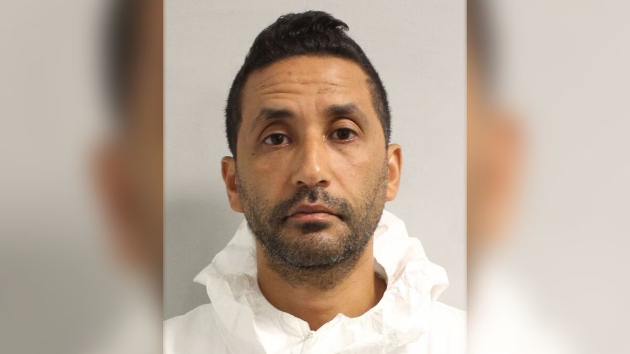
Holocaust survivor among the Boulder attack victims

Holocaust survivor among the Boulder attack victims
H. Richardson/MediaNews Group/The Denver Post via Getty Images)

(BOULDER, Colo.) — A Holocaust survivor was among the eight victims in an alleged “act of terrorism” carried out during a pro-Israel demonstration in Boulder, Colorado, according to a Department of Justice official.

The Holocaust survivor, who was not identified, “endured the worst evil in human history” and “came to America seeking safety,” Leo Terrell, the Justice Department official in charge of the antisemitism task force, wrote on social media. “Now, decades later, she’s victimized again.”

“The attack on this survivor reminds me of the horror of October 7, [2023], when Holocaust survivors were murdered and dragged away by Hamas terrorists in Israel,” Terrell said. “But this time, it happened here. In our country. This is all caused by the same type of hatred: antisemitism.”

“Holocaust survivors should not spend the final chapter of their lives experiencing or witnessing this hatred again,” Terrell wrote. “We must fight this terror together.”

The suspect, 45-year-old Mohammed Soliman, allegedly used a “makeshift flamethrower” and threw an incendiary device into a crowd of pro-Israel demonstrators on a pedestrian mall on Sunday afternoon, according to the FBI. He allegedly yelled “Free Palestine” during the attack, the FBI said.

The attack took place during a Run for Their Lives walk, which aims to raise awareness about the remaining hostages held by Hamas in Gaza and calls for their immediate release.

Eight victims were hospitalized with burns, including one person in critical condition, police said. The victims’ ages range from 52 to 88, police said.

Soliman has been taken into custody.

Israeli Prime Minister Benjamin Netanyahu said in a statement Monday, “My wife and I and the entire State of Israel pray for the full recovery of the wounded in the vicious terror attack that took place in Boulder, Colorado.”

“This attack was aimed against peaceful people who wished to express their solidarity with the hostages held by Hamas, simply because they were Jews,” he said. “I trust the United States authorities to prosecute the cold blood perpetrator to the fullest extent of the law and do everything possible to prevent future attacks against innocent civilians.”

The attack comes at a time of heightened violence against the Jewish community.

In April, a suspected arsonist firebombed Pennsylvania Gov. Josh Shapiro’s official residence because of “what [the governor] wants to do to the Palestinian people,” according to a search warrant signed by Pennsylvania State Police. The suspect was arrested.

On May 21, two Israeli Embassy staff members were killed as they left an event at the Capital Jewish Museum in Washington, D.C. When the suspect was arrested, he began to chant, “free, free Palestine,” according to police.

Two days after the D.C. attack, the Department of Homeland Security warned in a bulletin that the Israel-Hamas conflict “continues to inspire violence and could spur radicalization or mobilization to violence against targets perceived as supporting Israel.”

The Anti-Defamation League has documented a dramatic rise in acts of hate targeting Jewish people in the U.S. since the Oct. 7, 2023, terror attack in Israel. In 2024, the ADL said it recorded a record high of 9,354 antisemitic incidents in the U.S., marking a 344% increase over the past five years and a 893% increase over the past 10 years.

This is a developing story. Please check back for updates.

Copyright © 2025, ABC Audio. All rights reserved.

Boulder attack suspect in US illegally: Homeland Security

Boulder attack suspect in US illegally: Homeland Security
Chet Strange/Getty Images

(BOULDER, Colo.) — The man suspected of carrying out an “act of terrorism” during a pro-Israel demonstration in Boulder, Colorado, leaving eight people in the hospital, is in the United States illegally, according to the Department of Homeland Security.

The suspect, 45-year-old Mohammed Soliman, entered the U.S. in August 2022 on a B2 visa and he filed for asylum in September 2022, according to Tricia McLaughlin, the assistant secretary for public affairs at the Department of Homeland Security.

His B2 visa — which is typically a tourism visa — expired in February 2023, McLaughlin said.

Soliman was granted a work permit after his B2 visa expired, a senior official told ABC News. That work permit expired on March 28, so he has been in the country illegally since then, the official said.

Soliman allegedly used a “makeshift flamethrower” and threw an incendiary device into a crowd of pro-Israel demonstrators on a pedestrian mall on Sunday afternoon, according to the FBI. He allegedly yelled “Free Palestine” during the attack, the FBI said.

The demonstration was a Run for Their Lives walk, which aims to raise awareness about the remaining hostages held by Hamas in Gaza and calls for their immediate release.

Eight victims were hospitalized with burns, including one person in critical condition, police said. The victims’ ages range from 52 to 88, police said.

Soliman was taken into custody and is being held on $10,000,000 bond, according to the Boulder County Jail, which listed a range of felony charges against him, including use of an incendiary device. The posted list of felony charges also appeared to include first-degree murder, although it was not immediately clear whether the charge was attempted murder. According to police, there have been no fatalities.

The attack comes at a time of heightened violence against the Jewish community.

This is a developing story. Please check back for updates.

Copyright © 2025, ABC Audio. All rights reserved.
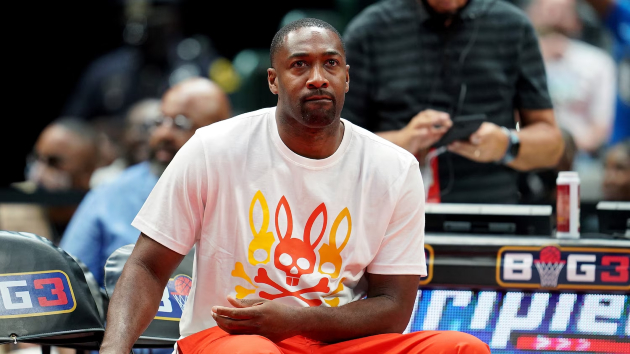
Ukraine-Russia peace talks resume in Istanbul after surprise drone attack

Ukraine-Russia peace talks resume in Istanbul after surprise drone attack
Turkish Ministry of Foreign Affairs viaGetty Images

(LONDON) — Ukrainian and Russian delegations met again in Istanbul, Turkey, on Monday to take part in the next round of U.S.-brokered peace talks intended to end Russia’s 3-year-old invasion of its neighbor. The talks come just one day after Ukraine launched an audacious drone attack on Russia’s strategic bomber fleet.

Revived talks so far have failed to reach a peace deal, or even achieve a sustained ceasefire, despite pressure on both sides by President Donald Trump’s administration. The last meeting between Russian and Ukrainian delegations in Istanbul in mid-May was the first direct contact between the two sides since spring 2022.

The Ukrainian Defense Ministry confirmed to ABC News on Monday morning that talks had resumed at Istanbul’s Ciragan Palace.

Secretary of State Marco Rubio spoke with Russian Foreign Minister Sergei Lavrov on Sunday, according to a readout published by the State Department — which said the call took place “at Russia’s request.”

“Secretary Rubio reiterated President Trump’s call for continued direct talks between Russia and Ukraine to achieve a lasting peace,” the State Department said.

The Russian Foreign Ministry said in a statement that the two men “exchanged views on various initiatives concerning the political settlement of the Ukrainian crisis.”
Ukraine is calling for a full 30-day ceasefire during which time peace negotiations can take place. Russia has refused the request, with President Vladimir Putin and his top officials retaining maximalist war goals dating back to the opening days of the Russian invasion.

Among the Kremlin’s demands are the annexation of four Ukrainian regions — plus the retention of Crimea, which Russia seized in 2014 — Ukrainian demilitarization and a permanent block on the country’s accession to NATO.

Ukrainian President Volodymyr Zelenskyy said in a Sunday social media post that Kyiv’s delegation will be led by Defense Minister Rustem Umerov.

The president set out Ukraine’s goals for the meeting. “First — a full and unconditional ceasefire,” he wrote. “Second — the release of prisoners. Third — the return of abducted children. And in order to establish a reliable and lasting peace and ensure security, preparation of the meeting at the highest level.”

Zelenskyy and his government have repeatedly accused Putin of intentionally sabotaging peace talks since Trump returned to office in January, having promised on the campaign trail to end the war within 24 hours. Trump’s threat of further sanctions on Russia do not appear to have softened the Kremlin’s war goals.

Zelenskyy and his European backers have pushed Trump to increase pressure on Putin by introducing new sanctions on Russia and providing Ukraine with more military support. Keith Kellogg, Trump’s Ukraine-Russia envoy, hinted at the president’s growing frustration with Moscow, telling ABC News last week that the president has “seen a level of unreasonableness that really frustrates him.”

In a phone conversation with Trump in May, Putin said Russia would provide a “peace memorandum” outlining a possible settlement. Moscow is yet to provide the document. Vladimir Medinsky — a Putin aide and long-time member of Russia’s negotiating team — said Sunday that the Russian team had received Ukraine’s version of the peace memorandum.

Since the last round of talks in Istanbul, Trump has hit out at Putin — calling him “absolutely crazy” — and again criticized Zelenskyy, saying of the Ukrainian leader, “Everything out of his mouth causes problems, I don’t like it, and it better stop.”

Oleksandr Merezhko, a member of the Ukrainian parliament representing Zelenskyy’s party and the chair of the body’s foreign affairs committee, told ABC News, “Russia’s primary goal is to avoid sanctions by pretending that it negotiates.”

“Putin is not interested in negotiations and ceasefire, because he hopes to start an offensive during summer,” Merezhko added.

“On the one hand, he imitates negotiations to avoid Trump’s sanctions and simultaneously to demonstrate that Russia is not politically isolated. Yet, on the other hand, Putin hopes that if Trump will decide to withdraw from the negotiations, he will leave Ukraine without military support, one-on-one with Russia.”

The talks come a day after Ukraine launched one of the most stunning attacks of the war. In what a source in the Security Service of Ukraine (SBU) told ABC News was an operation one and a half years in the making, operatives used attack drones concealed in containers carried by trucks to attack strategic bomber bases deep inside Russian territory.

Moscow has used long-range bombers and their cruise missile armaments to attack Ukrainian cities throughout the full-scale invasion. The SBU claimed to have hit more than 40 military aircraft in the attacks, which targeted multiple air bases thousands of miles from Ukrainian-controlled territory. Zelenskyy said that 34% of Russia’s cruise missile-carrying aircraft were hit.

Speaking at a summit of the Bucharest Nine and Nordic countries in Lithuania on Monday, Zelenskyy said of Sunday’s drone attack, “Russia must realize what it means to suffer losses. That is what will push it toward diplomacy.”

“This is a special moment,” Zelenskyy added. “On the one hand, Russia has started its summer offensive. But on the other, it is forced to participate in diplomacy. And this is at once a challenge and also a real opportunity for all of us. It is a chance to end this war.”

Russia’s Defense Ministry framed the operation as “a terrorist attack,” claiming that the strikes were “repelled” in three regions, but noting that several aircraft caught fire at airfields during the attacks in Irkutsk and Murmansk — videos of which the SBU published.

Also on Sunday, Russian authorities reported the collapse of two railway bridges and derailment of two trains in regions bordering Ukraine, which they blamed on “explosions.” At least seven people were killed, authorities said.

In an address on Sunday, Zelenskyy called the Ukrainian drone attack a “brilliant operation” and said Russia “suffered truly significant losses.” The president framed the attack as a defensive measure.

“We will defend ourselves by all means available to us,” Zelenskyy said. “Not for a single second did we want this war. We offered the Russians a ceasefire. Since March 11, the U.S. proposal for a full and unconditional ceasefire has been on the table. It was the Russians who chose to continue the war.”

“Pressure is truly needed — pressure on Russia that should bring it back to reality,” Zelenskyy added. “Pressure through sanctions. Pressure from our forces. Pressure through diplomacy. All of it must work together.”

Ivan Stupak, a former officer in the SBU, told ABC News that Ukrainians expect a significant Russian response — “probably mass drone attacks on civilians or using Oreshnik ballistic missiles.”

“I think there will be zero impact on peace negotiations,” Stupak added, citing the ongoing Russian ground offensives grinding forward and capturing — even if at great cost — more territory in eastern Ukraine, which the Kremlin will hope to leverage.

Meanwhile, long-range drone and missile attacks continued overnight into Monday morning.

Ukraine’s air force said Russia launched 80 drones and four missiles into the country overnight, of which 52 were shot down or neutralized. The air force reported impacts in 12 locations.

Russia’s Defense Ministry said it shot down 162 Ukrainian drones over nine Russian regions overnight.

ABC News’ Ellie Kaufman and Patrick Reevell contributed to this report.

Copyright © 2025, ABC Audio. All rights reserved.
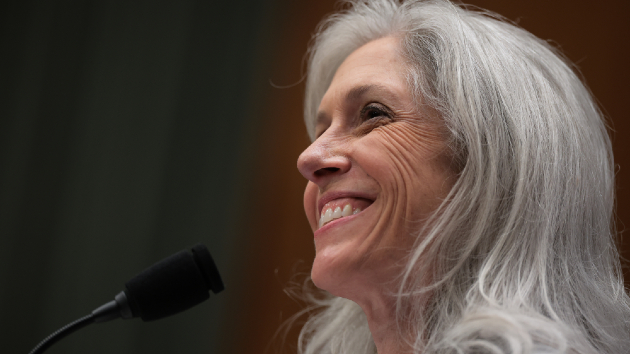
‘We see you’: In Trump-era Washington, World Pride 2025 organizers aim to bring ‘hope’ to LGBTQ+ community

‘We see you’: In Trump-era Washington, World Pride 2025 organizers aim to bring ‘hope’ to LGBTQ+ community
Capital Pride Alliance

Pride Month in the nation’s capital this year is expected to draw hundreds of thousands of participants across three weeks of programming consisting of over 300 events for World Pride 2025, an annual international festival that celebrates the LGBTQ+ community.

Organizers for the global celebration this year told ABC News they are emphasizing messages of resistance, resilience and, above all, hope at a time when LGBTQ+ individuals, particularly the transgender community, are being targeted on various fronts by the Trump administration.

World Pride 2025 makes its way back to the U.S. for the first time since 2019, when organizers chose New York City to host the festival the same year as the 50th anniversary of the Stonewall uprising.

World Pride 2025 events began May 17 and will culminate the weekend of June 7 and 8 with the annual parade and street festival. Included in the programming are events and partnerships with minority groups, including DC Latinx Pride, API Pride, Trans Pride, DC Black Pride, Youth Pride and DC Silver Pride for senior members of the LGBTQ+ community.

Ryan Bos is the executive director of the Capital Pride Alliance, which organizes Pride Month programming in D.C. each year. He has been spearheading the planning of World Pride since last year and says that the celebration this year is “more important than ever.”

“It’s surreal on days to think that the country that I was born into, the country that I have grown to have a lot of pride in — a country that I have devoted my professional and personal time in regards to creating spaces for people to feel welcome, to feel included, to make sure people feel seen and are valued — that in that country, we are now in a space where overtly, our federal government is saying certain people aren’t as valued,” Bos said. “And that hurts, and it’s scary.”

During his first weeks in office, Trump signed an executive order declaring that the U.S. government will only recognize a person’s gender assigned at birth. More executive orders targeted the transgender community in the military and in athletic spaces.

Marissa Miller, founder of the National Trans Visibility March, said that with attention focused on her community, this year, “humanity is on the line.”

“This is a revolutionary time,” she said. “We’ve been somewhere near here before, but I think that it’s been a while since we have been here.”

As a Black transgender woman, Miller emphasized that some members of the community have always felt like they had target on their backs.

“These are dangerous times — not unprecedented, dangerous times — for trans people, even more dangerous than they have been because there has been a permission set that says we do not exist,” Miller said.

In leading Pride Month planning this year, Bos said that security and safety have been at the forefront of many conversations. While D.C. is ready and welcoming, he said that it’s important for attendees and participants to understand any potential risks their international friends may have in travel.

Organizers and groups from several countries have already opted out of coming to World Pride this year, including those from Canada and some countries in Africa, Miller told ABC News.

Ry Schissler, a swimmer and cyclist from Toronto who decided not to travel to the United States for World Pride this year, citing decisions by the Trump administration. Schissler, who identifies as transgender and nonbinary, holds Canadian-American dual citizenship. Schissler’s team, the Toronto Purple Fins, a self-described “gender free” swimming group, had planned to come to D.C. in June for the IGLA+ Aquatic Championships and World Pride, but Schissler didn’t want to lead the team to a country where the group didn’t feel welcomed.

“There’s so many benefits to participating in sports, particularly team sports, and … trans people have been discouraged from that and actively banned from it,” Schissler said. “In a lot of cases, it’s so important to recognize how difficult it is for us to do that, much less travel internationally, to show up to an event where we’re clearly not wanted by a lot of people.”

Even though Schissler and the rest of the team planned to make the trip, they decided against it in the winter following Trump’s executive orders.

“Wherever I go, I have to be on my toes. And when I’m outside my comfort zone — the places that I go and know that there are people to support me — it’s hard,” Schissler added.

With the Trump administration’s executive orders targeting LGBTQ+ spaces and diversity equity and inclusion practices, Bos, the World Pride organizer, said that corporate partnerships this year have been more difficult to secure out of fear of losing federal funding.

Another one of Trump’s January executive orders not only banned DEI practices in the federal government, but also called on those in the private sector to end what the order calls “illegal DEI discrimination and preferences.”

According to Bos, some companies that had regularly sponsored Capital Pride in the past were “dragging their feet” to commit to World Pride 2025 as they waited for the outcome of the 2024 presidential election and some eventually backed out or lessened their support.

Booz Allen Hamilton, Deloitte, Comcast and Darcars are some of the companies that previously supported the Capital Pride Alliance that will not be sponsors for World Pride 2025, according to Bos. ABC News has not received a response after reaching out to the companies for comment.

But Bos says that he hopes the community persists, believing that “human decency and respect will ultimately win out.”

“My hope is that we can show that through World Pride and letting, again, folks know that there are people standing in our corner, that there are people willing to stand up, to be visible, to be heard, and that they’re not alone. And that they see hope in the future,” he said.

Copyright © 2025, ABC Audio. All rights reserved.

Suge Knight speaks out about Sean ‘Diddy’ Combs sex trafficking case

Suge Knight speaks out about Sean ‘Diddy’ Combs sex trafficking case
ABC News

Through the course of three weeks of testimony in the trial of Sean “Diddy” Combs, one man has loomed large even as he remains locked up in a prison, more than 2,500 miles away. That man is Marion “Suge” Knight, the rap impresario who was viewed by many as Combs’ chief competitor at the peak of Combs’ prominence atop the hip-hop world.

During hours of conversation with ABC News this weekend, Knight offered his reactions to the trial that has grabbed headlines and offered an often-disturbing portrait of the private life of a pop-culture icon and fashion tastemaker who could end up being sentenced to serve the rest of his life in federal prison, if convicted. Combs has pleaded not guilty and denied all wrongdoing.

Knight’s name has been mentioned in the Combs trial at least 50 times so far, with some of those references connected to the notorious Combs-Knight rivalry and others simply acknowledging that Knight once led Combs’ fierce competitor, Death Row Records. Their names are synonymous with the explosion of hip-hop, and the bad blood between the two moguls, and their record labels.

Speaking for himself in a series of phone interviews Saturday, Knight described what he saw as a toxic culture of abuse in some parts of the hip-hop industry that certainly did not start with Combs.

Knight is currently serving a 28-year sentence for voluntary manslaughter stemming from a 2015 fatal hit-and-run not connected to Combs’ case, to which he pleaded no contest in 2018. The famed founder of Death Row Records had an extensive criminal rap sheet that added time to his current sentence because it triggered California’s three strikes law. According to law enforcement, Knight has longstanding ties to LA’s infamous Bloods street gang.

On the phone, Knight said that, if Combs is the only one held accountable for alleged violence and abuse inside the world of rap, it won’t break the cycle.

“If you’re going to make Puffy answer, make everyone answer,” Knight said, referring to those who benefited from a system of trading sexual favors for advancement, or enabled the kind of behavior of which Combs is accused.

“Change the theme of the culture of the problems in hip-hop,” Knight said, repeatedly referring to Combs by his earlier street names “Puff” and “Puffy.”

“I think it’d be a great thing to let Puffy tell his truth. Tell the real truth, and bring everybody accountable,” Knight said.

Long before federal authorities charged Combs for alleged sex-trafficking and racketeering in connection with a lifestyle of allegedly forced sex sessions called “freak-offs,” Knight claimed there had long been rumors about Combs’ sex life back to the 1990s and 2000s.

“Everybody knew that,” Knight said, but that “Puffy didn’t just pop in the industry and say ‘hey, I want to have sex with everybody,’” Knight said. “I mean, we don’t have enough time to name all the names.”

Combs’ alleged use of fear and force to get what he wanted has been a frequent theme in his criminal case, far beyond sexual favors. The prosecution of Combs hinges on the core accusation that Combs used coercion and force to get what he wanted. To make that point, prosecutors presented Combs’ former assistant, Capricorn Clark, who said she returned to work for Combs after leaving his employment because Combs allegedly made it impossible for her to work elsewhere in the music industry.

“He held all the power as it related to me,” Clark testified through sobs.

Clark told jurors she had worked for Knight before Combs – a connection that, she claimed, did not sit well with Combs.

“He told me he didn’t know that I had anything to do with Suge Knight and, if anything happened, he would have to kill me,” Clark testified.

On cross-examination, Combs’ defense attorney Marc Agnifilo attempted to undermine Clark’s overall portrayal of Combs — and why she would want to continue working for a man who had allegedly threatened her.

“I wanted my life back, sir,” Clark explained.

“You want to work with him again,” Agnifilo said. “I wanted to work in the music industry,” Clark replied.

In his comments to ABC News, Knight lamented how Clark had allegedly been treated.

“I feel bad for Capricorn,” Knight said, describing “a young woman who want to work hard and become successful in the world.”

“She did great things for Puffy. Anything he needed, she got it. Anything he wanted, if she didn’t have it, she made it happen,” Knight said. “A lot of people might say, well, Capricorn could have did anything else she wanted to do. She did try. If you go get a job at Universal and Puffy makes a phone call, you’re not getting that job. If you go get a job at a counter agency or in the movie business and Puff make that call, your career is over.”

Knight recalled Clark telling him she had been warned by another records executive not to “tell on Puffy,” and that she was allegedly paid for her silence, he said.

On the witness stand, Clark recalled one meeting where, she claimed, she was given such a warning.

“It wasn’t about job opportunities. They were there to tell me to leave Puff alone and that this wasn’t going to end well for me,” Clark testified. “The outcome of that meeting was that — well, no job, but it was a warning.”

In response to that testimony, Knight said “They put that woman in a situation where she didn’t have no choice but try to be cool with these people if she’s gonna be in the industry.”

Knight said Combs did not invent the hardball tactics he allegedly employed.

“Don’t get me wrong, he (Combs) did terrible things, but he just didn’t come up with those stuff and those ideas on his own,” Knight said. “I don’t feel that they should take Puffy and lock him up and throw away the key. I think he can do so much good right now, him telling the truth about the industry,” Knight said. “When you can pick and choose who to put on the fire pit, it’s not fair.”

Combs should tell “the whole truth, nothing but the truth so help him god. That way, everybody would – history won’t keep repeating itself,” Knight said. “It’s a long list of people in the industry that’s unhappy because of the things they were being put through. And that’s the sad part about it.”

Knight said he sympathizes with Combs’ position.

“I feel that people in Puffy’s life, going on his journey growing up, they failed him,” Knight said.

“Do I think he made some mistakes? I think he repeats what he’s seen. He repeats what he learnt,” Knight said.

“First thing I would tell Puffy is this – I’m not going through what he’s going through for his freak-offs. But I’ve been there sitting in those cells. And I know he feels that he don’t have a friend in the world,” Knight said. Of all those once in his glamorous orbit, “none have been to court. None of them have been a help. So I’m quite sure he’s in a lonely place right now,” Knight said.

Combs’ family has remained by his side, some even sitting in on trial proceedings; Knight noted that cannot be easy for his kids especially.

“If there’s a situation where he can do some time, but not a lot of time, go knock it out. Don’t keep torturing yourself,” Knight said. “Once he get where he going, to a real prison, he’ll be able to, you know, have a step closer to freedom.”

Knight suggested that, perhaps, Combs should plead out. (Knight himself pleaded no contest to voluntary manslaughter and was sentenced to prison in 2018.) Combs declined a plea deal on the eve of trial last month.

“I think they should work out a deal with Puffy,” Knight said.

Though Combs and Knight are usually portrayed by the media and law enforcement as having been rivals, Knight said he saw it differently.

“I wouldn’t quite say we was rivals, because to say we rivals that means we had to be really really bad enemies,” Knight said.

“I do feel that he cared about the music industry. I think he do love the industry, and he did a great job with his artists, I do an incredible job with my artists,” Knight said, detailing a long history of competition as hip-hop went from being a street sound to a billion-dollar business. “I say it all the time, Puffy is known for making hit singles, like one song to go crazy. I’m known for making hit albums. Puffy can take an artist and make great music with them. I can take an artist and make them a superstar.”

The alleged grudge between Combs and Knight was a focus of early testimony in Combs’ trial. Combs’ former personal assistant, David James, said that, one night in 2008, he spotted Knight and his entourage eating at Mel’s Drive-in diner in Hollywood, and said Combs, upon hearing that, wanted to go confront Knight and the rival group.

Knight responded to that testimony this way:

“If there’s anything suggesting that I was doing anything illegal, I’m gonna say, definitely not,” Knight said chuckling. “I’m’a put it to you like this — I’m quite sure I remember some of that.”

“Anybody that know me — from 2 o’clock in the morning or 3 o’clock in the morning, to almost 6 o’clock in the morning, I’m always at Mel’s with six or seven [pretty women] enjoying myself. Until I finally was in a relationship with someone,” Knight said. “I’m a real West Coast man, and I have different stuff that I like to eat, but Mel’s was one of my places, because, Mel’s was open 24 hours, you know?”

If Combs did insist on returning to the diner to confront Knight, as James testified, Knight said perhaps it’s because “he’s got to show power.”

Of the competition between the two record-label bosses, Knight said he was told Combs would listen to Death Row music.

“I was surprised about that,” Knight said, making a reference to the late Death Row rap star Tupac Shakur. “He’d put on Death Row music, he’d put on Tupac, they’d go to the boat in the marina, the yacht, whatever it was, and get the Death Row music going again.”

“I hope he wasn’t jealous of me, ’cause if he was jealous of me, that means he was liking me too much, loving me too much,” Knight said.

“I don’t put myself in his head – or no one else’s head – because the man is on trial fighting for his life,” Knight said.

ABC News’ Peter Charalambous and Kaitlyn Morris contributed to this report.

Copyright © 2025, ABC Audio. All rights reserved.
Boulder attack updates: Suspect booked on charges after ‘act of terror’ with ‘makeshift flamethrower’

Boulder attack updates: Suspect booked on charges after ‘act of terror’ with ‘makeshift flamethrower’
ABC News

A suspect was booked on a range of charges after allegedly carrying out an “act of terrorism” on a pedestrian mall in Boulder, Colorado, on Sunday afternoon, using what police are describing as a “makeshift flamethrower” against a crowd of pro-Israel demonstrators.

Eight people were hospitalized with burns, Boulder Police said in an update Sunday night. The victims’ ages ranged from 52 to 88, and they were all taken to local hospitals, police said.

One victim was in critical condition, police said.

The suspect, identified by the FBI as 45-year-old Mohamed Sabry Soliman, was allegedly heard yelling “Free Palestine” while using a “makeshift flamethrower” and throwing an incendiary device at the crowd, according to Special Agent in Charge Mark Michalek.

Soliman was taken into custody without incident and transferred to a hospital where he was examined, police said.

Soliman is being held on $10,000,000 bond, according to the Boulder County Jail, which listed a range of felony charges against him, including use of an incendiary device.

FBI Director Kash Patel said officials were investigating the incident as a “targeted terror attack.” The FBI believes the attack was “ideologically motivated violence,” according to “early information, the evidence and witness accounts,” Deputy Director Dan Bongino added.

The attack in Boulder comes at a time of heightened violence, including high-profile incidents against the Jewish community.

The pro-Israel demonstration was a Run for Their Lives walk, aiming to raise awareness about the remaining hostages in Gaza. The organization hosts global run and walk events, “calling for the immediate release of the hostages held by Hamas,” according to its website.

Leo Terrell, head of the antisemitism task force at the Justice Department, said that an “incendiary device” was thrown at participants in the walk.

“This was not an isolated incident,” Terrell continued. “This antisemitic terrorist attack is part of a horrific and escalating wave of violence targeting Jews and their supporters simply for being Jewish or standing up for Jewish lives,” he said.

The attack happened on the eve of a Jewish holiday, Shavuot, “making it all the more chilling and cruel,” Terrell said.

A spokesperson for the organization, Miri Kornfeld, said in a statement to ABC News said a man who was leading the walk described the scene as “the floor burning beneath them.”

All upcoming Run for Their Lives events have been canceled until further notice, Kornfeld said, who was not at the walk in Boulder.

President Donald Trump has been briefed on the “targeted terror attack,” a senior White House official told ABC News.

“Hate-filled acts of any kind are unacceptable. While details emerge, the state works with local and federal law enforcement to support this investigation,” Colorado Gov. Jared Polis wrote on X, describing the incident as a “heinous act of terror.”

Boulder Police, while calling the attack a “tragedy” and “unacceptable,” initially stopped short of calling the incident terrorism and did not want to speculate on the suspect’s move, according to Chief Stephen Redfearn.

The incident occurred just before 1:30 p.m. on Sunday at the intersection of 13th Street and Pearl Street.

Police responded to reports of a man with a weapon and that people were being set on fire.

When they arrived, there were multiple victims at the scene with injuries consistent with burns, police said. Police said four of the victims were taken to Boulder Community Hospital and two others were airlifted to a burn unit in Aurora. Apart from the victim with serious injuries, the others were believed to be more minor, Redfearn said.

Last month, two Israeli Embassy staffers were shot and killed in Washington, D.C. in what was labeled as an “act of terror.”

The shooting sparked outrage and has been condemned as an “unspeakable” act of antisemitism after officials said the suspect, who is in custody, shouted “free, free Palestine” following the shooting.

In April, the residence of Pennsylvania Gov. Josh Shapiro, who is Jewish, was targeted by an arsonist who allegedly made two Molotov cocktails from Heineken bottles he had at home and threw them inside the governor’s mansion after breaking a window with a hammer, according to court documents.

The attack happened after the governor had posted about celebrating Passover with his family.

This is a developing story. Please check back for updates.

Copyright © 2025, ABC Audio. All rights reserved.