Andrew Woodley/Universal Images Group via Getty Images
(NEW YORK) — Search efforts for a Minnesota man who was last heard from in July have been suspended after 20 days as authorities say that his “most optimistic survival odds have run out.”
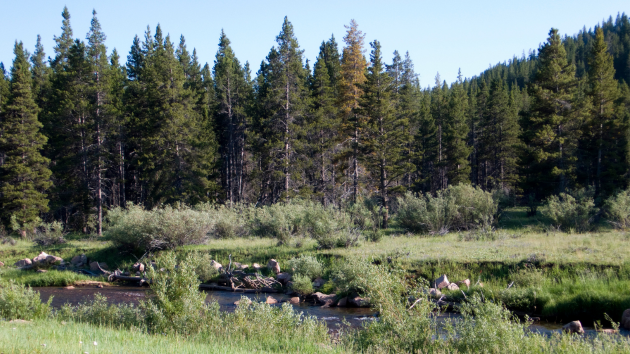
Grant Gardner had planned on a three-day hike “through the Misty Moon Lake area, eventually summiting Cloud Peak,” according to a statement from Big Horn County Sheriff’s Office in Wyoming. He was last heard from when he contacted his wife on July 29 saying he had made it to the summit, but “since that time there has not been any contact with Gardner,” officials said.
On Wednesday, after a 20-day search, authorities announced that they have suspended search and rescue operations for Gardner in consultation with his family members.
“During the past 20 days, Big Horn County and Wyoming SAR personnel have been searching diligently for Mr. Grant Gardner of Minnesota,” Big Horn County Sheriff Ken Blackburn said in his statement. “In consultation with family members, I have made the heartbreaking and difficult decision to suspend active search and rescue operations for Mr. Gardner. Our teams have exhausted all resources and personnel over the last 20 days. With weather conditions and other factors updated in our search models, we have to face the reality that the most optimistic survival odds have run out.”
Officials discovered Gardner’s vehicle earlier this month in the parking lot of the West Ten Sleep trailhead — where he began his journey — and also learned via the hiking log at the trailhead that he had entered the area “as he had indicated in his hiking plan,” officials said.
Phone records also revealed that he had reached the summit at Cloud Peak — which is around 13,000 feet — at approximately 7 p.m., which was concerning to officials due to the “lack of visible trails through cliffs, timber line, boulder fields and other hazards that had to be navigated after dark before reaching clear trails and safe terrain,” officials said.
“Our teams will rest, then begin search and recovery efforts as time and evidence allow. Many citizen volunteers and outdoors people are continuing to search for clues in an effort to bring peace to this family,” Blackburn said. “On behalf of the family, they want to personally thank each and every one of you who have offered time, resources, and prayers on their behalf. While grieving, they are humbled, and grateful beyond words.”
Officials said they have extensively searched for Gardner using helicopters, planes, foot teams and canines, but “conditions are extremely challenging,” with at least two rescuers suffering from “medical conditions” and needing treatment.
Bighorn National Forest is over 1 million acres, with 191,000 acres dedicated to the Cloud Peak Wilderness area, which is where Gardner is believed to have been traveling, according to the U.S. Forest Service.
“Many team members feel like they have lost a battle by not finding Grant at this time, however, it was not for a lack of effort on anyone’s part,” Blackburn said. “We hope clues will surface that will help bring a final closure to this tragedy in due time.”
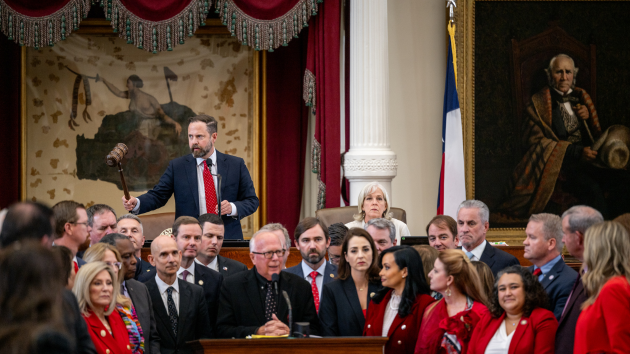
(NEW YORK) — After a long day of debate, the Texas House of Representatives passed a Republican-favored congressional map Wednesday evening that could flip five districts red by merging Democratic seats in the Houston, Austin, and Dallas-Fort Worth areas to form new Republican-leaning seats and by making two Rio Grande Valley districts currently held by Democrats more competitive.
Districts currently held by Democratic Reps. Al Green, Marc Veasey, Julie Johnson, Greg Casar and Lloyd Doggett are potentially targeted.
The vote came weeks after state Democrats decried the unorthodox mid-decade redistricting as blatant gerrymandering to increase the number of GOP congressional seats.
The new map does not appear to significantly weaken any GOP-held seats but experts have said it would rely on the durability of Hispanic support for Republicans in 2024 to carry into next year’s midterms. The maps have gone through some small adjustments since being first introduced in July.
It is likely that the redistricting plan, which was pushed by President Donald Trump, will pass. The map could pass the state Senate as soon as the end of the week and would then go to Gov. Greg Abbott for his signature.
In a press conference after the vote, House Democratic Caucus Chair Rep. Gene Wu acknowledged that Democrats had lost this round.
“This part of the fight is over, but it is merely the first chapter,” Wu said, adding later that a lawsuit against the new maps will be coming together soon but not until after Abbott signs the legislation.
House Democrats attempted to stall deliberations for hours during Wednesday’s floor session before the final vote with various long shot amendment proposals. Wu proposed an amendment to table consideration of the maps until the Jeffrey Epstein files are released by U.S. Attorney General Pam Bondi, but Wu’s amendment was dismissed as not germane to the matter at hand. Members also voted down an amendment from Rep. Chris Turner to kill the bill and several others attempted to get amendments to either table or scuttle the maps, all to no avail.
Before the final vote, Democrats decried Republicans’ efforts as undemocratic and said they were were working solely at the behest of Trump.
“You may not understand gerrymandering, you may not understand redistricting, but I hope you understand lying, cheating and stealing, because this is what people do, people like Donald Trump, people like the Republican Party of Texas, when they can’t win, they cheat,” Wu said.
Democratic Rep. Joe Moody said, “These maps are deepening the struggle for communities of color that will only worsen because one small man in D.C. demanded it. This is where division becomes dictatorship, the government against the people. Some people here are doing so much winning that they can’t see what we’re all losing.”
Democratic Rep. Harold Dutton told Republicans, “I don’t think you’ll ever win. I think you’ll win perhaps a battle, but the war, the war, you will always remember that the war will be won by right and justice.”
During the hours-long comments from Democrats who accused Republicans of pushing forward with the maps without their input as they pitched various amendments, GOP Rep. Todd Hunter, who authored the bill, snapped back — particularly after Rep. Gervin Hawkins made similar insinuations — that the House was unable to get any work done because Democrats fled the state.
“You own the walkout, you said you did that, but don’t come into this body and say we didn’t include you. You left for 18 days, and that’s wrong,” Hunter said.
The special session was delayed after Democrats left the state to avoid a quorum, despite threats of arrest from Abbott and other Republican leaders.
Some Democrats returned to the statehouse on Monday and allowed the legislature to reach a quorum. All 88 House Republicans voted for the bill and 52 of the 62 Democrats in the House voted against it.
A handful of Texas House Democrats refused law enforcement escorts to ensure they wouldn’t leave the state again. They stayed overnight in the Texas House in solidarity with state Rep. Nicole Collier, who had refused to sign a “permission slip” allowing her to leave the state Capitol with a law enforcement escort.
“Look I’m not gonna lie. I want to cry, but I’m too angry,” Collier said after the House vote. “I want to cry, but I’m too furious.”
She added, “My feet hurt, my back aches, but I think about the people who have no home, have no bed to sleep in, who have no job to work at. I think about the people who don’t earn livable wages. I think about the people who don’t have health care. I can fix my back, but what are we gonna do for them? … The fact that I’m still mad, angry and furious means that I still want to fight.”
The Texas state Capitol also dealt with a social media threat Tuesday night that led to the evacuation of grounds and the building, but Democratic lawmakers who were already in the building remained inside.
Following the vote, Abbott said he was planning to add proposed legislation to the special session that in the future would punish legislators who deny a quorum.
“We need to ensure that rogue lawmakers cannot hijack the important business of Texans during a legislative session by fleeing the state,” Abbot said in a statement.
Republicans continued to take victory laps over the bill passing the Texas House — and even before it passed, were sounding a defiant note.
“You will not silence the majority in the state of Texas. You can throw your tantrum, you can leave, you can run, and you can ignore the will of the rest of the voters,” Republican state Rep. Katrina Pierson said before the bill passed its final vote in the House. “But it’s honestly time to pick a new narrative. The racist rhetoric is old.”
Abbott, who had placed redistricting on the agenda for both of the special legislative sessions he called, wrote in a statement congratulating Republican House members that Democrats had “shirked their duty, in futility.”
“I congratulate Speaker Burrows and the Republican members of the Texas House of Representatives for passing congressional districts that better reflect the actual votes of Texans,” Abbott wrote. “While Democrats shirked their duty, in futility, and ran away to other states, Republicans stayed the course, stayed at work and stayed true to Texas. I will sign this bill once it passes the Senate and gets to my desk.”
California’s Democratic Gov. Gavin Newsom, who has been pushing a plan to draw new congressional maps in California in response to Texas or to other Republican-led states redrawing theirs, wrote in a post on X, “Congratulations to @GregAbbott_TX — you will now go down in history as one of Donald Trump’s most loyal lapdogs. Shredding our nation’s founding principles. What a legacy.”
In another post, he wrote simply, “It’s on, Texas.”
California’s legislature is set to take up and vote on redistricting legislation on Thursday.
New York Gov. Kathy Hochul, in her own post, wrote, “Game on.” Hochul has expressed support for redrawing New York’s congressional maps, but state legislators have said the earliest maps could be in effect is likely 2028.
(NEW YORK) — Hurricane Erin may not make landfall, but it still could have a devastating consequences for East Coast residents.
The first hurricane of the 2025 Atlantic season is forecast to cause rough surf, large waves and life-threatening rip currents for much of the East Coast despite churning northward several hundred miles offshore.
Average sea levels for many East Coast communities are now about a half foot higher today than they were just a few decades ago, climate scientists say, intensifying coastal erosion along the U.S. coastline.
Some of the biggest waves from Erin could occur in the evening during high tide, Kimberly McKenna, interim executive director of the Coastal Research Center at Stockton University in New Jersey, told ABC News. But states will have to “wait and see” just how harmful Erin is to the coasts, McKenna added.
Coastal erosion is part of the planet’s natural cycle, but warming global temperatures and rising sea levels are worsening the damage to the coast’s natural barriers, according to the U.S. Geological Survey.
Human-amplified climate change is making coastal areas more vulnerable, as more intense storms increase the risks of flooding and shoreline erosion, according to the Fifth National Climate Assessment, a 2023 summary of the latest climate science research findings by 14 different federal agencies.
Higher water levels allow waves, tides and storm surges to penetrate farther inland, eroding dunes and beaches more easily.
Human modifications to coastal landscapes, such as seawalls and levees, can worsen flood risks, accelerate erosion and hinder the ability of coastal ecosystems to naturally adapt, according to the Fifth National Climate Assessment.
Since 1970, the North Carolina coastline has experienced an average sea level rise of 7 inches, according to the Interagency Task Force on Sea Level Change.
By 2050, the U.S. East Coast is projected to experience an average sea level rise of 10 to 14 inches.
Solutions such as shoreline “hardening” — which involves the installation of seawalls, groins, rip-rap and levees — as well as beach nourishment, which includes adding sand to beaches, can help protect coasts, according to Climate.gov.
McKenna expects the beaches in New Jersey will be able to withstand the impacts of Erin.
“Right now, a lot of our beaches are pretty wide and can handle some of the wave impacts that are proposed,” McKenna said.
By Wednesday afternoon, Hurricane Erin was located about 350 miles off the coast of Cape Hatteras, North Carolina. It is expected march north, parallel to the East Coast, over the next 24 hours, and then race northeast across the north Atlantic Ocean into the upcoming weekend.
Impacts such as destructive waves, high rip currents and coastal flooding are expected from Wednesday through Saturday morning as Erin moves northeast.
In North Carolina, beaches in the Outer Banks are eroding at some of the fastest rates on the East Coast, according to the EPA.
The area’s low elevation makes it particularly vulnerable to the impacts of sea level rise, experts say.
More than 2,000 people were evacuated by ferry from barrier islands in the southern part of the Outer Banks by Wednesday afternoon, according to officials.
North Carolina Gov. Josh Stein issued an emergency declaration ahead of the storm due to the threats of coastal flooding, beach erosion and dangerous surf conditions.
“North Carolinians along the coast should get prepared now, ensure their emergency kit is ready, and listen to local emergency guidelines and alerts in the event they need to evacuate,” Stein said.
Officials in three New England states are searching for Mason Payne, a 23-year-old who led Massachusetts police on a high-speed chase, dragged a state trooper and then fled into Connecticut, according to the Shelton, Connecticut, Police Department. Shelton CT Police Department
(SHELTON, Conn. ) — The hunt is on for a Vermont man who led Massachusetts police on a high-speed chase, dragged a state trooper and then fled into Connecticut, according to the Shelton, Connecticut, Police Department.
On Tuesday afternoon, police in Dover, Vermont, said Mason Payne, 23, was involved in an armed domestic assault. Later that night at approximately 10 p.m., he was stopped in Holyoke, Massachusetts, by a state police trooper, officials said in a statement on Wednesday.
During the stop, Payne dragged the trooper several feet with his vehicle before fleeing. The pursuit ended for safety reasons, police said.
Payne, of Weathersfield, Vermont, was last seen driving an older model black Audi sedan, police said. Officials said the vehicle might “possibly” have temporary Vermont plates.
Payne is considered armed and dangerous and has made threats to harm law enforcement officers, according to police.
Anyone who sees Payne or his vehicle should not approach but instead call 911 and “provide as many details as possible,” officials said.
(WASHINGTON) — As President Donald Trump’s deployment of National Guard troops in Washington continued Wednesday, protesters booed Vice President JD Vance during a photo op with the guardsmen stationed in the city.
The protesters jeered Vance, Defense Secretary Pete Hegseth and White House deputy chief of staff Stephen Miller as they visited Union Station, blocks from the U.S. Capitol, to thank the troops at a Shake Shack where they bought lunch for the guard members.
“Well, a lot has changed in the past seven days,” Vance told the troops, referring to when the federal surge against D.C. crime began. “You guys are doing a hell of a job. I’m proud of you and we’re grateful,” he told the troops. So, we’ll say hello for a bit — just want to shake some hands and say hey to you guys.”
“Free D.C.,” the protesters shouted as the three officials arrived and then later inside the Shake Shack. The chants drowned out much of what Vance, Hegseth and Miller said as they tried to speak to reporters.
Vance and Miller dismissed the jeers, calling the protesters “crazy” and “communists.”
“They appear to hate the idea that Americans can enjoy their communities,” Vance said.
Vance was asked why troops were stationed at Union Station instead of parts of the city with higher crime rates. The vice president said the station was being overrun with homeless people and visitors didn’t feel safe.
“This should be a monument to American greatness,” he said.
Vance added that he believed that crime statistics do not report the full scope of crime on the streets of the nation’s capital.
At a back-to-school event Wednesday morning, Washington Mayor Muriel Bowser said the city doesn’t need federal agents to ensure safety in D.C.
“Crime has gone down in our city and it has gone down precipitously over the last two years because of a lot of hard work, changes to our public safety ecosystem, including changes to the law,” Bowser said. “And we know that those facts don’t comport to what some people are saying, but those are the facts.”
Bowser also said she doesn’t believe the National Guard should be used for “law enforcement.”
“They have to be used on mission specific items that benefit the nation,” she said of the guardsmen.
However, when asked about how her relationship with President Trump has changed since the start of the year, Bowser said her plan is to “represent the district.”
Flanked by Metropolitan Police Department Chief Pamela Smith, Bowser repeatedly deferred to Smith when asked about the city’s crime data.
The MPD has been collaborative with the federal agencies and so far has developed a congenial relationship with its federal partners, according to Smith. Smith also acknowledged having federal agents spread throughout the city has been helpful to the city’s police force.
“Hearing from the officers on the street, some of them have found it to be very helpful, some people in the community have found it to be very helpful,” she said.
ABC News’ Arthur Jones II contributed to this report.
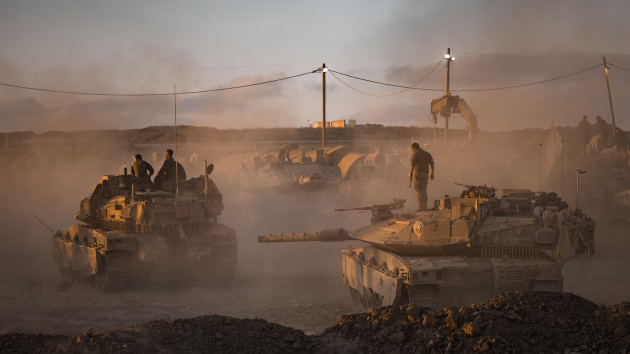
IDF soldiers prepare tanks on August 18, 2025 near the Gaza Strip’s northern borders, Israel. (Elke Scholiers/Getty Images)
(LONDON) — Israel has begun the “first stages of the attack on Gaza City” on Wednesday as it plans to call up to 50,000 to 60,000 reservists in order to occupy the city, according to Israel Defense Forces spokesman Eddie Defrin and an Israeli military official.
“We have begun the preliminary operations and the first stages of the attack on Gaza City. IDF forces are already holding the outskirts of Gaza City,” Defrin said Wednesday.
Israeli Defense Minister Israel Katz approved on Wednesday the Israel Defense Forces’ military plan, codenamed “Gideon’s Chariots II,” to invade and occupy the city, according to the official.
The call-ups will begin immediately, the official said.
Meanwhile, at least 58 Palestinians were killed in the past 24 hours in Israeli strikes on Gaza, according to the Hamas-run Gaza Health Ministry.
This comes after Hamas said it agreed to a ceasefire proposal from Qatar and Egypt on Monday. The proposal is said to be based on the framework put forward by the U.S. in June.
Israel has not commented on Hamas’ decision to accept the proposal.
White House press secretary Karoline Leavitt attributed, at least in part, Hamas’ decision to accept the proposed ceasefire to President Donald Trump’s social media post saying that the remaining hostages will only be returned “when Hamas is confronted and destroyed!!!”
“I don’t think it’s a coincidence that Hamas accepted this proposal after the president of the United States posted a very strong statement about this conflict on Truth Social yesterday,” Leavitt said Tuesday, referring reporters back to Trump’s post.
ABC News has not confirmed the exact details of the proposal or what Hamas agreed to.
Earlier this month, Israel’s security cabinet approved plans by Prime Minister Benjamin Netanyahu for the Israeli military to occupy Gaza City, in an expansion of military operations that comes amid international condemnation of the deteriorating humanitarian situation in the Gaza Strip.
Israel’s planned Gaza City military offensive “must be immediately halted,” United Nations High Commissioner for Human Rights Volker Turk said on Aug. 8, warning of “more massive forced displacement.”
“This further escalation will result in more killing, more unbearable suffering, senseless destruction,” Turk said.
Last month, 115 organizations described the dire food shortage in Gaza as “mass starvation,” as the “Israeli government’s siege starves the people of Gaza.”
Israel has blamed shortages on Hamas with Israeli Prime Minister Benjamin Netanyahu saying on Aug. 20, “If we had a starvation policy, no one in Gaza would have survived after two years of war. … In the last few months, Hamas has violently looted the aid trucks meant to get to Palestinian civilians. They deliberately created a shortage of supply.” Hamas, however, has denied those claims.
Earlier this week, the IDF said it is appealing to “Jewish communities abroad” to deal with a severe shortage of soldiers, according to a senior IDF official.
The shortage of soldiers — estimated at 10,000 to 12,000 soldiers — and the lack of Haredi recruitment from the ultra-orthodox community are pushing the IDF to exhaust every other possibility to replenish its ranks, the senior IDF official said.
The IDF intends to turn to the largest Jewish communities in the Diaspora, with the aim of encouraging the recruitment of young Jews of military age to come to Israel for several years to serve in the army, the official added. The main communities where efforts will be focused are the United States and France.
The recruitment potential among those aged 18 to 25, of draft age, in the largest Jewish communities exceeds 10,000 in each annual cohort, according to studies conducted by the IDF’s Manpower Division on this subject, the senior official said.
“The goal we intend to set is to increase the recruitment of approximately 600 to 700 additional soldiers each year from Jewish communities abroad,” a senior IDF official told ABC News.
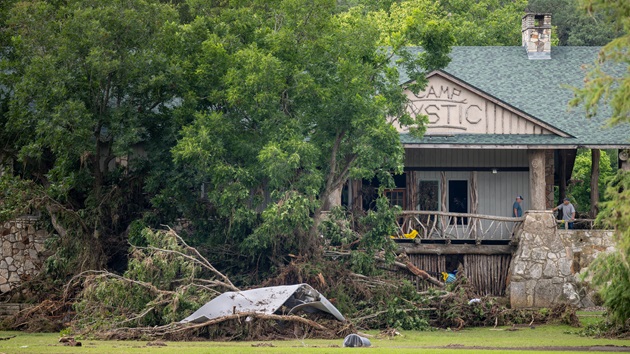
Debris is piled up at the entrance to Camp Mystic on July 07, 2025 in Hunt, Texas. Brandon Bell/Getty Images
(KERR COUNTY, Texas) — The parents of children who were among the 27 killed at Camp Mystic on Texas’ Guadalupe River during the historic Fourth of July flash flooding that devastated the Hill Country region gave emotional testimony on Wednesday before a state legislative committee probing the disaster.
A coalition of Camp Mystic parents testified before the Texas Senate Disaster Preparedness and Flooding Select Committee, which is considering reforms to increase safety at youth camps across the state.
Cici Williams Steward told the committee that her 8-year-old daughter, Cile Steward, is the only Camp Mystic camper still missing, and one of two flood victims that remain unaccounted for in the wake of the disaster.
“Three generations of women in my family went to Camp Mystic. This year, it was finally Cile’s turn. She was 8 years old, going for the very first time, her heart full of excitement to join the tradition of her mother, her aunt and her grandmother, her great aunt and five cousins,” Steward told the panel. “For Cile, camp meant adventure, memories, friendships, and lessons to carry for a lifetime. For me, it meant watching my child grow and learn, but always under the assurance that she would be safe.”
Steward added, “Joy and growth cannot exist without safety. Cile’s chance to experience camp only existed because I was ensured that her safety and the safety of all the young girls was paramount. I ask you, what could have been more important than that? But that assurance was betrayed. Obvious common-sense safety measures were absent, protocols that should have been in place were ignored. As a result, my daughter was stolen from us.
Sitting next to her husband, Steward said the agonizing experience of waiting for her daughter’s remains to be recovered has left her and her family in a “torture chamber of uncertainty.”
“Cile’s life ended, not because of an unavoidable act of nature, but because of preventable failures on just her fifth day of camp,” Steward said, breaking into tears.
Steward and the other parents who testified asked the committee to pass Senate Bill 1, a measure that will boost safety at campgrounds along the Guadalupe River, where Camp Mystic was devastated during the flood.
“Our children’s lives were cut short because the safeguards in place were not enough,” the Campaign for Camp Safety, a group that includes the Camp Mystic parents, said in a statement released this week ahead of Wednesday’s hearing. “We are asking lawmakers to make sure no other family ever has to endure the pain we have lived with every day since July 4th.”
Proposed bill intended to bolster camp safety
Texas State Sen. Charles Perry said the senate bill will place “basic campground safety reforms” on campgrounds, requiring them to have emergency plans on file with the county, prevent cabins from being constructed in flood plains, force camps to equip cabins with safety roof-top ladders and radios and require them to have at least two separate internet connections.
Perry said that had Senate Bill 1 — which will be renamed the “Heaven 27 Camp Safety Act” — been in existence during the flood, “I have no doubt that some lives, if not all lives, would have been saved on the camp front.”
The parents testifying on Wednesday were expected to make additional suggestions on how to improve camp safety along the Guadalupe River. In its statement, the group said it wants lawmakers to require campgrounds in a 100-year floodplain like Camp Mystic to equip cabins with emergency rooftop ladders and develop flash flood evacuation plans.
“It didn’t even cross my mind that a camp like Mystic wouldn’t have a detailed emergency procedure in place. When action was finally taken, it was too little, too late,” Michael McCown, whose 7-year-old daughter, Linnie McCown, died in the flooding. We did not send Linnie to a war zone. We sent her to camp. We trusted she would be safe. No parent should ever again face what we are living through now.”
‘She not only wan’t safe, she died’
Carrie Hanna described her 8-year-old daughter, Hadley, as a “hilarious, kind, caring, silly, loving little girl who always wanted to help others.”
“I told her camp was the safest place she could be, and she would make new friends and learn new things,” Hanna said. “I lied to her. She not only wasn’t safe, she died.”
Hanna said her daughter died “because there was no plan, because there was no backup system or sirens, because the sweet 18- and 19-year-old counselors did not have the training they needed.”
“Instead, they were told to stay in place, a rule that proved to be fatal,” Hanna said.
Wiping away tears, Clark Baker held up a photo of his 8-year-old daughter, Mary Grace Baker, holding up a fish she had caught.
“This picture you’re seeing was my last living memory of my daughter,” Baker said.
‘I sit before you a broken man’
Brandt Dillon, whose 8-year-old daughter, Lucy, was killed, pleaded with the committee to not allow Senate Bill 1 to be “watered down” before it is passed.
“When Lucy left for camp, it was the very first time she ever slept away from us,” Dillon said. “We entrusted her care to the camp operator and never for a moment did we believe she would be returned in a casket.”
He called his daughter his “best friend, my greatest contribution to society,” and told the committee, “Today I sit before you a broken man.”
“I will never forget the emotionless call that she was simply unaccounted for,” Dillon recalled. “We must make sure that when parents entrust their children to camps that they can have confidence that facilities are safe, operators are prepared and emergency plans are sufficient and executable. And, I’ll add, enforced as well.”
Ryan DeWitt told the committee that he dropped off two daughters at Camp Mystic and only one came home alive. In his testimony, DeWitt recalled his final goodbye with his younger daughter, 9-year-old Molly.
“She walked up to me. I was on one knee. She gave me a big hug. She pulled back. She grabbed me by both arms and she looked me directly in the eye, and no less than ten times with eye contact I had never experienced from this little girl, she said, ‘I love you, dad. I love you, dad. I love you, dad,” DeWitt said.
The heartbreaking testimony moved members of the committee to tears.
“I want you to know, you’re being heard,” a tearful state Sen. Lois Kolkhorst told the parents who testified. “You’re impacting lives.”
Camp Mystic, one of 19 youth summer camps on the Guadalupe River near Hunt, Texas, was devastated on July 4 when torrential rains fell over a short amount of time, causing the river to overflow in the early morning hours of July 4, trapping many campers in their cabins. Officials in hard-hit Kerr County, where Camp Mystic is located, said that more than 12 inches of rain fell in under 6 hours, and that the Guadalupe River rose more than 20 feet per hour during the storm.
At least 138 people were killed in flash flooding across the Hill Country region, including 117 in Kerr County, officials said.
During an Aug. 1 hearing of the Texas House and Senate Select Committees on Disaster Preparedness and Flooding, the Kerr County emergency management director conceded that he was sick and asleep as the water rose to historic levels on the Guadalupe River.
Other Kerr County officials testified that an inadequate flash-flood warning system upstream contributed to the disaster.
Kerr County Judge Rob Kelly testified that in the aftermath of the flooding, the county commissioned an independent hydrology study that confirmed the July weather event was a 1,000-year flood.
“By the time flooding became visible downstream, upstream communities, including multiple youth camps, were already underwater,” Kelly said.
When committee members asked Kelly why an evacuation order was not issued, he said, “It was too late.”
ABC News’ Jeffrey Cook contributed to this report.
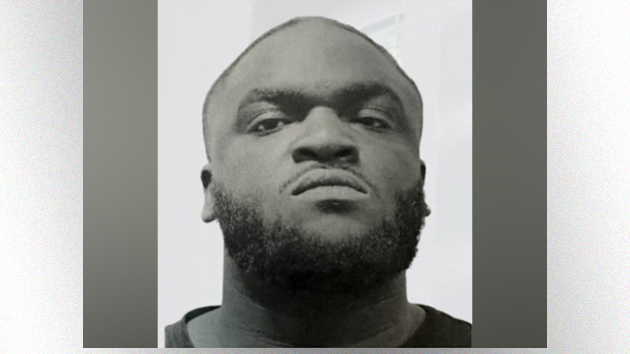
(NEW ORLEANS) — An inmate who was mistakenly released from a New Orleans jail has been captured following a nearly monthlong manhunt, authorities announced Wednesday.
Khalil Bryan, 30, was released from the Orleans Justice Center on July 25 due to a “human failure” that led to two deputies being fired, according to the Orleans Parish Sheriff’s Office.
He was “safely apprehended” in Texas after an anonymous tip led to “critical information on his whereabouts,” the Orleans Parish Sheriff’s Office said.
“We are grateful to the community member who stepped forward through Crimestoppers to provide the information that ultimately led to Mr. Bryan’s arrest,” Orleans Parish Sheriff Susan Hutson said in a statement. “This shows the power of community partnership in keeping our city safe.”
Crimestoppers of Greater New Orleans said the tip was “immediately processed by our liaisons with the US Marshals Gulf State Violent Offender Task Force and through their network with partnering agencies” and Bryan was arrested Wednesday morning.
Crimestoppers had been offering a $2,500 reward for information leading to his capture.
Bryan will be transported back to New Orleans to face pending charges, the sheriff’s office said.
At the time of his mistaken release, Bryan was being held on charges including possession of stolen property, drug paraphernalia and resisting an officer, according to the New Orleans Police Department. He also has an active warrant for aggravated assault with a firearm, domestic abuse, child endangerment and home invasion, it said.
Bryan was erroneously released when he was confused with another inmate with the same last name during the jail’s overnight release process and his identity was not properly verified, according to the sheriff’s office. The human error was “compounded by inadequate protocol adherence,” it said.
Two deputies were subsequently terminated for a “severe breach of duty and process,” the sheriff’s office said. Five staff members were also suspended “due to procedural failures and negligence” during the identity verification process, it said.
The sheriff’s office said it is further implementing changes, including additional training on the release process and a mandatory review of all inmate releases by a supervisor, in response to the incident.
“The people of New Orleans deserve a secure and accountable jail system,” Hutson said Wednesday. “While this erroneous release happened due to human failure, we have held those responsible accountable and we have taken responsibility and put safeguards in place.”
The Orleans Justice Center is the same jail where 10 inmates escaped in May. One remains on the lam.
(WASHINGTON) — More than 750 employees across the Department of Health and Human Services sent a signed letter to members of Congress and Health Secretary Robert F. Kennedy Jr. on Wednesday morning, calling on the secretary to stop spreading misinformation.
The letter states the deadly shooting that occurred at the Atlanta headquarters of the Centers for Disease Control and Prevention on Aug. 8 was “not random” and was driven by “politicized rhetoric.”
Authorities said the 30-year-old gunman — who killed a police officer in the attack — had been harboring yearslong grievances with the COVID-19 vaccine. He believed he suffered negative health effects after he got the vaccine, and the Georgia Bureau of Investigation found written documents at his home indicating that he wanted to make his discontent known.
The signatories are accusing Kennedy of endangering the lives of HHS employees by spreading misinformation.
Kennedy, who oversees the CDC, has peddled vaccine skepticism throughout his career. Before becoming health secretary, Kennedy falsely called the COVID-19 vaccine the “deadliest vaccine ever made.”
HHS did not return ABC News’ request for comment.
“Health and Human Services Secretary Robert F. Kennedy, Jr., is complicit in dismantling America’s public health infrastructure and endangering the nation’s health by repeatedly spreading inaccurate health information,” the letter states.
The employees pointed to various examples, such as Kennedy referring to the CDC as a “cesspool of corruption” in a post on X and falsely claiming mRNA vaccines “failed to protect effectively” against COVID and flu.
The letter said such “dangerous and deceitful statements and actions” contributed to the harassment and violence experienced by CDC employees.
Dr. Shiv Prasad, a scientific review officer at the National Institutes of Health who signed the letter, said he felt compelled to do so for many reasons.
“Like my colleagues at the CDC, I am concerned about several things,” Prasad, speaking in his personal capacity and not on behalf of NIH or HHS, told ABC News. “One is the misinformation that’s being spread, especially concerning vaccines and COVID-19 and it has a way of vilifying federal workers who are working every day to ensure the health of Americans.”
He went on, “I’m concerned about the safety of HHS workers … I think we are all potential targets now.”
The letter called on Kennedy to take a number of actions by Sept. 2, including not spreading inaccurate health information, affirming the scientific integrity of the CDC and guaranteeing the safety of the HHS workforce.
Prasad added that he would also like to see action from Dr. Jay Bhattacharya, the director of NIH. Bhattacharya recently supported Kennedy’s decision to cancel $500 million in federal funding for mRNA vaccine development, saying the decision was made because “the mRNA platform is no longer viable.”
Prasad said he and his colleagues would like Bhattacharya “to consider the effect of his words, potential effect on NIH staff, because he has made some comments in the past about the origins of COVID-19 and certainly recently with the NIH moving away from mRNA vaccine technology.”
“These things are not accepted by the field and, again it’s misinformation, and it could lead to it could put us at risk,” he continued.
ABC News’ Cheyenne Haslett contributed to this report.
Rick Friedman/Rick Friedman Photography/Corbis via Getty Images
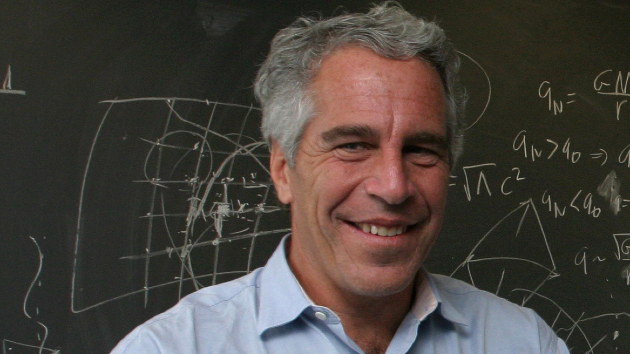
(NEW YORK) — A federal judge in New York has denied the Department of Justice’s request to unseal grand jury material from Jeffrey Epstein’s criminal case.
The Trump administration has been seeking to release materials related to the investigation into Epstein, the wealthy financier and convicted sex offender who died by suicide in jail in 2019.
This is a developing story. Check back for updates.