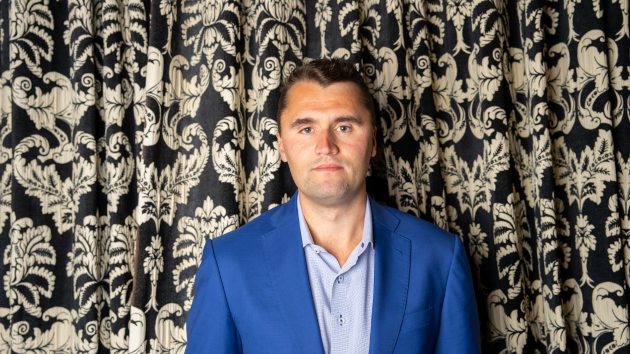
(OREM, Utah) — Charlie Kirk, the founder of the conservative youth activist organization Turning Point USA, has died after he was shot during an event at Utah Valley University on Wednesday, President Donald Trump said.
“The Great, and even Legendary, Charlie Kirk, is dead,” Trump said on social media. “No one understood or had the Heart of the Youth in the United States of America better than Charlie. He was loved and admired by ALL, especially me, and now, he is no longer with us. Melania and my Sympathies go out to his beautiful wife Erika, and family. Charlie, we love you!”
A single shot was fired on the Orem campus toward Kirk, a visiting speaker, shortly after noon, the school said.
“He was hit and taken from the location by his security,” the university said.
A suspect in the shooting remains at large, according to Orem police, which said they are supporting Utah Valley University in the investigation. The university had previously said a suspect was in custody.
Kirk, 31, was taken to a hospital after being shot, according to Turning Point USA, saying, “We are praying for him at this time.”
Trump posted on social media earlier: “We must all pray for Charlie Kirk, who has been shot. A great guy from top to bottom. GOD BLESS HIM!”
“It’s horrific. It’s one of the most horrible things I’ve ever seen,” Trump told ABC News Chief Washington Correspondent Jonathan Karl.
FBI and ATF agents are on the scene, according to Attorney General Pam Bondi.
FBI Director Kash Patel said the agency “stands in full support of the ongoing response and investigation.”
Utah Valley student Luke Pitman, who witnesses the shooting, told Salt Lake City ABC affiliate KTVX that he heard a “big bang.”
“We thought it was confetti. Then, everyone started ducking down,” he told the station. “And then, I look over at Charlie Kirk and I see blood coming from his neck.”
Utah Sen. Mike Lee said he is “tracking the situation at Utah Valley University closely.”
“Please join me in praying for Charlie Kirk and the students gathered there,” he said on social media.
Vice President JD Vance also said on X, “Say a prayer for Charlie Kirk, a genuinely good guy and a young father.”
Utah Gov. Spencer Cox said he is being briefed “following the violence directed at Charlie Kirk” during the conservative political activist’s visit to the campus.
“Those responsible will be held fully accountable. Violence has no place in our public life. Americans of every political persuasion must unite in condemning this act,” he said on X.
The university was the first stop this fall for Turning Point USA’s “American Comeback Tour,” which is traveling to multiple college campuses around the country.
An event featuring Kirk at Utah Valley University on Wednesday was expected to include a “prove me wrong” table, according to the tour’s website.
Ahead of Kirk’s visit to Utah Valley University, some students started an online petition asking university administrators to stop him from coming.
The tour has planned stops in Utah, Colorado, Minneapolis, Virginia and elsewhere, according to its website.
Utah Valley University’s campus is closed and classes have been canceled until further notice, the school said.
“There is no call to shelter in place at this time,” Orem police said. “If you see something suspicious, please report it to police dispatch by calling 911 or the non-emergency number.”
The incident sparked immediate condemnation from leaders on both sides of the political aisle.
“The attack on Charlie Kirk is horrifying and this growing type of unconscionable violence cannot be allowed in our society,” Pennsylvania Gov. Josh Shapiro, a Democrat, said on X.
Fellow Democratic governor, California’s Gavin Newsom, said on X that the “attack on Charlie Kirk is disgusting, vile, and reprehensible. In the United States of America, we must reject political violence in EVERY form.”
Republican Nevada Gov. Joe Lombardo said the “attack was sickening and heartbreaking, and there is no place — ever — for violence in American politics.”
This is a developing story. Please check back for updates.
Charlie Kirk poses at The Cambridge Union on May 19, 2025 in Cambridge, Cambridgeshire. (Photo by Nordin Catic/Getty Images for The Cambridge Union)
(WASHINGTON) — President Donald Trump and his top administration officials are reacting after law enforcement sources said conservative activist Charlie Kirk was shot at an event in Utah on Wednesday.
“We must all pray for Charlie Kirk, who has been shot. A great guy from top to bottom. GOD BLESS HIM!” Trump wrote on his social media platform.
Several top administration officials also quickly issued messages of support for Kirk, who was shot while speaking at a campus event at Utah Valley University.
Kirk, the founder of the conservative youth activist organization Turning Point USA, has been a close ally to Trump and many members of his administration.
“Say a prayer for Charlie Kirk, a genuinely good guy and a young father,” Vice President JD Vance wrote on X.
FBI Director Kash Patel posted that the bureau is “closely monitoring reports of the tragic shooting involving Charlie Kirk at Utah Valley University. Our thoughts are with Charlie, his loved ones, and everyone affected. Agents will be on the scene quickly and the FBI stands in full support of the ongoing response and investigation.”
“Prayers for Charlie Kirk. An incredible Christian, American, and human being. May the healing hand of Jesus Christ be upon him,” Pentagon chief Pete Hegseth wrote on X.
Republican members of Congress also said they are praying for Kirk.
“Please join us in praying for our good friend, Charlie Kirk,” House Speaker Mike Johnson posted on X.
“This is a sick and despicable attack,” Republican Sen. Lindsey Graham posted. “I am praying for Charlie Kirk and his family. Please join me.”
Many Democrats also quickly spoke out against the shooting on Wednesday.
“I am deeply disturbed by the shooting in Utah,” former Vice President Kamala Harris wrote on X. “Doug and I send our prayers to Charlie Kirk and his family. Let me be clear: Political violence has no place in America. I condemn this act, and we all must work together to ensure this does not lead to more violence.”
California Gov. Gavin Newsom condemned the shooting as “disgusting.”
“The attack on Charlie Kirk is disgusting, vile, and reprehensible. In the United States of America, we must reject political violence in EVERY form,” Newsom wrote on X.
House Democratic Leader Hakeem Jeffries wrote on X: “Political violence is NEVER acceptable. My thoughts and prayers are with Charlie Kirk and his family.”
Gabrielle Giffords, a former Democratic congresswoman who was shot in the head during a public event in 2011, also shared a message condemning acts of political violence.
“I’m horrified to hear that Charlie Kirk was shot at an event in Utah. Democratic societies will always have political disagreements, but we must never allow America to become a country that confronts those disagreements with violence. Mark and I are praying for Charlie’s recovery,” Giffords wrote.
Democratic Rep. Nancy Pelosi, whose husband was violently assaulted in their California home by an invader looking for Pelosi, called the shooting “horrific” and “reprehensible.”
“Political violence has absolutely no place in our nation,” Pelosi wrote on X. “All Americans should pray for Charlie Kirk’s recovery and hold the entire UVU community in our hearts as they endure the trauma of this gun violence.”
This is a developing story. Please check back for updates.
(OREM, Utah) — Charlie Kirk, the founder of the conservative youth activist organization Turning Point USA, was shot during an event at Utah Valley University on Wednesday, according to law enforcement sources.
A suspect is in custody, according to a school alert.
A single shot was fired on campus toward a visiting speaker, the alert said.
FBI and ATF agents are on the scene, according to Attorney General Pam Bondi.
President Donald Trump posted on social media: “We must all pray for Charlie Kirk, who has been shot. A great guy from top to bottom. GOD BLESS HIM!”
FBI Director Kash Patel said the agency “stands in full support of the ongoing response and investigation.”
Utah Sen. Mike Lee said he is “tracking the situation at Utah Valley University closely.”
“Please join me in praying for Charlie Kirk and the students gathered there,” he said on social media.
Vice President JD Vance also said on X, “Say a prayer for Charlie Kirk, a genuinely good guy and a young father.”
Utah Gov. Spencer Cox said he is being briefed “following the violence directed at Charlie Kirk” during the conservative political activist’s visit to the campus.
“Those responsible will be held fully accountable. Violence has no place in our public life. Americans of every political persuasion must unite in condemning this act,” he said on X.
The university was the first stop for the organization’s American Comeback Tour, which is traveling to multiple college campuses.
This is a developing story. Please check back for updates.
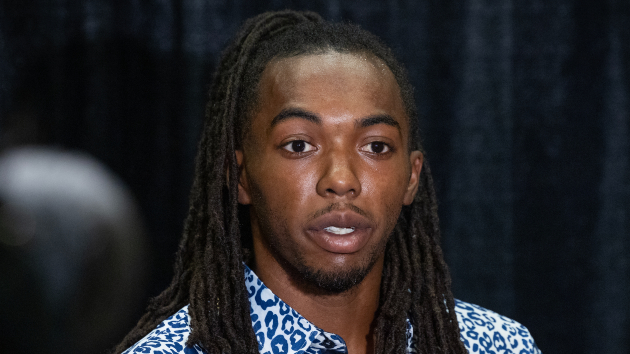
(JACKSONVILLE, Fla.) — William McNeil, Jr., the 22-year-old college student whose violent arrest was captured in a viral cell phone video earlier this year, filed a federal lawsuit on Wednesday against two sheriff’s deputies involved in his arrest, the sheriff and the city of Jacksonville, Florida, after prosecutors declined to file criminal charges against the officers in the case.
McNeil was arrested during a traffic stop on Feb. 19 after police said he was pulled over for allegedly not having his headlights on while it was raining. He appeared alongside his attorney Ben Crump and Harry Daniels during a press conference in Jacksonville on Wednesday where the lawsuit was announced.
“I really just wanted my side of the story to be heard … I hope my story gets heard today,” McNeil said in brief remarks on Wednesday.
Court records say that McNeil was arrested and charged with “resisting arrest without violence to his or her person,” possessing not more than 20 grams of marijuana with intent to use drug paraphernalia, driving while driver’s license is suspended, not wearing a seatbelt and no headlights in rain/fog/or smoke.
Additionally, court records show that McNeil was sentenced to and served two days in jail for resisting arrest without violence and driving with a suspended license.
Crump said on Wednesday that the legal team filed the lawsuit “not just because of the violent, brutal attack on this young college student who wasn’t violent,” but also because prosecutors declined to file charges against the officers involved in this case.
The lawsuit, which was filed in the U.S. District Court for the Middle District of Florida – Jacksonville Division, accuses the officers of “excessive force” and alleges that the policies of the sheriff’s office and the city allow “officers to utilize unwarranted and excessive physical force against an individual who poses no immediate threat to the officer or to others.”
The lawsuit also claims that the policies of the sheriff’s office do not require officers to report all incidents of force.
“This policy creates a setting that promotes its officers to engage in illegal or excessive use of force without the fear of encountering any repercussions or consequences, nor the obligation to report such actions,” the complaint alleges.
According to the lawsuit, McNeil suffered a laceration to his chin and his lip, a fractured tooth and a closed head injury that led him to be “diagnosed with an ongoing traumatic brain injury.”
He is seeking a jury trial and at least $100,000 in damages for physical and emotional distress, at least $100,000 in punitive damages, as well as attorneys fees and other costs, the complaint says.
“As a result of pending litigation, we would be unable to comment further on this incident,” a spokesperson for the Jacksonville Sheriff’s Office told ABC News on Wednesday.
ABC News reached out to the city of Jacksonville but a request for comment was not immediately returned.
The officers involved are named in the lawsuit as D. Bowers and D. Miller. It is unclear if they have retained attorneys. ABC News has reached out to the Jacksonville Consolidated Lodge No. 5-30 of the Fraternal Order of Police (FOP), which is the union representing the officers, but a request for comment was not immediately returned.
Prosecutors announced the decision not to file any criminal charges against the officers in this case in a 16-page memo released on Aug. 13 by the state attorney for the 4th Judicial Circuit Court, which serves Clay, Duval, and Nassau counties in Florida.
“Officer Bowers conducted a lawful traffic stop and gave McNeil 12 individual lawful commands, which McNeil refused to obey. Repeatedly requesting a supervisor and arguing the merits of the traffic stop did not absolve McNeil from following lawful orders,” the memo said. “McNeil’s refusal to provide his identification, registration, and proof of insurance, followed by his refusal to exit the SUV, show his hands, and obey the officers’ orders, created a dangerous situation for all involved.”
Crump criticized that decision on Wednesday, saying, “Just because they say it’s legal, that doesn’t make it right.”
In response to the memo, the police union defended the officer’s actions in an Aug. 13 statement posted on its Facebook account.
“When you allow due process and thorough investigations to occur you get facts and evidence. Not emotions, agendas and politics being pushed by radical people in our community and some elected officials who felt like they had to hear themselves speak before all the facts were known,” the union said.
Crump and Daniels criticized prosecutors for not filing charges and called on the U.S Department of Justice to investigate this case in a Sept. 8 statement.
“It’s not just how violent and brutal these officers were. It’s that they were absolutely unapologetic because they knew no one was going to hold them accountable,” Daniels said. “It’s clear that the State Attorney’s Office refuses to do anything about it. So we’re calling on the Department of Justice.”
ABC News reached out to the DOJ but a request for comment was not returned.
Sheriff T.K. Waters announced an internal review of the incident during a July 21 press conference and said that the actions of the officers were being examined in an “administrative review,” which will determine if the deputies “violated [Jacksonville Sheriff’s Office] policy.”
“Pending the outcome of this administrative review, Officer Bowers has been stripped of his law enforcement authority,” Waters said at the time. It is unclear if other deputies involved in the arrest have been placed on administrative leave.
Asked about the status of the investigation and the employment status of officers named in the lawsuit, the Jacksonville Sheriff’s Office did not immediately respond to a request for comment.
Emily Curiel/The Kansas City Star/Tribune News Service via Getty Images
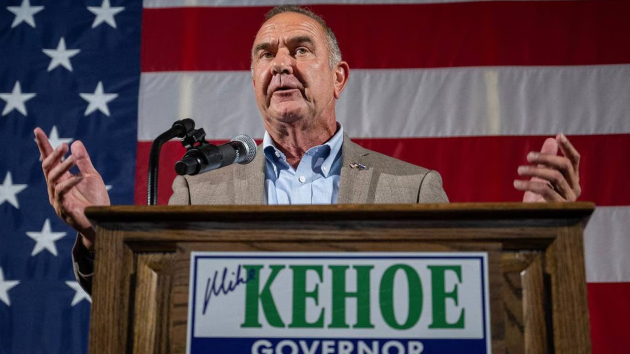
(WASHINGTON) — A new proposed congressional map in Missouri that could allow Republicans to flip at least one seat in the U.S. House of Representatives has advanced through the state House — but Democrats remain defiant.
The Missouri House of Representatives voted on Tuesday to pass the bill containing a new congressional map, first proposed by Gov. Mike Kehoe, over the objections of Democrats who say the map is racially discriminatory and an abuse of power. The state Senate is likely to hold hearings on the bill on Thursday and could pass it as soon as Friday.
Democrats and various outside groups who oppose the Republican-led effort are planning a day of protests in and around the state Capitol on Wednesday. One non-partisan coalition of anti-map advocates plans to lead what they claim will be a march that attracts thousands of people, while the national Democratic Party is also supporting a rally on Wednesday.
“The Democratic Party is united in our commitment to defend the American people against Republicans’ war on their rights and their pocketbooks … The Democratic Party is united in our commitment to defend the American people against Republicans’ war on their rights and their pocketbooks,” Democratic National Committee chair Ken Martin said in a statement.
Missouri’s entry into the mid-decade redistricting scramble encouraged by the White House has gotten praise from President Donald Trump.
Trump, in a post on his social media platform on Tuesday, praised the Missouri House passing the bill, saying “this new Map will give the wonderful people of Missouri the opportunity to elect an additional MAGA Republican in the 2026 Midterm Elections.”
The president, who had openly advocated for Missouri and other GOP-led states to redraw their congressional maps, called on the Missouri Senate to pass it “AS IS.”
Rep. Emanuel Cleaver of Missouri, whose district is targeted in the map, said Tuesday at a press conference on Capitol Hill alongside the Congressional Black Caucus that the new maps were “monumentally unpopular.”
“We are at a moment where there are powers trying to place this nation into the 1950s. They’re trying to reverse the direction of the country … and I don’t know if people realize the damage and danger of what’s going on,” Cleaver added.
Missouri House Democrats sounded a sad and defiant note in a press conference Tuesday, acknowledging they had no real way to stop the vote but arguing that the fight continues in the state Senate and beyond.
“We knew coming into this special session, we would lose. We knew that, but we showed up, and we will keep showing up, because the fight didn’t end today. There’s a lot of fight left. Missouri is just the latest, but it’s happening all over the country,” state House Minority Leader Ashley Aune told reporters.
Aune said she expects the map to go to a citizens referendum as soon as it passes the Senate. According to St. Louis Public Radio, opponents of the bill can try to gather enough signatures in most of the state’s congressional districts to force a statewide vote on the bill, although there are no guarantees this will be successful.
During Tuesday’s debate on the bill in the House, Republicans defended their authority to redraw congressional districts mid-decade.
“We may alter districts at any point. Being the case, it is totally appropriate this body, feeling this is a superior map to the current one, would pass it,” state Rep. Dirk Deaton, who sponsored the bill, said.
“Republicans do a better job of governance, both at the local level, the state level and the federal level. This is a great opportunity to see the districts more adequately represented in our federal government. We are a conservative state … we are a conservative state, and the voters of Missouri have elected that form of governance time and time again,” Rep. Brian Seitz said.
Alto Lee Adams Sr. U.S. Courthouse in Fort Pierce, Fla. (Joe Raedle/Getty Image)
(FORT PEARCE, Fla.) — A jury has been selected in the criminal trial of Ryan Routh, the man accused of attempting to assassinate Donald Trump on his golf course last year.
After three days of jury selection, U.S. District Judge Aileen Cannon finalized a group of twelve jurors and four alternates Wednesday.
Routh, who is representing himself at the trial in Fort Pierce, Florida, has pleaded not guilty to five criminal charges that risk sending him to prison for life, including attempting to kill a presidential candidate and possession of a firearm in furtherance of a crime of violence.
The selection of the jury came after Routh accused prosecutors of discriminatory practices, causing tensions to flare in the courtroom.
Prior to Judge Cannon finalizing the jury, Routh — who lacks any legal education or training — made what is known as a “Batson challenge” after he said prosecutors struck two Black potential jurors.
“We have a racist situation that is occurring,” Routh alleged. “It is blatantly obvious.”
Judge Cannon responded to the allegations by accusing Routh of improperly conferring with his standby lawyers, who remain in court to assist him with technical matters. She said she heard “whispers” from the defense table that suggested Routh was getting legal advice from his standby attorneys — something Judge Cannon has prohibited as a condition for Routh to represent himself.
She did not elaborate any further on the “whispers” and declined to inquire further into Routh’s alleged conversation with his lawyers, which is protected by attorney-client privilege.
“It seems to me you are using your attorneys for more than just technical things,” Cannon said.
Routh denied the claim, saying he is turning down their help and came up with the Batson challenge on his own.
“I am hearing whispers,” Cannon said. “I heard a whisper that sounded like more than technical advice.”
The situation deescalated after prosecutors explained their rationale for excluding one of the jurors, and Judge Cannon denied Routh’s challenge. Prosecutors claimed they only removed one Black juror after he provided inconsistent answers to some of the questions on the jury questionnaire.
“The U.S. has offered a legitimate, non-discriminatory reason for their preemptory strike,” Judge Cannon said.
Prosecutors allege that after planning his attack for months, Routh hid in the bushes of Trump’s Palm Beach golf course with a rifle in the predawn hours of Sept. 15.
With Trump just one hole away from Routh’s position, a Secret Service agent spotted a rifle poking out of the tree line and fired at him, causing him to flee, according to prosecutors. Routh was subsequently arrested after being stopped on a nearby interstate.
(NEW YORK) — A 350-billion-year-old rock discovered on the Red Planet is “the closest we’ve come to discovering ancient life on Mars,” according to NASA.
Potential signs of microbial life were found in a rock sample collected by the rover in 2024 from an ancient dry riverbed on Mars’ Jezero Crater — an area of rocky outcrops on the edges the Neretva Vallis, a river valley carved by water rushing to the canyon billions of years ago, NASA officials announced in a press conference on Wednesday.
The sample, named “Sapphire Canyon,” contains potential biosignatures, which are substances or structures that might have a biological origin, NASA said.
“To be clear, it’s not life itself, but a signature, like seeing a fossil or leftovers from a microbial process,” Nicky Fox, associate administrator of NASA’s Science Mission Directorate, said Wednesday. “It could have been formed billions of years ago. We’re sharing this first result with the world and inviting continued analysis.”
The finding is the closest astronomers have ever come to discovering life on Mars, Sean Duffy, acting NASA administrator, told reporters in Wednesday’s news conference.
“The identification of a potential biosignature on the Red Planet is a groundbreaking discovery, and one that will advance our understanding of Mars,” he said.
The sample was collected in 2024 from a rock named “Cheyava Falls.” The arrowhead-shaped rock measures about 3.2 feet by 2 feet and contains what appears to be colorful spots that could have been left behind by microbial life.
Fox said the leopard-spotted rock had never been seen before on the Martian surface. Using the rover’s organic chemical detector to analyze the spots, scientists at Caltech and the Jet Propulsion Laboratory (JPL) found iron, phosphorus and sulfur arranged in patterns consistent with minerals like vivianite (hydrated iron phosphate) and greigite (iron sulfide) that could have “potentially been made by ancient life.”
Higher-resolution images revealed a distinct pattern of minerals arranged into reaction fronts — or points of contact where chemical and physical reactions occur, according to NASA.
NASA said that vivianite is frequently found on Earth around decaying organic matter and in sediments and peat bogs. Greigite is produced by certain forms of microbial life on our planet.
“On Earth, these minerals are often byproducts of microbial metabolisms. Non-biological explanations exist, but this is the strongest evidence yet for a possible biosignature on Mars,” said Joel Hurowitz, a planetary scientist at Stony Brook University, who is one of the experts involved in the project. “To be certain, we must eventually return these samples to Earth.”
Hurowitz said that other non-organic reasons could explain the findings, but added that “The combination of chemical compounds we found in the Bright Angel formation could have been a rich source of energy for microbial metabolisms.”
The findings were released on Wednesday in a peer-reviewed scientific journal article published in Nature.
The formation’s sedimentary rocks are composed of clay and silt — materials that are “excellent preservers” of past microbial life on Earth, NASA said.
The discovery was “particularly surprising” because the sample was taken from the youngest sedimentary rocks the mission has investigated, contrary to an earlier hypothesis that assumed signs of ancient life would be confined to older rock formations, according to NASA.
NASA said the only way to confirm the findings is to return the sample to Earth. However, the Trump administration has recommended eliminating the funding for a program that would have returned Mars samples to Earth.
“This is a potential biosignature. That means it could have a biological origin, but more study is required. These findings are the result of decades of strategic exploration, thousands of scientists, and missions building on each other,” said Lindsay Hays, senior scientist for Mars Exploration at NASA.
Perseverance landed on Mars in February 2021 and has been studying the red planet’s Jazero Crater region ever since. It’s collected and analyzed 30 samples so far and has room for six more.
“NASA’s commitment to conducting Gold Standard Science will continue as we pursue our goal of putting American boots on Mars’ rocky soil,” Duffy said in a statement.
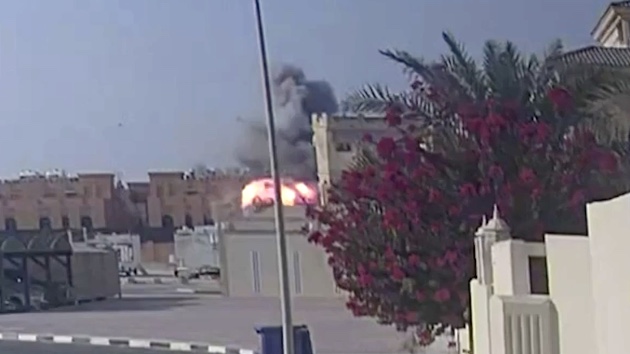
Security footage captures the moment of an Israeli strike targeting Hamas leaders in Doha, Qatar, on September 9, 2025. (Photo by Security Camera/Anadolu via Getty Images)
(DOHA, Qatar) — Israel has informed the U.S. that the chances of success of its strikes Tuesday on a Hamas residence in Doha, Qatar, have “decreased significantly,” two Israeli sources familiar with the matter told ABC News — likely confirming Hamas’ assertion that the strikes failed to kill top Hamas officials.
Five Hamas members and a Qatari official were killed in the strike. Hamas’ senior leaders survived the strike, Hamas said Tuesday.
“There was a meeting of the negotiating team and some Hamas leaders to discuss the ideas sent by the United States and the paper sent by President Trump,” Hamas political bureau official Suhail al-Hindi told Al Jazeera of when the strike took place.
Among those killed were the son of a senior Hamas leader, Dr. Khalil Al-Hayya — the head of the Hamas movement in Gaza and the head of Hamas’ negotiating team for a ceasefire with Israel — and an aide. Al-Hayya himself survived, according to Hamas.
Israeli Prime Minister Benjamin Netanyahu said Israel acted “wholly independently,” and took “full responsibility” for the strike in Doha on Hamas leadership in a brief statement Tuesday.
Netanyahu said he “convened the heads of Israel’s security organizations,” at noon local Israeli time Tuesday and “authorized a surgical precision strike” on Hamas leadership.
The strike targeted the residential headquarters of several members of the Hamas Political Bureau in Doha, according to Qatar.
Israel has faced criticism over the attack, with Arab nations, the United Kingdom and France all condemning the attack that took place on sovereign land.
“I’m not thrilled about the whole situation. It’s not a good situation, but I will say this, we want the hostages back, but we are not thrilled about the way that went down today,” Trump said.
“I was very unhappy about it, very unhappy about every aspect, and we got to get the hostages back, but I was very unhappy about the way that went down,” Trump said.
Qatar also condemned the attack, saying the “criminal attack constitutes a flagrant violation of all international laws and norms and a serious threat to the security and safety of Qataris and residents of Qatar,” a spokesperson for Qatar’s Ministry of Foreign Affairs posted on X.
Qatar said it will continue to mediate ceasefire negotiations between Hamas and Israel, as it has done alongside Egypt.
Hamas leadership and its primary negotiators have been based in Doha for years while trying to get a ceasefire and hostage release deal.
Israeli officials said the strikes on Doha were “completely justified,” alleging this Hamas leadership initiated and organized the Oct. 7, 2023, attack on Israel.
“Israel’s security policy is clear — Israel’s long arm will act against its enemies everywhere. There is no place for them to hide,” Israeli Defense Minister Israel Katz said in a statement Wednesday.
“If the Hamas murderers and rapists do not accept Israel’s conditions for ending the war, primarily the release of all hostages and the disarmament of their weapons — they will be destroyed and Gaza will be destroyed,” Katz said.
Qatar is home to the largest U.S. military base in the region. Al Udeid Air Base was attacked by Iran in June in retaliation for U.S. strikes on Iranian nuclear facilities, with Qatari forces helping the U.S. to intercept the missiles.
Earlier Tuesday, Trump said the U.S. “feels badly” about the location of the attack and added that “unilaterally bombing inside Qatar, a sovereign nation and close ally of the United States that is working very hard and bravely taking risks with us to broker peace does not advance Israel or America’s goals,” in a statement read by White House press secretary Karoline Leavitt.
Eighty migrants from Guatemala are deported to their country with a United States military plane at the Fort Bliss facility in El Paso, Texas, on Jan. 30, 2025. (Photo by Christian Torres/Anadolu via Getty Images)
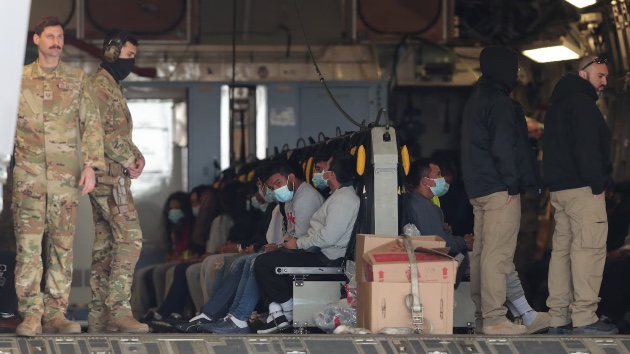
(NEW YORK) — Following the near deportation of 76 Guatemalan minors over Labor Day weekend, attorneys for the minors are scheduled to appear before a judge Wednesday to seek a preliminary injunction blocking similar removals.
A judge over the weekend temporarily blocked the deportation of the unaccompanied minors without due process, just as they were sitting on the planes preparing to depart.
In a new court filing, the minors’ attorneys said that immigration officials are interviewing unaccompanied minors from other countries with an eye toward removing them in the same manner.
Justice Department officials have said the 76 minors were being removed in accordance with the law and at the request of the Guatemalan government and the minors’ legal guardians, but attorneys for the minors say some of children did not have parents who had requested their return, and that some minors expressed a fear of returning to Guatemala.
The new filings included declarations from immigrant advocates and minors from Honduras, Guatemala, and El Salvador.
“I recently received a visit from HSI [Homeland Security Investigations], but they never asked me if I wanted to go back to Honduras,” said a 17-year-old from Honduras, whose name was redacted in the declaration.
The teenager, who said they are afraid to return to their home country, said that at an immigration hearing last month, a judge said he had a list of minors who had agreed to voluntary removal, and that the teen’s name was on it.
“I do not know why I was on the list,” the 17-year-old said.
According to a declaration filed by Roxana Avila-Cimpeanu, deputy director of the Florence Immigrant and Refugee Rights Project, a number of Honduran children have been questioned by Department of Homeland Security officials.
“We have no details as to how these children were chosen, or who is in charge of the plan,” she said. “We have no information as to whom we need to reach out to share that children have expressed fear or have possible relief.”
In another declaration, a 16-year-old from El Salvador, who said they fled their home country because they fear they will be “harmed or killed by the police,” stated they have been asked to participate in interviews with government officials.
According to several declarations, many of the minors who immigration attorneys and advocates believe are being targeted for removal have pending immigration proceedings. The attorneys argue that the Trump administration is violating the Trafficking Victims Protection Reauthorization Act, which outlines specific procedures for unaccompanied minors, including ensuring they are placed in immigration proceedings.
“Defendants’ argument that they can expel hundreds of children in the middle of the night with two hours’ warning relies on the fallacy that they were acting pursuant to authority to ‘reunify’ them with their parents,” attorneys representing the minors said. “That argument is illogical and illegal.”
In court filings, the attorneys also argued that the Trump administration does not have authority to transfer unaccompanied minors from the custody of the Office of Refugee Resettlement to DHS.
They said the court should reject the Trump administration’s “invocation of nonexistent statutory authority'” arguing that the administration is putting hundreds of children “at risk of imminent, irreparable harm if they are expelled with no remedy.”
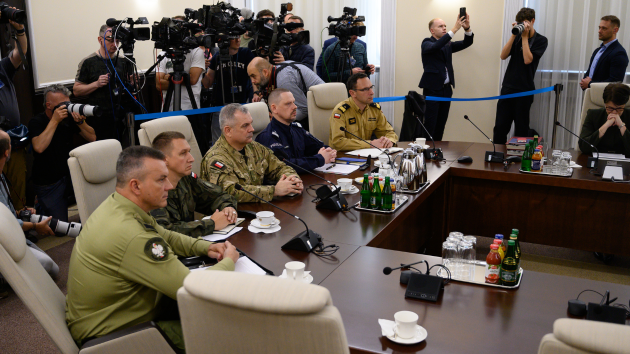
(NEW YORK and LONDON) — Polish airspace was violated by at least 19 Russian drones overnight, the country’s prime minister said, in a torrent of activity that triggered a response from the NATO country’s air force, which scrambled and downed several of the drones.
“Those drones that posed a direct threat were shot down,” Prime Minister Donald Tusk said early on Wednesday on social media. “I am in constant communication with the Secretary-General of NATO and our allies.”
Two Polish F-16s and two Dutch F-35s were deployed to “help ensure safety in Polish skies,” the military said. The operations ended early on Wednesday, Warsaw said, adding that the search continued for downed drones and potential impact sites.
The country’s military command described the violations as “unprecedented,” saying they amounted to “an act of aggression that posed a real threat to the safety of our citizens.”
Polish authorities did not report any casualties related to the drone incursion.
Tusk said this marked the first time in history that Russian drones had been shot down on NATO territory, which he said “changes the political situation.”
Tusk told parliament on Wednesday that Warsaw had requested the invocation of NATO Article 4. The clause allows a NATO member to convene a meeting of allies to consult on an issue that could threaten its security.
“Today we must say very loudly and clearly to the entire Western world and all our allies — Article 4 is only the beginning of deeper cooperation for the security of our skies and our border, which is NATO’s border, and words alone are by no means enough,” Tusk said.
“This is not just a war for Ukrainians,” he added. “This is a confrontation that Russia has declared against the entire free world.”
Tusk said that at least 19 Russian drones entered the country’s airspace late Tuesday and into early Wednesday, some of which crossed over from Belarus, and at least three were subsequently shot down by Polish and NATO forces.
Poland previously invoked Article 4 on Feb. 24, 2022, the day Russia launched its full-scale invasion of Ukraine, which triggered urgent NATO consultations at the time.
NATO Secretary-General Mark Rutte said in a statement Wednesday morning that allies had held discussions after Poland’s Article 4 request. “Allies expressed solidarity with Poland and denounced Russia’s reckless behavior,” Rutte said. “A full assessment of the incident is ongoing. What is clear is that the violation last night is not an isolated incident.”
“Allies are resolved to defend every inch of allied territory,” Rutte added. “We will closely monitor the situation along our eastern flank, our air defenses continually at the ready.”
U.S. President Donald Trump is expected to speak with Polish President Karol Nawrocki on Wednesday, a White House official told ABC News. The official added that Trump and the White House are “tracking the reports out of Poland.”
NATO’s Supreme Headquarters Allied Powers Europe (SHAPE) said in a statement to social media that German Patriot surface-to-air missile systems based in Poland were placed on alert and that an Italian airborne early warning aircraft was deployed during the incursion. A NATO aerial refueling aircraft was also launched.
Col. Martin L. O’Donnell, a spokesperson for SHAPE, said in a statement, “This is the first time NATO planes have engaged potential threats in Allied airspace.”
Kremlin spokesman Dmitry Peskov on Wednesday referred journalists’ questions to Russia’s Defense Ministry.
“This is not within our competence, it is the prerogative of the Russian Ministry of Defense,” Peskov told reporters.
Asked to comment on accusations by Europe and NATO that the incident was a Russian provocation, Peskov replied, “The EU and NATO leadership accuse Russia of provocation on a daily basis, most often without even attempting to present any arguments.”
Peskov added that Russia had not received any requests for contact from Poland’s leadership.
In a post to Telegram, Russia’s Defense Ministry said its “massive strike” was only aimed at targets within Ukraine. “No targets on the territory of Poland were planned,” it said.
French President Emmanuel Macron condemned the incident as “simply unacceptable.” He in a post to X, “I call on Russia to put an end to this reckless escalation. I reiterate to the Polish people and their government our full solidarity.”
European Commission President Ursula von der Leyen said in post to X, “Europe is in a fight. A fight for our liberty and our ability to determine our destiny for ourselves.”
“Today, we have seen a reckless and unprecedented violation of Poland and Europe’s [airspace] by more than 10 Russian Shahed drones,” von der Leyen added. “Europe stands in full solidarity with Poland.”
European Union foreign affairs chief Kaja Kallas described the incident as “the most serious European airspace violation by Russia since the war began,” adding that “and indications suggest it was intentional, not accidental.”
U.S. Ambassador to NATO Matthew Whitaker, meanwhile, said in a post to X, “We stand by our NATO allies in the face of these airspace violations and will defend every inch of NATO territory.”
Ukrainian President Volodymyr Zelenskyy early on Wednesday described the violation as “another escalation step.”
“An extremely dangerous precedent for Europe,” he said in Ukrainian on the messaging app Telegram.
It was not immediately clear whether Russia had intended to send the drones into NATO airspace. Russian and Ukrainian drones have been known to go off course during long-range strikes due to electronic warfare measures employed by the combatants.
The incursions occurred during a major Russian strike on Ukraine, which the air force in Kyiv said consisted of 415 drones and 35 missiles. Of those, 386 drones and 27 missiles were intercepted or suppressed, the air force said.
The Kremlin did not immediately issue a statement but Zelenskyy positioned the violation as anything but an accident — saying it might have been considered one if it had been just one drone that crossed the border.
Zelenskyy called for consequences for Russia, saying Moscow “must feel that the war cannot be expanded and must be ended.”
Military officials in Poland earlier said the country’s airspace was “repeatedly violated by drone-type objects” in the overnight hours amid Russian strikes on targets in Ukraine.
“An operation is underway aimed at identifying and neutralizing the objects,” the Polish military said in one of its initial statements, each of which urged people to stay at home.
The most threatened areas had been Podlaskie, Mazowieckie and Lubelskie, Poland said. Polish security services said they sent an SMS message to cellphones in the area — sending the type of alert that’s become a nightly occurrence in neighboring Ukraine.
Earlier, the Polish military said it had scrambled jets and was taking “preventative” action during the “massive attack” carried out by Russia on facilities in Ukraine.
“Polish and allied aircraft are operating in our airspace, and ground-based air defense and radar reconnaissance systems have reached the highest state of readiness,” the military said in the earlier statement.
Tusk, the Polish prime minister, convened an extraordinary government meeting early on Wednesday, bringing together the country’s emergency and military officials.
Polish Deputy Prime Minister Radoslaw Sikorski, who also serves as foreign affairs minister, met prior to that meeting with Andrii Sybiha, the Ukrainian foreign affairs minister, according to Poland. Jacek Najder, Poland’s representative to NATO, was also present, the country’s Foreign Ministry said.
“The security of Polish women and men is the greatest priority,” the ministry said prior to the meeting.
Tusk in the emergency cabinet meeting said the there was “no reason to panic,” according to the Chancellery.
“The procedures were implemented correctly, the decision-making process was flawless, and the threat was effectively eliminated thanks to the resolute actions of commanders, soldiers, and our allies,” Tusk said during the meeting, according to his office. “I am deeply grateful.”
The Defense Ministry in Belarus — which is aligned with Russia and has assisted its invasion of Ukraine — said in a statement that its forces also downed drones that went off course “as a result of the impact of the parties’ electronic warfare assets.”
Minsk said it shared information with neighboring Poland and Lithuania regarding the incoming drones. “This allowed the Polish side to respond promptly to the actions of the drones by scrambling their forces on duty,” the ministry said.
The ministry added that Polish forces had also notified Belarusian forces of incoming unidentified aircraft from Ukrainian territory.
A Lithuanian Defense Ministry official told ABC News that there were no violations of Lithuanian airspace overnight.
In Romania — which borders Ukraine to its southwest — the Defense Ministry said two F-16 fighter jets were scrambled in response to a “group of aerial drones in the area of the Ukrainian town of Valcov, on the border with Romania.”
No drones entered Romanian airspace, the ministry said in a statement.
ABC News’ Dada Jovanovic, Morgan Winsor, Natalia Popova, Oleskiy Pshemyskiy, Patrick Reevell, Anna Sergeeva, Anne Flaherty and Michelle Stoddart contributed to this report.