(KABUL, Afghanistan) — Watching the news about Afghanistan has become heart-breaking for ex-refugee and now-U.S. citizen Shabnam, who could only give her first name for the security of her family in Afghanistan.
She told ABC News that her siblings and extended family, like many Afghan citizens, are planning their escape out of the country. She said she’s losing her voice spending days on the phone with her family back home.
“People are just hopeless and helpless,” Shabnam, who left Afghanistan in 2011 after a Taliban attack forced her to flee the country, said.
The once-ousted militant group has taken over control over the Afghan capital and other major cities after the withdrawal of U.S. forces from the country. Many citizens fear what could come of their country and their livelihood in the Middle Eastern nation.
Now, many in the U.S. said they are left scrambling for ways to help their families back home.
“These two days back-to-back, I received calls from home and everybody thinks that I have a superpower that I can help them and bring them, but I don’t. I can’t do anything for them,” Shabnam said.
Women in the country fear that the Taliban will revert to oppressive tactics they used when they ruled in the 1990s, Shabnam said, like keeping women in the home, out of work and out of schools.
“It was a nightmare for me,” Shabnam said of the 90s in Afghanistan. The Taliban has claimed it will guarantee women’s rights under a new regime, but Shabnam and many others do not believe it. “They claim they are changing, but I know they are not. They are just waiting for the U.S. troops to get out of the country.”
Many also fear that the Taliban will retaliate against people with connections to America, who have worked with the U.S. or Afghan government, or who have criticized the Taliban, according to Krish Vignarajah, the president and CEO of the Lutheran Immigration and Refugee Service in Maryland.
Deena, who will also only be named for the security of her family back in Afghanistan, said she feels helpless. She is a first-generation American whose parents fled Afghanistan after the Soviet Union invaded in 1979, and she said she yearns for ways to help her family trapped in Kabul looking for a way out.
In the videos of Afghan citizens racing to get on airplanes and escape the growing Taliban presence in Kabul, she pictures her own family.
“People have lived through the Taliban regime before and people would rather hang on to airplanes and fall to their deaths than stay,” Deena said. “Everyone’s scared. They don’t know what to expect. They haven’t been going to work. Everything has been shut down. They have children and they’re worried.”
Deena is one of 150,000 people with Afghan heritage in America, according to the U.S. Census Bureau. In the last 20 years, backed by Western forces, she and her family say they have seen the Afghan government progress and modernize.
“They were pursuing their dreams, they’re becoming doctors and lawyers and artists,” Deena said. “Everything is just going to be taken away from them, all of their hard work and their efforts.”
They fear the Taliban takeover will turn back the clock on this — sparking violence, restrictions and oppression.
“My uncle, the last time I spoke to him, was like, ‘We’re leaving the house. We’re not going to be staying here. We don’t have power right now. We’re safe, pray for us,’” Deena said. “They don’t want history to repeat itself and unfortunately, everyone’s given up on them.”
Vignarajah said her organization has been flooded with incoming messages pleading for help.
Many have been left with the tough decision between staying in their homes or venturing out into the Taliban-controlled streets on the way to the airport. Some face death threats, she said, and retribution from militant groups.
The process for refugee resettlement can be lengthy, Vignarajah said, taking up to months or years to get through the bureaucratic red tape.
“We’re deeply concerned, knowing for those left behind, they face death threats and retribution from the Taliban,” Vignarajah said.
To help, many Afghan Americans and refugees with family back home say raising awareness, call legislators and representatives and volunteer for organizations that help refugees.
“Our hands are tied,” Deena said. “Being someone in the United States who’s in this position and seeing what’s happening over there and hearing the voices of my family members and how scared they are and how devastated they are — It’s a really difficult position to be in.”
(NEW YORK) — A former employee of convicted swindler John Ruffo has come forward with a rare home video showing the wanted fugitive before he disappeared more than 20 years ago.
The VHS video recording, which was filmed in 1995, shows Ruffo talking and strumming a guitar while socializing at the home of Jodylynn Bachiman, a family friend who worked for Ruffo as an office assistant at his New York City computer firm in the 90s.
The U.S. Marshals, who have been hunting Ruffo for almost three decades, say the video shows Ruffo at a time when he was committing one of the largest bank frauds in U.S. history.
The Marshals’ manhunt for Ruffo is the subject of a new season of the ABC News podcast, “Have You Seen This Man.” The podcast tells the story of his swindle and tracks the global search for Ruffo, which has been re-invigorated in recent months as the Marshals have followed new leads in the decades-old case.
Ruffo was arrested in 1996 after authorities say he negotiated more than $350 million in loans for a bogus business project. He pleaded guilty to a raft of federal charges in 1998 and received a 17-year sentence. But on the day he was scheduled to report to prison, he vanished.
The Marshals consider the newly uncovered video recording of Ruffo to be significant, even if it comes from before his escape, because it offers a rare chance to see and hear the man who now sits on the agency’s Top 15 Most Wanted list. The only other known videos of Ruffo do not include his talking at length, according to the Marshals.
Senior inspector Chris Leuer, who is overseeing the case with Deputy U.S. Marshal Danielle Shimchick, told ABC News, “a home video is something we rarely receive.”
“It can provide us with a ton of information about our fugitive as their guard isn’t up,” Leuer said. It’s just them acting normal in a safe environment.”
Bachiman said she found the video while searching through old belongings.
“[Ruffo] would always come over and play the guitar. Always. And my son loved it,” she said.
Bachiman spent several years working for Ruffo’s firm. She was arrested in 1996 when the FBI first exposed the scheme, but was later cleared of any charges or allegations of wrongdoing.
“Now looking back, it’s traumatic,” Bachiman said, of that time. “It haunts you no matter how much time goes by.”
(WASHINGTON) — The Biden administration is prepared to begin rolling out booster shots for many Americans the week of Sept. 20, the nation’s top health officials announced Wednesday, citing data that show the effectiveness of Pfizer and Moderna vaccines against COVID-19 diminishes over time.
In a joint statement by the US Food and Drug Administration, the Centers for Disease Control and Prevention and others, the officials cited the threat of the delta variant and noted “we are starting to see evidence of reduced protection against mild and moderate disease.”
Health care workers and nursing home residents will be first in line.
“Based on our latest assessment, the current protection against severe disease, hospitalization, and death could diminish in the months ahead, especially among those who are at higher risk or were vaccinated during the earlier phases of the vaccination rollout,” the officials wrote. “For that reason, we conclude that a booster shot will be needed to maximize vaccine-induced protection and prolong its durability.”
The CDC has long maintained that the vast majority of people hospitalized for COVID-19 are unvaccinated. There is evidence though that the numbers of vaccinated hospitalizations is growing, particularly for health care workers and nursing home residents who received their shots eight months ago.
“We are prepared to offer booster shots for all Americans beginning the week of September 20 and starting 8 months after an individual’s second dose. At that time, the individuals who were fully vaccinated earliest in the vaccination rollout, including many health care providers, nursing home residents, and other seniors, will likely be eligible for a booster,” according to the federal statement.
For now, the upcoming boosters will be aimed at people who received the Pfizer and Moderna vaccines only. But officials say they anticipate authorizing boosters for people who got the Johnson & Johnson vaccines too. The first J&J vaccines weren’t administered until March, and the Biden administration says it expects more data on the effectiveness of that vaccine in a few weeks.
The administration says vaccines are still working and are the best assurances against severe illness or death.
“Nearly all the cases of severe disease, hospitalization, and death continue to occur among those not yet vaccinated at all,” the officials wrote.
Among those signing the statement were CDC Director Dr. Rochelle Walensky, FDA Administrator Dr. Janet Woodcock, Surgeon General Dr. Vivek Murth and Dr. Anthony Fauci, President Joe Biden’s chief medical advisor and director of the National Institute of Allergy and Infectious Disease.
(KABUL, Afghanistan) — Chaos has enveloped Kabul after Afghanistan’s government’s collapsed and the Taliban seized control, all but ending America’s 20-year campaign as it began: under Taliban rule.
As the crisis intensifies, with images from Kabul showing Afghans storming the airport tarmac and climbing onto military planes after the U.S. assumed control of the airport, President Joe Biden briefly left Camp David to address the nation from the White House on Monday.
Biden is back in Washington on Wednesday and will sit down with ABC News’ George Stephanopoulos for an exclusive one-on-one interview at the White House, the president’s first interview since the withdrawal from Afghanistan.
The Pentagon said that 6,000 U.S. troops have been deployed to the country’s capital as the military races to evacuate people from an increasingly chaotic Kabul. Despite criticism, the Biden administration is sticking by its decision to withdraw troops from the country by Aug. 31, ending America’s longest war.
Here are some key developments. All times Eastern:
Aug 18, 11:51 am
One Afghan family’s harrowing account of getting to Kabul’s airport
“Khan,” a computer scientist who worked with a U.S. contractor on the mission in Afghanistan and whose name is being withheld to protect his identity, boarded a U.S. military aircraft on Wednesday with his 3-year-old son and wife, who is 35 weeks pregnant, according to his lawyer.
It was their third attempt to reach the Kabul airport after they picked up their Special Immigrant Visas on Saturday, hours before the U.S. embassy shuttered.
The chaos on Sunday kept them away, and on Tuesday, there were too many Taliban fighters to get close to the gates. Khan spent several hours on Wednesday trying to reach multiple gates.
The north gate was mobbed, with U.S. troops firing warning shots into the air or deploying tear gas to disperse the crowds, according to his lawyer, who was on FaceTime with him.
There were hours when it seemed like Khan and his family wouldn’t be able to get through, forcing him to consider trying alone and leaving them behind, his lawyer told ABC News’ Conor Finnegan, but “ultimately, it was his persistence that got them in.”
Once inside the airport, the process was efficient, his lawyer said. Two of her clients and their families were on flights within 30 minutes of being processed and entering the airport.
But the chaos outside is horrific, and Afghans are receiving conflicting correspondence from the U.S. embassy — some being told to shelter in place, others given specific instructions on which gates to proceed to — but that situation changing rapidly too, his lawyer said.
Aug 18, 11:01 am
Taliban seen forcefully patrolling area near Kabul airport
Thousands were still outside the airport in Kabul as the U.S. continues its evacuation efforts Wednesday and the Taliban patrolled the surrounding streets, only allowing foreigners through and occasionally firing warning shots, ABC News Senior Foreign Correspondent Ian Pannell reported.
The Taliban on Tuesday promised an “amnesty” for those who worked with the U.S. government and said it would allow for their safe passage to the airport, but on the ground on Wednesday, members of the Taliban were seen whipping Afghan civilians.
As many as 11,000 Americans and tens of thousands of Afghans still are desperately trying to leave the country. The U.S. said late Tuesday it had evacuated 3,200 people from Afghanistan including all U.S. Embassy personnel except for a core group of diplomats. Officials have said they plan to launch one flight per hour to hopefully evacuate up to 9,000 people each day.
Still, the situation remains tense across Afghanistan, with the international community paying close attention to the Taliban’s every move.
Outside of Kabul, about 90 miles away in the eastern city of Jalalabad, anti-Taliban protesters were met with violence from fighters after replacing the Taliban flag in the city’s main square with the Afghan national flag, The Associated Press reported.
Aug 18, 9:58 am
Former Afghan president in United Arab Emirates on ‘humanitarian grounds’
The United Arab Emirates Foreign Ministry has confirmed in a statement that former Afghanistan President Ashraf Ghani is in the United Arab Emirates, days after fleeing his home country.
Ghani and his family left Kabul on Sunday as the Taliban surged closer to the presidential palace. The Taliban ultimately overtook the building and has claimed the formation of the “Islamic Emirate of Afghanistan.”
Aug 18, 8:39 am
Few answers from Biden administration on Afghanistan despite pressure
Days removed from the Taliban’s takeover of Kabul and after a lengthy news conference with national security adviser Jake Sullivan, there is still little clarity on how conditions degraded so quickly in Afghanistan.
When ABC News Correspondent Stephanie Ramos asked Sullivan about reports that Biden administration officials were informed the Taliban could overwhelm the country, the national security adviser denied seeing it.
“I’m not actually familiar with the intelligence assessments you’re describing,” said Sullivan.
The administration plans to conduct an evaluation of the calamity once evacuations are completed.
“We’ll look at everything that happened, in this entire operation, from start to finish, and the areas of improvement where we can do better,” Sullivan told reporters Tuesday. “Where we can find holes or weaknesses and plug them as we go forward” that analysis will be shared.
Lawmakers are also putting pressure on the Biden administration for answers. Republicans on the House Armed Services Committee penned a letter to Biden demanding withdrawal plan details, plainly accusing the president of not having a concrete plan.
“For months, we have been asking you for a plan on your withdrawal from Afghanistan. You failed to provide us with one and based on the horrific events currently unfolding in Afghanistan, we are confident that we never received your plan because you never had one,” the letter reads. “The security and humanitarian crisis now unfolding in Afghanistan could have been avoided if you had done any planning.”
Aug 18, 7:52 am
Trauma injuries on the rise in Afghanistan, WHO warns
Months of violence in Afghanistan “have taken a heavy toll” on the country’s people and fragile health system, the World Health Organization warned Wednesday.
“As a result of the recent conflict, trauma injuries have increased, requiring scaled up emergency medical and surgical services,” Dr. Ahmed Al-Mandhari, the WHO’s regional director for the Eastern Mediterranean, said in a statement.
In July, some 13,897 conflict-related trauma cases were received at 70 WHO-supported health facilities in Afghanistan, compared with 4,057 cases during the same time last year, according to the WHO.
In Kabul and other areas where people have fled to seek safety and shelter, field reports indicate rising cases of diarrhea, malnutrition, high blood pressure, COVID-19-like symptoms and reproductive health complications. The country’s hospitals were already facing shortages in essential supplies amid the coronavirus pandemic, Al-Mandhari said.
Attacks on health care infrastructure and staff also remain a major challenge. From January to July, 26 health facilities and 31 health care workers were affected, while 12 workers were killed, according to the WHO.
“Delays and disruptions to health care will increase the risk of disease outbreaks and prevent some of the most vulnerable groups from seeking life-saving health care,” Al-Mandhari said. “There is an immediate need to ensure continuity of health services across the country, with a focus on ensuring women have access to female health workers.”
“The people of Afghanistan need support and solidarity today more than ever,” he added. “The gains of the past 20 years cannot be turned back.”
Aug 18, 7:40 am
ABC to interview Biden Wednesday
Biden will sit down with ABC News’ George Stephanopoulos one-on-one on Wednesday at the White House for the president’s first interview since the withdrawal from Afghanistan.
The interview will air on ABC’s World News Tonight on Wednesday and Good Morning America on Thursday.
Aug 18, 6:23 am
Taliban delegation meets with former Afghan president in Doha
A high-level Taliban delegation has met with Afghanistan’s former president, Hamid Karzai, and the head of the High Council for National Reconciliation, Abdullah Abdullah, in Qatar’s capital and assured them of security, a Taliban source told ABC News on Wednesday.
The Taliban has said there is a general amnesty for all in Afghanistan, including former government officials, and that no one should flee the country.
Aug 18, 5:51 am
UK to take in 20,000 Afghan refugees over 5 years
The United Kingdom announced Tuesday a plan to welcome 20,000 Afghan refugees over five years.
The resettlement program will prioritize women, children and religious minorities.
“We have an enduring commitment to the Afghan people, and we will honour it,” British Prime Minister Boris Johnson wrote on Twitter. “A new resettlement scheme will create a safe and legal route for those in most need to come and live safely in the UK.”
While addressing members of parliament on Wednesday morning, Johnson said his government has so far secured the safe return of 306 U.K. nationals and 2,052 Afghan citizens as part of the resettlement program, with a further 2,000 applications for Afghan nationals completed “and many more being processed.” An additional 800 British troops will be deployed to Afghanistan’s main international airport in Kabul to “support this evacuation operation,” according to Johnson.
“We are proud to bring these brave Afghans to our shores — and we continue to appeal for more to come forwards,” he said.
Aug 17, 11:55 pm
US Embassy destroyed some Afghans’ passports during evacuation
Last week when the U.S. Embassy in Kabul ordered staff to destroy sensitive material, including documents, passports were destroyed as well.
During the evacuation, embassy personnel destroyed the passports of Afghans that had been submitted for visa processing, according to a Democratic lawmaker’s office.
Rep. Andy Kim, D-NJ, has been compiling requests for assistance for Afghans on the ground, with his office funneling pleas for help through an email address. In the email’s response note, obtained by ABC News, it says, “Passports that were in the Embassy’s possession have been destroyed. Currently, it is not possible to provide further visa services in Afghanistan.”
A State Department spokesperson acknowledged that was true, but called it “standard operating procedure” during an evacuation and said it “will not prevent people who are otherwise eligible for evacuation from traveling.
Aug 17, 9:38 pm
House Armed Services Committee Republicans request Biden’s plan for Afghanistan
Republicans on the House Armed Services Committee sent a letter to Biden requesting information about his “plan” for Afghanistan.
“For months, we have been asking you for a plan on your withdrawal from Afghanistan. You failed to provide us with one and based on the horrific events currently unfolding in Afghanistan, we are confident that we never received your plan because you never had one,” the letter says.
“The security and humanitarian crisis now unfolding in Afghanistan could have been avoided if you had done any planning. Pretending this isn’t your problem will only make things worse. We remain gravely concerned the void left in Afghanistan will be rapidly filled by terror groups. The Taliban now control the country. Al Qaeda used Afghanistan to plot and execute the 9/11 attacks and other acts of terrorism,” the letter continues. “You cannot let this happen again.”
Notably, Rep. Liz Cheney, R-Wyo. — a member of the committee — has also signed the letter.
Cheney appeared on ABC’s This Week Sunday and said that Biden “absolutely” bears responsibility for the Taliban’s rapid takeover of Afghanistan, as does former President Donald Trump and his administration.
“What we’re watching right now in Afghanistan is what happens when America withdraws from the world,” Cheney told ABC This Week co-anchor Jonathan Karl. “So everybody who has been saying, ‘America needs to withdraw, America needs to retreat,’ we are getting a devastating, catastrophic real-time lesson in what that means.”
(KABUL, Afghanistan) — Chaos has enveloped Kabul after Afghanistan’s government’s collapsed and the Taliban seized control, all but ending America’s 20-year campaign as it began: under Taliban rule.
As the crisis intensifies, with images from Kabul showing Afghans storming the airport tarmac and climbing onto military planes after the U.S. assumed control of the airport, President Joe Biden briefly left Camp David to address the nation from the White House on Monday.
Biden is back in Washington on Wednesday and will sit down with ABC News’ George Stephanopoulos for an exclusive one-on-one interview at the White House, the president’s first interview since the withdrawal from Afghanistan.
The Pentagon said that 6,000 U.S. troops have been deployed to the country’s capital as the military races to evacuate people from an increasingly chaotic Kabul. Despite criticism, the Biden administration is sticking by its decision to withdraw troops from the country by Aug. 31, ending America’s longest war.
Here are some key developments. All times Eastern:
Aug 18, 9:58 am
Former Afghan president in United Arab Emirates on ‘humanitarian grounds’
The United Arab Emirates Foreign Ministry has confirmed in a statement that former Afghanistan President Ashraf Ghani is in the United Arab Emirates, days after fleeing his home country.
Ghani and his family left Kabul on Sunday as the Taliban surged closer to the presidential palace. The Taliban ultimately overtook the building and has claimed the formation of the “Islamic Emirate of Afghanistan.”
Aug 18, 8:39 am
Few answers from Biden administration on Afghanistan despite pressure
Days removed from the Taliban’s takeover of Kabul and after a lengthy news conference with national security adviser Jake Sullivan, there is still little clarity on how conditions degraded so quickly in Afghanistan.
When ABC News Correspondent Stephanie Ramos asked Sullivan about reports that Biden administration officials were informed the Taliban could overwhelm the country, the national security adviser denied seeing it.
“I’m not actually familiar with the intelligence assessments you’re describing,” said Sullivan.
The administration plans to conduct an evaluation of the calamity once evacuations are completed.
“We’ll look at everything that happened, in this entire operation, from start to finish, and the areas of improvement where we can do better,” Sullivan told reporters Tuesday. “Where we can find holes or weaknesses and plug them as we go forward” that analysis will be shared.
Lawmakers are also putting pressure on the Biden administration for answers. Republicans on the House Armed Services Committee penned a letter to Biden demanding withdrawal plan details, plainly accusing the president of not having a concrete plan.
“For months, we have been asking you for a plan on your withdrawal from Afghanistan. You failed to provide us with one and based on the horrific events currently unfolding in Afghanistan, we are confident that we never received your plan because you never had one,” the letter reads. “The security and humanitarian crisis now unfolding in Afghanistan could have been avoided if you had done any planning.”
Aug 18, 7:52 am
Trauma injuries on the rise in Afghanistan, WHO warns
Months of violence in Afghanistan “have taken a heavy toll” on the country’s people and fragile health system, the World Health Organization warned Wednesday.
“As a result of the recent conflict, trauma injuries have increased, requiring scaled up emergency medical and surgical services,” Dr. Ahmed Al-Mandhari, the WHO’s regional director for the Eastern Mediterranean, said in a statement.
In July, some 13,897 conflict-related trauma cases were received at 70 WHO-supported health facilities in Afghanistan, compared with 4,057 cases during the same time last year, according to the WHO.
In Kabul and other areas where people have fled to seek safety and shelter, field reports indicate rising cases of diarrhea, malnutrition, high blood pressure, COVID-19-like symptoms and reproductive health complications. The country’s hospitals were already facing shortages in essential supplies amid the coronavirus pandemic, Al-Mandhari said.
Attacks on health care infrastructure and staff also remain a major challenge. From January to July, 26 health facilities and 31 health care workers were affected, while 12 workers were killed, according to the WHO.
“Delays and disruptions to health care will increase the risk of disease outbreaks and prevent some of the most vulnerable groups from seeking life-saving health care,” Al-Mandhari said. “There is an immediate need to ensure continuity of health services across the country, with a focus on ensuring women have access to female health workers.”
“The people of Afghanistan need support and solidarity today more than ever,” he added. “The gains of the past 20 years cannot be turned back.”
Aug 18, 7:40 am
ABC to interview Biden Wednesday
Biden will sit down with ABC News’ George Stephanopoulos one-on-one on Wednesday at the White House for the president’s first interview since the withdrawal from Afghanistan.
The interview will air on ABC’s World News Tonight on Wednesday and Good Morning America on Thursday.
Aug 18, 6:23 am
Taliban delegation meets with former Afghan president in Doha
A high-level Taliban delegation has met with Afghanistan’s former president, Hamid Karzai, and the head of the High Council for National Reconciliation, Abdullah Abdullah, in Qatar’s capital and assured them of security, a Taliban source told ABC News on Wednesday.
The Taliban has said there is a general amnesty for all in Afghanistan, including former government officials, and that no one should flee the country.
Aug 18, 5:51 am
UK to take in 20,000 Afghan refugees over 5 years
The United Kingdom announced Tuesday a plan to welcome 20,000 Afghan refugees over five years.
The resettlement program will prioritize women, children and religious minorities.
“We have an enduring commitment to the Afghan people, and we will honour it,” British Prime Minister Boris Johnson wrote on Twitter. “A new resettlement scheme will create a safe and legal route for those in most need to come and live safely in the UK.”
While addressing members of parliament on Wednesday morning, Johnson said his government has so far secured the safe return of 306 U.K. nationals and 2,052 Afghan citizens as part of the resettlement program, with a further 2,000 applications for Afghan nationals completed “and many more being processed.” An additional 800 British troops will be deployed to Afghanistan’s main international airport in Kabul to “support this evacuation operation,” according to Johnson.
“We are proud to bring these brave Afghans to our shores — and we continue to appeal for more to come forwards,” he said.
Aug 17, 11:55 pm
US Embassy destroyed some Afghans’ passports during evacuation
Last week when the U.S. Embassy in Kabul ordered staff to destroy sensitive material, including documents, passports were destroyed as well.
During the evacuation, embassy personnel destroyed the passports of Afghans that had been submitted for visa processing, according to a Democratic lawmaker’s office.
Rep. Andy Kim, D-NJ, has been compiling requests for assistance for Afghans on the ground, with his office funneling pleas for help through an email address. In the email’s response note, obtained by ABC News, it says, “Passports that were in the Embassy’s possession have been destroyed. Currently, it is not possible to provide further visa services in Afghanistan.”
A State Department spokesperson acknowledged that was true, but called it “standard operating procedure” during an evacuation and said it “will not prevent people who are otherwise eligible for evacuation from traveling.
Aug 17, 9:38 pm
House Armed Services Committee Republicans request Biden’s plan for Afghanistan
Republicans on the House Armed Services Committee sent a letter to Biden requesting information about his “plan” for Afghanistan.
“For months, we have been asking you for a plan on your withdrawal from Afghanistan. You failed to provide us with one and based on the horrific events currently unfolding in Afghanistan, we are confident that we never received your plan because you never had one,” the letter says.
“The security and humanitarian crisis now unfolding in Afghanistan could have been avoided if you had done any planning. Pretending this isn’t your problem will only make things worse. We remain gravely concerned the void left in Afghanistan will be rapidly filled by terror groups. The Taliban now control the country. Al Qaeda used Afghanistan to plot and execute the 9/11 attacks and other acts of terrorism,” the letter continues. “You cannot let this happen again.”
Notably, Rep. Liz Cheney, R-Wyo. — a member of the committee — has also signed the letter.
Cheney appeared on ABC’s This Week Sunday and said that Biden “absolutely” bears responsibility for the Taliban’s rapid takeover of Afghanistan, as does former President Donald Trump and his administration.
“What we’re watching right now in Afghanistan is what happens when America withdraws from the world,” Cheney told ABC This Week co-anchor Jonathan Karl. “So everybody who has been saying, ‘America needs to withdraw, America needs to retreat,’ we are getting a devastating, catastrophic real-time lesson in what that means.”
(KABUL, Afghanistan) — Chaos has enveloped Kabul after Afghanistan’s government’s collapsed and the Taliban seized control, all but ending America’s 20-year campaign as it began: under Taliban rule.
As the crisis intensifies, with images from Kabul showing Afghans storming the airport tarmac and climbing onto military planes after the U.S. assumed control of the airport, President Joe Biden briefly left Camp David to address the nation from the White House on Monday.
Biden is back in Washington on Wednesday and will sit down with ABC News’ George Stephanopoulos for an exclusive one-on-one interview at the White House, the president’s first interview since the withdrawal from Afghanistan.
The Pentagon said that 6,000 U.S. troops have been deployed to the country’s capital as the military races to evacuate people from an increasingly chaotic Kabul. Despite criticism, the Biden administration is sticking by its decision to withdraw troops from the country by Aug. 31, ending America’s longest war.
Here are some key developments. All times Eastern:
Aug 18, 9:58 am
Former Afghan president in United Arab Emirates on ‘humanitarian grounds’
The United Arab Emirates Foreign Ministry has confirmed in a statement that former Afghanistan President Ashraf Ghani is in the United Arab Emirates, days after fleeing his home country.
Ghani and his family left Kabul on Sunday as the Taliban surged closer to the presidential palace. The Taliban ultimately overtook the building and has claimed the formation of the “Islamic Emirate of Afghanistan.”
Aug 18, 8:39 am
Few answers from Biden administration on Afghanistan despite pressure
Days removed from the Taliban’s takeover of Kabul and after a lengthy news conference with national security adviser Jake Sullivan, there is still little clarity on how conditions degraded so quickly in Afghanistan.
When ABC News Correspondent Stephanie Ramos asked Sullivan about reports that Biden administration officials were informed the Taliban could overwhelm the country, the national security adviser denied seeing it.
“I’m not actually familiar with the intelligence assessments you’re describing,” said Sullivan.
The administration plans to conduct an evaluation of the calamity once evacuations are completed.
“We’ll look at everything that happened, in this entire operation, from start to finish, and the areas of improvement where we can do better,” Sullivan told reporters Tuesday. “Where we can find holes or weaknesses and plug them as we go forward” that analysis will be shared.
Lawmakers are also putting pressure on the Biden administration for answers. Republicans on the House Armed Services Committee penned a letter to Biden demanding withdrawal plan details, plainly accusing the president of not having a concrete plan.
“For months, we have been asking you for a plan on your withdrawal from Afghanistan. You failed to provide us with one and based on the horrific events currently unfolding in Afghanistan, we are confident that we never received your plan because you never had one,” the letter reads. “The security and humanitarian crisis now unfolding in Afghanistan could have been avoided if you had done any planning.”
Aug 18, 7:52 am
Trauma injuries on the rise in Afghanistan, WHO warns
Months of violence in Afghanistan “have taken a heavy toll” on the country’s people and fragile health system, the World Health Organization warned Wednesday.
“As a result of the recent conflict, trauma injuries have increased, requiring scaled up emergency medical and surgical services,” Dr. Ahmed Al-Mandhari, the WHO’s regional director for the Eastern Mediterranean, said in a statement.
In July, some 13,897 conflict-related trauma cases were received at 70 WHO-supported health facilities in Afghanistan, compared with 4,057 cases during the same time last year, according to the WHO.
In Kabul and other areas where people have fled to seek safety and shelter, field reports indicate rising cases of diarrhea, malnutrition, high blood pressure, COVID-19-like symptoms and reproductive health complications. The country’s hospitals were already facing shortages in essential supplies amid the coronavirus pandemic, Al-Mandhari said.
Attacks on health care infrastructure and staff also remain a major challenge. From January to July, 26 health facilities and 31 health care workers were affected, while 12 workers were killed, according to the WHO.
“Delays and disruptions to health care will increase the risk of disease outbreaks and prevent some of the most vulnerable groups from seeking life-saving health care,” Al-Mandhari said. “There is an immediate need to ensure continuity of health services across the country, with a focus on ensuring women have access to female health workers.”
“The people of Afghanistan need support and solidarity today more than ever,” he added. “The gains of the past 20 years cannot be turned back.”
Aug 18, 7:40 am
ABC to interview Biden Wednesday
Biden will sit down with ABC News’ George Stephanopoulos one-on-one on Wednesday at the White House for the president’s first interview since the withdrawal from Afghanistan.
The interview will air on ABC’s World News Tonight on Wednesday and Good Morning America on Thursday.
Aug 18, 6:23 am
Taliban delegation meets with former Afghan president in Doha
A high-level Taliban delegation has met with Afghanistan’s former president, Hamid Karzai, and the head of the High Council for National Reconciliation, Abdullah Abdullah, in Qatar’s capital and assured them of security, a Taliban source told ABC News on Wednesday.
The Taliban has said there is a general amnesty for all in Afghanistan, including former government officials, and that no one should flee the country.
Aug 18, 5:51 am
UK to take in 20,000 Afghan refugees over 5 years
The United Kingdom announced Tuesday a plan to welcome 20,000 Afghan refugees over five years.
The resettlement program will prioritize women, children and religious minorities.
“We have an enduring commitment to the Afghan people, and we will honour it,” British Prime Minister Boris Johnson wrote on Twitter. “A new resettlement scheme will create a safe and legal route for those in most need to come and live safely in the UK.”
While addressing members of parliament on Wednesday morning, Johnson said his government has so far secured the safe return of 306 U.K. nationals and 2,052 Afghan citizens as part of the resettlement program, with a further 2,000 applications for Afghan nationals completed “and many more being processed.” An additional 800 British troops will be deployed to Afghanistan’s main international airport in Kabul to “support this evacuation operation,” according to Johnson.
“We are proud to bring these brave Afghans to our shores — and we continue to appeal for more to come forwards,” he said.
Aug 17, 11:55 pm
US Embassy destroyed some Afghans’ passports during evacuation
Last week when the U.S. Embassy in Kabul ordered staff to destroy sensitive material, including documents, passports were destroyed as well.
During the evacuation, embassy personnel destroyed the passports of Afghans that had been submitted for visa processing, according to a Democratic lawmaker’s office.
Rep. Andy Kim, D-NJ, has been compiling requests for assistance for Afghans on the ground, with his office funneling pleas for help through an email address. In the email’s response note, obtained by ABC News, it says, “Passports that were in the Embassy’s possession have been destroyed. Currently, it is not possible to provide further visa services in Afghanistan.”
A State Department spokesperson acknowledged that was true, but called it “standard operating procedure” during an evacuation and said it “will not prevent people who are otherwise eligible for evacuation from traveling.
Aug 17, 9:38 pm
House Armed Services Committee Republicans request Biden’s plan for Afghanistan
Republicans on the House Armed Services Committee sent a letter to Biden requesting information about his “plan” for Afghanistan.
“For months, we have been asking you for a plan on your withdrawal from Afghanistan. You failed to provide us with one and based on the horrific events currently unfolding in Afghanistan, we are confident that we never received your plan because you never had one,” the letter says.
“The security and humanitarian crisis now unfolding in Afghanistan could have been avoided if you had done any planning. Pretending this isn’t your problem will only make things worse. We remain gravely concerned the void left in Afghanistan will be rapidly filled by terror groups. The Taliban now control the country. Al Qaeda used Afghanistan to plot and execute the 9/11 attacks and other acts of terrorism,” the letter continues. “You cannot let this happen again.”
Notably, Rep. Liz Cheney, R-Wyo. — a member of the committee — has also signed the letter.
Cheney appeared on ABC’s This Week Sunday and said that Biden “absolutely” bears responsibility for the Taliban’s rapid takeover of Afghanistan, as does former President Donald Trump and his administration.
“What we’re watching right now in Afghanistan is what happens when America withdraws from the world,” Cheney told ABC This Week co-anchor Jonathan Karl. “So everybody who has been saying, ‘America needs to withdraw, America needs to retreat,’ we are getting a devastating, catastrophic real-time lesson in what that means.”
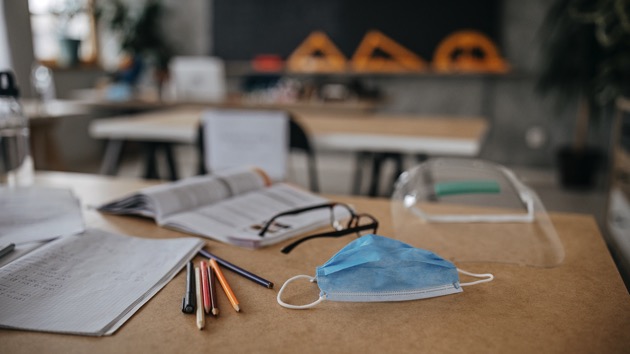
(FREMONT, Calif.) — When students return to Erin Castillo’s classroom Wednesday, their first day of in-person school in over a year, the high school teacher will be paying attention to more than just how they are doing academically.
Castillo, an English and peer counseling teacher at John F. Kennedy High School in Fremont, California, said she will be focusing more attention than ever this year to her students’ mental health.
“I think there’s a big emphasis [among educators and parents] on learning loss and the academic side, but I don’t think any kids are concerned about that,” Castillo told Good Morning America. “The kids that I’ve talked to, what they’re concerned about, and what I’m concerned about, is the social side of things … their health [amid the coronavirus pandemic] … and just the discomfort of going back to school.”
Her post inspired teachers around the world to make their own versions of the chart for their classrooms. The chart is hanging in Castillo’s own classroom still today as students return.
When using the check-in chart, students are encouraged to grab a post-it, write their name on the back and place it next to the statement that best matches their feelings for the day. The options are, “I’m great,” “I’m okay,” “I’m meh,” “I’m struggling,” “I’m having a hard time and wouldn’t mind a check-in” or “I’m in a really dark place.”
The last two statements merit a check-in with Castillo and a follow-up conversation with the counselor or the school psychologist on campus.
“When I created the chart, I wanted mental health to become part of the school conversation and to be tied into how we do things,” Castillo said. “Students can’t learn nearly as well when they’re struggling with something.”
Students across the United States are entering school this year amid not only their own anxiety and uncertainty but also uncertainty on a national scale amid rising numbers of COVID-19 cases, including among children, and angry debates among adults on whether students should wear masks.
Some school districts have recognized the mental health challenges facing students and have added resources for the new school year. In Castillo’s district, more mental health counselors have been deployed to schools and each school now has a designated mental health lead who receives additional mental health training to take back to their school’s teachers and staff.
“I’m sad that this is the way it finally came up but we’re seeing that shift now of, okay, we really do need to have these [mental health] conversations and we really do need to talk about coping strategies in the classroom,” said Castillo. “I’m definitely seeing it more.”
In addition to the mental health check-in chart in her classroom, Castillo has also created an “affirmation station” for students to recognize each others’ good works.
Each student in Castillo’s classroom has an envelope posted on a board in the “affirmation station.” When students recognize things another student is doing well, they can grab a notecard, write them an affirmation and stick it in their envelope, according to Castillo. Students keep them in their binders. They’ve told me they hang them up in their rooms.
Other mental health tools Castillo said she plans to use this year include giving students mental health-focused prompts to focus on each week, making use of the mini-shredder in her classroom for students to shred negative thoughts and encouraging students to set and reach small, attainable goals focused on self-care and self-love.
And while remote learning was difficult for students and teachers alike, one thing Castillo will miss is being able to use the chat and breakout room functions on Zoom that allowed her to communicate with students one-on-one.
She said her goal is to find ways to help incorporate that anonymity and directness in her in-person classroom.
“I saw a huge uptick in kids asking questions that they wouldn’t normally have asked because they may not have been comfortable,” said Castillo. “Whatever gives students the voice to communicate that they need help or support, I’m all for it.”
Another lesson Castillo said she learned from remote learning is that teachers themselves can set the best mental health example for students.
“We can’t be telling kids, ‘Take time to breathe and take time to focus on yourself, and it’s okay, if you need to ask for help,’ if we’re not doing any of that ourselves,” she said. “I think the more that we take care of ourselves and the more that we’re showing students that we’re doing that the smoother this school year is going to go.”
Castillo and a fellow teacher, Molly Jackson-Schultz, created a free, month-long mental health challenge for teachers to help prepare them for the year ahead.
“It’s a challenge specifically for teachers about focusing on themselves so we can better serve our students,” said Castillo, who noted that the challenge can be done any month. “As teachers, we have a hard time like putting ourselves first, but that’s the way we survive.”
If you are struggling with mental health or know someone in crisis, call the National Suicide Prevention Lifeline at 1-800-273-TALK (8255) or contact the Crisis Text Line by texting HOME to 741741. You can reach Trans Lifeline at 877-565-8860 (U.S.) or 877-330-6366 (Canada) and The Trevor Project at 866-488-7386.
Nasrin Nawa is a former journalist who was based in Kabul, Afghanistan. – (ABC)
(LINCOLN, Neb.) — Nasrin Nawa, a journalist from Kabul traveling to the U.S. for graduate school, was able to leave Afghanistan on Friday before the Taliban seized the capital. Unfortunately, she said her family members were not as lucky.
“On that day [the Taliban seized Kabul], everything was just a mess,” said Nawa. “My father took [my sister] to the airport, but it was a very crowded day. She was stuck in [a] traffic jam and I was just crying.”
Nawa’s sister is also a journalist in Afghanistan and she said she fears for her life.
“[I thought], ‘What if they find her on the street? What if something happened to her and she never arrives to the airport?'” Nawa asked.
Nawa, who is a Fulbright scholar attending the University of Nebraska-Lincoln, said that her sister’s flight was canceled and she feels “hopeless” about what’s ahead for her country.
“Everyone has some memories [of the] Taliban from the previous regime. It was so dark and so terrifying. It was full of cruelty and people just remember all the public executions,” said Nawa. “They will start taking away some people, specifically journalists, social activists [and] females who were active.”
The Pentagon said Monday that 6,000 U.S. troops are expected to arrive in Afghanistan to evacuate diplomats and civilians from Kabul, but for now, Nawa said that all other flights out of the country have been canceled.
Nawa said that women in Afghanistan went through a “transformation” in the 20 years since the fall of the Taliban and she fears that they’re headed back to square one.
“We could work, we could educate, we could lead. We had so many women in governments and nonprofit organizations that were leaders,” she said. “But now they’re stuck in their home with no other help.”
Taliban spokesperson Zabihullah Mujahid promised at a press conference Tuesday that women “will be afforded all their rights” under the new government.
“Whether it is at work or other activities, because women are a key part of society, and we are guaranteeing all their rights,” Mujahid said, though he added that would be “within the limits of Islam.”
Nawa said she has no trust in what the Taliban is currently telling people.
“We heard that and they constantly emphasize on this during the last year, but we have never believed — women like me don’t believe — these kind of words,” she said. “Because first they said, ‘OK, you can educate. You can go to work. You can be part of the society — but under the Sharia law.’ But he never gave any context of what Sharia law and we have different kind of definition for this Sharia law.”
On Monday, President Joe Biden stood by the White House’s decision to withdraw troops from America’s longest war.
“I will not repeat the mistakes we’ve made in the past — the mistake of staying and fighting indefinitely in a conflict that is not in the national interests of the United States, of doubling down on a civil war in a foreign country, of attempting to remake a country through the endless military deployments of U.S. forces,” Biden said.
Although she’s in the U.S. for now, Nawa said that she hopes she can go home to Afghanistan.
“I really deserve, like any other human in this world, to live in peace and use my potential,” said Nawa. “I would prefer to use it in my country.”
(BALTIMORE) — With the delta variant surging, and new data indicating young people can spread COVID more readily than previously thought, many parents with infants and toddlers are now left with questions about how to best protect their child.
Children who are less than two years old cannot safely wear a mask and do not have an option to receive a vaccine against COVID-19 yet. They can’t decide for themselves where they go, who they are around or what is in their environment — that is left up to a parent or caretaker to decide for them.
Scientists are still learning more about COVID-19 risk and transmission among young children under two. The good news is that even when they do get COVID, they seem less likely to become severely sick compared to adults. And there are several concrete steps parents can take to procreate a safe environment for young children.
1. Get vaccinated
Three vaccines, Pfizer, Moderna and Johnson and Johnson, are authorized by the Food and Drug Administration for use for anyone who is 18 years old. Pfizer is authorized for anyone over the age of 12. All three have proved to be safe and effective. Even as the new delta variant takes over as the dominant variant in the United States, these vaccines can still work against it.
Very often, children who are hospitalized with COVID-19 are living in households in which parents are not vaccinated, said Dr. Paul Offit, director of the Vaccine Education Center and professor of pediatrics in the Division of Infectious Diseases at Children’s Hospital of Philadelphia.
“It’s always tragic when children fall sick with COVID-19,” Offit told ABC News. “This year, these stories are more tragic because they’re preventable.”
2. Make sure everyone around your child is vaccinated
Young children aren’t yet eligible for vaccination, but if every person around them was vaccinated, this creates protection against the virus. Limiting the number of people you encounter who are unvaccinated can help create a safer environment for you and your family that will then offer some protection for your unvaccinated child.
This can be a very hard thing to do, especially if you live in a largely unvaccinated community, but weighing the risk COVID-19 can pose to your child is worth it. It may also be the push some people need to get vaccinated, too.
3. Get vaccinated if you are pregnant or breastfeeding
Vaccines are now recommended for people who are pregnant after a study showed taking a COVID-19 vaccine during pregnancy is safe for parent and child. Meanwhile, new research indicates mothers may be able to pass along antibodies against COVID-19 to your baby.
Antibodies are a part of our immune systems that help recognize and fight off infections. When a woman is pregnant, some antibodies can cross through the placenta and are found in babies’ blood up to a few months after they are born. Antibodies can also be passed through breastmilk.
This type of antibody protection for babies is called “passive immunity.” Your baby’s immune system will not be able to make their own antibodies from what is passed through the placenta or breastmilk, but experts say every bit counts, and some protection is likely better than nothing.
4. Social distancing and masking in public
When you and your young child are in public, it may be impossible to know if those around you are vaccinated. Try to maintain a safe distance away from others and wear a mask, especially in indoor areas where there may be many unvaccinated people.
If your infant is in a carrier, a blanket can be draped over the carrier, but make sure that’s only done when the carrier is in your view and the blanket should not be touching the baby. If you can, find a trusted, vaccinated babysitter if you need a night or day out, so you don’t have to bring your more vulnerable baby with you, especially to activities such as indoor dining that carry a higher risk of COVID-19 exposure.
5. Everyone should wash their hands
Every time someone visits your home from outside, make sure the first thing they touch is soap and water to wash their hands, especially before touching your child. In fact, pediatricians recommend this all year round, with or without a pandemic in any home that has a child less than two years old. It is an easy way to prevent the spread of many infectious diseases that can be tough on young children.
Dr. Jade A. Cobern, a pediatric resident in Baltimore entering the field of preventive medicine, is a contributor to the ABC News Medical Unit.
(NEW YORK) — Old Navy is championing size inclusion with the launch of the brand’s latest “Bodequality” campaign.
More than a campaign, the fashion retailer announced it would be fully revamping the company’s size offerings to feature every women’s style in every size ranging from 0-30 and XS-4X, along with no price differences.
The brand also confirmed Wednesday that these changes will start rolling out in stores and online starting Aug. 20.
The store’s entire shopping experience surrounding size inclusion, store visuals and more are getting a full-on upgrade, the company said.
In 2016, a study published by the International Journal of Fashion Design, Technology, and Education revealed that the average size of an American woman is between 16 to 18.
At the top of this year, the CDC published 2015-2018 data revealing that the average weight of American women is 170.8 pounds and 5 feet 3 inches. In most U.S. stores, these measurements equate to a pants size of 16 and up or large to extra large.
However, GMA previously reported that only about 2,000 stores cater to women above size 12 compared to more than 60,000 stores that cater to traditional straight sizes, 00 to 12, according to Torrid’s CEO Liz Muñoz.
Old Navy’s president and CEO Nancy Green noticed an opportunity to change the women’s shopping experience by making it more inclusive regardless of size, and she essentially ran with it.
“Bodqueality is not a one-time campaign, but a full transformation of our business in service to our customers based on years of working closely with them to research their needs,” Green said. “I’m proud of the collaboration across our Old Navy teams to evolve the retail experience for women.”
With efforts to provide updated sizing that felt true to a variety of body types, Old Navy said it administered 389 body scans to create digital avatars based on real women’s bodies.
Fit clinics with models that wear sizes 20-28 were also ran to build fresh fit blocks based on each of their unique proportions.
Old Navy also said it partnered with full-time fit models in sizes 8 – 20 to review the brand’s updated styles.
Similar to other big-name stores such as Nike and most recently Victoria’s Secret, the company said it will feature mannequins in a variety of sizes such as four, 12 and 18.
Online, shoppers can also use a new toggle feature that allows them to select their preferred default model display.
Prior to the launch of Bodequality, Old Navy offered sizes 0-14 as part of its Women’s collection and sizes 16-30 as part of its Women’s Plus collection. With its new initiative, all women’s sizes will be integrated where all customers can participate in the same brand experience with the same access to product.
Several other retailers have a designated area for plus sizes, but Old Navy is also doing away with separate sections and creating space where everything will be displayed in one place in-store and online.
Pricing will now also be the same throughout sizing. Before Bodequality, there was a price difference between straight sizes and the plus collection.
“Traditionally, to create extended size garments it requires more fabric and a different production process,” an Old Navy spokesperson told GMA. “As we launch Bodequality, we’ve transformed our process so we’ve been able to create price parity for all.”
Old Navy employees are also participating in customer-focused training with an aim to create more of an environment where everyone feels they belong, the company said.
Old Navy initially debuted its first Plus line in 2004 and in 2018 launched dedicated Plus shops in 75 U.S. stores. The following year, the company transformed 30 of those locations into size-integrated concept stores.
“Developing Bodequality allowed us to rethink the way we serve women in the retail industry,” Alison Partridge Stickney, head of women’s and maternity merchandising at Old Navy, said in a statement.
“This launch is a transformative moment for our brand and the fashion industry,” Partridge said.
With a goal to introduce Bodequality to women everywhere, the retailers will premiere a TV spot starring Emmy-nominated actress and comedian Aidy Bryant dancing alongside a diverse group of women to “I Am 100%” by Jarina De Marco.