
1 in 10 ACA enrollees dropped their coverage due to rising health care costs: Poll

1 in 10 ACA enrollees dropped their coverage due to rising health care costs: Poll
The healthcare.gov website on a laptop arranged in Norfolk, Virginia, US, on Saturday, Nov. 1, 2025. (Stefani Reynolds/Bloomberg via Getty Images)

(NEW YORK) — When Jessica Chamberlain went to sign up for health insurance coverage under the Affordable Care Act (ACA) for 2026, she not prepared for the sticker shock.

Last year, Chamberlain was paying $59.67 in monthly premiums. This year, she would be paying nearly $100.

The 43-year-old mother of two from Illinois said she was floored to see her monthly premiums were nearly doubling.

“I can’t afford that as a single mom with two kids,” she told ABC News.

After carefully weighing her options, Chamberlain decide to forego health insurance and is currently uninsured.

“What do I sacrifice [to pay for health insurance]? I’m diabetic,” she said. “What do I have to sacrifice to keep my medications and my health afloat?

Chamberlain is not alone. Nearly one in 10 people enrolled in the ACA Marketplace last year dropped their coverage in 2026, according to a new KFF survey published Thursday.

The findings come amid rising health care costs and the end of the enhanced premium tax credits. The tax credits helped lower the cost of monthly premiums for about 22 million Americans covered under the ACA and expired at the end of 2025, with no plans by Congress to extend them.

The survey built upon a previous KFF poll conducted in 2025 among Marketplace enrollees. Surveyors re-interviewed more than 1,100 adults between Feb. 2 and March 2, 2026.

Of the respondents, 69% said they re-enrolled in Marketplace coverage with 39% selecting the same plan and 29% switching plans.

More than half, or 51%, of returning ACA enrollees said their health care costs are “a lot higher” this year compared to last year. Of this group, four in 10 specifically said their premiums are “a lot higher.” Additionally, 80% said all health care costs — including premiums, deductibles, co-pays or coinsurance — are higher.

Meanwhile, 9% of Marketplace enrollees dropped their ACA coverage and are currently uninsured.

When asked why they decided to drop or change their coverage, most respondents said costs were the driving factor.

One of the respondents, Holly Weir, a 26-year-old from Ohio, told ABC News she was paying $30 in monthly premiums last year under a plan run by UnitedHealthcare. This year, her plan went to $177 in monthly premiums.

“I didn’t do anything to pick a new health care plan. I got the bill in the mail and I was like, ‘[Expletive]!'” Weir said. “I didn’t pay too much attention until I got the bill the next month and I was like ‘Oh my God, this isn’t from me going to see a medical provider.'”

Weir decided to cancel her insurance and has applied for Medicaid coverage. She is currently waiting to see if she will be approved.

Weir said she is a thyroid cancer survivor, and she has to see an oncologist every two months or so, in addition to taking regular medication.

“Once that runs out, I’ll get a lot more scared,” she said. “Of course, I’m not going to be stupid and leave it so long. If it does come to it, I’ll pay [for the insurance]. The idea that I would have to spend that each month is frustrating. I’m already not doing amazingly financially.”

The survey found that even those who re-enrolled in the ACA Marketplace may need to rework their household budgets.

More than half, or 55%, said they need to cut spending on food or other basic household expenses to afford their health care costs.

Among those with chronic health conditions, 62% of those who reenrolled in the ACA Marketplace said they will be cutting back on food and other basics.

The survey found that 22% of respondents did not re-enroll in the ACA Marketplace and got coverage through an employer, Medicare, Medicaid or another health plan outside the Marketplace.

Chamberlain, who also responded to the survey, said her kids qualify to be on state-run Medicaid. However, she said she doesn’t qualify because she makes too much in her current role working in probation.

She is hoping she can find another insurance plan to help cover health care costs.

“This is destroying people who have pre-existing conditions,” she said. “It is affecting people, especially single moms. We’re just trying to live.”

Copyright © 2026, ABC Audio. All rights reserved.
1 in 10 ACA enrollees dropped their coverage due to rising health care costs: Poll

1 in 10 ACA enrollees dropped their coverage due to rising health care costs: Poll
The healthcare.gov website on a laptop arranged in Norfolk, Virginia, US, on Saturday, Nov. 1, 2025. (Stefani Reynolds/Bloomberg via Getty Images)

(NEW YORK) — When Jessica Chamberlain went to sign up for health insurance coverage under the Affordable Care Act (ACA) for 2026, she not prepared for the sticker shock.

Last year, Chamberlain was paying $59.67 in monthly premiums. This year, she would be paying nearly $100.

The 43-year-old mother of two from Illinois said she was floored to see her monthly premiums were nearly doubling.

“I can’t afford that as a single mom with two kids,” she told ABC News.

After carefully weighing her options, Chamberlain decide to forego health insurance and is currently uninsured.

“What do I sacrifice [to pay for health insurance]? I’m diabetic,” she said. “What do I have to sacrifice to keep my medications and my health afloat?

Chamberlain is not alone. Nearly one in 10 people enrolled in the ACA Marketplace last year dropped their coverage in 2026, according to a new KFF survey published Thursday.

The findings come amid rising health care costs and the end of the enhanced premium tax credits. The tax credits helped lower the cost of monthly premiums for about 22 million Americans covered under the ACA and expired at the end of 2025, with no plans by Congress to extend them.

The survey built upon a previous KFF poll conducted in 2025 among Marketplace enrollees. Surveyors re-interviewed more than 1,100 adults between Feb. 2 and March 2, 2026.

Of the respondents, 69% said they re-enrolled in Marketplace coverage with 39% selecting the same plan and 29% switching plans.

More than half, or 51%, of returning ACA enrollees said their health care costs are “a lot higher” this year compared to last year. Of this group, four in 10 specifically said their premiums are “a lot higher.” Additionally, 80% said all health care costs — including premiums, deductibles, co-pays or coinsurance — are higher.

Meanwhile, 9% of Marketplace enrollees dropped their ACA coverage and are currently uninsured.

When asked why they decided to drop or change their coverage, most respondents said costs were the driving factor.

One of the respondents, Holly Weir, a 26-year-old from Ohio, told ABC News she was paying $30 in monthly premiums last year under a plan run by UnitedHealthcare. This year, her plan went to $177 in monthly premiums.

“I didn’t do anything to pick a new health care plan. I got the bill in the mail and I was like, ‘[Expletive]!'” Weir said. “I didn’t pay too much attention until I got the bill the next month and I was like ‘Oh my God, this isn’t from me going to see a medical provider.'”

Weir decided to cancel her insurance and has applied for Medicaid coverage. She is currently waiting to see if she will be approved.

Weir said she is a thyroid cancer survivor, and she has to see an oncologist every two months or so, in addition to taking regular medication.

“Once that runs out, I’ll get a lot more scared,” she said. “Of course, I’m not going to be stupid and leave it so long. If it does come to it, I’ll pay [for the insurance]. The idea that I would have to spend that each month is frustrating. I’m already not doing amazingly financially.”

The survey found that even those who re-enrolled in the ACA Marketplace may need to rework their household budgets.

More than half, or 55%, said they need to cut spending on food or other basic household expenses to afford their health care costs.

Among those with chronic health conditions, 62% of those who reenrolled in the ACA Marketplace said they will be cutting back on food and other basics.

The survey found that 22% of respondents did not re-enroll in the ACA Marketplace and got coverage through an employer, Medicare, Medicaid or another health plan outside the Marketplace.

Chamberlain, who also responded to the survey, said her kids qualify to be on state-run Medicaid. However, she said she doesn’t qualify because she makes too much in her current role working in probation.

She is hoping she can find another insurance plan to help cover health care costs.

“This is destroying people who have pre-existing conditions,” she said. “It is affecting people, especially single moms. We’re just trying to live.”

Copyright © 2026, ABC Audio. All rights reserved.

House Oversight committee to depose Epstein’s longtime lawyer

House Oversight committee to depose Epstein’s longtime lawyer
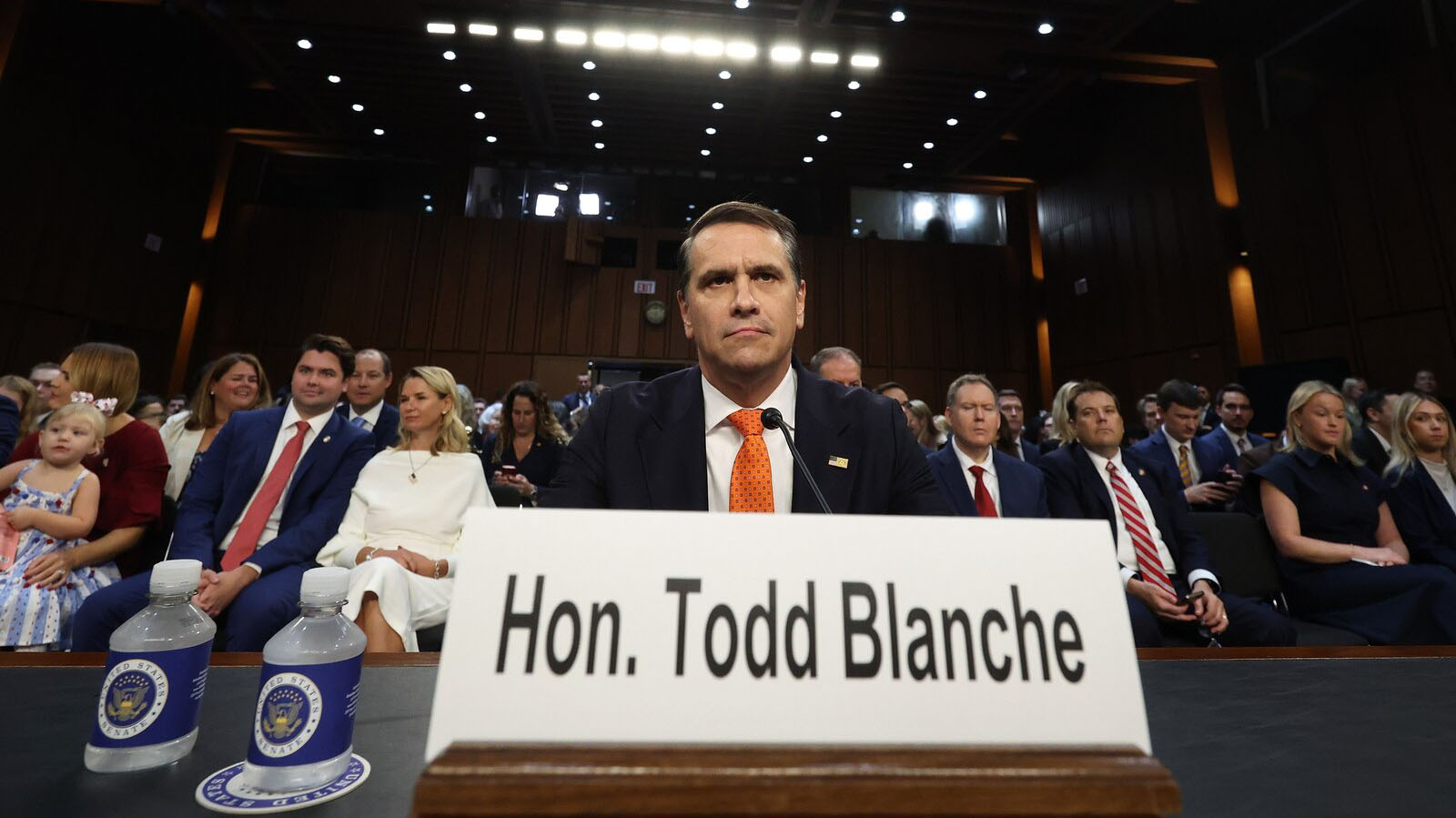
Richard Kahn, an accountant for convicted sex offender Jeffrey Epstein, arrives for a House Oversight Committee deposition about Epstein, in Rayburn building on Wednesday, March 11, 2026. (Tom Williams/CQ-Roll Call, Inc via Getty Images)

(WASHINGTON) — Members of the House Oversight Committee are set to depose a key member of Jeffrey Epstein’s inner circle who for more than two decades had a critical role managing his personal, financial and legal affairs.

Darren Indyke served as Epstein’s longtime attorney since the mid-1990s.

As Epstein for years attempted to avoid scrutiny while orchestrating a notorious sex trafficking operation, Indyke — together with accountant Richard Kahn — allegedly helped him navigate legal issues and formed part of the financier’s inner circle. Indyke allegedly helped facilitate at least three sham marriages between Epstein’s victims and withdrew hundreds of thousands of dollars in cash for Epstein, according to one lawsuit, and attested to Epstein’s character when he faced legal scrutiny. 

“Knowing that they would earn millions of dollars in exchange for facilitating Epstein’s sex abuse and trafficking, Indyke and Kahn chose money and power over following the law,” alleged one lawsuit that Indyke and Kahn agreed to settle with no admission of wrongdoing.

Neither man has been charged with any crimes. They both deny any wrongdoing and say they were unaware of Epstein’s crimes while working for him. 

The deposition Thursday comes as the House Oversight Committee attempts to zero in on members of Epstein’s inner circle to better understand how the disgraced financier was able to commit decades of crime with seeming impunity.

Following higher profile depositions of people like billionaire Leslie Wexner as well as Bill and Hillary Clinton, the questioning of both Indyke and Kahn arguably presents the committee with their strongest opportunity to learn more about Epstein’s life and crimes.

“I was not aware of the nature or extent of Epstein’s abuse of so many women until after Epstein’s death,” Kahn told lawmakers last week, according to his prepared remarks. “However, it pains me to think, and I deeply regret, that I may have unknowingly assisted Epstein in any way.”

Executor of Epstein’s Trust 
In a will signed two days before he was found dead in a Manhattan jail cell, Epstein named Kahn and Indyke as the co-executors of his estate and bequeathed them $25 million and $50 million, respectively. At the time of his death, Epstein’s estate was valued as much as $650 million. It was last valued at approximately $127 million, according to an October 2025 court filing, after paying out multiple settlements to Epstein’s victims.

As co-executors of Epstein’s estate, Indyke and Kahn recently agreed to settle a proposed class-action lawsuit brought by Epstein’s victims that accused them of “facilitation, participation, and concealment of Epstein’s illegal conduct” for their own financial gain.

According to the lawsuit, both men helped “structure Epstein’s bank accounts and cash withdrawals to give Epstein and his associates access to large amounts of cash in furtherance of sex trafficking.”

“The Epstein Enterprise would not have existed for the duration it did and at its scope and scale, without the collaboration and support of others. No one, except perhaps Ghislaine Maxwell, was as essential and central to Epstein’s operation as these Defendants,” the lawsuit alleged.

The settlement did not include an admission of wrongdoing and still needs to be approved by a judge.  Though the lawsuit was brought against them personally, the $25-35 million settlement would be paid by Epstein’s estate, according to the settlement terms.

“Neither Mr. Indyke nor Mr. Kahn socialized with Mr. Epstein, and both men reject as categorically false any suggestion that they knowingly facilitated or assisted Mr. Epstein in his sexual abuse or trafficking of women, or that they were aware of his actions while they provided professional services to him,” an attorney for the men told ABC News in December. 

Allegedly arranged sham marriages
In a lawsuit filed by government of the U.S. Virgin Islands, Indyke and Kahn were alleged to have helped facilitate at least three sham marriages created to secure immigration status for some of Epstein’s victims, further securing control of the women and ensuring they could remain in the United States. 

“The victims were coerced into participating in these arranged marriages, and understood that there would be consequences, including serious reputational and bodily harm, if they refused to enter a marriage or attempted to end it,” the complaint alleged.

According to a civil lawsuit filed in 2019 by an anonymous accuser, one woman alleged that Epstein’s longtime attorney — not explicitly named as Indyke in the lawsuit — helped prepare the legal paperwork for the marriage, going as far as arranging photographs “to give the appearance that the marriage was legitimate.”

“When the victim inquired about getting divorced … Indyke tried to talk her out of a divorce and threatened that she would lose Epstein’s protection,” a 2024 lawsuit alleged. 

Files released earlier this year by the Department of Justice appeared to reference some of the marriages allegedly arranged by Indyke and Kahn.

“Good morning Jeffrey! We are going now to get marriage license,” an unidentified individual wrote Epstein in 2013. “She is asking if it’s possible to meet with you? Because she has some questions.”  

Withdrawing thousands in cash 
Court filings as well as documents released by the Department of Justice suggested that both Indyke and Kahn played integral roles in managing Epstein’s wealth and overseeing his regular expenses, including alleged payments to women.

According to the Virgin Islands lawsuit — which was settled by the Epstein estate with no admission of wrongdoing — Indyke and Kahn allegedly arranged payments from Epstein’s personal, corporate and nonprofits bank accounts to victims. That lawsuit alleged that Epstein — together with Kahn and Indyke — managed more than 140 different bank accounts.

According to documents released by the DOJ, Indyke served as an officer for many of the holding and shell companies related to Epstein’s real estate and financial holdings.

A 2020 settlement between Deutsche Bank and the New York state financial regulator also suggested that an attorney for Epstein — who sources told ABC News is Indyke — methodically withdrew cash for Epstein in a manner they said intentionally avoided scrutiny.

Limiting the withdrawals to $7,500 in cash — the maximum amount permitted and below the threshold to trigger concerns — Indyke allegedly withdrew hundreds of thousands of dollars for Epstein over four years. While the transactions were below the $10,000 limit to trigger an alert to the Treasury Department, a report by New York State’s Department of Financial Services faulted Deutsche Bank for ignoring red flags about Epstein’s bank accounts.

Jail visits and a character reference 
After securing a plea deal in Florida, Jeffrey Epstein was visited in jail frequently by Indyke, according to visitor logs maintained by the Palm Beach Sheriff. Indyke also helped secure a lenient work-release program for Epstein by vouching for his employment, allowing Epstein to leave the jail for up to 16 hours a day, ABC News reported in 2021.

Prior to Epstein’s plea deal, Indyke also attested to Epstein’s character. According to a letter sent from defense lawyers to prosecutors in Florida, Indyke vouched for Epstein’s character and claimed that Epstein provided financial and emotional support to his family.

“Although Jeffrey was adamant that we owed him nothing, Jeffery honored us by agreeing to be the godfather of our children,” the letter quoted Indyke. 

Copyright © 2026, ABC Audio. All rights reserved.
‘I will follow the law,’ Bondi says after Democrats storm out of Epstein files briefing

‘I will follow the law,’ Bondi says after Democrats storm out of Epstein files briefing
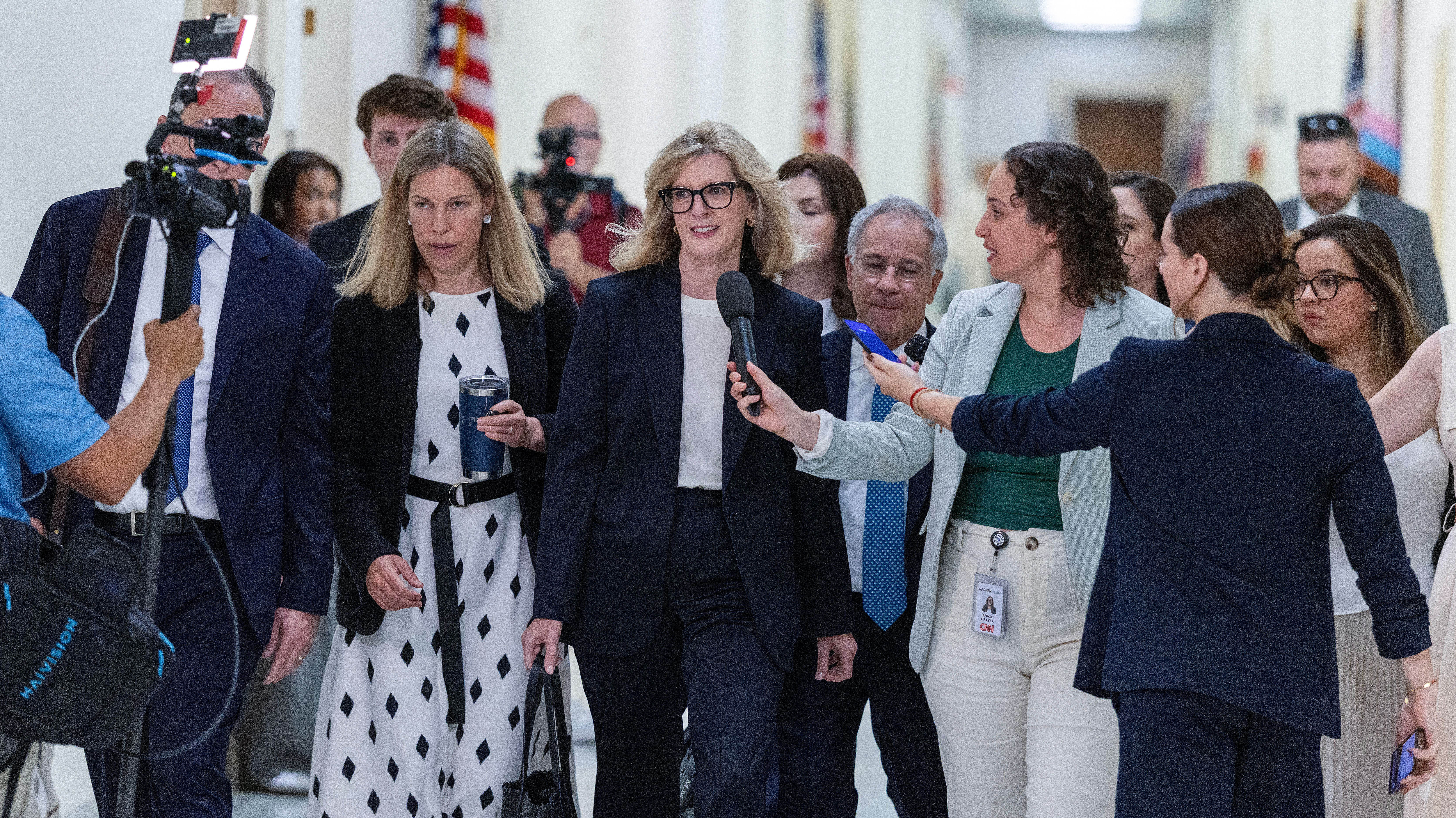
Attorney General Pam Bondi arrives ahead of a closed briefing before the House Oversight Committee at the U.S. Capitol in Washington, DC on March 18, 2026. (Photo by Nathan Posner/Anadolu via Getty Images)

(WASHINGTON) — House Oversight Committee Democrats said Wednesday that Attorney General Pam Bondi refused to commit to complying with a subpoena that compels her to testify at a closed-door deposition over the Jeffrey Epstein files on April 14.

Frustrations boiled over Wednesday evening as Democrats stormed out in protest of a closed-door briefing on the files — characterizing it as a “fake hearing.” Republicans chided Democrats for a “premeditated” stunt.

Rep. Robert Garcia, the top Democrat on the committee, told reporters, “She refused on multiple occasions to commit to following the subpoena that Chairman [James] Comer actually just put out. I asked her repeatedly that question. Other members asked her that question, and she would not commit to it. It is outrageous. It’s infuriating, and it’s continuous — this White House cover up of the Epstein files.”

Republicans, however, contended that Bondi actually stated that she would “follow the law” regarding her subpoena. 

“​​She said she’s going to stick to the law, whatever the law is, that’s what it is. So, I’m not the attorney but that was a legal answer, and that’s what she’s required to do as the attorney general,” Rep. Tim Burchett, R-Tenn., said. “It was all staged, you could tell it, because it just built up to it.”

Asked after the briefing if she would comply with the subpoena, Bondi replied, “I made it crystal clear. I will follow the law.”

Congressional subpoenas carry the weight of law behind them — defying one could result in a charge of contempt of Congress. But Democrats would need a handful of Republicans to vote with them to hold Bondi in contempt and the Department of Justice typically does not prosecute its own attorney general.

The attorney general admonished Democrats, who she said did not ask any substantive questions.

“We were there to answer questions. It’s the evening. We came at their convenience. We gave them as, really, as much time as they wanted,” Bondi said. “We sat there saying, ‘anything you want to ask us, ask us, anything you want to ask us.'”

After the briefing, Comer told reporters that he does not believe Bondi should sit for a deposition — even though the committee approved the subpoena. 

“I personally don’t see any reason for her to do a deposition. She’s the sitting attorney general. She’s turning over documents. I think the Democrats want to do this to embarrass her,” he said.

Comer stressed that he did not vote for the subpoena to bring her in for a deposition.

“I want to bring in the bad guys for the deposition,” Comer emphasized. “I want to bring in the men who have abused women. I want to bring in anyone who is involved in the prosecution and or lack of prosecution, of Epstein Maxwell and and some of these other guys. So that’s where I think our time and energy should be spent.”

Comer and Rep. Summer Lee, D-Pa., told reporters that they had a heated exchange, with the chairman acknowledging he scolded Lee to stop “bitching.”

“She was just complaining about the format,” Comer said. “The attorney general and [Deputy Attorney General Todd] Blanche and all the top brass at the DOJ in here to answer questions, and yet they don’t ask a single question.”

Copyright © 2026, ABC Audio. All rights reserved.

Luigi Mangione asks to delay federal trial

Luigi Mangione asks to delay federal trial
Luigi Mangione speaks to his attorney, Jacob Kaplan, during a suppression of evidence hearing in the killing of UnitedHealthcare CEO Brian Thompson in Manhattan Criminal Court on December 18, 2025 in New York City. (Luiz C. Ribeiro-Pool/Getty Images)

(NEW YORK) — Luigi Mangione asked a judge on Wednesday to postpone his federal trial from September 2026 to January 2027.

Mangione argued he could not properly prepare for his federal trial — which is set to begin with jury selection on Sept. 8 and opening statements on Oct. 13 — while he is on trial in the state case, which begins June 8.

The state trial would be ongoing while hundreds of potential jurors for the federal case begin filling out questionnaires on June 29.

“Mr. Mangione is now in the impossible position of having to review 800 jury questionnaires during the week of June 29, 2026, while on trial for second-degree murder in state court,” defense attorney Karen Friedman Agnifilo wrote in a letter to the judge. “As a practical matter, this would not be possible.”

She also argued potential jurors would be “bombarded” by news accounts of the state trial.

“As a result, forcing Mr. Mangione to start the state trial on June 8, 2026 — three weeks before potential federal jurors start filling out juror questionnaires a few blocks away in Mr. Mangione’s federal case — guarantees that the fairness and impartiality of Mr. Mangione’s federal jurors will be negatively impacted by weeks of media reporting,” the defense said.

Federal prosecutors are expected to oppose moving the trial date.

Mangione pleaded not guilty to state and federal charges after he was arrested for allegedly gunning down UnitedHealthcare CEO Brian Thompson in Midtown Manhattan in December 2024.

In January, U.S. District Judge Margaret Garnett took the death penalty off the table in the federal case.

Copyright © 2026, ABC Audio. All rights reserved.

Gabbard questioned on whether Iran posed ‘imminent nuclear threat’

Gabbard questioned on whether Iran posed ‘imminent nuclear threat’
U.S. Director of National Intelligence Tulsi Gabbard attends an event where President Donald Trump delivered an announcement on his Homeland Security Task Force in the State Dinning Room of the White House on October 23, 2025 in Washington, DC. (Photo by Alex Wong/Getty Images)

(WASHINGTON) — For the first time since the start of the war, Director of National Intelligence Tulsi Gabbard faced pointed questions Wednesday on whether Iran posed an “imminent threat” to the U.S. as President Donald Trump has maintained.

Lawmakers pressed Gabbard, CIA Director John Ratcliffe, FBI Director Kash Patel and other national security officials on the conflict, and other global matters, on the intelligence community’s annual assessment of such worldwide threats on Capitol Hill.

The hearing came one day after the resignation of Joe Kent, the Trump administration’s top counterterrorism official, who stepped down over his objections to the war, arguing there was no “imminent threat” from Iran.

Gabbard says only Trump can determine an ‘imminent threat’ in contentious exchange

Democratic Sen. Jon Ossoff pointedly questioned Gabbard about the intelligence community’s assessment on Iran’s nuclear capabilities.

President Trump previously said Iran’s nuclear program was “obliterated” by U.S. strikes last summer. Among its several justifications for the current war, however, the White House said Tehran posed an imminent nuclear threat.

“Was it the assessment of the intelligence community that there was an imminent nuclear threat posed by the Iranian regime? Yes or no?” Ossoff asked Gabbard.

“Senator, the only person who can determine what is and is not an imminent threat is the president,” Gabbard said.

Ossoff pushed back, accusing Gabbard of not answering directly because her response would contradict a statement from the White House.

“It is precisely your responsibility to determine what constitutes a threat to the United States. This is the worldwide threats hearing, where, as you noted in your opening testimony, you represent the [intelligence community’s] assessment of threats. You are here to represent the IC’s assessment of threats,” Ossoff said.

At another point in the hearing, CIA Director Ratcliffe said Iran has “been unwilling and incapable of enriching uranium to 60% as a result of” last summer’s strikes.

Lt. General James Adams, the director of the Defense Intelligence Agency, deferred questions about Iran’s existing nuclear capability and discussion about the possibility of U.S. boots on the ground to eliminate it to a classified session.

On Iran’s missile capabilities, Gabbard said Iran “previously demonstrated space launch and other technology it could use to begin to develop a militarily viable ICBM [Intercontinental Ballistic Missile] before 2035, should Tehran attempt to pursue that capability.”

Her remarks repeat an earlier assessment by the Defense Intelligence Agency before the U.S. and Israel began the war on Iran on Feb. 28. Gabbard said the assessment would be updated with the impact of the administration’s military campaign “Operation Epic Fury.”

Gabbard says Iranian regime appears ‘intact’ but ‘largely degraded’

In her opening statement, Gabbard provided the latest intelligence community assessment on Iran.

On the country’s current leadership, Gabbard said the regime “appears to be intact, but largely degraded due to attacks.”

“Its conventional military power projection capabilities have largely been destroyed, leaving limited options. Iran’s strategic position has been significantly degraded,” she said.

She also warned that while “internal tensions are likely to increase” inside Iran as its “economy worsens.”

“If a hostile regime survives, it will likely seek to begin a yearslong effort to rebuild its military, missiles and UAV [Unmanned Aerial Vehicle] force,” Gabbard said.

CIA director pushes back on ex-counterterrorism official

Ratcliffe told senators that Iran “posed an immediate threat” when the U.S. decided to attack the country, pushing back on the statements made by Kent when he resigned.

Kent said in his resignation letter he could not “in good conscience” support the war and argued that Iran posed “no imminent threat” to the nation.

Asked whether he believed “Iran had ceased in its nuclear ambitions, or … its desire to continue to build ballistic missiles capable of threatening American troops and allies in the Middle East” by Republican Sen. Jon Cornyn, Ratcliffe said “the intelligence reflects the contrary.”

“So you disagree with Mr. Kent?” Cornyn asked.

“I do,” Ratcliffe said.

Cornyn did not put the question to Gabbard, Kent’s former boss.

“I think Iran has been a constant threat to the United States for an extended period of time, and posed an immediate threat at this time,” Ratcliffe said.

Officials pressed on planning for Strait of Hormuz, Gabbard sidesteps

Gabbard sidestepped questions on whether she briefed the president on a probable response from Iran — which has been now beared out with Iranian strikes against U.S. partners in the region and a closure of the critical Strait of Hormuz.

Asked by Sen. Angus King, an independent from Maine, whether that contingency was “communicated to the president,” Gabbard would only say that the U.S. military took “preemptive planning” measures ahead of its attack.

She later acknowledged that it’s “long been an assessment of the IC that Iran would likely hold the Strait of Hormuz as leverage.”

“Did you brief the president, if he starts a war of choice, that the likely result would be that Iran would strike adjacent Gulf nations and close the Strait of Hormuz?” Sen. Mark Warner, the top Democrat on the Senate Intelligence Committee, asked Gabbard at one point.

“I have not and won’t divulge internal conversations,” Gabbard replied.

Copyright © 2026, ABC Audio. All rights reserved.
‘Low impulse control’: GOP Sen. Paul confronts Trump’s DHS pick Markwayne Mullin over ‘violence’ at confirmation hearing

‘Low impulse control’: GOP Sen. Paul confronts Trump’s DHS pick Markwayne Mullin over ‘violence’ at confirmation hearing
Chairman Sen. Rand Paul (R-KY) delivers an opening statement during a confirmation hearing for U.S. Sen. Markwayne Mullin (R-OK) to be the next Secretary of the Department of Homeland Security in the Dirksen Senate Office Building on March 18, 2026 in Washington, DC. (Chip Somodevilla/Getty Images)

(WASHINGTON) — Republican Sen. Markwayne Mullin’s confirmation hearing began with a personal confrontation between fellow Republican Sen. Rand Paul as Mullin seeks to take over the Department of Homeland Security from its embattled leader, Kristi Noem.

Paul, the Senate Homeland Security Committee chairman, sparred with Mullin over comments the Oklahoma senator reportedly made earlier this year regarding Paul’s voting record and assault by a neighbor in Kentucky in 2017.

“You told the media that I was a ‘freaking snake’ and that you completely understood why I had been assaulted,” Paul said.

Paul also pointed to Mullin’s previous public confrontations and temperament, adding that Mullin had “low impulse control.”

“Tell the world why you believe I deserve to be assaulted from behind, have six ribs broken and a damaged lung. Tell me to my face why you think I deserved it. And while you’re at it, explain to the American public why they should trust a man with anger issues,” Paul said.

“I just wonder if someone who applauds violence against their political opponents is the right person to lead an agency that has struggled to accept limits of the proper use of force,” he continued.

Before making his opening statement, Mullin fired back.

“I said I could understand, because of the behavior, you were having, that I could understand why your neighbor … did what he did,” Mullin said. “As far as my term of ‘snake in the grass,’ sir, I work around this room to try to fix problems. I’ve worked with many people in this room. It seems like you fight Republicans more than you work with us.”

Mullin, who President Donald Trump earlier this month tapped to take over the agency from Noem, asked Paul to let him earn his respect and said he would be secretary for all Americans.

Paul later played the tense moment at a November 2023 Health, Education, Labor and Pensions Committee hearing when Mullin stood up from his seat and appeared to prepare to physically fight Teamsters Union President Sean O’Brien as well as a montage of Mullin’s responses to the incident.

“I get it it’s about character assassination for you,” Mullin said to Paul. “That’s the way this game is played. I understand it. And you are making this about you, which is fine.”

Mullin noted that O’Brien, sitting directly behind him, came to the hearing on Wednesday as a “close friend.”

“As you can notice over my shoulder is my good friend, Sean O’Brien. Both of us have had conversations and shaken hands and agreed we could have done things different,” Mullin said. “Sean has become a close friend. We talk all the time. I have been on his podcast. It is how you handle your differences. Not like this, chairman.”

Paul told ABC News Capitol Hill Correspondent Jay O’Brien on Wednesday that he’s planning to hold a committee vote to advance Mullin’s confirmation out of the committee on Thursday — during which, Paul said he will vote no. That means Mullin still needs at least one Democratic vote to advance — and Democratic Sen. John Fetterman said he’s open to being that vote.

Fetterman previously said he was inclined to support Mullin, and Wednesday’s hearing didn’t change that, he told reporters.

Mullin pressed on Pretti comments

Lawmakers on the Senate Homeland Security Committee grilled Mullin, who has no law enforcement experience, throughout the day as the department he’s seeking to lead remains shut down due to a funding stalemate, with no clear end to that shutdown in sight.

Mullin’s hearing came as parts of DHS — from the Federal Emergency Management Agency to the Transportation Security Administration — are shut down amid a funding fight over Immigration and Customs Enforcement.

Democrats have said they will fund the department only if changes are made to the agency in the wake of the shooting deaths of Renee Good and Alex Pretti by federal law enforcement in Minneapolis earlier this year.

Sen. Gary Peters, the ranking member of the committee, pressed Mullin over his comments following the killing of Pretti, a Minneapolis nurse who was shot by federal agents during a protest in January.

After Pretti’s death, Mullin echoed initial statements from Noem and White House deputy chief Stephen Miller, calling Pretti “a deranged individual that came in to cause max damage.”

Noem later walked back her comments, claiming she did not have all of the facts at the time.

“I think I said this privately when we had a conversation. Those words probably should have been retracted. I shouldn’t have said that,” Mullin said to Peters, adding he was “responding immediately without the facts.”

“That’s my fault. That won’t happen as secretary,” Mullin said.

When Peters asked Mullin if he would apologize to Pretti’s family for his comments, Mullin stressed that the investigation into the shooting was ongoing.

“We’ll let the investigation go through, and if I’m proven wrong, then I will, absolutely,” he said.

Mullin asked about travel after ‘smell’ of war comments

Peters asked Mullin, who is not a veteran, about his comments to Fox News earlier this month where he suggested he knows what war “smells” like. Mullin admitted that he had never been out of the country for anything other than mission work and vacations.

Peters asked about the travel to Georgia and Azerbaijan that was listed in the FBI report on Mullin, but the nominee said those 2021 trips were classified.

“So where did you smell war?” Peters asked.

“Sir, I just said that this was classified,” Mullin responded.

Mullin on elections, FEMA

Democratic Sen. Elissa Slotkin asked Mullin about Trump’s controversial suggestion that Republicans “nationalize” elections and asked Mullin if he supported putting armed agents at polling stations.

“The only reason why my officers would be there, if there was a specific threat for them to be there, not for intimidation,” Mullin said.

Mullin appeared to counter the messaging of his predecessor when it came to Federal Emergency Management Agency and said the agency “needs to be restructured not eliminated.”

After the Senate Homeland Security Committee vote on Thursday, if his nomination is confirmed, it would then head to the Senate floor where he could be confirmed as soon as next week.

It is all but certain that Mullin will be confirmed as DHS secretary on the Senate floor.

ABC News’ Allison Pecorin and Jay O’Brien contributed to this report.

Copyright © 2026, ABC Audio. All rights reserved.
Fed holds interest rates steady in 1st move since war with Iran spiked oil prices

Fed holds interest rates steady in 1st move since war with Iran spiked oil prices
A television station broadcasts the Federal Reserve’s decision to hold rates after a Federal Open Market Committee meeting on the floor of the New York Stock Exchange. (Michael Nagle/Bloomberg via Getty Images)

(NEW YORK) — The Federal Reserve held interest rates steady on Wednesday at its first meeting since the U.S.-Israeli war with Iran drove up gasoline prices and risked a wider bout of inflation.

The central bank’s move marked the second consecutive time it has opted to maintain interest rates at current levels since the outset of 2026. Before that, the Fed cut interest rates a quarter-point three straight times. The decision on Wednesday matched market expectations.

“The implications of developments in the Middle East for the U.S. economy are uncertain,” the Federal Open Market Committee (FOMC), a policymaking body at the Fed, said in a statement on Wednesday.

Elevated price increases have coincided with a slowdown of economic growth, threatening to intensify an economic double-whammy known as “stagflation,” which poses difficulty for the Fed.

If the Fed opts to lower borrowing costs, it could spur growth but risk higher inflation. On the other hand, the choice to raise interest rates may slow price increases but raises the likelihood of a cooldown in economic performance.

The benchmark rate stands at a level between 3.5% and 3.75%. That figure marks a significant drop from a recent peak attained in 2023, but borrowing costs remain well above a 0% rate established at the outset of the COVID-19 pandemic.

A lackluster jobs report last week showed the U.S. economy lost 92,000 jobs in February, which marked a reversal of fortunes for the labor market and erased most of the job gains recorded in 2026.

The unemployment rate ticked up from 4.3% in January to 4.4% in February, the BLS said. Unemployment remains low by historical standards.

A revised government report last week on gross domestic product (GDP) showed the economy grew at a sluggish annualized pace of 0.7% over the final three months of 2025.

Those economic headwinds helped set the conditions before the outbreak of war with Iran, which spiked oil prices and risked price increases for a host of diesel-fuel transported goods.

U.S. crude oil prices rose to about $97 per barrel on Wednesday, marking a surge of more than 50% since a month earlier.

Since the military conflict began, U.S. gas prices have gone up 86 cents to an average of $3.84 per gallon as of Wednesday, according to AAA.

The rate decision on Wednesday marked the first such move since a federal judge blocked Justice Department subpoenas to the Federal Reserve’s Board of Governors after determining the government “produced essentially zero evidence” to support a criminal investigation of Fed Chair Jerome Powell, according to an unsealed court opinion.

“A mountain of evidence suggests that the Government served these subpoenas on the Board to pressure its Chair into voting for lower interest rates or resigning,” U.S. District Judge James Boasberg said in his opinion on Friday.

Acting U.S. Attorney Jeanine Pirro blasted Boasberg as an “activist” judge and pledged to appeal his ruling.

ABC News’ Alexander Mallin, Allison Pecorin, and Jack Date contributed to this report.

Copyright © 2026, ABC Audio. All rights reserved.
Moderate geomagnetic storm forecast for tonight: What to expect

Moderate geomagnetic storm forecast for tonight: What to expect
NASA’s Solar Dynamics Observatory (SDO) captured this image of an X5.8 solar flare peaking at 9:23 p.m. EDT, May 10, 2024. (NASA)

(NEW YORK) — A moderate geomagnetic storm could bring northern lights displays to U.S. states further south than usual, forecasts show.

The National Oceanic and Atmospheric Administration Space Weather Prediction Center has issued a storm watch for a G2 geomagnetic storm due to a coronal mass ejection expected to begin Wednesday at 8 p.m. ET and continue until Thursday at 8 p.m. ET.

A coronal mass ejection is a massive eruption of solar material and magnetic field from the sun’s outer atmosphere.

Auroras can occur when the charged particles from the sun clash with the atoms and molecules in Earth’s upper atmosphere — causing those atoms and molecules to emit a glow that appears as a spectrum of light in the night sky.

In the U.S., northern lights could be visible in Alaska, Washington, Oregon, Idaho, Montana, Wyoming, North Dakota, South Dakota, Nebraska, Minnesota, Iowa, Wisconsin, Illinois, Michigan, New York, Vermont, New Hampshire or Maine, according to the NOAA aurora viewline map.

A G2 storm can also impact high-latitude power systems, spacecraft operation and high frequency radio propagation, according to NOAA. Fluctuations to weak power grids and minor impacts on satellite operations can occur as well.

Migratory animals could possibly be affected by geomagnetic storms, according to NOAA. A 2023 study found that inclement space weather may cause fewer birds to migrate during the disturbances — likely due to more difficulty in navigating — and NASA has researched whether solar storms cause an increase in marine mammal strandings, possibly due to similar navigation issues.

The month of March is often an active month for northern lights displays.

The weeks before and after the spring equinox on March 20 are considered “aurora season,” as geomagnetic storms are more likely due to the way solar wind interacts with the Earth’s magnetosphere, according to EarthSky.org.

The spring equinox comes as the solar maximum comes to a close. The sun’s 11-year cycle peaked around late 2024 and has continued to emit strong solar activity and geomagnetic storms, leading to an increase in aurora displays.

The best time to see the northern lights in the U.S. is generally between 10 p.m. and 4 a.m. local time, and traveling to the darkest location possible is recommended for the best viewing, according to NOAA.

Copyright © 2026, ABC Audio. All rights reserved.

Israel destroys building in Beirut amid escalating effort to destroy Iran proxy Hezbollah

Israel destroys building in Beirut amid escalating effort to destroy Iran proxy Hezbollah
A view of the structural damage following air strikes carried out by the Israeli military in the Balata Street and El Basta areas of central Beirut, Lebanon on March 18, 2026. (Houssam Shbaro/Anadolu via Getty Images)

(LONDON) — Around 4 a.m. Wednesday, the Israel Defense Forces posted an image of several blocks in Beirut’s Bashoura neighborhood, saying in an accompanying “urgent warning” that people inside a building outlined in red should leave immediately. 

“To everyone present in the building marked in red on the attached map and the adjacent buildings: You are located near a facility affiliated with the terrorist Hezbollah organization, which the Israel Defense Forces will act against,” Avichay Adraee, an IDF spokesperson, said in the Arabic-language post on social media. 

About an hour later an Israeli airstrike targeted the building, reducing it to rubble.

It was not immediately clear whether anyone was inside the building at the time of its destruction. The Lebanese Ministry of Health on Wednesday said at least 10 people had been killed in overnight Israeli strikes on the capital, but did not detail where those killings had taken place. Another 27 people were injured, the ministry said.

The Israeli strikes came amid an escalation of Israel’s efforts to stamp out Hezbollah, an Iranian proxy based in Lebanon and designated by Israel and the United States as a terrorist organization. 

Hezbollah on March 2 began firing missiles south into Israel, an act that it said was in support of Iran. Those launches, which effectively marked the end of a fragile ceasefire that began in November 2024, came two days after the United States and Israel launched joint airstrikes on Tehran. 

The Israeli Air Force has since retaliated by carrying out strikes on the Lebanese capital and elsewhere in Lebanon, striking targets that Israel describes as Hezbollah-related.

Health officials in Lebanon said at least 912 people have been killed in strikes, along with more than 2,000 people who have been injured. Hundreds of thousands of people have been displaced by the conflict, officials said.

Among the Israeli targets have been buildings and sites throughout Lebanon associated with the Al-Qard al-Hasan Association, an organisation said to finance Hezbollah’s operations. Israel, as it posted a grainy video showing an eagle-eyed view the Bashoura-building strike, said it had overnight targeted that group. It did not explicitly link the al-Hasan group to the destroyed building.

Hezbollah has also continued targeting Israel, firing between 50 and 60 rockets overnight into the country’s north, according to the IDF. Most were intercepted, but several made direct hits, damaging property and setting fires, Israel said. Emergency medical services reported no fatalities, but several light injuries.

Israel’s air force has also over the last two weeks targeted sites across Southern Lebanon.

Israel also said on Monday it had begun a “limited and targeted” ground operation across its northern border, where it says it’s seeking to destroy Hezbollah “strongholds.” The IDF added on Tuesday that it was seeking to create an “additional layer of security for residents of northern Israel.”

Telling Lebanese residents they will not be allowed to return to southern Lebanon, Defense Minister Israel Katz has signaled Israel may carve out a buffer zone inside Lebanese territory.

“In recent days, IDF troops from the 36th Division have begun limited and targeted ground operations aimed at enhancing the forward defense area,” the IDF said in a statement. “The troops are continuing efforts to establish the forward defensive posture in order to remove threats and create an additional layer of security for residents of northern Israel.”

Israel on Wednesday issued a broad warning for anyone in southern Lebanon, saying residents south of the Litani River — which is seen in part as a geographic boundary between northern and southern Lebanon — should move north as quickly as they could.

The IDF was expecting to target “crossings” on that river, meaning bridges, in the coming hours, Israel said, adding that it was being “compelled” to carry out those strikes because of Hezbollah’s activities “with the support of the civilian population.” 

“For your safety and the safety of your families, immediately move to areas north of the Litani River,” the IDF said on social media on Wednesday. “Remaining south of the Litani River may endanger your lives and the lives of your families. Please note: any movement southward may endanger your lives.”

“Accordingly, and to prevent the transfer of reinforcements and combat means, the Defense Army intends to attack crossings on the Litani River starting from midday hours today,” Adraee, the IDF spokesperson, said on social media.

It was unclear how civilians remaining in the south would be able evacuate to the north if river crossings were destroyed.

Copyright © 2026, ABC Audio. All rights reserved.