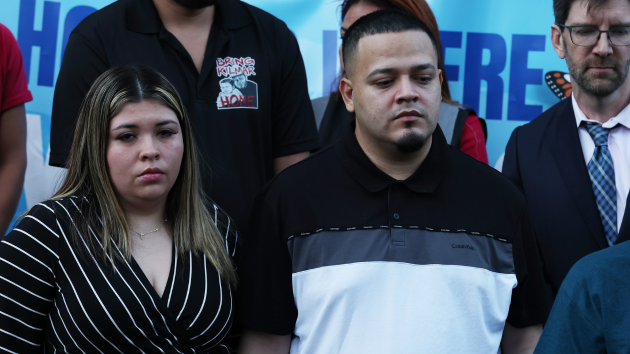
Kilmar Abrego Garcia (R) and his wife Jennifer Vasquez Sura (L) attend a prayer vigil before he enters a U.S. Immigration and Customs Enforcement (ICE) field office on August 25, 2025 in Baltimore, Maryland. (Anna Moneymaker/Getty Images)
(NEW YORK) — A federal judge in Tennessee will hear arguments Thursday over whether the government is being vindictive in pursuing a human smuggling case against Kilmar Abrego Garcia.
The hearing comes after the judge, Waverly Crenshaw Jr., canceled the trial in the case in December and wrote in a court order that there was enough evidence to hold a hearing on the question of vindictive prosecution.
The government is currently blocked from deporting Abrego Garcia, who was released from immigration detention in December. In a separate case last week, a federal judge ruled that Immigration and Customs Enforcement cannot re-detain him because his 90-day detention period had expired and the government lacked a viable plan for his deportation.
The Salvadoran native, who had been living in Maryland with his wife and children, was deported in March to El Salvador’s CECOT mega-prison — despite a 2019 court order barring his deportation to that country due to fear of persecution. The Trump administration claimed he was a member of the criminal gang MS-13, which he and his attorneys deny.
He was brought back to the U.S. in June to face human smuggling charges in Tennessee, to which he pleaded not guilty.
After being released into the custody of his brother in Maryland pending trial, he was again detained by immigration authorities before being released in December.
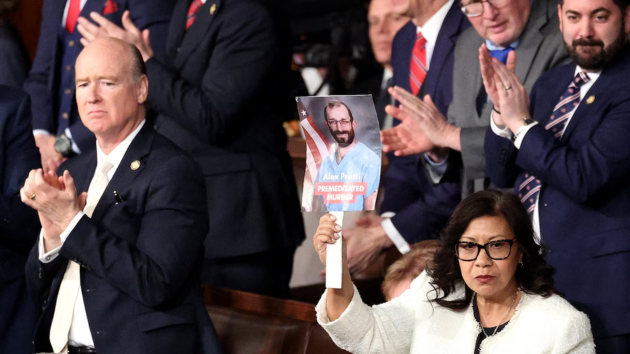
Rep. Norma Torres holds up a photo of Minnesota shooting victim Alex Pretti who was killed during an immigration enforcement operation during U.S. President Donald Trump’s State of the Union address during a Joint Session of Congress at the U.S. Capitol on Feb. 24, 2026, in Washington, D.C. (Win McNamee/Getty Images)
(WASHINGTON) — President Donald Trump did not mention their names in his speech, but Alex Pretti and Renee Good loomed over the State of the Union address.
Pretti, a 37-year-old intensive care nurse, and Good, a 37-year-old mother of three, were both fatally shot in January by federal law enforcement deployed to Minneapolis during the Trump administration’s “Operation Metro Surge” immigration crackdown.
While the deaths of Good, who was killed on Jan. 7, and Pretti, who was killed on Jan. 24, were captured on video and garnered national attention, the president did not broach the subject of their demise.
But some Democrats attending the State of the Union attempted to invoke their names during Trump’s hour-and-48-minute speech.
During the address, Rep. Norma Torres, D-Calif., held up photos of Pretti and Good that included a caption in all capital letters, reading, “PREMEDITATED MURDER.”
Trump has previously lamented the deaths of Good and Pretti and instituted a drawdown in federal law enforcement in Minneapolis in the wake of their deaths.
During his speech Tuesday, the president blamed the Democrats for the current partial government shutdown stemming from an impasse over immigration enforcement. Funding for the Department of Homeland Security ran out on Feb. 14.
“Now they have closed the agency responsible for protecting Americans from terrorists and murderers,” Trump said of the Democrats. “Tonight, I’m demanding the full and immediate restoration of all funding for the border security, homeland security of the United States, and also for helping people clean up their snow.”
At one point, Trump prompted heckling from Rep. Ilhan Omar, D-Minn., and Rep. Rashida Tlaib, D-Mich., when he said the Democrats should be “ashamed.”
“One of the great things about the State of the Union is how it gives Americans the chance to see clearly what their representatives really believe,” Trump said in his speech. “So, tonight I’m inviting every legislator to join with my administration in reaffirming a fundamental principle. If you agree with this statement, then stand up and show your support: the first duty of the American government is to protect American citizens, not illegal aliens.”
While it appeared that all of the Republican lawmakers in the chamber stood up and applauded, most of the Democrats remained seated.
While seated next to each other, Omar and Tlaib repeatedly shouted at Trump. Omar was heard yelling, “You have killed Americans! You have killed Americans!” in an apparent reference to the deaths of Good and Pretti.
Tlaib shouted “liar” and referenced the Epstein files.
The barbs from Tlaib and Omar continued as Trump said, “I’m also asking you to end deadly sanctuary cities that protect the criminals and enact serious penalties for public officials who block the removal of criminal aliens, in many cases, drug lords, murderers, all over our country. They’re blocking the removal of these people out of our country. And you should be ashamed of yourself.”
During her rebuttal address for the Democrats, Virginia Gov. Abigail Spanberger said the nation’s “broken immigration system is something to be fixed — not an excuse for unaccountable agents to terrorize our communities.”
“And yet, our president has sent poorly trained federal agents into our cities, where they have arrested and detained American citizens and people who aspire to be Americans — and they have done it without a warrant,” Spanberger said.
She added, “They have ripped nursing mothers away from their babies, they have sent children — a little boy in a blue bunny hat — to far-off detention centers, and they have killed American citizens on our streets.”
In a statement released immediately after the State of the Union, Rep. Betty McCollum, D-Minn., also mentioned the killings of Good and Pretti.
“Here in Minnesota, we have seen what happens when President Trump gets his way and a Republican majority in Congress goes along,” McCollum said. “We’ve seen the damage from masked, unidentifiable federal agents invading and occupying our communities to sow chaos, violence, and division. We’ve seen Minnesotans racially profiled and assaulted. We’ve seen the killing of Renee Good and Alex Pretti by federal agents.”
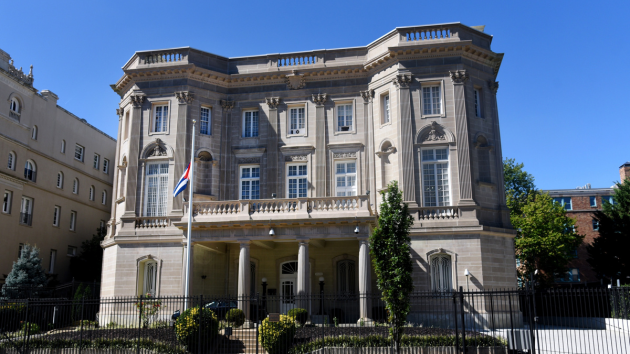
The Cuban flag waves outside of the Embassy of Cuba in Washington, DC on October 3, 2017, in Washington, DC. The U.S. orders on Tuesday the expulsion of 15 Cuban Diplomats from the Washington DC Embassy. (Photo by Olivier Douliery/Getty Images)
(CUBA) — Four people on a speedboat were killed and another six injured in a “confrontation” near Cuba’s coast after those on board the United States-registered vessel opened fire on Cuban troops, according to the Cuban Ministry of the Interior.
As Border Guard troops approached the boat for identification after it was detected in Cuban waters, those on board the speedboat “opened fire,” injuring the commander of the Cuban vessel, the ministry said.
“As a consequence of the confrontation, as of the time of this report, four aggressors on the foreign vessel were killed and six were injured,” the ministry said in a statement released by the Cuban Embassy in the United States.
Those injured were evacuated and received medical assistance, it said.
The speedboat was registered in Florida, according to the ministry. It approached Wednesday morning about 1 nautical mile northeast of the El Pino channel, in Cayo Falcones in the Villa Clara province, the ministry said.
When reached for comment, the U.S. Coast Guard, White House and other related agencies referred ABC News to the State Department.
“In the face of current challenges, Cuba reaffirms its determination to protect its territorial waters, based on the principle that national defense is a fundamental pillar of the Cuban State in safeguarding its sovereignty and ensuring stability in the region,” the Cuban Ministry of the Interior said.
This is a developing story. Please check back for updates.
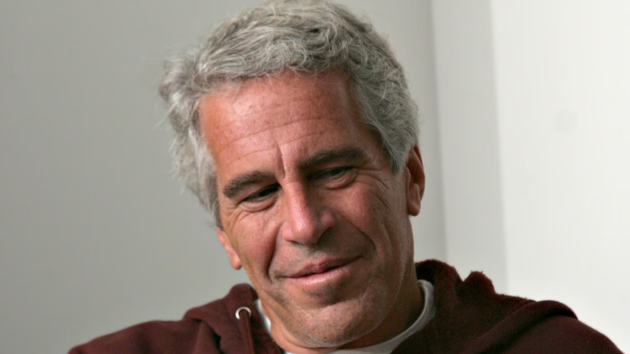
Jeffrey Epstein in Cambridge, Ma., Sept 8, 2004. (Rick Friedman/Corbis via Getty Images)
(WASHINGTON) — The late sex offender Jeffrey Epstein appears to have successfully hidden a trove of potential evidence of his crimes from investigators for more than a decade, according to documents released this month by the Department of Justice.
Internal correspondence between Epstein’s attorneys and private investigators, as well as previously sealed court filings, suggest that the disgraced financier went to extreme lengths to hide the potential evidence during the critical three-year period when local and federal law enforcement began investigating him before he secured a lenient plea deal that allowed him to avoid a lengthy prison sentence.
Less than two weeks before the Palm Beach Police Department raided Epstein’s mansion in October 2005, a private investigator retained by Roy Black, a criminal defense lawyer for the disgraced financier, removed a trove of evidence from the home, including multiple computers, more than two dozen phone directories, and sexually explicit material, according to documents released by the DOJ.
State and federal prosecutors appeared to have never accessed the materials while they investigated Epstein, potentially shielding Epstein from criminal exposure and contributing to how he was able to evade justice for more than a decade.
A 2020 report from the DOJ’s Office of Professional Responsibility about the issues with the investigation later concluded that the computers contained “potentially critical” evidence that could have changed the trajectory of the case.
“There was good reason to believe the computers contained relevant — and potentially critical — information; and it was clear Epstein did not want the contents of his computers disclosed,” the report said.
In the two decades that have followed — despite multiple investigations into Epstein’s criminal actions — the boxes of sensitive evidence appear to have been passed between representatives of Epstein but never fully recovered by law enforcement.
While law enforcement has long been aware of the removed computers, documents released earlier this month by the Department of Justice for the first time shed light on the evidence removed from the home and the ill-fated effort to retrieve them by law enforcement.
The documents outlining the trove of removed evidence were first reported by The Telegraph.
‘Items of potential evidentiary value’
According to a 2005 memo from private investigator William Riley to Black, another private investigator, Paul Lavery, visited Epstein’s Palm Beach home at Black’s direction to remove “items of potential evidentiary value” from the home.
Attempts by ABC News to contact Lavery and Riley Wednesday about the developments were unsuccessful. Riley’s partner in his private investigative firm Steve Kiraly declined to comment.
Black died last year, and an attorney at his former firm said he was occupied with an ongoing trial on Wednesday and unavailable.
Searching Epstein’s home less than two weeks before police would raid it, Lavery removed more than a hundred pieces of potential evidence, including three computers, 29 bound telephone directories, a three-page listing of nearby masseuses, and at least ten photos of nude or partially nude women, according to the memo. At least two of the photos had handwritten messages on them, including from a woman who wrote, “You better never forget about me” before signing her name and ending the note “Class of 2005,” the memo said.
Lavery also removed more than dozen items of sexual paraphernalia, five pieces of women’s underwear, Epstein’s concealed carry permit, an Epstein identification card for Harvard University, and more than $2,000 in cash, according to the memo. Among the removed items was also more than forty mainly pornographic VHS tapes and books titled “‘Compleat Slave’ — creating and living an erotic dominant/submissive lifestyle” and “‘Training with Miss Abernathy’ — a workbook for erotic slaves and their owners,” the memo said.
The detective with the Palm Beach Police Department who was in charge of the investigation noted in a court filing that several items in Epstein’s home “were conspicuously absent” when they arrived to execute the search warrant.
“For example, there were several hanging file folders that had their contents removed, and the pre-existing security cameras that I had observed during my last visit to Mr. Epstein’s residence were in place but were not connected to recording equipment,” he said in the filing. “In addition, at each location where a computer had been present, computer monitors, printers, and other peripheral devices were present but the computers (CPU-Central processing unit) themselves were removed.”
A FBI later agent attested in a then-sealed court filing that the items “were purposely removed from Mr. Epstein’s home in anticipation of an execution of a search warrant” and may contain vital evidence.
“A review of Mr. Epstein’s computers may provide additional electronically stored message logs which could be further evidence of Mr. Epstein’s intent to travel to engage in sexual activity with teenagers he recruited from five Palm Beach County high schools,” the court filing said.
According to the filing, one of the computers potentially contained critical surveillance camera footage because it previously was hard-wired to the home’s surveillance system.
“The FBI investigation has determined that Mr. Epstein was actively involved in lewd and lascivious conduct with minor females as early as March 2004. To the extent that Mr. Epstein tries to deny that any or all of the victims ever visited his home, video footage of them at the house would rebut such a claim,” the filing said.
A review of the Department of Justice’s Epstein library and an index of evidence released last year by the Trump administration earlier this year suggests the materials were never fully recovered by law enforcement. Testimony from an FBI analyst during the 2021 trial of Epstein co-conspirator Ghislaine Maxwell suggested that investigators recovered a copy of at least one of the computers, though the original computers and physical documents appear to have never been located.
‘She needed to gather the stuff from the house’
The removal of the computers and other items was memorialized in multiple interviews conducted by law enforcement in the following two decades.
A woman who worked as a personal assistant for Epstein told the FBI in 2021 that she was instructed by the disgraced financier to gather his items so an unidentified man could collect them from Epstein’s Palm Beach Home.
“[She] recalled the conversation she had with EPSTEIN was where he told her that something happened to his detriment and she needed to gather the stuff from the house,” an FBI agent wrote in a report summarizing her account.
While the assistant said she believed she would likely be meeting with a member of law enforcement, she said she arrived at the home, gathered the material, and provided it to an unknown man. The assistant said she similarly removed items from Epstein’s island.
Epstein’s property manager also recounted the handover in his interview with federal agents, describing that Lavery retrieved the computers in the fall of 2005.
In the following years, law enforcement unsuccessfully made multiple attempts to retrieve the items, though court documents suggest that their attempt to recover the evidence was largely focused on the three computers, rather than the trove of physical evidence — such as dozens of address books and sexual paraphernalia — that were also removed from the home.
‘Never seen the equipment again’
As the investigation into Epstein heightened in the months following the search, Epstein’s lawyers fought to keep the materials out of the hands of law enforcement, arguing in previously sealed grand jury materials that the attempt to recover the materials were “simply the most recent of a series of highly intrusive and unusual attempts to acquire highly personal and/or privileged information” about Epstein.
In court filings, Epstein’s attorneys appeared to acknowledge that the items were removed from the home prior to the search but argued the materials were irrelevant to the investigation and protected by attorney-client privilege.
“Without disclosing any work done by Mr. Riley or his firm on Mr. Epstein’s behalf and at my direction, any actions thereafter taken by him or the firm were taken in connection with the legal representation of Mr. Epstein,” Epstein’s attorney Roy Black told the court in a then-sealed motion.
The exact location of the materials in the months following the search is not clear, though recently released documents suggest that the materials quickly changed hands. According to notes taken by federal agents in 2007, Lavery claims that he promptly delivered the items to Riley, another private investigator who worked for Epstein and managed multiple storage units for the financier, the Telegraph first reported.
“I took the items that were given to me,” Lavery said, according to notes. “Never seen the equipment again.”
Riley was subpoenaed for the information but appears to never have handed over the material, objecting to the requests with the help of Epstein’s lawyers. During the critical three-year period when Epstein was investigated by law enforcement before reaching a plea deal that allowed him to avoid a lengthy prison sentence, the trove of evidence was never accessed by law enforcement.
When Epstein fulfilled his objection to plead guilty in state court pursuant to his non-prosecution agreement, the grand jury subpoena was withdrawn. When victims suing Epstein began seeking the materials in 2009, lawyers for the convicted sex offender appeared to spring into action to further ensure the materials would not be disclosed, citing the terms of the non-prosecution agreement.
“Over the weekend I learned that plaintiff’s counsel are looking to get from me the computers and paperwork I took from Jeff’s house prior to the Search Warrant. I have them locked in storage and would like to know what to do with them,” Riley told an attorney for Epstein. “They are no longer needed in the criminal case, I assume.”
Riley later confirmed in a letter to Epstein’s attorney Robert Critton that he would continue storing the materials in a “safe and secure location.”
“If at any time, you are unable to maintain possession of those materials or have any concern whatsoever that Mr. Epstein’s possession may be compromised in any manner, please advise me immediately such that we can take the necessary actions to protect and preserve those materials as is required in the Non-Prosecution Agreement,” Critton wrote in a letter memorializing their conservation. Critton died in 2020.
Email correspondence between Riley and Epstein suggest that the disgraced financier was paying to keep the materials in a storage unit as late as 2010, though their location in the following decade — when investigators in New York opened a new investigation into Epstein and charged him with sex crimes before his 2019 death by suicide — appears to still be a mystery.
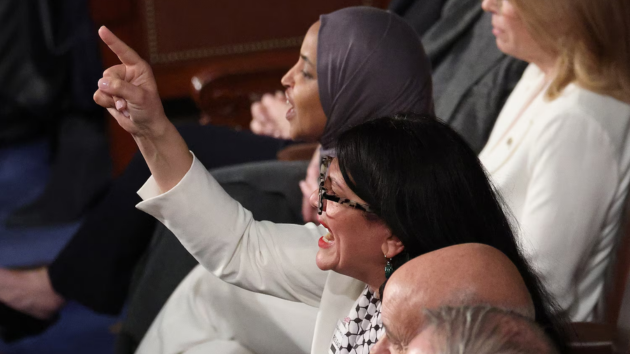
Rep. Rashida Tlaib and Rep. Ilhan Omar shout during U.S. President Donald Trump’s State of the Union address during a Joint Session of Congress at the U.S. Capitol, February 24, 2026, in Washington. (Win McNamee/Getty Images)
(WASHINGTON) — President Donald Trump is bashing two of the Democrats who repeatedly interrupted his State of the Union speech by shouting at him, calling them “LUNATICS” who “look like they should be institutionalized” in a social media post on Wednesday.
During his Tuesday evening address, Trump attacked Democrats several times, with his comments on his immigration crackdown eliciting jeers from Democratic Reps. Rashida Tlaib and Ilhan Omar, who repeatedly said the president was “killing Americans” — a reference to the fatal shootings of Minnesota residents Renee Good and Alex Pretti by federal law enforcement earlier this year.
Their fatal shootings were amid the administration’s “Operation Metro Surge,” which sent federal agents to Minnesota as part of its immigration enforcement. Border czar Tom Homan announced earlier this month that the effort was ending.
“When you watch Low IQ Ilhan Omar and Rashida Tlaib, as they screamed uncontrollably last night at the very elegant State of the Union, such an important and beautiful event, they had the bulging, bloodshot eyes of crazy people, LUNATICS, mentally deranged and sick who, frankly, look like they should be institutionalized,” Trump said.
In his social media post, Trump also said “we should send them back from where they came — as fast as possible.”
Omar, who fled Somalia and came to the U.S. as a refugee when she was a child, has been living in the country since she was 12 years old and is a U.S. citizen. Tlaib was born and raised in Detroit; she is the daughter of Palestinian immigrant parents.
Trump’s social media post about Omar and Tlaib mark his first comments the day after his major address.
Omar has been the target of verbal attacks from Trump for years. Earlier this year, his attacks have come alongside escalated rhetoric describing the Somali community in Minnesota, the largest in the nation.
During Tuesday night’s speech, Democrats remained seated when Trump asked members of the chamber to stand if they supported the idea that the American government was “to protect American citizens, not illegal aliens.”
“You should be ashamed of yourselves,” Trump said at the seated Democrats.
“You have killed Americans,” Omar, a Democrat from Minnesota, repeatedly shouted as Trump continued talking.
Tlaib, who was seated next to Omar, also shouted at the president throughout his speech. She even appeared to repeatedly mouth “K-K-K” as Republicans chanted “U-S-A, U-S-A.”
Omar told CNN Wednesday morning that she had no regrets for calling out the president during the speech, especially since Trump did not mention the fatal shootings of Good and Pretti.
“It was really unavoidable. The president talked about protecting Americans, and I just had to remind him that his administration was responsible for killing two of my constituents,” she said.
The speech was punctuated at times by other interjections, including from Tlaib, a Democrat of Michigan and outspoken critic of the president, who at one point in the speech called Trump “the most corrupt president.”
After the president said that Democrats “are crazy,” Tlaib, who was wearing a pin that said, “F*** ICE,” stood briefly, then sat down again before again shouting at Trump from her seat.
“How’s those Epstein files?” she shouted as the president spoke.
Neither Omar nor Tlaib were asked to leave the chamber, but they were among the many Democrats who left before Trump finished his speech, which lasted one hour and 48 minutes — making it the longest speech before a joint session of Congress in history.
House Speaker Mike Johnson was asked after the speech if Omar or Talib would see any consequences for their actions.
“We’ll find out,” Johnson responded.
ABC News’ Sarah Beth Hensley and Ivan Pereira contributed to this report.
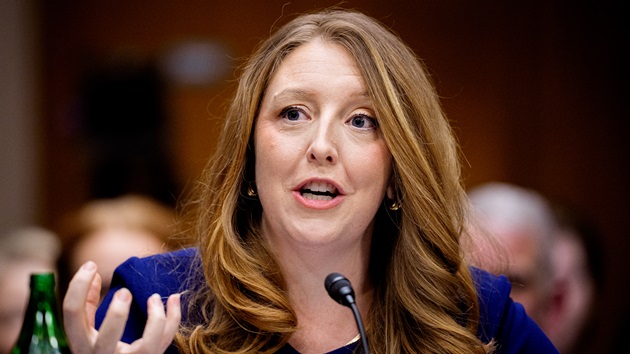
Dr. Casey Means, nominee for the medical director in the Regular Corps of the Public Health Service and U.S. surgeon general, testifies at a Senate Health, Education, Labor and Pensions Committee hearing on Capitol Hill on February 25, 2026 in Washington, DC. Andrew Harnik/Getty Images
(WASHINGTON) — President Donald Trump’s surgeon general nominee, Dr. Casey Means, indicated she supports vaccines but stopped short of recommending certain shots during her confirmation hearing before the Senate Health, Education, Labor and Pensions (HELP) committee on Wednesday.
Means, who has a medical degree but does not hold an active medical license, appeared hesitant to say that some vaccines, such as the flu vaccine, prevent serious disease.
When asked by HELP committee chair Sen. Bill Cassidy, R-La., if she would encourage mothers to vaccinate their children with the measles, mumps and rubella (MMR) vaccine amid widespread illness in the U.S., Means said, “I absolutely am supportive of the measles vaccine, and I do believe vaccines save lives and are important part of the public health strategy.”
However, she stressed personal autonomy and said each patient or parent needs to have a conversation with their doctor or pediatrician before taking any medication.
Later in the hearing, Sen. Tim Kaine, D-Va., asked Means for her opinion on the efficacy of the flu vaccine.
“Do you believe that there is evidence that the flu vaccine prevents serious disease and prevents hospitalization or deaths in children?” Kaine said.
“I believe that all patients should talk to their doctor–” Means began answering.
“And so do I, and that’s not what I’m asking,” Kaine interjected.
“I support the CDC’s guidance on the flu vaccine,” Means replied, adding that she believes the shot reduced the risk of hospitalization “at the population level.”
Earlier this year, the Centers for Disease Control and Prevention announced that it was changing the childhood immunization schedule, removing the universal recommendation for multiple shots, including the flu vaccine.
Means was originally scheduled to testify before the HELP committee in October, but her appearance was postponed for four months after she went into labor.
If confirmed, Means would become the nation’s top doctor, leading more than 6,000 members of the U.S. Public Health Service, including physicians, nurses, scientists and engineers working at various federal health agencies.
Means’ views largely mirror those of Health and Human Services Secretary Robert F. Kennedy Jr., with a focus on tackling the chronic disease epidemic, creating a healthier food supply and expressing vaccine skepticism.
This is a developing story. Check back for updates.
ABC News’ Youri Benadjaoud and Arthur Jones II contributed to this report.
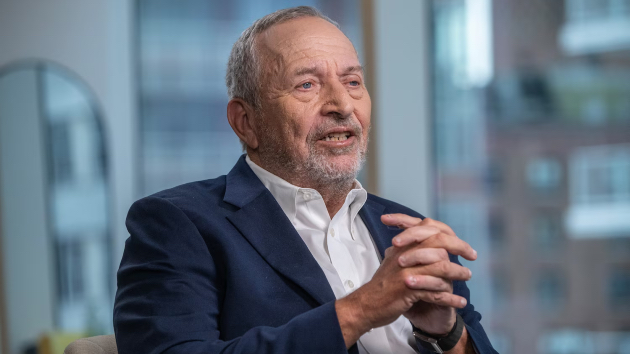
Larry Summers, president emeritus and professor at Harvard University, during an interview in New York City, Sept. 17, 2025. (Victor J. Blue/Bloomberg via Getty Images)
(NEW YORK) — Former Treasury Secretary Larry Summers announced on Wednesday that he would resign from his academic and faculty appointments at Harvard University at the end of the academic year.
Summers — who has been on leave from the university since November — also resigned from his role as the co-director of the Mossavar-Rahmani Center for Business and Government, according to a Harvard spokesperson.
The resignation was made “in connection with the ongoing review by the University of documents related to Jeffrey Epstein that were recently released by the government,” the spokesperson said.
“I have made the difficult decision to retire from my Harvard professorship at the end of this academic year,” Summers, a former Harvard president, said in a statement. “I will always be grateful to the thousands of students and colleagues I have been privileged to teach and work with since coming to Harvard as a graduate student 50 years ago.”
He added, “Free of formal responsibility, as President Emeritus and a retired professor, I look forward in time to engaging in research, analysis, and commentary on a range of global economic issues.”
The news was first reported by the Harvard Crimson.
Summers announced in November he was stepping back from public life after his apparent conversations with Epstein, the late sex offender who died by suicide in a Manhattan jail in 2019, were released by the House Oversight Committee.
“I am deeply ashamed of my actions and recognize the pain they have caused. I take full responsibility for my misguided decision to continue communicating with Mr. Epstein,” Summers said in a statement at the time.
ABC News previously reported that Summers maintained a relationship with Epstein for many years, particularly during Summers’ term as president of Harvard from 2001 to 2006.
He flew at least four times on Epstein’s aircraft, according to flight records made public during litigation against Epstein and he was the top official at Harvard during a time when the university received millions in gifts from the disgraced financier.
All of those gifts were received prior to Epstein’s guilty plea in Florida in 2008 to charges of solicitation of prostitution with a minor, according to the university’s review of its Epstein connections.
No Epstein survivor has alleged wrongdoing by Summers and there is no public record evidence to suggest Summers was involved in any of Epstein’s crimes.
Summers served as U.S. treasury secretary under President Bill Clinton from 1999 to 2001.
This is a developing story. Check back for updates.
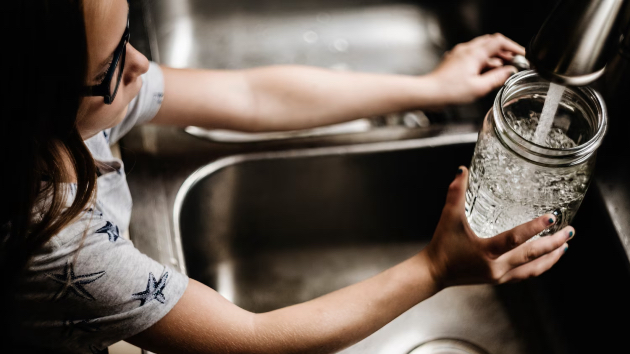
Stock photo of a child filling a glass of tap water. (Cavan Images/STOCK PHOTO/Getty Images)
(NEW YORK) — Turning on the tap for a glass of water or to wash produce may become significantly less predictable because of climate change.
According to a study published in Communications Earth & Environment, climate change is making access to drinkable water more difficult in the United States.
Hazards intensified by climate change, like drought and flooding, threaten both the quantity and quality of drinking water across the U.S., according to the study.
As a result, water utilities serving 67 million customers across the U.S. are at high risk from climate hazards, roughly a fifth of the entire U.S. population.
Looking at 1,500 municipal water utilities across the country, researchers found that water utilities in every U.S. region are vulnerable to climate hazards. While drought impacts water utilities in the Western states more directly, saltwater from coastal flooding worsens groundwater quality, and extreme cold can wear on pipes. Additionally, water utilities in the upper Midwest and Northeast are particularly vulnerable to climate hazards due to older infrastructure.
“Much of our infrastructure was built many decades ago,” Costa Samaras, professor of civil environmental engineering at Carnegie Mellon University and co-author of the study, told ABC News. “It was built not for the climate that we’re experiencing now.”
Given the age of existing infrastructure and lack of adaptive capacities, water utilities are less likely to quickly recover from increasingly common climate hazards. According to the study, water utilities are already experiencing higher operating expenses and more revenue lost from hazards.
The study found that some of the largest water utilities in the country are also some of the most vulnerable to climate hazards. In Texas, where the most vulnerable utilities serve a growing number of customers, more investments in water utility infrastructure are key to keeping up with the increasing population.
To make matters worse, most drinking water utilities in the U.S. are not financially planning for future climate risks. As water utility companies try to keep their costs down, short-term emergency fixes are prioritized in order to resume service while investments to prevent more extreme future hazards get put on the back burner.
“When you’re not thinking strategically about asset management and long-term planning, it’s really easy to become stuck in a negative financial loop,” said Zia Lyle, postdoctoral researcher at the University of North Carolina at Chapel Hill and co-author of the study. Intensifying climate risks create larger financial burdens on utility companies to maintain service, limiting investments in future resilient infrastructure.
In addition to poor asset management, the study found that bond disclosures for the municipal water utilities do not typically include information on climate risks.
“The lack of disclosure here indicates a real systematic lack of climate risk assessments,” said Lyle. “When we interviewed drinking water utility managers, some of them were just unaware of how this range of hazards can affect all the different aspects of their system.”
Though it is becoming more common, only 30% of utilities discussed climate change in their bond statements in 2024. Without disclosure, those buying municipal bonds are left unaware of the risks their drinking water utilities face. In six states alone — Michigan, Illinois, California, Massachusetts, Virginia, and Texas — bond debt is currently around $500 million. Paired with decreased funding from the federal government, the lack of assessment and disclosure only increases the financial strain on drinking water utilities.
As climate hazards intensify, the financial risk combined with climate risks puts millions of customers and water utilities in a vulnerable position.
Some states are addressing the risks their drinking water utilities face. In Colorado, Denver Water is currently assessing the risks drought poses to their utilities so that they can plan appropriately and ensure water for their customers in the future.
Between appropriate risk assessment and increased investment from the state and federal governments, ensuring future access to drinking water is still possible.
“Now is the time for systems to invest,” said Dr. Zyle. “Overall, capital is more affordable now, and they can make these investments before it becomes too expensive.”
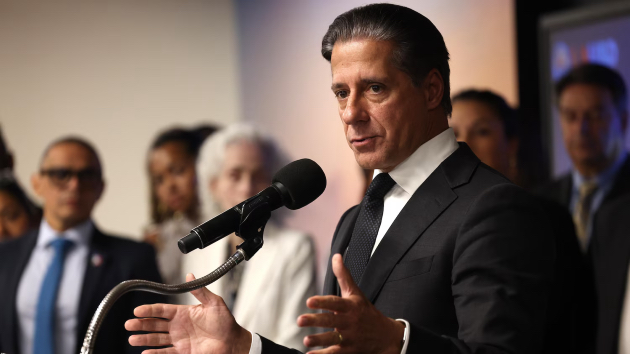
In this Oct. 30, 2025, file photo, superintendent Alberto Carvalho speaks at the LAUSD headquarters in downtown Los Angeles. (Genaro Molina/Los Angeles Times via Getty Images, FILE)
(LOS ANGELES) — Law enforcement is executing a court-approved search warrant at the home of Alberto Carvalho, the superintendent of the Los Angeles Unified School District, the nation’s second-largest school district, according to the U.S. Attorney’s Office in LA.
Sources told ABC News that the allegations, while under court seal, are not violent in nature, and the search was conducted quickly.
Carvalho has been the district superintendent since 2022, the longest-serving LAUSD superintendent in over two decades.
This is a developing story. Please check back for updates.
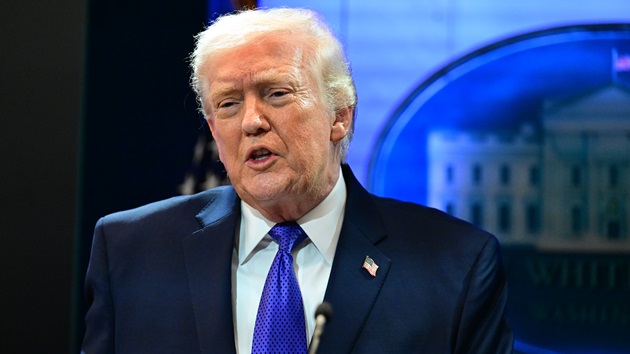
US President Donald Trump speaks during a press conference at the White House, Washington, D.C., US on February 20, 2026. Kyle Mazza/Anadolu via Getty Images
(NEW YORK) — President Donald Trump rushed to enact new tariffs and vowed to preserve others after a recent Supreme Court ruling knocked out most of his levies.
Businesses and consumers now face a different set of tariffs, which amount to taxes paid by importers for goods shipped into the U.S. Oftentimes, importers pass along tariff-related costs to consumers, raising retail prices.
The nation’s overall tariff rate has dropped, meaning some products have gained relief from tariff-related price pressures, some analysts told ABC News. But levies remain in place for nearly all imported goods, including duties as high as 50%, hiking costs for some companies and shoppers, they added.
“In general, we’ve seen tariffs pushing up on prices. That won’t go away,” Jason Miller, a professor of supply chain management at Michigan State University, told ABC News.
The high court ruled on Friday that the International Emergency Economic Powers Act (IEPPA) does not authorize Trump to impose levies, nullifying 70% of Trump’s tariffs after they collected more than $140 billion through December, the Yale Budget Lab found.
During his State of the Union speech on Tuesday, Trump criticized the Supreme Court decision, describing at as a “very unfortunate ruling,” and asserting that he retains the ability to impose tariffs under “fully approved and tested alternative legal statutes.”
In a social media post on Monday, Trump affirmed what he said was his authority to issue tariffs, saying he does not need to consult Congress before erecting new trade levies.
Trump also reiterated his commitment to his policy approach, warning other countries that they may face a “much higher Tariff, and worse.”
A 10% global tariff took effect on Tuesday, marking the first duty enacted by Trump since the high court’s decision. Trump issued the levy under Section 122 of the Trade Act of 1974, which allows the president to hike tariffs for 150 days as means of addressing “large and serious” balance-of-payments deficits, or disparities between a country’s total payments in transactions with other nations and its total earnings. In order to extend the Section 122 tariffs beyond 150 days, Trump would need to secure congressional approval.
Senate Minority Leader Chuck Schumer, D-N.Y., said this week that Democrats would oppose an extension of Section 122 tariffs, which could deny Trump the 60 votes necessary to overcome a potential Senate filibuster.
Trump has vowed to hike the Section 122 tariff to 15%. As of Tuesday, however, the president had not issued an order formalizing that increase.
A 15% Section 122 tariff would result in price increases amounting to $800 in additional costs for an average U.S. household over the next 150 days, the Yale Budget Lab projected.
“That’s hundreds of dollars that you’re going to be paying as a result of these tariffs,” Raymond Robertson, professor for trade, economics and public policy at Texas A&M University, told ABC News.
Robertson noted the ultimate cost impact may be slightly lower than projected as consumers shift away from products that display noticeable tariff-induced price hikes. But, he added, tariff-impacted products will be all but impossible for shoppers to avoid.
“These tariffs are hitting across the board,” Robertson said.
The Trump administration also plans to maintain sector-specific tariffs imposed under Section 232 of the Trade Expansion Act of 1962 and conclude pending investigations that could authorize additional levies, U.S. Trade Representative Jamieson Greer said in a statement on Friday.
That statute permits the White House to levy tariffs on products of importance to national security. Under the law, the White House must await the result of an investigation undertaken by the Commerce Department before imposing a tariff.
Under Section 232, for instance, steel and aluminum face a 50% tariff, putting upward pressure on prices for tableware, motorcycles, canned goods and assorted children’s products, analysts previously told ABC News.
A 50% tariff also applies to some copper products, while 25% tariffs remain for cars and auto parts. Those levies exclude a host of goods compliant with the United States-Mexico-Canada Agreement, or USMCA, a free trade agreement.
To be sure, some products will experience a reduction of tariffs in the aftermath of the Supreme Court decision. Products from China, Brazil, Vietnam and India will likely gain notable tariff relief, since those nations faced significant tariffs under the legal authority that was struck down by the Supreme Court, Miller said.
Electronics and clothing are among the products that could benefit from softer tariffs.
If the Supreme Court had opted to uphold tariffs issued under IEPPA, the nation’s effective tariff rate would have remained at 16%, the Yale Budget Lab said. Taking into account Section 122 tariffs, the effective tariff rate now stands at 13.7%, the group said.
“The good news for consumers is there’s an overall decrease in tariff rates,” Miller said. “What creates a challenge is we don’t know exactly what the new landscape will look like.”