(NEW YORK) — The U.S. Food and Drug Administration (FDA) has approved the first-ever long-acting injectable drug for HIV prevention.
Until this week, the only FDA-licensed and approved medications for HIV pre-exposure prophylaxis, most commonly known as PrEP, were daily oral pills containing the HIV treatment drugs tenofovir and emtricitabine, which slow the progression of an HIV infection in the body.
PrEP is taken daily so that it builds up in your system, to the point that if there is an HIV infection, it prevents the virus from replicating and spreading throughout the body.
When taken as prescribed, PrEP services reduce the risk of getting HIV from sex by about 99%, according to new data from the CDC. Now, individuals who feel at-risk of HIV infection have the option of taking the daily pill, or the new shot every two months, after two initiation injections administered one month apart.
“This injection, given every two months, will be critical to addressing the HIV epidemic in the U.S., including helping high-risk individuals and certain groups where adherence to daily medication has been a major challenge or not a realistic option,” the FDA said in a statement.
According to Dr. Darien Sutton, Emergency Medicine Physician, in an interview with “Good Morning America,” “This is a game-changer in the world of HIV prevention.”
“Patients often have difficulty complying with any oral medication, so a bi-monthly injection can truly change the landscape in terms of HIV prevention. Having a bi-monthly treatment also serves as an opportunity to interact with a patient, share risk reduction sexual health education and complete necessary screenings.”
“Patients on PrEP can often feel stigmatized with taking daily medication,” he told “GMA.” “Some have shared with me that they fear simple actions, like picking up their medications from the pharmacy due to fear of stigmatization. This stigma unfortunately doesn’t stop at the pharmacy, as many also fear being seen carrying their preventative medications in public.”
Sutton added, “The study was also inclusive, including transgender women, which allows better applicability with diverse patient populations.”
CDC data shows that an estimated 34,800 people in the United States acquired HIV in 2019, the most recent year for which data are available.
Men who have sex with men, transgender women who have sex with men, and Black cisgender women are among those disproportionately affected by HIV in the U.S.
Heterosexual people made up 23% of all HIV diagnoses in the U.S. and six dependent areas in 2019. Specifically, heterosexual men accounted for 7% of new HIV diagnoses and heterosexual women accounted for 16%.
The FDA approval comes on the heels of a CDC recommendation this month that there be an expansion of HIV prevention medication to close the gap on PrEP implementation.
In a release, the National Institute of Allergy and Infectious Diseases (NIHAID) also made a nod to the FDA approval, saying in part, “These medications are highly effective at preventing HIV when taken daily as prescribed, however, taking a pill daily while feeling healthy can be challenging.” Adding, “Long-acting injectable cabotegravir PrEP is a less frequent, more discreet HIV prevention option that may be more desirable for some people.”
(DENVER) — Truck driver Rogel Aguilera-Mederos was sentenced on Dec. 13 to 110 years in prison for a 2019 fiery crash just outside Denver that killed four people and injured several others – a sentence that the judge in the case said he wouldn’t have chosen if he had the discretion.
A spokesman for the Colorado First Judicial District Attorney’s Office told ABC News on Tuesday afternoon that the DA’s office “filed a motion to start the reconsideration process” of the sentence on Friday afternoon, and Jefferson County District Attorney Alexis King has requested that the court set a new hearing “as soon as practicable.”
“As Colorado law required the imposition of the sentence in this case, the law also permits the Court to reconsider its sentence in an exceptional case involving unusual and extenuating circumstances,” the motion says.
Mederos, who was 23 years old at the time of the crash, was charged with 42 counts and was found guilty on 27 – the most serious of which was first degree assault.
Prosecutors sought the minimum penalties for each of the charges — the highest of which is 10 years, but the number of the charges and a law that says that some have to be served consecutively resulted in the lengthy sentence.
Progressive prosecutors aim to change the criminal justice system from the inside
“The Eighth Amendment of the Constitution says punishments can’t be cruel and unusual, and as far as Mr. Mederos is concerned, this is a cruel and unusual punishment,” Mederos’ attorney, James Colgan, told ABC News Tuesday.
A Change.org petition advocating for a commutation for Mederos, indicating that the crash was “not intentional,” was signed by more than 4.5 million people as of Tuesday afternoon, becoming one of fastest growing petitions on the website.
Mederos was driving a semitrailer loaded with lumber along a highway in Lakewood, Colorado, on April 25, 2019.
Those killed in the crash on Interstate 70 were Miguel Angel Lamas Arellano, 24; William Bailey, 67; Doyle Harrison, 61; and Stanley Politano, 69.
Prosecutors argued during the trial that Mederos could have taken a runaway truck ramp after losing control of his brakes, instead of driving into traffic.
Colgan said that his client “may have made some negligent mistakes,” but the punishment is “completely disproportionate to what happened.”
“What he did does not deserve a life sentence,” he said.
Why the judge didn’t have a choice
Ian Farrell, a professor of law at the Sturm College of Law at the University of Denver, said that this case has sparked outrage because Mederos “got the same sentence as someone who intentionally killed 100 people would have gotten in Colorado.”
“In every state in the country, which doesn’t have the death penalty, the maximum possible sentence is a life sentence,” Farrell said.
A Jefferson County jury found Mederos guilty of six counts of first-degree assault, 10 counts of attempted first-degree assault, four counts of vehicular homicide, four counts of careless driving causing death, two counts of vehicular assault and one count of reckless driving.
“I will state that if I had the discretion, it would not be my sentence,” the district court judge, A. Bruce Jones, said during the sentencing. ABC News has reached out to Jones but a request for comment was not responded to.
Mederos was sentenced to 10 years each for six counts of first degree assault, as well as five years each for 10 counts of attempted first degree assault, resulting in the 110-year sentence.
“When the judge said he didn’t have discretion, he was accurate,” Colgan said.
Jones was bound by “sentence enhancers” that are outlined in Colorado law, Farrell said, pointing to mandatory minimum penalties for certain crimes and certain classifications that enhance penalties for violent crimes.
Under Colorado law, first degree assault and attempted first degree assault are classified as “crimes of violence,” Farrell said, which mandates that an individual convicted of more than two “crimes of violence” serve the sentences consecutively, not concurrently.
“One of the things that the sentence enhances and mandatory minimums do is it takes power away from the judge, and gives it to the prosecutor,” Farrell said.
Since vehicular homicide, a class four felony, and the remaining lesser charges are not classified as “crimes of violence,” Colgan said that the judge “had discretion to run [them] concurrently, which he did.”
Prosecutors face backlash
Asked about the backlash over the number of charges and the length of the sentence, District Attorney King told ABC News in a statement on Tuesday that prosecutors “initiated plea negotiations but Mr. Aguilera-Mederos declined to consider anything other than a traffic ticket.”
“The actions and decisions of Mr. Mederos resulted in the loss of four lives, devastating injuries to the survivors and – as we heard them state during the sentencing hearing – grave impacts to their families and loved ones,” King said.
Colgan argued Mederos was “overcharged” in an attempt to “coerce” him into pleading guilty.
Domingo Garcia, President of the League of United Latin American Citizens, told ABC News he believes that “racial bias played a big part” in Mederos’ case, pointing to the fact that he is a Cuban immigrant who used a translator during the trial.
Farrell said that it’s “impossible to know” if racial bias played a part, but “Black and brown people are overcharged [and] over sentenced in every different area of the law.”
PHOTO: District Attorney Alexis King speaks during a news conference in Golden, Colo., Nov. 8, 2021.
David Zalubowski/AP, FILE
David Zalubowski/AP, FILE
District Attorney Alexis King speaks during a news conference in Golden, Colo., Nov. 8, 2021.
King’s office did not comment directly on the allegations of racial bias when asked by ABC News, but said in a statement that “the sentence – which our office requested the minimum for – is within the purview of the court and reflects the judgment of the legislature.”
“Just as the law mandates this outcome, it also provides future opportunity to revisit the sentence, and we will again pursue an appropriate outcome if that opportunity arises, after consulting with the victims and survivors and receiving their input,” King said.
Derek Chauvin wants to go to federal prison, even though it means he’ll do more time
Seeking a commutation
On the witness stand, Mederos expressed remorse for those who were killed and injured in the crash and said that the accident was unintentional and he is “not a criminal.”
“I want to say sorry. Sorry for the loss, for the people injured. I know they have trauma, I know, I feel that,” he said while crying.
“But please, don’t be angry with me … I was working hard for a better future for my family. I have never thought about hurting anybody in my entire life,” Mederos, who emigrated from Cuba to the U.S. at the age of 19, said.
Colorado Gov. Jared Polis said during a press conference on Tuesday that he received a clemency application from Mederos’ attorney.
Clemency could mean commutation or a pardon but Colgan told ABC News Tuesday morning he is “actively seeking a commutation” and not a pardon at this time.
Conor Cahill, the press secretary for Polis, told ABC News on Sunday before the application was received that Polis “would expedite consideration.”
A spokesman for LULAC, one of the largest Latino civil rights organizations in the U.S, told ABC News on Tuesday that the organization is set to meet with Polis on Wednesday morning to advocate for Mederos.
Asked if he plans to appeal the case, Colgan said that “everything’s on the table.”
(NEW YORK) — As the COVID-19 pandemic has swept the globe, more than 5.3 million people have died from the disease worldwide, including over 809,000 Americans, according to real-time data compiled by Johns Hopkins University’s Center for Systems Science and Engineering.
About 61.6% of the population in the United States is fully vaccinated against COVID-19, according to data from the Centers for Disease Control and Prevention.
Latest headlines:
-Biden calls out those spreading misinformation ‘that can kill their own customers’
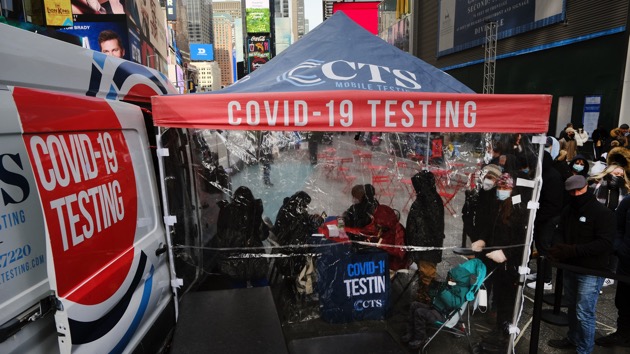
-New York City has highest new case rate in US
-Biden to announce plan to send 500 million free rapid tests to Americans
-Fauci on omicron’s ‘unprecedented’ spread
Here’s how the news is developing. All times Eastern.
Dec 21, 4:36 pm
New Hampshire hospital seeing record-high number of patients
Elliot Hospital in New Hampshire is now seeing three to four times as many patients as it had at the beginning of the pandemic, Dr. Laura McPhee told ABC News.
She said their ICU is full with COVID-19 patients and staff is running thin.
“We’re tired. It’s been extremely hard on everybody,” McPhee said, stressing that “most of the patients that we’re seeing are unvaccinated.”
“Most days I’ve been angry and frustrated. … Because this is preventable. It doesn’t have to happen,” she said. “I’ve not ever seen a patient here in the ICU who has been fully vaccinated with a booster.”
ABC News’ Arielle Mitropoulos
Dec 21, 4:08 pm
Inmates on home confinement due to pandemic can stay out of prison, DOJ says
About 4,000 nonviolent inmates placed under home confinement due to COVID-19 will not be forced to return to prison at the expiration of the public health emergency, as long as officials determine they have not broken rules and made rehabilitative progress during the period of their release, the Justice Department said.
The announcement follows an extensive review by the Justice Department’s Office of Legal Counsel that for months weighed whether there was any way to keep the inmates placed on home confinement from being forced back into incarceration. An earlier OLC opinion released during the final days of the Trump administration determined they would have to return to prison within a month of the emergency’s expiration.
ABC News’ Alexander Mallin
Dec 21, 3:42 pm
Biden calls out those spreading misinformation ‘that can kill their own customers’
With omicron now the dominant variant in the U.S., President Joe Biden said in a public address Tuesday, “If you’re not fully vaccinated, you have good reason to be concerned.”
“The unvaccinated have a significantly higher risk of ending up in a hospital — or even dying,” he said.
Biden said “the unvaccinated are responsible for their own choices” but also blamed “dangerous misinformation on cable TV and social media.”
“These companies and personalities are making money by peddling lies and allowing misinformation that can kill their own customers and their own supporters. It’s wrong. It’s amoral,” he said. “I call on the purveyors of these lies and misinformation to stop it.”
When reporters confronted the president about people struggling to find tests before the holidays, Biden said omicron “spread even more rapidly than anybody thought.”
Biden said the omicron surge created a “big rush” for tests and that this does not resemble a “failure” from the administration.
Biden announced a new plan to distribute 500 million free at-home rapid tests to Americans beginning in January. The free at-home rapid tests will be delivered by mail to Americans who request them. Americans will have to request the tests through a website that will launch in January.
The federal government is also opening more testing sites and mobilizing 1,000 military doctors and nurses to overburdened hospitals.
(NEW YORK) — In an effort to stop bad behavior on planes, unruly passengers could lose their TSA PreCheck privileges.
The Federal Aviation Administration (FAA) is partnering with TSA to share information on passengers facing fines for unruly behavior. After receiving the information, TSA said it can then remove those passengers from its PreCheck program.
“If you act out of line, you will wait in line,” FAA Administrator Steve Dickson said.
The FAA has been cracking down on the unfriendly skies for almost a year, taking a “zero-tolerance approach.” The agency has warned passengers that they could face hefty fines as much as $37,000 for interfering with a flight crew.
Despite the crackdown, there has been a record number of unruly incidents on flights; this year alone the FAA has received 5,664 reports of which 4,000 were mask related.
“Our partnership aims to promote safe and responsible passenger behavior,” Dickson said. “One unruly incident is one too many.”
(NEW YORK) — President Joe Biden on Tuesday announced a plan to distribute 500 million free at-home rapid tests to Americans beginning in January, doubling down on an effort to slow the spread of a highly transmissible variant that has hit the U.S. distressingly close to the holidays.
But he denied it was a failure not to have more tests already available as Americans wanted to get checked days before family gatherings.
“I want to start by acknowledging how tired, worried and frustrated I know you are,” Biden began in his address to the nation from the White House. “For many of you, this will be the first or even the second Christmas, we look across the table to see an empty kitchen chair.”
“If you’re not fully vaccinated, you have good reason to be concerned,” Biden went on, talking about the omicron variant, now the dominant strain in the U.S. “Almost everyone who has died from COVID-19 in the past many months has been unvaccinated. Unvaccinated.”
“You’re putting other people at risk — your loved ones, your friends, neighbors, strangers,” he said to unvaccinated Americans. “You may think you’re putting only yourself at risk. But, it’s your choice. Your choice is not just about you, it affects other people. You’re putting other people at risk. Your loved ones, your friends, neighbors, strangers you run into, and your choice can be the difference between life or death. The longer the virus is around, the more likely variants form that may be deadlier than the ones that have come before,” he said.
Still, the president rejected the idea that the U.S. would go back to March 2020 or impose new lockdowns, and said public health officials have the means this winter to keep schools open safely, for example.
“If you are vaccinated and follow the precautions that we all know well, you should feel comfortable celebrating Christmas and the holidays as you planned it,” he said.
“The best thing to do is get fully vaccinated and get your booster shot — and no, this is not March of 2020. Two hundred million people are fully vaccinated. We’re prepared. We know more. We just have to stay focused,” Biden added.
In his ongoing push to get hesitant Americans vaccinated and boosted, Biden also mentioned that former President Donald Trump this week said he had gotten his booster shot, adding, “Maybe one of the few things he and I agree on.”
He also gave the Trump administration a nod on vaccine development.
“Let me be clear, thanks to the prior administration and our scientific community, America is one of the first countries to get the vaccine,” Biden said. “Thanks to my administration and the hard work of Americans, we led a rollout that made America among the world leaders in getting shots and arms.”
Biden’s new efforts come as the omicron variant became the most dominant COVID strain in the country Monday, accounting for nearly three-quarters of all cases, and just as travel kicks off at nearly pre-pandemic levels for the holiday season.
The Biden administration’s free at-home rapid tests will be delivered by mail to Americans who request them, Biden said, marking a slightly different approach from European countries that chose to send tests to all residents.
“Because Omicron spreads so easily, we’ll see some fully vaccinated people get COVID, potentially in large numbers. There will be positive cases in every office, even here in the White House,” he said, one day after the White House reported the president came in contact with a staffer who later tested positive.
“But these cases are highly unlikely to lead to serious illness. Vaccinated people who get COVID may get ill, but they’re protected from severe illness and death. That’s why you should still remain vigilant,” he said.
Pressed by reporters, Biden rejected suggestions it was a failure to not have the tests readily available in advance of the holidays.
“No, it’s not a failure, but the alarm bell went off. I don’t think anybody anticipated that this was going to be as rapidly spreading as it did,” he said.
Americans will have to request the tests through a website that will launch in January, a senior administration official said on Monday, and it’s not yet clear how many tests Americans will be able to request per household.
The move is a significant departure from the White House’s posture just two weeks ago, when White House press secretary Jen Psaki dismissed the idea of mailing tests to every American as costly and wasteful.
“Should we just send one to every American?” Psaki told a reporter on Dec. 6.
“Then what happens if every American has one test? How much does that cost, and then what happens after that?” Psaki said.
But the effort shows the consensus among White House officials on the need to improve the nation’s testing apparatus, which was caught unprepared by the perfect storm of high demand for pre-holiday testing and a surge of omicron cases.
As a result, Americans have faced long lines and empty shelves this week as they attempt to safely gather for the holidays in keeping with CDC guidance, which calls for families to use at-home rapid tests as an extra layer of prevention before gathering.
Fielding questions after his remarks, Biden was also asked what took so long to get tests out to Americans as the spread of omicron coincides with a greater need for testing ahead of the holidays.
“Come on, what took so long?” Biden quipped back at a reporter.
“Well, what took so long, is it didn’t take long at all. What happened was, the omicron virus spread even more rapidly than anybody thought,” Biden said.
Dr. Sam Scarpino, managing director of pathogen surveillance at the Rockefeller Foundation and a member of their Pandemic Prevention Institute, said the government could have seen this coming.
“Scientists have been warning about the potential for new variants to come along for a year now or more. And we’ve known about omicron since the day before Thanksgiving. It’s been weeks at this point,” he said.
There will be other actions to get ahead of omicron outlined in Biden’s speech on Tuesday, too, like new federal testing sites around the country — the first several of which will launch in New York City by Christmas — and mobilizing 1,000 military doctors and nurses to overburdened hospitals, the senior administration official said.
The military aid will be five-fold the current deployment and could be a big boost to hospitals that have been running on fumes for two years.
There are currently 175 troops spread over four states, and since August 2021, when a joint military operation across the Army, Navy and Air Force began, about 530 medical military personnel have been deployed to work alongside civilian health care providers.
Tuesday marked the second time Biden addresses the nation about the omicron variant in less than a month.
In November, Biden announced a winter COVID plan that included beefing up vaccination and booster clinics to encourage more Americans to get protected and increase testing by getting insurance companies to reimburse the cost of at-home tests.
The 500 million free at-home tests that will be announced on Tuesday will be in addition to getting at-home tests reimbursed, which will go into effect on Jan. 15.
Noticeably missing from the new government efforts will be any attempts to enact further restrictions or lockdowns — which some European countries have opted for as omicron has swept through their populations.
“I know you’re tired. I really mean this, and I know you’re frustrated. We all want this to be over. But we’re still in it,” Biden said in closing. “This is a critical moment. But we also have more tools than we’ve ever had before. We’re ready. We’ll get through this. As we head into the holidays, I want us to all keep the faith.”
ABC News’ Anne Flaherty and Justin Gomez contributed to this report.
(WASHINGTON) — President Joe Biden detailed further steps his administration will take to slow the spread of omicron in an address to the nation on Tuesday, including an effort to distribute 500 million free at-home rapid tests to Americans next month, dispatch military members to overburdened hospitals and continue the push to vaccinate and boost all Americans.
“I want to start by acknowledging how tired, worried and frustrated I know you are,” Biden began in his address to the nation from the White House. “For many of you, this will be the first or even the second Christmas we look across the table to see an empty kitchen chair.”
He acknowledged that the highly transmissible omicron variant, which became the most dominant COVID strain in the country Monday, was raising concerns just as travel kicks off at nearly pre-pandemic levels for the holiday season.
“If you’re not fully vaccinated, you have good reason to be concerned,” Biden said. “Almost everyone who has died from COVID-19 in the past many months has been unvaccinated. Unvaccinated.”
“You’re putting other people at risk — your loved ones, your friends, neighbors, strangers,” he said to unvaccinated Americans. “You may think you’re putting only yourself at risk. But, it’s your choice. Your choice is not just about you, it affects other people. You’re putting other people at risk. Your loved ones, your friends, neighbors, strangers you run into, and your choice can be the difference between life or death. The longer the virus is around, the more likely variants form that may be deadlier than the ones that have come before,” he said.
For vaccinated Americans, the message was starkly different. Biden encouraged spending time with family.
“If you are vaccinated and follow the precautions that we all know well, you should feel comfortable celebrating Christmas and the holidays as you planned it,” he said.
But he also acknowledged the risks of higher breakthrough cases in the weeks and months to come, stemming from omicron’s many mutations able to escape vaccine protections.
“Because omicron spreads so easily, we’ll see some fully vaccinated people get COVID, potentially in large numbers. There will be positive cases in every office, even here in the White House among among the vaccinated,” he said.
“But these cases are highly unlikely to lead to serious illness. Vaccinated people who get COVID may get ill, but they’re protected from severe illness and death. That’s why you should still remain vigilant.”
Still, the president rejected the idea that the U.S. would go back to March 2020 or impose new lockdowns.
“The best thing to do is get fully vaccinated and get your booster shot — and no, this is not March of 2020. Two hundred million people are fully vaccinated. We’re prepared. We know more. We just have to stay focused,” Biden said.
In his ongoing push to get hesitant Americans vaccinated and boosted, Biden also mentioned that former President Donald Trump this week said he had gotten his booster shot.
“Maybe one of the few things he and I agree on,” Biden said.
He also gave the Trump administration a nod on vaccine development.
“Let me be clear, thanks to the prior administration and our scientific community, America was one of the first countries to get the vaccine,” Biden said. “Thanks to my administration and the hard work of Americans, we led a rollout that made America among the world leaders in getting shots and arms.”
Biden’s newest efforts on omicron, from more testing to help for strained hospitals
Part of Biden’s latest efforts will be free at-home rapid tests delivered by mail to Americans who request them, the president said, marking a slightly different approach from European countries that chose to send tests to all residents.
Americans will have to request the tests through a website that will launch in January and it’s not yet clear how many tests Americans will be able to request per household.
The move is a significant departure from the White House’s posture just two weeks ago, when White House press secretary Jen Psaki dismissed the idea of mailing tests to every American as costly and wasteful.
“Should we just send one to every American?” Psaki told a reporter on Dec. 6.
“Then what happens if every American has one test? How much does that cost, and then what happens after that?” Psaki said.
But the effort shows the consensus among White House officials on the need to improve the nation’s testing apparatus, which was caught unprepared by the perfect storm of high demand for pre-holiday testing and a surge of omicron cases.
As a result, Americans have faced long lines and empty shelves this week as they attempt to safely gather for the holidays in keeping with CDC guidance, which calls for families to use at-home rapid tests as an extra layer of prevention before gathering.
Fielding questions after his remarks, Biden rejected suggestions that it was a failure to not have the tests readily available in advance of the holidays.
“No, it’s not a failure, but the alarm bell went off. I don’t think anybody anticipated that this was going to be as rapidly spreading as it did,” he said.
But experts have long been warning that new variants are always on the horizon. Since omicron was detected last month, many have urged the Biden administration to move away from a strategy that solely prioritizes vaccination and to beef up other prevention measures, such as testing or mask mandates.
“Scientists have been warning about the potential for new variants to come along for a year now or more. And we’ve known about omicron since the day before Thanksgiving. It’s been weeks at this point,” said Dr. Sam Scarpino, managing director of pathogen surveillance at the Rockefeller Foundation and a member of their Pandemic Prevention Institute.
Biden outlined other efforts in his speech on Tuesday, too, including new federal testing sites around the country — the first several of which will launch in New York City by Christmas — and mobilizing 1,000 military doctors and nurses to overburdened hospitals.
The military aid will be five times the current deployment and could be a big boost to hospitals that have been running on fumes for two years.
There are currently 175 troops deployed over four states, and since August 2021, when a joint military operation across the Army, Navy and Air Force began, about 530 medical military personnel have been deployed to work alongside civilian health care providers.
Tuesday marked the second time Biden had addressed the nation about the omicron variant in less than a month.
In November, Biden announced a winter COVID plan that included setting up more vaccination and booster clinics to encourage more Americans to get protected and increase testing by getting insurance companies to reimburse the cost of at-home tests.
The 500 million free at-home tests announced on Tuesday will be in addition to getting at-home tests reimbursed, which will go into effect on Jan. 15.
“I know you’re tired. I really mean this, and I know you’re frustrated. We all want this to be over. But we’re still in it,” Biden said Tuesday, closing out his speech. “This is a critical moment. But we also have more tools than we’ve ever had before. We’re ready. We’ll get through this. As we head into the holidays, I want us to all keep the faith.”
ABC News’ Anne Flaherty and Justin Gomez contributed to this report.
(RIO DE JANEIRO) — Gabriel Boric, a 35-year-old self-described “moderate socialist,” will be sworn in as Chile’s president in March, making him both the youngest leader in South America and the youngest president in modern Chilean history.
The left-wing former student protester secured 56% of the vote in Sunday’s election, defeating the ultra-conservative José Antonio Kast, 56. Boric has vowed sweeping changes in Chilean society, campaigning on promises to dismantle the economic legacy of the General Augusto Pinochet’s dictatorship in the 1970s and 1980s.
“I am going to be the president of all Chileans, whether you voted for me or not,” Boric said after his victory.
His campaign was successful in part because it appealed to the interests of younger Chileans. Boric rose to prominence as a key figure of the recent student protests, which included several years of nearly constant demonstrations against inequality and demands for social reforms.
“Boric is a symbol of hope for all Chile not just the rich or the poor,” Mariana Bona, a 27-year-old music teacher and Boric voter from Santiago, Chile’s capital, told ABC News. “We need to become one people.”
Born on Feb. 11, 1986, in Punta Arena in southern Chile, Boric began his activist career a decade ago, as a leader in student marches seeking better and cheaper education for all.
The former law student never finished his studies and instead turned his focus to politics. Striking a casual figure compared to other Chilean lawmakers — Boric rarely wears a tie — he was first elected to congress as a lower-house legislator for the Magallanes region in 2013. He was reelected in 2018.
During his presidential campaign, he promised to “bury” the neoliberal, free-market economy implemented under Pinochet’s rule, vowing to tax the richest in society to improve social services.
The left-winger was able to secure support beyond Santiago, including from ethnic minorities and the LGBT community, eliciting favor through his support of same-sex marriage in a majority Catholic country. Sunday’s high-turnout vote brought with it a message of unification, according to Lucía Dammert, a political analyst at the Universidad de Santiago de Chile.
“So many people went to vote, more than at the first round where Kast was leading,” she said. “This is the presidential elections with the largest number of votes in the history of Chile. This is significant — and it does provide a lot of legitimacy for Gabriel Boric. This is truly an historical event.”
In his post-victory speech, Boric said the country would no longer accept that the poor continue paying the price of inequality.
“Boric’s win will allow the country to grow,” Dammert said. “And it will allow Chile to find and define a new path.”
(NEW YORK) — As Americans brace for the possibility of another difficult winter ahead in the nation’s fight against coronavirus, there is a renewed sense of urgency to get as many people inoculated and boosted as quickly as possible, given the emergence of the highly contagious omicron variant — now dominant in the U.S.
An ABC News analysis of federal and state data found that since July, there has been an acceleration of the number of breakthrough coronavirus cases, thus, of individuals who test positive after being fully vaccinated.
While federal data from the Centers for Disease Control and Prevention (CDC) is incomplete, only accounting for a subset of states, the analysis found that between April and November, more than 16,700 vaccinated people had died — the vast majority since the start of the delta variant’s surge, earlier this summer. Similarly, nearly all — approximately 96% — of the 1.8 million breakthrough cases — have come during the same time period.
Comparatively, in those select states, at least 5.8 million unvaccinated Americans had tested positive, and just under 64,000 unvaccinated Americans had died, during the same time period.
Despite the increase in coronavirus infections among vaccinated people, experts say vaccines are holding strong in their ability to dramatically reduce the risk of severe illness.
“Just because you have a breakthrough infection doesn’t mean the vaccine does not work and isn’t giving you huge benefit,” Dr. Justin Lessler, professor of epidemiology at University of North Carolina at Chapel Hill, told ABC News.
The analysis of state data reveals that the percentages of fully vaccinated individuals testing positive, requiring hospitalization, or dying of coronavirus remain quite low when compared to the percentage of unvaccinated Americans experiencing severe illness because of the virus. Since the rollout began last winter, only a small fraction of fully vaccinated people in the United States have experienced a breakthrough infection, and an even smaller percentage have been hospitalized or died.
“I think if you look at the data, it’s clear the vaccine is working,” Lessler said.
Breakthrough infections captured by the available data have been predominantly still associated with the delta variant. However, as concerns grow over the potential impact of the omicron variant, preliminary data suggests the new variant may be more likely to cause infections among vaccinated people.
Breakthrough cases becoming more common, data shows
Many vaccines lose their power over time and are not nearly as effective even initially as the COVID-19 vaccines. The tetanus vaccine, for example, requires a booster shot every 10 years. Other vaccines, like the flu shot — which, according to the CDC, reduces the risk of flu illness by between 40% and 60% among the overall population — are needed on a yearly basis.
When the COVID-19 vaccines were first launched last December, experts did not know how long their protection would last and how the evolution of the virus might impact vaccine efficacy. At the time, Pfizer and Moderna both estimated that their vaccines were more than 90% effective.
By late May, several weeks after the vaccine program became open to the general adult population in mid-April, about half of Americans had been fully vaccinated against COVID-19. But in the summer and fall, as the highly-transmissible delta variant became dominant, the nation began experiencing a marked increase in infections, including among vaccinated people, as the efficacy of the vaccines began to wane.
“We do have some evidence of vaccine effectiveness waning a bit,” Ellie Murray, an assistant professor of epidemiology at Boston University School of Public Health, told ABC News. “Vaccinated people start to have a higher chance of being infected than they did closer to the date of their vaccine.”
However, reporting from health officials and data revealed that infections in inoculated individuals tended not to be severe, thanks to underlying protection from the vaccines against acute illness.
CDC data, sourced from more than two dozen states, shows that between April and June, a total of 77,000 breakthrough cases and 1,500 breakthrough deaths were recorded, compared to more than 1.74 million breakthrough cases and 15,000 deaths recorded between July and the first week of November. It is unclear exactly how many of these people had also been boosted.
The federal data was pulled from 27 states, which regularly link their case surveillance and immunization information.
State-level data for breakthrough COVID-19 cases, hospitalizations and deaths is not publicly available in every state. But data obtained by ABC News from 41 states — which extends to December — echoes findings from federal data that even though the acceleration trend in breakthrough infections has continued over the last two months, the percent of fully vaccinated Americans who have experienced a breakthrough case remains low.
“An important thing to think about with breakthrough infections is not simply the number of [breakthrough cases], but what percentage of people who are vaccinated are having breakthrough infections and whether that percentage is changing in a meaningful way,” Murray explained.
Like the federally compiled data, state-level data from January to December also shows that infections among vaccinated people were still relatively uncommon. Meanwhile, it remains exceedingly rare for a vaccinated person to die of COVID-19.
Data for breakthrough infections, cases, and hospitalizations varies greatly by state. Some states provide data for all three variables, while others only offer statistics for one or two variables.
Data from 36 of the states showed that approximately 1.37% of those fully vaccinated have experienced a breakthrough infection between January and December. Similarly, data from 34 of the states showed that about 0.05% of those fully vaccinated Americans have experienced a breakthrough case that required hospitalization, and data from 36 states showed only 0.01% of those fully vaccinated have died of COVID-19.
In October, unvaccinated individuals had a 5 times greater risk of testing positive for COVID-19 and a 14 times greater risk of dying from it, as compared to fully vaccinated individuals, according to data compiled by the CDC. Additionally, unvaccinated individuals had a 10 times greater risk of testing positive for COVID-19 and a 20 times greater risk of dying from it, as compared to fully vaccinated individuals with a booster.
Breakthroughs do not mean vaccines are not working, experts say
With more people getting vaccinated, and protection declining over time since the initial vaccination series, breakthrough cases are to be expected, experts concurred.
“With waning immunity, new variants and increased population mobility, it’s no surprise that we are seeing a surge in breakthrough cases. While breakthrough cases will be for the most part mild or even asymptomatic, any new case only furthers community transmission and prolongs the pandemics,” said John Brownstein, Ph.D., an epidemiologist at Boston Children’s Hospital and an ABC News contributor.
Although vaccines remain overall, “very, very effective,” and “extremely effective” against hospitalization and death, there does indeed appear to be a decline in protection against infection, over time, Lessler explained.
“Even if we’re seeing a lot of breakthrough infections, those people are going to be less likely to end up in the hospital clinic compared to somebody who is [unvaccinated],” Lessler added.
Murray and Lessler both likened the COVID-19 vaccine to a seatbelt, explaining that even if an individual were to get into a car accident, the seatbelt can often, but not always, help prevent significant injury or death.
“Breakthrough infections are not evidence that vaccines don’t work anymore than the fact that car crashes [that] are still sometimes fatal is evidence that seatbelts don’t work. We use prevention tools because they help reduce our risk of serious disease or death, not because they are guaranteed to 100% always keep us safe,” Murray said. “If we held to that latter standard, we’d never use any preventive measures because nothing is perfect, and the result would be much more death and disease and disability.”
According to data from Peterson-Kaiser Family Foundation’s Health System Tracker, from June to September, the large majority of breakthrough hospitalizations affected older Americans, as well as those with comorbidities. Further, their average stay at the hospital was shorter than those who were unvaccinated.
The unknown of omicron
Over the last three weeks, concerns over omicron have rapidly traversed the globe. Data from the CDC shows that in the U.S., the presence of the omicron variant, now the dominant variant domestically, has increased by 70% over the last two weeks.
“With omicron displaying increased transmissibility, breakthrough cases will unfortunately become even more normalized,” Brownstein said.
Experts concurred that although much is still unknown about the omicron variant, it could also potentially cause more breakthroughs than past variants.
“Omicron is going to be more than a major player. It is going to be the main story,” Lessler said, adding that the U.S. may see a significant wave of infections, which could cause significant systemic challenges for hospitals.
Preliminary data suggests that omicron not only spreads at a rate two to three times faster than the delta variant, but also, may be more likely to cause infections among vaccinated people. Despite this, vaccines and additional booster shot protection still appears to dramatically reduce the risk of severe illness.
Ultimately, personal responsibility will play a major role in preventing additional spread, experts agreed.
Boosters and vaccines remain the key to slowing the spread of the infections, and ultimately to turning the pandemic around, particularly when combined with social distancing, masking and other preventative measures, according to the CDC.
“We have the right tools to limit breakthrough cases. Testing before traveling or attending a gathering can help prevent risk to both vaccinated and unvaccinated people. Similarly, boosters when eligible can dramatically reduce the risk of transmission,” Brownstein said.
The CDC currently recommends that everyone ages 16 and older receive a booster shot six months after their Pfizer or Moderna vaccines or two months after the Johnson & Johnson shot.
(NEW YORK) — As the COVID-19 pandemic has swept the globe, more than 5.3 million people have died from the disease worldwide, including over 807,000 Americans, according to real-time data compiled by Johns Hopkins University’s Center for Systems Science and Engineering.
About 61.5% of the population in the United States is fully vaccinated against COVID-19, according to data from the Centers for Disease Control and Prevention.
Here’s how the news is developing. All times Eastern:
Dec 21, 9:29 am
Biden to announce plan to send 500 million free rapid tests to Americans
President Joe Biden will speak to the public at 2:30 p.m. ET Tuesday, announcing new steps to combat the pandemic.
Biden will announce a plan to distribute 500 million free at-home rapid tests to Americans beginning in January. The free at-home rapid tests will be delivered by mail to Americans who request them. Americans will have to request the tests through a website that will launch in January, a senior administration official said.
The president is also set to introduce new federal testing sites around the U.S., the first several of which will launch in New York City by Christmas.
The government will also mobilize 1,000 military doctors and nurses to overburdened hospitals, the senior administration official said. There are currently 175 troops spread over four states, and since August 2021, when a joint military operation across the Army, Navy and Air Force began, about 530 medical military personnel have been deployed to work alongside civilian health care providers.
-ABC News’ Cheyenne Haslett, Sarah Kolinovsky
Dec 21, 8:59 am
Massachusetts activates National Guard to help hospitals
Massachusetts will activate up to 500 National Guard members as the state faces a “critical staffing shortage,” Gov. Charlie Baker’s office said Tuesday.
Besides a staffing shortage, hospitals are also seeing an influx of patients, but many patients are from “non-COVID related reasons,” the office said.
Beginning Dec. 27, all hospitals will be directed to postpone or cancel nonessential elective procedures that are likely to result in hospital admission.
Massachusetts has also updated its mask guidance, recommending that everyone, including those vaccinated, wear a mask in indoor, public places.
-ABC News’ Arielle Mitropoulos
Dec 21, 8:19 am
Fauci on omicron’s ‘unprecedented’ spread
Dr, Anthony Fauci on Tuesday called omiron’s spread “unprecedented.”
“It is really extremely unusual,” he told Good Morning America. “It’s a doubling time of two to three days, closer to two days. Which means that if you start off with a few percentage of the isolates being omicron, and you do the math and double that every couple of days, it’s not surprising that just a week or two ago we had only 8% to 10%, and now we have 73% of all the isolates are omicron. That’s truly unprecedented in the rapidity with which a virus spreads.”
Fauci predicted omicron’s peak will be soon.
“It’s going to be a matter of a couple of weeks that we then start to see just as dramatic a decline,” he said. “That’s what we’re hoping for.”
“When you have something that goes up this quickly, often you see it come right back down. Because what will happen is that either almost everyone is either going to get infected, particularly the unvaccinated, or be vaccinated,” he said. “And the vaccinated people will either be — particularly the boosted people, and it’s very important to underscore right now the importance of getting boosted — that those people will either be protected from infection, or if they do get infected, they’ll have a relatively mild course of infection.”
World Health Organization Director-General Dr. Tedros Adhanom Ghebreyesus on Monday recommended delaying or canceling holiday events, saying, “an event canceled is better than a life canceled.”
Fauci told GMA that family gatherings are safe if you know everyone is vaccinated.
“When you have a family setting, for example, parents, grandparents, children, who are vaccinated, you should have an enjoyable Christmas and holiday gathering, dinner, whatever in your own home,” Fauci said. “What you want to stay away from is indoor congregant sittings in which you do not know the vaccination status of the people around you. That would be quite risky.”
Dec 21, 3:05 am
Broadway’s ‘Harry Potter’ cancels Christmas week performances
The Broadway shows “Harry Potter and the Cursed Child” and “Hadestown” canceled their Christmas week performances, citing rising breakthrough COVID-19 cases.
“We will enchant you another time and apologize for the inconvenience,” said a notice posted on the “Harry Potter” Twitter account late on Monday night.
The two shows added to a growing list of those cancelling performances amid the spread of the omicron variant. “Hamilton” and “Aladdin” both announced they’d stay dark until after Christmas.
Another Broadway musical, “Jagged Little Pill,” based on Alanis Morissette’s catalog, said on Monday it would close its doors for good.
The producers of “Pill” said in a Twitter post that the spread of the omicron variant “appears to be another substantial public health crisis.” Members of the production’s company tested positive for COVID-19, the post said.
Dec 20, 7:43 pm
Biden tests negative after close contact with positive staff member
President Joe Biden was exposed to a staff member who recently tested positive for COVID-19, White House press secretary Jen Psaki said in a statement Monday evening.
Biden was near the staff member for about 30 minutes on Air Force One on Friday, during a trip to Philadelphia from South Carolina, according to Psaki.
The staff member, who is fully vaccinated and boosted, tested negative Friday morning, but tested positive Monday, according to the White House.
The president received an antigen test Sunday and a PCR test Monday, and both came back negative, Psaki said in a statement. He will receive another test Wednesday, she said.
“As CDC guidance does not require fully vaccinated people to quarantine after an exposure, the president will continue with his daily schedule,” Psaki said in a statement.
-ABC News’ Sarah Kolinovsky
Dec 20, 6:51 pm
U.S. records what’s believed to be 1st known omicron related death
Health officials in Texas announced Monday that it recorded the first death related to the omicron COVID-19 variant.
This is believed to be the first known recorded omicron death in the U.S.
Harris County Health officials would only say the victim was “a man in his 50s,” who was unvaccinated and had underlying health conditions..
Public health officials do not think omicron is more virulent than previous variants, but they do say in general vaccination and a booster shot when eligible appears to lower your risk for severe illness.
Dec 20, 6:39 pm
More military teams to be deployed to hospitals
The military announced it is sending two teams to hospitals in Wisconsin and Indiana to assist with rising COVID-19 cases.
The 20-person teams include nurses, respiratory therapists, and medical doctors from the U.S. Navy.
They will be assisting Indiana University Health Methodist Hospital in Indianapolis starting on Christmas Day and Bellin Hospital in Green Bay, Wisconsin starting on New Year’s Eve, according to a U.S. Army North spokesperson.
Ten other military teams have been deployed to hospitals in five other states.
(NEW YORK) — The World Economic Forum announced Monday it has indefinitely postponed its upcoming summit in the Swiss resort town of Davos due to uncertainty caused by the omicron coronavirus variant.
The announcement makes the high-profile gathering of business leaders, politicians and more the latest event to be canceled or put on hold recently due to omicron’s spread. It also marks the second year in a row that the Davos summit was disrupted by the pandemic.
Event organizers said the annual meeting, which was scheduled to take place from Jan. 17-Jan. 21, is now planned for early summer, though specific dates were not yet released.
“Current pandemic conditions make it extremely difficult to deliver a global in-person meeting. Preparations have been guided by expert advice and have benefited from the close collaboration of the Swiss government at all levels,” Adrian Monck, the managing director of public engagement at the World Economic Forum, said in a statement Monday. “Despite the meeting’s stringent health protocols, the transmissibility of Omicron and its impact on travel and mobility have made deferral necessary.”
Klaus Schwab, the founder and executive chairman of the World Economic Forum, added in a statement that the postponement of the meeting “will not prevent progress through continued digital convening of leaders from business, government and civil society.”
“Public-private cooperation has moved forward throughout the pandemic and that will continue apace,” Schwab said. “We look forward to bringing global leaders together in person soon.”
The delay of the in-person gathering comes amid a new surge of COVID-19 cases globally, propelled by the omicron and delta variants, that has upended many business leaders’ plans for a return to normalcy in the aftermath of a coronavirus vaccine rollout.
Nearly two years into the pandemic, the recent disruptions may be causing deja vu for some and serve as a harsh reminder the global health crisis is not over. A slew of major companies have again announced new delays in return-to-office plans and the omicron variant has been linked to the cancellations of Broadway productions to sports events in recent weeks.