(NEW YORK) — Harrowing stories of survival and rescues are surfacing after a rain-drenched night of deadly storms in the northeastern United States.
The remnants of Hurricane Ida brought historic floods and damaging tornadoes across the region on Wednesday and caused 22 fatalities in areas where the storm hit. Although the death toll is expected to rise as the damage is surveyed, scores of people were also saved or spared.
The New York City Fire Department “rescued hundreds of people citywide during the storm,” removing them from trapped cars and flooded subway stations, FDNY spokesman Frank Dwyer told ABC News.
One FDNY water rescue crew saved a family of six who became trapped in their Brooklyn home as floodwaters rose in the basement overnight. The husband and wife, who have four young children, spoke to New York City ABC station WABC about the ordeal.
“When the water came through our walls, it trapped me,” the husband recalled. “So my wife is at the bottom of the stairs, trying to scream to me to get out, and I didn’t know what to do. I was trapped.”
“Thankfully, our fire department was amazing and they came and they rescued us,” the wife added, fighting back tears. “It was so scary.”
Footage from Mullica Hill, New Jersey, showed where a tornado ripped through the area, obliterating homes and scattering debris across green lawns.
Speaking to Philadelphia ABC station WPVI, Troy Bonnenberg said he and his children took cover in the basement of their house in Mullica Hill on Wednesday night. When they emerged unharmed minutes later, the back half of their home was gone and their belongings were scattered throughout the neighborhood.
But Bonnenberg’s neighbor across the street bore the brunt of the storm. The house was destroyed and aluminium sliding, roofing, furniture and children’s toys were all piled atop the family’s car, according to WPVI.
In Passaic City, New Jersey, Mayor Hector Lora was on scene with local authorities and rescue crews amid the pouring rain as he urged residents to stay indoors.
“We have too many areas where the flooding has gotten so bad, the cars are stuck and we have bodies under water,” Lora said in a Facebook Live video on Wednesday night. “We are now retrieving bodies.”
The power of the storms were also felt in Pennsylvania’s Montgomery County. Mike Zajack of Maple Glen, a small suburb of Philadelphia, recalled how his house shook as the rain beat down outside.
“I couldn’t even hear myself think,” Zajac told WPVI. “I see branches start to get carried by the wind past my house, the chair on our front porch got flipped and it was nuts.”
ABC News’ Alexandra Faul and Aaron Katerksy contributed to this report.
(NEW YORK) — The remnants of Hurricane Ida dumped flooding rain, spawned tornadoes across the Northeast and caused at least 22 deaths in areas where the storm landed.
A flash flood emergency was declared for the first time in New York City as subway stations were turned into waterfalls and Midtown streets became rivers. New York City also declared a state of emergency, and as of Thursday morning, at least eight people have died due to the extreme floods.
Five residents of the Oakwood Plaza apartment complex in Elizabeth, New Jersey, were found dead in the aftermath of the flooding Thursday morning, a city spokeswoman told ABC News.
Rescuers have been checking the rent roll and going door-to-door though the entire complex to make sure no other bodies are found. The complex is across from the Elizabeth Fire Department headquarters, which was inundated with 8 feet of water.
Early Thursday in Queens, the New York Police Department said that after responding to a flooding condition at a partially collapsed building, they found two people — a 43-year-old female and a 22-year-old male — unconscious and unresponsive inside. The man was pronounced dead at the scene and the woman was taken to the local hospital, where she later died. “The investigation is ongoing and the Medical Examiner will determine the cause of death. The identification of the deceased is pending family notification,” they said.
At a second flooded location in Queens, the NYPD said they found a 50-year-old male, a 48-year-old female and a 2-year-old male, unconscious and unresponsive, within the residence. They were all pronounced dead at the scene.
Also in Queens, police responded to a 911 call of a flooding condition and discovered a 48-year-old female, unconscious and unresponsive, within the residence. “The aided female was removed by EMS to Forest Hills Hospital where she was pronounced deceased,” they said. An 86-year-old woman also died in her Queens apartment due to flooding, police said.
After responding to a similar flooding incident in Brooklyn, the NYPD said officers found “a 66-year-old male, unresponsive and unconscious, within the residence.” He was pronounced dead at the scene.
“FDNY members rescued hundreds of people citywide during the storm, removing occupants from trapped vehicles on flooded roadways and removing New Yorkers from subway stations,” department spokesman Frank Dwyer told ABC News.
The inundating rainfall Wednesday evening broke records.Central Park reported a record of 3.25 inches of rain in one hour from 8:51 p.m. to 9:51 p.m., the National Weather Service reported.
New York issued a citywide travel ban just before 1 a.m. ET Thursday until 5 a.m.
“All non-emergency vehicles must be off NYC streets and highways,” the city said.
Every subway line in the city was suspended, according to the Metropolitan Transportation Authority, due to so many flooded stations. New York City Mayor Bill de Blasio told ABC station WABC that people were being evacuated from subway cars stuck underground.
New York Gov. Kathy Hochul also declared a state of emergency to “help New Yorkers.”
“Earlier tonight I declared a State of Emergency in New York State within the counties of Bronx, Dutchess, Kings, Nassau, New York, Orange, Putnam, Queens, Richmond, Rockland, Suffolk, Sullivan, Ulster, and Westchester in response to major flooding due to Tropical Depression Ida,” she said in a statement, also encouraging New Yorkers to “please pay attention to local weather reports, stay off the roads and avoid all unnecessary travel during this time.”
At least one person also died due to the flooding in Passaic, New Jersey, Mayor Hector Carlos Lora confirmed on Facebook Thursday morning.
“It is … with an extremely heavy heart that I share unfortunately that we have confirmed the loss of a life within the city of Passaic and have unconfirmed reports of additional lives that may have been lost,” he said in a video, later explaining that the person was trapped inside their car, which was “overtaken by water.”
The mayor — who declared a state of emergency in the city — also said that two other residents are reported to have been swept away by the water. The search continues for them.
“We continue to receive reports of incidents that have occurred throughout the city. Vehicles can be repaired, property can be replaced, but loss of life we cannot bring that back,” Lora said.
At the same time, he said, 60 residents are receiving temporary shelter in City Hall.
“We have too many areas where the flooding has gotten so bad that cars are stuck and we have bodies underwater,” Lora said in a video posted to Facebook. “We are now retrieving bodies.”
In New Jersey, Gov. Phil Murphy quickly declared an emergency with 3 to 5 inches of rain falling per hour in some locations across the tristate area.
“We will use every resource at our disposal to ensure the safety of New Jerseyans,” Murphy tweeted. “Stay off the roads, stay home, and stay safe.”
He was not specific about how many people may have been killed or injured in the floods.
At Newark Liberty Airport in New Jersey, a baggage area was flooded and flights were grounded.
“We’re experiencing severe flooding due to tonight’s storm,” the airport’s account tweeted. “All flight activity is currently suspended & travelers are strongly advised to contact their airline for the latest flight & service resumption information. Passengers are being diverted from ground-level flooded areas.”
The U.S. Open, taking place in Queens, New York, had to pause one tennis match as the court was flooded — despite there being a roof over the court — due to rain coming in the side of the stadium.
Several homes were damaged in Mullica Hill, New Jersey, across from Philadelphia, after warnings went out about possible tornadoes.
“Gloucester County has experienced devastating storm damage,” the county said in a statement. “It is likely that multiple tornadoes have touched down within our communities. Our Emergency Operations Center is fully activated with multiple local, county, state, and regional partners assessing damages and deploying resources.”
In Gloucester County, 20-25 homes were “completely devastated,” and roughly 100 more sustained some damage, when a tornado ripped through Harrison Township, Wednesday, the mayor of the Harrison Township told ABC News.
Mayor Lou Manzo said the community is “blessed” that no one died and only one person had to go to the hospital, but the damage to property across the township is “extensive,” he said.
Fire and emergency personnel made “a few rescues” of people who became trapped after sheltering in their basement, according to the mayor.
There was also a “confirmed large and extremely dangerous tornado” located near Woodbury Heights, New Jersey, at about 6:30 p.m. and another “confirmed large and destructive tornado” over Beverly, near Trenton, at 7 p.m., according to the National Weather Service.
Early Thursday there were 101,652 customers without power in Pennsylvania, 73,348 in New Jersey, 51,931 in New York and 34,449 in Connecticut, according to poweroutage.us.
The Schuylkill River in Philadelphia is rising into major flood stage early Thursday morning and is forecast to rise a few additional feet before cresting around 9 a.m.. The National Weather Service has increased their predicted water level for the river to 17.2 feet, which would be greater than the highest recorded total of 17 feet. The rain has stopped, but flood risk continues, the Philadelphia Office of Emergency Management wrote on Twitter.
David M. Benett/Dave Benett/Getty Images for Hugo Boss UK
(LONDON) — Prince Harry gave an impassioned speech at an awards ceremony last night, pleading with governments and pharmaceutical companies to do more to vaccinate the world.
“Where you’re born should not affect your ability to survive, when the drugs and know-how exist to keep you alive and well,” the Duke of Sussex told attendees of the 24th annual GQ Men of the Year Awards.
Harry was presenting The Heroes of the Year Award to Professor Dame Sarah Gilbert, Dr. Catherine Green and the team behind the Oxford/AstraZeneca vaccine.
Speaking via video link, he called them “heroes of the highest order who gave us an instrument to fight this disease,” adding, “They are our nation’s pride and we are deeply indebted to their service.”
But as he hailed “their breakthrough research” he also called on others to do more.
“Until every community can access the vaccine, and until every community is connected to trustworthy information about the vaccine, then we are all at risk,” he said.
He went on, “As people sit in the room with you tonight, more than a third of the global population has received at least one dose of the vaccine. That’s more than 5 billion shots given around the world so far. It sounds like a major accomplishment, and in many ways is. But there is a huge disparity between who can and cannot access the vaccine. Less than 2% of people in the developing world have received a single dose at this point and many of their health care workers are still not even vaccinated. We cannot move forward together unless we address this imbalance as one.”
The duke also spoke about the misinformation campaigns that are adding to vaccine hesitancy: “This is a system we need to break if we are to overcome COVID-19 and the rise of new variants,” he said.
He then called on “global governments, pharmaceutical leaders, and heads of business” to do their part.
“That must include sharing vaccine science and supporting and empowering developing countries with more flexibility,” he said.
Harry and his wife Meghan, the Duchess of Sussex, have previously spoken out on vaccine inequality.
Last May the pair were campaign chairs of “Vax Live: The Concert to Reunite the World,” an international COVID-19 vaccination effort organized by Global Citizen.
Speaking at that event Harry said, “None of us should be comfortable thinking that we could be fine when so many others are suffering. In reality, and especially with this pandemic, when any suffer, we all suffer,” Harry also said in his remarks. “We must look beyond ourselves with empathy and compassion for those we know, and those we don’t. We need to lift up all of humanity and make sure that no person or community is left behind.”
(LONDON) — At one minute before midnight local time on Aug. 31, the last U.S. servicemember was withdrawn from Afghanistan. It marked the end to almost two decades of war and a frantic and heavily criticized evacuation effort prompted by the Taliban rapidly recapturing the country.
The effort, marred by a deadly terror attack, brought 123,000 people, including 5,500 U.S. citizens out of the country since the middle of August in what American officials have described as one of the largest, most complex evacuations in history.
But other countries played a role in getting large numbers of people out of Afghanistan, including those in the region, Europe and Asia. Their flights evacuated tens of thousands, including some U.S. citizens, according to officials and reports, even as thousands more who were hoping to leave the country were left behind — risking a refugee crisis in the region and beyond amid deep humanitarian need.
Here is a look at some of those efforts:
The U.S. did not work alone in overseeing the mass evacuation. As of Aug. 30, Qatar and the United Arab Emirates said they had facilitated the evacuation of 40,000 and 36,500 respectively, with a massive security operation that other countries were able to tap into.
Among those evacuated were citizens and allies of NATO members, as well as other countries who had citizens in Afghanistan, with the Aug. 31 deadline looming and the Taliban indicating that any extension to U.S. troop presence in the country would be considered a “red line.” An estimated 17,000 were flown out as part of the British evacuation effort, codenamed Operation Pitting, from the beginning of the Taliban offensive to Aug. 31. Some 5,000 of those were British nationals, the U.K. Ministry of Defense told ABC News.
Between 100 and 200 U.K. nationals are estimated to have been left behind, and on Wednesday a spokesperson for the prime minister’s office confirmed to ABC News that an envoy had been dispatched to Qatar to speak with Taliban officials about the safe passage of those still in the country, even as the Taliban are now in control of the airport.
On Saturday, French President Emmanuel Macron announced the country had evacuated 2,834 people from Afghanistan. The military estimate that a “few dozen” French nationals were left behind.
Germany successfully evacuated 5,300 people including more than 530 German nationals and approximately 4,400 Afghans, according to the foreign ministry and Italy’s foreign minister said the country has taken on the largest number of Afghan evacuees in the European Union, with close to 5,000 Afghan citizens arriving in the country, according to Agence France-Presse.
In Eastern Europe, hundreds of Afghans have arrived in Kosovo, Albania, North Macedonia, many of whom are being housed temporarily at U.S. request and expected to travel on to America, according to local media reports. Russia evacuated some its own citizens, as well as those of its former Soviet allies from Afghanistan last week, according to Russia’s defense minister.
Japan evacuated one national and 15 Afghans, but around 500 people who sought evacuation were left behind after the suicide bombing at Kabul airport led to a reluctance to continue, according to Kyodo News.
In addition to the air evacuations, many Afghans have sought asylum across Afghanistan’s land borders, particularly as the airport became increasingly difficult to get to. Tens of thousands of people have crossed at two major border crossings – Spin Boldak in the south and Torkham in the north. The border, however, is closed to refugees, local officials have said.
Prior to the Taliban offensive, Iran officially had a population of 780,000 Afghan refugees, although it is estimated that a further 2 million may be living in the country without documentation, according to the UNHCR.
However the government, after initially indicating it may be receptive to the idea of accepting new Afghan refugees, has now adopted a policy of not letting Afghans in through one of the country’s main land borders, Iranian state-affiliated media reports.
Bordering Tajikistan and Uzbekistan are both dealing with an influx on Afghans, though so the numbers are estimated in the low thousands. They are reportedly expected to be flown onward to third countries.
The evacuation efforts are unlikely to be the last the world sees in terms of the mass movement of people from the country. Last week the U.N. estimated around 500,000 new refugees in the region seeking to leave the country as a “worst case scenario.” The EU is reportedly drafting a package of more than $700 million worth of aid to Afghanistan’s neighbors amid fears of a repeat of the migrant crisis following the Syrian civil war, according to the Financial Times.
And even with the U.S. led evacuation efforts wrapped up, there is growing pressure from the international community for the Taliban to continue to allow Afghans to leave the country, with many foreign nationals as well as tens of thousands of Afghans who helped during the U.S.’s longest war facing an unknown fate under the new regime.
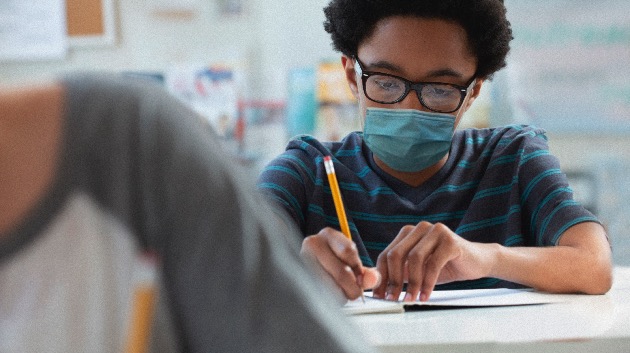
(NEW YORK) — As students return for a third school year affected by the coronavirus pandemic, trauma and grief support are top of mind among educators addressing the wide-reaching impacts of the crisis.
For many students, loss due to the pandemic hits close to home. More than 140,000 children in the U.S. lost a primary or secondary caregiver, such as a live-in grandparent or another family member, in a COVID-19-associated death, according to provisional data from the Centers for Disease Control and Prevention obtained by ABC News in late July. More than 640,000 Americans have died from COVID-19.
Most, if not all, students may have experienced loss in other ways, from financial or housing instability to a prolonged disruption to their sense of normalcy or routine.
In Georgia, Atlanta Public Schools plan to screen over 30,000 pre-K to 12th grade students on their social-emotional behavior this fall.
“Many of our students had been at home and participating virtually since March of 2020,” Shannon Hervey, director of student support and interventions for Atlanta Public Schools, told ABC News. “We don’t know what our students may have faced, and so we wanted to take a proactive approach and say, ‘Let’s get to know our students more so that we can determine what their needs are and help to provide for that.'”
The district will be screening for external behaviors like hyperactivity or aggression, and internalized risks like depression and anxiety. From there, they hope to determine what students’ needs are and how the school can support them. The district also added 25 new school social workers and plans to train employees in trauma-informed practices this year, among other measures, to address the mental health needs of its students this year.
Other school districts are also looking to bolster support around trauma and grief due to the pandemic. Chicago Public Schools had previously announced a $24 million, multiyear plan to invest in mental health and trauma support programs for students and staff. Miami-Dade County Public Schools has provided staff with social-emotional learning and mental health awareness trainings as they welcomed students back, as well as hiring 45 mental health coordinators.
Identifying and accommodating students impacted by trauma and grief are key, as those who have experienced significant loss may need long-term support in the classroom, said Maria Collins, the head of New York Life Foundation’s Grief-Sensitive Schools Initiative, a program that provides resources and tools for school communities to support grieving students.
“Grief can have a serious impact on learning, academic performance, social withdrawal, behavioral issues, if not supported,” Collins told ABC News. “It’s really understanding and acknowledging that the loss exists, and this impacts how they learn and also how present they are in the classroom.”
While educators largely recognize the importance of supporting students’ emotional needs, most don’t feel they have the training to do so. A 2020 survey by the New York Life Foundation and American Federation of Teachers found that only 15% of educators said they feel comfortable addressing the grief or trauma tied to the pandemic.
The Grief-Sensitive Schools Initiative has seen an “increasing need” for support during the pandemic, Collins said, with nearly 100 schools and school districts reaching out in the past year. The organization has also partnered with the National Parent Teacher Association to help provide similar resources and support for parents.
“We’re educating new generations; we’re educating educators, parents and children about grief and grief support,” Collins said.
Dr. David Schonfeld has also seen an increase in interest from schools for grief support during the pandemic, particularly for younger students. As the director of the National Center for School Crisis and Bereavement, which provides schools with crisis, trauma and grief support, he’s done over 200 trainings, workshops and presentations since the pandemic started. Much of the center’s work focuses on grades K-12, though they have seen “lots of demand” at the preschool level, Schonfeld said.
The National Center for School Crisis and Bereavement has shifted most of its training to focus on how to support students during the pandemic, which has “heightened” grief, he said.
The pandemic has “raised people’s interests and importance” of grief and trauma support, he said, “but also made it very challenging for them to find the time and have the capacity to schedule the training. Schools are frankly overwhelmed by everything they need to do. Opening the door is now a big challenge.”
Educators have also often questioned how to best support students when they themselves may be struggling with grief or trauma, Schonfeld said.
“A lot of people say, ‘What are we supposed to do? We’re grieving or we’re struggling or we’re exhausted,'” he said. “What I try and tell them is we’re really not asking classroom teachers to counsel children over the death of their parents. We’re not asking them to do therapy. We’re asking them to show sympathy and be present for the child and show concern and then maybe make accommodations to help them learn.”
Collins advocates for schools to become “grief-sensitive” and have a specific bereavement plan that can help connect families with local resources.
“We’re not saying that educators need to be grief specialists,” she said. “They just have to have the awareness and know where to refer and have the resources to give to the parents.”
For Schonfeld, the impacts of the pandemic are so wide-reaching that staff may need to support all students on some level.
“We need to figure out how to help everyone and still keep our eyes open for those who need more,” he said. “If educators know how to provide universal support, they will be better prepared to know when someone needs more than that.”
(WASHINGTON) — House Minority Leader Kevin McCarthy on Tuesday warned dozens of communications companies against cooperating with the House select committee investigating the Jan. 6 Capitol attack, saying that Republicans “will not forget” it if they retake the House.
His broadside was immediately criticized by Democrats and ethics experts, who accused him of violating House ethics rules and likened the statement to tampering with the congressional investigation.
Democrats’ “attempts to strong-arm private companies to turn over individuals’ private data would put every American with a phone or computer in the crosshairs of a surveillance state run by Democrat politicians,” McCarthy said in a statement posted to Twitter.
The select committee asked 35 companies on Monday to preserve records that could be relevant to its investigation into the Capitol attack and “efforts to delay or interfere” with the transfer of power after the 2020 election, which could be a precursor to more targeted subpoenas compelling the production of records.
Jan. 6 committee asks companies to preserve phone records from GOP lawmakers, Trump aides
While the requests didn’t mention any individuals by name, the select committee is expected to focus its inquiry on GOP lawmakers who communicated with former President Donald Trump on and around Jan. 6 regarding the election, along with the president’s close aides and family members.
McCarthy, whose own conversations with Trump were highlighted during the second impeachment trial, could be of interest to the panel’s investigation.
“This is very unusual for a member of Congress, especially someone in a leadership role in the House, to try to intervene and prevent a congressional committee from trying to do its job,” Craig Holman, a lobbyist for the nonpartisan watchdog group Public Citizen, told ABC News.
“By demanding that no one participate with the select committee, he is undermining the credibility of Congress itself,” he said, suggesting that McCarthy’s comments were in violation of House Rule 23, which requires members to “behave at all times in a manner that shall reflect creditably on the House.”
Holman said Public Citizen would consider filing a complaint against McCarthy with the Office of Congressional Ethics, the independent congressional ethics office, should no member ask the House Ethics Committee to consider the matter directly. That office could refer its review to the ethics panel, which could decide whether to investigate the matter further or sanction McCarthy.
In his statement, McCarthy also accused Democrats of asking companies to violate federal law, though his office did not respond to questions from ABC News asking for the specific statute he referenced.
“It’s not illegal for the select committee to request that the companies preserve the records, and to demand that the records be turned over under subpoena if the committee can produce sufficient evidence to warrant that action,” Holman said.
In response to McCarthy, the select committee said it had asked companies “not to destroy records” that could aid in its inquiry, and that the panel “won’t be deterred by those who want to whitewash or cover up the events of January 6th, or obstruct our investigation.”
“To me, that’s pretty straight-up intimidation and obstruction,” Rep. Eric Swalwell, D-Calif., a former prosecutor who served as an impeachment manager after the Jan. 6 attack, told ABC News. “It’s the congressional equivalent of ‘snitches get stitches.’ That’s kind of what he’s telling them.”
Zach Wamp, a former GOP congressman from Tennessee who co-chairs the Reformers Caucus for Issue One, a government reform advocacy group, criticized his former colleague’s statement.
“It’s not in his best interest or the right thing to do,” Wamp said of McCarthy. “You can’t have an investigation without knowing who talked to who, and when.”
“There are Republicans who may have things to hide, but it’s not Kevin McCarthy,” he said.
“If this turns into a really broad request not tied to individuals, there are Fourth Amendment concerns,” Jonathan Bydlak, the director of the Governance Program at the R Street Institute, told ABC News. “But I don’t think that’s what we’re talking about right now.”
Bydlak noted that McCarthy, as the top House Republican vote counter in 2013, was among the majority of House members to oppose an amendment restricting the National Security Agency’s collection of phone records.
“When you compare what he’s saying now to the opposition he’s expressed in the past to NSA collection of bulk metadata, it’s really hard to not come to the conclusion that these remarks are being driven by partisan concerns, and not ideological and principled concerns about government access to private data,” Bydlak said.
Other Republican lawmakers have also bristled at the panel’s preservation request.
“There weren’t any text messages that I can recall with the President of the United States. Certainly, I communicate with other congressmen on a regular basis,” Rep. Mo Brooks, R-Alabama, who strategized with other Republicans at the White House about how to derail the Jan. 6 electoral vote count, told Newsmax.
Brooks, who is running for Senate, encouraged Trump supporters to “start taking down names and kicking a**” and asked if they were ready to “fight for America” at a rally outside the White House on Jan. 6. He later said he was not encouraging violence.
“I haven’t gone over those text messages but I assume on one side or the other there are some caustic words used to describe what is going on in our country … but those are private communications,” Brooks told Newsmax.
Separately, Rep. Liz Cheney, R-Wyo., was named the vice-chair of the select committee on Thursday, a move meant to further highlight the panel’s bipartisan cooperation as it expands its investigation.
“Representative Cheney has demonstrated again and again her commitment to getting answers about January 6th, ensuring accountability, and doing whatever it takes to protect democracy for the American people,” Chairman Bennie Thompson, D-Miss., who appointed Cheney to the role, said in a statement.
The announcement comes as Cheney faces another attempt to expel her from the House Republican conference: A group of House Freedom Caucus members have asked for GOP leaders to amend party rules to remove Cheney and Rep. Adam Kinzinger, R-Illinois, from the House Republican conference for serving on the panel with seven Democrats as the majority of Republicans boycotted the committee.
“We will not be deterred by threats or attempted obstruction and we will not rest until our task is complete,” Cheney said in a statement Thursday after her new title was announced.
(NEW YORK) — The remnants of Hurricane Ida are dumping flooding rain, spawning tornadoes across the Northeast and causing deaths across the tri-state area.
A flash flood emergency was declared for the first time in New York City as subway stations were turned into waterfalls and Midtown streets became rivers. New York City also declared a state of emergency, and as of Thursday morning, at least eight people have died due to the extreme floods.
Early Thursday in Queens, the New York Police Department said that after responding to a flooding condition at a partially collapsed building, they found two people — a 43-year-old female and a 22-year-old male — unconscious and unresponsive inside. The man was pronounced dead at the scene and the woman was taken to the local hospital, where she later died. “The investigation is ongoing and the Medical Examiner will determine the cause of death. The identification of the deceased is pending family notification,” they said.
At a second flooded location in Queens, the NYPD said they found a 50-year-old male, a 48-year-old female and a 2-year-old male, unconscious and unresponsive, within the residence. They were all pronounced dead at the scene.
Also in Queens, police responded to a 911 call of a flooding condition and discovered a 48-year-old female, unconscious and unresponsive, within the residence. “The aided female was removed by EMS to Forest Hills Hospital where she was pronounced deceased,” they said. An 86-year-old woman also died in her Queens apartment due to flooding, police said.
After responding to a similar flooding incident in Brooklyn, the NYPD said officers found “a 66-year-old male, unresponsive and unconscious, within the residence.” He was pronounced dead at the scene.
New York issued a citywide travel ban just before 1 a.m. ET Thursday until 5 a.m.
“All non-emergency vehicles must be off NYC streets and highways,” the city said.
Every subway line in the city was suspended, according to the Metropolitan Transportation Authority, due to so many flooded stations. New York City Mayor Bill de Blasio told ABC station WABC that people were being evacuated from subway cars stuck underground.
New York Gov. Kathy Hochul also declared a state of emergency to “help New Yorkers.”
“Earlier tonight I declared a State of Emergency in New York State within the counties of Bronx, Dutchess, Kings, Nassau, New York, Orange, Putnam, Queens, Richmond, Rockland, Suffolk, Sullivan, Ulster, and Westchester in response to major flooding due to Tropical Depression Ida,” she said in a statement, also encouraging New Yorkers to “please pay attention to local weather reports, stay off the roads and avoid all unnecessary travel during this time.”
At least one person also died due to the flooding in Passaic, New Jersey, Mayor Hector Carlos Lora confirmed on Facebook Thursday morning. That makes 17 people who’ve died as a result of Ida in the U.S.
“It is … with an extremely heavy heart that I share unfortunately that we have confirmed the loss of a life within the city of Passaic and have unconfirmed reports of additional lives that may have been lost,” he said in a video, later explaining that the person was trapped inside their car, which was “overtaken by water.”
The mayor — who declared a state of emergency in the city — also said that two other residents are reported to have been swept away by the water. The search continues for them.
“We continue to receive reports of incidents that have occurred throughout the city. vehicles can be repaired, property can be replaced, but loss of life we cannot bring that back,” Lora said.
At the same time, he said, 60 residents are receiving temporary shelter in city hall.
“We have too many areas where the flooding has gotten so bad that cars are stuck and we have bodies underwater,” Lora said in a video posted to Facebook. “We are now retrieving bodies.”
In New Jersey, Gov. Phil Murphy quickly declared an emergency with 3 to 5 inches of rain falling per hour in some locations across the tristate area.
“We will use every resource at our disposal to ensure the safety of New Jerseyans,” Murphy tweeted. “Stay off the roads, stay home, and stay safe.”
He was not specific about how many people may have been killed or injured in the floods.
At Newark Liberty Airport in New Jersey, a baggage area was flooded and flights were grounded.
“We’re experiencing severe flooding due to tonight’s storm,” the airport’s account tweeted. “All flight activity is currently suspended & travelers are strongly advised to contact their airline for the latest flight & service resumption information. Passengers are being diverted from ground-level flooded areas.”
The U.S. Open, taking place in Queens, New York, had to pause one tennis match as the court was flooded — despite there being a roof over the court — due to rain coming in the side of the stadium.
Several homes were damaged in Mullica Hill, New Jersey, across from Philadelphia, after warnings went out about possible tornadoes.
“Gloucester County has experienced devastating storm damage,” the county said in a statement. “It is likely that multiple tornadoes have touched down within our communities. Our Emergency Operations Center is fully activated with multiple local, county, state, and regional partners assessing damages and deploying resources.”
In Gloucester County, 20-25 homes were “completely devastated,” and roughly 100 more sustained some damage, when a tornado ripped through Harrison Township, Wednesday, the mayor of the Harrison Township told ABC News.
Mayor Lou Manzo said the community is “blessed” that no one died and only one person had to go to the hospital, but the damage to property across the township is “extensive,” he said.
Fire and emergency personnel made “a few rescues” of people who became trapped after sheltering in their basement, according to the mayor.
There was also a “confirmed large and extremely dangerous tornado” located near Woodbury Heights, New Jersey, at about 6:30 p.m. and another “confirmed large and destructive tornado” over Beverly, near Trenton, at 7 p.m., according to the National Weather Service.
Early Thursday there were 101,652 customers without power in Pennsylvania, 73,348 in New Jersey, 51,931 in New York and 34,449 in Connecticut, according to poweroutage.us.
The Schuylkill River in Philadelphia is rising into major flood stage early Thursday morning and is forecast to rise a few additional feet before cresting around 9 a.m.. The National Weather Service has increased their predicted water level for the river to 17.2 feet, which would be greater than the highest recorded total of 17 feet. The rain has stopped, but flood risk continues, the Philadelphia Office of Emergency Management wrote on Twitter.
(NEW YORK) — The United States is facing a COVID-19 surge this summer as the more contagious delta variant spreads.
More than 642,000 Americans have died from COVID-19 while over 4.5 million people have died from the disease worldwide, according to real-time data compiled by the Center for Systems Science and Engineering at Johns Hopkins University.
Just 61.5% of Americans ages 12 and up are fully vaccinated against COVID-19, according to data from the Centers for Disease Control and Prevention.
Here’s how the news is developing Thursday. All times Eastern:
Sep 02, 7:34 am
Africa set to miss COVID-19 vaccination goal, WHO warns
The World Health Organization warned Thursday that Africa, the world’s second-largest and second-most populous continent, is set to miss the global goal of vaccinating the most vulnerable 10% of every country’s population against COVID-19 by the end of September.
Forty-two of Africa’s 54 nations — nearly 80% — will fall short of that target, set in May by the World Health Assembly, if the current pace of vaccine deliveries and vaccinations holds, according to the WHO.
“With less than a month to go, this looming goal must concentrate minds in Africa and globally,” Dr. Matshidiso Moeti, the WHO’s regional director for Africa, said in a statement Thursday. “Vaccine hoarding has held Africa back and we urgently need more vaccines, but as more doses arrive, African countries must zero in and drive forward precise plans to rapidly vaccinate the millions of people that still face a grave threat from COVID-19.”
With more COVID-19 vaccines expected to be delivered across Africa from the global vaccine-sharing initiative COVAX as well as the African Union, the WHO said there could be enough doses to meet the 10% target. Nine African countries have already reached the goal and, at the current pace, three more are set to do so. Two more could meet it if they speed up vaccinations, according to the WHO.
But while many African nations have sped up vaccinations as shipments increased, the WHO said that 26 countries have used less than half of their doses.
So far, some 39 million people — just 3% of Africa’s population — are fully vaccinated against COVID-19. In comparison, 57% of people are fully vaccinated in the European Union and 52% in the United States, according to the WHO.
“The inequity is deeply disturbing,” Moeti said. “Just 2% of the over five billion doses given globally have been administered in Africa. Yet recent rises in vaccine shipments and commitments shows that a fairer, more just global distribution of vaccines looks possible.”
Sep 02, 6:33 am
WHO monitoring new ‘variant of interest’: Mu
The World Health Organization has added another version of the novel coronavirus to its list of “variants of interest” amid concerns it may mutate to the point of evading the immunity people have developed from vaccination or past infection.
The so-called mu variant, also known as B.1.621, was added to the list on Monday after it was detected in 39 countries around the world.
“The Mu variant has a constellation of mutations that indicate potential properties of immune escape,” the WHO said in its COVID-19 weekly epidemiological update published Tuesday. “Preliminary data presented to the Virus Evolution Working Group show a reduction in neutralization capacity of convalescent and vaccinee sera similar to that seen for the Beta variant, but this needs to be confirmed by further studies.”
Sep 02, 6:05 am
Moderna to recall 1.63 million doses in Japan after discovery of stainless steel contaminants
American drugmaker Moderna and its Japanese distribution partner Takeda Pharmaceutical Co. announced Wednesday that they are planning to recall three suspended lots of COVID-19 vaccine doses in Japan after an investigation discovered stainless steel contaminants.
Last week, the Japanese government suspended use of the batches, containing about 1.63 million doses of Moderna’s COVID-19 vaccine, following reports of foreign substances in some unused vials at multiple inoculation sites. Moderna told ABC News that one of the three lots received “several complaints of particulate matter” in its vials, while the two other adjacent lots were put on hold out of “an abundance of caution” and for continued assurance of quality.
An analysis confirmed the contaminants to be high-grade stainless steel, commonly used in manufacturing and food processing. The most probable cause of contamination was related to friction between two pieces of metal installed in the stoppering module of the production line due to an incorrect set-up. The contamination only impacted the lots that were included in the suspension, according to a joint press release from Moderna and Takeda.
The investigation was conducted by Moderna in partnership with Takeda and ROVI, the Spanish manufacturer that operates the production plant where the contamination occurred.
Japan’s Ministry of Health, Labor and Wealth said in a statement Wednesday that, based on the companies’ investigation, it is unlikely the stainless steel particles pose any additional health risk.
The contamination raised further concern after two men, aged 30 and 38, died in Japan within days of receiving their second doses of the Moderna vaccine from one of the suspended lots. The cause of death in both cases remains under investigation.
Moderna and Takeda said there is currently no evidence that the fatalities were caused by the vaccine.
“The relationship is currently considered to be coincidental,” the companies said in a joint statement Wednesday.
Sep 02, 3:08 am
WHO opens global hub to ward off next pandemic
The World Health Organization opened a center in Berlin on Wednesday that will gather, assess and share information internationally to help prepare for the next global health crisis.
The so-called “WHO Hub for Pandemic and Epidemic Intelligence” is receiving an initial investment of $100 million from Germany and will be led by Dr. Chikwe Ihekweazu, director-general of Nigeria’s Center for Disease Control. The facility “will harness broad and diverse partnerships across many professional disciplines, and the latest technology, to link the data, tools and communities of practice so that actionable data and intelligence are shared for the common good,” according to a press release from the WHO.
“The world needs to be able to detect new events with pandemic potential and to monitor disease control measures on a real-time basis to create effective pandemic and epidemic risk management,” Dr. Tedros Adhanom Ghebreyesus, director-general of the WHO, said in a statement Wednesday. “This Hub will be key to that effort, leveraging innovations in data science for public health surveillance and response, and creating systems whereby we can share and expand expertise in this area globally.”
“All the work that goes into pandemic and epidemic preparedness must occur before an outbreak starts,” Tedros added. “Data linkage and analysis, and the ability to better detect and assess risks of disease events in their earliest stages before they amplify and cause death and societal disruption, is what the WHO Hub will focus on.”
The ongoing coronavirus pandemic was the impetus for the hub’s creation.
“Despite decades of investment, COVID-19 has revealed the great gaps that exist in the world’s ability to forecast, detect, assess and respond to outbreaks that threaten people worldwide,” Dr. Michael Ryan, executive director of the WHO’s Health Emergency Program, said in a statement Wednesday. “The WHO Hub for Pandemic and Epidemic Intelligence is designed to develop the data access, analytic tools and communities of practice to fill these very gaps, promote collaboration and sharing, and protect the world from such crises in the future.”
Sep 01, 6:54 pm
US hospital admissions could surge to 22,000 a day by late September: CDC
On average, approximately 12,200 Americans are being admitted to the hospital each day with COVID-19. The forecast models used by the CDC suggest that by Sept. 27, that number could surge to as high as 22,400 a day.
The lower end of the forecast puts the daily hospital admissions at around 6,400.
There are signs the rate of hospital admission nationwide may be slowing, with the U.S. Centers for Disease Control and Prevention reporting hospital admissions will likely “remain stable or have an uncertain trend over the next 4 weeks.”
Kentucky currently tops the list of states expected to see the most hospital admissions, per capita, in the next two weeks, followed by Florida and Georgia.
(NEW YORK) — The United States is facing a COVID-19 surge this summer as the more contagious delta variant spreads.
More than 642,000 Americans have died from COVID-19 while over 4.5 million people have died from the disease worldwide, according to real-time data compiled by the Center for Systems Science and Engineering at Johns Hopkins University.
Just 61.5% of Americans ages 12 and up are fully vaccinated against COVID-19, according to data from the Centers for Disease Control and Prevention.
Here’s how the news is developing Thursday. All times Eastern:
Sep 02, 9:37 am
Virginia’s Liberty University reports 430 COVID-19 cases among students
Liberty University switched all residential classes to be online and suspended indoor gatherings as the campus — which does not require vaccinations for students or staff — grapples with a new surge in COVID-19 cases.
The college reported 430 active cases of students with COVID-19 on Wednesday, according to ABC News’ local affiliate WSET-TV. This is more than the total number of cases at four neighboring Virginia colleges combined. The University of Virginia, Virginia Commonwealth University, Virginia Tech and James Madison University have reported a total of 125 students with active cases total.
The latter four universities require students to get the COVID-19 vaccine and wear masks, while Liberty does not require either.
Sep 02, 7:34 am
Africa set to miss COVID-19 vaccination goal, WHO warns
The World Health Organization warned Thursday that Africa, the world’s second-largest and second-most populous continent, is set to miss the global goal of vaccinating the most vulnerable 10% of every country’s population against COVID-19 by the end of September.
Forty-two of Africa’s 54 nations — nearly 80% — will fall short of that target, set in May by the World Health Assembly, if the current pace of vaccine deliveries and vaccinations holds, according to the WHO.
“With less than a month to go, this looming goal must concentrate minds in Africa and globally,” Dr. Matshidiso Moeti, the WHO’s regional director for Africa, said in a statement Thursday. “Vaccine hoarding has held Africa back and we urgently need more vaccines, but as more doses arrive, African countries must zero in and drive forward precise plans to rapidly vaccinate the millions of people that still face a grave threat from COVID-19.”
With more COVID-19 vaccines expected to be delivered across Africa from the global vaccine-sharing initiative COVAX as well as the African Union, the WHO said there could be enough doses to meet the 10% target. Nine African countries have already reached the goal and, at the current pace, three more are set to do so. Two more could meet it if they speed up vaccinations, according to the WHO.
But while many African nations have sped up vaccinations as shipments increased, the WHO said that 26 countries have used less than half of their doses.
So far, some 39 million people — just 3% of Africa’s population — are fully vaccinated against COVID-19. In comparison, 57% of people are fully vaccinated in the European Union and 52% in the United States, according to the WHO.
“The inequity is deeply disturbing,” Moeti said. “Just 2% of the over five billion doses given globally have been administered in Africa. Yet recent rises in vaccine shipments and commitments shows that a fairer, more just global distribution of vaccines looks possible.”
Sep 02, 6:33 am
WHO monitoring new ‘variant of interest’: Mu
The World Health Organization has added another version of the novel coronavirus to its list of “variants of interest” amid concerns it may mutate to the point of evading the immunity people have developed from vaccination or past infection.
The so-called mu variant, also known as B.1.621, was added to the list on Monday after it was detected in 39 countries around the world.
“The Mu variant has a constellation of mutations that indicate potential properties of immune escape,” the WHO said in its COVID-19 weekly epidemiological update published Tuesday. “Preliminary data presented to the Virus Evolution Working Group show a reduction in neutralization capacity of convalescent and vaccinee sera similar to that seen for the Beta variant, but this needs to be confirmed by further studies.”
Sep 02, 6:05 am
Moderna to recall 1.63 million doses in Japan after discovery of stainless steel contaminants
American drugmaker Moderna and its Japanese distribution partner Takeda Pharmaceutical Co. announced Wednesday that they are planning to recall three suspended lots of COVID-19 vaccine doses in Japan after an investigation discovered stainless steel contaminants.
Last week, the Japanese government suspended use of the batches, containing about 1.63 million doses of Moderna’s COVID-19 vaccine, following reports of foreign substances in some unused vials at multiple inoculation sites. Moderna told ABC News that one of the three lots received “several complaints of particulate matter” in its vials, while the two other adjacent lots were put on hold out of “an abundance of caution” and for continued assurance of quality.
An analysis confirmed the contaminants to be high-grade stainless steel, commonly used in manufacturing and food processing. The most probable cause of contamination was related to friction between two pieces of metal installed in the stoppering module of the production line due to an incorrect set-up. The contamination only impacted the lots that were included in the suspension, according to a joint press release from Moderna and Takeda.
The investigation was conducted by Moderna in partnership with Takeda and ROVI, the Spanish manufacturer that operates the production plant where the contamination occurred.
Japan’s Ministry of Health, Labor and Wealth said in a statement Wednesday that, based on the companies’ investigation, it is unlikely the stainless steel particles pose any additional health risk.
The contamination raised further concern after two men, aged 30 and 38, died in Japan within days of receiving their second doses of the Moderna vaccine from one of the suspended lots. The cause of death in both cases remains under investigation.
Moderna and Takeda said there is currently no evidence that the fatalities were caused by the vaccine.
“The relationship is currently considered to be coincidental,” the companies said in a joint statement Wednesday.
Sep 02, 3:08 am
WHO opens global hub to ward off next pandemic
The World Health Organization opened a center in Berlin on Wednesday that will gather, assess and share information internationally to help prepare for the next global health crisis.
The so-called “WHO Hub for Pandemic and Epidemic Intelligence” is receiving an initial investment of $100 million from Germany and will be led by Dr. Chikwe Ihekweazu, director-general of Nigeria’s Center for Disease Control. The facility “will harness broad and diverse partnerships across many professional disciplines, and the latest technology, to link the data, tools and communities of practice so that actionable data and intelligence are shared for the common good,” according to a press release from the WHO.
“The world needs to be able to detect new events with pandemic potential and to monitor disease control measures on a real-time basis to create effective pandemic and epidemic risk management,” Dr. Tedros Adhanom Ghebreyesus, director-general of the WHO, said in a statement Wednesday. “This Hub will be key to that effort, leveraging innovations in data science for public health surveillance and response, and creating systems whereby we can share and expand expertise in this area globally.”
“All the work that goes into pandemic and epidemic preparedness must occur before an outbreak starts,” Tedros added. “Data linkage and analysis, and the ability to better detect and assess risks of disease events in their earliest stages before they amplify and cause death and societal disruption, is what the WHO Hub will focus on.”
The ongoing coronavirus pandemic was the impetus for the hub’s creation.
“Despite decades of investment, COVID-19 has revealed the great gaps that exist in the world’s ability to forecast, detect, assess and respond to outbreaks that threaten people worldwide,” Dr. Michael Ryan, executive director of the WHO’s Health Emergency Program, said in a statement Wednesday. “The WHO Hub for Pandemic and Epidemic Intelligence is designed to develop the data access, analytic tools and communities of practice to fill these very gaps, promote collaboration and sharing, and protect the world from such crises in the future.”
Sep 01, 6:54 pm
US hospital admissions could surge to 22,000 a day by late September: CDC
On average, approximately 12,200 Americans are being admitted to the hospital each day with COVID-19. The forecast models used by the CDC suggest that by Sept. 27, that number could surge to as high as 22,400 a day.
The lower end of the forecast puts the daily hospital admissions at around 6,400.
There are signs the rate of hospital admission nationwide may be slowing, with the U.S. Centers for Disease Control and Prevention reporting hospital admissions will likely “remain stable or have an uncertain trend over the next 4 weeks.”
Kentucky currently tops the list of states expected to see the most hospital admissions, per capita, in the next two weeks, followed by Florida and Georgia.
(RICHMOND, Va.) — Abortion rights is shaping up to be a core issue in Virginia gubernatorial nominee Terry McAuliffe’s campaign, amplified after the nation’s most restrictive abortion ban took effect in Texas on Wednesday.
The former Democratic governor is now targeting Republican opponent Glenn Youngkin again over their different positions on the issue.
“The stakes are huge. … For years, we’ve said, abortion could be outlawed. Well, it happened today,” McAuliffe told ABC News in an interview. “I vetoed every bill that would have stood in the way of women making their own decisions. And, you know, I’ve vetoed bills that would have defunded Planned Parenthood. I stopped all their nonsense. But it’s a battle here in Virginia. We’re not going back.”
The new Texas law, which outlaws abortions after about six weeks of pregnancy, went into effect Wednesday after the Supreme Court declined to immediately weigh in on state abortion providers’ emergency request to block it. And late Wednesday night, in a 5-4 decision, the Supreme Court formally rejected the request by Texas abortion providers to block the law.
While 12 other states have attempted to similarly outlaw first-trimester abortions, legal challenges have prevented those laws from taking effect, making Texas’ law the most restrictive abortion ban in the country.
In addition to being “first and foremost,” a threat to women’s health, McAuliffe also said it’s an economic issue, telling ABC News that “draconian laws” like Texas’ are “absolutely devastating” to the economy.
“It’s an absolute killer to one’s economy. … I called my head of economic development today. I said, ‘Call HP, call Dell, call American Airlines, move ’em to Virginia,'” McAuliffe said, listing off major companies headquartered in Virginia. “Nobody wants to be in a state that discriminates, tells women what to do with their body. … Glenn Youngkin would destroy the Virginia economy.”
At an event in Tysons Corner hosted by Virginia Free Wednesday, Youngkin was asked by a reporter what he thought about the Texas abortion bill. He first deflected, saying his “biggest concern when it comes to abortion in Virginia is my opponent’s extreme view,” going on to attempt to tie him to current Gov. Ralph Northam.
Northam, a physician, came under fire in January 2019 for comments he made in which he seemed to imagine a scenario where an abortion would be performed when an infant was about to be born. He was responding to a question about a proposed bill that would allow for a third-trimester abortion to be performed under select circumstances with a single doctor’s opinion, and said he was speaking of a rare hypothetical. Virginia only allows abortions after the second trimester in select circumstances when multiple doctors agree the woman’s life or health is significantly endangered, something his spokesperson pointed out, accusing Republicans of “trying to play politics.”
After further pressing, Youngkin said, “I’ve said it from the beginning of this campaign — I’m pro-life. I believe in exceptions in the case of rape, and in case of incest and in case of where the mother’s life is in jeopardy.”
The law in Texas does not include exceptions for rape or incest.
Abortion rights first took center-stage in Virginia’s gubernatorial race — one of only two gubernatorial contests held this year — in early July when a liberal online publication published a video, surreptitiously recorded by liberal activist Lauren Windsor, of Youngkin reportedly at a June fundraising event in Loudoun County calling himself “staunchly unabashedly pro-life” but saying he cannot openly discuss the issue because he needs to win over independents.
When an off-camera questioner asks Youngkin if he would defund Planned Parenthood or “take it to the abortionists,” Youngkin replies, “I’m gonna be really honest with you, the short answer is in this campaign I can’t.”
“When I’m governor, and I have a majority in the House, we can start going on offense. But as a campaign topic, sadly, that in fact won’t win my independent votes that I have to get. So you’ll never hear me support Planned Parenthood. What you’ll hear me talk about is actually taking back the radical abortion policies that Virginians don’t want,” he said in the recording, as published by The American Independent.
In a statement to ABC News regarding that video, Youngkin campaign spokesman Matt Wolking said, “Glenn Youngkin tells everyone he meets the same thing: he can’t wait to go on offense for the people of Virginia by building a rip-roaring economy, creating more jobs with bigger paychecks, restoring excellence in education, prioritizing public safety, and making Virginia the best place in America to live, work, and raise a family. This deceptively recorded audio demonstrates that Glenn Youngkin says the same thing no matter who he is talking to, unlike Terry McAuliffe who knowingly makes false allegations and decides what to say based on whatever poll is in front of him.”
McAuliffe’s campaign used news coverage and part of that recording in an ad that hit Virginians’ televisions last week. On Tuesday, the campaign launched another abortion-focused TV ad. Both ads hit Youngkin over his “far right agenda.”
Early voting for Virginia’s Nov. 2 off-year election starts Sept. 17. The gubernatorial race is a critical test for Democrats in the post-Trump era. Democrats have made significant inroads in what used to be a key presidential battleground. Not only did the party gain a government trifecta in 2019 by gaining majorities in both legislative chambers, but voters rejected former President Donald Trump last year by nearly double the margin they did in 2016.
McAuliffe has pitched himself by promising to build on the progress he believes Virginia’s made, starting with his first term. But Youngkin, a former private equity executive and political newcomer, argues the commonwealth needs a change in leadership and that longtime politician McAuliffe is “pushing a failed partisan agenda.”
“The only thing we have to do differently is everything. Because to fix what is broken, we can’t settle for half measures. We need a whole new approach,” Youngkin said at a campaign rally in Fairfax Monday where he unveiled his “Day One Plan.”
Despite Democratic gains, polls show the race is competitive. A Monmouth poll out Tuesday showed McAuliffe with a slight lead over Youngkin among registered voters, 47% to 42%, but Youngkin held an edge among independents, 44% to 38%.
While the Monmouth poll showed Youngkin leads among voters who describe themselves as being more enthusiastic in this year’s race compared with past contests, abortion rights could galvanize voters on both sides of the debate. Given the demographic shifts in the commonwealth, that enthusiasm may aid McAuliffe more.
“The Supreme Court has just given Terry McAuliffe a gift two weeks before early voting starts,” said Larry Sabato, the founder and director of the University of Virginia’s Center for Politics and a longtime watcher of the commonwealth’s politics. “The problem for Youngkin is that Virginia is decidedly pro-choice, especially in vote-rich Northern Virginia. Independents are mainly pro-choice, too.”
Sabato said abortion has mattered in past Virginia elections, usually in Democrats’ favor. He cited 2013’s gubernatorial race, when McAuliffe won by a slim 2.5-point margin. Also bolstering the Democrats, Sabato said, is the “growing belief” that the conservative Supreme Court is moving toward overturning Roe v. Wade.
However, he added, “It isn’t all bad for Youngkin. He’ll run up the score in conservative pro-life rural areas using this issue. It’s just that rural areas don’t pack the electoral punch they once did.”